

He always figured the disease found him in a swimming hole. This was back in 1952, when he was 16 and the star running back on the Boonville High football team.
Out there in North Carolina’s Yadkin Valley, Benny Phillips grew up with tobacco fields that rolled over the hills and uncles who wandered around barns to take a swig at night. Benny had big plans, though — Chapel Hill, probably, then the NFL. He was that good.
“And boy was he good-looking, too,” his wife, Judy, says now.
That summer he went for a swim, and a few days later, damned if the doctors didn’t say he had polio. They sent him to a hospital in Greensboro and he spent a few days in an iron lung, a nearly obsolete machine that wraps around a person like a Twinkie around filling. He’d get out of that machine, doctors said, but he wouldn’t walk again. The football star was a paraplegic. Benny begged them to let him die.
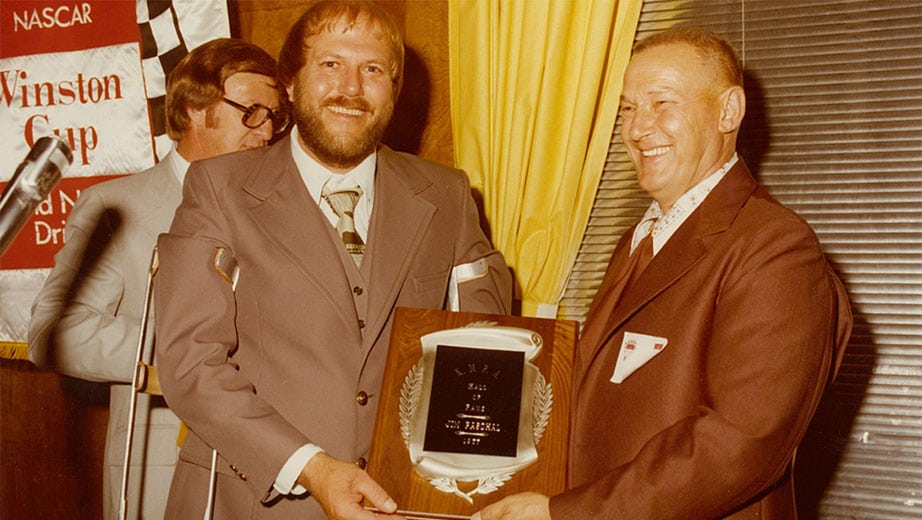
Over the next half-century, most everybody in NASCAR would come to know those crutches.
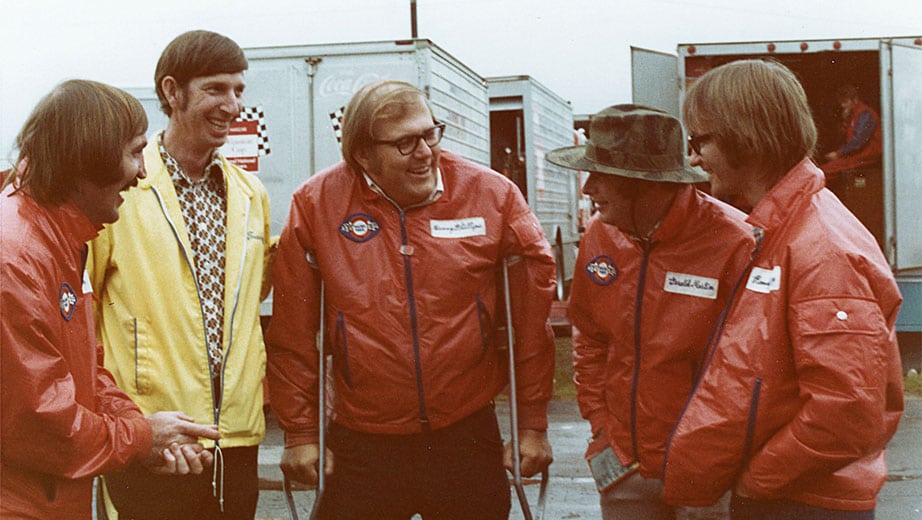
Benny became part of a small group of journalists who decided to cover the sport in its earliest years. But it was more than a job to him; it was a second chance at sports. He treated his jobs as sports reporter and then sports editor with the High Point Enterprise the way an athlete treats workouts and practice. Benny’s personal vehicles always had hand controls, and he spent time in every shop within a short drive. He grew to like some drivers and dislike others. He wrote mostly about the ones he liked. He wrote about racing in a way that let you know he was rooting for it to grow, but not in the style of a cheerleader. It was more like the way you’d root for your sister to achieve her dreams.
No place felt more like home to Benny than Darlington.
To him, Darlington Raceway had feelings and flesh. He wrote about it as if it was the sport’s mistress — so good, but so bad, and always on the mind.
RELATED: All-time Southern 500 winners
Darlington occupied Benny’s thoughts more than ever during the summer of 1965. The track had been resurfaced that year for the first time since it opened in 1950, and Junior Johnson had finally won a race at the track the previous May. On Sept. 1, 1965, the week of Southern 500, Benny published a column that helped crystallize the track’s identity for a generation.
“As treacherous as Mata Hari,” he wrote, a comparison to the infamous German spy whose cover was performing as an exotic dancer, “as desirable as Hollywood’s most beautiful actress — as unpredictable as any woman — these are the virtues of ‘The Lady In Black.’ ”
• • •
The nickname, you know, stuck.
In the half-century since, references to Darlington as “The Lady In Black” have appeared thousands of times in publications across the country. But I searched through archives, and funny as it sounds, I found only one other instance when Benny wrote the phrase “Lady In Black” to describe Darlington, nine years later in 1974.
“I am sure there are skeptics who say the place doesn’t live and breathe like a human being and hasn’t a soul and isn’t vindictive and good and kind and all the other things real humans are,” he wrote that year. “But I know better.”
Whenever Darlington changed over the years, he argued to keep it the way it was — to not sanitize the grit, and leave the angels as angels and devils as devils.
In 2003, when Darlington’s premier race moved to November and California got the Labor Day draw, Benny flexed over his computer.
“You do not go moving the Kentucky Derby to West Virginia, or pick up the Masters in Augusta and put it down in Fargo, N.D.,” he wrote.
But even mad, Benny could find the good in growth. He closed that column like this:
“Meanwhile, out in California, as the earth tremors, and a scientist tries to measure the quake, a young boy clings to the infield fence with white knuckles. A lump grows in his throat as 43 cars roar to life and move slowly toward the green flag. He tells his best friend he wants to grow up and be like Jeff Gordon. And a tradition is born.”
RELATED: Then and Now: Famous paint schemes
• • •
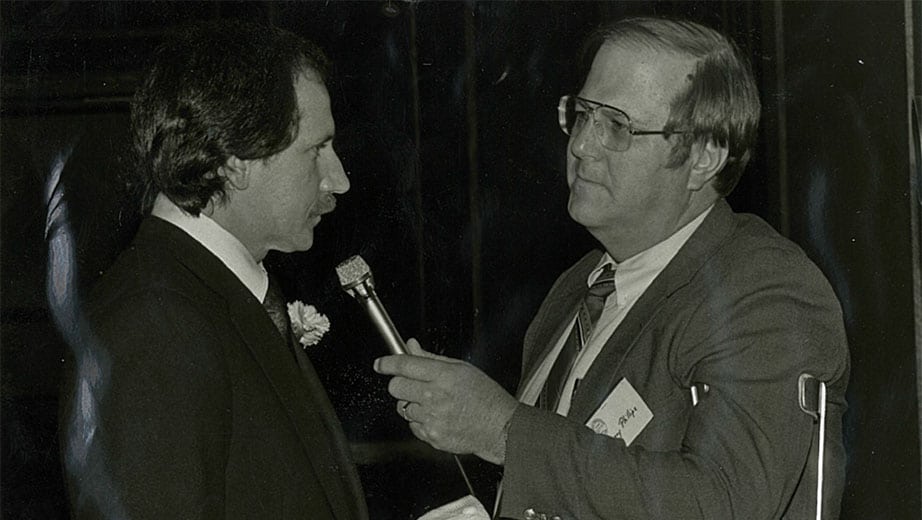
Benny was my first boss in journalism. He was the sports editor at the Enterprise in 1998, and I was a sophomore at High Point University. I wanted to be a sports writer, so my college newspaper adviser arranged the meeting in hopes that I could get some work covering high school football. Benny, by then bald and with car windows for eyeglasses, looked over maybe a paragraph of a story I’d written for the college paper and said, “Do you know how to keep stats?”
He was tough and rarely flattered, but he was giving. He took my first story and went line by line to tell me what worked and what didn’t. After that, whenever I wrote something half-decent, he told me so.
I’d stay late on Fridays and watch him get on those crutches and walk to the production room, where he’d paste up the evening’s game stories on a board.
He rubbed some people wrong, but I always liked him. And everybody admired him. When Benny decided he couldn’t be the paper’s main racing writer anymore, he hired his own replacements. Greer Smith was the last to work for him.
“I wasn’t in awe of him, but you knew you were following a legend,” Smith says now. “It felt like the guy who followed John Wooden.”
The Enterprise‘s news team hired me as a full-time intern for the summer of 2000. I’d work a day shift and then sit by his desk in the evening to listen to Benny tell stories. He talked about names I’d only heard on television like family — going to the Caribbean with Dale Earnhardt and hunting in Montana with Terry Labonte. I decided then that if I ever made a career out of this writing thing, I’d try to know the people I wrote about like Benny did.
• • •
Once a week for most of his career, Benny would drive to Randleman to meet with the Pettys, Lee and Richard, and crew chief Dale Inman. They’d talk racing for a few minutes, then life for a lot longer. With those walking crutches propped against the wall, Benny gave Richard as much as Richard gave Benny.
“He was just part of our crowd,” Petty, now 81, tells me on a recent morning at his race team’s shop in Welcome, sitting around a table with Inman, another friend of Benny’s. “Or maybe we was a part of his crowd.”
Says Inman: “You could always run your troubles past Benny, because he’d been through them and worse.”
After Benny died in 2012, Judy ran into a doctor in Greensboro who’d known him. “Doc would say, ‘We miss hearing Benny Stories,’ ” Judy says.

You could always run your troubles past Benny, because he’d been through them and worse.

Judy opened Benny’s old computer and found a bunch of clips from the past 20 or so years and put them together in a spiral-bound book she called Sittin’ On the Porch With Benny. The cover photo is of Benny on a four-wheeler with his dachshund. Reading it is like reading a racing history book, but without less-important stuff like who won and lost. It’s about the people — Bobby Allison and Father Dale Grubba, the Catholic priest who became a spiritual adviser to the drivers. Junior Johnson, of course. Earnhardt, of course. A heap of Pettys, of course.
Some stories he wrote in the 2000s contained material he’d held for three decades.
“He was taking stuff in even if he wasn’t doing interviews,” Petty says.
In one story, Benny writes about his first meeting with Earnhardt, in November 1978 at Atlanta. Benny walked up to him and said, “Would you like to talk?”
“About what?” Earnhardt asked.
“You,” Benny replied.
“I’m thirsty,” Earnhardt said. “Let’s get a Coke.”
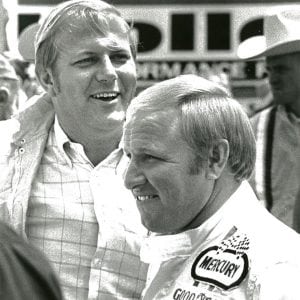
Within a few hours, they were talking about each other’s fathers – Ralph Earnhardt had died five years earlier, and Benny’s dad had died five years before that. The two men, journalist and race car driver, cried right there. Benny wound up writing Earnhardt’s biography, Dale Earnhardt: Determined.
Years later, in 2000, after Dale Earnhardt Jr. won the pole for the Coca-Cola 600 in Charlotte, a bunch of reporters rushed up to Earnhardt to “get ‘proud pop’s’ reaction,” Benny wrote. But the father shoved them off angrily and said, “Why don’t you go ask him? Hell, I wasn’t driving the car; he was.”
The next day, Benny made his way to Earnhardt’s rig.
“Why are you so ill?” Benny asked bluntly.
A funny thing happens when you listen to other people’s stories all your life – you pile up quite a few of your own. Benny didn’t just make the drivers out to be characters, he became one, too.
“A lot of people believed in Benny, and they’d basically pour their hearts out to him,” Petty says. “He knew a lot of things about a lot of people. We were open to him because he was open to us.”
• • •
With two laps remaining in the 1980 Southern 500, on a 96-degree day in Darlington, David Pearson led, Dale Earnhardt was second and Benny Parsons third. All three glanced the wall after hitting oil going into Turn 1. Earnhardt and Parsons almost immediately lost their places, but Pearson kept going with a damaged car, hoping to hold on and get to the start-finish line and the race-ending yellow flag first. In a flash, though, Terry Labonte flew past him on the low side of the track and put the nose of the car over the line for his first career victory.
RELATED: Old Darlington races remastered
The next day, Labonte was in a field in Richmond County with Benny for the first day of dove-hunting season.
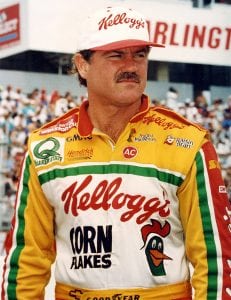
“I remember dove hunting was hotter than Darlington,” Labonte says now.
Labonte was probably Benny’s closest friend in racing. The book Judy put together includes the most intimate profile of the driver you’ll ever read. It starts with a scene at an airport in Billings, Montana, in 1995. Terry and Benny had just finished a four-day hunting trip on a private ranch, and when they pulled the rental car up to the airport to catch their flight home, they accidentally locked the keys inside. An officer told them they couldn’t park there, but they had the flight to catch. When she asked what they wanted her to do about the locked and running car, Terry said, “I don’t know, madam. You have a pistol. Maybe you should shoot it.”
If Benny had to choose between racing and hunting, he’d have picked hunting every time. He always wore the same felt cowboy hat, Labonte says, whether they were chasing birds or deer.
One year, Benny went on a trip to Northwestern Quebec with his friend and photographer Sonny Hedgecock.
“The planes got smaller and smaller as we went north,” Hedgecock says. The last one was floating on a pond. The dock that led to it was old and worn, with spaces between planks too wide for Benny to navigate on crutches. Benny handed his wallet to Hedgecock and pushed himself into the frigid water. He grabbed the wood with his hands and shuffled himself down to the airplane using nothing but upper body strength.
“Benny did not let anything slow him down,” Hedgecock says. “Nothing.”
Benny did not let anything slow him down. Nothing.
At the paper, he competed with Judy, the Lifestyles editor, to see who could put out the best section. He worked for 48 years; she worked for 42.
“He’s my hero,” she says. “He didn’t sit around feeling sorry for himself; he would sit around figuring out what he could do.”
In all that time they spent together, Benny never talked about death, or his legacy, or any of that.
But when he died six years ago, the funeral home was packed with mourners, among them Terry and Kim Labonte, Richard Petty and Dale Inman.
“He was the reporter, Dale worked on the car, and I drove the car,” Petty says, laughing. “But we were all buddies. We didn’t lose a reporter. We lost a friend.”
• • •
Coming into Darlington, the track still looks like a big high school football stadium, with lights on poles shooting out from a field in the distance.
At the main entrance, there’s a small museum, and in there you’ll find Benny’s name a few times. He was a seven-time National Motorsports Press Association writer of the year. The prize is now called the George Cunningham Award, and there’s a trophy for it in a case here. Benny’s name is on a plaque next to Tom Higgins, the longtime Charlotte Observer writer who died earlier this summer.
RELATED: Phillips honored among NASCAR greats
In 2016, Benny was posthumously honored as the Squier-Hall Award for media excellence, which comes with an exhibit in the NASCAR Hall of Fame. Benny would be tickled to know his name is in the Hall, but he’d probably be even more pleased to know it’s at Darlington, as close to that old track as he could be. And he’d especially love knowing the sound of car engines is right outside the door again every Labor Day weekend.
“In the heat of late summer, gnats buzz your head like you are part of a cattle drive,” Benny once wrote. “The sand flies sting, and mosquitoes bite. The sand sticks to your sweaty body and makes your skin itch. The rough lumber that provided grandstand seats in those early days left splinters in your rear. … I guess those who never watched a race at Darlington in this elegant setting are missing a tasty hunk of sports pie.”
I guess those who never watched a race at Darlington in this elegant setting are missing a tasty hunk of sports pie.
After reading every story in the book Judy put together, two things stand out: Benny could write like hell, and Benny could love the people he wrote about. Actually, it’s probably in this order: Benny could love the people he wrote about, and Benny could write like hell. The second didn’t happen without the first.
“Everything’s different,” Labonte says. “Back then the reporter could come up and talk to the drivers, and drivers could talk to reporters. Now you gotta go talk to their PR person, you’ve got to set up a time, and ask ahead of time, ‘What do you want to talk about?’ ”
Benny never saw interactions that way.
Maybe that’s why he turned Darlington into a person in his writing. It’s easier to love something that breathes, even if only in your mind.
Michael Graff is a writer in Charlotte, North Carolina.