At the Wood Brothers Racing Museum, nestled in the Virginia mountain hamlet of Stuart where NASCAR’s longest-running team was founded, two photos tell twin narratives that encapsulate 75 years.
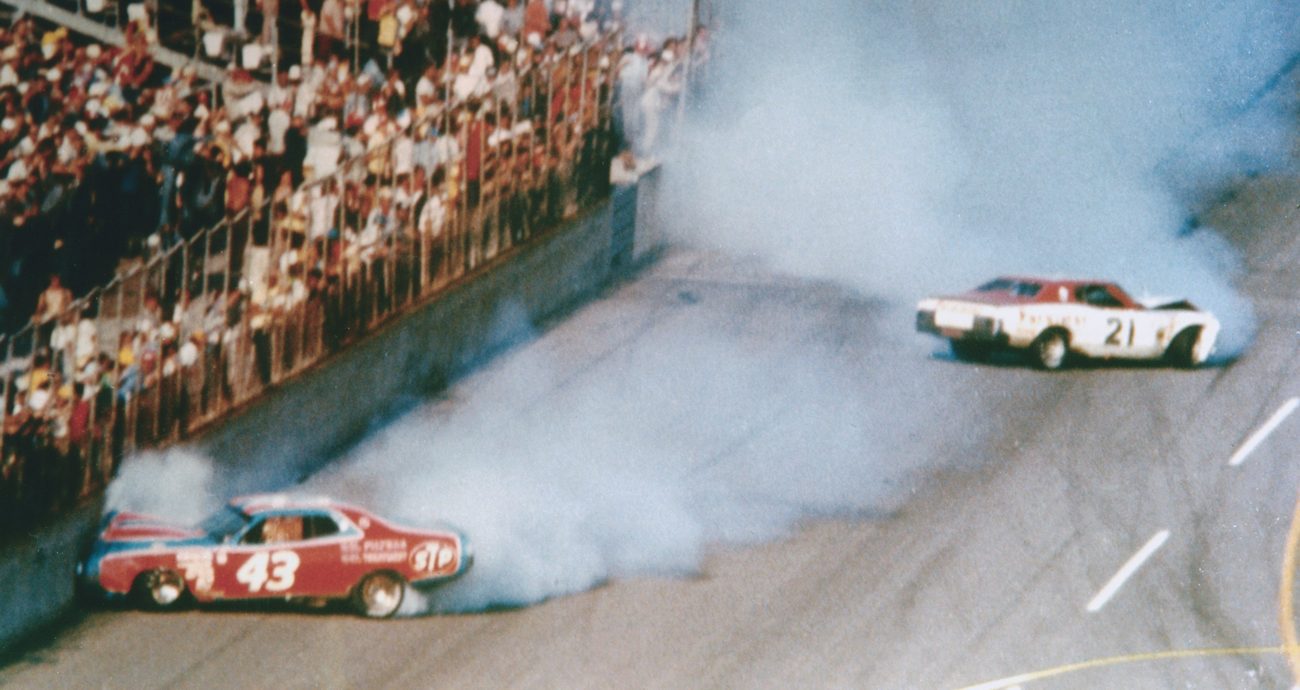
For Eddie Wood, team CEO and the oldest son of late patriarch and WBR co-founder Glen Wood, his personal favorite among a vast collection of 102 Victory Lane moments is among the most famous. It’s the celebration of David Pearson’s classic victory over Richard Petty in the 1976 Daytona 500 after the two legends crashed on the last lap in the signature moment of NASCAR’s greatest rivalry.
“David and I had some of the coolest conversations on the radio you ever would hear,” Eddie Wood said with a laugh. “I remember ’76 just as it happened because the really cool thing that showed was the Steve McQueen and Clint Eastwood swagger that David Pearson had. That conversation during the entire last lap, he was talking to me just like he was one of the radio announcers calling the race. That’s my big moment.”
NASCAR CLASSICS: Watch 1976 Daytona 500
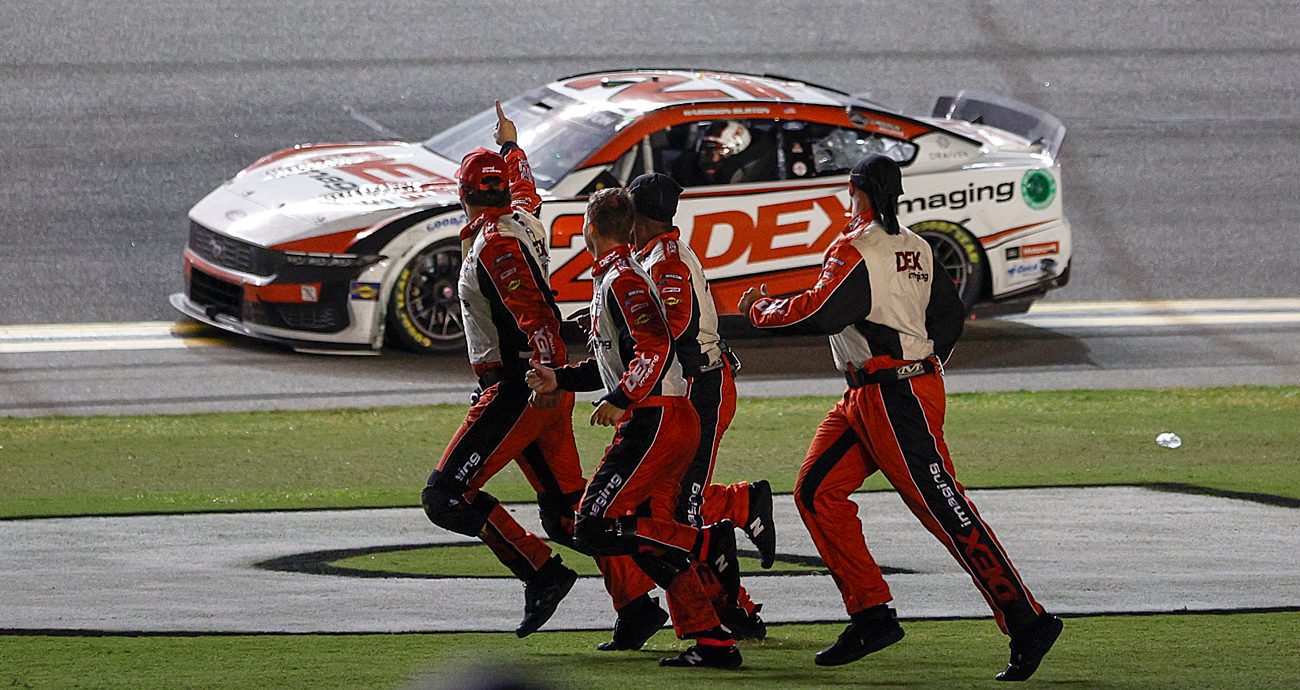
For Len Wood, Eddie’s younger brother and the COO of WBR, his cherished image is recent: A series of photos from Harrison Burton’s victory at Daytona International Speedway last August that signified the oldest team in NASCAR still was fighting to recapture its 20th-century heyday.
“Quite a special picture,” Len said.
NASCAR CLASSICS: Watch Burton’s win
Pearson, three-time Cup champion Cale Yarborough, versatile global superstar Dan Gurney and four-time Indy 500 winner A.J. Foyt are on the roster of winners who built Wood Brothers Racing into a Ford powerhouse with an extraordinary pedigree during the first half of its existence.
But the second half of WBR’s history is a much different story of adapting through some very painful and occasionally humiliating hard times.
A team whose epic run of eight winning decades in NASCAR is as much about its survival as its enormous success.
“That’s a true statement,” Len Wood said. “If we look back, there could be probably 10 times a different decision could have been the end of it.”
There’s no talk of turning out the lights now at Wood Brothers Racing, which enters its hometown race weekend at Martinsville Speedway with a future that seems as bright as at any point since entering full-time Cup racing 40 years ago.
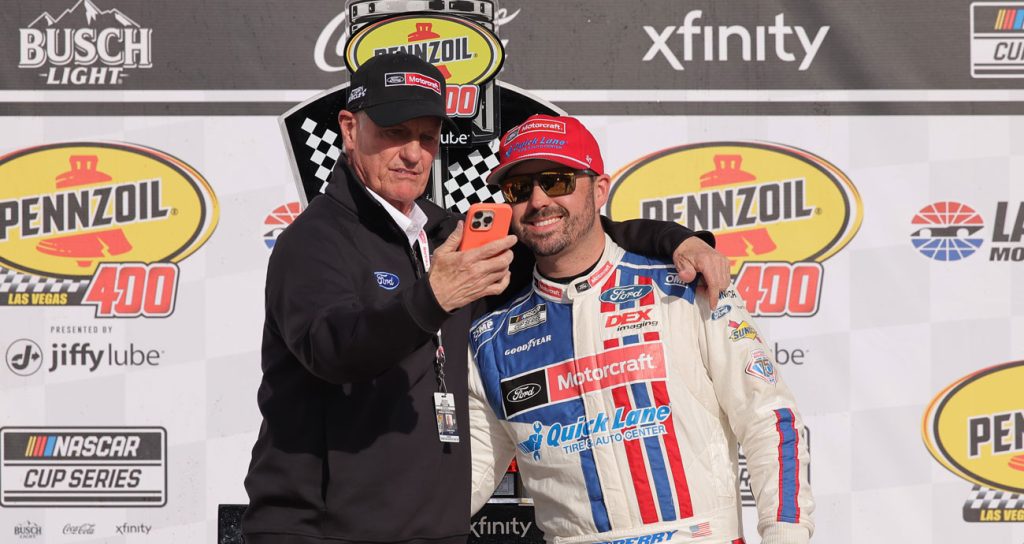
Josh Berry’s March 16 victory at Las Vegas Motor Speedway was the latest sign of a rebirth for NASCAR’s most storied organization. A week earlier, Berry had finished fourth at Phoenix Raceway — the team’s first top five ever at the 1-mile track.
With its Team Penske alliance and a reworked organizational structure and succession plan that has ushered in a third generation of leadership to secure its longevity, the family-run team is well poised to soldier on in its unconventional way.
Rather than measure by wins and championships, Jon Wood, Eddie’s son and the president of WBR, likes to view success in “longevity and how long you make it in this sport, and the mark that you make. I feel like (our) mark probably competes with or tops any other team’s relevance in NASCAR.
“We do things quite a bit differently than anybody. Every team has their own nuances, and with that there are pros and cons, but we do things quite a bit different. Some of it may not be the best, but if you add all of it together, I think what we do seems to work.”
Wood Brothers Racing was in only its seventh year the first time its extinction was staved off.
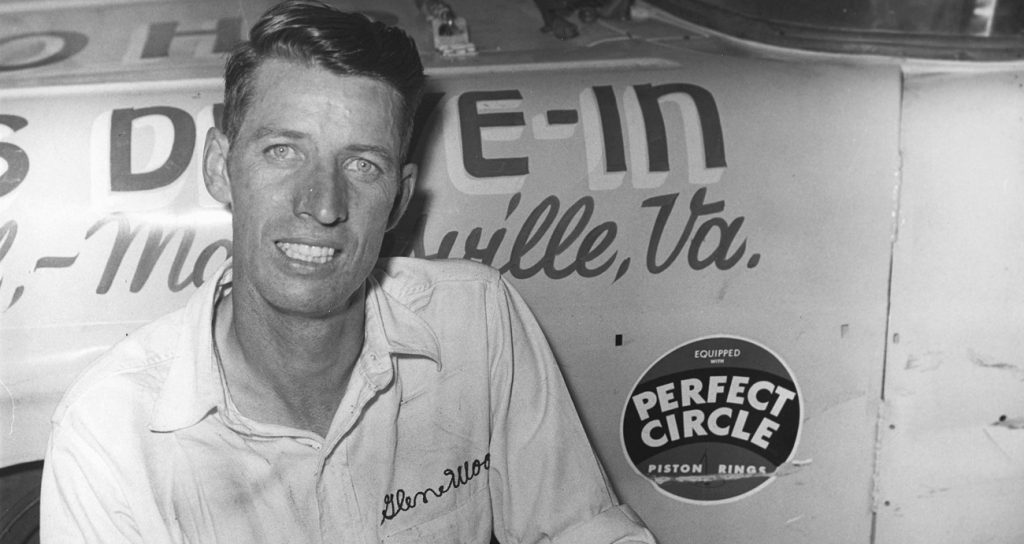
After a winless 1956 season, driver-owner Glen Wood had lost his Ford support but still managed to win at Champion Speedway in Fayetteville, North Carolina — earning a congratulatory call from 1925 Indy 500 winner Peter DePaolo.
“Daddy thanks him and says, ‘But I’m about done. I got a car for Richmond, but I don’t think I can make it,’ ” Len Wood said. “DePaolo said, ‘What do you need?’ They rolled Daddy out a set of six tires.”
Wood won the next Convertible race on April 7, 1957, at Richmond Fairgrounds and got “back on the deal” with Ford Motor Co.
There since have been many inflection points for the team, notably when Eddie and Len took charge of daily operations and secured full-season sponsorship to begin running full time with Kyle Petty in 1985. It was a major step for a team that excelled by cherry-picking (and winning) the biggest races.
“In that timeframe, one wrong decision, and I would have been working in a sawmill,” Len Wood said. “Daddy was a sawmiller who took up racing as a hobby. He could make a little bit more money in racing than sawmilling. It was more dangerous, but it was much easier. I would not want to work in a sawmill. I’ll take the life we had.”
Eddie and Len Wood have been at the helm for some of the team’s lowest points.
After a stretch with two wins in 10 years, the team relocated its racing operations from Stuart to the Charlotte area in 2003 but was met with diminishing results amid a lack of engineering depth.
The nadir came after failing to qualify for the 2008 Coca-Cola 600. At a Pocono Raceway test a few days later, Eddie Wood took a call from Edsel Ford seeking a phone number but also wondering why he never heard from the team. After Eddie said he was “ashamed” to call the Ford scion because of the team’s struggles, Edsel Ford immediately set up a meeting at the company’s Dearborn, Michigan, headquarters with new Ford Motor Co. executive Jim Farley.
Leaving the Pocono garage in T-shirts and jeans, Eddie and Len Wood flew directly from Wilkes-Barre, Pennsylvania, to Detroit, but they had time to get new clothes at a mall when Farley was called away on business.
Farley, now the CEO of Ford, put a plan in place two days later to nurse Wood Brothers Racing back to health while staying on a part-time schedule. Two and half years later, in his second career start, Trevor Bayne won the 2011 Daytona 500 in the No. 21 the day after he turned 20.
“That was a kid who didn’t know what he couldn’t do,” Len said. “A fairytale story.”
MORE: All of WBR wins by driver
Said Eddie Wood: “We went from almost being out of business because we couldn’t make races, to winning the biggest race of the year in a matter of three years.”
A return to full-time racing came in 2016, two years after Team Penske began supplying engineering and technical support. As Len explains it, the “worker side” of the car’s final preparation still involves longtime Wood Brothers Racing employees.
“Penske has been firm from the beginning that they need to keep their DNA and their identity, and we need to keep ours,” Jon said. “We’ve maintained our way of doing things, and ours is a little bit more edgy at times. Theirs is more cleaned up and proper, but it’s a good relationship, and it seems to work. It’s mutually beneficial, and it’s helped us tremendously. But they are Team Penske, and we’re Wood Brothers, and there’s a difference, and that will never change.”
The “edginess” that Jon references is evident in the Wood Brothers Racing social media accounts where he often serves as a de-facto admin who revels in irreverence (check out the posts after Berry’s victory).
Jon also is the team’s president since taking over day-to-day operations from his father nearly a year ago in a generational passing of the baton. His sister, Jordan Wood Hicks, also became the chief marketing officer, and his first cousin Keven (Len’s son) was named executive vice president.
The transition began five years ago as Eddie and Len realized they were too “low tech” to adapt in the new world.
“We’ve got Jon, Keven and Jordan on the high-tech side,” Len said. “When the pandemic hit and all these Zoom calls started happening, Eddie and I are not particularly fond of that or sitting around listening and talking about die-cast cars or T-shirts or team president meetings for two hours or whatever. So Jon was doing all that.”
Eddie still handles sponsors. Len organizes the budget with Penske and helps oversee the operations in Stuart (where 90-year-old team co-founder Leonard Wood still works on engines and carburetors with several machinists). Their sister, Kim Wood Hall, keeps the team’s books as chief financial officer.
“When they say the prayer, sing the anthem and fire those things off, it’s still racing and as good now as it was back then to me,” Eddie said. “But everything else is different. So now Jon and Jordan and Keven are kind of leading the thing. They understand the technology landscape. If I had to deal with social media back in my day, I don’t know if I’d have made it.”
Jon Wood stresses he still wants to maintain the “vision” of Eddie and Len and keep pace with modern-day NASCAR without making fundamental changes to WBR.
And what is that vision?
“If you come to a hard spot in a decision, it’s ‘Well, what’s the right thing to do?’ and you do that, and it usually works out,” Eddie said. “That’s kind of the way we raced.”
It’s often antithetical to how someone with an MBA would run a company. Built on a foundation of handshake deals and implicit trust, Wood Brothers Racing has remained operational for 75 years without a delineated business plan. Jon has struggled with reconciling decisions made by his father and uncle that seem unsound in the short term but work out over time.
“I always would make fun of them and say that their CPA worked for the IRS because it seemed like they paid more taxes than anybody,” Jon said. “But they would take the approach that there’s a fork in the road, and there’s two routes, either what benefits us or what’s the correct and the right thing to do, and they always do what’s the right thing, whether it benefits us or not. And in the end, it turns out is the right decision.”
One recent example would be the team’s decision last year to pull Burton’s winning car at Daytona from rotation so it could be displayed in race condition at the museum in Stuart with its original engine, interior and Victory Lane confetti still on the hood.
Beyond the logistical hurdles of rearranging inventory timelines and ordering new parts and pieces from a few dozen suppliers, there also was the unbudgeted expense of buying an entirely new car for its fleet.
“That’s the right thing to do,” Len said. “If we took a shortcut or put in another seat or another transaxle, then it wouldn’t be the car.”
Jon said “authenticity” is the simplest way to explain the ethos of Eddie and Len.
“They take it a step further that not only are they friends with Jim Farley, but they know what sport Jim Farley’s kids are into,” Jon said. “They actually care, and that’s the difference. They’re genuine people.
“You can’t just keep doing exactly the same things. But you still have to stay true to what your fundamentals are and the way this team was founded and run for 75 years. And the way they’ve done things is primarily built on relationships and treating people right. We don’t have flowers and a really pretty interactive display behind our hauler and all this other crap that a lot of these teams have shifted to that is fluff and puff. But that also doesn’t make you who you are as a race team, and that part for us will never change.”
Case in point: Jon and Eddie Wood interrupted a family vacation to the Hoover Dam to conduct the phone interview for this story from a minivan that was parked on a dirt road 10 feet from the edge of Lake Mead under gathering storm clouds.
“I’m worried it’s going to rain so much; we’re not going be able to make it back because, again, we’re in a minivan,” Jon said with a laugh. “But that’s how we do things.”
Things worked out as they always do. Three days later, Berry scored his stunning victory at Las Vegas that locked Wood Brothers Racing into the playoffs for the fourth time and earlier than ever before.
That’s encouraging for a business that already is overperforming expectations by just continuing to race. Out of curiosity, Jon Wood recently Googled how many Fortune 500 companies had been on every list since 1955. The answer was less than 50.
“And only one Cup team from 1950 is still around today,” he said. “You don’t just do that by being lucky. There have been a lot of opportunities that we probably should have gone out of business and didn’t, and it was just total luck, but there’s been more where things happened because the right decision was made. That’s how you keep it going.”
Nate Ryan has written about NASCAR since 1996 while working at the San Bernardino Sun, Richmond Times-Dispatch, USA TODAY and for the past 10 years at NBC Sports Digital. He is a contributor to the “Hauler Talk” show on the NASCAR Podcast Network. He also has covered various other motorsports, including the IndyCar and IMSA series.