A history of NASCAR in California
1 of 19
Sarah Crabill | Getty Images
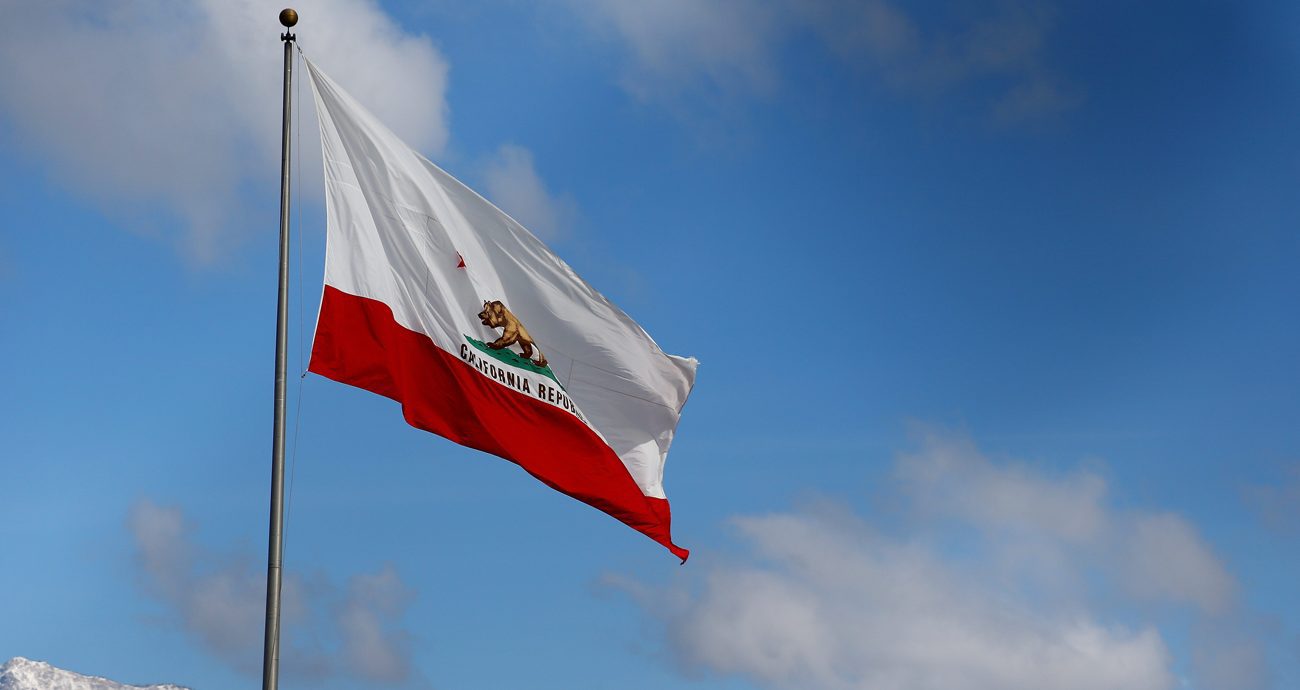
NASCAR's connection to California is a rich history with roots that run deep, far from its origins in the American South. A new chapter will debut in the 2026 NASCAR season with the addition of a tripleheader race weekend at Naval Base Coronado. Take an inside look at the people and places that have helped to shape the Golden State's stock-car heritage.
2 of 19
NASCAR Research & Archives Center | Getty Images
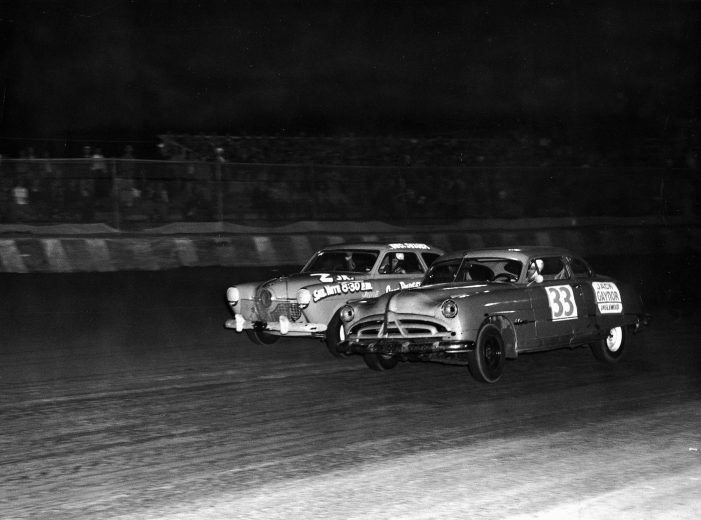
NASCAR's first premier series race in California was held April 8, 1951 at Carrell Speedway in Gardena, just south of Los Angeles. Marshall Teague was the winner in the first of three Cup Series dates that season at the half-mile dirt track. Here, Lou Figaro's No. 33 Hudson gets the better of George Seeger's Studebaker on his way to victory there in June.
3 of 19
NASCAR Research & Archives Center | Getty Images
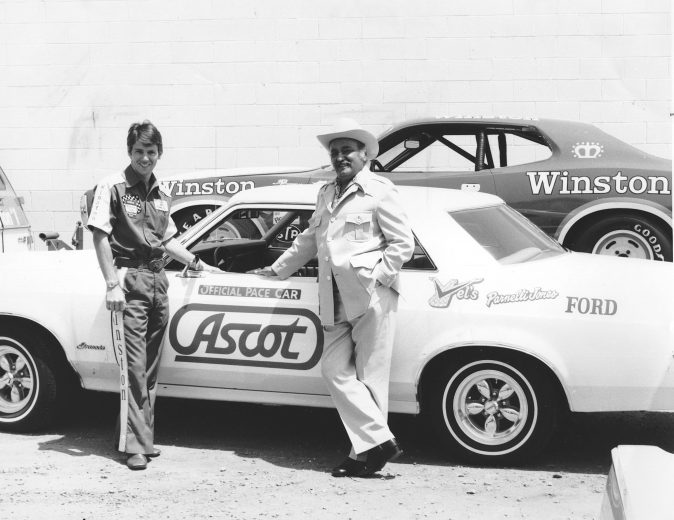
The Cup Series made its first visit to 11 other California tracks during the 1950s, when stock-car racing's reach began to expand. Among the most historic venues was Ascot Park, a half-mile dirt oval led by top promoter J.C. Agajanian. The Cup Series made just three stops there, but racing in what's now known as the ARCA Menards Series West continued at Ascot until 1979.
4 of 19
NASCAR Research & Archives Center | Getty Images
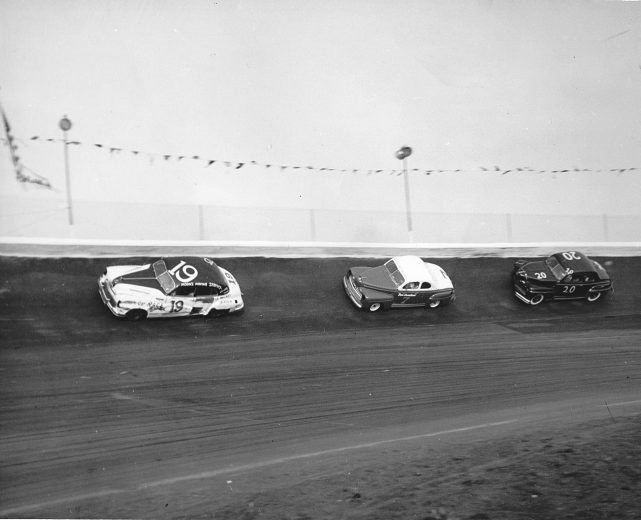
The Bay Area also welcomed big-league stock-car racing in 1951 with a trio of races at Oakland Stadium, a half-mile track with banking that some measured as steep as 62 degrees. In order, Joe Gemsa leads Bob Sweikert and a young Hershel McGriff -- a future NASCAR Hall of Famer.
5 of 19
NASCAR Research & Archives Center | Getty Images
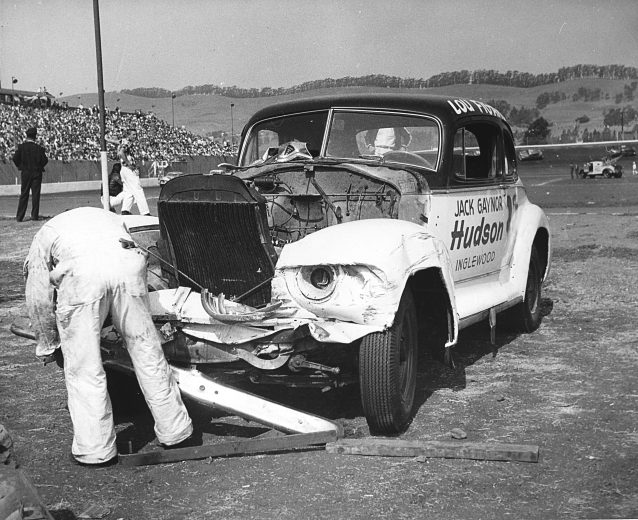
The super-steep banking and narrow groove took its toll on many a racer, with Lou Figaro's Hudson sustaining damage after one such early 1950s crack-up.
6 of 19
NASCAR Research & Archives Center | Getty Images
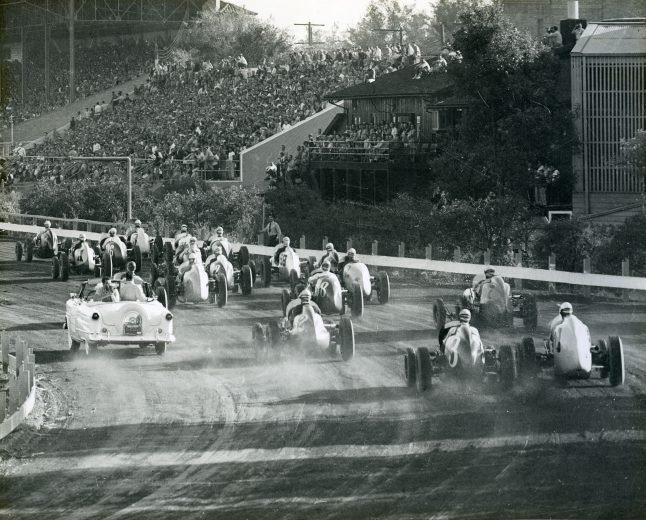
The state capital was also a Cup Series host, with six events taking place at the California State Fairgrounds in Sacramento. Here, the field scrambles in an early IndyCar race on the dusty 1-mile circuit. The Santa Clara County Fairgrounds in San Jose, Willow Springs Speedway in Lancaster, Bay Meadows Speedway in San Mateo and Hanford Motor Speedway were also on the list of pioneering tracks in NASCAR's growth to the West.
7 of 19
Michael Zagaris | Getty Images
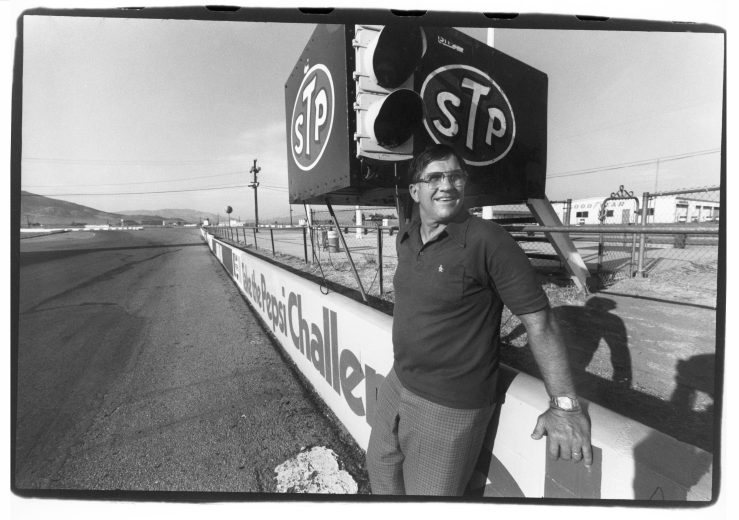
The longest-running track to join the NASCAR schedule in those early days was the winding road course at Riverside International Speedway. Among its biggest proponents was Les Richter, an NFL Hall of Famer who later became a NASCAR executive and the Riverside track president after his football days. Richter -- a Fresno, California native -- was crucial to establishing NASCAR's foothold on the West Coast.
8 of 19
NASCAR Research & Archives Center | Getty Images
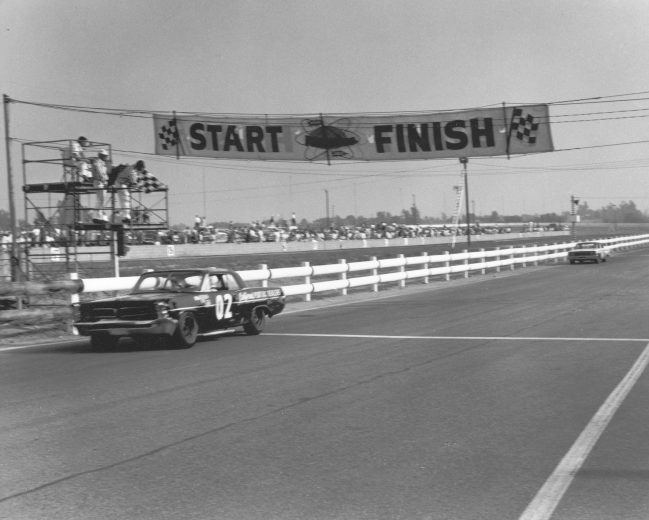
NASCAR ran 48 Cup Series races -- the most of any California track -- at Riverside from 1958-88. Among the facility's earliest winners was a young Roger Penske, who claimed a regional-series win in a Pontiac in 1963 before becoming one of the most successful businessmen and team owners in motorsports history.
9 of 19
NASCAR Research & Archives Center | Getty Images
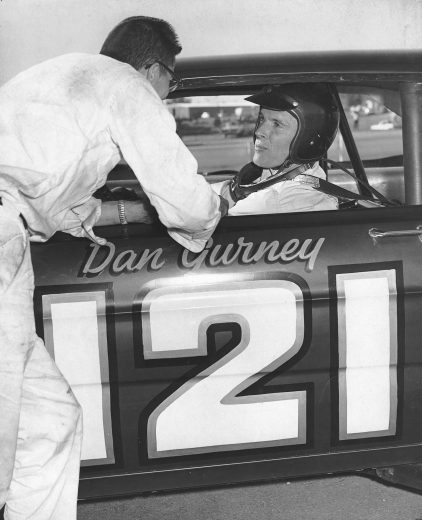
Road-racing ace Dan Gurney -- who hailed from Costa Mesa, California -- was an early dominator in NASCAR's earliest visits to Riverside. He scored five wins at the 2.62-mile circuit -- four while paired with the Wood Brothers Racing team and one with the Holman-Moody operation.
10 of 19
NASCAR Research & Archives Center | Getty Images
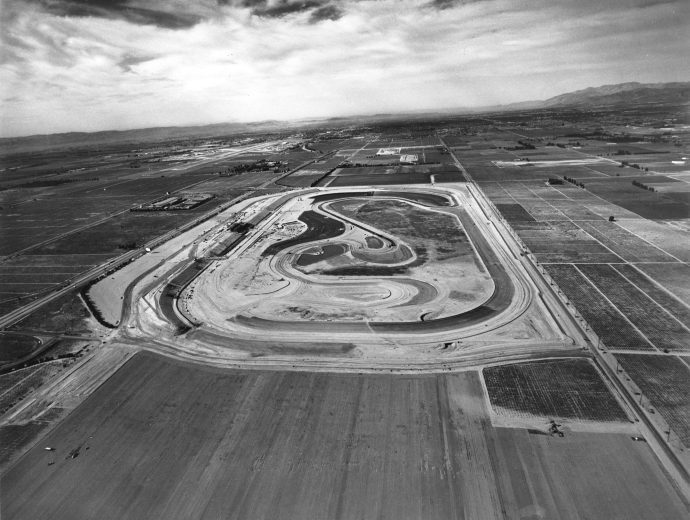
Southern California welcomed a new oval-track companion in the 1970s with the construction of Ontario Motor Speedway, touted as the "Indianapolis of The West" for its similar layout and 2.5-mile length. Nine Cup Series races were held there, and A.J. Foyt was the first winner in 1971.
11 of 19
NASCAR Research & Archives Center | Getty Images
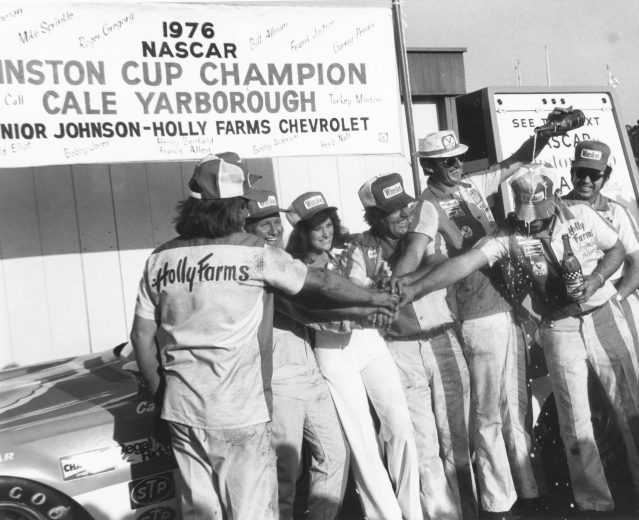
The Ontario track became the site of the Cup Series' season finale from 1974-1980, hosting several championship celebrations through the years. Cale Yarborough and his No. 11 crew are seen savoring the Hall of Famer's first Cup title in 1976. Ontario was also where Dale Earnhardt was crowned Cup Series champ for the first of seven times in 1980.
12 of 19
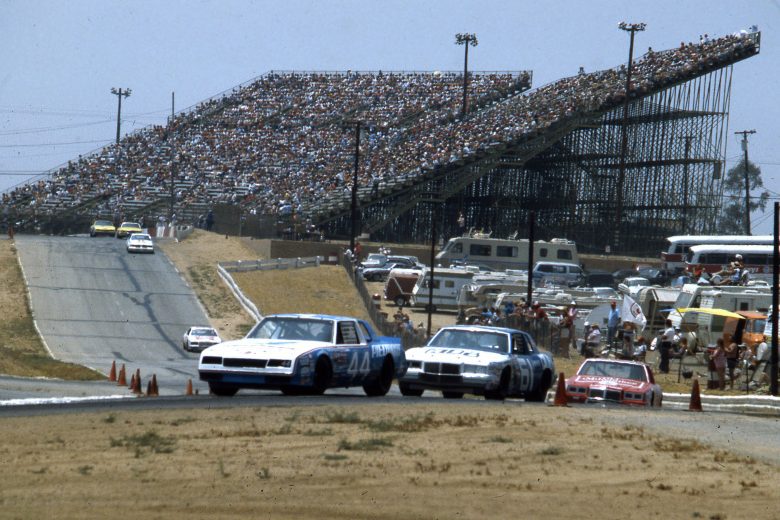
NASCAR Research & Archives Center | Getty Images
Riverside took the season-finale duties from its SoCal neighbor in 1981. Terry Labonte secured the first of his two Cup Series titles there in 1984.
13 of 19
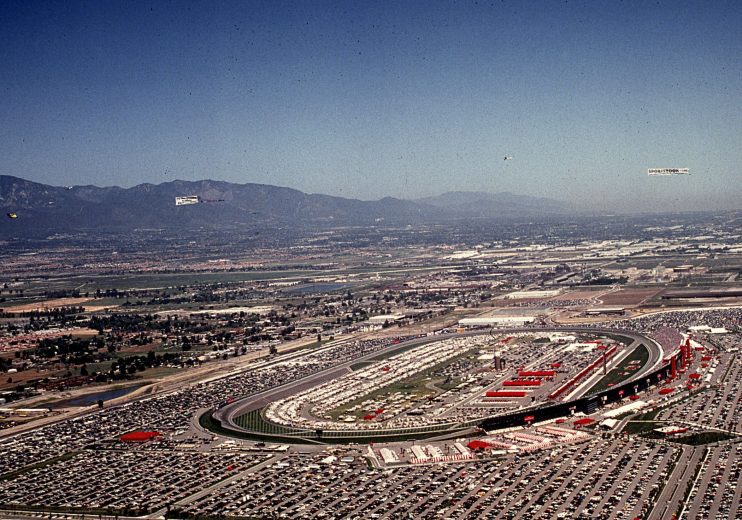
NASCAR Research & Archives Center | Getty Images
After Ontario and Riverside shuttered in the 1980s, a new oval in the vicinity began to take shape. The 2-mile California Speedway (later called Auto Club Speedway) grew to host 33 Cup Series events in Fontana, part of San Bernardino County.
14 of 19
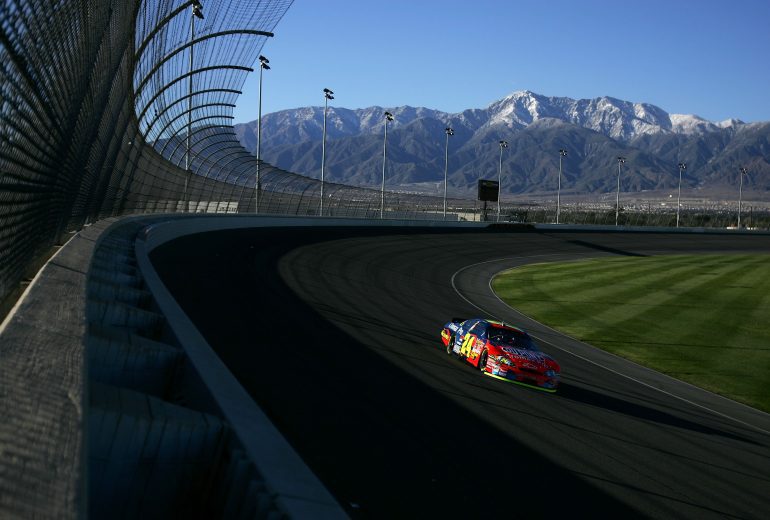
Donald Miralle | Getty Images
NASCAR Hall of Famer Jeff Gordon notched three of his 93 Cup Series wins at Auto Club in the shadow of the San Gabriel Mountains. Gordon has claims to Indiana roots, but his birthplace marks him as a California native from Vallejo.
15 of 19
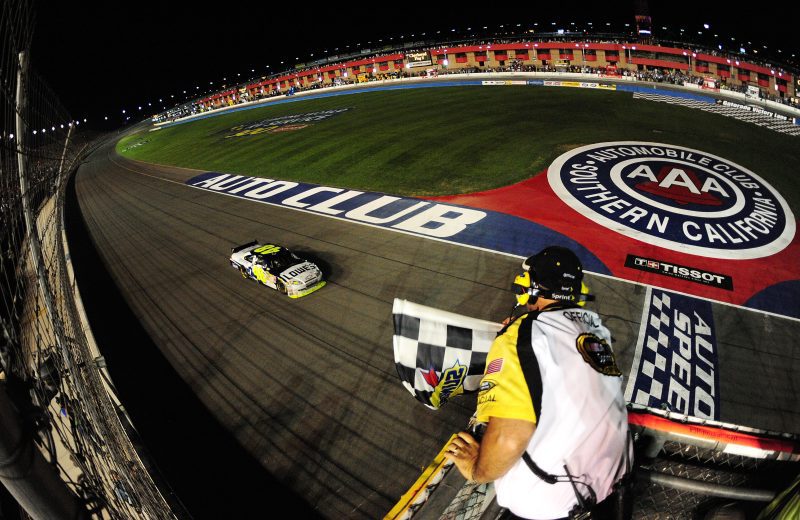
Robert Laberge | Getty Images
Another California native with strong ties to the Auto Club track is seven-time Cup champ Jimmie Johnson. The El Cajon hometowner won in Fontana six times, including his Cup Series breakthrough.
16 of 19
Jerry Markland | Getty Images
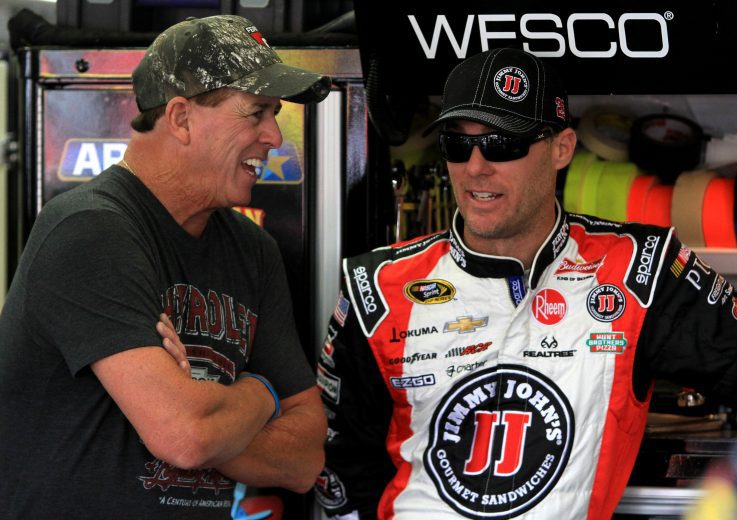
Two more California natives -- one a NASCAR Hall of Famer and the other a shoo-in for enshrinement -- have a strong connection as part of stock-car racing's elite. Ron Hornaday Jr., left, is a four-time champion from the Craftsman Truck Series. Two of those titles came with Kevin Harvick -- a 60-time Cup winner -- as his team owner. Harvick hails from Bakersfield, and Hornaday's hometown is Palmdale.
17 of 19
Robert Laberge | Getty Images
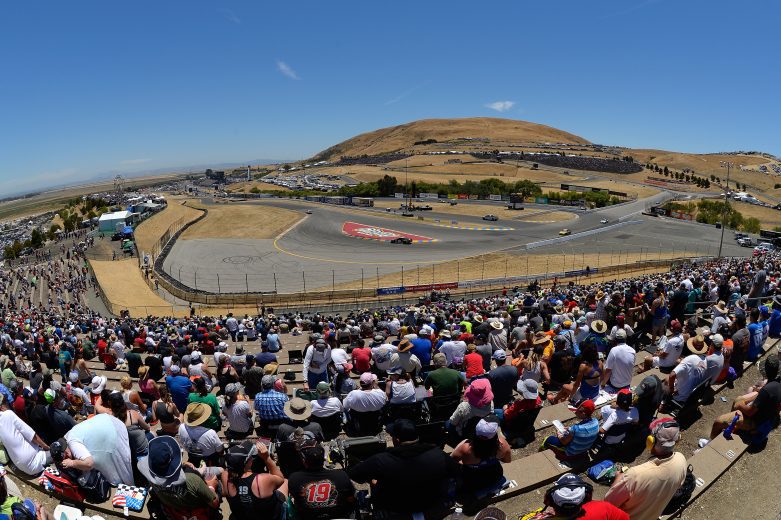
During NASCAR's hiatus from Southern California, a twisting road course in the northern part of the state picked up the slack. Sonoma Raceway -- previously known as Sears Point Raceway -- joined the Cup Series rotation in 1989, and Ricky Rudd won the first Cup race there.
18 of 19
Meg Oliphant | Getty Images
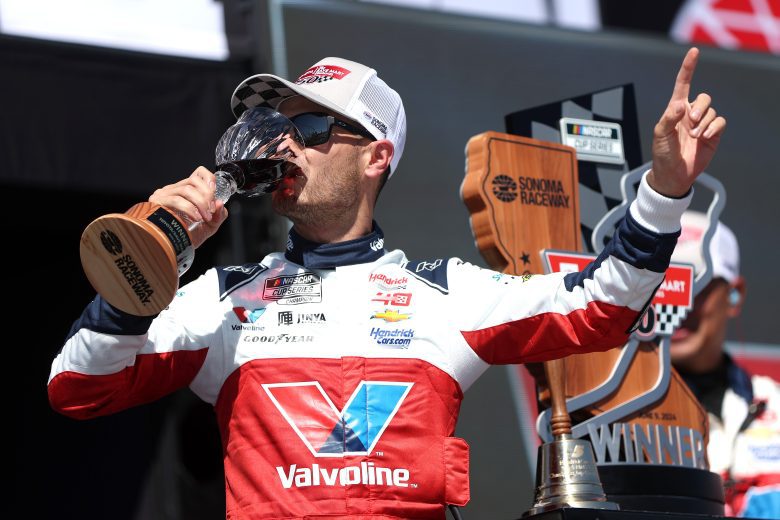
Sonoma is still a mainstay on the Cup Series circuit, as is Elk Grove, California, native Kyle Larson, who has tasted victory on the road course twice. Larson's first triumph there was part of a 10-win season that led to his first Cup Series championship in 2021.
19 of 19
James Gilbert | Getty Images
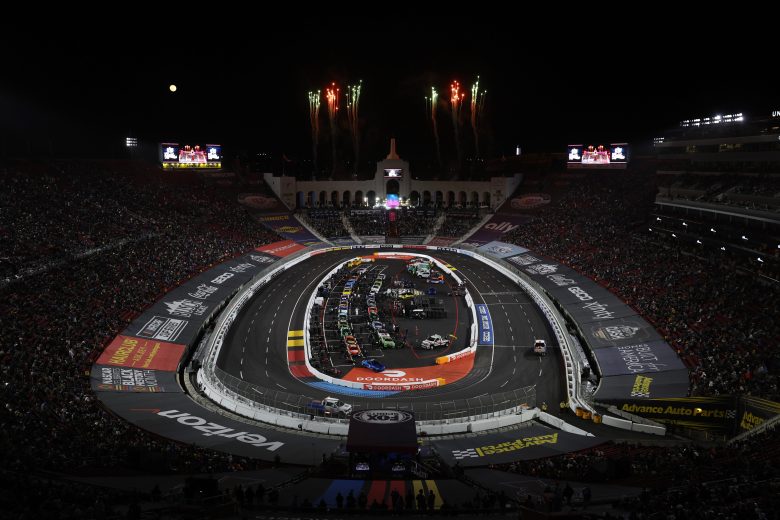
NASCAR took a seismic shift with its schedule in 2022, bringing the annual Clash exhibition to the Los Angeles Memorial Coliseum. The historic venue had a three-year run as Clash host, with Joey Logano, Martin Truex Jr. and Denny Hamlin winning on the temporary quarter-mile track.