PORTAGE, Mich. — Carson Hocevar lives like he drives — wide open, unapologetically, unconventionally. He stays up all night playing video games, races like a single missed opportunity counts as abject failure and says what’s on his mind, consequences be damned.
The man dubbed the “Hurricane” charms fans and sponsors, annoys competitors and relishes both. If you like it, great. If not, maybe even better because the sport needs a villain, or at least someone to talk about.
None of this is an accident. Hocevar watches old races to study drivers’ techniques, and he also absorbs how they talk, what they say in interviews, what attracts fans and what repels them.
RELATED: Hocevar earns first Cup win in Talladega thriller
And he has applied what he has learned. He sounds like a young Carl Edwards when he says he wants to live life to the fullest and doesn’t want to be friends with other drivers. He looks like a young Kyle Busch when he tries to lead every lap. Even his victory celebration on Sunday was a mimic of Dale Earnhardt Jr. after he won the 2014 Daytona 500 (albeit Hocevar turned it up to 11).
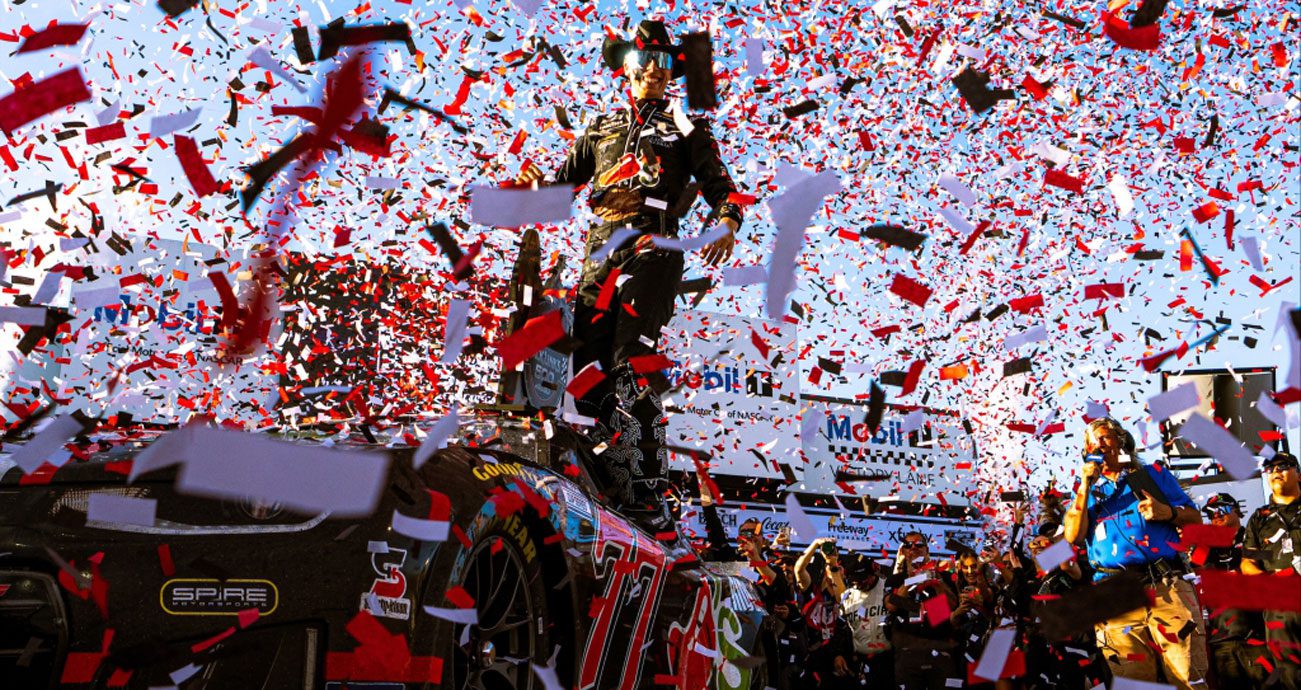
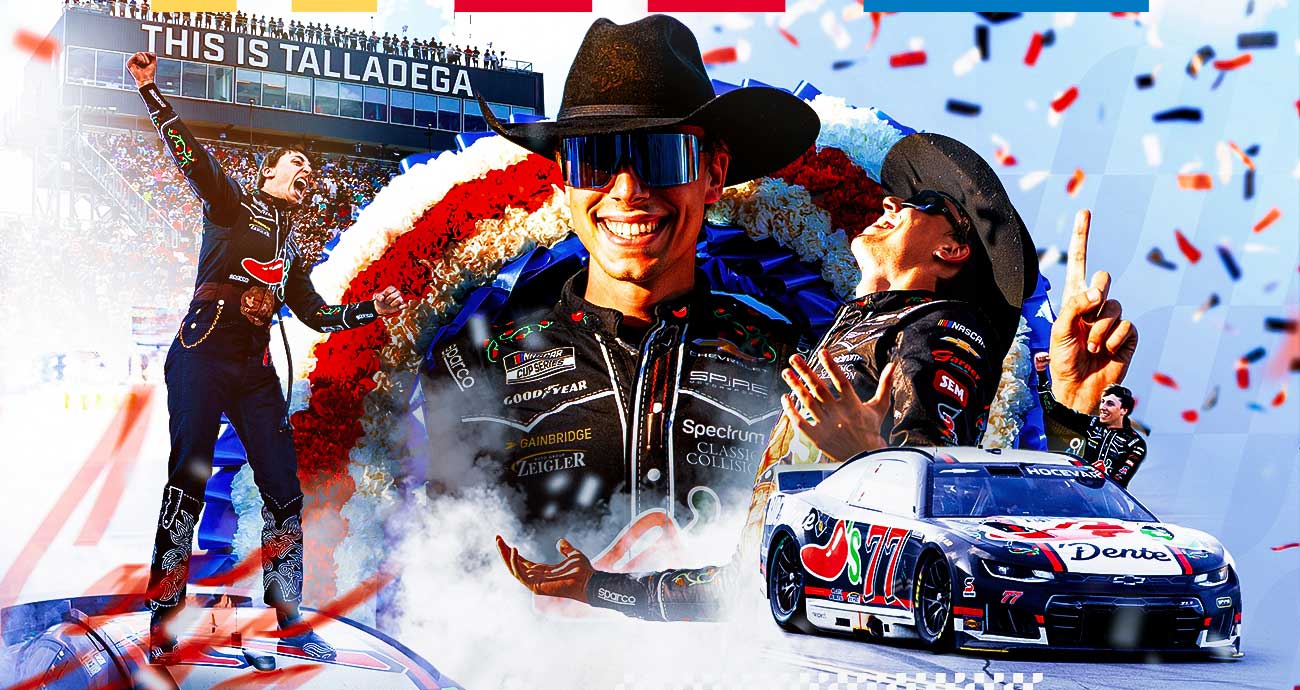
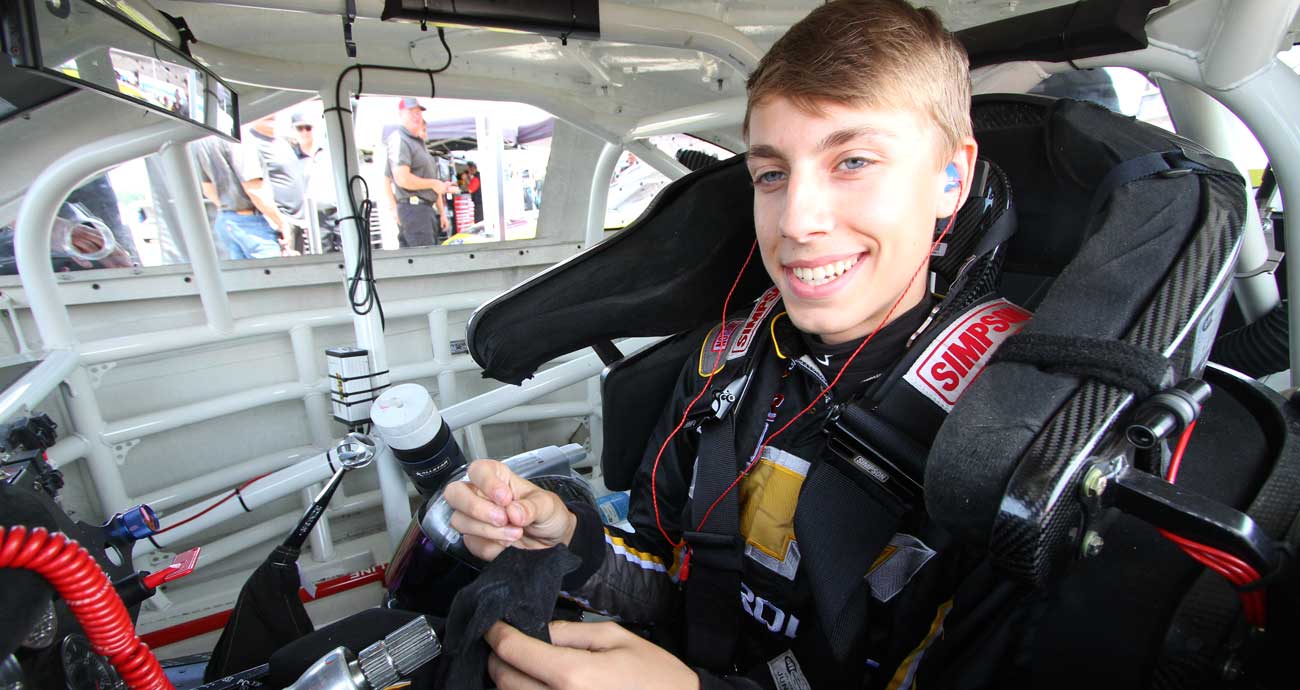
With a toothy grin, aggressive style and surgical car control, he has been on the verge of superstardom for months, maybe even years. So when he squeezed himself out of his No. 77 Spire Chevy window after taking the checkered flag at Talladega Superspeedway on Sunday and drove down the frontstretch facing the fans so he could see them and they could see him, it lit not just NASCAR but the sports world like a flash of lightning.
And in the “Hurricane’s” wake, the sports world seemed to be asking: Where did THAT come from?
To answer that question, NASCAR.com spent a few days in the West Michigan places that shaped him.
The place: Scott’s Sports Cards, Coins & Jewelry
The story: The origins of his racing obsession
Hocevar’s parents, Scott and Amy, own Scott’s Sports Cards, Coins & Jewelry, which they describe as “the leading buyer of estate jewelry in Portage, Michigan, as well as the area’s best choice for coins, sports cards and memorabilia.”
The store sits near a pub, an auto parts store and a wings place on a busy street in Portage, a city of 50,000 in southwestern Michigan, roughly halfway between Chicago and Detroit. Inside the store on Wednesday afternoon, a coin expert discussed the rising value of silver coins, a card expert flipped through a customer’s collection looking for unique items, and a jewelry expert appraised items brought in in a sandwich bag.
The store has Carson memorabilia, but you have to ask, or you’d (probably) miss it. His shirts are folded on shelves, and his trading cards sit under glass, across from Wrigley Field seats and next to a collection of Derek Jeter items.
Scott and Amy had been told they couldn’t have children and were married for 11 years before he was born. The store was thriving, and his arrival corresponded with a boom in the gold market. They worked long hours and brought him along. He napped, he played, he stoked dreams of racing glory.
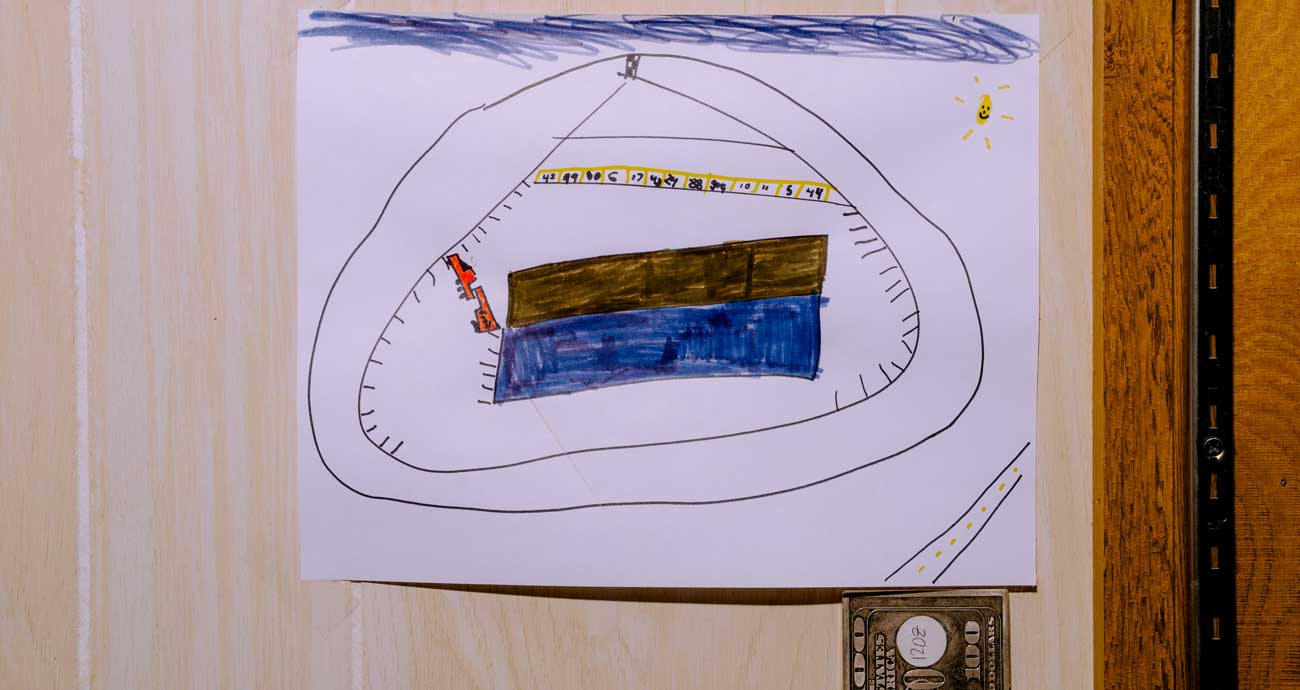
The wall inside a back office was once covered with his racing-related artwork. Tornado damage prompted the removal of most of the “Hurricane’s” drawings. Only two items remain. One is a photo of him at age 7 in a quarter midget. The other is a drawing of a race track. A smiley face sun hovers over Turn 4. A red hauler heads to the Turn 1 tunnel. Based on the shape and what appears to be a lake in the infield, it looks to be Daytona International Speedway.
MORE: Hocevar launches first-win celebration to remember
A stickler for detail, Carson wanted his toy race tracks to be just like the real thing, and when he ran pretend races, he insisted his toy cars represent the real ones he imagined them to be. “If you don’t have the right number or the right sponsor, that’s not the real race for him,” Amy says.
Even now, 20 years into his racing obsession, his parents only know that he’s racing crazy; they can’t really explain what prompted it. They were not race fans until he was. If anything, their background suggests he’d be a baseball nut.
When Carson was born, his parents were co-owners of a baseball team in the independent Frontier League. His dad has known Hall of Famer Derek Jeter, who grew up in nearby Kalamazoo, for many years and is on the board of his foundation. When Carson was 3, Scott and Amy took him to a suite in Detroit’s Comerica Park for the 2006 World Series. He used a table to play with his toy cars and didn’t care about what was happening on the field. “After a couple games, the caterers realized they should not put anything on that table,” Amy says.
None of that stuck. He only ever cared about racing — so much so that when Carson got in trouble, Amy says, the only effective way to punish him was to take away his cars.
In their absence, he asked if he could play with dominoes.
Because they had numbers on them.
The place: Little Kalamazoo Speedway
The story: If you build it, he will race
Every story about a driver who reaches NASCAR’s top level is also a story about his parents’ sacrifice. In most cases, the dad shoulders the work. In Carson’s case, it was his mom, except for the very beginning.
For the first year of Carson’s racing “career,” Scott was in charge because Amy was busy managing the store’s Beanie Babies craze. Just as her son knew every car number, every sponsor, every driver and demanded authenticity when he recreated the races, she knew every Beanie Babies release, every special one and every fake. Hot items drew big dollars — the most she paid for one was $13,000 — and they demanded her time.
Then the Beanie Babies craze ended, and her racing craze began.
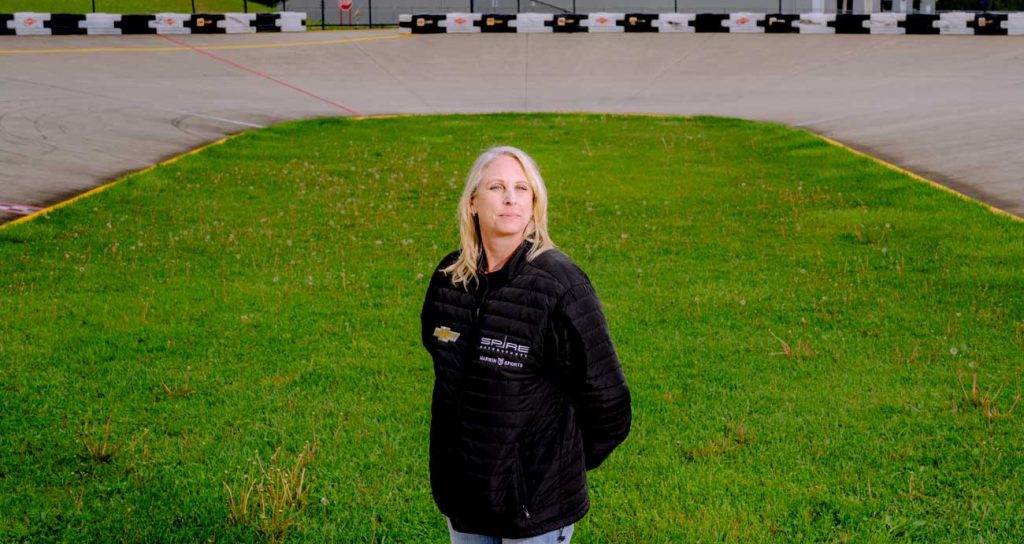
In 2009 and 2010, Amy shuttled Carson nearly three hours round-trip to a track in Lansing so he could practice his quarter midget. At the same time, the store owned a suite at Kalamazoo Speedway, a few miles from their home. Amy looked out over Turn 3, saw unused property, got to talking with track officials, and soon they hatched a plan for Amy to build Little Kalamazoo Speedway.
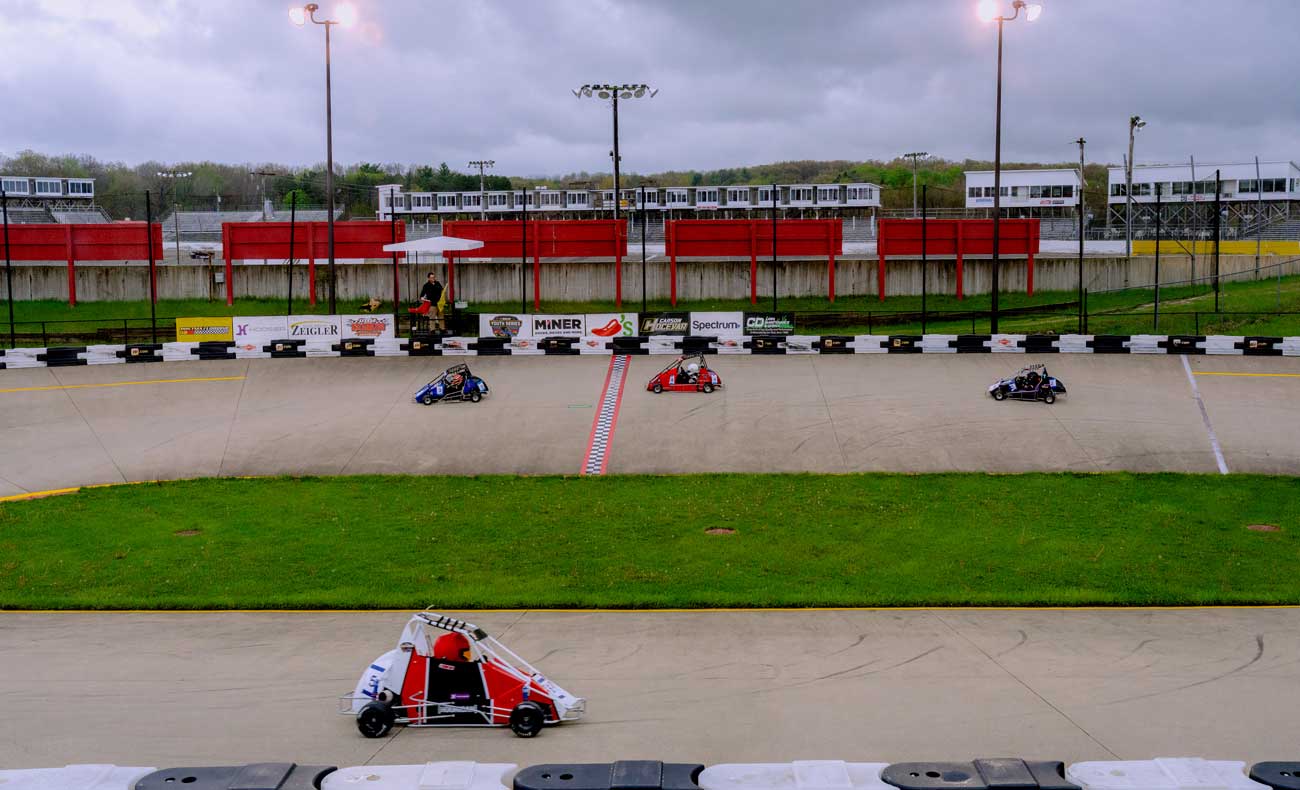
It’s concrete, banked, 1/20th of a mile, and shaped like a paper clip, with a grass strip in the middle and plastic barriers ringing the outside. It almost looks like a boy drew Martinsville, gave that to a construction crew, and they used that as a blueprint.
There is no track, nor will there ever be, where Carson has turned more laps. It opened in 2011, when he was 8, and he visited almost daily, driving hundreds of laps each time.
SHOP: Carson Hocevar gear
His career launched from there. In quarter midgets, he won 15 national championships and 79 national races. While Scott ran the store, Amy booked travel for 40-plus weekends a year and accompanied Carson to all of them. And she fought and beat breast cancer, too.
The more Carson raced, the deeper his passion became. He repeatedly watched DVDs of races and in-car cameras of tracks where he planned to compete. He knew how to get around tracks before he got to them.
Amy still owns Little Kalamazoo Speedway today, more than a decade after Carson outgrew it. It is home to the Little Kalamazoo Quarter Midget Club. For $150 a year, members can show up and have their kids drive whenever they want. Volunteers handle all jobs — race director, flag man, scorekeeper, etc. Carson sometimes helps out when he’s in town.
Amy arrived there on Wednesday evening to help with rookie practice. The children donned helmets that looked to weigh nearly as much as they did and fire suits not much bigger than onesies. With dads pushing them to get them started, they ran timid laps for a few minutes, hobbling around like toddlers learning to walk, before rain soaked the track.
The place: The Root Beer Stand
The story: Local boy made good
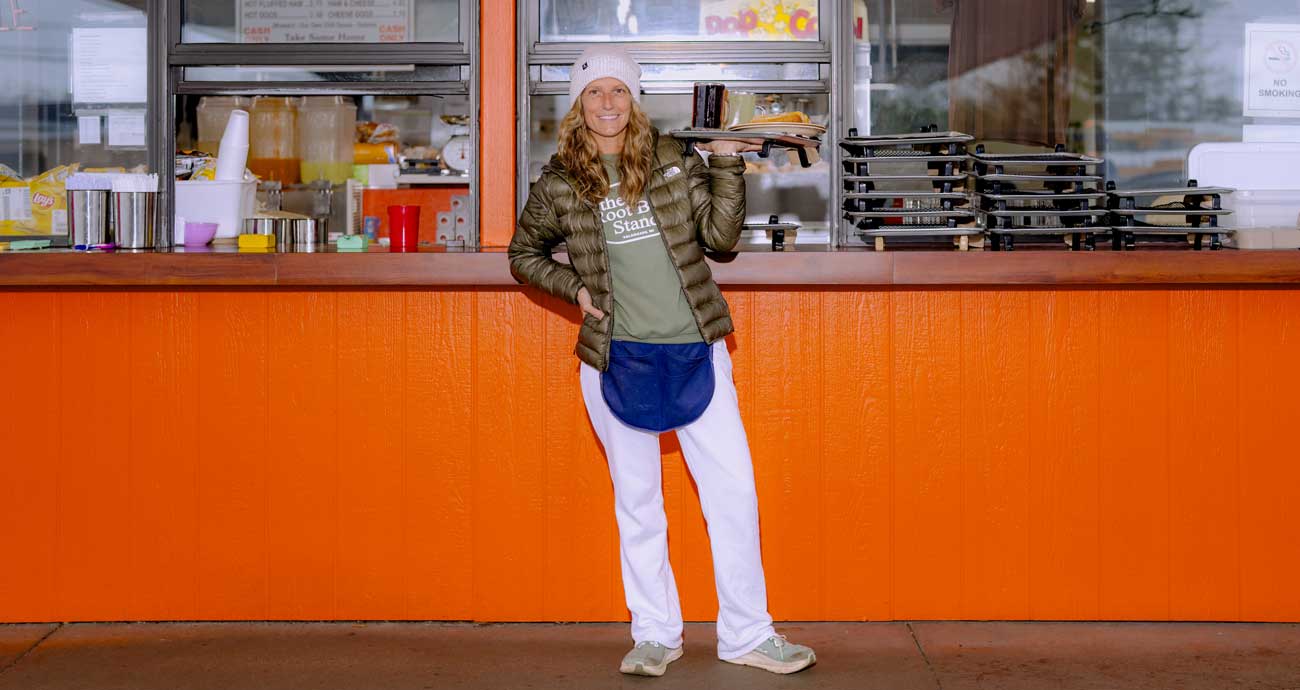
Two miles north of Scott’s, across from a Discount Tire and in between The Tangy Crab and St. Monica Catholic Church, sits The Root Beer Stand, a Portage lunch staple. Cash only, but there’s an ATM on site. The low-slung, bright orange brick building houses the kitchen, and the “dining room” is a parking lot under a canopy. Customers have parked there and devoured hot dogs and slurped root beer for 95 years.
Carson eats here whenever he is in town, often placing orders with Jennifer Feger, a wiry ball of energy in jeans and a wide grin.
Blond hair tumbled out of Feger’s gray winter hat on this chilly, rainy, nasty spring afternoon. Joyful enthusiasm tumbled out of her mouth as she bounced on sneakered feet from the counter to a car, took an order, bounced back to place that order at the counter, then carried it on a tray back to the car, bouncing less so this time as not to spill the root beer in the frosted mug.
Even after many years of doing this, interaction with The Root Beer Stand’s clientele still brings Feger great delight. She left to try the corporate life — it sucked by comparison — so she came back to jibber-jabber with every customer. This is how she met Carson and Scott. They always order hot dogs with cheese, chili, onions, ketchup and mustard, and a couple of ham and cheese sandwiches.
Feger doesn’t follow racing, but she knows Carson is a driver from chit-chatting with him. “Bro!” she has told him repeatedly, “One day, you’re going to be big.”
In response, she says, he flashes a smile and says, “Maybe one day,” and she half-jokes she half-wishes there weren’t a full couple of decades gap in their ages.
She knew he won the race on Sunday but had not heard about his unique celebration — driving down the frontstretch while sitting on the car’s door edge.
“Like a tray!” she said. “I love that.”
Now Feger hustled to take an order from Terry Derhammer, white hair, white handlebar mustache, white Tahoe. He knows Carson’s grandfather as they are members of the local Eagles club, and he knows Scott and Amy. If you live in Portage long enough, you know everybody. (And he has sold jewelry to Scott.) He knew Carson’s grandmother, too, and attended her memorial service last year. He was surprised to see all of Carson’s crew members there.
Derhammer is an old-school NASCAR fan who walked away from the sport after the death of Dale Earnhardt. He was in Daytona that fateful day, and things changed for him in the years after. He stopped watching. Then along came Carson, barreling through other drivers on his way to Victory Lane. A sly grin crossed Derhammer’s race-starved heart. He’s seen this film before, and he loves the ending.
Not only is Carson a local boy made good, but he’s also a local boy made good who drives with the aggression and attitude that evoke the sport’s glory days, the days Derhammer loves and misses and yearns to return to.
“He’s the next Dale Earnhardt,” he says as Feger drops off his hot dogs and popcorn.
The place: Berlin Raceway
The story (Part 1): Old-school veteran meets new-school driver
Berlin Raceway, a 7/16th of a mile track, sits between a green forest and the white stables of the county fairgrounds, just outside of Grand Rapids, an hour north of Portage. It doesn’t really have a frontstretch or a backstretch, or at least neither is long enough for a driver to ever straighten his wheel out.
On Tuesday afternoon, a light breeze whistled across the track. It was silent except for birds chirping, the distant hum of a highway … and the occasional elephantine roar of a solitary driver turning lonely practice laps.
If Little Kalamazoo Speedway is where Carson’s dream of becoming a NASCAR Cup Series winner was born, and Talladega was where that dream came true, Berlin Raceway is where that dream stopped seeming far-fetched.
When Carson was 11, his dad called Johnny Benson Jr., the 1995 NASCAR O’Reilly Auto Parts Series champion, 2008 NASCAR Craftsman Trucks Series champion and legend in Michigan racing. They knew each other because Scott’s had sponsored Benson’s car for races in Michigan.
Scott wanted to buy Benson’s race car for Carson. Instead, after watching Carson test at Hickory Motor Speedway near Charlotte and being impressed with his car control, Benson offered to coach Carson. In his first race under Benson, though Carson qualified well, Benson forced him to start in the back. Benson’s father had done the same thing with him decades before, during his upbringing in nearby Grand Rapids. He wanted Carson to see the race unfold before he was in the middle of it. The car was fast, but Carson didn’t know how to race it yet. “You can see how they’re running, you can see how they’re attacking the race,” Benson says.
Benson’s lessons were as much about managing the car and expectations as they were about driving. His advice was blunt: “Don’t cause your own wrecks. You knock the nose off this car, pal, we’re going to have a problem.”
They never had one.
The place: Berlin Raceway
The story (Part 2): Where the boy becomes a man
Jeff Striegle — who called NASCAR races for MRN for more than two decades, including Carson’s first win in the Craftsman Truck Series — serves as Berlin’s general manager. On Tuesday, Striegle motored a golf cart around the track, rumbling over old and weathered asphalt — the way it should be, as Striegle says. He pointed out “character bumps” coming out of Turns 2 and 3. He cut off Turn 4, narrowly missing the retaining wall, to demonstrate the fastest way around the track.
Starting with his lessons with Benson and continuing with races for a team owned by Mike Bursley (now Berlin’s track president), Carson grew from a passionately obsessed boy with uncommon car control and latent potential into a budding superstar.
It wasn’t always easy. He sat on the couch watching TV while Benson worked on the car … until Benson insisted that he help. At the track, between practice sessions, Carson played as any prepubescent boy would. He wandered around, got dirty, kicked rocks across the parking lot, etc. Then the team would call him over, he’d put on his helmet, rip laps until practice was over, then go back to playing.
He grew out of that restless boy energy … mostly, kinda, sorta, actually maybe not. Really, that restless boy energy turned into restless man energy. Put another way, when Carson wielded a flamethrower on the YouTube documentary series “RISING,” and said he was burning stuff because that’s fun, it seemed like a grown-up version of kicking rocks across the parking lot.
Just as he matured off the track, he matured on it. The most important win in Carson’s early career came at Berlin Raceway. Racing against men old enough to be his father, he lined up for a late restart with the lead. The second-place driver was a former track champion named Terry VanHaitsma, who was roughly 25 years older than him.
Striegle was VanHaitsma’s team owner and coached his driver during the final caution. “I’m going, ‘Take this kid to school, take this kid to school,'” Striegle said. “But in the end, we were the ones that got taken to school.”
Carson won the race and made national headlines because he was only 13.
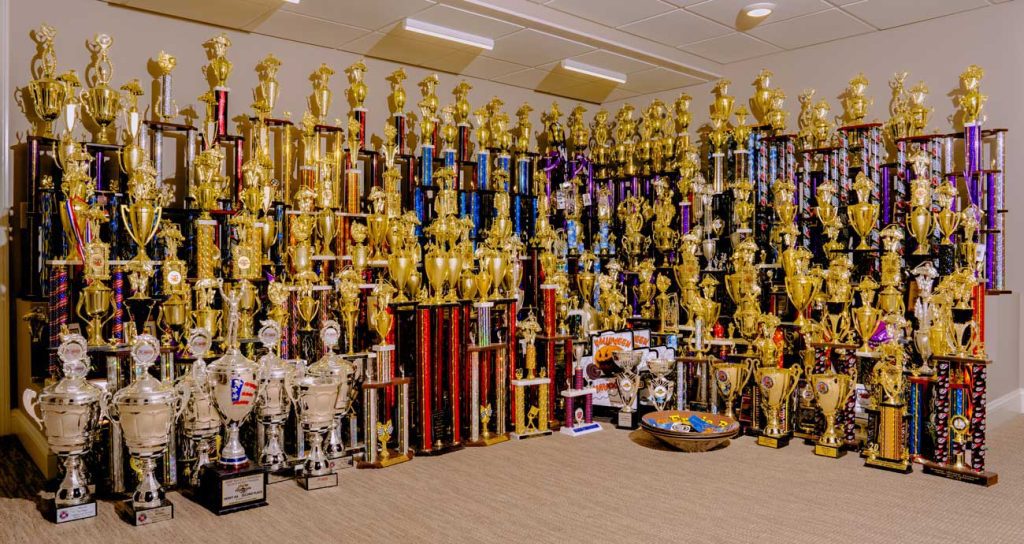
Soon, NASCAR called the track to say drivers must be 14 to compete in NASCAR-sanctioned races, and Carson was forced to sit out the rest of the season. His mom points out with delight that he won the track championship the next season, a stunning accomplishment for a 14-year-old.
His driving style back then does not resemble his driving style now. He never tried to squeeze a full car into half a hole as he does now. “He wasn’t pissing people off,” says Bursley. “I think the only thing he was doing to make them mad was beating them.”
It was only later, once he entered big national races and had the confidence born of winning at Berlin and elsewhere, that Carson started to drive more aggressively. He has made no secret that his only goal in life was to win at the Cup level. He bristled at the idea that he needed a backup plan. He passed up a normal childhood in pursuit of that goal. Now that he was so close to it, he wasn’t going to miss his chance by not driving as hard as he could.
He developed as a fan favorite in Berlin, too. Early on, he was shy, awkward, uncomfortable around fans, says Tim Horvath, who owns HDFive, a racing design and branding company and has known Carson since he was 10. “I remember teaching him how to take a photo. He would stand there and be all stiff, and I’m like, ‘Carson, you’ve got to loosen up, man, these are your fans,'” Horvath says. “You’ve got to reach in for a hug. These people want you to interact with them.”
Those two things — his aggressive style and his ability to relate to fans, both of which grew out of his experience at Berlin — explain Carson’s rise to the verge of superstardom. “They need a guy that stirs up the pot a little bit, and Carson fulfills that,” Horvath says.
The place: Living rooms across West Michigan
The story: That’s a great celebration, Carson, but please don’t die
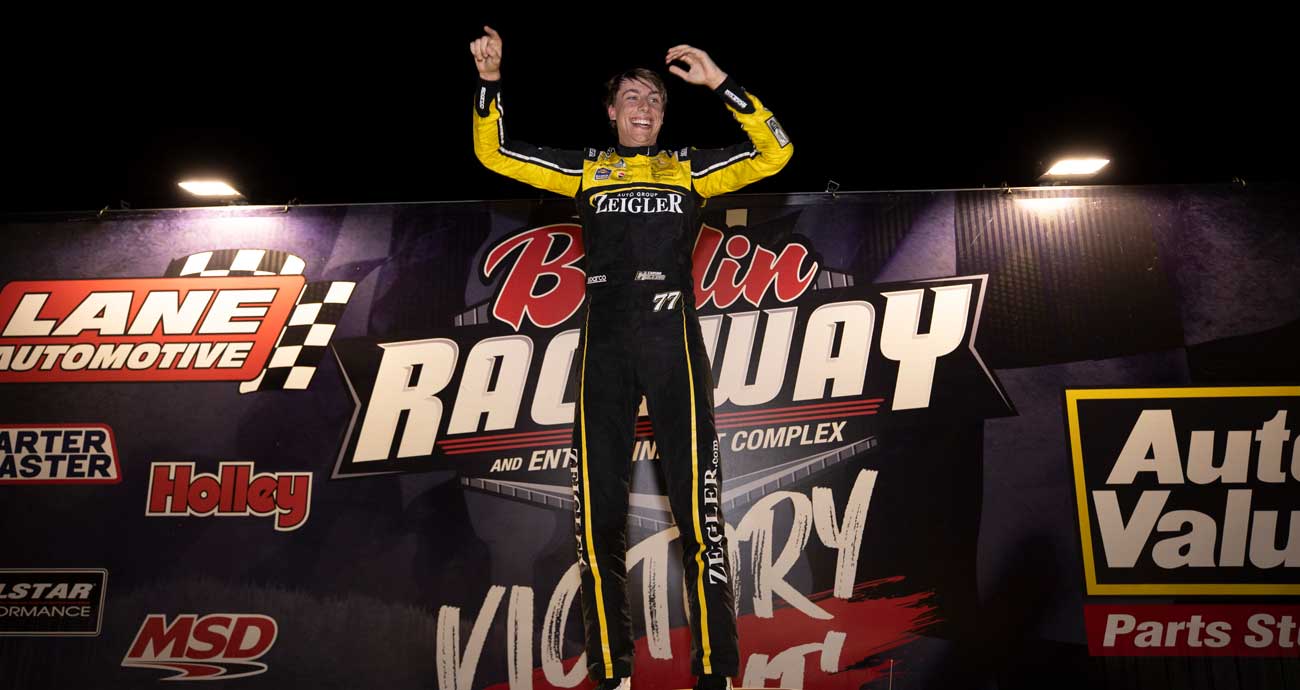
Horvath, Striegle and Bursley all got choked up when Carson took the checkered flag on Sunday. Horvath saw it as vindication for years of supporting him. Striegle was bummed he wasn’t there to broadcast the race himself, so he called Carson’s run off of Turn 4 to the checkered flag in his head. And Bursley shot Carson a text that said, “The first one is always the hardest, now go win the rest.”
Carson’s friends in West Michigan watched with a mix of delight and concern as this man, who is “8 feet tall and skin and bones,” as Horvath joked, crawled halfway out of his car, sat on the window, and started to drive it like that. They worried he’d crash into the wall, fall out and run himself over or get hurt in some other way equal to the risk he was taking.
To see him execute a wildly creative move, soak up the moment with fans, and do something no one had ever seen before … surprised none of them. Said John VanDoorn, whose company, VanDoorn Racing Development, built and maintained cars owned by Carson Hocevar Racing:
“That’s Carson 101 right there.”
It’s the Carson Hocevar that all of West Michigan had seen before.
And now everyone else is seeing him, too.