RELATED: Denver offers warm embrace
Editor’s note: This story was originally published on Sept. 12, 2016.
DENVER — NASCAR’s most unique race shop sits across from a fabric-manufacturing warehouse on Denver’s industrial northeast side. Colorado’s “Favorite Meat Store” is down the street. Dull gray concrete walls dominate the addresses here.
The noisy and steady sounds of the nearby Interstate 70 freeway are interrupted at regular intervals by the heavy clunking and loud train whistles coming from the neighboring railroad tracks.
The street front of Furniture Row Racing’s shop blends in completely with the industrial look of its neighboring businesses. There are no signs to identify the gray building or to offer even a single clue of what lies behind the sturdy, always-locked front doors. Team members have parked their pick-up trucks in a small lot alongside the shop and many more line the street out front.
This is NASCAR’s version of Oz.
And it’s been quite the yellow-brick road.
“This building has been a lot of different things,” Furniture Row Racing team owner Barney Visser said, allowing a slight smile. “It was a warehouse for our company, then a waterbed factory, then an oak furniture factory then an upholstery plant.
“But we wanted to make sure the inside is real nice for the race team.”
And sure enough, behind the concrete facade and nondescript front doors of the building, is a comfortable home base to a busy, well-equipped, highly motivated NASCAR race shop — an inspired group of people who spend their Rocky Mountain days on East Coast time preparing the No. 78 Toyotas for driver Martin Truex Jr.’s path into the postseason.
No team based west of the Mississippi River has ever won NASCAR’s most celebrated trophy. And in fact, until Furniture Row Racing’s championship bid, no one had even considered it a realistic possibility.
It may be far removed from NASCAR’s traditional Carolina hallowed ground, but as Visser’s Denver-based team and two-time 2016 winner Truex have proven, this group is primed, ready and willing to expand conventional wisdom.
There is great pride for the team members and this community knowing that this company is doing things its own way and literally changing the landscape of the sport.
The team’s General Manager Joe Garone — a Colorado native — quickly discovered the team’s “way” absolutely meant operating out of Denver, not opening up another shop in NASCAR’s Southeastern backyard.
“In my mind when Barney said we’re going to race in Cup, I was like ‘OK, we’ll find a shop in Charlotte, we’ll get this thing going, not a problem,’ ” Garone recalled of his initial meetings with Visser.
“And Barney said immediately, ‘No Joe, not in Charlotte, in Denver.’ ”
“It’s what we need,” Garone said, looking around the facility with pride. “It’s more than what we need. It may not be a Taj Majal, but it’s all about building race cars that go fast.”
***** ***** *****
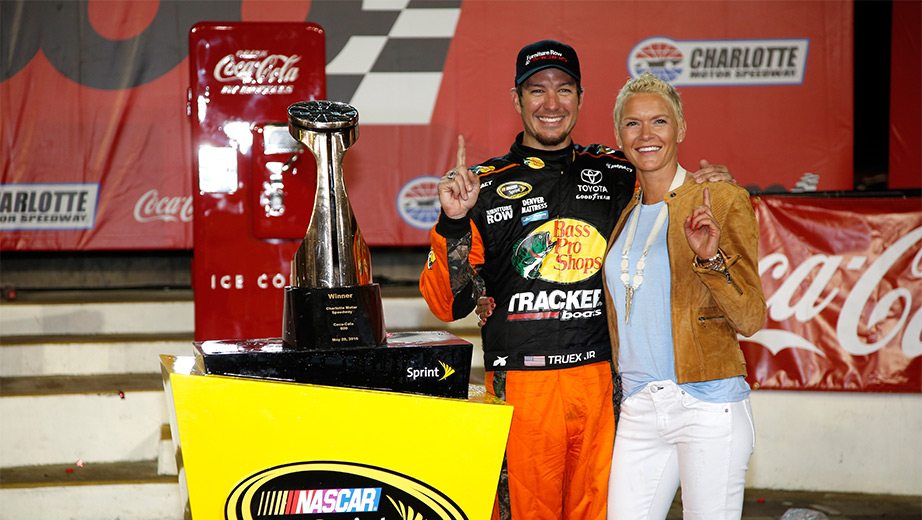 The 2016 Coca-Cola 600 win was one of the most dominant showings in NASCAR history.
It sounds like such a simple concept. And for this team, it’s been the overriding premise. Speed and skill trumps dash and flash.
And who could argue with three playoff berths in the last four seasons?
Furniture Row Racing is doing things its own way — part of the conventional wisdom that makes it one of NASCAR’s most celebrated story lines.
Team members here work on East Coast time so as to be in sync with the rest of their competition. That means an early wake-up call to arrive at the 35,000-square foot building long before sunrise lights up even the tips of the Rocky Mountains in the distance.
Inside the shop, flags from each of the U.S. Armed Forces branches hang prominently from the ceiling, an always-present reminder of hard work and sacrifice and also a nod to Visser, who is a proud Vietnam War veteran.
And although the Furniture Row Racing shop is filled with the most modern machinery and tools, it definitely feels a bit more like a “throwback” version of NASCAR’s early days.
It is a far cry from the Charlotte-area tour train of massive new complexes that feature gigantic race shops and flashy souvenir stores.
The small Furniture Row lobby — just inside those locked front doors — is crowded with significant team memorabilia. It includes — among other things — a framed No. 78 Denver Broncos jersey on the wall, used race-winning tires on the floor and the trophy from the team’s first victory, the historic five-foot-plus tall Southern 500 hardware won by Regan Smith at Darlington Raceway in 2011.
Smith and his wife Megan still have the home they bought outside Denver, where he spent four years (2009-2012) helping place FRR on the NASCAR map.
… And NASCAR on the Denver map.
“The interaction was great for the community,” Smith fondly recalled. “You’d watch the news at night and there would be Furniture Row Racing and then there’d be the rest of the NASCAR race. They’d have Furniture Row updates and then NASCAR updates. From a community standpoint, they really adopted the team as essentially their own franchise.”
A native New Yorker, Smith said he and his family loved living in the Denver area, “30 minutes from the city and 45 minutes from the ski slopes.”
“We don’t spend as much time there as we’d like, but we still envision that being our home again one day down the road,” Smith said. “When someone decides to move out there and move their family out there, there is a different level of commitment made, whether crew chief, mechanic or marketing person.
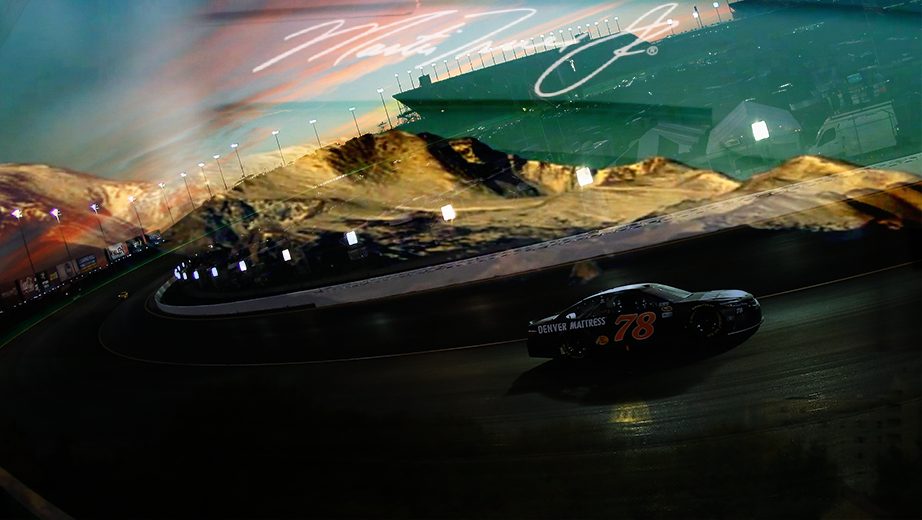
Furniture Row Racing operates on East Coast time, so as not to lose a step to its competitors. Past drivers and former crew members have all fallen in love with Denver.
“It’s a big decision to up and move there. Drivers can kind of live where they want, but for shop guys you aren’t going to push your toolbox down the road and start working somewhere else. A lot of people have moved out there and stayed even if not with the team anymore. It speaks volumes to that area and the city as a whole.”
It has admittedly been a draw for much of the FRR team, several of whom readily moved their families westward beyond the comfy, familiar stock-car scene. And several here say they plan to stay in Colorado, no matter what their NASCAR career may bring.
“I’d have never thought of moving here, I’d never been here before, never even been to Colorado,” said Chris “Cowboy” Moyher, who works on the cars’ rear suspensions.
“About five minutes off the plane, I decided I was going to stay here. They asked me if I wanted to work here, so I went back to Charlotte and took two weeks and then came out here. I’ve been here for six years.
“I feel more comfortable here than any place I’ve ever lived.”
***** ***** *****
Veteran driver Kenny Wallace gets it. The first racer ever asked to drive a Furniture Row car full time in the premier series, he can hardly believe how far this team has come. He qualified the team for 17 Cup races in 2006, failing to make another 14 but also leading the team’s first ever lap — at Indianapolis. He raced for the team again in 2007, making 15 races and leading laps at Talladega and Daytona.
“I remember it like it was yesterday,” Wallace said of the initial talks with Visser and Garone about him steering the No. 78.
And Wallace couldn’t be more proud of where the team sits today.
“It pleasantly shocks me; it doesn’t surprise me; it shocks me,” Wallace said, his voice full of emotion. “We went through brutal times to get that team up and going.
“Barney Visser doesn’t speak much. But that was the first thing he said to me before we got going, they made it clear they were staying in Denver. There’s a pride factor going on here. They’re trying to prove something. They made it clear, they are going to do it even if it costs more per year. I respect them for it.
“As smart as Barney is, this was one thing Barney was going to do his way.”
As unlikely the path, the team has proven Visser correct in his steadfast desire to operate far from NASCAR’s traditional homeland.
And while this is a feel-good story all around, the ultimate happy ending isn’t written quite yet. The team’s hope is that comes in November after the regular-season finale in Homestead.
“Basically, we are showing other people, it can be done without all the glitter,” said the team’s Director of Competition Pete Rondeau. “It’s a good solid group of guys, a few old-timers and some young guys. We keep building and building.”
Certainly part of Visser’s initial desire to keep this team in his hometown was a matter of convenience and perhaps a source of pride. And what he has created is a unique contribution to NASCAR, something the sport celebrates, too.
This is new frontier for both the race team and NASCAR.
“Ultimately a big reason why I wanted to work here, is because it’s here, out West,” said crew chief Cole Pearn, a Canada native.
“It’s a good place to live, it’s nice being away from everything and we have a really tight-knit group that is a product of that. It’s just really enjoyable to ‘get away from it’ every week. You stay more focused on the task to some degree, you’re not caught up in as many distractions as you might when you’re surrounded by all the hype (in Charlotte).
“It’s nice, quieter, and we’ve got a really tight-knit group which I think is a product of being out here on our own.”
***** ***** *****
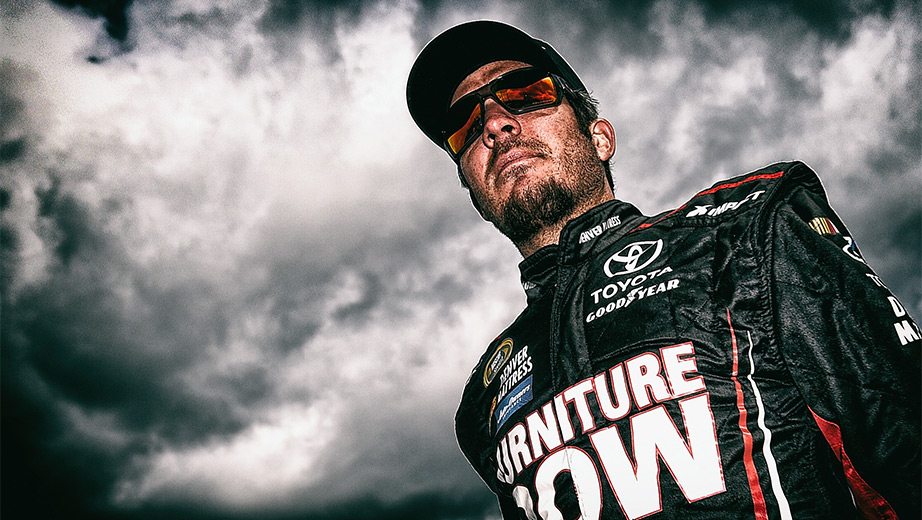
Ultimately the product is one of NASCAR’s most successful teams, which claimed a historic Southern 500 victory on Labor Day and raised domination standards after a jaw-dropping win in the Coca-Cola 600 at Charlotte in May.
Truex came up a record 0.010 seconds short — basically a hand-width shy — of winning the season-opening Daytona 500, too, the team leaving its mark on three of NASCAR’s biggest races.
All of Visser’s big dreams, Garone’s careful planning, the team’s unconventional work schedule and Truex’s inspired driving has resulted in one of the best stories in NASCAR.
And the team is likely going to have to make some more room for spectacular winning hardware in the small entryway.
“I don’t think I ever tried to convince Barney to do things differently,” Garone said. “It wasn’t an option. It was clear. Barney lives here and he wanted to be a part of the team. He’s not an owner that’s removed from it. He’s a gearhead. He’s involved in it. He likes the people part, the competitive part.
“And our sponsors until recently were 100 percent his companies. And as we’ve had success the company overall has gotten more involved and taken ownership of ‘its car’ out on the track. It’s been a really fun growth.”
“But,” Garone stressed, “You have to earn it out there. You have to perform. If you don’t perform, people don’t watch. We learned once you start having good performance you could go in the local Starbucks with a Furniture Row shirt on and every time you go in, somebody talks to you. And then it’s just grown. Go to a restaurant for lunch, and people ask, ‘Are you with the race team?’
“Denver is a huge sports town with a lot of fans passionate about all the sports. But you have to really earn your place.”
It would seem that work is clearly done.