LEBANON, Ore. – Willamette Speedway’s pit area sits behind the backstretch, and Joey Tanner’s team hauler typically is parked behind the exit of Turn 2. The walk from that portion of the pits to the track’s exterior fence requires a climb up a sizable hill (and eye protection from the flying western Oregon soil).
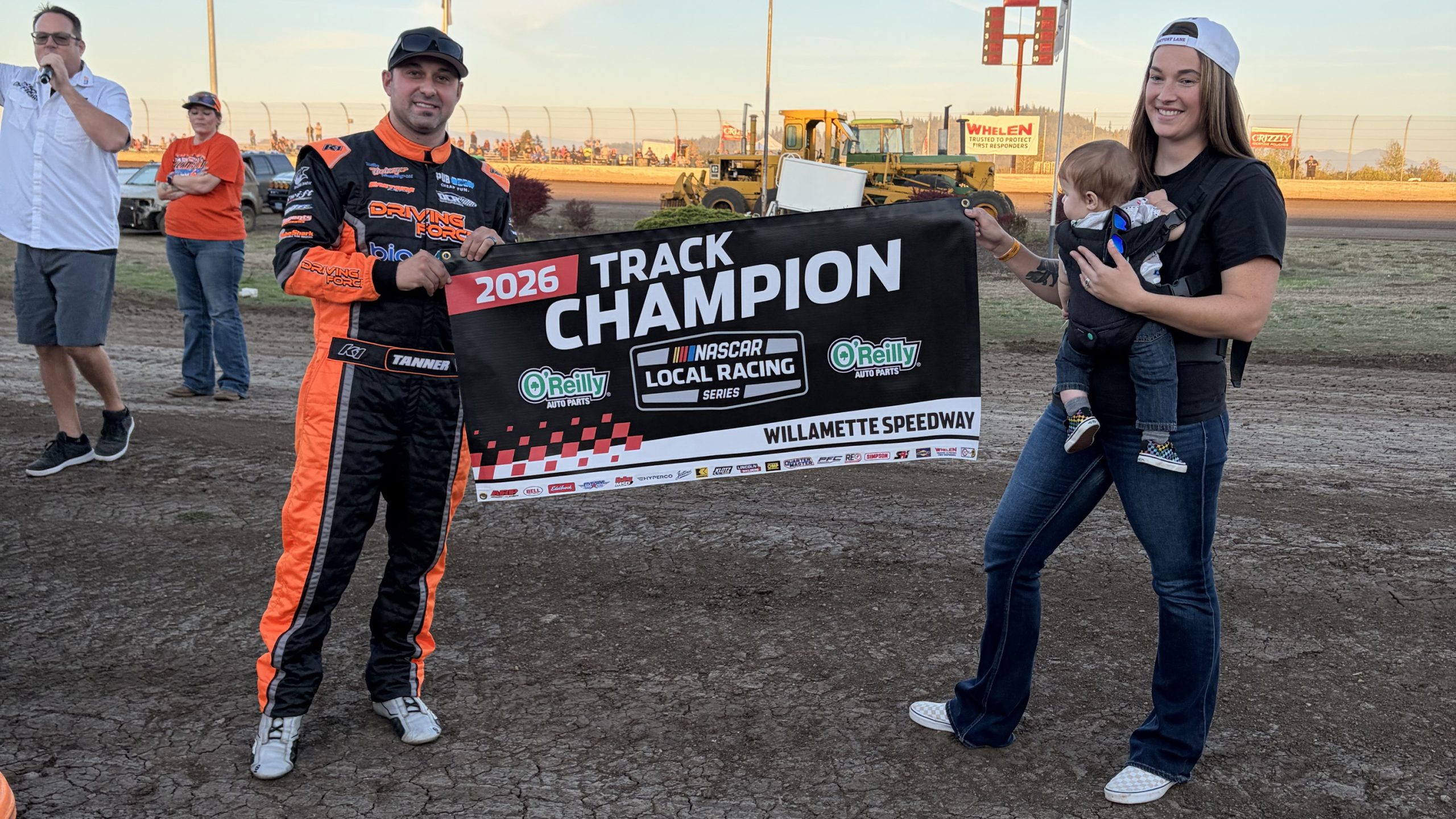
On the night of Sept. 19, when Tanner ran his final NASCAR points-paying race of the 2026 season on the third-mile dirt oval, his wife Ashlie ran up and down that hill at least a dozen times. She ascended to watch Joey’s hot laps, qualifying run, heat races and feature. In between sessions, she helped at the hauler, carrying equipment and assisting in car prep.
She did all of this with her and Joey’s 7-month-old son strapped to her chest.
Joey Tanner calls his wife a “supermom” due in part to how she takes care of their son, their 5-year-old daughter and his 10-year-old stepson all while lending her hand to what’s become one of the best dirt late model programs on the West Coast.
“The amount of support she gives me and the things she does behind the scenes, I couldn’t do this without her,” Tanner said. “She gives up a lot for me to be able to do this. Just to watch her and the things she does just so I can focus on what I’m doing at the track, I’m so grateful for it. Everybody thinks I’ve got it rough. No, she’s the strong one. She’s the one who keeps it going.”
For Tanner, not many things in life take priority over racing. Family is one of them. He gave up the former for the latter a few years back so he could buy a home, get married and have children.
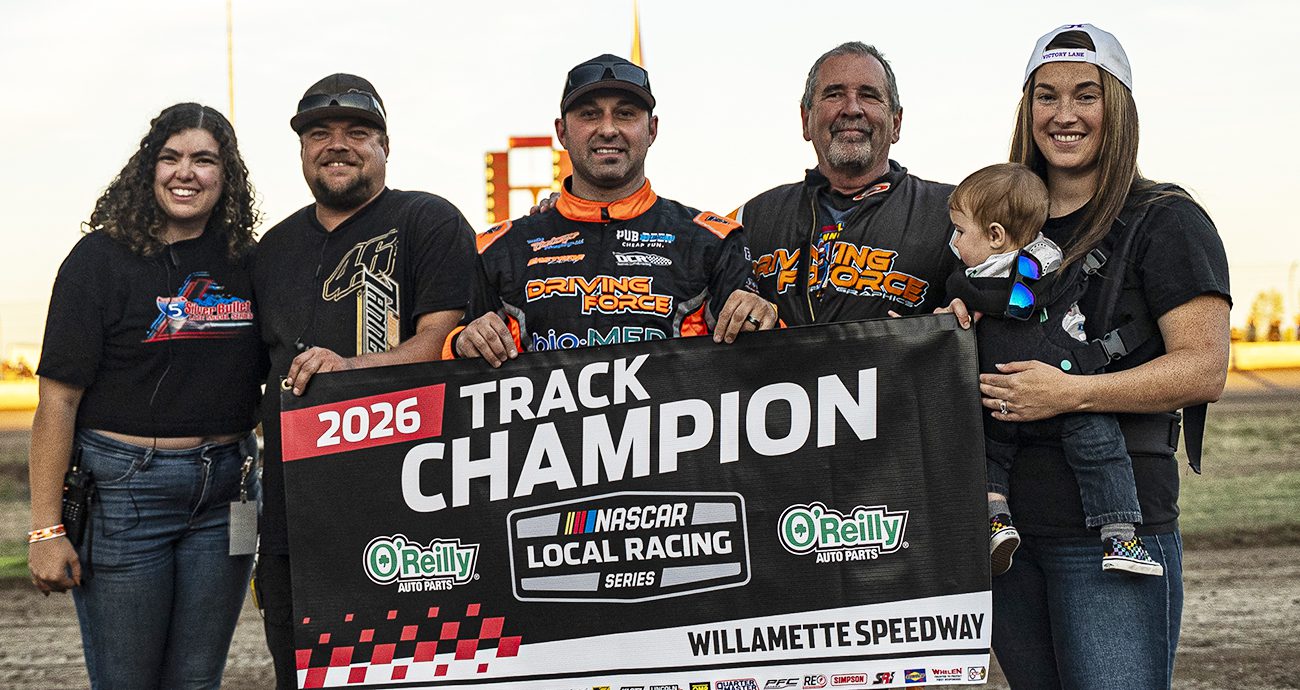
But thanks to a series of breaks, he’s back in the driver’s seat. And on that cool September night, after Tanner won his 12th race in 15 starts at Willamette, his family was the first to greet him with hugs after he clinched the 2026 NASCAR Local Racing Series Powered by O’Reilly Auto Parts Division I national championship.
Seven-month-old Tyson won’t remember the celebration, but Tanner is sure to “put it in his brain” via photos and stories as his son grows older.
After all, if Tyson grows up at the track, experiences his dad’s career first-hand, becomes a racing-obsessed boy, collects die-cast race cars, learns all the local drivers’ names and pretends to call races for fun, forges lifelong relationships in the pits, sticks with his passion into adulthood and turns his dreams into his reality, he will have done exactly what Joey did.
***
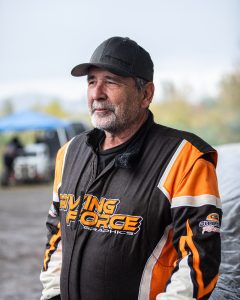
Pavement tracks aren’t as common as dirt tracks in the Pacific Northwest, but Joey Tanner’s father Jody was an asphalt guy in his heyday. The elder Tanner competed on NASCAR’s Northwest and Southwest Tours. Locally, he raced at the now-defunct Portland Speedway.
Joey made friends at school, especially as a tri-sport athlete. But his core relationships were built at the race track.
“From a baby to about 10 years old, while Portland Speedway was around, I’d go there every Friday night,” he said. “I grew up around (racing) with my dad and my brother; my whole family raced. Going to the tracks on Friday nights and Saturday nights in the western U.S. from Oregon to California, Idaho, Montana, even to Nevada.
“I just fell in love with it when I was a kid, and it kind of went from there. When you’re around it as a kid, it’s in you.”
Jody didn’t have to push Joey to the driver’s seat. As soon as the younger Tanner was old enough, Jody got him in an indoor go kart.
And he was good – good enough to enrage the grown men who were racing against (and losing to) a 10-year-old boy.
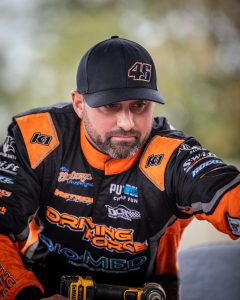
Rules at the time prohibited anybody under the age of 16 to race at most tracks. But Oregon’s Madras Speedway had a juniors division, which gave Tanner a chance to run a street stock at the age of 13. In his second year, he won the class championship and earned an opportunity (with signed consent from his dad) to move up to a late model.
Tanner spent a few years running dirt late models before a brief asphalt detour in 2009 and 2010, when he was old enough to try the discipline his father mastered. Tanner found success on pavement, too. He became the youngest driver to win the Fall Classic at Washington’s Yakima Speedway.
Due in part to the scarcity of pavement tracks in the region, though, Tanner returned to the dirt world in 2011 and has been there ever since.
“I loved racing pavement,” he said. “The amount of attention to detail there is, the heat, the amount of laps you race, I liked that challenge. But obviously I love dirt, too. I love the friendships you build, the communities you race with. A lot more friendly, a lot less professional.
“So the dirt thing really stuck. And there’s nothing like it. Driving a 900-horsepower late model on the verge of hitting the wall every lap. (I actually hit the wall often, but try not to hit it too hard.) Obviously I’ve built a love and passion for it.”
Tanner in his dirt career has driven for multiple car owners, including himself. The opportunity to work with a longtime friend in Darren Coffell arrived when Coffell took a chance on Tanner after an event in Las Vegas. Tanner joined Coffell on the trip as a helping hand, but he ended up in the driver’s seat of the car, finishing in the top 10 and indirectly launching a partnership that’s yielded seemingly endless success.
Tanner went full-time racing in Coffell’s late models three years ago. Every season, he grows more thankful for the team’s camaraderie. The equipment is good, and the communication is great.
“We live and breathe racing,” Tanner said. “We’re always thinking about ways we can make our cars faster. Things we can do to beat the competition or be different, or challenge ourselves to a new goal. A lot of our success is the thought process behind shock settings, chassis adjustments, just other things to tinker that other people don’t really do. I think we’ve gained a lot more speed just by our knowledge and putting our heads together and coming up with packages that nobody else has. Not even the chassis builder recommends what we run.”
An invaluable piece of their puzzle is Chris FitzJohn, the crew chief who randomly messaged Tanner on Facebook 10 years ago asking for an opportunity to learn about and work on late models as part of a team. Tanner at the time was riding solo and needing the help, so he said yes. He now calls it “the best thing (he) ever did,” adding that FitzJohn is “consistent” and “dependable.”
Tanner’s crew also features Dick Gummus, a longtime friend of Coffell whose age (in his 80s) doesn’t stop him from helping in the shop and taking on tire work in the pits. Alexis Coffell, Darren’s daughter, lends a hand on race day, too.
That’s the extent of the squad that produced the best season in the country in NASCAR’s Division I ranks.
“I’m just so proud of our accomplishments with what we have,” Tanner said. “Obviously we know we have a great program. We know we have the stuff. But on a national level, now everybody knows. We’ve been fast for a couple years, and I’ve been winning races for a long time. Just nobody really knew.
“But doing it with a small team – we don’t think of ourselves as that small, but yeah, it is a small team – it shows what you can do with people who just work hard and put all their effort into it. I’m so happy I was able to do it for the team.”
***
Willamette Speedway promotors Sandy and Cory Penfold announced in March a new NASCAR sanction for the 2026 season, citing the benefits for drivers and the potential path to a national spotlight.
Tanner was completely on board with his home track’s move thanks to his first-hand experience.
When Jody Tanner won that Portland Speedway track championship in 2000, he was invited to attend NASCAR’s awards banquet in Orlando. Joey tagged along, and he vividly remembers watching Gary Webb, a dirt-track racer from Iowa, get recognized for winning that season’s national title.
No dirt-track racer had won NASCAR’s national championship since Webb’s triumph … until Joey Tanner did what he did in 2026.
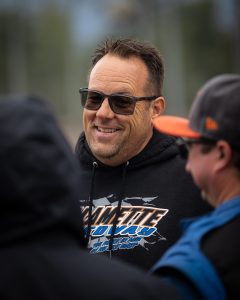
Willamette’s NASCAR sanction created a new goal for a team that was already accustomed to winning 10-plus races a season. That success is why Tanner felt cautiously optimistic.
“We knew after last year’s performance, 13 wins in 15 starts, we could have a shot at doing something great,” he said. “Whether it was winning the region, the state or even national. We knew it was going to be tough, and we knew we weren’t going to get that many races. So our throw-outs were going to have to be pretty good just to be able to be in the hunt. So we were excited about it, and we knew from the beginning that we had a shot to do something good, and we ran with it.”
Tanner in the spring began the season on a tear, winning Willamette’s first six late model features before a relatively stunning second-place run right before the calendar flipped to June. He ended up winning 12 of 15 races with all three “losses” being second-place results.
Still, the points race was close. Tanner entered the final NASCAR weekend just a few points up on Connor Hall, the two-time Division I national champ who races asphalt late models primarily in Virginia and North Carolina. Hall won his finale at North Carolina’s Hickory Motor Speedway and put the pressure on Tanner to do the same later that night on the West Coast.
No problem. Despite unpredictable track conditions and some tire trouble after qualifying, Tanner in his final feature smoked the field to clinch not just the national title, but the West Regional championship, too.
“We were definitely focused on winning this,” Tanner said. “When we really started to notice us creeping up in the points for national and the gap was getting bigger for regional, we really dug in. Darren stepped it up. We had more tires than I had ever seen. The equipment was always beautiful. He showed up ready to go. I mean he brought both cars two weeks in a row; we were ready to go in case one car had a problem. We were fully invested.
“We actually missed a race (at Willamette) for a race at another track because it was a higher paying race. And we actually missed out on a max points night possibly. I’m glad it didn’t bite us in the butt.”
***
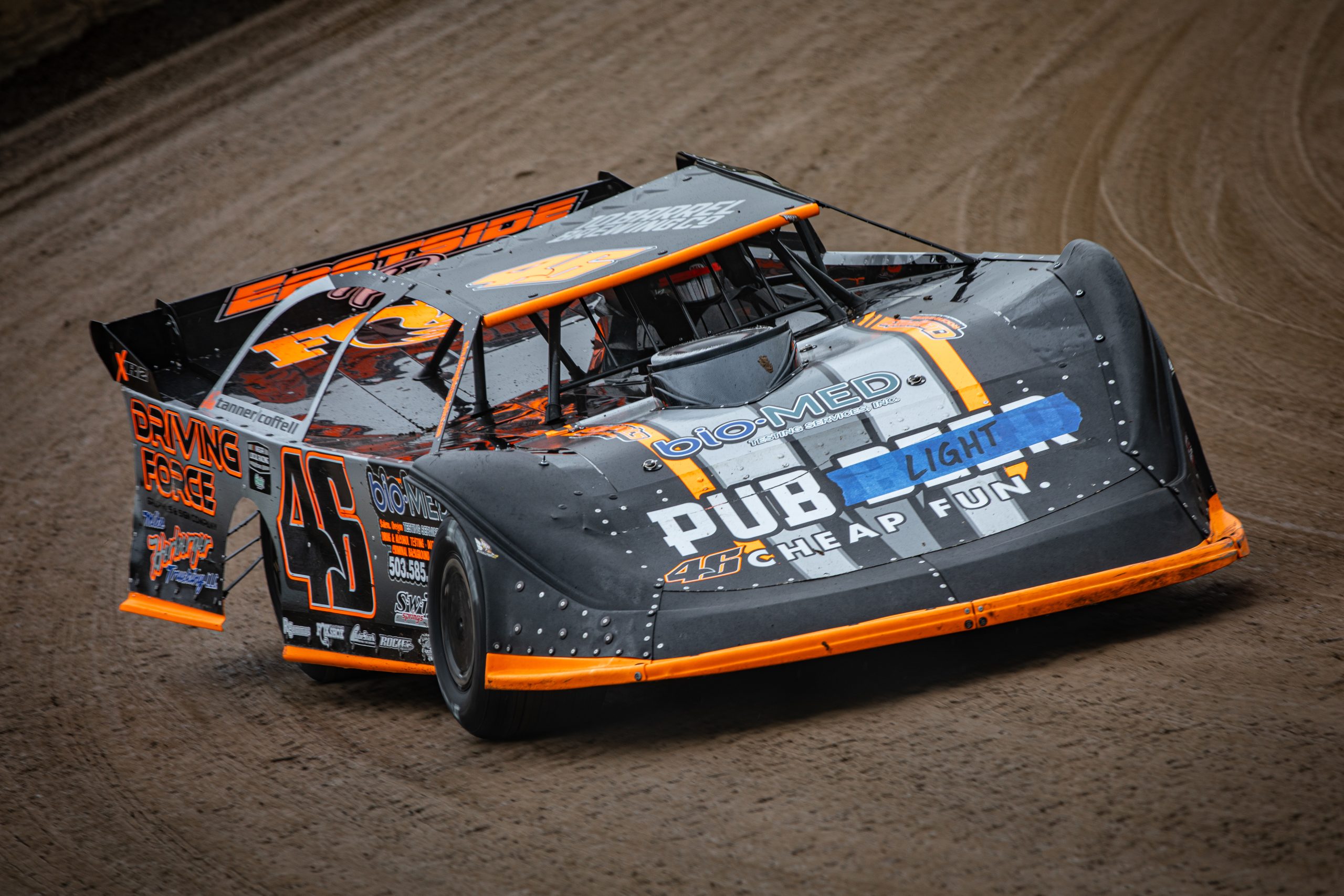
When he’s not wrenching on or wheeling championship-caliber late models, Tanner works full-time as a sales professional for Maletis Beverage in Portland. He and Ashlie live East of the city in the suburb of Troutdale.
The drive from their home to Willamette on the weekends is about two hours, but they’re able to bunk with Ashlie’s family, local to Lebanon, to avoid late-night returns.
That’s how the Tanners are able to keep the family together at the race track … even if his daughter spends half the time wandering around the pits hanging out with other crews.
“It’s very special for me to have the family here,” Tanner said. “The older I get, the more I look on it, and family’s so huge to me. I gave up racing five or years six years ago for my family. I was content with what I had done in my racing career, and I was happy to leave it. Maybe not forever, but for a while. And obviously I’ve been fortunate enough to get back into it and keep going doing what I love. But having my kids around, it’s so rewarding to me, because I did it when I was a kid, and it was so cool for me to grow up around it, and I’m so grateful my kids and my family were all here to see it.”
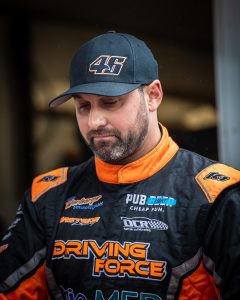
“It,” in this case, was his clinching the national championship. Jody was there to see “it,” too, which is a huge deal given the impact he’s had on Joey’s life.
Jody brought Joey to the banquet after he won the Portland Speedway title in 2000. In November, Joey will bring Jody to the NASCAR Regional and International Awards banquet in Charlotte.
“I mean, how ironic, right,” Joey Tanner said. “It’s so rewarding for me as a son having him here. And having him going to the banquet with us will be so cool because I did go to it with him. He’s only been to one national banquet because he’s only won one championship. And that was the one that I went to was the last dirt champion.”
Ashlie will attend, too, possibly with their baby still strapped to her chest as the family continues to celebrate their accomplishment.
This triumph is as momentous for Tanner, Coffell and the rest of the team members as it is for the state of Oregon, the Pacific Northwest and a dirt-racing community that hadn’t seen a NASCAR national champ in a quarter century. That wasn’t lost on Tanner when he first celebrated in the Willamette pits on Sept. 19, and the reminders will keep coming as he continues his career. His home track will certainly make sure everyone recalls one of its drivers taking NASCAR’s national title in the venue’s first season with the sanction.
Tyson will remember, too, even if he was too young to process the moment in real time. He’ll see photos of his grandfather taking his dad to Orlando and images of his dad taking his grandfather to Charlotte.
Perhaps one day Tyson will take Joey to a NASCAR banquet, too.