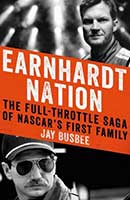
EARNHARDT NATION is the story of one of NASCAR’s most famous families, from dirt-track racer Ralph to American legend Dale to NASCAR icon Dale Junior. The book is the first to trace the entire history of the Earnhardt family, from Ralph’s first days working under a hood to Dale Junior’s 2015 Sprint Cup campaign, and everything in between. EARNHARDT NATION is on sale Feb. 16 at bookstores everywhere, or online at Amazon, Barnes & Noble and all other booksellers. Author Jay Busbee is on Twitter at @jaybusbee and on Facebook at facebook.com/jaybusbee.
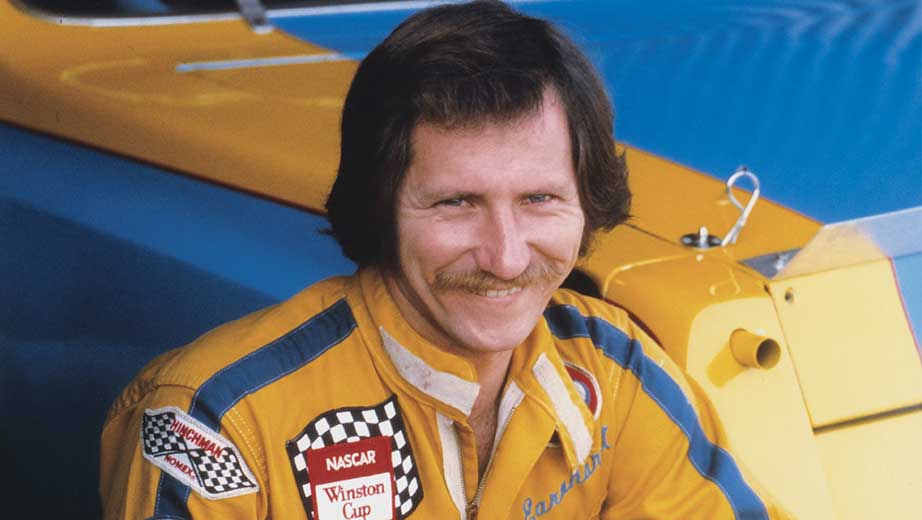
In this excerpt, a young Dale Earnhardt, not yet a NASCAR driver, is learning just how treacherous life can be when you’re racing for your groceries every week.
Friends, family, everyone was telling Dale to quit this racing silliness — to go get a real job and stop smashing the family’s money into unforgiving track walls. When Earnhardt quit his last real job, at Punchy Whitaker’s Wheel Alignment in Concord, North Carolina, Whitaker, a local automotive legend, asked, “What are you going to do?”
“I’m going racing,” Dale told him.
“You gonna starve to death, boy,” Whitaker declared.
Dale’s one-page 1975 application to race in NASCAR is a country music song on Courier-font paper. Beside “Children (Names & Ages) Earnhardt wrote “Kerry Dale, 5 / Kelly [sic] King, 2 / Dale Junor [sic], 3 months.” Beside “What happened in first race,” he wrote “finish 10th.” And beside “Ambition (other than racing),” he wrote “None.”
Dale saw a glimmer of something more in himself, and each weekend, he drew just enough encouragement to keep running – sometimes literally. One night at some dirt track – it could have been any of them, really – he was running in fourth place when third paid enough for his family’s food for the next week. He had one hell of a problem right ahead of him in the person of Gene Daves, a locally famous driver who went by the nom de track of “Stick Elliott.”
Stick was a man in Ralph Earnhardt’s mold; he’d mortgaged his life in the early ’60s and gone on to win hundreds of races in his career. But where Ralph had preferred the solitude of his own tools and motors, Stick had gone for the glory. Stick had served as a stunt driver for the 1968 Elvis Presley flick “Speedway,” and according to legend, even took Elvis on a terrifying ride around Charlotte Motor Speedway. In short, young Dale Earnhardt was about to toy with the man who’d intimidated The King himself.
Not that it mattered. Dale Earnhardt would have put a bumper to the devil if need be. On the final lap, Dale caught Stick, turning the veteran and scooting past his spinning car for that third-place finish and some critical grocery money. As Earnhardt was climbing out of his car, word reached him that one of Stick’s crewmen was headed his way with a pistol. Earnhardt fled the track, still wearing his dirt-covered firesuit. The next weekend, Earnhardt showed up at the track only to see Stick and his crew headed Dale’s way.
Oh, hell, Dale thought.
Stick walked right up to the kid, stared straight at him, and then broke into a grin. “You know, son,” he said, “you might just make a driver yet.”
Young and wild-haired, Dale Earnhardt did little to distinguish himself from any of a dozen other drivers’ kids. He drove a ’55 Chevy, same as his father, but that and the surname were the only connections between Dale and Ralph. Where Ralph was precise, Dale was ragged; where Ralph worked his car like a scalpel, Dale wielded his like a club. “That Earnhardt boy,” an old driver named Red Farmer said one night, “hit everyone and everything at the track except the people in the grandstands.”
At one 200-lap Sportsman race in Savannah, Dale prepared to race against a crew of luminaries that included fellow future Hall-of-Famer David Pearson. “I got to win this race,” he told Gary Hargett, his car owner and mechanic at the time. “No way,” said Hargett. “I’m broke,” Dale said. “I got to win this race.” And that’s exactly what he did. For 199 of the race’s 200 laps, he tailed Pearson, but on the race’s final lap, Dale turned Pearson, putting him into the wall and sliding past him for the win. Hargett was furious; turning a man was no way to win a race. “Why in the world would you do something like that?” he complained. “(Forget) him,” Earnhardt shot back. “He’s got money, and I’m broke.” He and Hargett had to peel out of the track at full speed to avoid a pack of fans eager to discuss sportsmanship with the kid from Kannapolis. “You didn’t want to mess around at these tracks,” his friend Little Bud Moore said. “Some of these places, you didn’t want to get too close to the wire fence or the women would cut you.” “Dale knew that the difference between doing well and doing poorly would determine whether he was headed back to the cotton mill,” said NASCAR Hall of Fame executive director Winston Kelley. “The thing about Earnhardt is, even when he got to the point where he didn’t have to be successful every race, he raced just as hard.”