Find out why this story still resonates with young drivers
RELATED: Evolution of rookie meeting | Youngest, oldest rookie winners
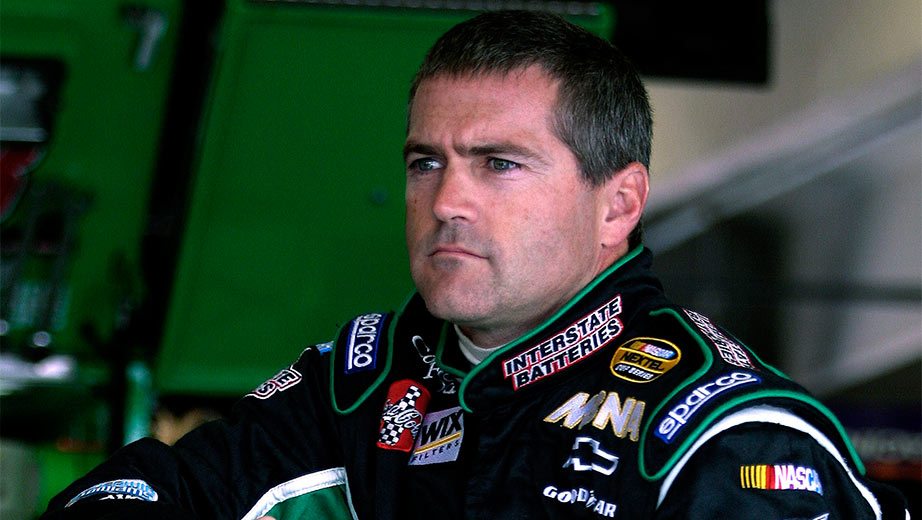
A 2005 crash involving Bobby Labonte at Pocono Raceway continues to serve as a reminder for rookie drivers today in NASCAR’s three national series.

“We were getting ready to put right-side glasses in the trucks when we were going to Talladega,” NASCAR XFINITY Series Director Wayne Auton said. “We’d never run right-side windows in the trucks before. I was talking to Bobby about some stuff to help us get ready to go down there and one of the things he brought up was about running the right-side glass.
“I sort of questioned about why we should be worried about the right-side glass. And he said, ‘well what happened to me was … I got pinned up against the outside wall (on the) driver’s side.’ There was so much smoke inside the car he got disoriented … and couldn’t get out of the car.”
As a result of the incident, Labonte set out to correct the problem, meeting with former crew chief Jimmy Makar one evening at the Joe Gibbs Racing shop.
“He told me that he crawled in the car, buckled himself in and then told Jimmy to turn off the lights,” Auton said. “He started to get out of the car and … hooked himself on something. So he stopped and told Jimmy to turn on the lights. They adjusted some things he crawled back in the car, buckled back in, turned off the lights. Started to come out again, got hooked on something, stopped, turned on lights, adjusted that, sat back down … and he came out of the car.
“He said he tried that two or three times just to make sure he knew where everything was in the car.”
Makar, now senior vice president of racing operations at JGR, said the biggest issue for the driver was the bars inside the car and locating the window release on the right side.
“You have to crawl over them and you have to find the window release; that was hard to do,” Makar said. “When you’re in a panic and trying to do it, it’s not intuitive.
“Crawling over those bars is hard enough, but those two things combined, that was something that he said on his own that ‘we need to figure this out. I need to be able to do this better.’
“Most of the stuff that’s in the way is stuff that has to be there. The bars, the way the seats are with the headrest, it makes it very hard to get through that space.
“It’s just a matter of figuring you the best way to maneuver yourself, headfirst or feet first, what part is first? And that was mostly it, just doing it. And not having to do it in a panic the first time.”
Auton relates the importance of being able to exit the vehicle from the right side each time he oversees a rookie meeting where the right-side windows are required (all tracks 1.5 miles or larger). Locks are attached to a strap that, when pulled from the inside, release the window.
“The driver can take it out from the inside or the safety teams or crews can take it off from the outside,” Auton said. “… We don’t want it locked to where the driver can’t have access to remove it.”
“Most think you just crawl in your car and you drive it and you don’t worry about nothing. We try to explain to them that it’s as important getting out of your car as it is getting in it. Because there might be that one time that you need to go out the right side.”