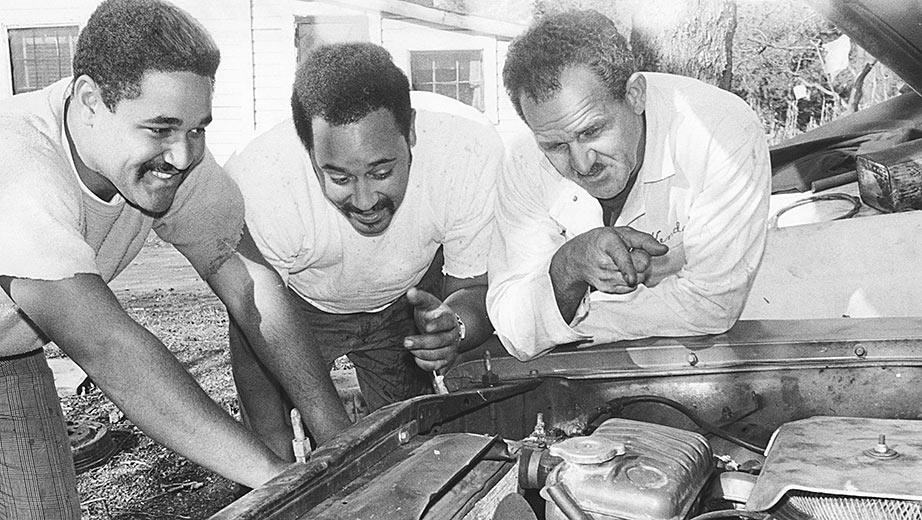
Editor’s Note: This story originally was published on March 26, 2015. Scott was inducted into the NASCAR Hall of Fame in 2015. In our Driver by Number series, Scott was selected as the driver for the No. 34.
SUTHERLIN, Va. — Perhaps he heard about it in the newspaper, buried in the WBTM “Radio Ramblin’s” community notebook on Page 11. The radio station’s call letters stood for “World’s Best Tobacco Market” or “World’s Biggest Textile Mill,” depending on which of the town’s primary industries was closest to your heart.
So it may not have been a big deal for most, sitting below the paper’s fold, after the news about celebrations planned for Dan River Mills’ 75th anniversary, below how many TV sets Vaughan Supply sold the previous week, and underneath flashy ads for cowboy westerns at the Rialto Theatre on Main Street.
RELATED: Driver by Number selections | Scott synonymous with the No. 34
“Danville has a new speedway,” began the three-sentence brief in The Bee on June 8, 1957 — a development that merited mention after well-wishes for recent high school grads and tips for frying bacon in the sweeping, ellipsis-heavy column.
Whether Wendell Scott read about the new facility in broadsheet print or heard about it through the murmurs from the promising racing scene in south central Virginia, no one can say for sure. But the news certainly had Scott’s attention. James Arness might’ve been the star of the shoot-’em-up picture show in town, but Scott was bent on making a name for himself, too.
So on the eve of the first race at the tight dirt track west of town, Wendell Scott — with his sons in tow as his de facto pit crew — pulled off Highway 58, making a slight detour from their route to a Saturday show at nearby South Boston Speedway to survey the new bullring. They looked over the fence to see a snug, quarter-mile layout of rich clay carved into a thicket of Virginia pines and oaks. But Scott saw something else in the new Danville Speedway — a vision of dollar signs at the pay window.
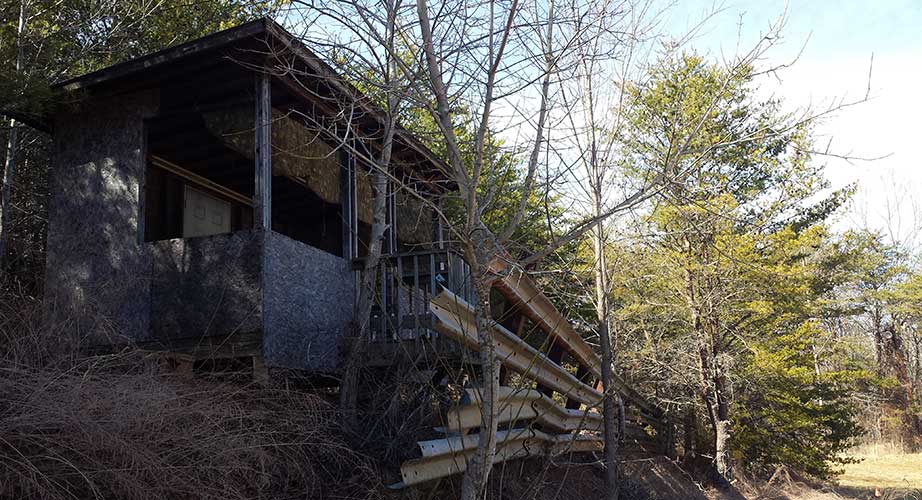
Danville Speedway today. (Photo by Zack Albert)
“We walked up there and what’d Daddy say?” Wendell Scott Jr. recalled, sharing in re-telling the story with his brother, Franklin. “He said, ‘I’m going to win that damn race tomorrow.’ “
Scott did, backing up his guarantee and adding to the legend that would propel him from regional hotshot to a regular in stock-car racing’s big leagues to an eventual place in the NASCAR Hall of Fame.
“You can keep it or leave it,” Scott Jr. said, showing some reluctance to quote his father’s mild profanity, “but that was how adamant he was. … He won it just like he said it.”
‘WHAT ARE THE ODDS OF THAT?’
Knock on the door at the stately brick house on top of the hillside and Raymond Burdette greets you with a firm handshake. From his front porch, you can see rolling blue hills stretching into North Carolina on a clear day. Head around back and there’s a perfect blend of serenity and racing history.
“There’s some good memories down there,” Burdette, a mobile mechanic for Lorillard Tobacco Company, says from his front stoop.
Have a look around? Raymond obliges, leading the way to the farm gate and unhooking the rusty latch to swing the door open. The tire tracks lead down the hill to the jersey barriers that formed the lanes for the pit entrance and exit, just off what used to be Turn 4. Walk through and set foot on the former racing surface and the track opens up, revealing the banked turns still encircling the weed-choked infield, the well-worn metal guardrails ringing the place and the ramshackle flagstand overseeing it all. The small, waferboard building is no longer a home base for race officials, but now serves as a capable deer stand for Burdette during hunting season. The grandstands are long since gone, but the lights that brought night racing to the speedway in the early 1990s still stand sentry over the remnants.
The break in the Turn 4 guardrails isn’t far from where Raymond first set eyes on the track on April 27, 1969. The date, barely three months before the Apollo 11 moon landing, is significant. Though this plot of land has given him a lifetime of warm memories, his first interaction with the speedway was a haunting one, prompting a full-circle story that Burdette opens by saying, “Now what’re the odds of this?”
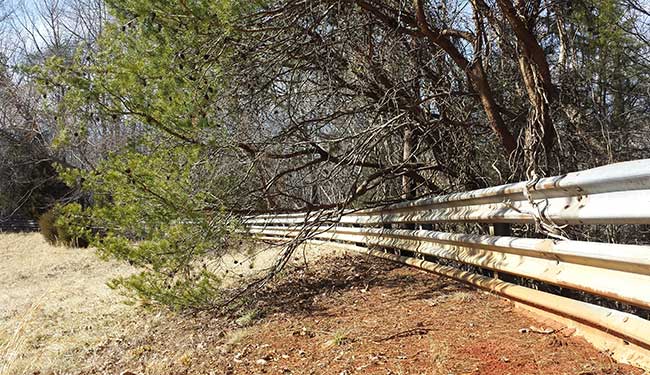
Danville Speedway today. (Photo by Zack Albert)
That spring Sunday, a 10-year-old Raymond joined his older brother, Benny, and a friend in sneaking through the woods into the back side of the track, which was also called 58 Speedway in its on-again, off-again life span. They paid no admission, but the three youngsters still saw more than they had bargained for. In the fourth lap of the 50-lap feature for sportsman cars, Jack East — a veteran driver from Greensboro, N.C. — rolled over twice after his ’56 Ford lost a tire in the south turn. He was pronounced dead at a local hospital, succumbing to severe head injuries.
“There weren’t any regulations back then. His seatbelt came loose from the floor, his head went out, virtually cut his head off,” Raymond said, noting that it was the track’s only fatality to the best of his memory.
Raymond remembers drivers passing their helmets in the grandstand during the track’s next meet to collect donations for the East family. The speedway ceased operations not long after the accident, laying dormant for more than two decades. That’s where Raymond comes back into the picture to complete the circle.
His family bought the 3.8 acres that included the speedway in 1986. After hearing urgings from race fans and competitors in the community, Raymond brought the track back to life in 1992 — some 23 years after his first and only visit during the track’s first incarnation.
“I end up buying it years later. You tell me what the odds of that are, buddy,” Burdette, now 56, says with a laugh. “But I haven’t ever won the lottery, now.”
A TRAIL BLAZER AND A GENTLEMAN
With his family’s pedigree in the grading and excavation business, it’s only natural that Bert Sellers would have a hand in the speedway’s history. His father and uncle are credited with helping to build the track and were part of the four or five people — depending on whom you ask — among the original ownership group.
Sellers, 59, was a toddler when the track first opened, but he clearly knows the legacy, especially the one that Scott left with it. No matter where his travels have taken him, Scott’s name always seems to come up once his roots as a Danville native begin to show.
“They don’t ask me about the cotton mills, they don’t ask about other people that came from Danville,” Bert says, “it’s ‘do you know Wendell Scott?’ “
For locals, Scott stood out not only as the lone African-American driver in a primarily white sport but for his resilience. While Scott accepted assistance from his fellow competitors in the form of auto parts or advice, he remained largely a self-made man as a car owner, driver and mechanic all in one.
Both Sellers and Burdette recounted the story of Scott’s car rolling onto its roof during a race in the 1950s at the speedway. He crawled out unhurt, then politely asked Sellers’ father, Hubert, if he could adjust the brakes while the car was conveniently upside-down. Scott’s request was no joke. Within moments, he produced an old brake spoon tool needed to adjust the drum brakes, all while the wrecker crew waited to right the car — something Bert called “about the most uncommon thing in the world.”
“But during a race, for a driver to get out and adjust his brakes while his car was upside down, I guess will give some insight into how he operated,” he added. “He did it all himself, and did it at the most opportune times. When the need arose, he took care of it.”
His well-documented fight against the racial prejudices of the South during that time has posthumously shaped Scott as a hard-nosed driver with a fierce streak of independence. The uphill climb against rampant discrimination may have defined Scott’s career, but Sellers said a compassionate demeanor resided under that tough veneer.
In the track’s earliest days, promoters would occasionally hold women-only “powder-puff derbies” in an effort to drum up business. Bert’s mother drove in one of those novelty races, but a crash left her with a cut on her elbow that required stitches at a local hospital. As she recovered at home later that evening, Wendell Scott was among the first well-wishers to knock on the family’s door to check up on her.
“He had a good side to him that doesn’t get written about enough, about how humble he was and what a gentleman he was,” Bert says. “… There’s a lot of things, you hear the humorous side of it, but he had a good side to him and his family stuck behind him. A sign of a good man sometimes is how close his family will stick with him, and his family always stuck mighty close to him. I think that represented his character as much as anything.”
That spirit was a guiding factor in Scott’s 2015 induction into the NASCAR Hall of Fame as a trail blazer, the lone African-American winner in its premier series’ history. The ripple effect of Scott’s long-awaited honor was felt nationally, but the epicenter came in Danville, where historical markers and a panoramic mural commemorate his life and career.
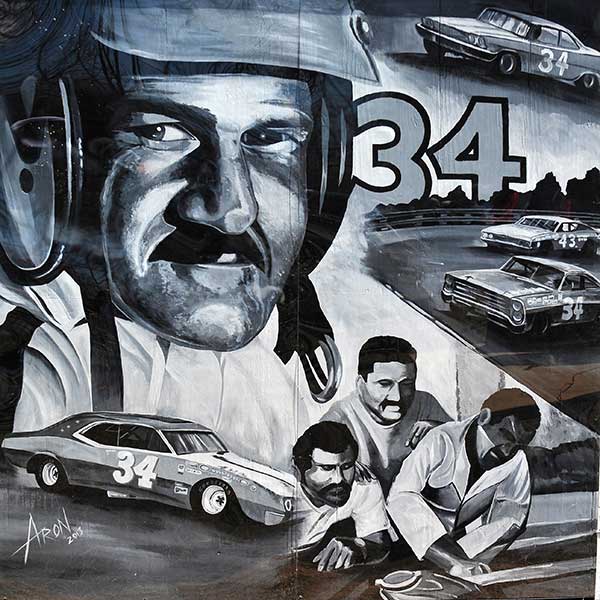
A mural in Danville, Virginia, celebrates Wendell Scott’s racing achievements.
“His character kind of became bigger than life. Everybody felt like he deserved it,” Sellers says. “… The general consensus was with everybody in this area that they were glad to see him go in the Hall of Fame, and the people that knew him knew that he represented our area very well.”
Bert Sellers stayed involved in racing and then some. The bug didn’t skip a generation with his son, Peyton, who won the 2005 national championship in NASCAR Whelen All-American Series competition and locked up his second South Boston Speedway championship last season.
Peyton Sellers still calls Danville home, operating a successful race-car manufacturing business barely five miles away from the ghost track’s footprint. When NASCAR representatives came calling to celebrate the his national title nearly 10 years ago, a highlight of their visit was a lap around Danville Speedway’s dusty remains.
MEMORIES AND KEEPSAKES REMAIN
The rumble of racing engines has been silent at the track for more than 20 years now. Danville Speedway’s comeback lasted just three seasons (1992-94), ending when Raymond grew increasingly nervous about the rising cost of insuring the place.
An out-of-control car lifted and clipped the flagstand one season, a near-disaster that prompted him to double down on guardrails, adding a third and fourth row of retaining fence on the frontstretch. When an errant tire bounded over the first-turn embankment, landed beside a spectator area and eventually came to rest against a Toyota pickup in the parking lot, Raymond knew his days as a race track owner were almost done.
“I was never the same,” Raymond said. “That one wheel could’ve killed two or three people. We ran it one more season, and I’m like, ‘I can’t stand no more of this. We’re going to lose everything we got.’ “
But there’s still a twinge in Burdette’s voice that shows he still has the itch when he stands on the frontstretch, looks off into Turn 1 and talks about the old days running his outlaw track.
The late-winter afternoon is so peaceful that you have to imagine the sights and sounds of wedge-shaped dirt late models, hustling in a power-slide through the banked corners.
“Them cats was crazy, God knows they were. They were wild,” Raymond says, reinforcing the slogan that souvenir programs touted in its comeback season — If you can’t sling ’em, don’t bring ’em.
The fond memories remain down here, not just for Burdette, but for Sellers, the Scott family and the rest of the Danville community. Raymond clings to the staple-bound program — signed by members of the Scott family — from Oct. 18, 1992, the night of the track’s Wendell Scott tribute race. Bert Sellers still has 8-millimeter color film footage from the track’s first stint that he had converted to VHS tape, but “I guess now that’s obsolete,” he says. “I need to have it put on a disk now.”
Keepsakes remain, but the track sits idle against the advancing march of nature. Erosion has taken its toll on the banking and the mangled guardrails, and trees now sprout from the low-lying land where a small pond once stood, between the third and fourth turns.
“Dirt racing seems to be coming back in this area some,” Bert says with a slight glimmer of hope, “but I think that track’s seen its day now.”
Mother Nature may be winning that race, taking back the man-made playground and making the odds of another comeback that much slimmer. But the reigning champion just off Highway 58 is racing folklore, an enduring legacy behind the latched farm gate that all started with Wendell Scott’s called shot on the eve of opening day in 1957.