Bruce: Whether dominant or just good enough, everything is equal again
RELATED: Follow your picks in the Perfect Chase Grid Challenge for chance at $100,000 prize
Brad Keselowski‘s average finishing position in the first three races of this year’s Chase for the NASCAR Sprint Cup is an impressive 3.3.
Team Penske teammate Joey Logano was just a shade better at 3.0.
It’s been the most impressive pairing since the Road Warriors climbed into the wrestling ring.

Kasey Kahne, meanwhile, idled into the start of this week’s Contender Round with a hefty 18.7 average.
Others were better than the Hendrick Motorsports driver, some by a lot, some by not so much.
Competitively, the gulf from the top to the bottom of the 12-car Chase field looks about as wide as the Mississippi. It’s product of numbers perhaps — as the field dwindles, so too should the gap between the best and the rest.
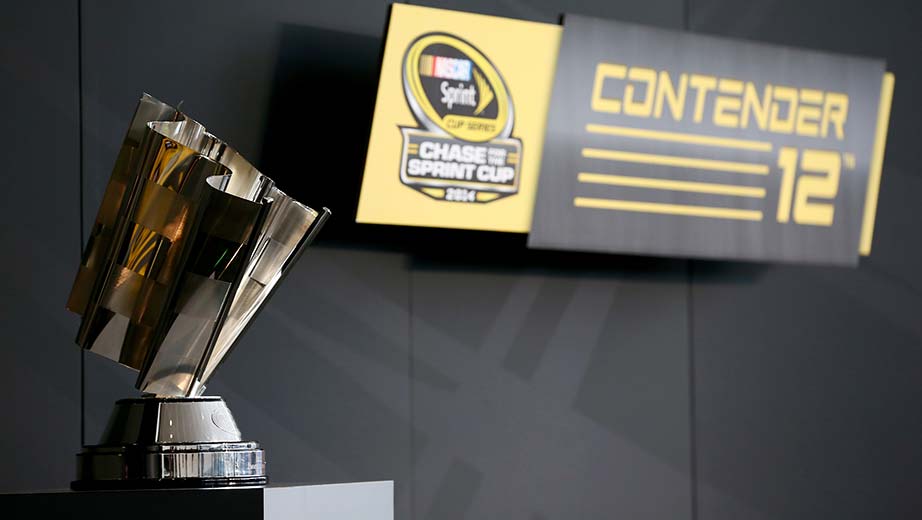
Yet when the 12 remaining Chase teams roll their cars off the back of their haulers Friday at Kansas Speedway, each will have 3,000 points. The good, the bad and those we’re still not so sure about.
Advancement in the Chase is the Monopoly equivalent of passing “Go” and collecting $200. Some got a “Get Out of Jail Free” card to boot.
All square. Even Steven. Or maybe it’s Stephen.
So now we’re down to a dozen teams and three more races, after which four more drivers will discover they peaked too soon, peaked too late or failed to peak at all.
It’s the ultimate game of peak-a-boo-boo.
The sport that isn’t like other sports is more like other sports today than ever. Baseball teams are just beginning postseason play, and those that advance don’t get to bring along the runs scored in previous contests. Every game begins 0-0.
Meanwhile, back in the Chase, points have always separated the field. Sometimes by a lot, sometimes by a little, but it was always there.
And to some extent, that’s still the case.
One or more positions in every round of this year’s Chase have been, or will be, determined by points earned. Three of the original 16 drivers that advanced into the postseason qualified based on points earned through the first 26 races.
Winners from those championship-eligible teams will continue to advance as the Chase progresses, with the remainder of the field determined at each break by points standings.
Even the lineup for the all-important Championship Round will fall back on points to determine at least one of the final four positions.
The difference this time around is that regardless of how you manage to advance, eventually the competition is allowed to catch up. Points haven’t been tossed aside, but they now come with expiration dates attached.
Until the season’s final race, you don’t have to beat everyone, just enough of them to carry you safely into the next round.
There’s an old joke that goes something like this:
Two hikers are making their way off the mountain when a bear suddenly jumps out of the bushes. Both hikers begin running, but one eventually stops to put on a pair of running shoes.
“Are you crazy?” his companion asks. “You can’t outrun a bear!”
“I don’t have to outrun the bear,” the first hiker says. “I only have to outrun you.”
And that’s pretty much the situation facing drivers in this year’s Chase.
Win and you’re guaranteed to advance.
For everyone else, it’s a matter of making sure you’re better than the rest.
MORE:
|
|
PLAY: Monitor your Chase Grid Game picks
|
WATCH: Latest
|
FOLLOW LIVE: Get
|
|---|

Chase news


