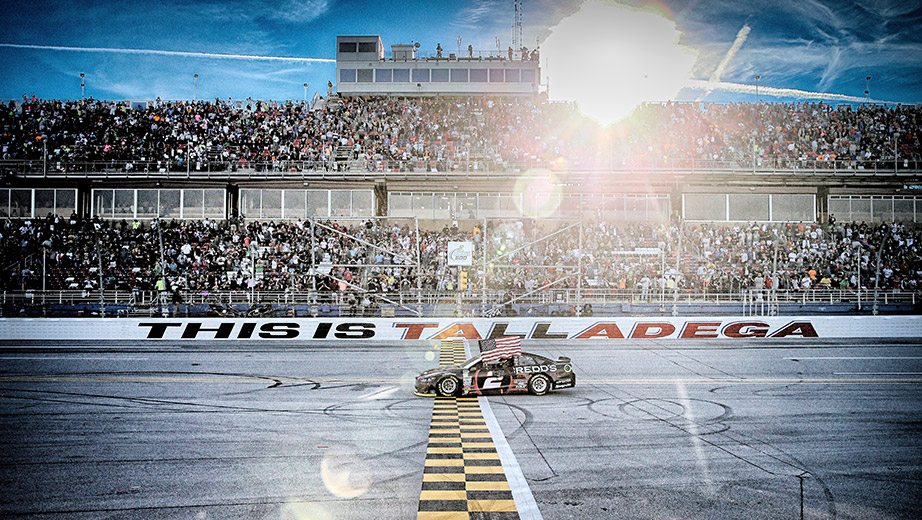
NASCAR reserves right to have more than one vehicle on track at Daytona, Talladega
Play: NASCAR Fantasy Live
RELATED: Official NASCAR release
NASCAR plans to revise its qualifying procedure for all three national series at superspeedway races for the remainder of the season at Talladega Superspeedway and Daytona International Speedway.

Beginning in May at Talladega, there will be two rounds of qualifying with drivers turning one timed lap. The top 12 will advance to the final round. Each driver will take a warmup lap, the timed lap and a cool-down lap before returning to pit road.
Based on a random draw, vehicles will line up on pit road for the first round — rather than nose in or nose out in a pit stall — and NASCAR will release drivers at a predetermined interval. The sanctioning body reserves the right to have more than one vehicle on track at a time. It’s likely that two vehicles will be on track at the same time, but the second vehicle won’t impede or help the one it follows on track.
“Once we send the first car out, it will go out and take the green flag and then as it comes by to take the checkered flag, we’ll send the second car out,” Sprint Cup Series Managing Director Richard Buck told NASCAR.com on Monday.
Following each lap, NASCAR will impound vehicles, and there will be a 10-minute break between rounds. Only during that break may teams make adjustments, and they will only be allowed to adjust tape and use a cool-down unit at that time.
The final round qualifying order will be set from slowest to fastest speeds in the first round with starting positions 1-12 determined by the fastest laps in that second session.
“That second round they will go out in the order of the slowest to the fastest so it will build with some excitement there,” Buck told NASCAR.com. “It will give the opportunity for the drivers and the teams to prepare the car, but it won’t be as we’ve seen in the past, where they spend an extra amount of time and effort with different parts and pieces to go on a car just for single-car qualifying because it is an impound race. So what they are qualifying, will be what they race.”
Buck said that the differences between how teams were qualifying at superspeedways as opposed to all the other tracks was very noticeable.
“The superspeedway qualifying is a different animal. Obviously, to run in packs and to get your fastest time, the feedback we’ve gotten from the drivers and the teams is that they want to be in the back and get that draft and that slingshot. So it’s almost reverse strategy that we’ve seen on the superspeedways. Rather than wanting to be at the front and lead and have clear air, everybody fights to get to the rear so they can get that draft and put in that quickest lap. And that’s kind of an opposite mentality of what is normal, that we know is normal on the other style of qualifying.
“With the feedback from the teams and looking at our past qualifying sessions, that coupled with knowing the effort that goes into the single-car qualifying, the amount of effort and money that goes into a vehicle that is just built for one qualifying lap or two qualifying laps only, we were able to come to a place that feels good for us and the feedback from the garage is it seems to be best fit.”
The changes come after two versions of group qualifying at Daytona in February. Following NASCAR Sprint Cup Series Coors Light Pole Qualifying for the Daytona 500 with two groups in the first round, NASCAR broke the XFINITY and Camping World Truck fields into four groups.
Accidents marred both versions and drew criticism from drivers. Steve O’Donnell, NASCAR executive vice president and chief racing development officer, vowed the sanctioning body would “continue to review the qualifying format for future superspeedway events.”
Qualifying procedures for the 2016 Daytona 500 will be announced at a later date.
MORE:
|
|
PLAY: Sign up
|
WATCH: Latest
|
FOLLOW LIVE: Get
|
|---|
NASCAR news


