Restrictor plate tracks return to single-car qualifying starting this weekend
Related: Biffle tops final practice | Stenhouse fastest in first practice
TALLADEGA, Ala. – Defending NASCAR Sprint Cup Series champion Kevin Harvick said, “it just didn’t work.”
Stewart-Haas Racing teammate Danica Patrick likened it to the TV show “Survivor.”
The shelf life of group qualifying on restrictor plate tracks has expired.
Tradition, some would say sanity, has returned.

When NASCAR Sprint Cup and XFINITY Series teams hit the 2.66-mile Talladega Superspeedway for qualifying Saturday, fans won’t see packs of cars jostling for position, trailing cars laying back trying to catch the air and possibly ride the draft to a front-row starting spot.
They also won’t see multi-car crashes similar to the one that unfolded at Daytona when the format was put into play for this year’s season-opening race.
Instead, teams will go it solo with one driver’s qualifying attempt coming to a close as the next begins.
“I feel really good about what it has evolved into,” Harvick said Friday at Talladega, site of Sunday’s GEICO 500 (FOX, 1 p.m. ET). “I think all the competitors feel that way. We were tearing up a lot of cars in qualifying.”
According to NASCAR officials, each driver will complete three laps – the first to get up to speed, the second which will be the official qualifying lap, and a third as he or she returns to pit road.
Approximately halfway through the qualifying lap, the next driver in line will head out for his or her attempt.
The qualifying order in each series will be based on a random draw for the first of two rounds.
In the final round, the order will be based on first-round times, from slowest to fastest.
Each session is expected to take less than one hour to complete.
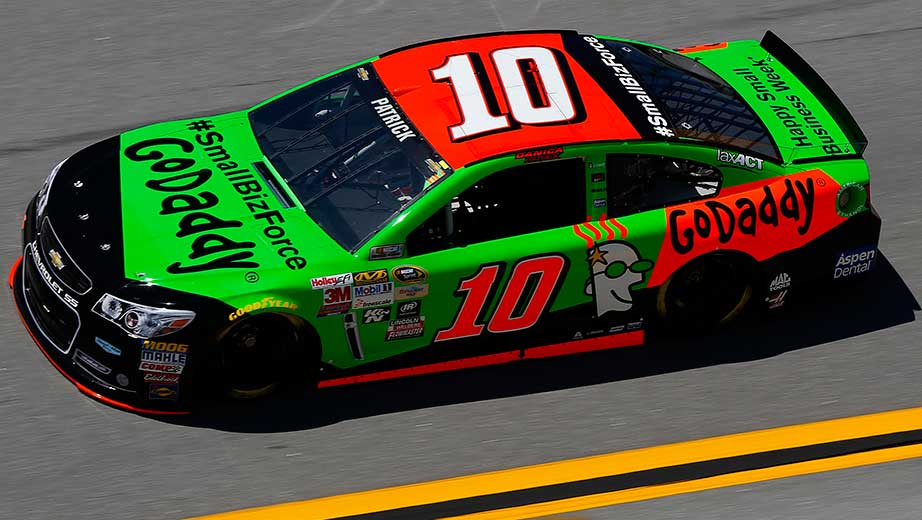
Patrick’s only pole in the Sprint Cup Series came in the Daytona 500 two years ago, under the single-car qualifying format.
“It just was, I feel, like a very unnecessary stress for everybody,” Patrick said of the group qualifying format at Daytona and Talladega. “The amount of conversations and meeting with drivers … I felt like I was on ‘Survivor’ … trying to make alliances and finding out the best thing to do was not have any and just be the one that tags onto the group. Because nobody really cared if it was just one car.
“But when a group of five saw you, you’re like ‘oh, I can’t have all five of those going faster.’”
The speed and closing rate of a car, or cars, catching a group in front often meant the pole winner wasn’t the first to cross the line.
Friday’s two practice sessions saw plenty of pack drafting but no significant contact. Roush Fenway Ford driver Ricky Stenhouse Jr. (200.780 mph) led the opening practice while teammate Greg Biffle (197.929 mph) topped the leaderboard in the second.
Biffle, who has one restrictor plate pole and one win, says he’s pleased with the change to the qualifying format “because it’s the speed of the car.”
“It’s not who got the lucky lane or who got a draft or who laid back so far and got sucked up on a big run,” Biffle, 45, said. “… I feel (this is) the right way to do it.”
Group qualifying will continue to be used to set the starting lineup at tracks other than Talladega and Daytona. Such a format works well at those shorter tracks, Harvick said.
“I think there have been a lot of things that have changed, but … our qualifying change has been week-in and week-out probably one of the better changes that we have had in our sport in a while.
“I think when you look a the adjustment and the time everybody has put in, I hope it evolves into that … this weekend as well.”