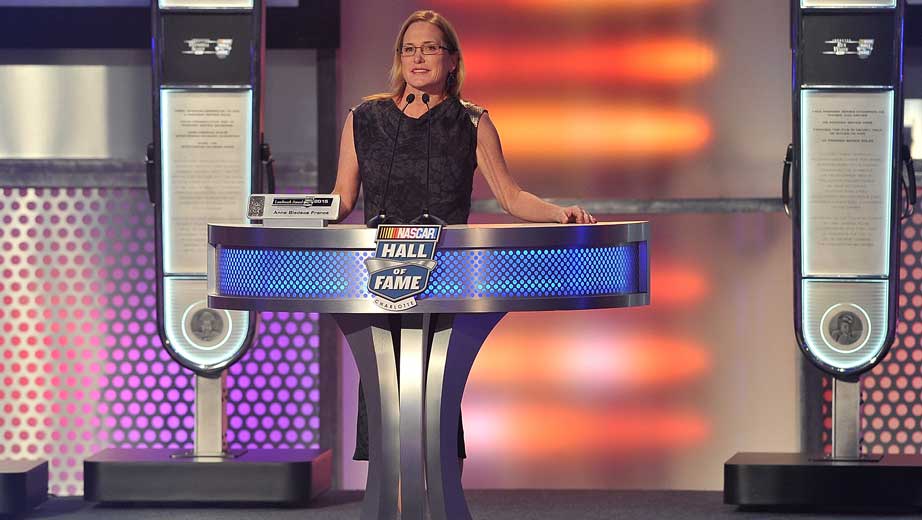
Lesa France Kennedy, the chief executive officer of International Speedway Corporation and a member of the NASCAR board of directors, has helped shape the vision of NASCAR — both its present and its future.
France Kennedy was profiled in The New York Times, which covers influential women in leadership positions for its “Women in Business” series. She revealed plenty about herself, her beliefs and even her management style.
RELATED: Read The New York Times story
It’s an intriguing look into the mind of one of NASCAR’s visionaries, whose mottos — “You’re always looking to do new things” — are prevalent now more than ever.
Look no further than Sunday’s race at Talladega Superspeedway serving as an elimination event in the Chase for the NASCAR Sprint Cup, or to the Daytona Rising project — a massive $400 million undertaking that will reimagine the race-day experience at the “World Center of Racing.”
Watch clips in the video provided by the The New York Times, and below are some additional excerpts from the story:
• “You’re always looking to do new things with the business, and think about what people really want. … The pace of change in the world of motorsports is so fast and furious that you have to make sure you’re headed in the right direction and at the right speed.”
• “I had always been part of the ‘solve-it team,’ and when you become CEO, people often come to you with the problem already solved. If you’re used to being in the middle of things, it takes time to step back a little bit and let them work it out.”
• “First impressions are so important in terms of fitting in on the team. The moment you walk in the door, you’re being observed.”
• “I found the best way to get invited (to key meetings) was to add value and find out what their challenges and their struggles were.”
• “Our business moves so fast, you have to be willing to jump in and do whatever job needs to be done. If we have a rainout, you may be out in the rain giving people information. The people in our building know that, and they all are a part of it. They understand that culture.”