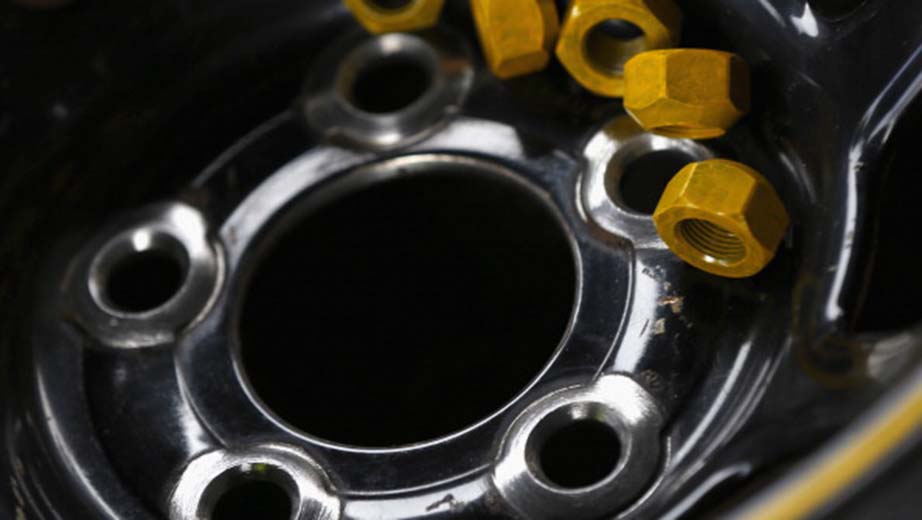
This time last year, teams and crews were trying to figure out how much they wanted to gamble on hitting fewer than all five lug nuts. A year later, we have a better idea of what that rule has produced.
NASCAR competition officials repealed a rule that monitored and penalized loose or missing lug nuts ahead of the 2015 campaign. At the beginning of that season, only a few crews were hitting four nuts in hopes of gaining a time advantage. By the middle of the year, at least half of the teams were hitting four. By the time The Chase came around and the season was in the fourth quarter, almost every team on pit road was hitting four nuts.
So, is the risk really worth the reward? Absolutely.
Tightening each nut takes about 0.2 seconds. During a four-tire stop, each changer will hit four patterns (two off and two on). Simple math tells you that’s roughly 0.4 seconds each changer can save during a pit stop by switching to four lug nuts instead of five.
Over the last year, pit-stop times have dropped dramatically and it’s because of this rule. Teams have improved their equipment and made modifications so that their air guns can keep tires tight while only hitting four nuts.
The obvious negative is loose wheels. However, it’s a rule that polices itself, because when a driver feels a vibration, he often comes to pit road to remedy the situation or is forced to ride it out. With the Chase for the NASCAR Sprint Cup now focused so much on wins — and risking fast stops to get those wins — a slower, five-lug stop has been less popular.
That shows in the speed of current pit stops. Two years ago, only a handful of 10-second stops were being done. Last year, there were plenty. This year, it’s slowly becoming the norm.
Will a nine-second stop be next? We’ve seen film of nine-second stops in practice, but not yet in a race. It’s only a matter of time.
For more pit crew news, visit PitTalks.com.