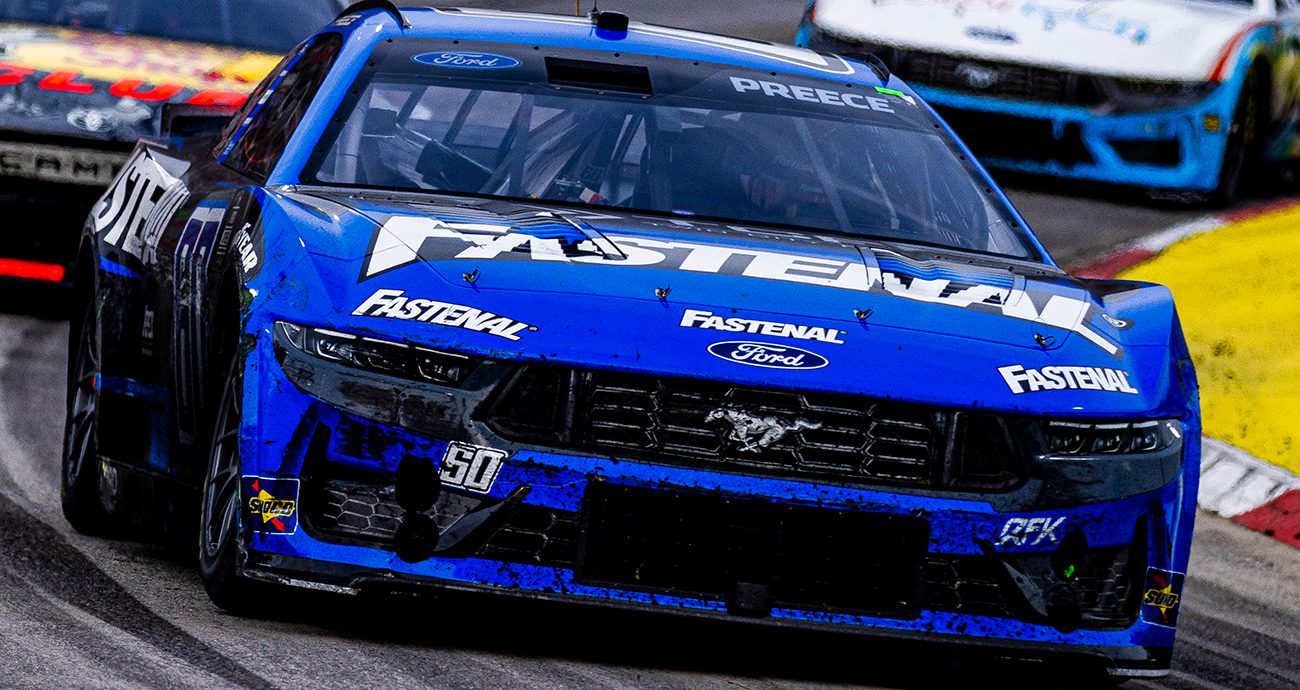
After placing seventh in Sunday’s NASCAR Cup Series race at Martinsville Speedway, Ryan Preece considered his strong finish a bit of a surprise.
“I didn’t expect that one,” Preece said after the race, reflecting on his third top 10 in a row. “We’ve got some work to do to be able to drive through like some other cars do, but I think we’ve got some good ideas and obviously a little luck went our way today.”
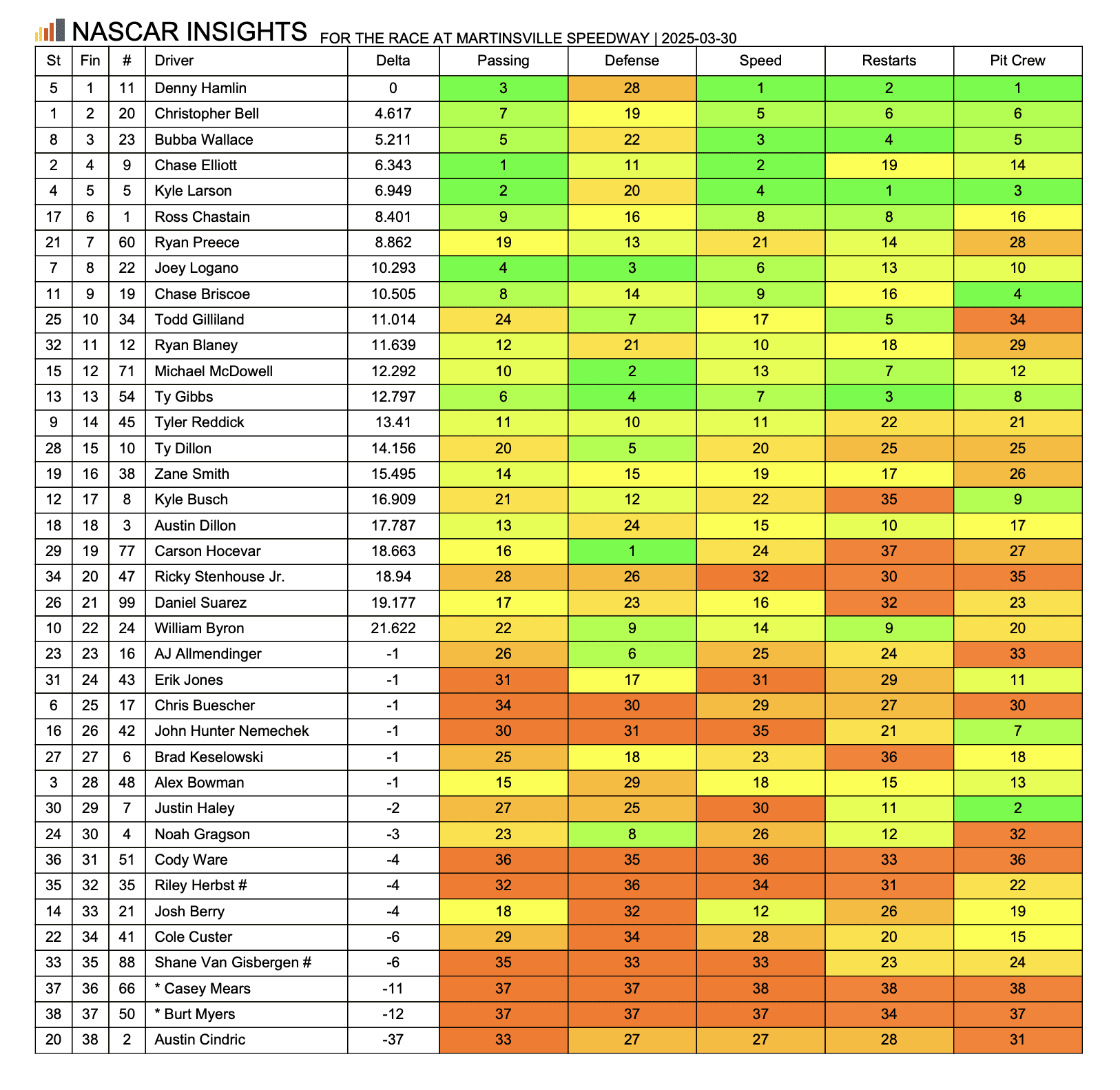
So how much truth is there to Preece’s luck? Using data from NASCAR Insights, Preece’s explanation makes sense.
RELATED: Cup Series standings | NASCAR Insights analysis explained
NASCAR Insights is using five major categories to analyze drivers throughout the season: Passer Rating, Defense Rating, Speed Rating, Restart Rating and Pit Crew Rating. In Sunday’s race, Preece ranked 13th or worse in all five of those categories; in fact, he was the only top-15 finisher to not rank in the top 10 in any of the five.
Starting Sunday’s 400-lapper in 21st, Preece and crew chief Derrick Finley used some early strategy to gain stage points as a caution with nine laps to go in Stage 1 allowed the No. 60 RFK Racing Ford to stay out and finish seventh in Stage 1. Before the yellow, Preece was running in the 30s. When he pitted during the break, he lost that track position and didn’t have the raw speed to climb back through the field. According to NASCAR Insights, Preece ranked 21st in Speed Rating, evidenced in part by a 23rd-place finish in Stage 2 and his 20.4 average running position for the day.
Preece continued to run in the 20s throughout the final stage until green flag pit stops fell in his favor. Shane van Gisbergen went for a spin because of a loose wheel, bringing out a caution at Lap 275. Because Preece had not yet pitted, that allowed him to come down pit road for fresh Goodyears under the yellow.
Restarting with a slight tire advantage, Preece drove from the mid-teens to seventh at the end of the race, benefitting from a 74-lap green-flag run to the finish.
But how do some of the other metrics from NASCAR Insights factor into Preece’s finish?
Preece’s team finished 28th in Pit Crew Rating, a rating that, based on the eye test, feels a bit surprising for a seventh-place finish. For reference, race winner Denny Hamlin statistically had the best pit crew on Sunday, and Joey Logano, who finished directly behind Preece, had the 10th-best and ranked top six in passing, defense and speed.
Throughout the first half of the race, Preece complained to his team about handling issues. He battled a tight condition overall, telling Finley: “Whatever we did overnight completely killed it.” Because the team had more speed during the final long run, Preece’s pit stops earlier in the race were likely longer due to more adjustments, especially since he has the 11th-best pit crew this season.
MORE: Power Rankings: Where Preece sits
“They made the right adjustment when it mattered,” Preece said, referring to his pit crew. “There are some guys that hit it early and then they fell off. For us, we were at our best there at the end, so I’m just proud of everybody. I’m happy. We’re getting on a roll. At first, this is a place I wanted to take advantage of for points because I felt like Martinsville is in my wheelhouse, so I’m happy we did. I hate talking about points, but every bit matters.”
Preece’s other NASCAR Insights metrics included 19th in Passer Rating, 13th in Defense Rating and 14th in Restart Rating. His best-career finish at Martinsville propelled him up two spots to 14th in the Cup Series standings. It’s also the first time in his career with three straight top 10s – an impressive feat for a brand new third RFK car.
Other notables from Sunday:
– Despite having the highest Defense Rating, Carson Hocevar finished 19th, in part due to recording the second-lowest Restart Rating.
– Justin Haley had the second-best pit crew at Martinsville but was 25th or worse in Passer Rating, Defense Rating and Speed Rating as he finished 29th.
– William Byron placed top 10 in Defense Rating and Restart Rating, but finished 22nd in the race largely because of a Passer Rating and Pit Crew Rating in the 20s.
– The top-five finishers statistically had the five fastest cars.