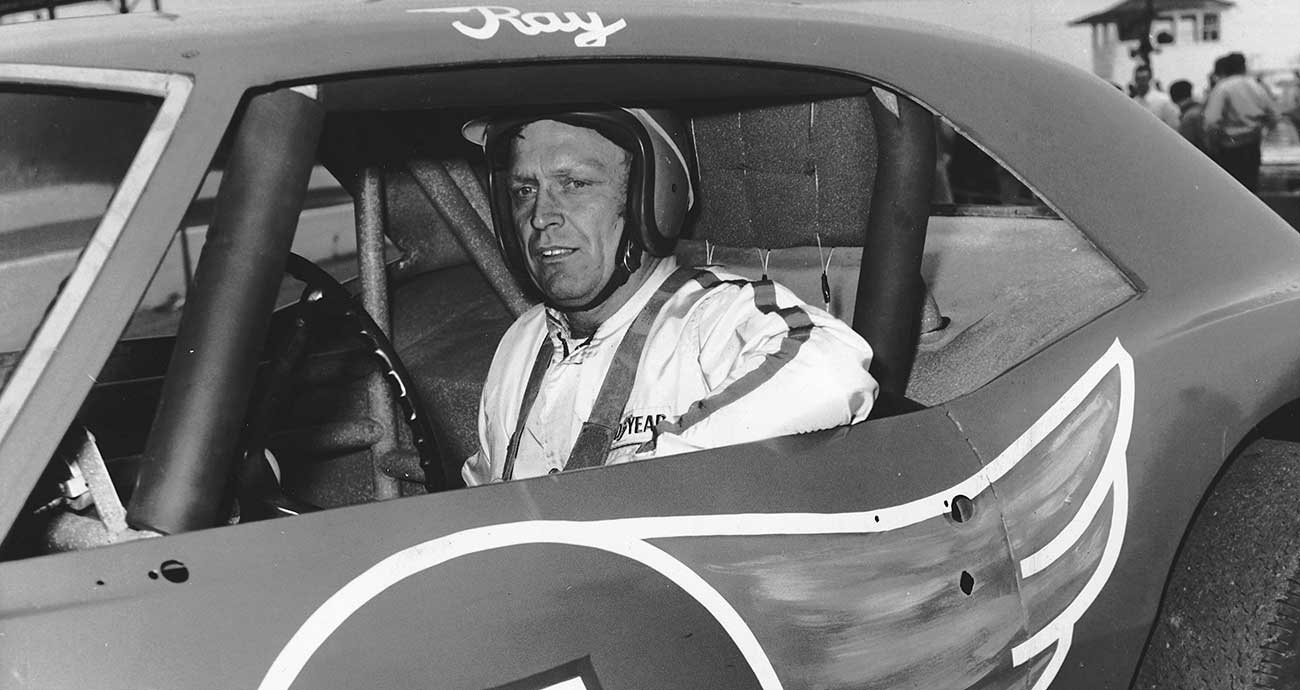
On his journey to the NASCAR Hall of Fame, Ray Hendrick raced in two locations.
Anywhere. Everywhere.
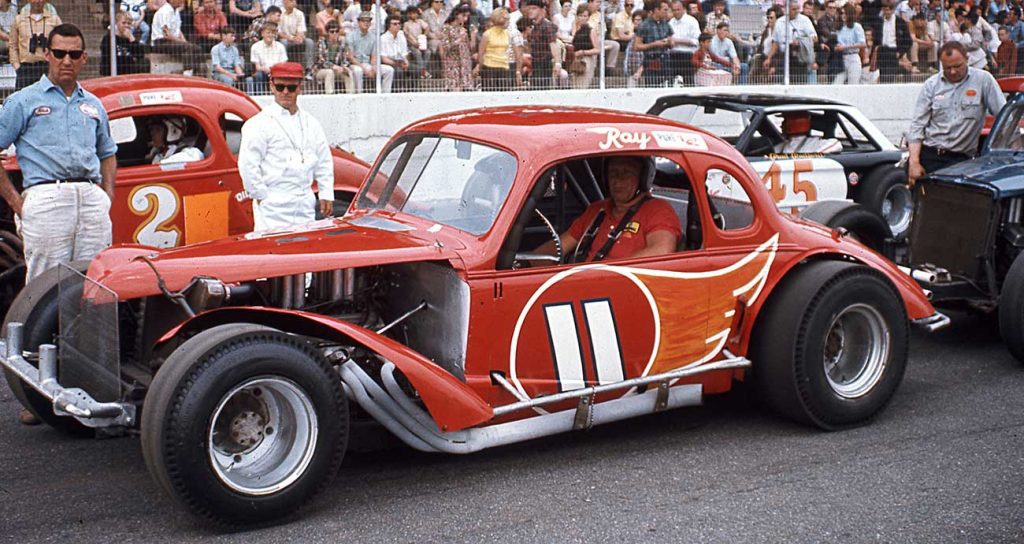
Around the tough short tracks of New England, in the racing hotbed of Richmond, Virginia (his hometown) and onto the faster superspeedways at places like Charlotte and Talladega, Hendrick raced and won. He won so many times – the record-keeping of the early years was spotty, at best – that his career total is lost to history. The number 700 wins has been tossed around for years in the Hendrick story. No one will ever know for sure, but those who raced against him, especially in the Flyin’ 11 Modified coupe he made famous, typically were surprised by Hendrick only when he didn’t win.
“When you raced against him, you raced against the best,” said Bill Dennis, among the short-track stars who challenged Hendrick frequently. “He wanted to lead every lap. He never laid back one inch. He was going to the front whenever he could. When you saw him on your bumper, you knew he was coming by. If I was doing all I could against him, sometimes I’d just let him go.”
Ricky Dennis, Bill’s son, said Hendrick called second place “the first loser. He was a hell of a competitor. When he was there, we had to hope we could beat him. More times than not, we didn’t.”
Virginian Brian Tidball grew up with Hendrick’s sons and saw their dad race to the front many times.
“He was phenomenal to watch,” said Tidball, who has researched Hendrick’s career. “He won so much at some tracks that they put a bounty on him. Usually it didn’t work. He told me during the late 1950s and early 1960s they could race six or seven times a week, and he’d win four or five.”
Hendrick’s star was made in the NASCAR Modified division. Driving first for car owner Ira Smiley and later for John Tadlock, Dick Armstrong and the legendary Jack Tant-Clayton Mitchell team, among others, Hendrick quickly earned a pair of nicknames: Mr. Modified and Rapid Ray.
RELATED: NASCAR Hall of Fame celebrates Class of 2026
He raced from 1950 to 1988, concentrating on modifieds and late model sportsman races. He ran 17 times in the Cup Series but never had consistently competitive equipment. Those visits to the highest levels of stock cars convinced him he would have more fun – and make much more money – dominating elsewhere, particularly the Modified ranks.
The wins came in torrents.
Over the years, he had fierce battles with other stars of the time, including Bugs Stevens, Richie Evans, Fred DeSarro, Sonny Hutchins, Tommy Ellis and Dennis.
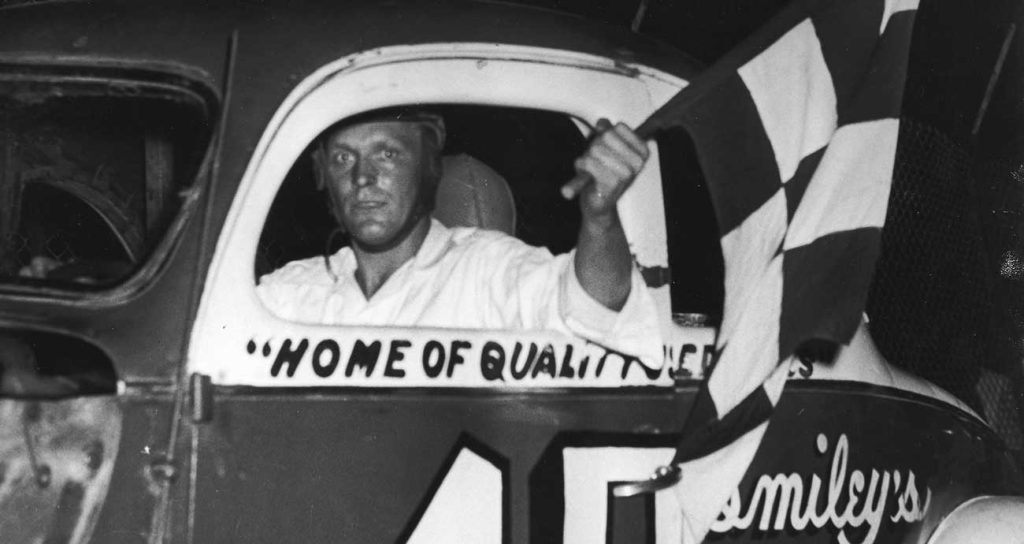
He won the track championship five times – four Modified and one Late Model Sportsman – at South Boston Speedway, one of his favorite haunts. He scored an all-time record 20 victories at Martinsville Speedway.
Short tracks were Hendrick’s bread and butter, but he also had wins at high-speed ovals in Dover, Talladega and Charlotte.
Hendrick’s glory days were recorded in cars powered by engine builder Jack Tant and chassis expert Clayton Mitchell. “Those guys made me,” Hendrick said in an interview after he retired. “I was driving for Jack, and then Clayton came along with us and nothing could touch us.”
Tant remembered racing at wicked Langhorne Speedway in Pennsylvania for the first time with Hendrick at the wheel in the 1969 Race of Champions. Practically a perfect circle, Langhorne was fast, very dangerous and not for the timid.
“I had read about Langhorne a long time before we got up enough money to run it,” Tant said in an interview after his racing days. “There they put you on the grid in the order that you checked in, so we got there before dawn. When the sun came up, I looked around and could see for the first time all the big guys who were there. Ray started 11th. In 10 laps, he was leading the race.”
Hendrick won that day against some of the biggest names in the sport, then won the RoC again when it moved to Trenton, New Jersey in 1975.
MORE: Scenes from Class of 2026 Voting Day
Virtually the only significant track where Hendrick failed to win was Daytona International Speedway. That he missed Victory Lane at one of auto racing’s most famous tracks was one of the few disappointments in his driving career.
John Dodson, now owner of two car dealerships in Williamsburg, Virginia, owned a race car Hendrick drove for part of one season. He and Hendrick met when Dodson was a teenager and remained friends until Hendrick’s death in 1990.
“They’d race four or five nights a week, and it was nothing for Ray to win two, three or four,” Dodson said. “He knew how to win everywhere, and if the car was right you wouldn’t stop him.
“He ran some for Junie Donlavey (a longtime NASCAR car owner and a fellow Richmond native). A guy carried me over to Junie’s shop when I was about 14. They had a room off to the side with a pool table. They covered the table and played poker on it one night a week. I looked around that night, and Sonny Hutchins and Emanuel Zervakis and guys like that were playing. They would cut five dollars out of the pot on every hand and throw it in a bucket. That’s what Junie ran on.”
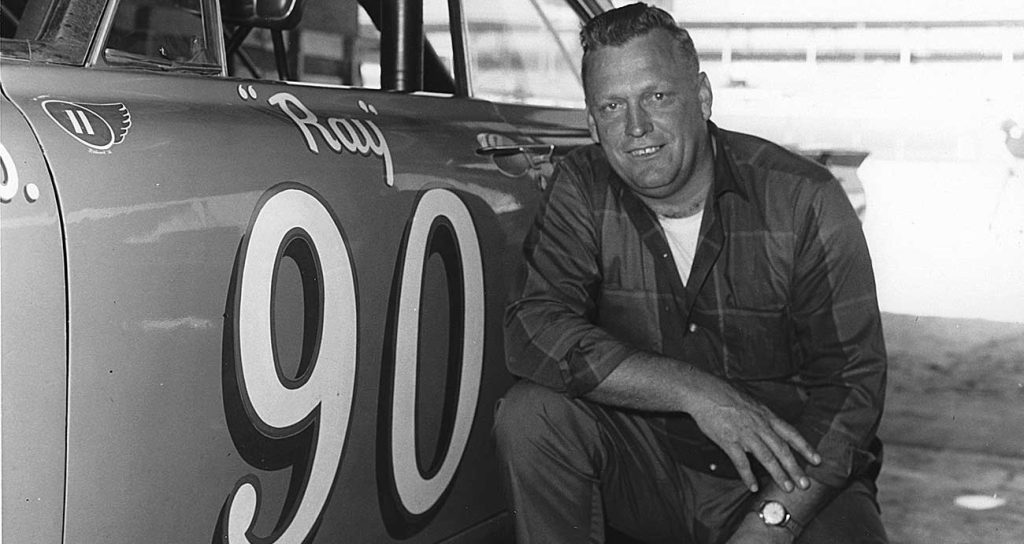
Jimmy Spencer, a Modified star who drove on to become a winner in Cup, raced against Hendrick on the tight tracks of the Modified tour.
“He was like David Pearson and Richie Evans and Bobby Allison, guys like that,” Spencer said. “He would go race where the money was. The way he figured it, he knew everywhere he went that he would finish no worse than third or fourth, and that was good money every time. You win a thousand or a couple thousand every time out, and you’re doing great.
“I remember a race at Thompson (Speedway, in Connecticut) when I was running second late in the race. Ray had some kind of trouble and had been lapped. I came up on him trying to get up to first, and no matter what I tried I couldn’t get by him. I finished second. After the race, I went up to him and said, ‘Mr. Hendrick, why did you race me so hard when I was trying to win the race?’ He put his arm around me and led me over to the car and pointed at the bumper. He said, ‘If you want to get my attention, use that. That would have done the job. But I race for every position.'”
Hendrick had talents beyond racing. He was an expert carpenter. He worked for his brother’s construction company as a foreman and often put in a full day’s work at a building site before heading out to race that night. Hendrick’s grandson, Chuck, operates an automotive repair shop and works in a garage bay built by Hendrick.
“Ray was the type of driver who would absolutely run you into the ground if the car was capable,” Tidball said. “I remember a 400-lap Modified race at South Boston that he won by five laps.
“He was a tough guy. He wrecked in a 300-lap Late Model Sportsman race at Langley. Fell out of the race. Buddy Baker wanted a relief driver, and Ray got in his car. Tommy Ellis was leading and came up to lap Ray. Ray blocked his every move. Finally, Ray got tired of it and gave Ellis a shot in the corner. Later, Ray said, ‘The next time that little SOB touches me, he’ll be picking pine bark from his teeth.’ But Ray later drove one of Tommy’s cars at Richmond.”
Hendrick drove most of his career for other team owners but ran one Modified season in cars he co-owned with Donald Guild. Stuart Guild, Donald’s son and a friend of Hendrick’s son, Roy, remembers Hendrick blistering the rest of the field.
“He was the best I ever saw in traffic,” Guild said. “Back in those days, you were in traffic all the time. He just had a knack for moving through, and you very seldom saw him mess up. He was aggressive, but he didn’t get in trouble much.
“Ray ran back in the day when the driver made a huge difference. Now if you’re not in the right car, you’re not going to win, but the driver meant a whole lot more then. He wrestled a car at Trenton (in 1975) to take the lead late and won the race. The car was pushing hard, and after the race Ray’s wrist was so swollen they had to cut his wristwatch off. A tough guy.”
Tant remembered that Trenton race and Hendrick’s pure talent for manhandling a race car. “A car didn’t have to be dead-on for him to win with it,” Tant said. “When you did get it dead-on, he was gone.” Tant said Hendrick was so efficient at controlling a car with manual steering that he “absolutely hated it” when power steering came along.
The race to lead as much as possible cost Hendrick his only real shot at winning the Modified national championship. In the final race of the 1966 season at Atlanta, he needed to finish only a spot or two in front of championship challenger Ernie Gahan, who started near the back of the field. Hendrick started 15th but raced hard in search of the lead and eventually blew a tire, the aggressive run ending his shot at the championship. Gahan won.
“I had a good car at Atlanta, and he (Gahan) had a junker,” Hendrick remembered. “All I had to do was finish, but I went out there and tried to win the race and blew a tire.”
The trophies, plaques and other awards documenting Hendrick’s career were stored for many years in the basement of his home in Richmond. Well-lit shelves spotlighted the Victory Lane hardware. “As a kid, I was fascinated with all the trophies and helmets and flags around in his basement,” said Chuck Hendrick, his grandson. “There were wall-to-wall trophies, hundreds.”
Hendrick’s widow, Janet Belcher (she later remarried), kept the trophies for many years but eventually gave them to other family members and friends when she moved to another residence. “The vivid memory I have from being in that basement as a kid was a checkered flag from Charlotte Motor Speedway,” Chuck Hendrick said. “I’d grab it and wave it around there in the basement. That was the thing I got from there. Now the Hall of Fame has it.”
And the Hall also will have Ray Hendrick soon.
Belcher said she attended every race with Hendrick after their marriage. “We met at Southside Speedway, and I went with him everywhere,” she said. “He was just a natural. He loved it, wasn’t afraid of anything. He didn’t want to give it up, but it got to where the cars weren’t as good, and he’d rather quit than drive like that.”
Hendrick died September 28, 1990 at the age of 61 after a battle with cancer. He was buried in his driver uniform at Westhampton Memorial Park in Richmond. His gravestone describes him as “Mr. Modified” and “A Stock Car Legend.”
MORE: Members of the NASCAR Hall of Fame
Earlier that month, during the Cup Series’ stop at Richmond Raceway, Sonny Hutchins, perhaps Hendrick’s greatest rival, threw a final party for his old foe. Illustrating the respect Hendrick enjoyed across the full NASCAR spectrum was the fact that many of the top drivers of the day, including Richard Petty, were in attendance.
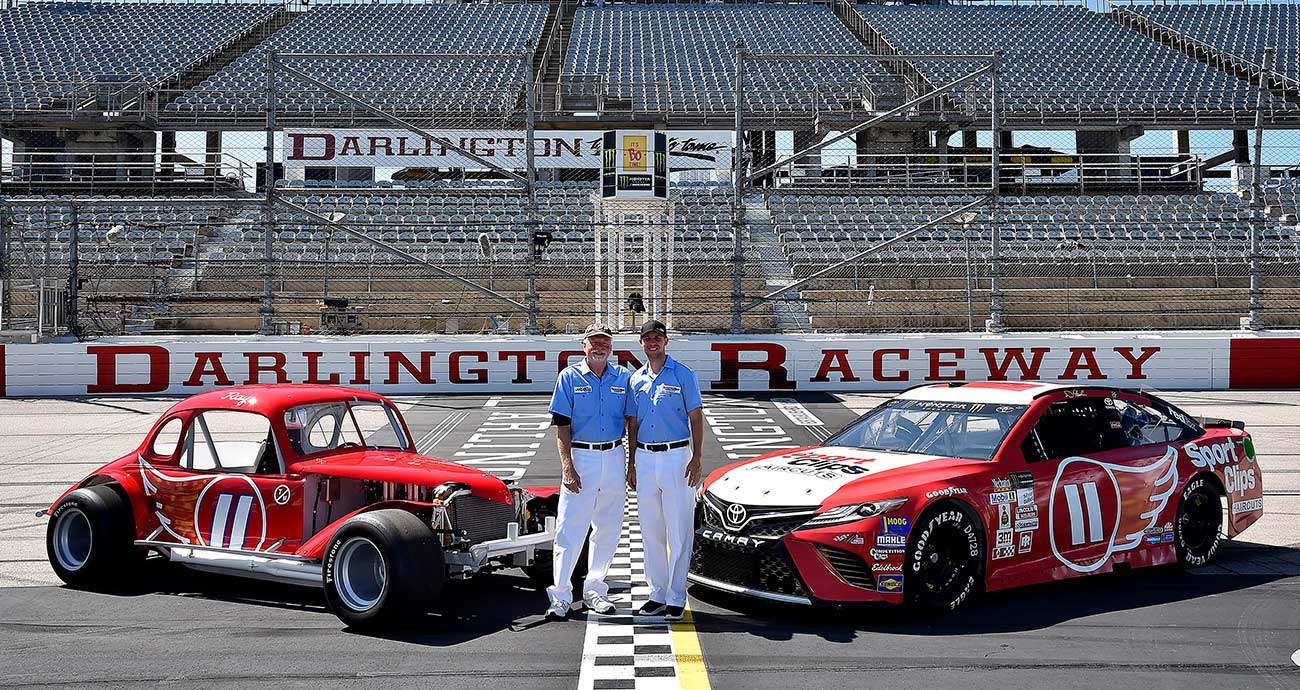
The success of the Flyin’ 11 car was celebrated in 2017 at Darlington Raceway when Denny Hamlin used the car’s paint scheme during Throwback Weekend. A restored Flyin’ 11, now owned by Rick Hendrick, was displayed at the track. Although Rick Hendrick and Ray Hendrick aren’t related, they formed close ties in the 1960s. Rick, then a teenager, traveled with Ray’s team along with Rick’s father, Joe, to races, a small start on the road that would lead him to spectacular success in NASCAR.
Jack Tant was among the guests attending the Darlington race, and he renewed his friendship with Rick Hendrick. Larrie Matthews, a longtime Hendrick Motorsports employee and a fellow traveler with Rick on trips with the Ray Hendrick team, also was there. “Jack told Rick, ‘I’ve had a wonderful life. I’m not sure today isn’t the best day of my life,'” Matthews said. “Rick put his arm around him and said, ‘Jack, if you hadn’t let me and Pop help out some with Ray’s car, we probably wouldn’t be standing here now.'”