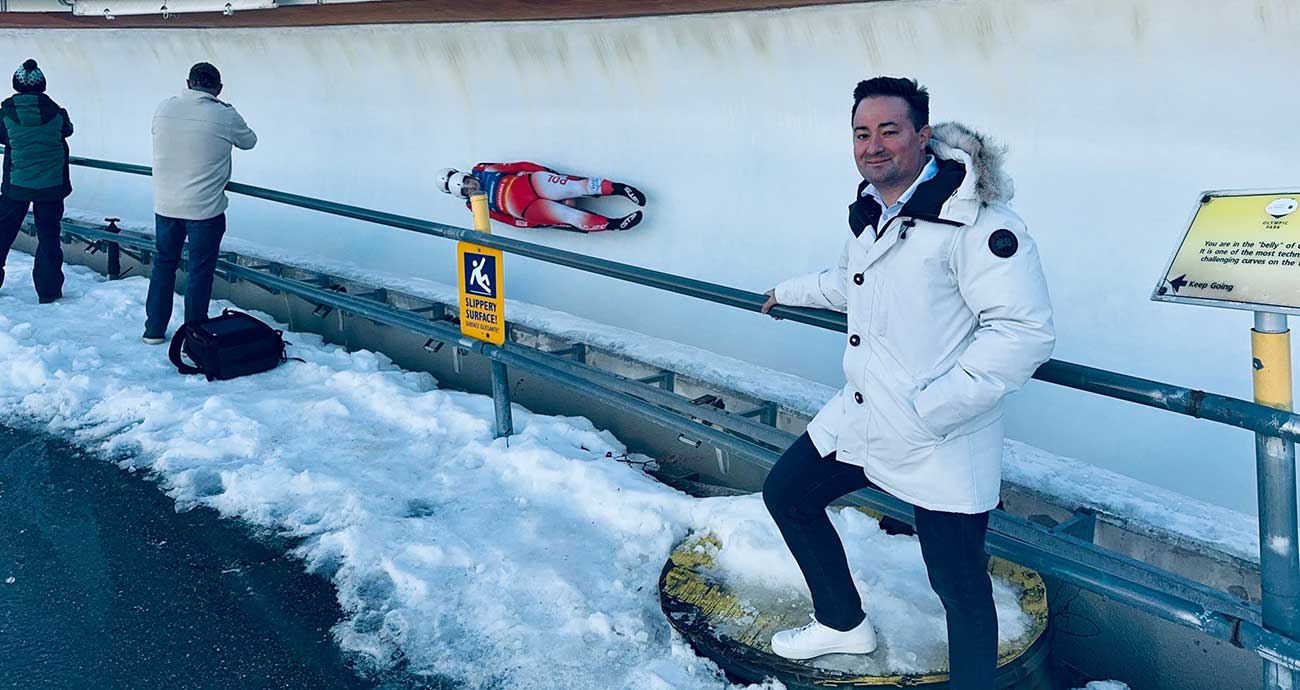
At a glance, the common ground between the motorsports realm of NASCAR and the winter sport of luge should seem small. Then again, after a season-opening exhibition race for the stock-car crowd that faced snow and ice this past week, maybe more overlap exists than expected.
Both worlds, however, are heading to their respective Super Bowls in the days ahead. NASCAR will set its season in motion with next Sunday’s Daytona 500 (1:30 p.m. ET, FOX, HBO Max, MRN Radio, SiriusXM NASCAR Radio), and USA Luge will join the rest of the American delegation at the Winter Olympics, which starts this weekend in Milano Cortina in Northern Italy.
NASCAR and USA Luge announced Jan. 28 that the two organizations have formed a partnership, one that holds mutual marketing potential but also creates a technical alliance designed to give American athletes a competitive edge. That’s where the other connection point between the two sports comes into play.
“We’re both trying to develop or achieve speed, and that involves an athlete — whether it’s a driver in a car or a luge athlete on a sled — they need to be on the best technology that’s aerodynamic and fast,” says Scott Riewald, CEO for USA Luge. “It’s not just for wind resistance, it’s how the car, how the sled interfaces with the ice, materials, the ways to set things up, the properties of materials to improve efficiencies and limit vibrations — all these things. It’s uncanny how many similarities there are between the two.”
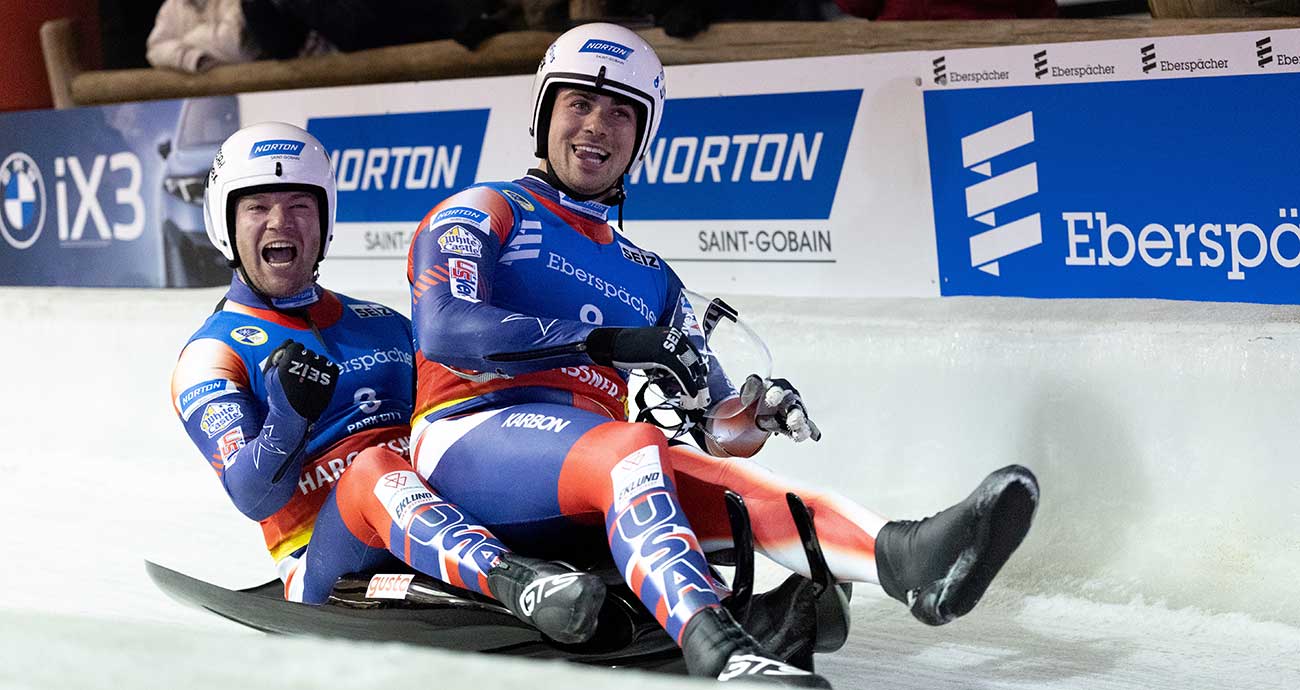
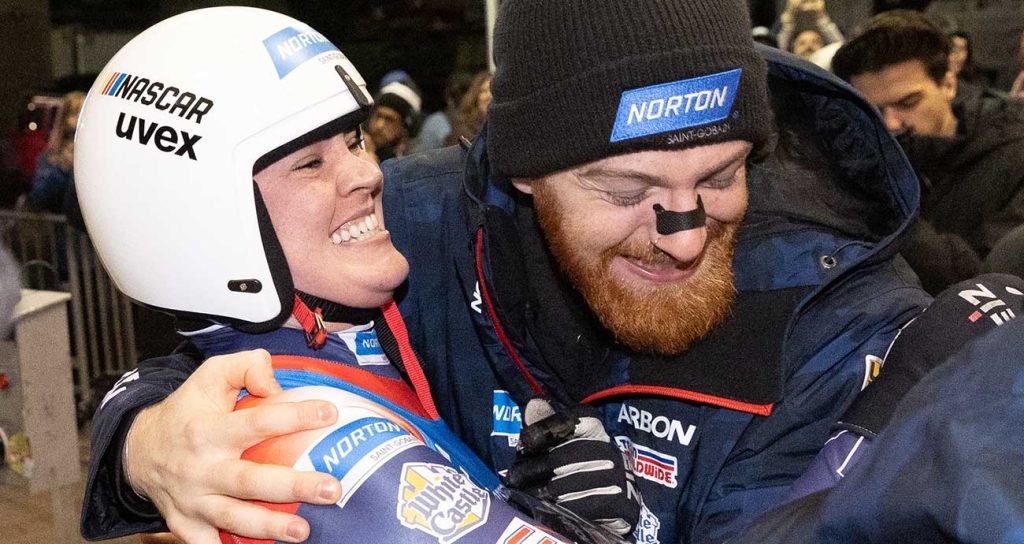
USA Luge athletes carried the NASCAR logo on their helmets during their most recent event, but the arrangement goes beyond mere product placement. Dr. Eric Jacuzzi, NASCAR’s vice president of vehicle performance, led a group that met with the sliding-sport athletes during their Dec. 12-13 World Cup meet in Park City, Utah.
RELATED: NASCAR, USA Luge forge partnership | Daytona Speedweeks schedule
Those early talks prompted USA Luge to ask how NASCAR would design a sled for what’s the fastest of all Olympic sports, with athletes nearing 90 mph on the ice-covered track. Jacuzzi then outlined NASCAR’s approach to building a car, from using computer-aided design (CAD) to computational fluid dynamics (CFD) to wind tunnels and other aero testing.
“Just introducing them to those processes is very cool,” Jacuzzi says. “They have a ton of tribal knowledge about how to build these sleds. … A great example was the men’s doubles guys. I was like, ‘Hey, how did you guys pick this shape for the sled?’ and they’re like, ‘Oh, we thought it looked cool.’ So I’m like, ah, we can probably make some improvements here.”
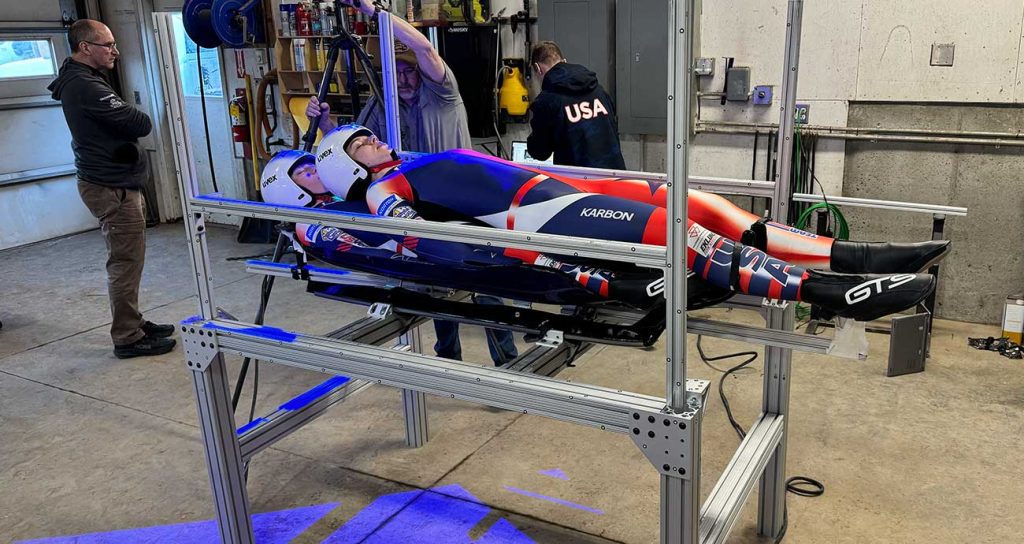
Jacuzzi and crew got to work right away, setting up space in a maintenance shed at the Park City venue to build a makeshift laser-scanning station, one that uses similar technology to NASCAR’s optical scanning for vehicle inspection. Athletes and their sleds were marked, stabilized and scanned, giving NASCAR’s group sets of finely detailed CAD drawings to bring back from Utah. Next steps, Jacuzzi says, will include making CFD models and eventually a wind-tunnel model for further analysis.
Though those interactions came during an especially hectic time in the luge season with Cortina less than two months away, Riewald said the long-term benefit was worth devoting the effort.
“Look, it was a World Cup event, and it was a qualifier for the Olympic Games, and it could have been very easy for the athletes and coaches to say, ‘hey, let’s de-prioritize this and punt this down the road to a later time,'” Riewald said. “So the fact that they took time, came out, got scanned, had their sleds scanned and were excited and enthusiastic about it says a lot in terms of the value that the athletes place on this relationship and what can come from it.”
Zack DiGregorio has had a glimpse of the benefits of NASCAR’s resources already, as he prepares with men’s doubles partner Sean Hollander for his second Olympics appearance.
“I mean, he’s brilliant,” DiGregorio said of Jacuzzi. “We could tell that early, just talking about changes on the sled and what we can do with ourselves to help better the airflow around us. It was fascinating to see these ideas we’ve had for a while or that I’ve seen recently, kind of all across the board. As soon as we kind of mentioned a section of the sled, he would come up with an idea that was very similarly aligned with what we were seeing from other nations. So I think it’s safe to say we’re going to make a huge jump with the scanning and with the testing and with having great minds like Eric involved.”
The partnership isn’t the first crossover between NASCAR and Olympic sliding sports. Former stock-car racer Geoff Bodine created the Bo-Dyn Bobsled Project in 1992, and his team’s designs helped Team USA secure men’s bobsled gold at the 2010 Vancouver Games, filling a 62-year void.
This current agreement in luge will be in place for Milano Cortina, but there’s already a focus on a longer-reaching goal. The Winter Games will return stateside in 2034, when Salt Lake City hosts the Olympics for a second time.
“That’s eight years away, but it’s a home Olympic Games and an opportunity to really showcase USA, not just our sports, but our athletes competing in front of the home fans and sliding on the best technology that they can is a big part of it, and promoting the sponsors and the collaborations that have helped us get there,” Riewald says. “I truly believe there’s going to be great Games between now and then, but that’s an awesome kind of beacon to strive for and set as something that we’re really trying to peak for.
“The tools, there’s so many things I think that NASCAR and the brain power and their understanding of aerodynamics and materials and setups can help us with. You take that knowledge and combine it with our staff and what they know about the specifics of luge, it’s exciting. I mean, it makes me giddy just like thinking about kind of the things that we could do. But it doesn’t happen with a snap of fingers. There’s a roadmap, and there’s process, but that long-term collaboration will be awesome for our sport.”
MORE: 2026 NASCAR Cup Series schedule
Further strengthening the collaboration, Jacuzzi will join the USA Luge team at the Cortina Games, which open with Friday’s Opening Ceremonies (8 p.m. ET, NBC, Peacock). Besides searching for speed, Jacuzzi says he’s also found that branching into a more European-centric sport doesn’t come with the common misconception that perhaps Americans were out of their depth against more alpine competition.
“That couldn’t be further from the truth,” says Jacuzzi, who will be experiencing his first Olympics. “… You could definitely tell there was a ton of respect right from the start of just what we could bring to them. So I think if we didn’t have some fans there, we certainly made some.”
DiGregorio, who teamed with Hollander for the silver medal in the Park City World Cup event, says the luge team is ready for its own crossover once the Olympics are done and NASCAR season is in full swing. The Massachusetts native hasn’t been to a race yet, saying, “I need to change that pretty soon.” His experience so far is seeing it on TV, driving by Watkins Glen International while visiting his grandparents on Seneca Lake in Upstate New York, and seeing Ross Chastain’s viral “Hail Melon” moment from 2022. “I think just about the entire world saw that clip, putting his foot on the gas and not lifting until he saw the checkered flag or God,” DiGregorio said. “That’s a classic.”
In the meantime, DiGregorio says he’s bullish on the performance possibilities that come with tapping into NASCAR’s resources and expertise.
“I think that’s the exciting part,” DiGregorio says. “We’ve talked to them, and of course, all these changes can’t happen right away, especially during an Olympic season. So that’s where long-term, it’s going to be a game changer, especially on our side, where we get to learn so much from them.”