It took about 15 minutes for NASCAR to grant Hendrick Motorsports’ request to replace Alex Bowman with Myatt Snider in the No. 48 Chevrolet at Circuit of The Americas.
The driver approval process normally takes much longer, but given the extenuating circumstances of Bowman falling ill during Sunday’s race, time wasn’t an option.
“Obviously, we would have loved to take hours, but we didn’t have that luxury,” NASCAR managing director of communications Mike Forde said during the latest episode of the “Hauler Talk” podcast. “And so the conversation wasn’t a lengthy one by any means.”
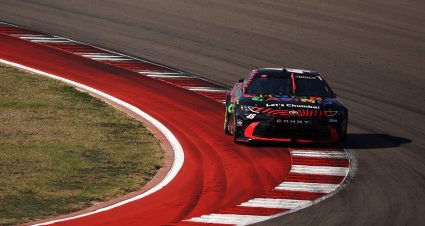
MORE: Snider subs for Bowman at COTA | COTA results
The unusual swap started with a text to NASCAR executives from Hendrick Motorsports vice president of competition Chad Knaus, who had asked for an expedited approval of Snider to relieve Bowman.
Snider, who was working at COTA as a spotter for Fox Sports pit reporter Jamie Little, has 112 starts in the NASCAR O’Reilly Auto Parts Series (including a 2021 win at Homestead-Miami Speedway). But he wasn’t approved for Cup and has no experience in the series.
Snider was licensed to race O’Reilly Auto Parts Series in 2026, which made him eligible for Cup consideration.
An impromptu in-race approval meeting in COTA race control took place between Chad Little (who heads up the driver resume committee), chief racing development officer John Probst, Cup Series director Brad Moran and senior vice president of competition Elton Sawyer.
The executives used the Riedel intercom system, which has mics and headsets that provide efficient communication despite the trackside noise.
“Those (radios) were a lifesaver,” Forde said. “We could pretty much have a meeting on the spot with all the key decision-makers. The four people that needed to weigh in were all in the same room, all wearing these Riedel headsets and could break down and look up what needed to be discussed as far as Myatt Snider’s resume, which is pretty robust.”
Snider also has 11 starts (and a win) in the ARCA Menards Series and made 13 starts in 2019 on the NASCAR Euro Series, which primarily races on road courses. His most recent NASCAR start was last October at Martinsville Speedway in the O’Reilly Series.
Snider now is approved to run road courses and short tracks in Cup.
“Looking at his resume, we decided in race control that he would be OK to race a road course in the NASCAR Cup Series,” Forde said. “When you’re going through each of the series, the first approval typically is for road courses, next is short tracks, then intermediates and then superspeedways.”
Noting that some Cup rookies made their debuts without testing, Forde said Snider’s lack of time behind the wheel of a Next Gen “didn’t really come up,” but he added the type of track made the approval easier.
“If this was anywhere but COTA or Martinsville or maybe even Phoenix, he probably would not be qualified to run,” Forde said. “If this was Darlington or Homestead, certainly Daytona or Talladega, we would probably would have had to tell Hendrick Motorsports that they needed to find someone else.”
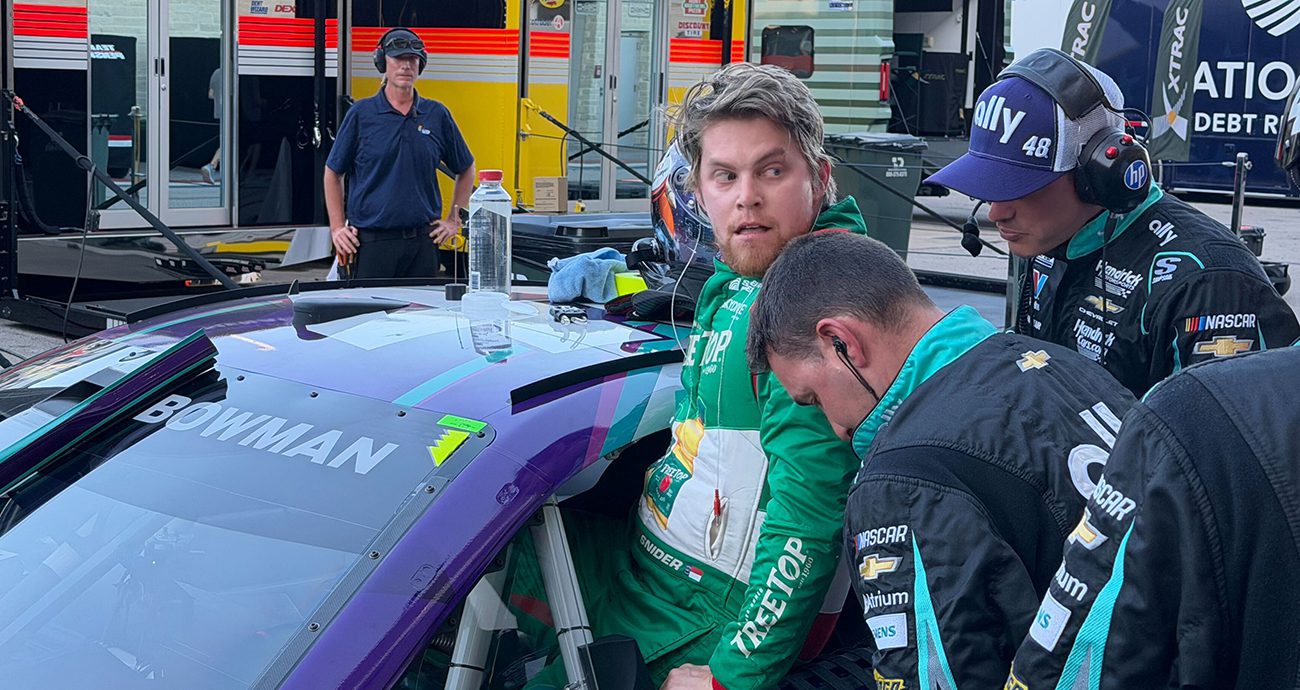
David Green, a NASCAR technical inspector who helps oversee safety, also joined the podcast to discuss his role in ratifying the No. 48 driver swap.
Before cars are on track each race weekend, Green ensures that a few dozen safety devices — seat belts, headrests, seats, steering wheels, roll bar padding, window net, roof hatches — are certified and in compliance with NASCAR regulations.
For an in-race driver swap, Green checks that the relief driver has the proper firesuit, helmet and head-and-neck restraint.
He was called on twice at COTA. After ensuring Legacy Motor Club reserve driver Harrison Burton had the proper safety gear to potentially replace an ailing Erik Jones (who was able to finish the event in the No. 43 Toyota), Green scurried to the No. 48 stall in time to meet Snider and check his firesuit, helmet and HANS device.
“So all those boxes were checked before Myatt ever got to the car,” Green said.
Once Snider was in the cockpit, the next step was ensuring a proper field of vision.
“Before he ever put his helmet on, I’m kind of looking at his eyesight line compared to the headrest and then his shoulder belt angle, stuff like that.
“Now, the big question would be what happens if none of this lines up, and we’re in a bad spot? Then we start digging a little bit deeper (on) do we really need to change the insert to get Myatt lower in the seat. But we didn’t have to go that path because he almost looked perfect sitting in that car. HMS and all the teams do a great job on the Cup side of making sure the i’s are dotted and the t’s are crossed. I really had no concerns with Myatt getting in the car other than the simple height of Myatt vs. Alex. He fit right in there like a glove and it was really a smooth transition.”
Green, who won the 1994 O’Reilly Auto Parts Series championship before joining NASCAR, estimated he usually encounters approving relief drivers a few times annually — but rarely during the same race.
“We have a plan in place, but hope we don’t have to use that plan, and the teams obviously do the same thing,” Green said. “The 48 situation was probably the most spur-of-the-moment deal that we ever got thrown at us.”
Other topics covered by Forde and senior director of racing communications Amanda Ellis during the 44th episode of “Hauler Talk,” which explores competition issues in NASCAR:
— The multiple cool suit failures that arose during the COTA race;
— How inserts are used to improve driver safety and comfort;
— What’s new this weekend at Phoenix Raceway, where NASCAR will share an oval with the IndyCar Series for the first time.
Click on the embed below to listen or search for “Hauler Talk” wherever you download podcasts to hear it on your phone, tablet or mobile device.
Nate Ryan has written about NASCAR since 1996 while working at the San Bernardino Sun, Richmond Times-Dispatch, USA TODAY and for the past 10 years at NBC Sports Digital. He is a contributor to the “Hauler Talk” show on the NASCAR Podcast Network. He also has covered various other motorsports, including the IndyCar and IMSA series.