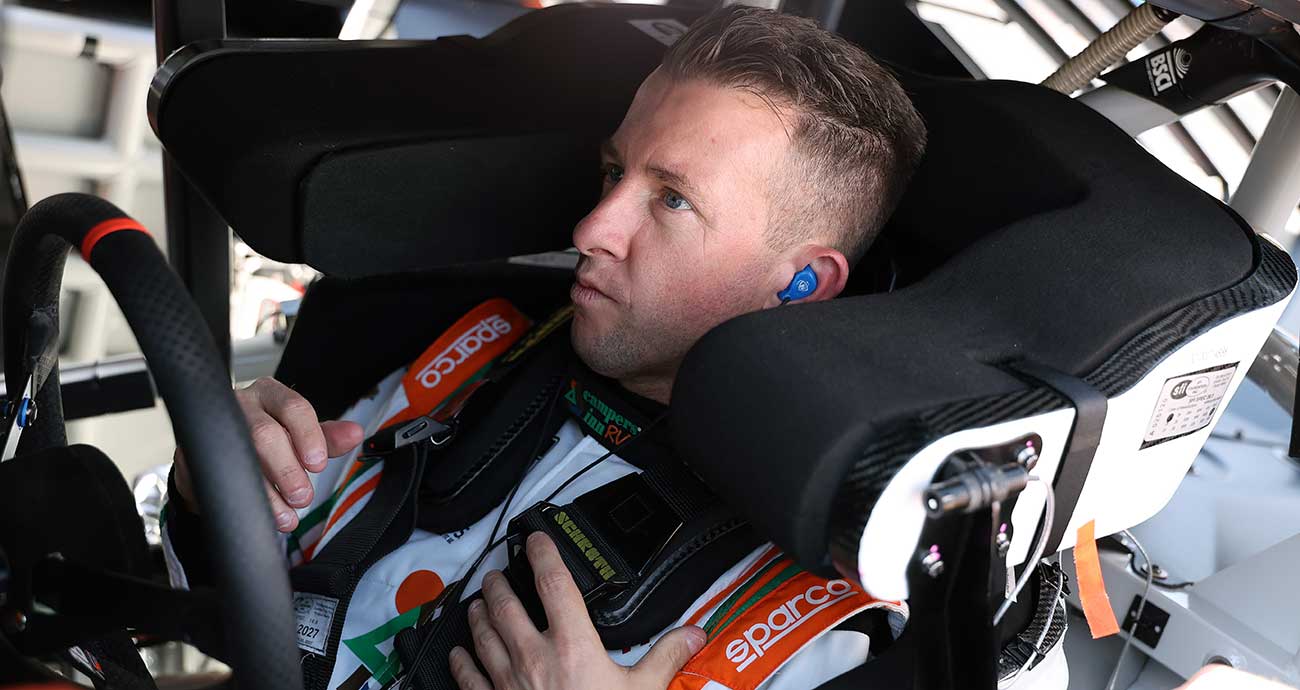
AVONDALE, Ariz. – AJ Allmendinger was fresh and fit in the Phoenix Raceway media center Saturday morning, a stark contrast from the picture he illustrated just six days earlier. When the TV camera’s glare last captured him, the Kaulig Racing veteran was flat on his back on Circuit of The Americas’ pit road post-race last Sunday, drained and dehydrated from a cool-suit failure.
The 44-year-old driver was evaluated and released from the infield care center, but said he bounced back in relatively short order.
“All good to go,” Allmendinger said. “Just took a little bit of fluids and some ice, and I was fine back on the plane.”
RELATED: Sunday’s starting lineup | Weekend schedule, TV info
Drivers will aim to keep their cool in the desert heat in Sunday’s Straight Talk Wireless 500 (3:30 p.m. ET, FS1, HBO Max, MRN Radio, SiriusXM NASCAR Radio) at Phoenix Raceway. The forecast for the fourth race of the NASCAR Cup Series season is for sunshine and temperatures tipping into the upper 80s — the warmest day of a packed racing weekend at the 1-mile oval.
Cooling systems and driver comfort came into focus after last Sunday’s event at the Austin, Texas, road course, where a handful of drivers experienced issues. Prime among them was Allmendinger, who gutted out a ninth-place finish that’s helped lift him to eighth in the early Cup Series standings.

Cool shirts aren’t new technology, and one of the earliest examples in stock-car racing was pioneered by the innovative Paul Goldsmith in the 1960s. Some of the same principles from previous versions still apply, with cold water coursing through the suit’s tubing.
“Back in the day, the cool-shirt thing has been around for a really long time,” said Chase Elliott, third in the Cup Series standings entering Phoenix. “For those that probably don’t know that, because it’s kind of a semi-new thing in this garage, but it’s always been available, probably throughout my whole racing career, but they always had a bad rap of failing, and that was why a lot of guys didn’t run them for years and years and years. And I think the technology has gotten a lot better, and that’s why a lot of us have chose to try them at different tracks.”
It’s when the system goes awry that the warmth of the cockpit gives its full force, and the circulating water heats up to scalding levels.
“I think there’s two parts to it,” Allmendinger said. “Like, the physical part of it is, you’re obviously hot and dehydrated and everything kind of starts cramping, and you don’t have a lot of strength, is the first half of it. But it’s almost worse on the mental side of it, because you just know you’re trapped, right? I mean, I guess at the end of the day, you can get out if you want, but I’m gonna do everything I can to maximize the best that I can for my race team, especially when the day is going fairly well. So I think that’s almost harder sometimes, is the mental side of it. It’s like the anxiety builds up where you’re in this tiny little room, and it’s hot and you’re strapped down and you can’t move and there’s nowhere to go.”
It may not seem like it in toasty Phoenix, but we’re still in the last throes of winter with the warmer spring and summer months ahead on the NASCAR schedule. Spiking temperatures await, and the pressure on cooling systems to perform will be greater.
MORE: At-track photos: Phoenix | Fantasy Fastlane
The recent rash of cool-suit trouble has been enough to prompt William Byron, for one, to explore alternatives.
“Definitely when it works, it’s great,” said Byron, who noted that he’s regularly used the cool-shirt system since his Cup career began in 2018. “But I feel like there’s definitely a handful, if not more times, that it doesn’t work. That shirt is very insulated. I was at a Martinsville test one time and was wearing it and didn’t turn it on for most of the day, and just started to feel sick because just the way it insulates your body and kind of has the opposite effect when it’s not on. So yeah, I think I’m open to other options. We used to just have blowers in the car that would just blow air on your back. So definitely, we’ve talked about looking at other options and seeing what’s out there. It’s effective, but at the same time, if it doesn’t work or it doesn’t work as well, like I said, it’s pretty insulated. It’s like wearing a coat.”