Darlington Raceway’s history book has many chapters. The tome spans all eras, from stock-car racing’s infancy — when the idea of staging a 500-mile race for late-model automobiles on a track so large was dreamlike — to the modern day, where technology, science and preparation have sent speeds around the narrow oval rocketing into the high sky.
One thing applies from any era: Only the courageous need apply.
The promise of another dynamic piece of the track’s story arrives this week at one of NASCAR’s original proving grounds, with a tripleheader weekend culminating in Sunday’s Cup Series Goodyear 400 (3 p.m. ET, FS1, HBO Max, MRN Radio, SiriusXM NASCAR Radio). The 400-miler marks the biggest turning point this season for a rules configuration that combines increased horsepower, a reduction in aerodynamic bolstering and Goodyear tires designed for aggressive wear.
RELATED: Darlington weekend schedule | Cup Series standings
The wrinkle, though, is that no matter the generation of car, driver or rules, Darlington’s toughness has become legend. In the days before every speedway on the circuit needed a plug-and-play nickname or brand as part of a marketing flourish, “Too Tough to Tame” was gospel, on par with the sinister “Lady in Black” handle that the track also wears.
Teams have already sampled the new 750-horsepower package this year, experiencing the extra output on the 1-mile Phoenix Raceway two weeks ago. But Darlington threads the line of running a configuration meant to enhance short-track racing on an intermediate-adjacent 1.366-mile layout. That combination just ramps up this weekend’s unknowns.
“We’ve got a lot more questions than answers right now with this package, with the limited amount of sim that we’ve tried to do and tried to understand, predicting fall-off to be several seconds – to the point where we don’t think we’re gonna have to count on two hands, but we might max out one,” said RFK Racing veteran Chris Buescher. “It’s going to be big from that side of things, and it’s going to certainly change the race and how we approach it and how hard you want to push. Can you conserve the tire enough to survive late into a run? You know, it’s the shorter Darlington race, but that being said, it’s still going to present a lot of challenges that really Darlington has come to present all on its own, and now we’re tacking on the horsepower, the less downforce and the higher fall-off tire. So lots of excitement going into this one, lots of hope to see some really unique, good racing.”
However new the rules alignment might be, Darlington’s rugged reputation is a decades-long trademark. That calling card began when track founder Harold Brasington began carving the layout into the South Carolina sandhills, doing much of the construction work himself. He also bore the brunt of the ridicule. Long before “Too Tough to Tame,” the site was mocked as “Harold’s Folly” for its outsized scope and seemingly foolhardy ambition.
As has been well documented, land donor JS Ramsey wanted to protect his nearby pond from all the commotion. Given the primitive track-design principles of the day, Brasington didn’t figure the asymmetry would make a difference, so he tightened the west bend’s radius — Turns 3 and 4 today — to appease his business partner.
“The lay of the land was such that we couldn’t make both ends the same size,” Brasington told the Florence (S.C.) Morning News in 1983. “So we just said, ‘What the heck? It won’t matter if one end is a little bigger than the other.'”
Oh, it mattered. It still matters.
“One of the biggest reasons it’s so demanding is it’s not — you don’t see it when you look at it — but it’s not circular in shape,” said Mark Martin, a NASCAR Hall of Famer and two-time conqueror of Darlington’s prestigious Southern 500. “The wall that goes around it seems circular, but the banking is not. So when you’re going fast, you have to hit the apron going into the corner, and then you almost hit the wall on the outside when you leave it. And it’s hard to describe, but it’s just really difficult to manage. It always was, even when it was first built, it was really only one lane wide — insane, and it’s been insane ever since, and it will be even more this year.”
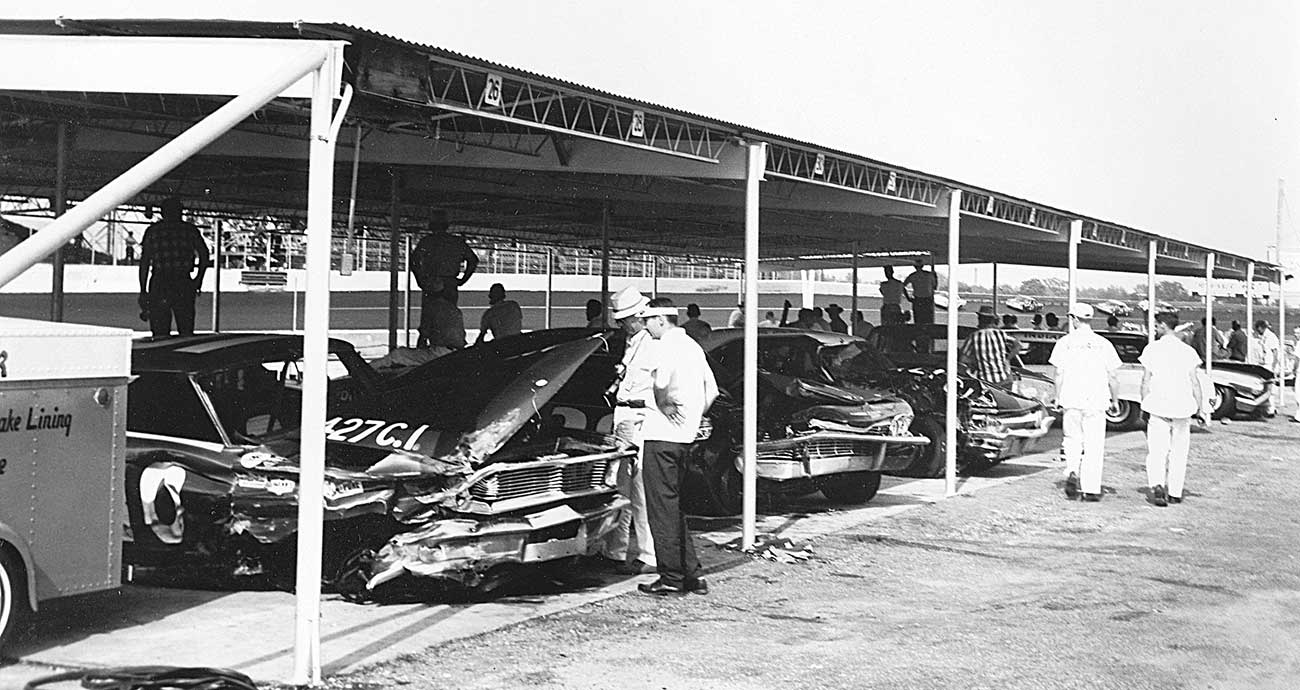
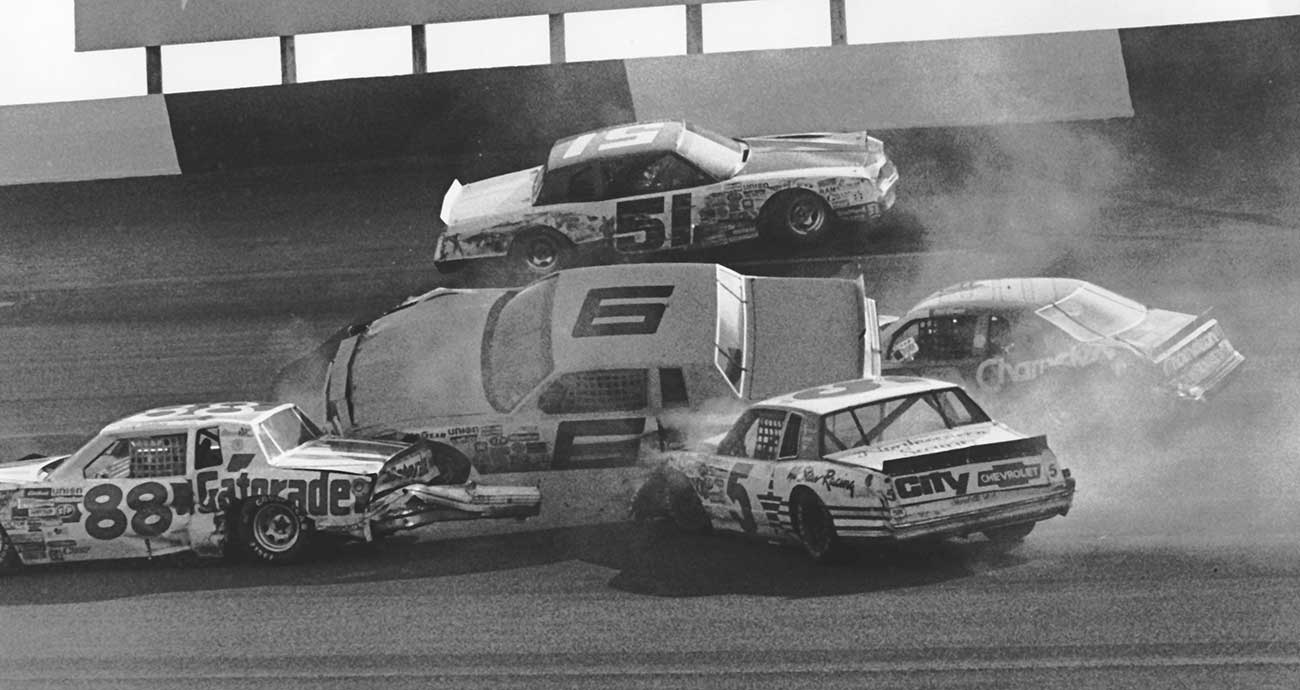
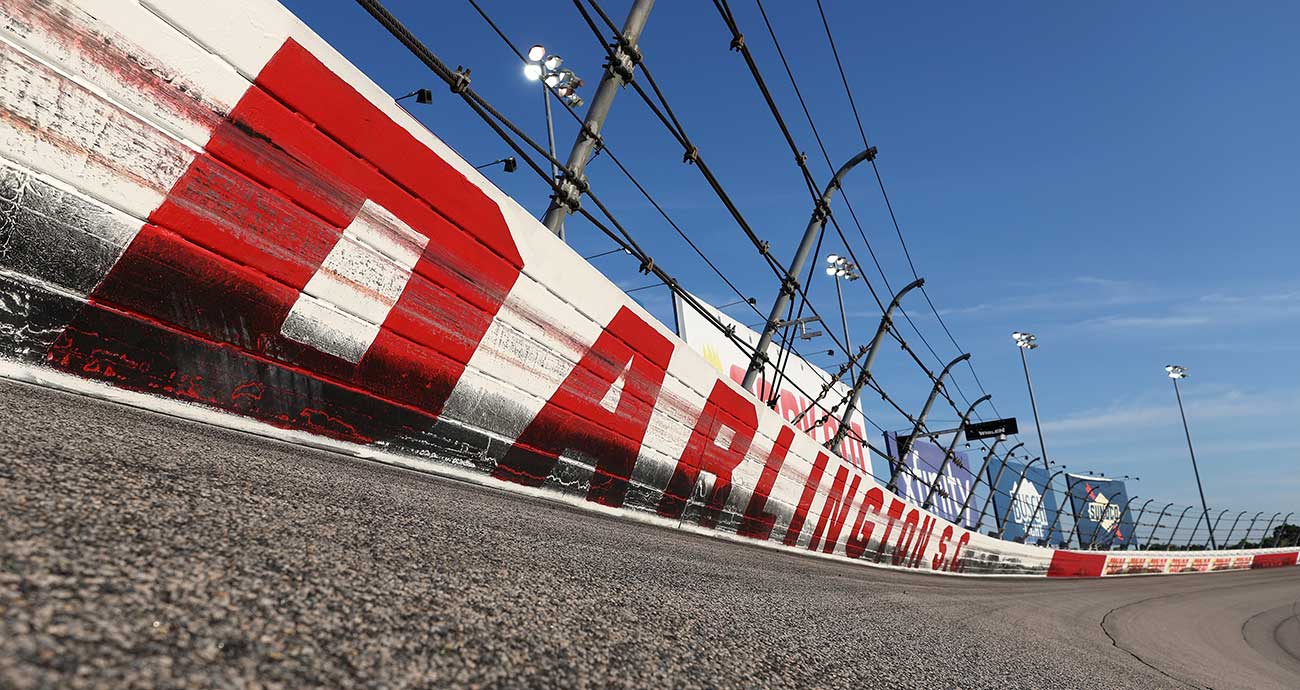
Darlington has always been a divider, no matter how sparse the preferred grooves might be and how often the wall scrapes — “Darlington Stripes” in racing vernacular – come about. Those drivers who excelled there were often among the sport’s all-time greats. Those who struggled with Darlington’s tough nature often found creative ways to express their contempt.
MORE: ‘Darlington Stripe’ through the years
Kyle Petty once said he loved visiting Darlington, playing golf at local courses, exploring nearby restaurants and hanging out by the motel pool — “as long as they don’t make me run the track.” John Andretti actually won one Southern 500 pole position, but his difficulties there were so pronounced that he predicted his souvenir business would skyrocket after he qualified 18th for his Darlington debut. “Man, what an accomplishment! On a track nobody should be able to drive!” Andretti told the Associated Press in 1999. “I thought, ‘Man, my T-shirts ought to start selling like crazy now.’ I thought everybody would be really impressed. I was.”
Other criticisms have not been as cheery. “This track was built over 20 years ago,” Charlie Glotzbach said after a 1971 crash there that injured Hall of Famer Fred Lorenzen. “It’s just plain murder.”
The contrast may well be why the track’s triumphs have been so heavily celebrated. David Pearson never prepared on a racing simulator or cared a whit about a rules package, but girded himself for Darlington by working on his cars and relying on his patient approach and boundless wisdom. When the time was right, he’d put out his cigarette and pounce. The speedy but savvy “Silver Fox” won 10 times at Darlington — more than anyone.
Mark Martin won two Cup Series races there, and a record eight wins in what’s now called the O’Reilly Auto Parts Series. He was once described as being as tough as the Winn-Dixie steaks that sponsored many of his No. 60 Fords in the old Busch Series days, and his tenacity helped guide him in those 10 trips to Darlington’s Victory Lane.
Fellow Hall of Famer Cale Yarborough won the Southern 500 five times, an accomplishment that hangs on the entrance sign to the Darlington garage that bears his name. The South Carolina native also experienced the other side of Darlington’s wrath, saying he felt like an astronaut after his car sailed over the guard railing and out of the park in a calamitous 1965 crash.
“One little slip and it bites you,” Yarborough said years later.
You can’t spell Darlington without “daring,” and that’s a tradition that lives on.