Denny Hamlin’s still got it — as if there was any doubt. Following a sequence of respectable finishes in the season’s first month, Hamlin led 134 of 267 laps on Sunday at Las Vegas Motor Speedway for his 61st career victory, and first in 2026.
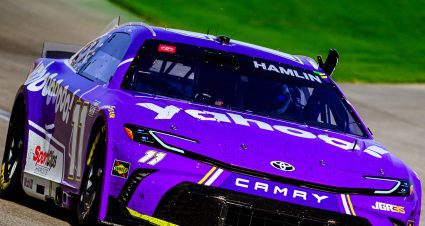
“It is just so satisfying, so gratifying. You just never know what can happen year over year if you still have it or not,” Hamlin said after the race. “I wasn’t totally locked in for the first few weeks. We’ve just been hitting our stride now. This is our bread and butter, these are the tracks that we know we can go win, and we executed. This is a team win. The team did it.”
To Hamlin’s point, it may have been difficult for any driver to fully lock in until they arrived at Las Vegas last weekend. While the NASCAR season technically began in the pack-racing chaos of Daytona and EchoPark Speedway near Atlanta, then moved to the twists and turns of Circuit of The Americas and the unique challenge of Phoenix, the meat and potatoes of the Cup Series season doesn’t start until the cars hit the first 1.5-mile oval of the year.
Want proof of how (to use Hamlin’s words) “bread and butter” these tracks are for the season as a whole? Going back to 2005, I charted the correlation between a driver’s Driver Rating at each track and their finishing quality (measured by Adjusted Points+ index) in every other race that year. A higher correlation means driving well at that particular track means you did better everywhere — and as the chart below shows, mile-and-a-half ovals are the sport’s ultimate bellwethers. Performances at sites like Chicagoland, Kansas and, of course, Las Vegas generally tend to be more closely linked with a driver’s season-long success than any other track types on the schedule:
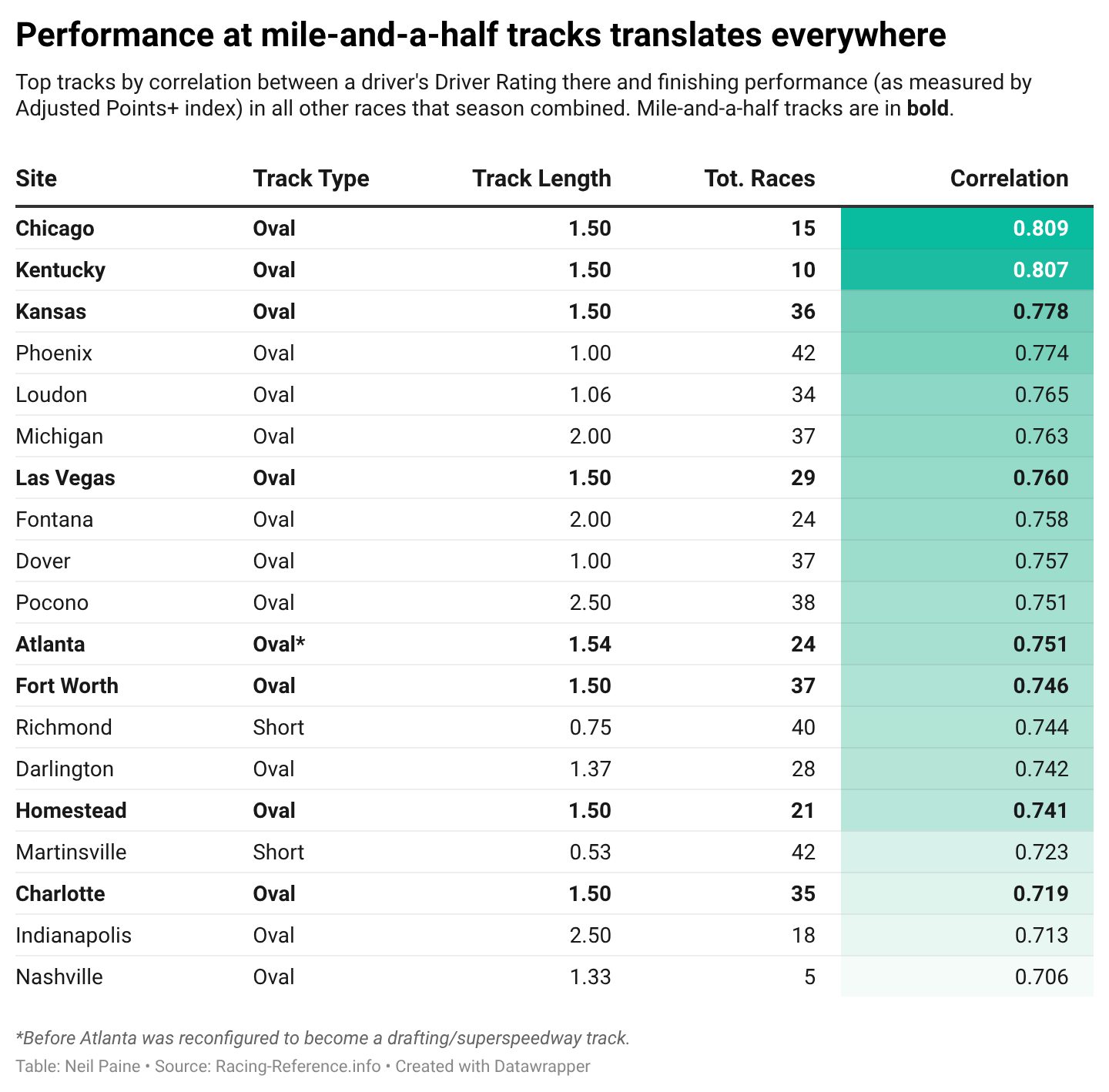
That’s why teams put so much emphasis on their performance from the moment the haulers pulled up at the track this past weekend — and why drivers like William Byron stuck around in Vegas on Monday for additional test laps. The data and adjustments gleaned from running at one of the most quintessential ovals on the schedule outweigh what you might get from other tracks.
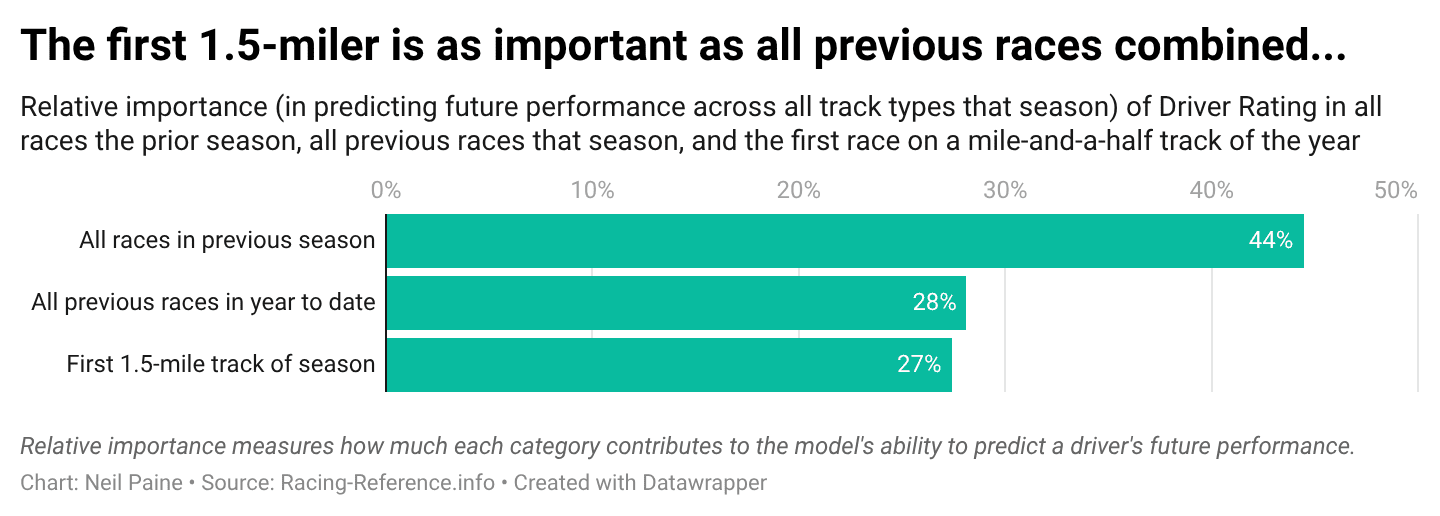
To further illustrate just how disproportionately significant the initial race of the season on a 1.5-mile track tends to be, I took data from those races each year since 2005 and set up a series of predictions, forecasting a driver’s finishing quality for the remainder of the season based on three factors:
- Driver Rating from the previous year (across all track types).
- Driver Rating in the current season-to-date (across all track types).
- Driver Rating from the first race of the season on a 1.5-mile track.
With that model, we can use a measure of relative importance to track how much each category contributes to the accuracy of the future predictions. And the results show that a single race on a 1.5-mile track is basically as valuable as all previous races that season combined (and more than half as important as all of last season) when it comes to knowing who will do well over the rest of the schedule overall:
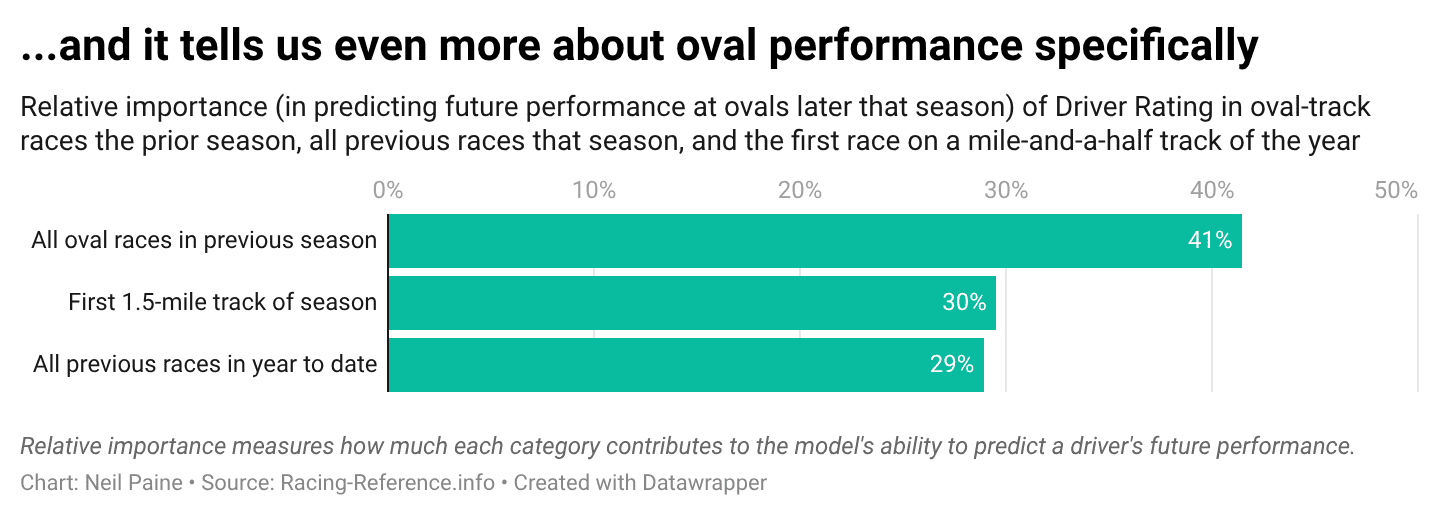
 Furthermore, how you drive at the opening 1.5-miler of the season gains even more salience when we specifically focus on predicting finishes at ovals (mile-and-a-halfs or otherwise) over the remainder of the season. In that regard, that one single race on a 1.5-mile track outweighs all previous races combined to begin that season, and it’s nearly three-quarters as important as oval performance was over the entirety of the season before as well:
So we don’t blame Hamlin for being jazzed about just how well his car ran — winning in spite of an early speeding penalty that buried him in 31st place — and what it might mean over the rest of this, his 22nd season in the Cup Series. Seven of the races on the Chase schedule are, broadly categorized, ovals (Darlington, Gateway, Kansas, Las Vegas, Charlotte, Phoenix and Homestead), and four of those — Kansas, Las Vegas, Charlotte and Homestead — are specifically 1.5-mile “bread and butter” tracks.
Based on what he did at Las Vegas this past weekend, the rest of the field should fear what this No. 11 Toyota Camry might be able to do over the remainder of the schedule — and especially in those crucial late-season battles at the all-important mile-and-a-half intermediate.