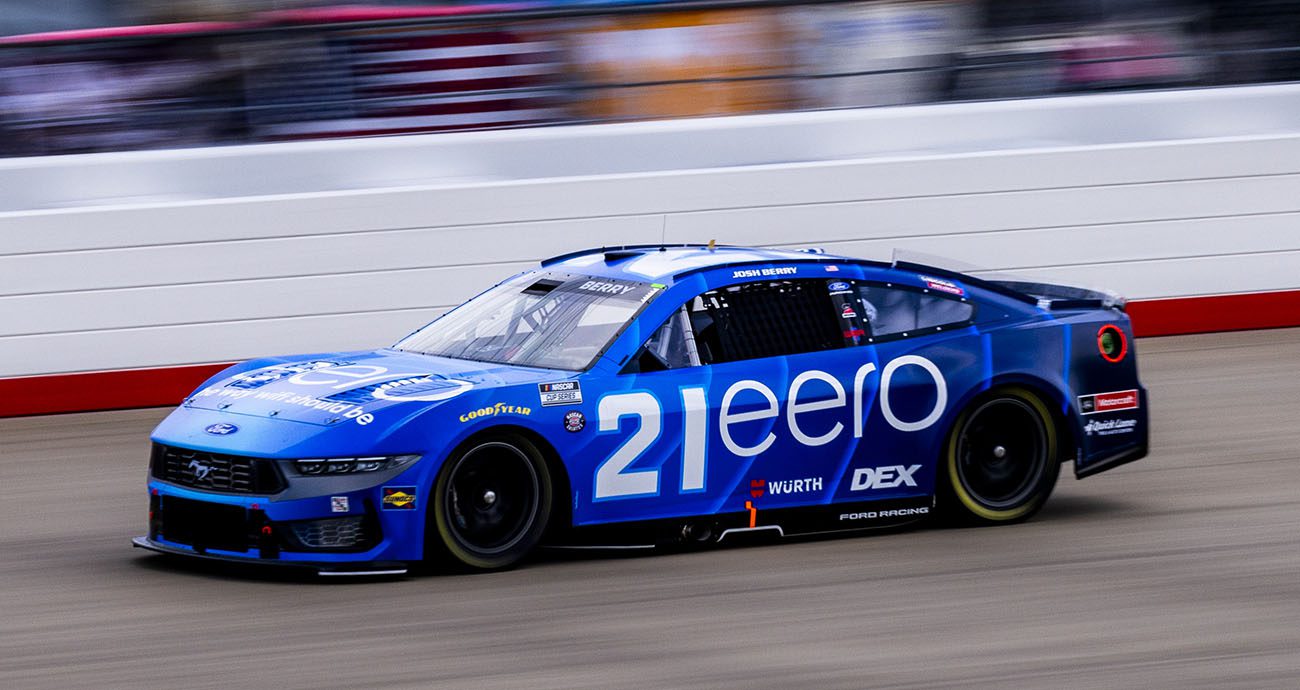
LEBANON, Tenn. – Questions remain, opinions vary and data is still being gathered at the midway point of the 2026 regular season. That’s why much of the conversation ahead of Sunday’s NASCAR Cup Series Cracker Barrel 400 at Nashville Superspeedway (7 p.m. ET, Prime Video, HBO Max, PRN Radio, SiriusXM NASCAR Radio) hovers around the Cup Series’ new short-track aerodynamic package.
For the second time in 2026, the short-track package designed for venues measuring less than 1.5 miles in length will take to a 1.33-mile circuit (Darlington Raceway in March). It also marks the third visit to a concrete surface, on the heels of running at Dover Motor Speedway for the All-Star Race in mid-May and in April at Bristol Motor Speedway. The package consists of a shorter three-inch rear spoiler and fewer stabilizing strakes on the rear diffuser. The bump to 750 horsepower will likely be a contributing factor, too. All those components can lead to cars being a handful.
RELATED: Cup starting lineup | Nashville schedule
“The aero package with the horsepower is a complete game-changer,” Adam Stevens, leader of Christopher Bell’s No. 20 team, told NASCAR.com on Saturday. “We’re going to have a lot more tire degradation, lap times are going to slow down more over the run. The track treatment (resin) is probably going to open up the higher lanes more than what we’ve seen in the past. It should be racier and you should have some comers and goers.
“The priority is going to be hitting the setup right, a little bit more than just pure track position, which is what it tended to previously.”
With more energy into the system and the parts and pieces doing added work every lap, naturally, times will dial back. Drivers will be going faster down the straightaway, but jam on the brakes harder entering the corner, which will reduce the minimum speed.
Miles Stanley, who calls the shots for Josh Berry and the No. 21 Wood Brothers Racing team, believes the new aero package and higher horsepower have been a net positive for the industry. Like Darlington and Dover, Stanley expects there to be more lane movement and agrees with Stevens that drivers could volley throughout the field if a team hits on the setup during a given run.
“I wouldn’t say it’s going to change dramatically, but maybe we see a little more passing, maybe we see the second lane open up a little bit earlier in the runs,” Stanley added. “I think it will be better, but we will have to wait and see.”
Another factor is the standard Goodyear tire compound that is being used for the sixth time in 2026 at Nashville. Stanley believes that this setup has made it a challenge to go off strategy with how much the tire falls off during the course of a run. But Stevens doesn’t think the tire is as big a variable now that the series has more internal datapoints on the tire.
“It’s hard to say it’s a shorter lifespan because what are we comparing it to?” Stevens pondered. “Intermediates, we’ve run this tire a lot already, so it wasn’t a change. The bigger change is the aero package more than the tire. A lot of the compounds are duplicates from compounds we’ve raced recently, with some minor construction changes. I don’t think the difference is in the tire at all, the difference is in the horsepower and the aero.”
Denny Hamlin will lead the field to the green flag on Sunday, as qualifying was canceled due to rain. Based on the metric, Bell will start fourth and the hometown driver Berry will roll off from 33rd position.