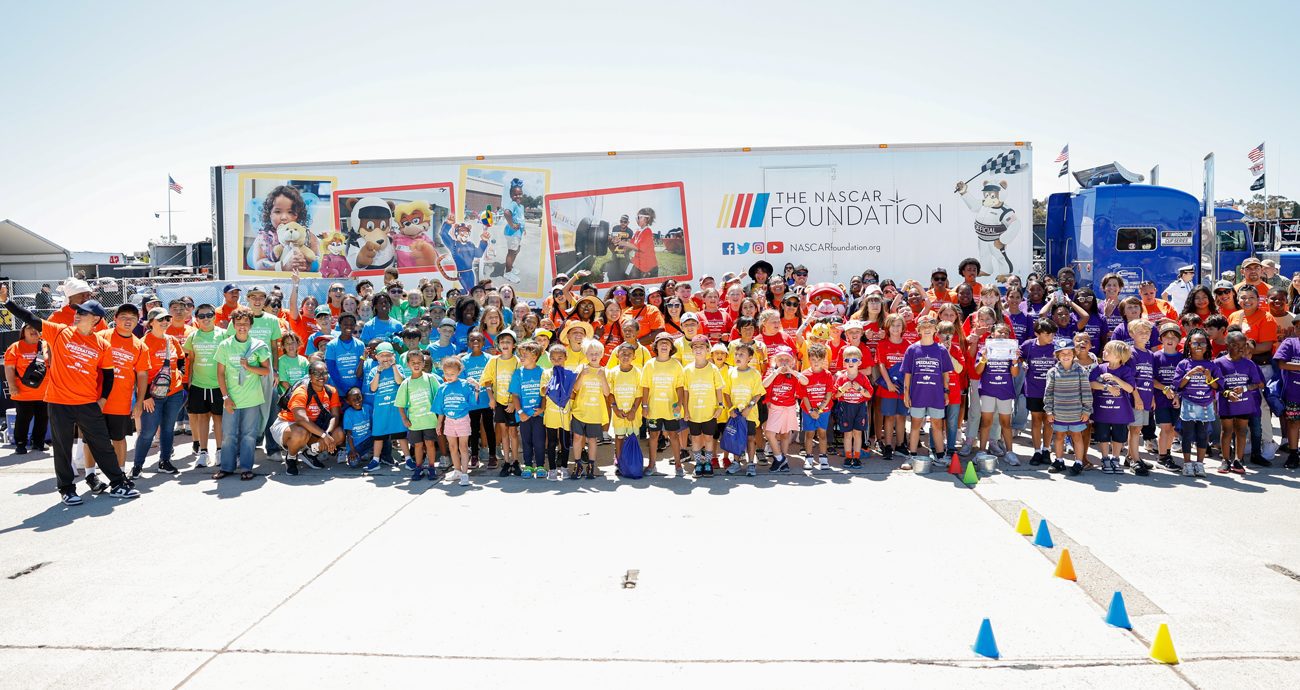
SAN DIEGO — Eyes wide open and hearts beating fast, more than 100 eager kids arrived at The NASCAR Foundation obstacle course inside Qualcomm Circuit last month at San Diego’s Naval Base Coronado — the USS Carl Vinson anchored in the background and a U.S. Navy Hawkeye helicopter on display only a few yards away.
Dressed in bold-colored The NASCAR Foundation T-shirts, the students ranging from kindergarten to middle school-age from the base’s Navy Child Youth Program ran into the designated area as NASCAR race car engines screamed from the track in the distance. The NASCAR Foundation members and Ally representatives shook pom-poms high above their heads and shouted cheers to welcome the group to San Diego’s installment of the Speediatrics Fun Day Festival — one of 16 held across the United States this year.
RELATED: Learn more about The NASCAR Foundation
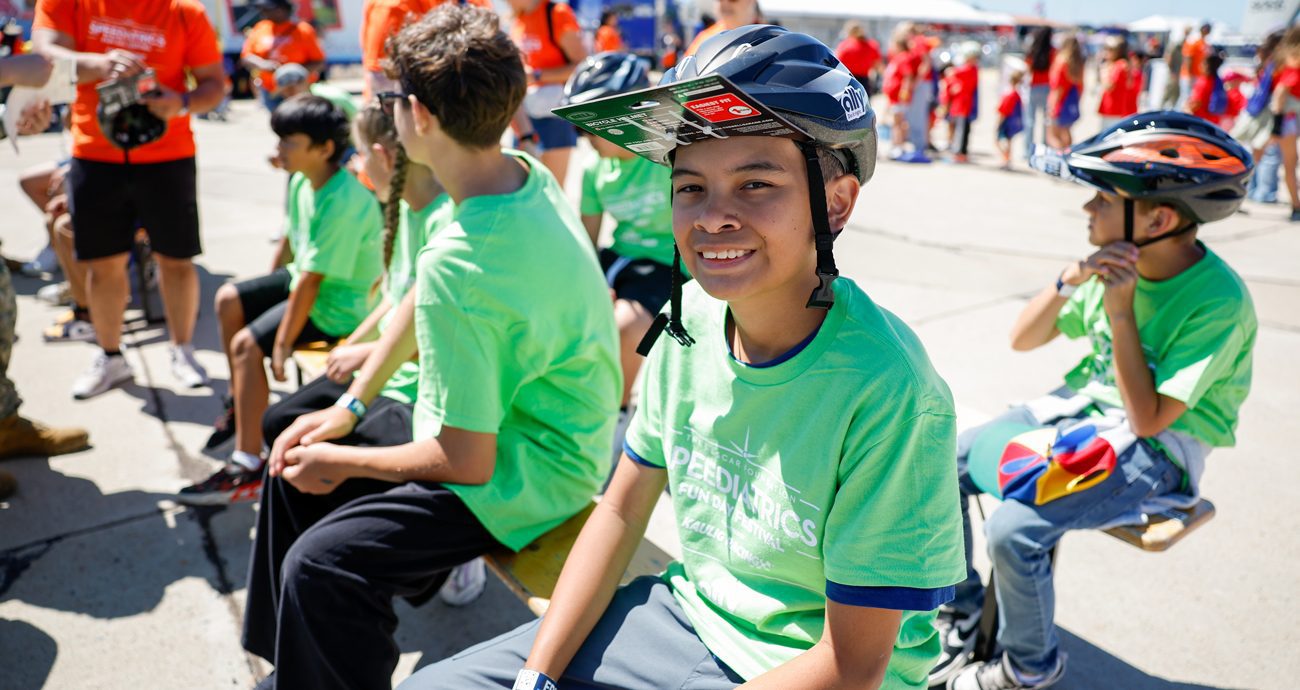
A tire “roll,” a “gas can relay,” and a “find the lug nut” challenge were among the creative hands-on activities the kids tried out. Most notably among the setup was a series of long tables with bicycle helmets piled high — that station designed to fit each of the 121 students with a brand-new helmet.
Within the hour, the students would find out that each of them was not only receiving a personalized helmet but also receiving a new bicycle — courtesy of Ally. The bikes were custom-built only days earlier by dozens of supportive people in the NASCAR industry. Volunteers from groups like Stepp’s Towing drivers to race team mechanics to Kaulig Racing team owner Matt Kaulig and team executive Chris Rice — the Kaulig team being a full-season sponsor of the Fun Day events across the country are the first to raise their hands to turn wrenches as master bike builders for the Foundation.
“The NASCAR Foundation does incredible work keeping youth active and engaged in our race communities,” said Bridget Sponsky, executive director of brand, sponsorship and creative marketing at Ally. “A new bike and a day at the track might seem like small things, but they can easily spark a lifelong love for the sport. Supporting the foundation’s initiatives over the years is one meaningful way we ‘do it right’ and leave the communities where we race a little better than we found them.”
Before the dramatic two-wheel reveal, NASCAR Cup Series driver Alex Bowman made an appearance. The No. 48 Hendrick Motorsports Chevrolet driver posed for photos and signed autographs and shared the Foundation’s message with the kids about the importance of healthy eating and staying fit.
Then, Nichole Krieger, The NASCAR Foundation’s vice president and executive director, took the microphone and announced that not only was the organization donating $15,000 to the Navy Child Youth Program, but every one of the youngsters would also be receiving a new bicycle.
“I can’t believe it, I can’t believe it, I can’t believe it,” 11-year-old Jack Hamby shouted over and over again.
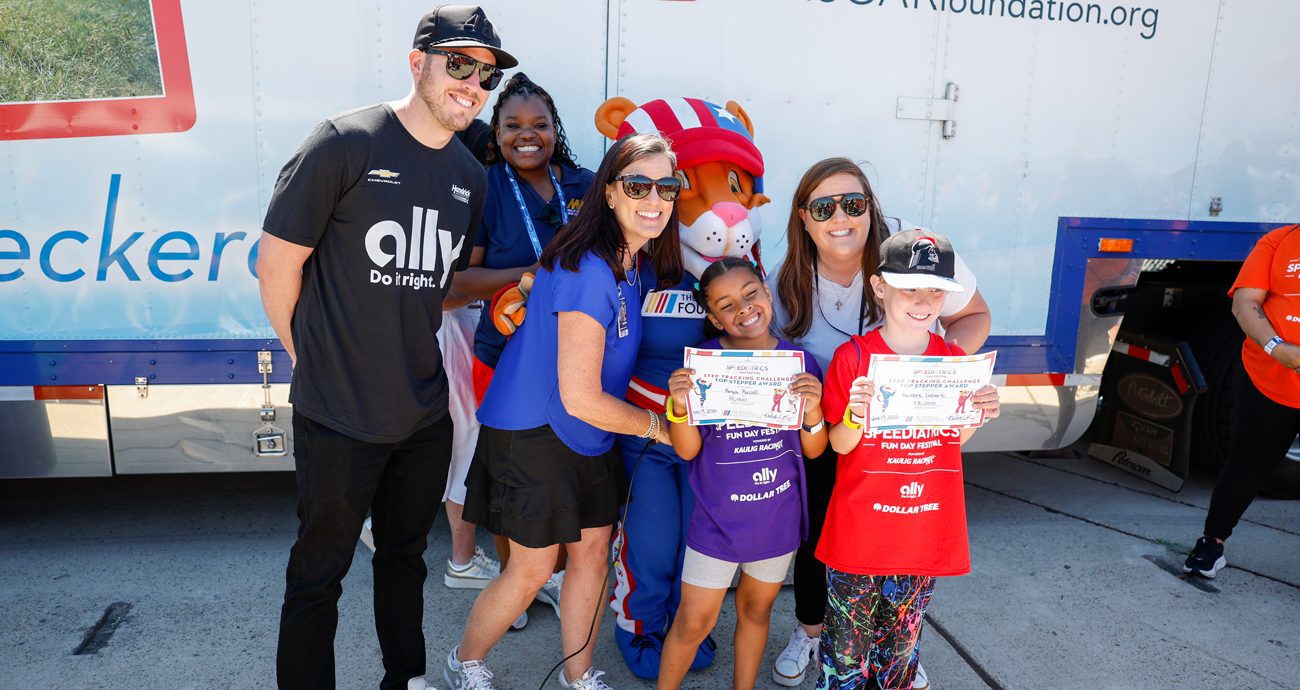
There was no question what this Foundation-led experience had meant to these kids on this day and to families across the country so many other days as the organization officially marks 20 years of service to the sport.
The NASCAR Foundation isn’t just an admirable and generous concept developed and fostered by the late Betty Jane France. The organization has been a real-life difference-maker for kids and families since its inception, raising and donating more than $55 million and serving almost two million children and their families.
NASCAR Vice Chairman and Senior Adviser Mike Helton — a highly respected longtime steward of the sport — is a founding board member and the current Chairman of The NASCAR Foundation. And he doesn’t lead from an office in Daytona Beach, Florida; he makes it a point to attend the events around the country and forge a bond with the people this impactful organization is helping.
He often assures Krieger that his close friend, the late Mrs. France, would have loved seeing the joy and solace the Foundation has given to families. And that it is still going strong two decades after its inspired beginning.
“I think what the Foundation has done now in its 20 years, it has created a culture in our industry that represents that family spirit of helping,” Helton said. “I think that’s the synergy that Betty Jane led the charge on for the Foundation. But the bigger and broader part, in addition to millions of dollars of help with children that need help, whether it’s medically or quality of life, it was also a statement made that NASCAR, everywhere we go, our footprint is across America, but everywhere we go, we’re still a local community-driven event.”
“I think in a way, NASCAR kind of created the idea that our sport is big-hearted. Before there was a Foundation, that spirit existed. It certainly existed in Daytona, where our headquarters is at the Speedway and is still a huge part of the community. But that model got to be able to be spread across the country as we traveled on our national series and even our local series.”
Now in her 14th year with The NASCAR Foundation, Krieger is proud that it has continued to play such a significant role in NASCAR communities and beyond.
“Mrs. France was so passionate about kids,” Krieger recalled of the organization’s beginning. “So we honed our mission to really be about children’s health and wellness. It could be kids in the hospital, and it could be kids like here at San Diego learning about health and wellness. It’s all of that.
“I think the other thing our team has worked really hard at is we’re about more than just writing a check. We do that. We write checks to hospitals and charities, but the programs we run — the Speedy Bear Brigade, for example, where we go into the hospital, we deliver the teddy bears and bring the drivers to meet the kids. Our track presidents get involved, and employees and sponsors get involved. I feel like it has distinguished the Foundation to be more than just writing a check. It’s more about, how do we rally our sport?”
The support has come from the entire sport. From the corporate sponsors who support the race teams, to the insiders who make the industry tick and certainly the race car drivers themselves — all cherish the opportunities to make a difference for these children.
From visiting young patients in hospitals all around the country, to supporting youth sports to building the bicycles, as they did in San Diego — the “ask” is invariably met by a “thank you” from the sports stars, whose time supporting The NASCAR Foundation turns out to be as impactful for them as the kids they make smile.
“It’s really easy to forget we do a job that kids idolize and they put us on a pedestal,” said RFK Racing driver Ryan Preece, who has made several hospital visits on behalf of The NASCAR Foundation and says it especially hits home for him now as a father of two young children.
“You can go to a hospital and see some of these kids, and they need that little bit of something to lift them up, you see it lift their spirits, just them spending five minutes with a race car driver.
“And when you’re around them, they’re doing something for us as well. Everybody goes through tough times, but when you’re able to take a minute and really put things into perspective. Those are the moments that impact.”
NASCAR Chairman Jim France has been a strong supporter of The NASCAR Foundation from the very beginning and considers it a vital part of the sport — its present-day impact something he knows his late sister-in-law would be especially proud of.
“I think it reflects the value, the core of our sport and our industry and the folks that are around that are teams and drivers,” France said. “We’ve got a very big community of people that have important social projects and things that they’re trying to support. Our Foundation has become kind of a hub of that for the entire sport, so to speak.
“So, watching it step up and help organize a lot of different things is gratifying.”
One of the most impactful moments Krieger says she’s ever experienced with The NASCAR Foundation happened this summer at Michigan International Speedway during another of the Foundation’s Fun Days.
Among the more than 100 youth that attended the Michigan event was a fifth-grade girl, Dayton, with spina bifida — a spinal cord condition that affects the ability to walk and can often make wheelchairs necessary for patients. As the Foundation was preparing bicycles to give away, Krieger was adamant that Dayton received a bicycle, too — and a specially made version just for her was presented along with the others.
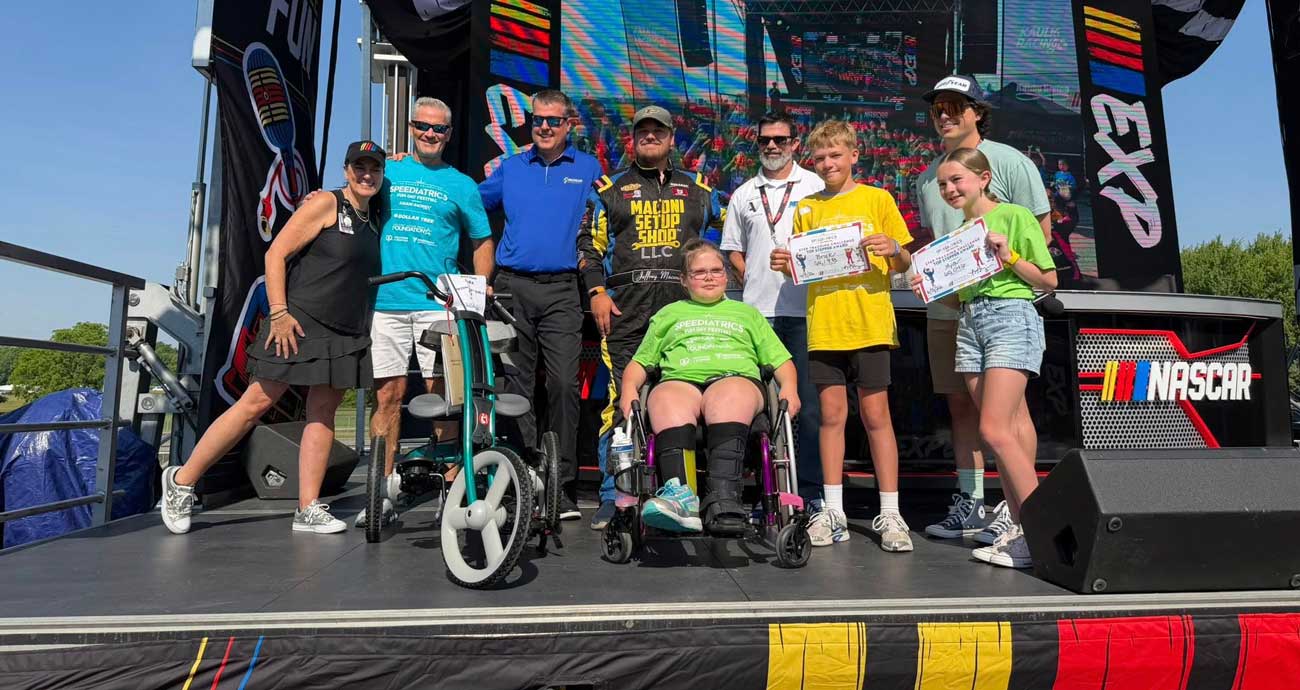
The surprise and thrill … and complete gratitude from this young girl and her family was one of the more emotional moments for Krieger in all her years witnessing the Foundation’s service to the community.
“It was the right thing to do, and I always want to be guided by that,” Krieger said, recalling how Dayton got on the bike and rode it around within minutes. “She was thrilled, and her mom texted me with videos and photos afterward of her outside riding her bike at home along with everyone else now.
“As a sport, it makes me proud that we can do that. It’s just one child, but we may have really changed her life. We don’t know what the impact will be like later. That’s why we do this.”
In so many ways, The NASCAR Foundation is NASCAR’s ultimate “win-win” — powering the sport and fueling the future with generosity and kindness that will provide its own substantial legacy.
As France puts it, “It’s a community effort by everybody within the sport, and it makes you proud of our folks and people that participate.”