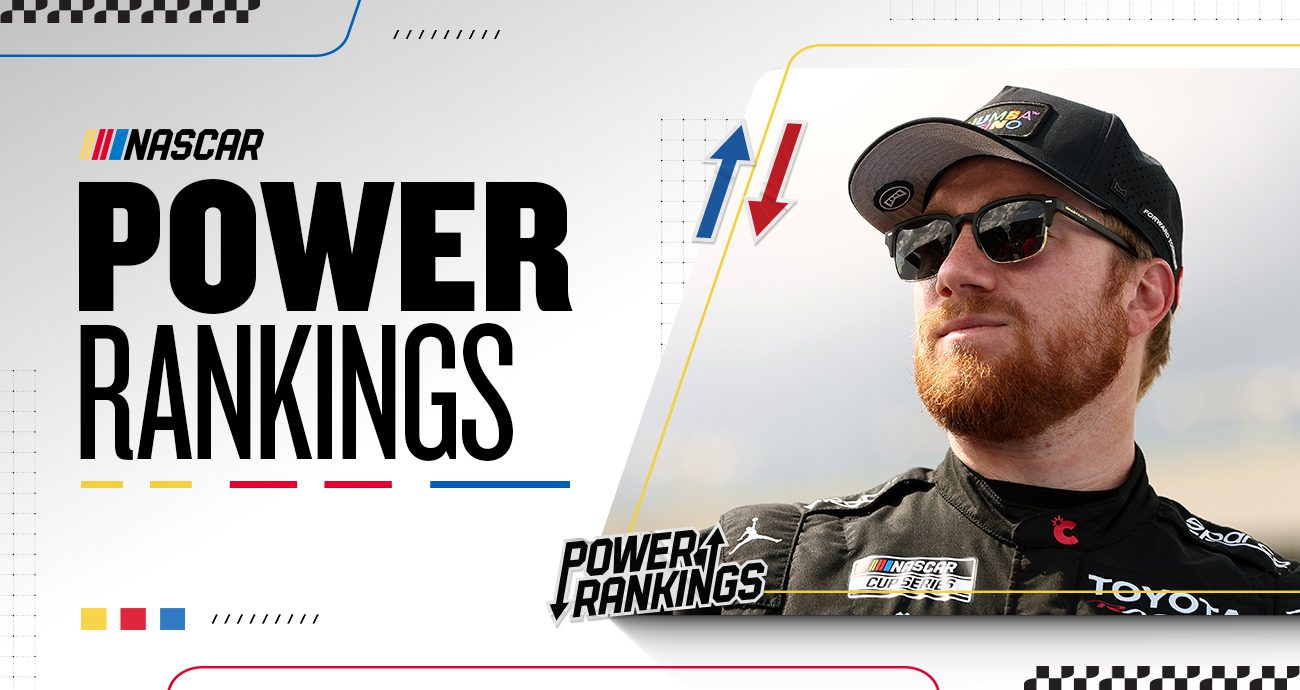
NASCAR.com’s Pat DeCola ranks the top 20 Cup Series drivers competing for the 2026 championship after Ty Gibbs’ win at Iowa Speedway and before Saturday’s race at Richmond Raceway (7 p.m. ET, USA Network, HBO Max, MRN Radio, SiriusXM NASCAR Radio).
RELATED: 2026 Cup Series schedule | Cup Series standings
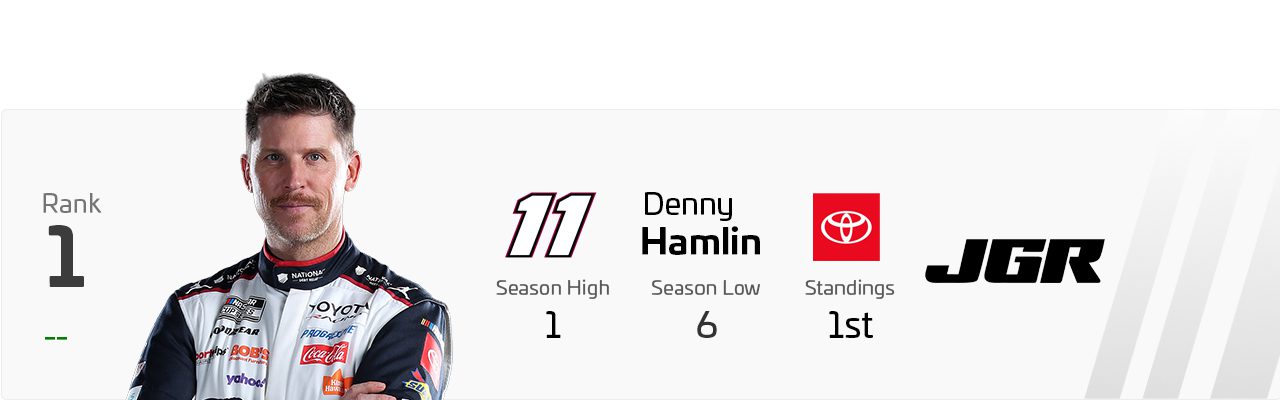
Analysis: Iowa threw just about everything it could at Hamlin, from brake issues to start the weekend and a trip to the rear before the green to more brake trouble during the race, and he still drove to fifth. That gained him another 19 points on the field and stretched his championship lead to 103 over his teammate Gibbs with three races remaining, while the No. 11 continues to rank first in season-long speed. Richmond is precisely where you’d expect Hamlin to keep the pressure on, too: He owns five Cup wins there, including victories in 2022 and 2024, and finished 10th last season. At this stage, even a weekend that begins sideways seems to end with Hamlin further ahead than when it started, which is a dangerous attribute come Chase time.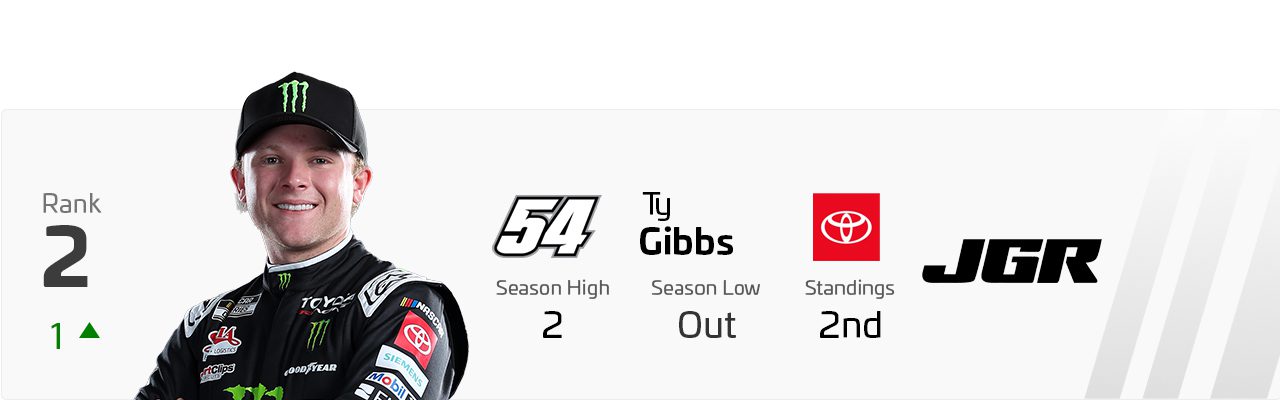
Analysis: The conversation around Gibbs has changed dramatically in just a handful of months, and second in these rankings with just 13 races left in the season is worthy of real recognition. A disastrous Stage 1 pit stop dropped the No. 54 from fourth to 28th at Iowa, but Gibbs methodically erased all of it, leapfrogged Bell with a two-tire call on the final green-flag stop and then refused to crack with his teammate filling the mirror over the closing laps. It was win No. 2 of 2026 and moved him from fourth to second in points, but perhaps more telling — he has finished in the top four in all four short-track races this season. Richmond has been less spectacular for Gibbs at the Cup level — with one top 10 and a 19.3 average finish in six starts — though Gibbs won the 2022 O’Reilly Auto Parts Series race there. If there was still a question whether No. 54 belonged in the championship heavyweight discussion, Iowa went a long way toward answering it.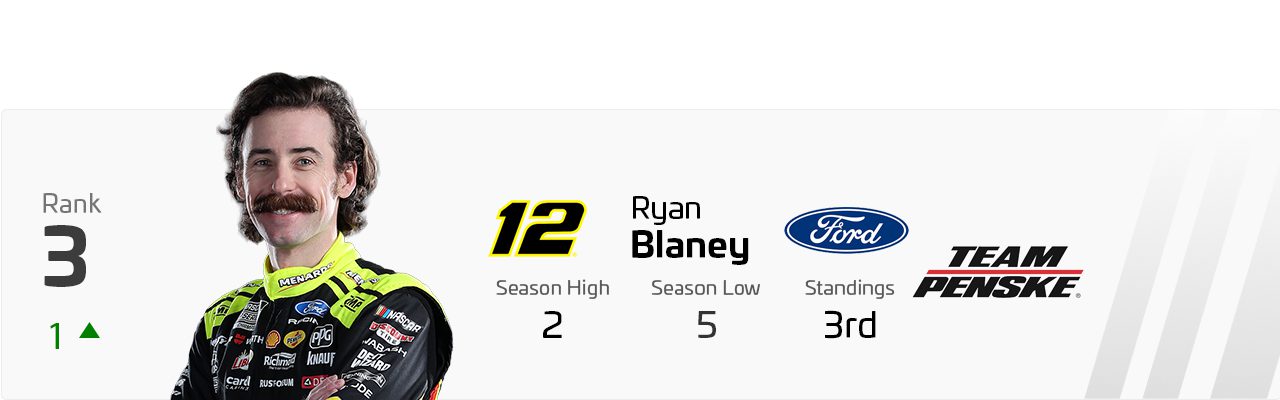
Analysis: Blaney probably left Iowa wondering how the most dominant car managed to only finish third, but that’s been the story of his season, to a degree. The No. 12 started from the pole, led a race-high 129 laps, won Stage 1 and ranked first in both speed and restarts before the final strategy cycle tilted toward the JGR teammates. He nevertheless gained 30 points relative to The Chase cut and now owns a series-best 16 top 10s, further cementing one of the steadiest seasons in the garage. Richmond historically has not been one of Blaney’s signature tracks, but third place with 39 laps led last summer certainly suggests that old weakness is losing relevance. Another afternoon like Iowa and eventually strategy won’t be able to keep the No. 12 out of Victory Lane.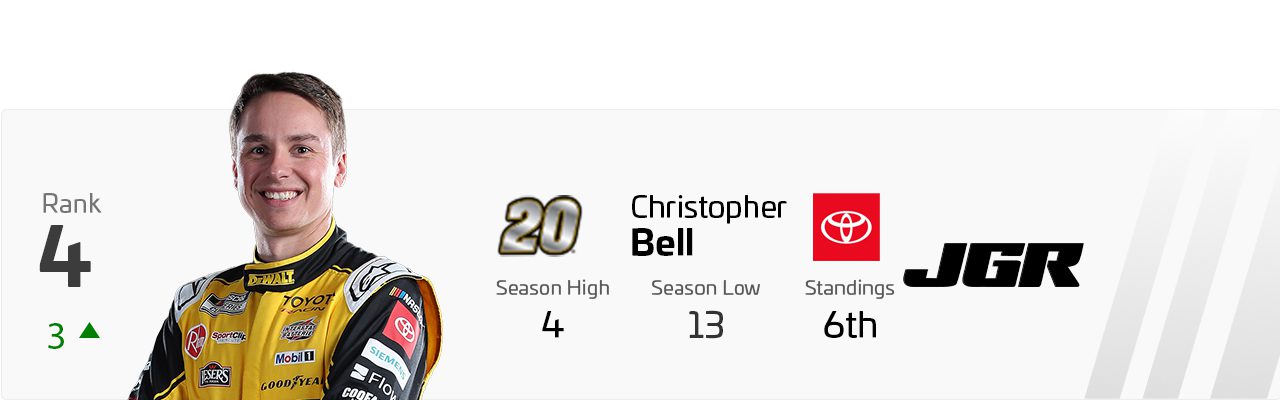
Analysis: At some point, Bell has to run out of ways to finish second. Iowa made it seven runner-ups this season — four in the last five races alone – after he climbed from 22nd, won Stage 2, led 108 laps and ranked first in both passing and defense and second in speed. The total ties Harry Gant’s 1981 mark for the most second-place finishes in a winless season, which has crossed the line from frustrating into genuinely bizarre. Richmond seems as logical a place as any to finally end it: Bell has yet to win there in Cup, but he won three consecutive O’Reilly Auto Parts Series races at the track from 2018-19. The strangest part of this entire saga remains that Bell isn’t merely getting close; he keeps looking like one of the very best cars on the track and arguably the best.
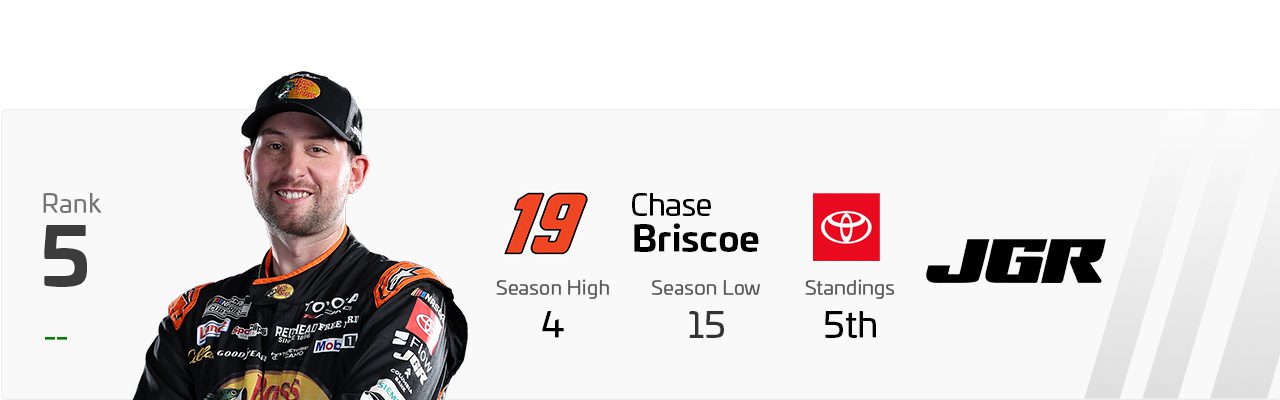
Analysis: Briscoe’s Iowa sixth-place run almost qualifies as boring compared with what he’s been doing lately. No. 19 started 20th, worked his way to the front half of the field and spent portions of the afternoon chasing Bell before recording his fifth top-six finish in six races. He gained another 23 points relative to The Chase cut and now sits fifth in points. Richmond offers a fascinating test because Briscoe’s career record there has been aggressively ordinary: no top 10s in nine Cup starts, but a respectable 16.3 average finish. Current form says that resume may not mean much anymore, though. 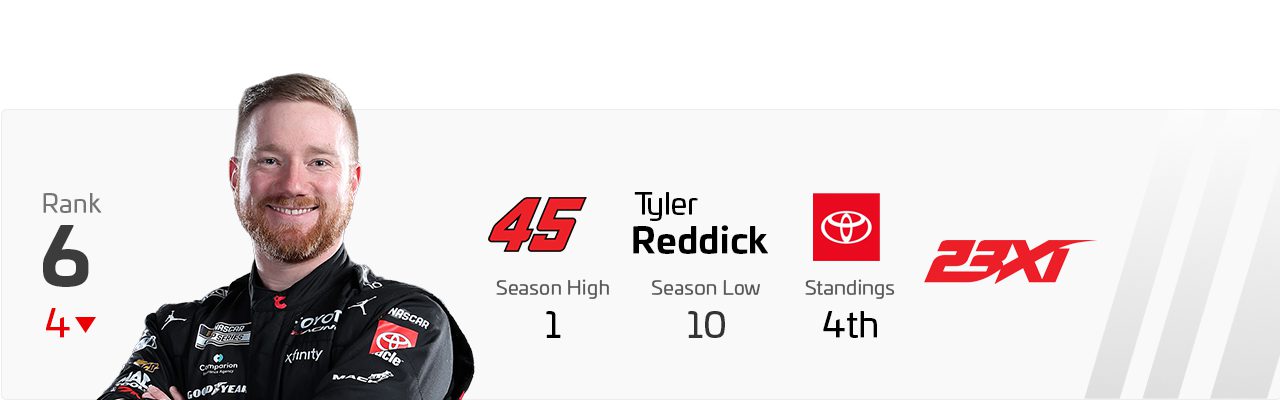
Analysis: Few season arcs in recent memory have turned as sharply as Reddick’s. The driver who captured our attention early on by winning five of the first nine races lost control on Lap 4 at Iowa, swept Erik Jones into the wall and finished 36th … for his fifth result of 30th or worse in the last nine races. He has slipped from second to fourth in points in that span, now 120 behind Hamlin, and finally tumbles out of the elite tier he occupied in these rankings essentially all season as his JGR compatriots almost all look like stronger contenders at the moment. Richmond, ironically, captures the current Reddick experience rather well: Last year he won Stage 1 and led 41 laps, only to finish 34th. The No. 45 still ranks second in season-long speed and first in passing, so the machinery underneath the slump is hardly broken. But with The Chase around the corner, the early season juggernaut needs to start resembling itself again, and soon.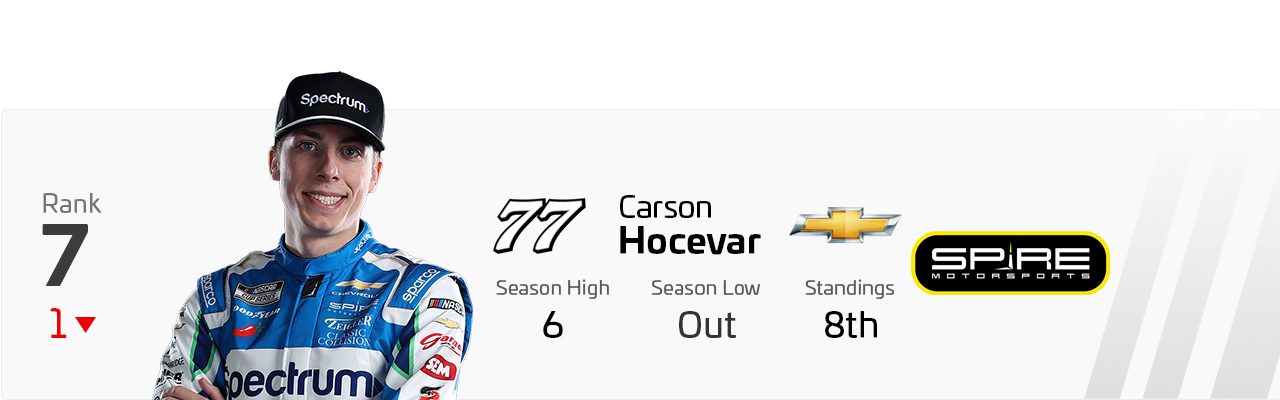
Analysis: Hocevar finally ran into the kind of weekend his breakout season had largely managed to avoid. An alternator issue surfaced early at Iowa, he later spun while buried in traffic, and the No. 77 finished 31st, dropping three positions in the standings and surrendering 11 points relative to The Chase cut. The previous 22 races built enough cushion to absorb it, however, and Richmond offers a useful reminder that short tracks have been part of his ascent rather than a drag on it. Hocevar won the 2023 Craftsman Truck Series race there, then led 10 Cup laps before finishing 15th last summer. Iowa interrupted the climb; it did not invalidate it. The next step for an increasingly complete driver is showing how quickly he can make a rotten afternoon irrelevant and find a way to rebound.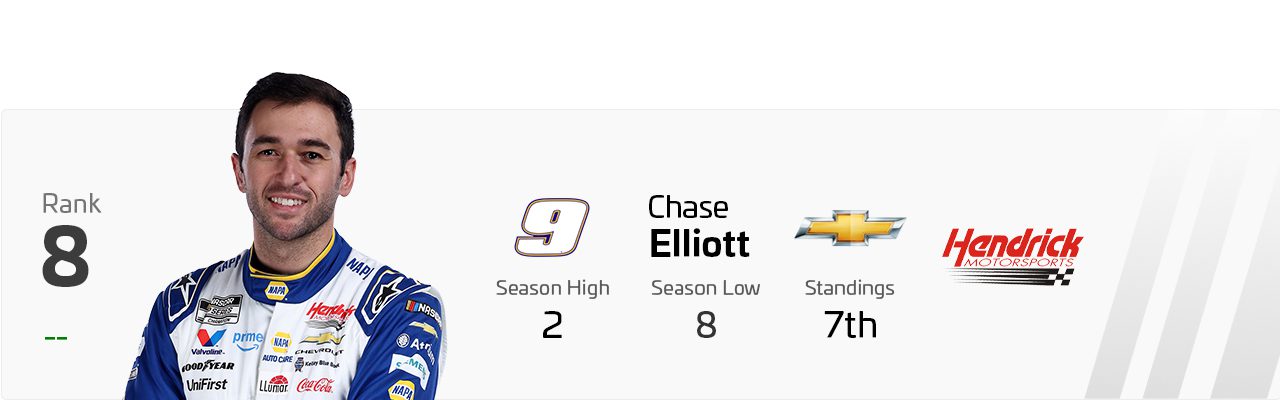
Analysis: Elliott’s path to 15th at Iowa was considerably more eventful than the finishing position suggests. After crashing in practice and starting from the rear, he used strategy to lead 18 laps before a pit stop went sideways and sent him backward again. He still gained five points relative to the cutline, but the bigger concern is organizational: Hendrick Motorsports’ summer short-track performance has not looked anything like what you’d expect from the championship outfit. Richmond itself has generally been kind to Elliott, though — six top fives and eight top 10s in 18 Cup starts with a 12.2 average finish. That makes Saturday less of a survival exercise and more an opportunity for the No. 9 to prove the recent lull is schedule-specific rather than something deeper. But there’s no guarantee it is.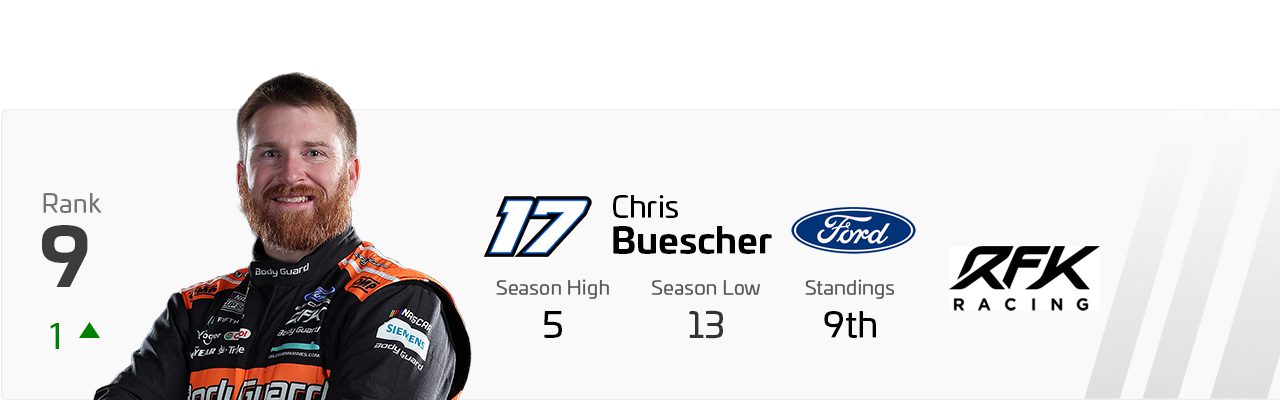
Analysis: Buescher gains a position largely because the standings around him shifted, not because Iowa offered much reason to celebrate. The No. 17 finished 13th but ranked 30th in speed and 32nd in both passing and defense, a surprisingly invisible afternoon for a driver whose floor has usually been one of his strengths. Still, Buescher leaves ninth in points and 140 above The Chase line, and Richmond is much more his kind of place. He won there in 2023, leading 88 laps, before last year’s 30th-place clunker interrupted what had been a much better recent run. If there is a track to remind everybody why Buescher spent much of this season inside the upper reaches of these rankings, this one certainly qualifies. 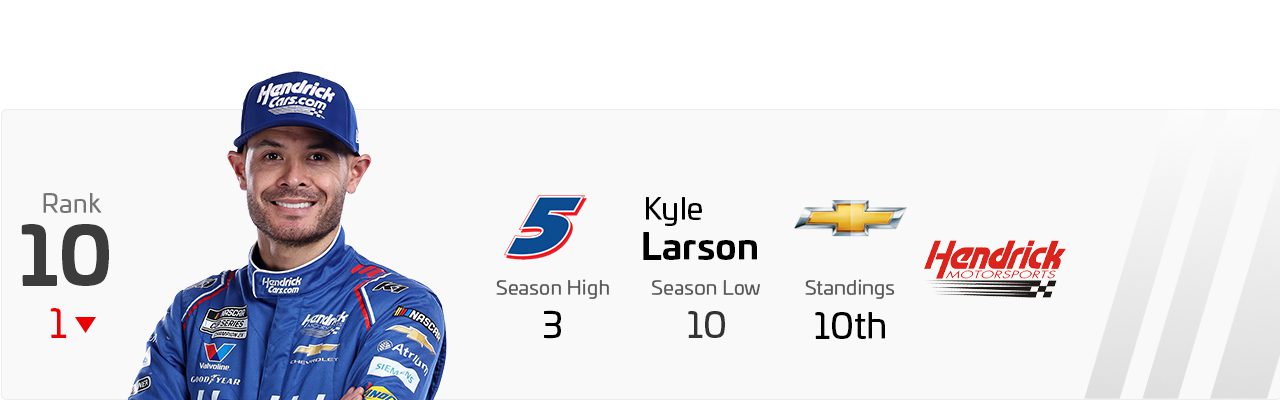
Analysis: Iowa’s relationship with Larson remains downright hostile. After starting second and finishing third in Stage 1, the No. 5 was forced high in a four-wide mess and tangled with Hendrick teammate Alex Bowman, eventually finishing 33rd — his third result of 33rd or worse in four races. Yet here comes the same contradiction that has defined his entire season: Larson still has 637 laps led, the fastest pit crew in the sport and ranks sixth in season-long speed despite sitting 10th in points with no wins. Richmond is legitimately one of the better tracks available for a reset, with Cup wins in 2017 (pre-Hendrick) and 2023 and a sixth-place finish last year. We’ve called several tracks rebound opportunities lately. Eventually one will stop being hypothetical.
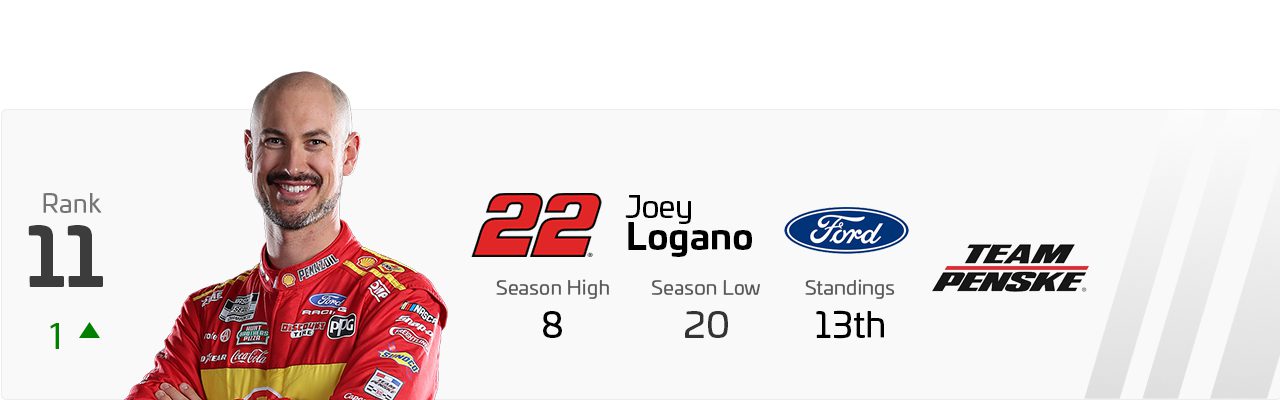
Analysis: Fourteenth hardly screams “another strong Logano race,” but the box score misses most of what happened. He ran second throughout the opening stage, finished runner-up in both stages and ranked third in speed and restarts before a pit-road issue forced the No. 22 to back up and retighten the left-rear wheel. His Chase cushion nevertheless expanded to 89 points, a remarkable place to be after spending much of the summer staring up at the wrong side of the line. And Richmond is about as (sliced) bread-and-butter as tracks get for him: two wins, 15 top fives and 20 top 10s in 32 starts, with a 9.8 average finish. The comeback has already happened. Now the three-time champ gets one of his best tracks to keep stacking on it and really build his case.
Analysis: Byron did something at Iowa that no Hendrick driver had managed in three races: finish in the top 10. Ninth hardly resembled his dominant victory there last season, but it stopped the organizational bleeding, added 15 points to his Chase cushion and moved the No. 24 back up a position in the standings. His second-ranked pit crew remains an enormous asset, particularly as margins begin to shrink, though Richmond has produced considerably less noise lately and Byron finished 12th there last season. He is now 103 points above the cut, so urgency is not the issue, but finding the version of Byron that looked like an obvious championship fixture early in the year is.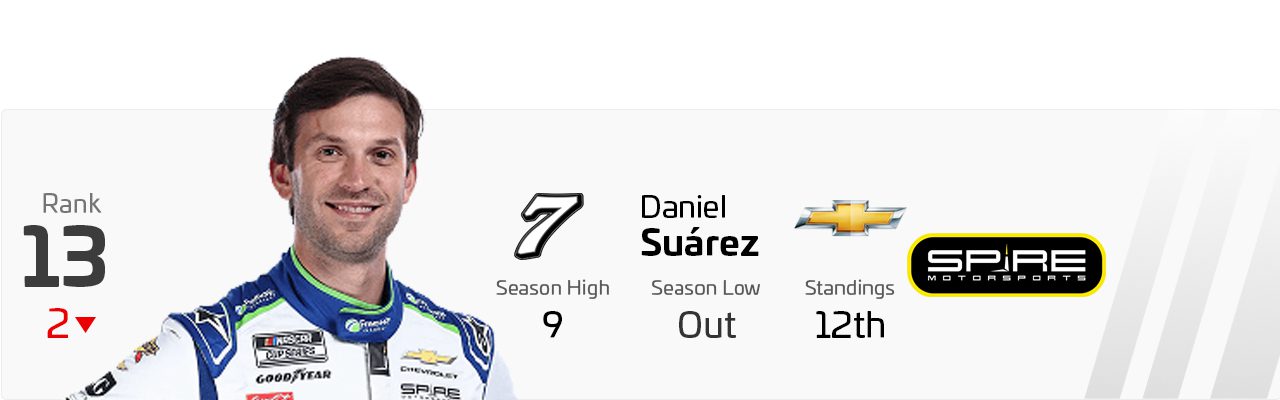
Analysis: Suárez’s Iowa race never really had a chance to get started. The No. 7 rolled off 33rd, remained buried throughout the afternoon, ranked 27th in speed and finished 23rd, yet somehow surrendered only three points relative to The Chase cut because almost everybody around him had problems of their own. That leaves Suárez an even 100 points above the line and in excellent mathematical shape despite the uneven performances. (See? Winning still helps.) Richmond provides a much better recent reference point: seventh last summer with a lap led, his best finish during that portion of the schedule, as he was already winding down his time at Trackhouse Racing. Three races from The Chase, Suárez doesn’t need fireworks. A couple more afternoons like last year’s Richmond effort would make the rest of the regular season wonderfully uneventful and that’s what he’s looking for right now.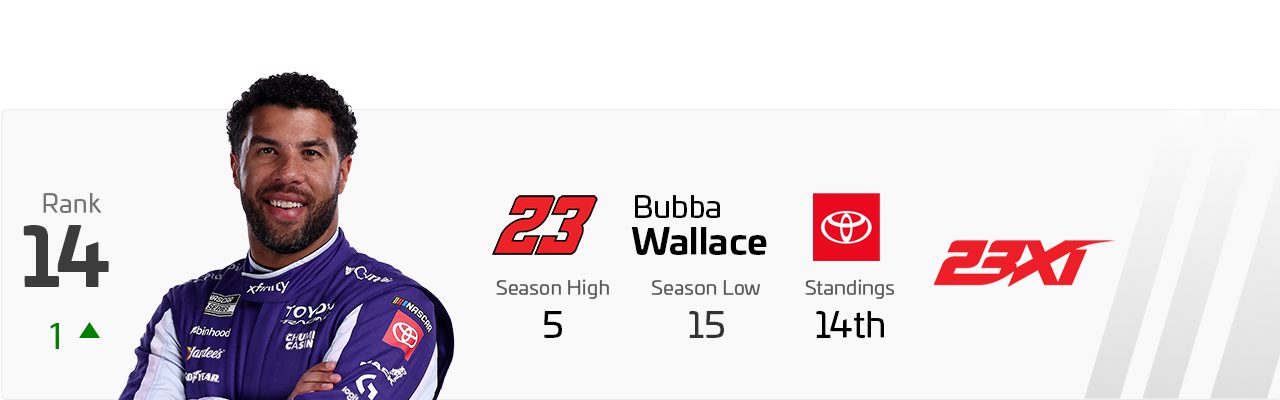
Analysis: Wallace continues finding ways to make good races look mediocre by the time the standings are updated. He surged from 26th at Iowa, took the lead from Elliott and paced 35 laps, only to speed entering pit road under caution and spend the remainder of the afternoon doing his best to recover to 12th. Richmond last year somehow provided an even more extreme version of that same script: Wallace led a race-high 123 laps there last year before finishing 28th. In 14 Cup starts at the track, he has just one top five and one top 10 despite leading 206 total laps. There’s plenty of evidence that Wallace can be fast Saturday, but the question is whether the No. 23 can finally convert Richmond speed into the result it has repeatedly deserved — and if there’s enough steam left in his season to avoid squandering his Chase positioning.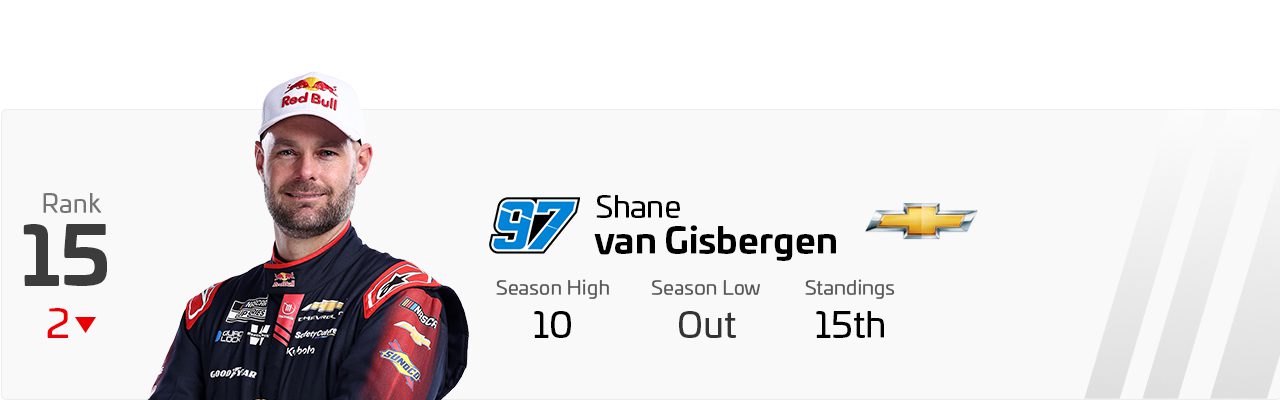
Analysis: SVG has spent much of 2026 raising his oval ceiling, but Iowa was a reminder that the floor remains a work in progress. He spun in Stage 2, finished 30th three laps down and lost another 10 points against The Chase cut, trimming his margin to just 47 with three races remaining. Richmond is at least familiar enough to him to reduce some uncertainty after a perfectly useful 14th-place run there last season. The No. 97 has already delivered legitimate oval performances at Nashville, EchoPark and North Wilkesboro this year, so Iowa shouldn’t reset the entire evaluation. But this is no longer an experimental stretch, either. SVG now needs those lessons to come in handy to help preserve a Chase position that is very much not locked in.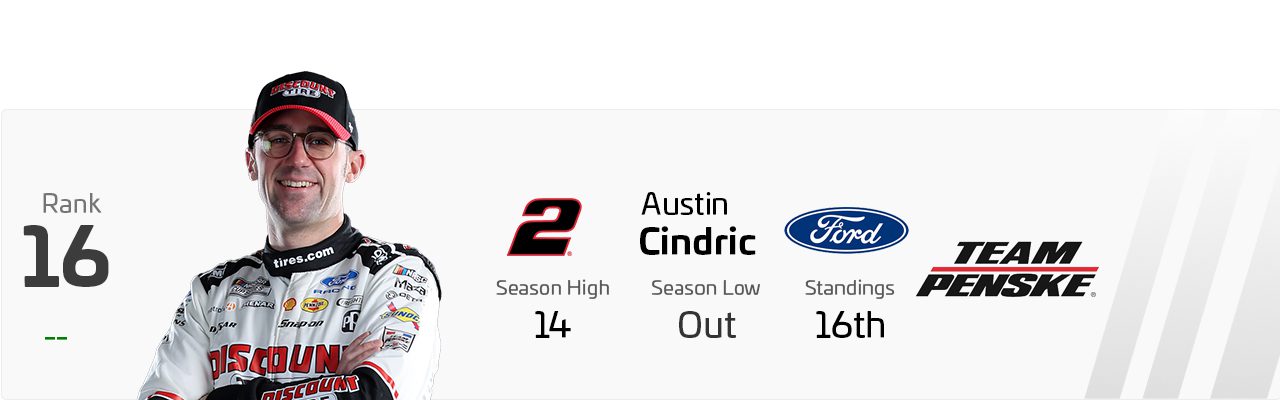
Analysis: Boy, that cutoff line is getting uncomfortably close. Cindric is still safe for now, but finished 29th at Iowa, ranked 25th in speed and gave away nine points to The Chase cut, leaving just 29 points between the No. 2 and fellow Ford driver Ryan Preece with three races remaining. Richmond should provide considerably more confidence than Iowa did, though: Cindric finished fifth there last season, one of three Penske cars inside the top five, after briefly leading. The comforting part is that Penske has been among the strongest organizations on short tracks lately. The uncomfortable part is that Preece, Chastain, Keselowski and Jones are separated by only 21 points immediately behind him. Saturday could turn the bubble race from tense into absolute chaos.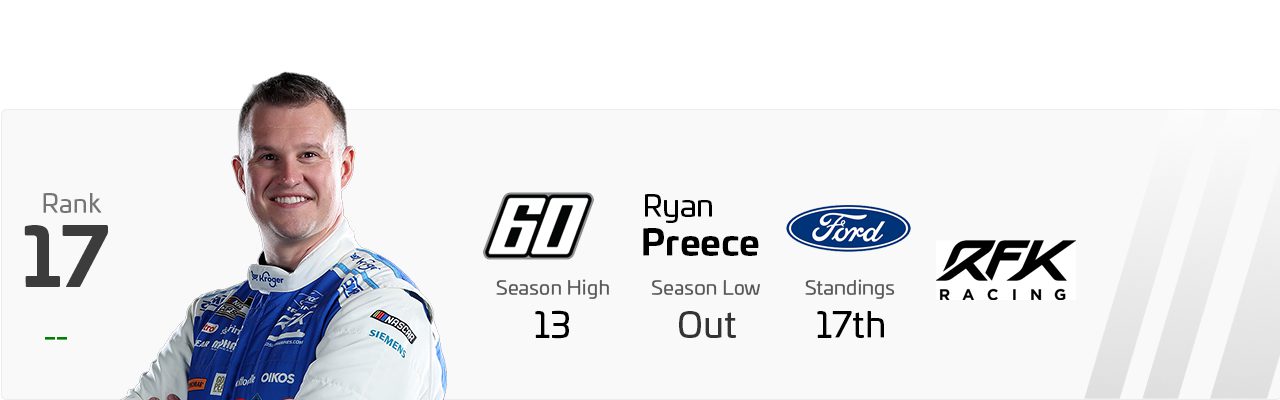
Analysis: Preece’s 20th-place Iowa result was hardly the breakthrough he needed, yet the standings somehow moved in his favor. The No. 60 gained nine points on Cindric and is now only 29 below the cut, keeping alive a season that has repeatedly flirted with The Chase without quite getting over the line for good. Richmond is perhaps the most intriguing track left for him: The short-track star won the pole and led 60 laps there last summer before crashing to 35th, and his career line includes a 2023 top five to mark his best finish across 10 starts. There are no more moral victories available at this stage, but there are still enough points. A clean version of last year’s Richmond speed could finally make this bubble fight flip.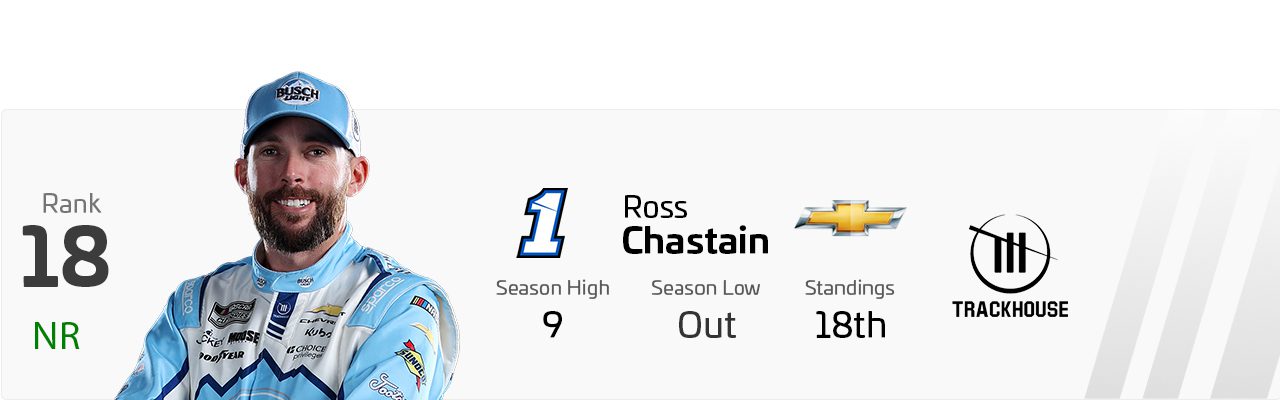
Analysis: Now that looked like a driver trying to make The Chase. Chastain produced perhaps his best all-around weekend of the year at Iowa, finishing seventh after leading 40 laps and ranking fifth in speed, second in defense and fifth on restarts. The payoff was enormous: 35 points gained relative to the cut, a three-position standings jump and a deficit that has suddenly shrunk to 47. Richmond does not supply an obvious silver bullet, however — Chastain finished 19th there last season — so Iowa needs to represent a broader, No. 1 team-wide improvement rather than a track-specific spike. After months of waiting for Trackhouse to turn flashes into a complete afternoon on an oval, Chastain finally did. There is just enough runway left for that to matter a lot, but he’ll need to hurry up.
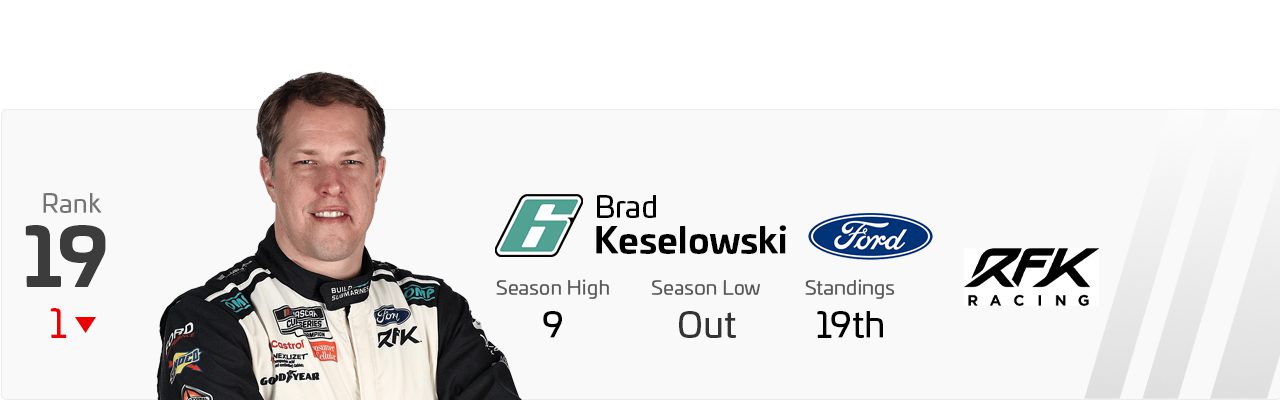
Analysis: Keselowski’s recent momentum ran straight into the Iowa wall before Sunday even began. After posting the fourth-fastest time on his first qualifying lap, the No. 6 crashed hard on the second, required unapproved adjustments, went to the rear to start and eventually finished 27th. And now the larger equation: Keselowski is 48 points below The Chase cut, only one behind Chastain and two ahead of Jones. The 2012 champ’s Richmond resume may be the most convincing track-history card anybody on the wrong side of the bubble can play right now. Keselowski won there in 2014 and 2020, finished ninth last season and also owns four O’Reilly Auto Parts Series victories at the 0.75-mile oval. His recent revival took a week off, but he can’t afford another.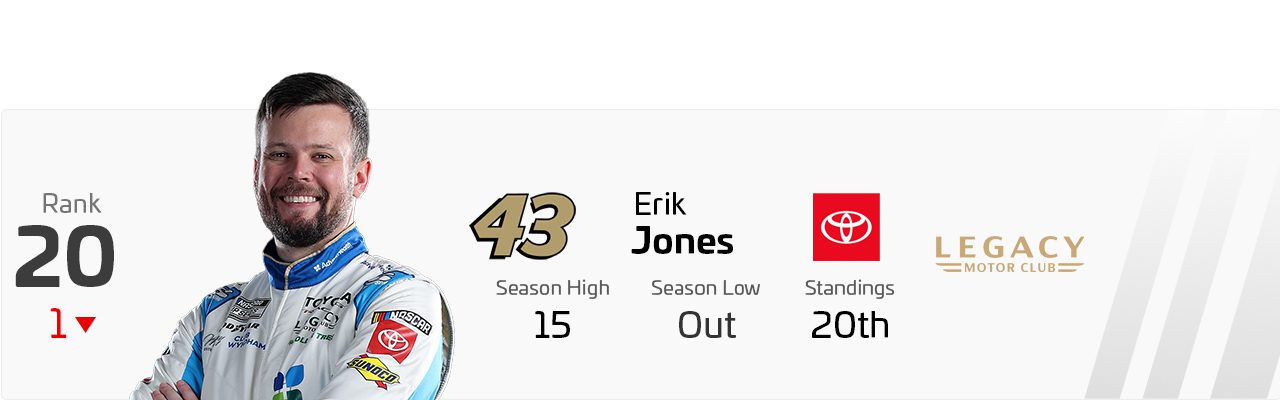
Analysis: Jones’ Iowa race lasted four laps, and the timing could hardly have been worse. Running inside the top 10, he was collected when Reddick lost control entering Turn 1 and slammed the wall, finishing 35th and falling from 44 to 50 points below The Chase line. He remains only two points behind Keselowski and three behind Chastain, so the ranking may say 20th, but the actual bubble fight has barely separated those three. Richmond offers less obvious ammunition after Jones finished 26th there last season, and incremental gains are becoming increasingly useless with only three races remaining. He needs a strong couple of races. The Iowa wreck was not his doing; but what matters now is whether No. 43 can make the next three races emphatically his.