RICHMOND, Va. — One week to the next, the racing calendar shifts from the Iowa plains to the central Virginia piedmont — two vastly different regions of the country. At face value, the NASCAR tracks that live there would seem comparable.
RELATED: Saturday’s starting lineup | Weekend schedule
The Cup Series travels from last weekend’s race at Iowa Speedway to a regular-season showdown at Richmond Raceway, which hosts Saturday night’s Cook Out 400 (7 ET, USA Network, HBO Max, MRN Radio, SiriusXM NASCAR Radio). The schedule turns from Iowa’s 0.875-mile D-shaped oval to a similarly shaped 0.75-mile layout in Richmond, fostering the notion that crew chiefs might have like-minded approaches to the two tracks.
Some of those track traits, however, are as different as the cornfields are from the Commonwealth.
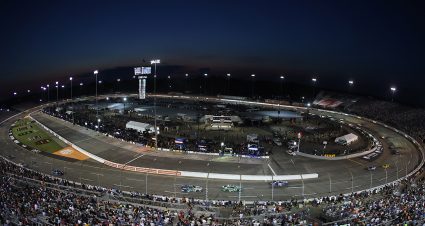
“I think a little bit, with how it drives and the banking and the pavement, like the bump in (Turn) 1 in Iowa,” says Chris Gayle, crew chief for Denny Hamlin’s Joe Gibbs Racing No. 11 Toyota. “This place, though, by far, tire degradation is a lot bigger deal. I mean, you freaking wear out tires here, whereas Iowa, you would think you would, but it’s really not quite as bad as you would think, and the fall-off’s not much. It’s a lot here, right? I think that’s the biggest difference between the two places.”
Iowa presented a different challenge for Gayle’s No. 11 team with brake issues that prompted Hamlin’s pedal to go long both during practice and the race, a brake-pressure problem shared by Joe Gibbs Racing colleague Chase Briscoe and the No. 19 group, plus a pair of 23XI Racing Toyotas. While debate swirled this week around whether brake pads could be changed without penalty, Gayle said the week also provided the organization with an opportunity to dive into the issue, aiming to keep it from happening again.
“Last week was an outlier choice on some brake pads, and I think that honestly, now that we’ve gotten back and they’ve looked at them, I don’t think that we had what we thought we had from the manufacturer, and that’s the truth,” Gayle told NASCAR.com. “I know that doesn’t make everybody feel good. Everybody wants conspiracy theories and all kinds of other things, but it was a legit problem that surprised all of us last week. Because I mean, why would we go into Iowa picking something that somebody across our group hadn’t run multiple times and felt good about? So it just worked out that way to where I think it was something different than what we expected to get, and so that’s why so many of us had trouble.”
So is it back to what’s worked in the past? Gayle said yes. “Yeah, I was going to do that different because Iowa is a specific place that creates a separate brake problem that you don’t necessarily have as bad here,” he said, “but this just reiterated for me to stick with our normal, so it’s not a big deal.”
Getting back to the tried and true is also the hope for the No. 3 Richard Childress Racing Chevrolet team and driver Austin Dillon, who has won the last two Cup Series races at Richmond. No. 3 crew chief Richard Boswell and the rest of the Cup field will face a Goodyear tire combination that’s new to Richmond (with different left-side rubber), but familiar to other short tracks with appearances at Martinsville Speedway and North Wilkesboro Speedway earlier this season. Dillon & Co. also return with a power boost over last year, with the 750-horsepower package — by now a known entity elsewhere — making its Richmond debut.
MORE: At-track photos: Richmond
Boswell said the team expected to learn more about the tire tweak from Friday’s practice, held in the searing afternoon heat ahead of what’s anticipated to be a cooler Saturday evening race. But he was also optimistic about their setup mastery carrying over.
“Really, we’re just trying to replay weekends, right?” Boswell told NASCAR.com. “We want to try and hit on the same balance we hit on last year. We want to try and get the driver’s same comments and try and parlay that into the race. So for us, it’s kind of status quo. Just try and execute the things that we didn’t execute perfectly last year. Just try and get better on all of them.”
As for the differences in Iowa and Richmond, Boswell shared Gayle’s sentiment.
“I mean it’s super-high fall-off to no fall-off,” Boswell said. “The track shapes are the same, the tires are very different, and the fall-off is very different. So from a racing standpoint, I don’t think that they compare. From just a repetition of getting in a rhythm and hitting your marks and getting back in a short-track mentality, I think they’re very similar.”