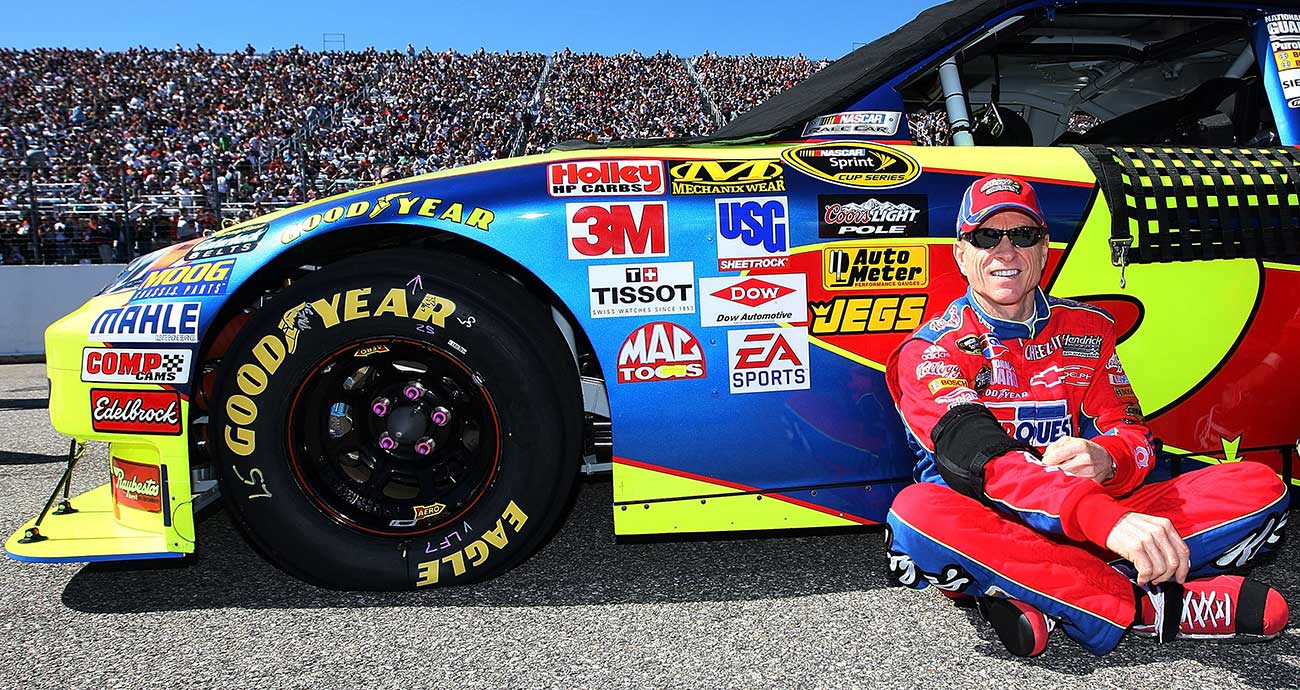
The last flourish of Mark Martin’s NASCAR career seemed to defy logic at nearly every turn of the 2009 season. At age 50, when most Cup Series racers are on the decline, retired or strongly considering hanging it up, Martin savored one of his most productive years — all aided by a new team and crew chief, a car owner’s relentless persuasion, and a veteran’s keen ability to diversify his already considerable all-around race craft.
Defying logic? For Martin, who had seen a little bit of everything through the decades, it almost defied reality.
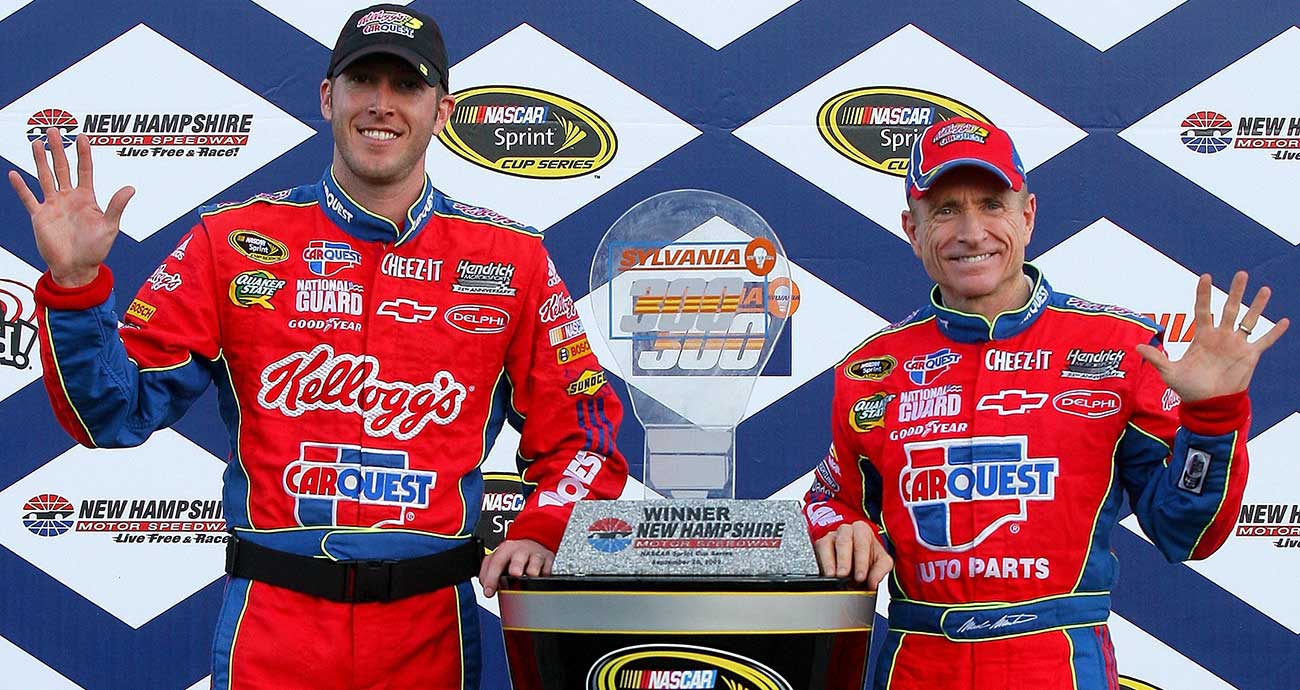
“Pinch me. I am sure I’m sleeping,” Martin said from Victory Lane at New Hampshire Motor Speedway that fateful year. “I am sure I’m dreaming.”
Martin’s five-win season with Hendrick Motorsports in 2009 marked a rejuvenating moment in his voluminous stock-car tenure, told in the first installment of the “Start/Finish” documentary series on the NASCAR Channel. The fifth of those victories — and the last of his 40-win Cup career — came at the 1.058-mile New Hampshire track, site of Sunday’s Dollar Tree 301 (2 p.m. ET, USA Network, HBO Max, PRN Radio, SiriusXM NASCAR Radio).
CLASSICS: Full race replay: New Hampshire, 2009
Chalk Martin’s incredulity up to his history of performances in the Granite State and his difficulty getting a feel for the circuit’s sweeping, relatively flat corners. He’d twice been a pole winner there and thrice a runner-up, but 25 previous trips to the Loudon oval had failed to produce a victory. Furthermore, before landing with Hendrick, Martin had endured three-plus winless seasons in both full- and part-time efforts, including a heartbreaking Daytona 500 loss by a fender to Kevin Harvick in 2007.
The missing piece, Martin said, was what he called an “unfair advantage” — a pairing with crew chief Alan Gustafson, who was in his fifth season at the helm of the No. 5 Chevrolet group. The two clicked nearly from the start, and while Gustafson’s input didn’t reinvent Martin’s veteran skillset, he opened portals that were previously closed off.
Martin won at two tracks that year where he’d previously been shut out — Chicagoland Speedway and New Hampshire — and his triumph at Michigan International Speedway that June unlocked a newfound strength: saving fuel. Gustafson’s late-race coaching over the No. 5 radio emphasized a conservative approach, one that paid off when front-runners Jimmie Johnson and Greg Biffle ran out of gas in the final two laps. At each turn, Martin heaped abundant credit Gustafson’s way.
“I have a lot of trust in Alan,” Martin told The Boston Globe that fall. “I let him do his thing, and he’s brought so much support, you know, in so many areas, and unloaded so much off my shoulders. He’s the smartest — the best combination of really smart engineering, understanding of that, and the guy that pulls the wrenches and gets his hands dirty, [the] practical racer. He’s the best combination of all that. I’ve worked with great engineers and really smart people and great guys that work on race cars and are practical and all that, but he’s the combination, the strongest combination of all of that.”
MORE: Mark Martin through the years | Watch: Start/Finish documentary
The respect from Gustafson was mutual, especially for someone he’d looked up to as he made his own climb through the NASCAR ranks. As he graduated to become a Cup Series crew chief in 2005, Gustafson was tasked with molding the early stages of Kyle Busch’s big-league career, discovering a talented, fierce rookie who tended toward a more aggressive bent. Martin, Gustafson says now, was the opposite with a measured style shaped by years of experience.
“The sheer pace that he could go at, I always said if you just put Mark, like if the goal was to run 500 laps as fast as you can and no one else is on the track, I don’t know that he loses a race, to be honest,” Gustafson said. “It was all the other intangible things. He’s well known, obviously, for how he would race people, right? He wouldn’t hold anybody up. If he was slower, then he’d pull over and let them go, and he just raced really clean. As far as the ability to drive the car fast, like second to none, just incredible. So yeah, immensely talented and to have the desire and the commitment and the competitiveness at 50 was great.”
The deal that brought him into the Hendrick fold almost didn’t happen. Martin had raced the previous two Cup Series seasons on a part-time basis by choice, competing in 24 of the 36 events each year. When Rick Hendrick came calling in the months leading up to Silly Season’s full swing, Martin told the team owner that he’d consider it, provided that his agreement was for the same two-thirds workload.
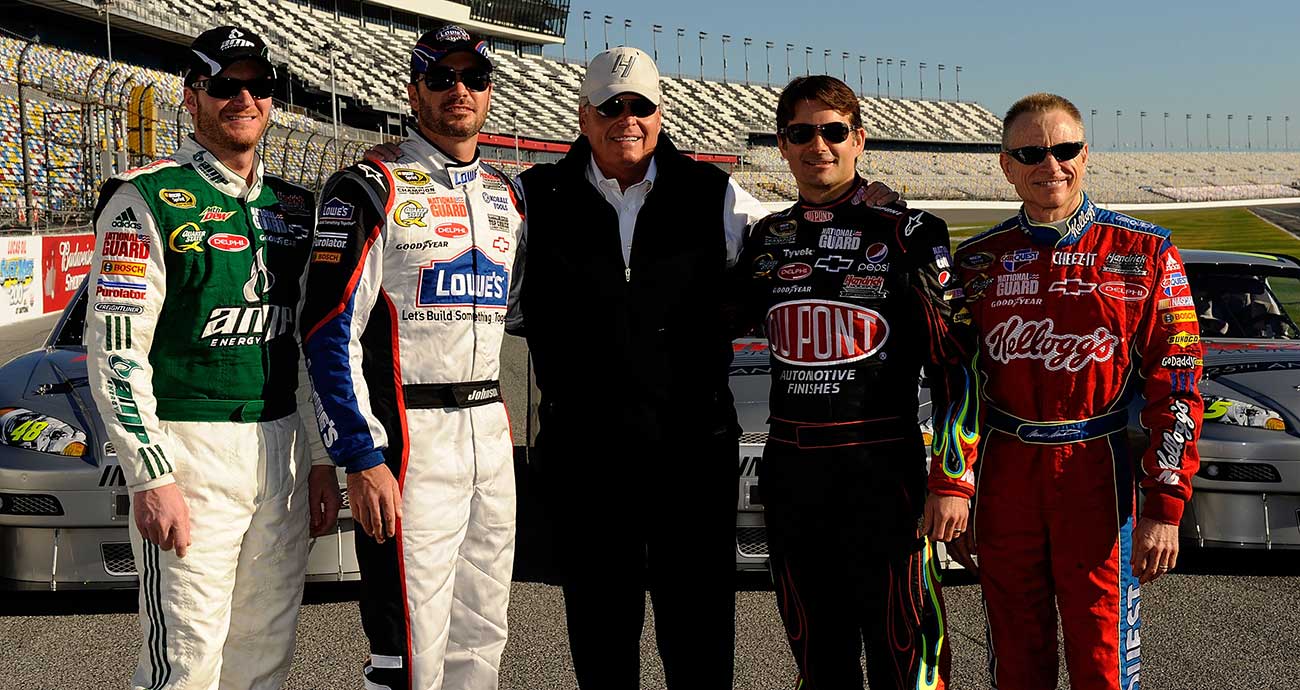
Hendrick wanted that last third, and his persistence prevailed. Martin’s eventual acceptance created a formidable four-driver roster of mega-powers, with Johnson, Jeff Gordon and Dale Earnhardt Jr. as teammates. All four would become NASCAR Hall of Famers. The opportunity was too good for Martin to pass up, giving him a competitive benchmark and his best chance to win in years.
“I never would have thought that we would ever have a lineup like this or any team would ever have a lineup like this,” Martin said at the announcement. “The stars aligned, the opportunities were there, and Mr. Hendrick’s reputation and respect, how he treats people and runs his businesses and organizations, made it all possible.”
Martin’s performance aligned with that of his peers at Hendrick, and he assembled a regular season of four wins and six pole positions, entering the 12-driver Chase as its top seed. The postseason kicked off that year at New Hampshire, leaving the Arkansas native less than jazzed about his chances.
Gustafson countered the pessimism with what turned out to be a winning setup and strategy, including an off-cycle pit gambit that put Martin in control. He led 68 of 300 laps, snookering Juan Pablo Montoya on a late restart and denying him one of his best shots at an oval-track victory.
“I’m speechless. I can’t talk right now, boys,” Martin said on the cool-down lap.”… Hardest one I remember getting in a long, long, long time.”
“How good is Mark Martin?” Gustafson told the ESPN broadcast. “It’s unbelievable.”
The triumph ended up as the last Cup Series win for Martin, who had emerged from a track of great personal torment with the points lead intact. But the campaign also wound up being his final true bid at a Cup Series championship, and that ending was not as cherished. Johnson was well into his unprecedented run of five consecutive Cup titles, and he registered four wins in the final nine races to seal his fourth crown. Martin’s challenge came unglued in that stretch, capped by a rollover crash on the next-to-last lap at Talladega that provided Johnson with enough of a late-season cushion.
RELATED: Weekend schedule: NHMS
Martin finished second in the points for a fifth and final time that year, and the recurring questions about his lack of a championship ring dogged him anew. Answering those questions in his retirement requires an analysis of his legacy and whether a title matters. The blue jacket that the NASCAR Hall of Fame gave him as part of the Class of 2017 still fits either way.
“He shouldn’t be defined by not winning a championship because I don’t think that was ultimately always in his control,” Gustafson says. “I can tell you from experience working with multiple champions that he is every bit as good as they are, and he is every bit as deserving of winning a championship, and unfortunately, it just never came to fruition for him. I don’t want to say I have regret over ’09, but you know, it’s definitely one of those years that I look back and you always ask yourself, could you have done a little more, could you have done something a little different, because I do think we could have. In my mind, yeah, I wish we would have won that championship and that would have been the answer to that question. So I think yes, flipping at Talladega, I don’t remember everything, but that was one of the big ones.
“I think the best thing: Ask anyone who raced against him, and they’ll be like, yeah, that dude was tough. So yeah, I don’t think he should be judged on the not winning a championship, and it just … sometimes unfortunately, life isn’t fair and it didn’t work out for him. That’s not an indication of his abilities or any shortcoming in his career. It’s just the way it worked out.”
Martin raced for four more seasons — two full-time and two partial — before sunsetting his NASCAR career after the 2013 campaign. No more wins came his way, but he looked back fondly at his last big year, and a brilliant day at New Hampshire’s “Magic Mile.”
“It was a magical year last year for me,” Martin said just before the 2010 campaign, “and I still feel the magic each time I strap into a race car.”