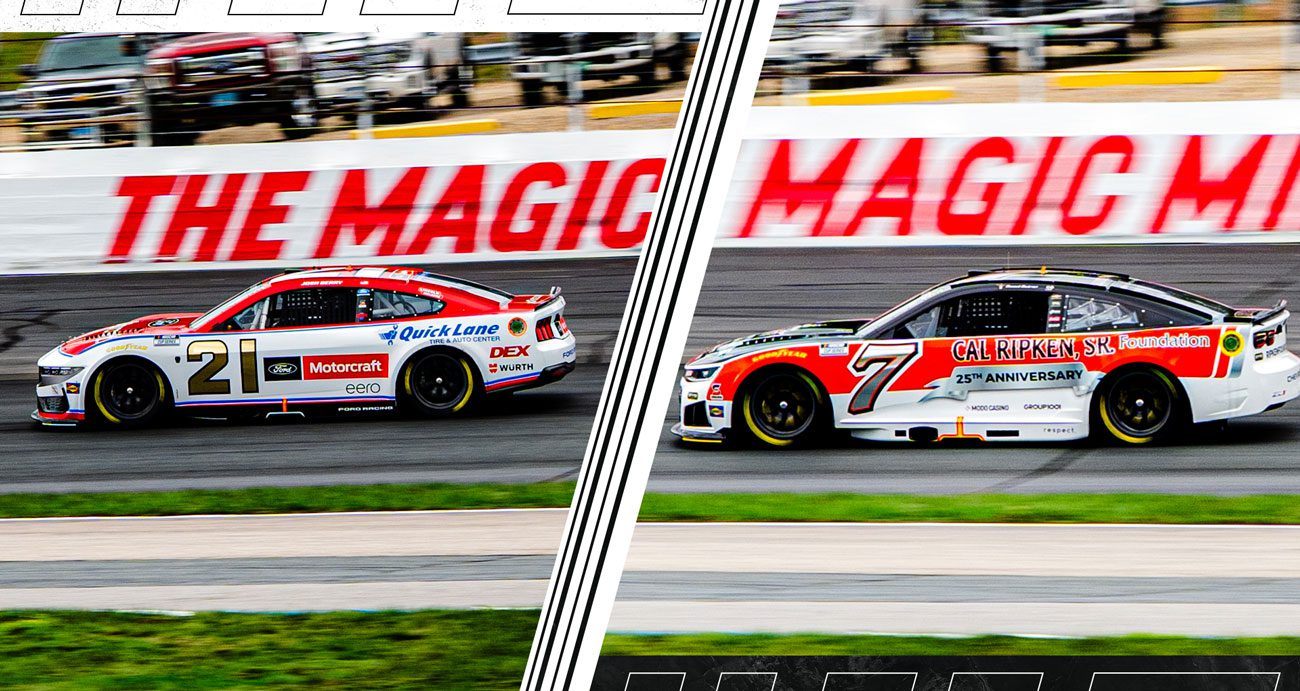
LOUDON, N.H. — Josh Berry and the No. 21 Wood Brothers Racing team nearly won last year’s NASCAR Cup Series race at New Hampshire Motor Speedway.
With a notebook full of goods, crew chief Miles Stanley returns to the “Magic Mile” hoping their setup allows them to pull off their best trick yet in Sunday’s Dollar Tree 301 (2 p.m. ET, USA Network, HBO Max, PRN Radio, SiriusXM NASCAR Radio).
“We took a lot of what we learned here last year and tested that at (North) Wilkesboro in January and then kind of carried that over to Wilkesboro a few weeks ago and then Richmond and Iowa as well and back to here,” Stanley told NASCAR.com. “So hopefully it all applies, and we can improve a little bit on what we did here last year.”
MORE: New Hampshire hub | Cup Series standings
The recent run of success shows positive steps forward for the No. 21 team, which enters the relatively flat, 1.058-mile track after three consecutive top-10 finishes for the first time in Berry’s career: seventh at Indianapolis Motor Speedway, fourth at Iowa Speedway and eighth at Richmond Raceway. The surge comes as Berry auditions for a ride, as he won’t return to the No. 21 Ford in 2027.
“The momentum is real,” Stanley said. “Just try and keep that and carry that into practice and into qualifying and then hopefully through the race.”
Practice is also back in full force for the remainder of 2026 with a single full-field, 50-minute session each weekend, with the exception of Daytona International Speedway and Talladega Superspeedway. That added time comes with an extra set of tires, all of which Stanley views as a positive change for the garage.
“I think that’s a big thing for us,” Stanley said. “I know there’s varied opinions across the garage of whether it’s good or bad or what we need or what we don’t need, but I like it personally. I think it’s a great thing. I think it gives us the opportunity as a team to strategize a little bit about how we approach that practice, what we use that second set of tires for and just gives us an opportunity to learn more reps, more chances to learn something.”
Ryan Sparks, crew chief of the No. 7 Spire Motorsports Chevrolet and driver Daniel Suárez, agreed that added practice is an overall plus. Previously, the field was split into two groups for separate, single 25-minute sessions. With all 36-plus cars on track, teams can gather more applicable data for Sunday’s true tests.
“I think it just gives the teams another opportunity to optimize the attitude of the car, understanding where your heights need to be,” Sparks told NASCAR.com. “There’s a lot more cars on track at the same time now since there’s no groups, so you can kind of understand how your car behaves in traffic and things like that. Double practice time, just more opportunity to learn about your car and how it’s going to handle that weekend.”
One additional benefit the No. 7 team finds is added track time with Suárez, who is going to tracks with Spire for the first time this season.
“Every week, I feel like, builds a notebook, especially for us with Daniel for the first year,” said Johnny Branzelle, lead engineer on the No. 7 car. “A lot of these places, it’s one thing to keep in mind that we’re going to these places with Daniel for the first time and we have limited practice, so there’s limited opportunity to change things. So each week, we’re going into it based on what we did last year and what our teammates have and trying to just build from there.”
Sunday’s forecast also includes the chance of precipitation, which necessitated a one-hour-earlier-than-planned start to Sunday’s race at 2 p.m. ET. While rain wouldn’t be ideal, Goodyear will provide teams four sets of wet-weather tires if conditions demand them.
There is also a playbook for wet-weather racing at New Hampshire, where teams competed in the inclement conditions in a notable success that saved officials from calling the race prematurely.
“It’s just something else we have to prepare for,” Stanley said. “I hope that we don’t really have the weather, honestly, but it’s just another layer to it. We have some notes now. I think that Loudon race a couple years ago was pretty much the first oval that we (had) done that on. We’ve done it now once at Wilkesboro with a couple heat races and things. Bowman Gray, we did it there. … But we’ve got a little bit of data, and we have a little bit of an idea of what we need to do for changes and kind of how long we think tires will last and those sorts of things.
“NASCAR’s gotten more educated now (and) with that experience has a bit of better idea how to officiate that whole thing, too. I think that race a couple years ago, we weren’t all quite sure how we were going to do it and everyone was learning, but now I think we have a clearer picture of, OK, if it’s wet and you have a certain allotment of wet tires, you can come down pit road and change to another set of wet tires if you’d like to.”