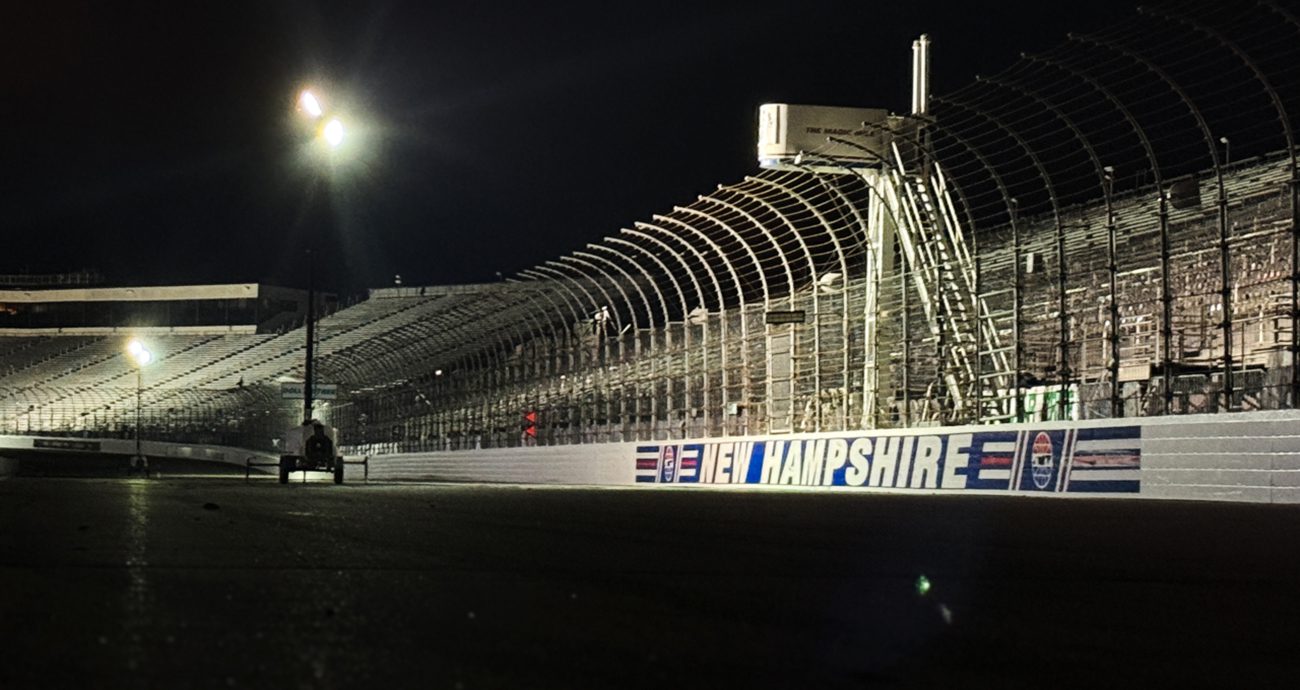
LOUDON, N.H. — The NASCAR Chase doesn’t return to New Hampshire Motor Speedway until next season, another 13-odd months away.
Sunday sure had the feel of it, though.
The drama dropped before the green flag even did — but not until after some heavy raindrops that briefly delayed the start and necessitated cars starting the race with wet-weather tires — with Carson Hocevar spinning out during the opening pace laps as drivers tested the racing surface. The intensity only ramped up from there.
And with Daytona International Speedway’s regular-season finale now the only race separating the Cup Series from a finalized 16-driver Chase field, every position throughout the Dollar Tree 301 seemed to carry a little extra weight around the “Magic Mile.”
RELATED: Race results | At-track photos
“Yeah, it was definitely aggressive for sure,” race winner Ryan Blaney said in his post-race press conference.
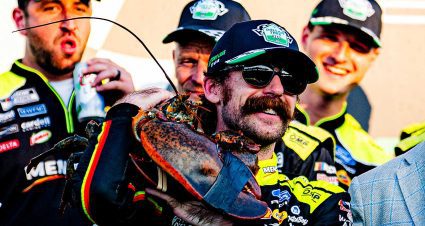
Aggressive barely covers it. The sense of urgency was palpable, even as drivers currently well-locked in — like Blaney himself — fought tooth and nail for every inch on every restart, leading to bump-and-runs for the lead, crunch-inducing hits, wild pit-road chaos, you name it. Even pole winner Tyler Reddick spun out almost immediately.
That was the thing about this weekend at Loudon, though. It was not a Chase race. The postseason field is not quite set, and much of the field was still technically eligible for championship contention.
Keyword: was.
Kyle Larson, Joey Logano, Chris Buescher, Carson Hocevar, William Byron and Daniel Suárez are newly clinched as of Sunday evening. Denny Hamlin officially locked up the No. 1 seed.
Not everyone enjoyed the same positive outcomes.
“It’s just an unfortunate end to our run towards the Chase,” said Ross Chastain, who saw his potential run to a championship officially end in Stage 1, mathematically eliminated after a drivetrain issue knocked him out of the race and saddled him with a last-place finish. “The speed has gotten better, so we’ll hopefully keep moving forward on that. That’s the important part. With the things in our control, we were able to make them better through the summer. I’ve learned that’s really tough to do in the NASCAR Cup Series. We did get better, but we’ve got a ways to go.”
For those who finished the race, Sunday was the last real opportunity for the drivers hovering around the cutline to independently shape their situation before a healthy serving of unpredictable superspeedway action takes the math equation somewhere considerably less controllable.
Daytona is next, and it comes with even more unknowns than usual this year.
At Loudon, a team can still qualify well, manage its tires, execute on pit road, score stage points and spend 301 laps methodically constructing the afternoon it needs. We saw Bubba Wallace do this, rebounding from a poor qualifying effort to still walk away P2 on Sunday and leave with a healthy 75-point buffer over the cutline.
At Daytona, a driver can do nearly all of that correctly — flawlessly, even — and still find himself behind the wall because somebody several rows ahead made the wrong decision at the wrong time.
Plenty of skill involved in both. Considerably more control in one, and Sunday represented the last ounce of it.
“It was a tough day for what we needed,” said Shane van Gisbergen, currently straddling the cutline and leading 30 laps early on the wets before fading to 20th. “Being that fast on wet-weather tires and falling that fast shows that we were missing something to have grip on the slick tires. Hopefully there are some learnings on that because Connor [Zilisch, teammate] and I just went backwards as fast as we could when the track dried. It’s just a disappointing way to end the day. We would love to have more of a cushion heading into Daytona, but the No. 60 [of Ryan Preece] did a great job today. I don’t think the No. 2 [of Austin Cindric] gained much on us, but we would love to have more heading into a big unknown race next weekend.”
New Hampshire did not dramatically reshuffle The Chase standings, but it sure brought them into further focus. Even those already well out of the danger zone were aware of the implications around them.
“You could tell the strategies, like the 60 pulling things like that,” Hamlin said on pit road. “You know, I thought it was a good strategy call for them. But yeah, you could see that everyone was in need of points, just chasing points.”
Larson saw it, too.
“The 60 had a good day, or at least I think he did,” he told NASCAR.com. “And I know he’s fighting for everything he can get to get that final spot. So yeah, he was doing a really good job with it.”
And all of it unfolded at a track that will carry Chase pressure of its own when NASCAR returns in 2027, which felt considerably less theoretical and off in the distance by the time the checkered flag fell Sunday evening.
“Yeah, you know, this place has kind of been in The Chase. It’s been out of The Chase. It’s kind of, you know, jumped in and out,” said Blaney. “And I’ve always thought this place is incredibly deserving of a Chase race, just because it puts on a really good show. The fans up here are incredibly passionate about racing … like, it’s just a good atmosphere here. It’s important, I think, to have a [Chase] race here in kind of the Northeast for sure. So it’s nice. I was sad that it was out of the Chase this year. I’m excited it’s back in, and just even you know whether we run really good or bad here, I think this place really deserves a Chase race because the fans are incredibly passionate, and they love motorsports.”
New Hampshire has long rewarded complete afternoons, and Sunday was no exception. Entering the weekend, five of the previous six winners had started inside the top five. The Stage 1 winner had gone on to win three consecutive races. Only one of the previous 14 events required overtime.
This, plus all of the wild aspects of how Sunday went, is the information teams will bring back next year.
Not because Sunday perfectly replicated the circumstances of a Chase race — again, it was not. But the tension this weekend largely belonged to drivers trying to qualify for the 16-driver field, and it was palpable. When New Hampshire joins the 10-race Chase in 2027, the stakes will be different: every one of those contenders will already be in, and every point gained or surrendered here will contribute directly toward deciding a champion.
Sunday offered a glimpse of what happens when New Hampshire’s typical demands — precision, patience, track position and execution — collide with stakes larger than an ordinary points day.
This year, that pressure came from trying just to reach The Chase. Next year, it will come from trying to win it all.
For now, the Cup Series leaves New Hampshire with one regular-season race remaining and the 16-driver field still unfinished.
New Hampshire gave the bubble one final afternoon to shape the equation.
Daytona gets to pop it.