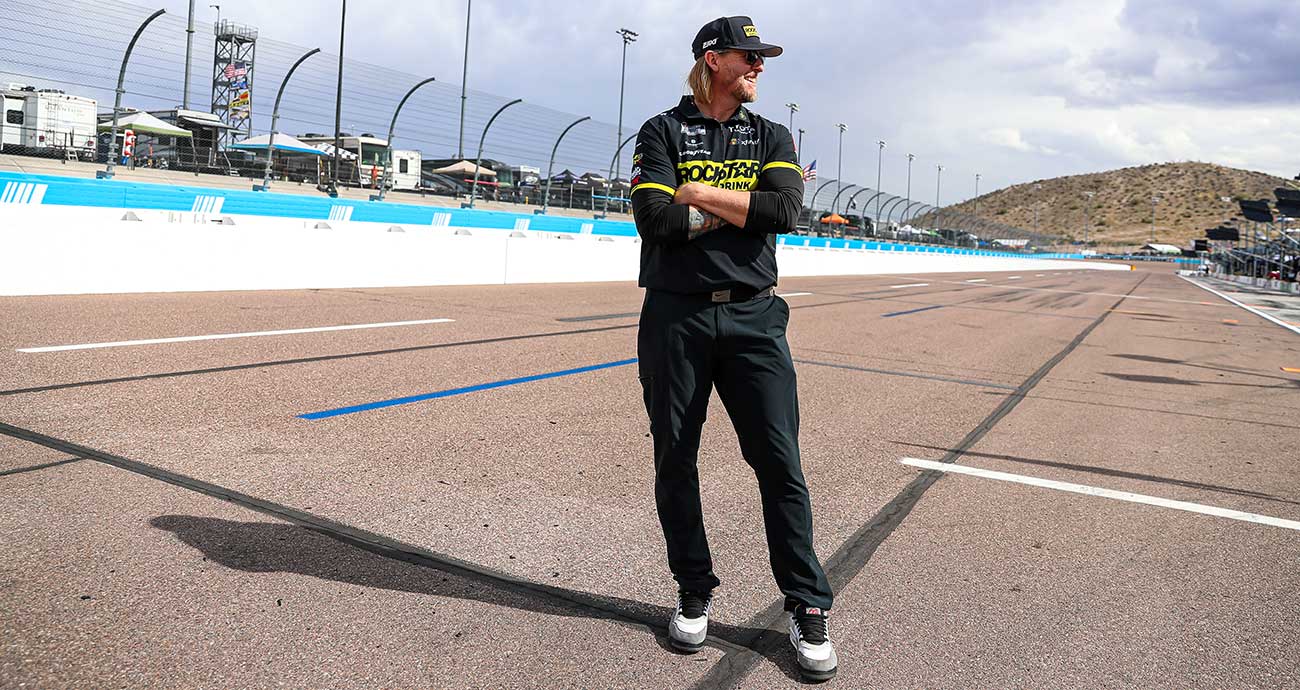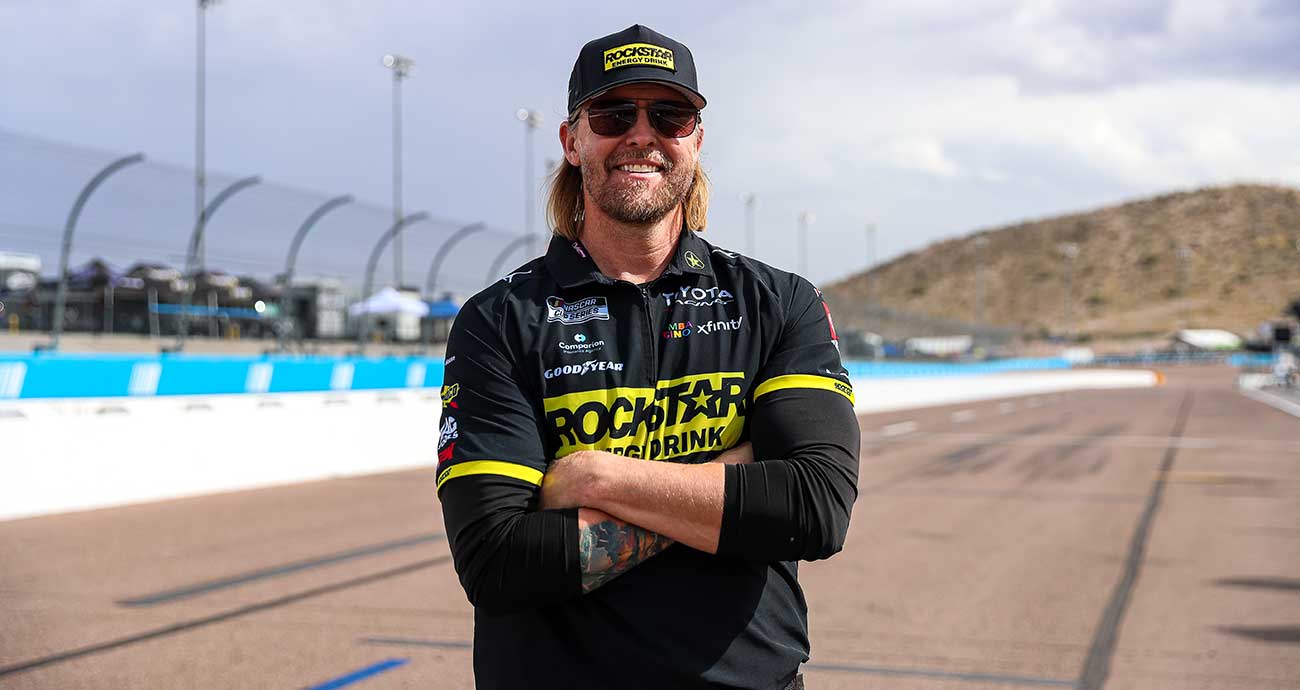
Brian Dheel reflects, and the snapshots from winning NASCAR’s biggest race come into vivid focus.
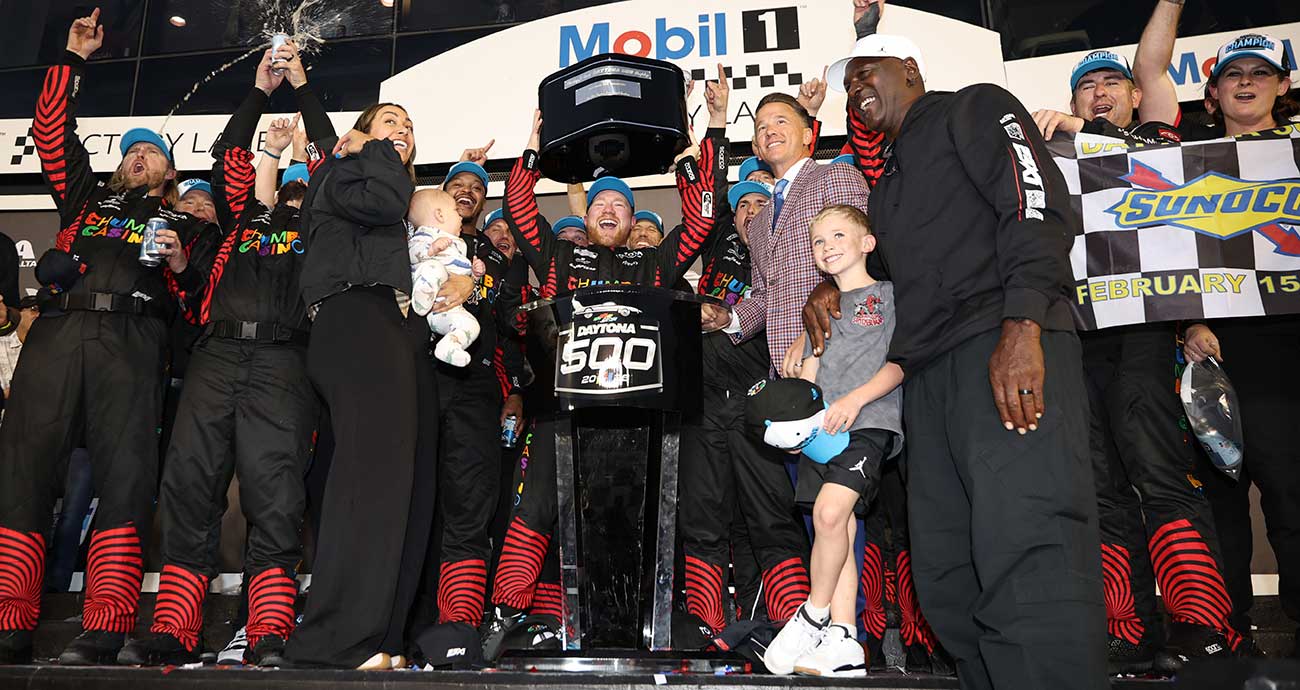
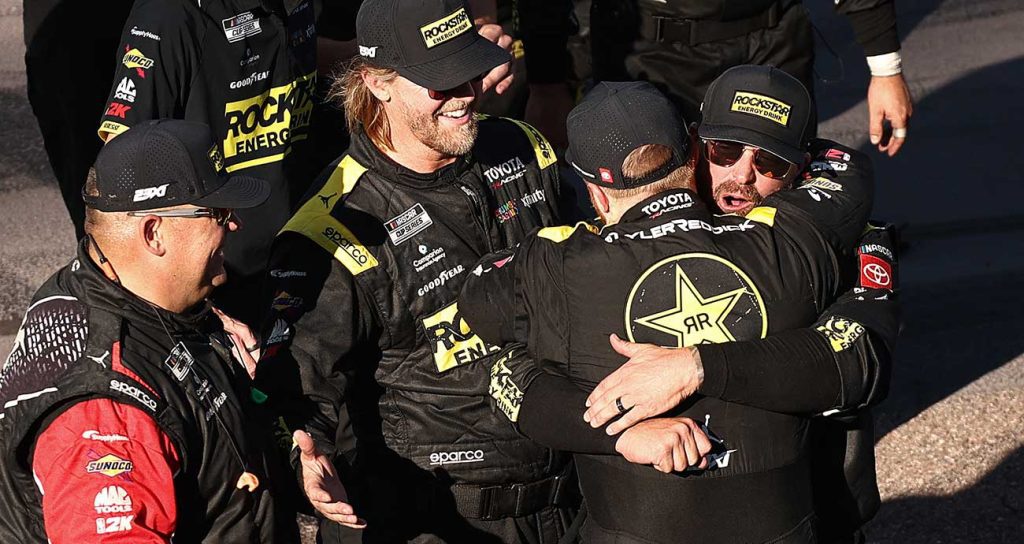
The veteran fueler for 23XI Racing’s No. 45 Toyota remembers Daytona International Speedway’s massive frontstretch grandstand dwarfing him as he ran across the tri-oval grass, where he and his pit-road teammates were waiting to catch Tyler Reddick as he dove from his winning car into their arms.
Dheel had come close to Daytona 500 glory before. As a member of Furniture Row Racing’s No. 78 team through its heyday, he watched in 2016 from pit road when Martin Truex Jr. ended up an agonizing 0.010 seconds behind Denny Hamlin in the Great American Race’s closest-ever finish. Ten years later, Dheel made sure to take photos that captured the moment, a long-awaited one that he wasn’t sure would happen again.
In Victory Lane, Dheel and crew converted a joyous double-beer smash and pour that would make wrestling icon “Stone Cold” Steve Austin proud. High-fives with NBA great and 23XI co-owner Michael Jordan gave the celebration a surreal feel, especially for the Ohio native who grew up with allegiances to the Cleveland Cavaliers, a longtime foil to Jordan’s Chicago Bulls dynasty. “As a younger kid, he definitely put a stake in my heart numerous times,” Dheel says. Now their goals align, and the basketball legend easily blends in as just another member of the team. No need to be starstruck, Dheel says, but still, when he hears that voice, the one belonging to the larger-than-life “Be Like Mike” Jumpman persona from his childhood, “it’s just like, holy cow, that’s who that is.”
Dheel’s most gripping moment, though, came in the in-between, as he walked back across Daytona’s ballfield lawn to the celebration’s epicenter. His wife, Mandy, had been on the receiving end of so many of Brian’s phone calls after those triumphant moments in racing, including many of Truex’s Furniture Row victories and the team’s Cup Series championship in 2017 — a year after his Daytona heartbreak. “Oh my God, I can’t believe you guys did this. … It was so exciting, we were screaming at the house!” Brian would recall her saying. The realization hit him on the walk toward Victory Lane. In that moment, it wasn’t who he was sharing the win with, but who he wasn’t.
“We kind of paused and started running back. Like, I can’t call her, right,” Dheel says with a quiver in his voice. “So that made it emotional. I kind of choked up and had to fight the tears there, because I was like, I don’t want people to see me bawl. So that was definitely a hard one, right out of the gate to win that race and not have her there to call or send pictures.”
The Daytona victory came nearly nine months after Mandy Dheel passed away, the toll of a valiant eight-year battle with advanced breast cancer. She was the family’s light, a dedicated companion to Brian and a loving mother to their son Gage, now 18, and daughter Quinn, 14. Brian Dheel noted her generosity, but also her selflessness as she tried to shield the rest of her family from just how much strife the disease had caused.
Work became his release through the most trying of times, his means of focusing on something — anything — else. The camaraderie with his 23XI teammates helped lift him up, but for as much as was made about how difficult a winless 2025 was for Reddick, Dheel’s hardship was exponentially greater. Dheel has been open on social media about how he’s tried to come to terms with grief. “Every day is a cycle of anger, tears and numbness,” he wrote last New Year’s Eve. “I couldn’t wait for Christmas to be over, and I don’t care about 2026 at all. The future feels empty without you. Pretending I’m OK.”
Just six weeks later, Dheel tried to square those feelings with finally reaching a long-sought pinnacle of professional and personal triumph. There was no rest after Daytona, either, and the wins began to flow like a flooding river — Atlanta the next week, Circuit of The Americas the next and a grand total of five victories in a record-setting start through the first nine races. Allowing himself to soak in those jubilant professional moments became a challenge, one that sometimes conflicted with his personal journey.
“Just trying to enjoy the moments with the guys because I know I’ve only got a few years left of probably doing it, but then not forgetting all these years, just like that,” Dheel says, snapping his fingers. “I think that’s my biggest fear. … You get caught up in life, and then you don’t think about that person every day, and that’s what I’m kind of afraid of. I don’t want to not think about her, but I also don’t want to constantly pull myself from constantly crying or being depressed or in that side of it. So it’s definitely a struggle.”
How Brian Dheel has managed, and how he’s continuing to manage the strains of work-life balance has served as an inspiration for one of the NASCAR Cup Series’ top pit crews and its winningest team this year. He’s done it while balancing the roles of dad to two teenagers, professional athlete in a fast-paced sport, and a leader and recruiter for the next generation of over-the-wall elite — all with a bonkers commute required to check the boxes on all three.
He raps a knuckle on one of the tables in the break room of 23XI’s gleaming Airspeed headquarters as a knock-wood hope for all the years ahead that he intends to compete at this level, even as he inches toward his 50th birthday. Time moves forward, and Dheel is moving with it.
* * *
Racing wasn’t part of Brian Dheel’s immediate family history growing up. His athletic pursuits stretched across all kinds of varsity sports, but his career aspirations centered around soccer. By his later grades of high school, Dheel was playing nearly year-round, and his senior season led to an invitation to play in Europe. He turned down a Division III collegiate opportunity back in the states, but latched on for a stint with a semi-pro club in Germany.
“I’m probably one of maybe a handful of guys that grew up playing soccer competitively that’s in the sport now,” says Dheel, who transitioned to coaching back in the U.S. after his European tour. His introduction to motorsports, though, came through a racing-crazed family he went to church with back in Ohio. That family included Greg Miller, who is now a pit crew coach with Chip Ganassi Racing’s IndyCar operation and was a close friend of one of Dheel’s cousins, who told him, “You need to hit Greg up.”
It was the mid-2000s and Red Bull was entering the sport, and Miller had moved over to start a pit-crew program from scratch for its fledgling two-car team. Dheel had tired of his “real job” of coaching high school soccer and came down for workouts. Two months later, he got the call — catch-can duty with training to come for operating the jack and carrying tires.
That opportunity nearly came to a crashing halt at the end of its first week. “We were playing at the end of the day, doing a little frisbee football, and I jumped up, bumped, and when I landed, I turned my wrist the wrong way and it just popped,” Dheel says, clapping his hands together. “I was like, ‘Ah, crap! This is over before it even starts.’ Fortunately, they didn’t get rid of me, and I was able to recover.”
What Red Bull may have lacked in on-track performance for a Cup Series start-up, it made up for in its fun factor with publicity and activations, including one that allowed Dheel and his colleagues to execute a full-on pit stop in New York’s Times Square. When the organization disbanded, Dheel bounced between a two-year stint at Michael Waltrip Racing and coached soccer for a year at Pfeiffer University before an opportunity that established his full-time course into stock-car racing.
Furniture Row had always stepped to its own beat, especially with far-flung headquarters in Denver, Colorado. Though Dheel was among those based back in NASCAR’s Charlotte-area nerve center, the bonds he formed with his pit-road teammates from those days hold fast today.
“That group. For me, it’s probably like one of the most special groups I’ve been a part of, and it really had nothing to do with winning a championship.” Dheel says. “Every van ride, every dinner, every hotel stay, it’s just a great group of guys. … At the time when we were put together, it was a little bit of, we were kind of, I don’t want to say the castaways from other teams, but it just kind of worked where either guys were coming to the end of their contracts with other teams and weren’t getting brought back. It’s just, it was an awesome group that pulled for one another, and we knew if someone made a mistake, you get a lot of toxic environments where guys will kind of point the fingers. There was none of that. It was like, ‘OK, man. I’m gonna give you 30 seconds, and I’m gonna say something, and we’re gonna get back after it for the next stop.’ “
Sustained success didn’t come right away for a team that won just once in its first nine years of Cup Series operations. Truex’s first season with the Barney Visser-owned organization was an uneven one, but the group rounded into a steady contender. As it did, the kinship of Furniture Row’s personnel grew stronger.
“There’s some teams that I think when you go through some really rough times, you get really close to one another,” says Lee Cunningham, a teammate of Dheel’s at Furniture Row who now serves as the rear-tire changer for Joe Gibbs Racing’s No. 19 team and driver Chase Briscoe. “Then obviously winning a championship, I mean obviously, that’s the pinnacle of why we’re all here doing this, right. I think when you finally get there, I think the Furniture Row thing was, we weren’t necessarily tier one. We weren’t supposed to beat JGR. We weren’t supposed to … like, all these things kind of add up, and in the back of your mind, like we are the underdog. And when the underdog finally wins one, I don’t know, I think that’s something we’ve always kind of been through, and we still kind of have that mentality today: If you feel like you’ve made it, you’re not trying hard enough.”
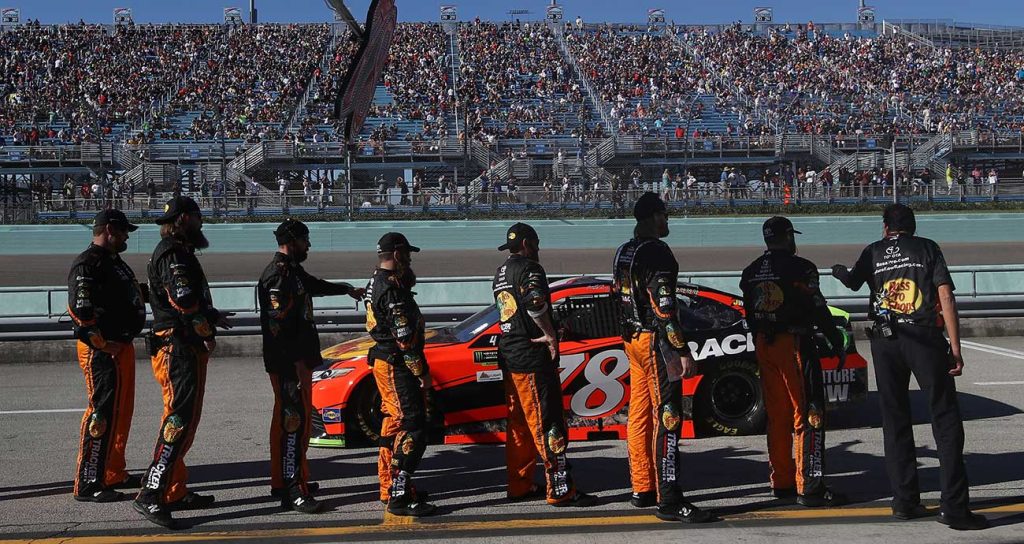
The spirit of the team included some good-natured razzing. Cunningham said Dheel’s meticulous attention to detail came through in his frantic calculations, with his teammates teasing him as he tried to measure whether he’d fully fueled the No. 78 after each stop. Adding to the math confusion, Dheel says his hands shook from the adrenaline rush of each pit service, and the notes he jotted down on a dry-erase board (in the days before tablets came into fashion) were mocked as barely legible scribbles.
For all the idiosyncrasies, the collective focus worked. Furniture Row won 17 times in a four-year span, operating mostly as a scrappy one-car outfit headquartered outside of NASCAR’s traditional hub.
“It was a special time,” Cunningham recalls. “I think a lot of us didn’t come from winning teams, and then you put us all together, and then to have the success that we did in ’16, ’17, ’18 was just off the charts for most of us. I mean, I think a lot of us went in, I don’t know if any of us had a championship at all. … I think it was all kind of a pinnacle in all of our careers together, where we all felt like we made it. We were the underdogs, and we fought through.”
Says Dheel: “We never felt like there was that separation of road crew and pit crew that some teams have. Yeah, it was the most … it was the best five years that I’ve had in the sport.”
* * *
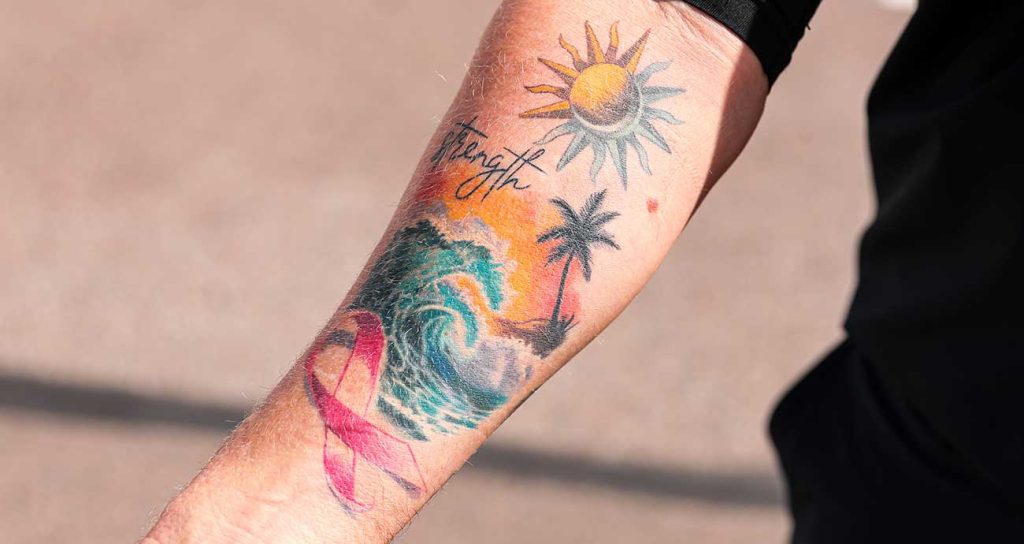
Dheel removes his black 23XI sweatshirt to reveal a colorful tattoo that covers most of his right forearm. Like most good ink, there’s a meaningful story behind it.
On one side, a sunset brightens the dark skies over a palm-lined bay. In the shallows, three ocean rocks peek out with the initials M, G and Q representing his family’s names. More symbolism marks the other side, with another series of crashing waves, a pink ribbon signifying breast cancer awareness and a sun-and-moon image that Mandy also carried on her skin. The couple shared another permanent connection through body art — her forearm was marked with the word “Strength,” and Brian added the same word in the same typeface to his arm, too, the text resting atop a glowing sky.
Strength came to define their relationship, going well beyond the muscular might that Dheel relies on to quickly hoist 110-pound canisters of racing fuel with such dexterity that makes it look simple, like how most folks summon the slightest energy to pour milk into coffee. There’s an inner strength, however, that’s helped the Dheels through so much more.
Brian first met Mandy at a gym in their shared home state of Ohio, and their meet-cute involved him breaking away from his group of buddies to spot for her. The conversation didn’t border on anything close to flirtatious until she asked if she could call him. After shopping and dinner in Cleveland, their relationship launched from there. Mandy was on a two-year plan to get married, Brian said. His thought was more like six. They split the difference at four.
After settling in North Carolina, the Dheels felt drawn to the nearby coast. Virtually all of their vacations involved seaside accommodations, and the tranquility of the ocean provided a contrast and relief for Brian from the bustle of the NASCAR schedule. After Mandy was diagnosed with Stage 2 breast cancer in 2017, the Dheels faced a choice: Stay in North Carolina, move back to Ohio or relocate somewhere coastal. In the early summer of 2023, they intended to look at a condo in the Myrtle Beach area. Instead, they bought a modest house just 10 to 15 minutes from the shore. Brian showed it to Mandy through FaceTime, panning to the view of the lake that backed up to the property. “Yep, that one,” she said.
To make it work with the rigors of Brian’s schedule required a reimagining of his weekly schedule. He starts a typical week in South Carolina on Monday, leaves before dawn for the nearly 200-mile trip to AirSpeed on Tuesday morning for film review, workouts and pit practice. His shop duties typically wrap up by lunchtime Thursday, then it’s back to Myrtle until Saturday evening, when he loads back into Charlotte to get in position to fly out with the rest of the crew on race-day Sunday morning. Post-race, after the team’s return, he drives through the night back to the coast.
“That’s probably the most impressive part is that obviously they went through a really, really tough time. I mean, it was tough for years, honestly, trying to balance all that with home back there,” said No. 45 crew chief Billy Scott. “They moved back there because of her sickness and wanting to be where she wanted to enjoy her time, and still coming to work, still not letting that affect his performance. … With trying to balance being a father and still trying to have this career, I can’t imagine. We’re talking about things he’s needed and tried to help along the way, but at some point it’s just a matter of he just has to make do and find that balance, and he’s done an excellent job.
“You wouldn’t know that he has had the challenges he’s had if you didn’t know his story, right? On the outside looking in, people that have been around him, there probably are people that don’t know all the details of it, just because he is able to maybe compartmentalize that, and when he’s at work, do his work, but also knowing that he’s done a great job with his family. His kids are great. They’re obviously managing the best they can, and just a lot of respect for him for being able to manage both as well as he does.”
Managing became more difficult as the disease progressed in waves. Out hiking with Brian in North Carolina’s high country in 2019, Mandy complained of knee soreness that was slow to go away. Before long, she was using the wall to steady herself as she walked. After an MRI and a consultation with a spinal oncologist in Charlotte, she was whisked to surgery to remove a large tumor from her spinal tissue. Radiation treated other troubling areas, and doctors placed two rods in her back.
The beach provided a respite during some of the hardest of times, but so did the company of his closest friends in the sport.
“When he was going through it, I think you could see it wearing on him, and I didn’t want to be the guy that always asked how things were going because you kind of know how they’re going, right?” said Cunningham, noting how his Joe Gibbs Racing crew typically shared airplane rides with 23XI to and from the track. “There were a few times I’d just sit next to him on the plane, even if there was an open seat, I’d sit next to him anyway, and just talk about anything other than that, just to try to get his mind off it — talk about old times, talk about how he lives part-time down at the beach, talk about that — kind of just anything you could to just try to be there as a friend, be there as a teammate and just give him some time off, even if it was just a one-hour flight to maybe not think about life for a little bit.”
The depths came last season. Mandy started eating less, and warning signs of the disease’s spread grew more pronounced. Brian remembers her staring vacantly at the microwave in the kitchen and being unable to respond when asked what’s wrong. “I think I was always kind of in denial,” Brian says. “Like I think every hurdle my wife faced, I was, ‘Oh, she’ll beat it. We’ll get new medication. There’s trials and all this stuff,’ and she had kept a lot from me, like just how bad it was. And I really didn’t know until the final few months before she passed how bad it was, and had to speak to doctors and some friends, and I don’t know if she kept that from me to just kind of like keep my mind away from that, because we made this big move and we had two kids.”
“Regrettably,” Brian says, he made the trip with the team and the rest of the industry to the inaugural Cup Series race in Mexico City. “I should have stayed home, not realizing how bad she was quickly progressing downhill.” His fretting spiked when his mother called him just an hour before the green flag that Sunday, saying Mandy hadn’t woken up. She followed up with a second call shortly thereafter to say, “She’s up, she’s OK,” but Brian rushed back and took her to the doctor’s office immediately after he returned.
Suspicions that the cancer had reached the brain were soon confirmed, and she was given three weeks to live. She had lost three inches from her already petite 5-foot-1 frame, frail “like an 80-year-old in a 49-year-old’s body,” he said. They arranged for hospice care that Friday morning, and her outlook turned even more bleak. By Saturday morning, she was gone. It was June 21, six days after her 49th birthday and one day after their 21st wedding anniversary.
“So now I’m like,” Brian says, trailing off. “Now just everything changes.”
Management at 23XI Racing told Brian to take as much time off as he needed, and colleagues deterred him from trying to return prematurely as he attempted to find a shred of normalcy amid the grief. “I kind of had to,” Brian says. “Like at that point, it was my escape.”
“It was surprising for people that he was just able to carry on, right?” Scott says. “You don’t even know how you would react because most people haven’t been through something that significant, and you don’t know what they need, either. So that’s why, yeah, I think the company, from the top down, was very accommodating and willing to do whatever we could to make that possible.”
His teammates rallied around him, and he tried to find solace in his two opposite worlds. In one, he focused on leading the pit crew, persevering and performing during each stop for the rest of the year. The other world provided him with the natural, calming sound of the tide. Just two weeks ago, he went for a run in the sand, searching for balance while managing his multiple roles.
“I was thinking, like, gosh, this is what I need,” Brian Dheel says. “Like, I wouldn’t get this if I’m up here (in North Carolina), I think the other week, just a cup of coffee for like 30 minutes, whether it’s just sitting on the sand, just kind of trying to let my mind shut off.”
He has a reminder of that peaceful place on his forearm that he carries from home to shop to track. Above it all is a reminder of the other lasting connection he shared with Mandy — strength.
* * *
What was supposed to be the easiest question of a sometimes emotional interview wound up being the most difficult to answer.
Your age?
“Just say I’m in my late 40s. How about that? Can I lie?” Dheel says, turning to a 23XI publicist, who smiles and shrugs. “Like, no one’s going to fact-check this. I mean …”
We will.
In the meantime, seasoned, veteran and longtime make for more diplomatic descriptors of Dheel as a crew member of a certain age. Going over the wall might be considered a young person’s game, but Dheel’s competitive drive is still scratching the win column for the sport’s graybeards.
“Yeah, I mean, there’s a reason he’s been doing it this long, and there’s a reason that he’s still doing it — and he doesn’t like to talk about it — at the age that he is,” says Josh Shiplett, 23XI’s athletics director and a former colleague of Dheel’s at Furniture Row, Hendrick Motorsports and Joe Gibbs Racing. “It’s because he works really hard, and he stays focused on the things that are important to doing his job, and shows up every year and continues to excel. He gets better, and I think that he’s recognized that, and a lot of our older athletes have. But the older you get, the harder you have to work, and the more focused you have to be, and he sets a good example for that, for what it’ll take some of these younger kids to do to make it that long.”
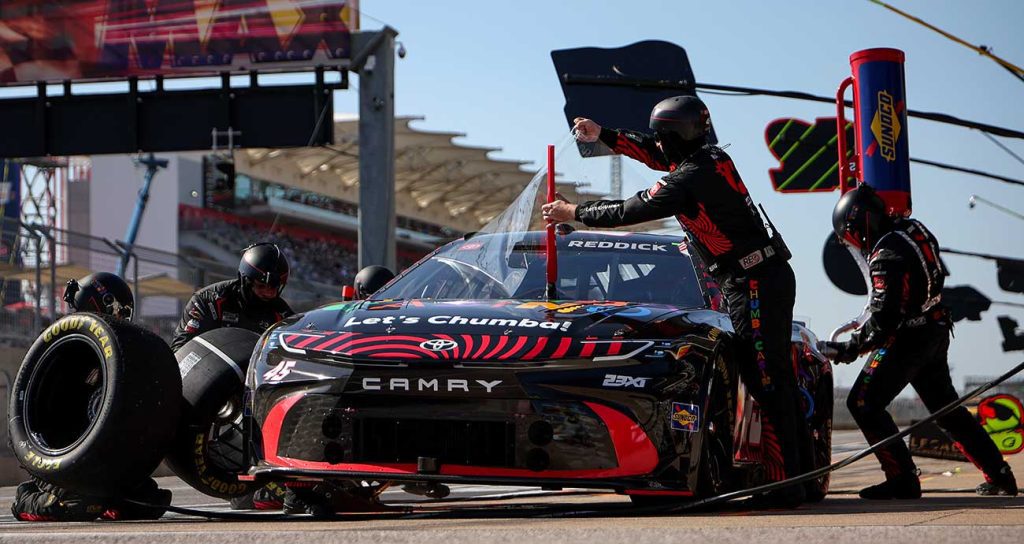
Those traits have all translated to leadership, whether it’s through Dheel’s actions in executing at a high level or his words when finding the right spots to pick up teammates who might need a pep-up. Cunningham, his former Furniture Row teammate, says Dheel’s experience also translates to wisdom, that uncanny ability to anticipate the nuances of each pit stop before they happen.
It’s a large part of why Shiplett brought Dheel with him from JGR when 23XI took its own pit-crew operations in-house in 2023. Dheel had almost always played a captain’s role during his soccer-playing years, both stateside and abroad, and his knack for identifying and developing young talent was treated as an asset. Shiplett needed a pit recruiter, and he told Dheel to run with it.
“I love it,” Dheel says. “It’s a bit of a challenge because there’s just such a wide pool to go search. A lot of these athletes have no idea how to get into it. They may have seen it, but are not sure, ‘Well, who do I talk to?’ or even consider it as an option.”
Dheel has made plenty of introductions to NASCAR since then. The measure of a good recruit, though, doesn’t purely rest on a stat sheet. In a similar way that the Furniture Row team helped define him, Dheel looks for the intangibles — dedication, grit, chemistry — to find the right fits.
“He just worked harder, and he finds those same qualities in the guys that we bring in,” Shiplett says. “So somebody that might get taken by an HMS (Hendrick) or a JGR might not make it here, and it’s not because of athleticism. It’s because of the feel that he gets with them. He’ll sit and talk with the strength coaches and kind of the vibe they get from those guys, and if it’s something that we’re not really feeling like we’re aligned on culture-wise and work ethic-wise, doesn’t really matter how good of an athlete they showed on paper or in the gym, we’ll pass.
“He’s really good at picking up those intangibles, and it’s made our development program actually very successful, and very little turnover, and that’s one of our big things. It’s going to take time to develop these guys, but if we have people that buy into the system and are willing to work harder than we’re asking them to work, it goes a long way.”
Dheel’s willingness has helped establish him as an anchor of 23XI’s program, some 20 years on from his earliest pit stops. Instead of the natural decline that most veteran athletes endure, Dheel has become faster by almost every metric, down to his coordination, choreography and the quick exchange of fuel cans.
“Anything that you would expect him to drop off on because of age has been the opposite,” Shiplett says. “I love it. I know it’ll catch up to him eventually, but if it’s 10 years from now. …”
Dheel’s mind roams when he considers the possible lengths of his longevity.
“Now I think it’s a challenge,” Dheel says. “I want to do this as long as I can do this.”
Pitting cars continues to be that rewarding escape, providing a sense of belonging to a group that’s shared high points with the lows this year in its on-track performance. Last Sunday at Phoenix Raceway, Dheel and his group were back in Victory Lane after Reddick’s late-race surge, one that halted a 23-race drought and put him back on the fringes of contention for the Cup Series title.
“I think being able to see him still celebrate after what he’s been through, and also all the success he’s already had, when he’s celebrating something, you’re kind of reassured that it is a big deal,” Scott says. “You don’t ever want to take any of this for granted, and that yeah, you need to enjoy every minute of it.”
Dheel says he’s taking the enjoyment in those moments as they come, but it comes with an acknowledgement that it’s still a strenuous journey. When NASCAR competed for the first time at the Naval Base Coronado course earlier this year, the Cup Series race was held one year to the day after Mandy’s passing. When the emotions washed over him, he consciously reset and locked in. Visor down. Focus forward.
At home, he’s navigated the relatively new role of single parent, all while driving road-weary hours on the sandhills highways that connect the Carolinas, all while making time for his family and carving out those moments of serenity by the crashing sea, all with strength.
“There’s definitely not as much happiness and joy, but trying to find some sort of peace with it,” Dheel says. “Like I said, I do owe it to her.”