NASCAR delivered the 2021 Cup Series rules package to teams on Thursday afternoon, and the most notable change involved which package will be run for the two races at Darlington Raceway next year.

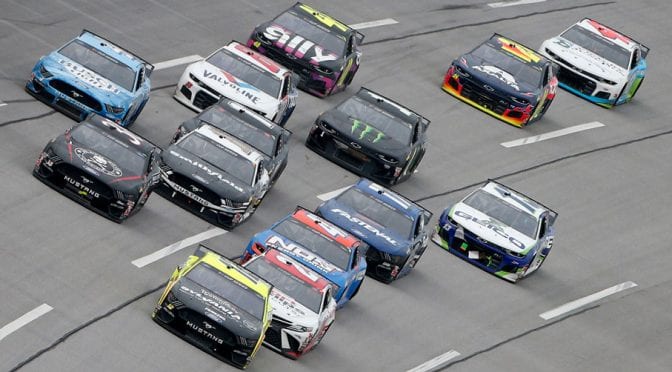
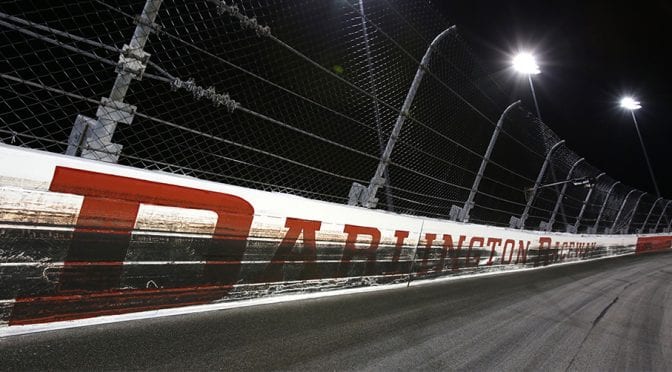
At Darlington (scheduled for May 9 and Sept. 5), teams will utilize the 750-horsepower, low-downforce race package. In 2020, this package was run at tracks 1 mile in length and under and at road courses. The three races held at the 1.366-mile Darlington track in 2020 used the 550-horsepower package.

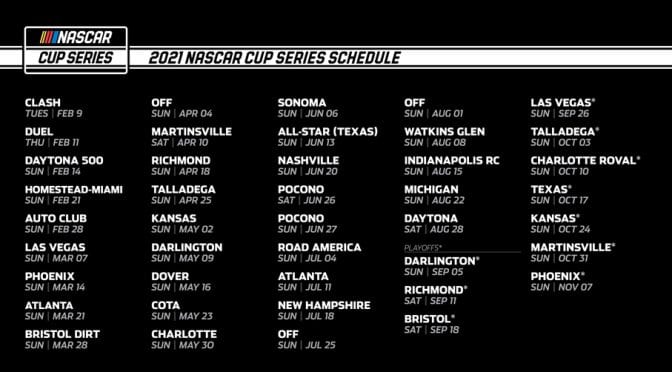
RELATED: See the 2021 NASCAR Cup Series schedule | What is the reduced downforce package?

The 750-horsepower package will also be used on June 20 at Nashville Superspeedway for the first Cup race at that venue. With that change and addition, 23 of the 36 races will be run with 750 horsepower.

In addition to more horsepower, that package includes:

— A significantly smaller rear spoiler, which shrinks from an 8-inch height to 2.75 inches.

— The front splitter’s overhang measures a quarter-inch (down from 2 inches), with approximately 2-inch wings (reduced from 10.5 inches).

— Alterations to the radiator pan, removing its vertical fencing in an effort to reduce front-end downforce. The dimensions of the pan remain the same.

“We constantly review the race packages to try to put on the best possible racing for our fans,” said John Probst, NASCAR’s senior vice president, innovation and racing development. “When we brought in the short track/road course package this season, Darlington was not part of it due to its unique size. We’ve been evaluating data from both race packages, as well as feedback from drivers, teams and OEMs and feel that the 750 hp/low downforce package best fits the track.”

The rules package will generally remain the same in 2021 as teams look to build off their knowledge and experience from the race package in 2020 while preparing to transition over to the Next Gen car for the 2022 season.

RELATED: Next Gen car to come in 2022 | Next Gen testing resumes at Dover

The aero package for the new road courses on the Cup schedule — Circuit of The Americas, the Indianapolis Road Course and Road America — will be determined by the sanctioning body, working with OEMs through the use of simulations to determine which package will work best. This same exercise was done earlier in the summer to determine which package to run at the Daytona Road Course, which was a late addition to the 2020 schedule.

In other changes, teams must compete in a minimum of 16 points events with a short block sealed engine. This is up from the minimum of 13. Teams are also restricted to 150 Restricted CFD (computational fluid dynamics) runs per calendar month.

Below is the breakdown of each engine package and where it will be used:

750 horsepower: Bristol Motor Speedway (both oval and dirt), Charlotte Motor Speedway Roval, Circuit of The Americas, Darlington Raceway, Daytona Road Course (which the Busch Clash is running), Dover International Speedway, Indianapolis Road Course, Martinsville Speedway, Nashville Superspeedway, New Hampshire Motor Speedway, Phoenix Raceway, Richmond Raceway, Road America, Sonoma Raceway and Watkins Glen International.

550 horsepower: Atlanta Motor Speedway, Charlotte Motor Speedway, Auto Club Speedway, Homestead-Miami Speedway, Kansas Speedway, Las Vegas Motor Speedway, Michigan International Speedway, Pocono Raceway and Texas Motor Speedway.

Superspeedway: Daytona International Speedway and Talladega Superspeedway.

The clock felt like it was potentially ticking on Ryan Vargas’ NASCAR career, but thanks to an imagined TikTok paint scheme and a can-do attitude from the young driver, a breakthrough came in the eleventh hour.

On July 22, freelance graphic designer Ryan Pistana tweeted one of his creations, a mock-up of Vargas’ No. 15 NASCAR Xfinity Series race car with social-media platform TikTok as the then-fantasy primary sponsor.

What Pistana called a dream sponsorship opportunity turned into a reality for 20-year-old Vargas, who will drive the No. 6 TikTok Chevrolet for JD Motorsports in the final six races of the Xfinity Series season, beginning with Saturday’s Ag-Pro 300 at Talladega Superspeedway (4:30 p.m. ET on NBCSN/NBC Sports App, MRN and SiriusXM NASCAR Radio).

“It really just all came together from his tweet,” Vargas said. “He knew that I was a very avid TikTok-er. I love the app. It’s by far my favorite social-media platform and that’s not because they sponsor, it’s literally the most fun and the easiest way to connect new potential fans. When he posted that, that post really kind of made its rounds through the industry.”

RELATED: Career stats for Ryan Vargas

But this newly blossomed relationship wasn’t a one-way street. TikTok also sought out Vargas, showing a genuine interest in jump-starting discussions.

“When TikTok started talking with me and NASCAR, it just started to grow from there,” Vargas said. “TikTok is just so enthusiastic about being in the sport and really just enthusiastic about partnering with myself and my team. I think that’s probably the coolest part.”

While most NASCAR Cup Series drivers have larger organizations and personal managers assisting them with major primary sponsorship deals, Vargas started working with TikTok on his own for the most part, with help from Truex Management Group, owned by Joe Gibbs Racing driver Martin Truex Jr.

RELATED: Details of TikTok partnership with Ryan Vargas

The Truex-owned group provided consultation, but it was Vargas tirelessly picking up the phones that made the deal happen, which is a situation he has grown accustomed to throughout his entire racing career.

“I think that’s been the biggest thing for me over the last few years — handling everything business-wise, whether it would be with the race team or any potential sponsors or any potential rides,” Vargas said. “It’s always been me going in there and making those deals. I think that resonates with teams and businesses a lot more, when the driver themselves are doing it. I do know later on in the future, I do have to start handing that off to people and luckily the folks at TMG have stepped up and helped me out a lot, which is so new to me. Marketing is just so tough in the sport and, you know, no one has the secret power or the secret to landing sponsorships, but when it comes down to it, a lot of it is just chance and taking risks.”

Those risks have included leaving his family and friends in La Mirada, California, at age 17 and having it all nearly come to an end after 2018 — spending more than nine months out of a race car until his next opportunity. Vargas then made his debut start for JD Motorsports at Iowa Speedway in July of 2019, followed by two more starts that year at Road America and Phoenix Raceway. His 2020 starts so far have come at Pocono Raceway, Kansas Speedway and Darlington Raceway.

On top of the pressure to perform for a company known around the world, Vargas will be making his first-ever start on a superspeedway.

“If that’s not getting a crash-course in NASCAR, I don’t know what is,” Vargas said. “… I can’t wait. I’m ready to go. JD Motorsports … there’s several occasions where they have competed for wins on superspeedways. With TikTok on the hood and we have some good power under the hood, I’m excited.”

While a victory is always on the table at a track like Talladega, Vargas is keeping his end goal very simple over these next six events — finish.

“At the end of the day, we’re still JD Motorsports,” Vargas said. “We’re not a Penske (Team Penske) or a Gibbs (Joe Gibbs Racing) or a JRM (JR Motorsports). We have the equipment and tools necessary to go out there now to compete and run top 15, top 10, fingered crossed and knock on wood. At the end of the day, it’s about finishing races and learning. As long as we go out there and have a clean race and give TikTok the best possible showing that we can without going out there and tearing stuff up, I consider that a win.”

One major victory throughout his young career has been Vargas’ social-media presence, exhibiting the hard work, dedication and resiliency that has allowed him to push through while also betting on himself and his racing prowess. Mix that with his willingness to grab the business side of the sport by the horns, it has been a lethal combination for a young man with grit and determination who has never showed signs of wavering.

So, does Vargas’ ability to find beauty in the struggle set him apart from other younger drivers in the same predicament?

“I’d be lying if I said no,” Vargas said with a laugh. “It’s very important. That’s just the biggest thing … like if I wasn’t like this, I wouldn’t have a ride. That’s just plain and simple. I wouldn’t be able to race in the Xfinity Series. I know what it’s like to come very, very, very close to losing it all. I’ve spent the last year and a half not knowing when my next race was, I’ve spent the last year and a half not knowing what I was going to be doing. So, to have this kind of partnership come about and really just set the course for me this year, you know, really what it does is legitimize everything that I’ve worked on and tells people that there is stock to my name.

“There is a reason to work with me and invest in me, take a chance on me. I think that’s what matters the most, is having the opportunity to go out there, have these races and go race.”

The NASCAR Cup Series Playoffs head back to the Southeast region, landing at one of the series’ most iconic tracks in Talladega Superspeedway. Don’t miss the upcoming Round of 12 action in the YellaWood 500 at 2 p.m. ET on Sunday (NBC/NBC Sports App, MRN, SiriusXM NASCAR Radio).
But first, here’s what you need to know.

RELATED: Full Talladega schedule | How the postseason works

TRACK DETAILS

At 2.66 miles around, Talladega Superspeedway is the largest oval on the NASCAR circuit. Formerly known as Alabama International Speedway, the track has a long history and tradition dating back to its inaugural race in September of 1969. Dale Earnhardt still holds the record for most wins at the track with 10 — and remains the only premier series driver to ever reach double-digit victories there.

The 48-feet wide asphalt racing surface spans 4,000 feet long on the backstretch, with the frontstretch between the turns and tri-oval measuring 2,150 feet. The track features up to 33 degrees of variable banking in the turns, with a 16.5-degree frontstretch banking and 2 degrees of tilt on the backstretch.

STAGE LENGTHS

Stage 1 will end at Lap 60, Stage 2 at Lap 120 and the Final Stage at Lap 188.

STARTING LINEUP

Denny Hamlin is the recipient of this week’s Busch Pole Award, earning the honor of leading the field to green Sunday. This is Hamlin’s second time this season starting a race from the pole position. Kurt Busch, Martin Truex Jr., Alex Bowman and Kevin Harvick fill out the top five.

The lineup was determined using NASCAR’s competition-based formula, which is a total number based on the previous event: 15% of a fastest lap time position, 25% of the driver’s final race finish position, 25% of the owner’s final race position and 35% of the owner points position.

RELATED: Full starting lineup | All time ‘Dega fall winners

RULES PACKAGE

The 2020 NASCAR rules package for superspeedways will be in effect, with additional engine restrictions intended to drop the target horsepower to around 510. The cars will use the superspeedway package, but aero ducts will be eliminated and a smaller throttle body will be used. Competition officials introduced the changes May 1 after Ryan Newman’s severe wreck in the season-opening Daytona 500. Learn more about the crash findings and the intent of the safety and competition changes here.

GOODYEAR TIRES

Cup Series teams will have seven sets of Goodyear Eagle Speedway Radials for the race.

Tire management and taking risks might be the theme of this week, as it is possible to pit here without losing a lap. With the importance of track position and chances to make moves at the end of a stage, working with teammates and manufacturer groupings to perfect a winning strategy will be a focus for drivers and crew chiefs all afternoon.

“While not known as a high-wear track, we do actually see some wear at Talladega,” said Greg Stucker, Goodyear’s director of racing. “Talladega was repaved in 2010, but tire wear is really not an issue. This leaves open the possibility for some pit strategy, with teams having the opportunity to take two tires, or even no tires on occasion. This will impact them in two ways — to gain a little track position and help them stay close to teammates or other cars they are working with in the draft.”

PLAYOFF STATS TO KNOW

— Team Penske drivers have won five of the last six playoff races at Talladega. Joey Logano and Brad Keselowski, the team’s two remaining playoff drivers this year, have a combined eight career wins here. Ryan Blaney, who was knocked out of the playoffs after the Round of 16, has won the last two Talladega races.

— Kurt Busch has made the playoffs seven times during the current elimination format but has never made it to the Championship 4. With his win at Las Vegas, he advances to the Round of 8 but still has a point total that is below the cutline.

— Martin Truex Jr. and Alex Bowman are the only remaining playoff drivers who do not have a superspeedway win in their Cup Series career.

— Kyle Busch has just six races left to extend his 15-year win streak. He has four runner-up finishes this season.

Source: Racing Insights

INTERACTIVE COVERAGE

For a more interactive experience, head over to NASCAR.com or the NASCAR Mobile App to check out an enhanced Race Center, live Lap-by-Lap coverage, the customizable live leaderboard with Scanner (which is FREE for both races), and the return of Drive (featuring in-car cameras).

Be sure to set your lineup in Fantasy Live and make your picks in the NASCAR Finish Line App!

2019 RACE WINNER

A .007-second margin was all that separated Ryan Blaney from the runner-up at Talladega in last season’s playoff thriller. Blaney edged Ryan Newman on the last lap to collect his third career victory at the track and secure the sixth-closest margin of victory in Cup Series history.

RELATED: Power Rankings

ACTIVE TALLADEGA WINNERS

Brad Keselowski (five wins); Joey Logano (three); Jimmie Johnson, Ryan Blaney and Clint Bowyer (two each); Aric Almirola, Matt Kenseth, Kevin Harvick, Denny Hamlin, Chase Elliott, Kyle Busch and Ricky Stenhouse Jr. (one each).

Editor’s note: This is Part V of a five-part series detailing how NASCAR successfully ran its 2020 season amid the ongoing COVID-19 pandemic.  

Part I: Overview | Part II: Schedule | Part III: Broadcast | Part IV: Teams


As masked fans filtered into Talladega Superspeedway in orderly fashion, NASCAR field and office workers wandered about the sparse crowd, assisting where and when needed. They handed out two-ounce containers of hand sanitizer and clear bags for those who forgot about the no-coolers rule. Some walked with signs that read “please wear your mask” and “please observe six-feet social distancing,” as they respected the requests themselves.

This didn’t fit in most of the employees’ job descriptions. Many who volunteered to help actually drove to Talladega, Alabama, from the NASCAR headquarters in Charlotte, North Carolina, and Daytona Beach, Florida, specifically for this race weekend.

Crop23

Even Talladega track president Brian Crichton left the infield to lend a hand.

“The people we encountered and we talked to, they were thanking us,” Crichton said. “They were thanking us for making it possible for them to come back to races. I got a little bit of goosebumps when they said that. I got a little emotional. But it meant so much for the fans to be able to come back as well.”

After a Sunday rainout, June 22 marked the first NASCAR race with paying customers since the two-month COVID-19 shutdown. Homestead-Miami Speedway invited up to 1,000 South Florida service members as honorary guests the previous weekend. Talladega, though, sold up to 5,000 tickets, along with limited motor-home/fifth-wheel camping spots outside the track, on a first-come, first-served basis — prioritizing those in-state and within a 150-mile radius.

INFORMATION: Centers for Disease Control | World Health Organization

Talladega had to get approval to host fans from Alabama governor Kay Ivey, the Alabama Health Department and Talladega County officials. The race was scheduled regardless, making up for the original April 26 postponement. Crichton found it in the track’s favor that NASCAR had already completed eight races since its May return, proving the sport’s protocols and procedures were thorough enough to be reliably safe.

NASCAR announced fans would be allowed on June 9 — less than two weeks before the GEICO 500.

“It was stressful because we knew as a southeast region, as a NASCAR team, we all had to come together and make it successful,” Crichton said. “It had to be a success so we could continue to build off of it and continue to go racing.”

Crop26

Talladega built off of NASCAR’s procedures and protocols for essential personnel.

Upon entering the premises, fans went through drive-in stations where they answered COVID-19 symptom and exposure questions and had their temperature checked by a handheld thermometer. If everyone in the car passed, they moved on to park. Those who didn’t went to a secondary screening with Emergency Medical Services (EMS) officials. Same thing: Pass, move on. Crichton said there were no instances where someone had to be turned away, which would have been the case if medical professionals thought there was reason to worry.

Tips for inside the venue came from an unexpected source. Select NASCAR employees, including Managing Director of Racing Operations Tom Bryant, toured Universal Orlando about 10 days before the theme park reopened June 5.

“We spent an entire day with their team going through everything from how they parked their guests to how they entered the facility to how they screened them,” Bryant said. “How they had concessions set up, how they had restrooms set up, how they had to adapt movement in and around the attractions to keep people socially distanced. Everything you can think of.”

And everything that relates to a NASCAR event.

Masks were required at all times. Social-distancing pucks — basically stickers on the ground — detailed common areas and where lines formed. Concessions solely offered pre-packaged foods and sealed drinks. Cashless payment was used to limit touch exposure. Bathrooms had every other stall or urinal blocked off.

Crop24

Talladega also hired a cleaning team through its environmental-services partner, Clean Harbors. It sanitized the entire venue before and after the event. During the race, its cleaners constantly were on the move, wiping down all high-touch surfaces.

The infield was completely off limits to fans.

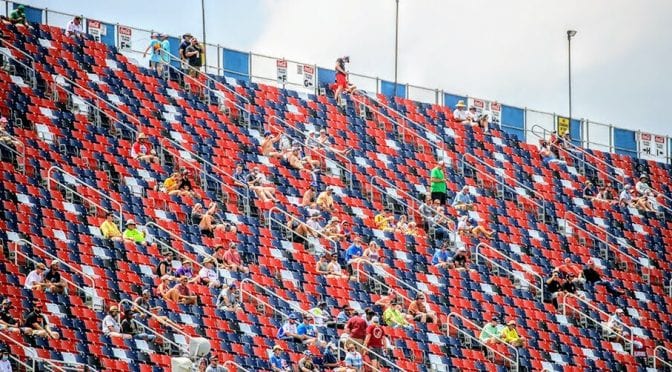
As for the grandstands, Talladega grouped seats in pods of four, starting two or three chairs in from the aisle to keep a safe social distance between those sitting and those walking up and down the stairs. Only one or two pods were ticketed per row.

“Even if we had space between those two groups of four – say the row was 30 seats long – well, we wouldn’t put a group in the middle, not even a group of four in the middle, because that group would have to walk in front of one of these other groups,” Crichton said. “But what we could do is we could put a group of four in the row behind those two groups, but they were in the middle of the row, so it was staggered.”

Crop21

Fans witnessed the drama of seeing two wrecks on the final lap, Ryan Blaney beating Ricky Stenhouse Jr. to the checkered flag by .007 seconds, which tied for the sixth-closest finish in Cup Series history, and Aric Almirola crossing the finish line backward in third.

WATCH: Talladega Superspeedway’s 2020 photo finish

“Man, it was so great just to have fans back,” Blaney said post-race. “The atmosphere of them cheering was back. Before and after the race, we love that stuff. Drivers, we love support.”

Attendance wasn’t guaranteed after that event, though. It still depends on local and state COVID-19 restrictions.

The NASCAR Playoffs is currently in its Round of 12. The opening race last weekend at Las Vegas Motor Speedway did not have fans. This Sunday’s event at Talladega will still be far from full capacity, but a track representative indicated the number of spectators welcomed will be up from the June count. Charlotte Motor Speedway will permit a limited number of fans for the elimination race scheduled Oct. 11 on its Roval layout, in accordance to North Carolina’s recently updated rules.

As of right now, Phoenix Raceway plans to host fans for the Nov. 8, 2020 championship.

“Having our fans back is awesome and we look forward to the day we can have all of them back in full capacity, but that’s not yet,” Bryant said. “Our priority and the marching orders we’ve received are to ensure our ability to crown champions in Phoenix. We are laser-focused on that. We’re not going to do anything on the fan side that would endanger our ability to conduct races. It’s a balance.”

Hendrick Motorsports and Richard Childress Racing confirmed Thursday that the two teams will combine forces to establish one common Chevrolet engine specification.

In doing so, Chevrolet joins manufacturers Ford and Toyota in streamlining engine building to one supplier.

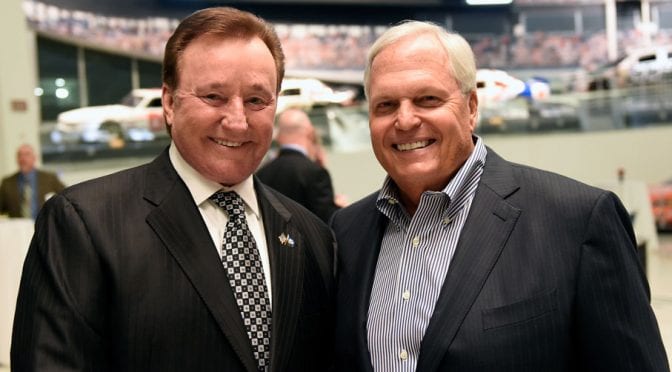
“Following the 2020 NASCAR Cup Series season, Hendrick Motorsports and Richard Childress Racing will formalize a joint venture focused on engine R&D and the establishment of a common Chevrolet engine specification,” the organizations announced Thursday in a joint statement. “While our two championship-winning organizations will collaborate on research and development, our respective engine shop operations will continue to function independently as they currently do. We look forward to working together to fully leverage the knowledge and intellectual property of our two successful programs to advance Chevrolet’s engine for NASCAR.”

Both Hendrick Motorsports and Richard Childress Racing (via ECR Engines) have developed powerful engine programs over the years. Engines produced by the two have earned a combined 39 NASCAR national series championships, including 20 at the Cup Series level. Additionally, Chevrolet race cars fielded by the two organizations have won a combined 369 NASCAR Cup Series points-paying events.

Growing up and attending races at Rockford Speedway, Dennis Smith Jr.‘s biggest dream was to one day race late models at his home track.

It was on that track Smith‘s dad raced and he would go watch as a kid. When he was 20, Smith began racing there himself.

Dennis Smith, Jr.

“It‘s home. That‘s why we race there, it‘s so close,” Smith said of Rockford, a NASCAR-sanctioned high-banked quarter-mile asphalt track in Rockford, Illinois. “I‘ve been going there forever. It‘s second nature. I‘ve done a million laps around the place by now.”

Rockford Speedway | Facebook

Sixteen years into his career, Smith finally got the chance to get into the track‘s highest division. Even though the start was rocky, he not only lived his dream as a late model driver, he also reached Victory Lane.

“Our very first race was opening night spring classic in 2017,” he said. “We were running good and a lap car took us out and we ended up burning the car to the ground. There was literally nothing left to it, and I still owed money on my loan for it. So everybody all over Illinois, Wisconsin, all over the place sent me parts and money to put it back together. We never missed a race.

“We won a race that year.”

Smith started racing at Rockford in 2000, and dominated the track‘s lower divisions with three RoadRunner championships and two Figure 8 titles.

But a competitive nature had him longing for more in his race career.

“It was boring. There was legit no challenge left. I needed to challenge myself with something new,” he said.

Smith took out a loan to buy a late model in 2016 and began racing it the next year. Even though they struggled in the beginning, he and the team have finished in the top five in Rockford‘s late model points every year since. He‘s third in the standings with one race left this season.

Racing has always been a family event for Smith. His dad got him into the sport. His brother raced and now serves as his spotter. His wife‘s cousins help on his crew as well, and his daughter raced for a couple years and picked up a few wins herself.

He has a family, too, among the drivers, staff, and fans at Rockford.

“Especially since I‘ve been going down there pretty much my whole life,” he said. “So everybody knows who I am down there and in the Rockford area and everybody comes together and helps everybody and we all have a good time. Have some beers after the races.”

Rockford Speedway schedule

Even though he‘s been underfunded his entire career, getting to race a late model at the track where his dad raced has been a dream come true for Smith, and he‘s honoring his dad‘s race career with his car now, too.

This year Smith switched his number from 08 to 80, the same number his dad ran, and he is using the same paint scheme.

He was able to put the car honoring his dad in victory lane on the first night of the season.

“That was like double bonus there,” he said. “Winning that, I could have retired, but I wanted to win again.”

Smith‘s 2020 season hasn‘t been the steadiest. Since that win he had two part failures in back-to-back races that he said took them out of contention for the championship.

Dennis Smith, Jr.

Rockford will host the track‘s points championship on Friday night, and the National Short Track Championships on Saturday and Sunday. While Smith said there‘s an outside chance of him winning the track title on Friday, his biggest goal this weekend is to get another late model win in one of the biggest races of the year.

“Win. That‘s it,” Smith said of his goal this weekend. “It‘s so cool to win at National Short Track Championships. I won a couple in the Figure 8 division and RoadRunner division down there, and even that was really cool, but to win at National Short Track Championships in a late model would be even cooler.”

A competitive edge and a dream is what put Smith in a late model. Now that he‘s lived two of his dreams, he wants to keep competing for even more.

“I was never really that good at competitive sports like baseball, football, that kind of stuff, but I‘m a very competitive person,” Smith said. “So I think it‘s the competitiveness. That‘s what I said earlier about getting out of the stocks, it just wasn‘t a challenge anymore. I wanted to compete. If I can compete at something at a high level I want to do it.

“That was like the coolest thing I thought I could ever do was drive a late model, and then to win a feature would have been the coolest thing ever and we did that. Now we just want a championship. So maybe next year.”

Rockford Speedway will host the NASCAR Night of Champions on Friday beginning at 6 p.m., and the National Short Track Championships on Saturday at 4 p.m. and Sunday at 12:30 p.m.

Rockford Speedway Schedule

The NASCAR Cup Series schedule, but make it bold.

That’s essentially what the sanctioning body wanted out of its 2021 resume. It has been a process in the making and finally came to fruition this week. Those involved are proud of the final product.

“We said back in really 2019 that we wanted to evolve the schedule,” said Steve O’Donnell, NASCAR’s executive vice president and chief racing development officer. “2020 was going to be the year that we could make some moves within the portfolio of races that we had, but really 2021 and beyond are where you’re going to see some bold races from NASCAR.

“We believe we’ve delivered on that.”

RELATED: Full NASCAR release | A different look for the Cup Series

NASCAR sure did. Wednesday marked the Cup Series’ biggest schedule unveil in more than 50 years. The 36-race reveal featured the highest number of new tracks added since the 1969 slate.

Overall, there were nine significant overhauls when comparing recent iterations to this upcoming version.

“Even when we set out to build this 2021 schedule, we wanted to make sure that whatever we’re doing it’s done with a very measured approach,” said Ben Kennedy, NASCAR’s vice president of racing development. “I think that’s what you’ve seen in this schedule we’ve put together. For 2022 and beyond, of course we want to continue to introduce more tracks to the circuit, especially short tracks and road courses.”

The first three changes have to do with venue additions. Circuit of The Americas, Nashville Superspeedway and Road America are all either brand or relatively new locations for the Cup Series. COTA is making its NASCAR debut. Nashville ran the Xfinity Series and Gander Truck Series from 2001-11 but never the Cup Series. Road America currently holds Xfinity Series races but hasn’t seen the Cup Series since 1956.

RELATED: Cup Series and its dirt history | Nashville Superspeedway to host Cup race in ’21

Two other differences come at familiar tracks but different layouts. Bristol Motor Speedway, which is ran twice a year, will convert its concrete oval into a dirt track for the Cup Series’ spring race. The Cup Series will take on Indianapolis Motor Speedway’s road course for the first time; the Xfinity Series tested it out this year.

Darlington Raceway and Atlanta Motor Speedway each gained a race – count that as two updates. The All-Star Race will move to Texas Motor Speedway. And then, lastly, the opening Clash exhibition event of 2021 is set for a Tuesday night on Daytona International Speedway’s road course.

That all should add up to the magic number: nine.

“A lot to look forward to as we think about future evolutions of the schedule, too,” Kennedy said. “This is certainly a big, important step for us. But continuing to press forward with it as well.”

RELATED: The race to save the 2020 season

Don’t forget, this step came during an abnormal season. There have been one-day events, midweek races and weekend doubleheaders in 2020 due to the ongoing COVID-19 pandemic. Practice and qualifying sessions were completely eliminated to limit at-track time. O’Donnell indicated practice and qualifying will be held at the five new tracks/new configurations on the schedule for 2021 as well as the Daytona 500, Coca-Cola 600 at Charlotte Motor Speedway and the title race at Phoenix Raceway.

Those unexpected alterations in 2020, though, showed NASCAR executives that they can successfully make major advances for the betterment of the sport.

“2021 we really believe is a bold step in that direction, but we’re not done,” O’Donnell said. “There’s 2022 and beyond where we’ll continue to look at making changes that we believe are in the best interest of the sport in key markets and at key iconic race tracks as well. We’re going to continue the journey.”

Editor’s note: This is Part IV of a five-part series detailing how NASCAR successfully ran its 2020 season amid the ongoing COVID-19 pandemic.

Part I: Overview | Part II: Schedule | Part III: Broadcast | Part V, Thursday: Fans


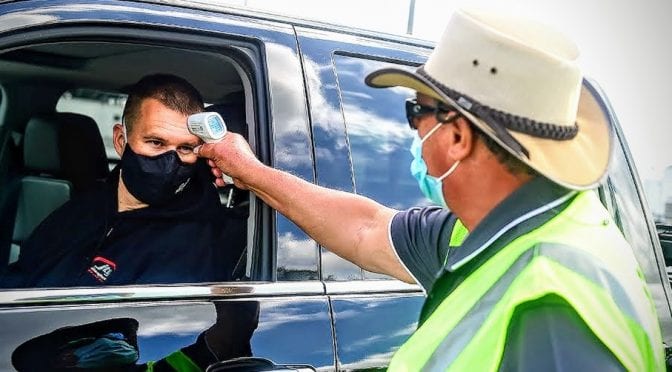
As the driver’s-side window rolls down, an at-track official reminds the team member inside the vehicle to wear his mask during pre-entry screening. The team member declined at first, but reluctantly put one on. As soon as he passed the checkpoint, however, the man made a show of taking the mask off and tossing it onto the passenger’s seat.

Crop0

The team member – whose name was not disclosed, nor was the series or track – was forced to leave the premises within about 15 minutes.

“When we reached out to the series leadership and they reached out to the team, there was lightning-quick action to remove the problem,” said Tom Bryant, NASCAR’s managing director of racing operations. “Because, look, you’re endangering everybody. Stop being selfish.”

NASCAR is currently operating under abnormal circumstances, as is the rest of the nation due to the ongoing COVID-19 pandemic. There are strict safety protocols and procedures, such as mandated masks and screenings, to help stop the coronavirus’ spread and allow the sport to continue its season. No one is excluded from these rules, and clearly, there are varying repercussions for those who do not follow them.

INFORMATION: Centers for Disease Control | World Health Organization

Bryant and NASCAR Vice President of Racing Operations John Bobo led a 29-member team in charge of creating a handbook dedicated solely to COVID-19 protocols and procedures. It doesn’t have a hard page count because it’s updated as more findings come out about the virus, but it typically ranges around 50 pages. All of the content has been contributed to and reviewed by numerous health experts – epidemiologists, pulmonologists, infectious disease consultants, emergency room physicians and intensive care workers.

“A lot of reading material,” said Steve O’Donnell, NASCAR’s executive vice president and chief racing development officer. “But the entire industry came together and said we want to race, we want to do this in a safe way and we believe in the protocols that are being put forward.”

The thoroughness of the handbook is why NASCAR received approval from local and state officials to race at select tracks, like Darlington Raceway in South Carolina for starters on May 17, after a two-month pause.

Crop14

So, here’s how a Cup Series race day looks for a race team under the guidelines of this handbook.

For starters, roster numbers are limited. Essential personnel quantify as six road-crew members, five pit-crew members and two hauler drivers. That’s about half the normal amount, give or take, depending on the team.

Anyone attending an event must take an online health questionnaire NASCAR sends out via text message 24 hours before departure. The five-question form must be filled out and returned within 12 hours of the garage opening. Answers are reviewed by a medical liaison team. If there are any issues, NASCAR’s American Medical Response (AMR) director Dr. Ryan Stanton will schedule a telehealth appointment for the individual for further evaluation and advisement before the person even gets to the track.

“It’s 100 percent cards up,” Team Penske competition director Travis Geisler said. “We’ve really stressed to everybody this isn’t about letting your team down because you’re not coming to work or you’re lazy because you want to stay home. This is about doing the right thing.”

Cropped7

Upon arrival, there’s that masked in-car pre-entry screening. Precautionary questions are asked about symptoms and exposure. Temperatures are checked with a handheld thermometer. Those with any concerns go to a secondary screening, where they have a follow-up with an on-site physician – normally Stanton or another AMR representative. The medical professional then makes the call whether the person can enter the venue, not NASCAR.

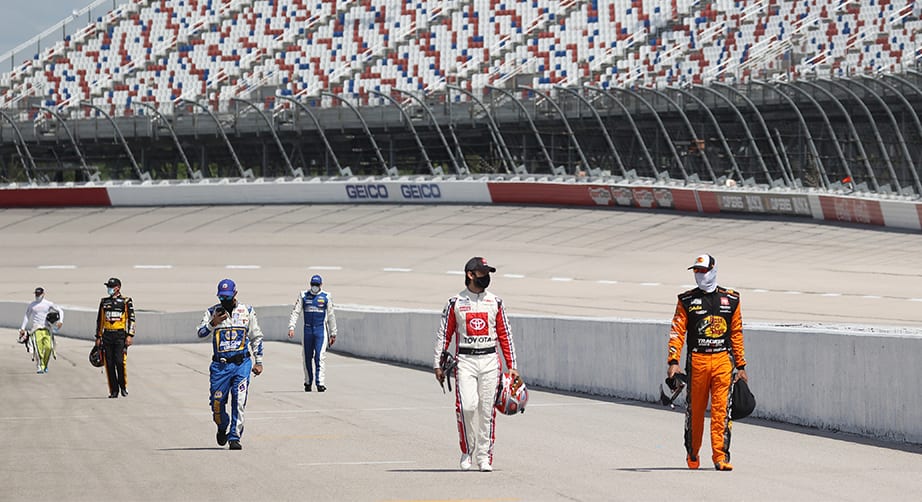
Once inside, team members go straight to their respective areas of work – garage stall, pit road, spotter’s stand, etc. NASCAR implemented the safety measure of compartmentalization. Rather than one big bubble, there are many mini-bubbles.

“The driver comes in, they go to their motor coach, and they don’t come out again until they get their race car,” Bobo said. “That way, if the driver is asymptomatic, he’s not infecting someone on his team. If there’s a mechanic on his team that’s asymptomatic, he’s not infecting the driver. … The functional work groups have created an additional level of isolation, so if something does go wrong, you’re not taking out an entire team.”

From green to checkered flag, things are normal apart from the lack of people wandering around.

Drivers still have post-race media obligations, but even those responsibilities have been altered. The race winner celebrates in Victory Lane alone, wearing a mask. Instead of press conferences or mass pit-road interviews, there are Zoom teleconferences, which the top-three finishers can do from their motor home or the media center. If in the media center, masks are worn and surfaces are wiped down in between sessions.

Speaking of sanitization, each entity – NASCAR, track, teams and suppliers – are required to clean their belongings before leaving the facility. That includes haulers, cars and equipment.

Cropped4

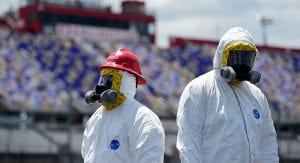
“It really hit me after the race at Darlington,” Geisler said. “NASCAR outsourced some at-track sanitization of products in their trailer, like parts and tools. Those people were walking around in like full nuclear fallout gear. I mean, they had sealed facial stuff on with air pumps. They had the yellow suits on with all the seams taped. We’re walking around and we’re kind of looking at each other – none of us wearing anything but a mask – like do they know something we don’t?

“You feel like you’re in a movie at that point, and you’re just a cast member not really sure what’s going on in the script yet.”

Cast members know the script better now. It’s not the preferred normal, but it is the current norm.

Twenty-two regular-season and four postseason Cup Series events have been completed with these ever-evolving protocols and procedures. Only six playoff races remain before the 2020 champion is crowned Nov. 8 at Phoenix Raceway.

“No one at NASCAR is taking a victory lap on this,” Bobo said. “We feel fortunate and grateful that we’ve gotten this far in the season. But we understand the road ahead and we know it’s a privilege.”

PART 5: Fans

DAYTONA BEACH, Fla. (Sept.  30, 2020) – NASCAR today announced the 2021 NASCAR Cup Series schedule, an historic slate that includes the introduction of three new race tracks – and new layouts at two iconic venues – to the sport’s top level.

Not since 1969 has NASCAR added this many new venues to its premier series schedule.

The 36-race slate includes races at three new road-course layouts, and the first Cup Series dirt race in more than 50 years.

BUY TICKETS: 2021 events available

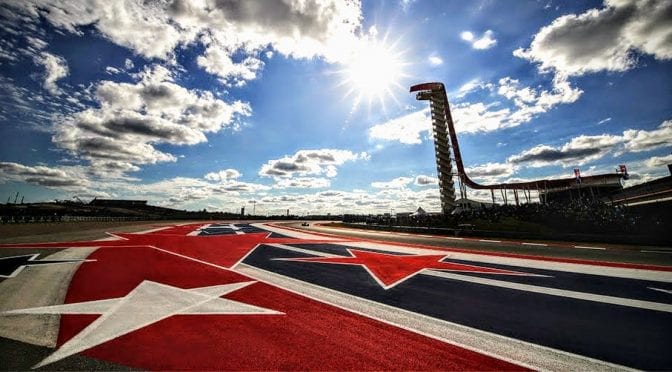
The road course at Circuit of The Americas (May 23) joins the schedule for the first time, Road America (July 4) returns for the first time since 1956 and, after a thrilling debut in the NASCAR Xfinity Series in 2020, the Cup stars will race on the Indianapolis Motor Speedway Road Course in 2021 (Aug. 15).

The high banks of Bristol Motor Speedway will transform into a dirt track for a NASCAR Cup Series race on March 28, the first premier series race on dirt since Sept. 30, 1970 (North Carolina State Fairgrounds in Raleigh, North Carolina).

And as previously announced, NASCAR returns to the Music City with a race at Nashville Superspeedway on June 20, which will kick off the NBC Sports portion of the season.

“We developed the 2021 schedule with one primary goal: Continue to take steps to create the most dynamic schedule possible for our fans,” said Steve O’Donnell, NASCAR executive vice president and chief racing development officer. “Extensive collaboration between NASCAR, the race tracks, race teams and our broadcast partners allowed NASCAR to create what promises to be an exciting 2021 schedule of races.”

RELATED: NASCAR’s 2021 schedule features three new tracks

In addition, NASCAR announced the NASCAR Cup Series All-Star Race’s return to a high-speed 1.5-mile track in 2021, as the annual star-studded event moves to Texas Motor Speedway on June 13 for the first time in its 36-year history.

NASCAR will open its Cup Series season with two consecutive races in Florida. As is tradition, the season will kick off with the running of The Great American Race – the DAYTONA 500 – at Daytona International Speedway on Sunday, Feb. 14, live on FOX before heading south to Homestead-Miami Speedway on Sunday, Feb. 21.

The series will also double down on a pair of familiar venues in markets threaded deep with historical NASCAR ties and passionate fanbases. Cars will hit the track at Darlington Raceway for the first time on Sunday, May 9 and again to kick off the Playoffs on Sunday, Sept. 5 while Atlanta Motor Speedway will host NASCAR’s premier series on Sunday, Mar. 21 and Sunday, July 11.

After an overhaul for the 2020 season, the only change in the 2021 NASCAR Cup Series Playoffs will be a swap of dates between Texas and Kansas in the Round of 8. Wholly unpredictable venues – Bristol Motor Speedway (Sept. 18), the Charlotte Motor Speedway Roval (Oct. 10) and Martinsville Speedway (Oct. 31) – will once again serve as the cutoff races in 2021.

RELATED: Go deeper into the six road courses

Phoenix Raceway culminates the 10-race Playoffs slate as host of the NASCAR Cup Series Championship Race for the second consecutive year.

NASCAR Cup Series races in 2021 will once again air on the FOX and NBC family of networks. Start times and specific networks will be announced at a later date. Schedules for the 2021 NASCAR Xfinity Series and NASCAR Camping World Truck Series will also be announced at a later date.

Below is the full 2021 NASCAR Cup Series schedule (Playoff races in bold font):

2021 NASCAR CUP SERIES SCHEDULE

Date Race / Track
Tuesday, February 9 Clash (Daytona Road Course)
Thursday, February 11 Duel at Daytona
Sunday, February 14 DAYTONA 500
Sunday, February 21 Homestead-Miami
Sunday, February 28 Auto Club
Sunday, March 7 Las Vegas
Sunday, March 14 Phoenix
Sunday, March 21 Atlanta
Sunday, March 28 Bristol Dirt
Saturday, April 10 Martinsville
Sunday, April 18 Richmond
Sunday, April 25 Talladega
Sunday, May 2 Kansas
Sunday, May 9 Darlington
Sunday, May 16 Dover
Sunday, May 23 COTA
Sunday, May 30 Charlotte
Sunday, June 6 Sonoma
Sunday, June 13 All-Star (Texas)
Sunday, June 20 Nashville Superspeedway
Saturday & Sunday, June 26-27 Pocono Doubleheader
Sunday, July 4 Road America
Sunday, July 11 Atlanta
Sunday, July 18 New Hampshire
Sunday, August 8 Watkins Glen
Sunday, August 15 Indianapolis Road Course
Sunday, August 22 Michigan
Saturday, August 28 Daytona
Sunday, September 5 Darlington
Saturday, September 11 Richmond
Saturday, September 18 Bristol
Sunday, September 26 Las Vegas
Sunday, October 3 Talladega
Sunday, October 10 Charlotte Roval
Sunday, October 17 Texas
Sunday, October 24 Kansas
Sunday, October 31 Martinsville
Sunday, November 7 Phoenix

For decades, road racing at NASCAR’s highest level was a twice-a-year experience. In the last two seasons, the Cup Series competed on three road courses each year, adding an extra dose of right and left turns to the schedule.

With Wednesday’s release of the 2021 Cup Series schedule, the number of road courses has grown to six for next season, with two first-time hosts, one circuit’s return from a long-ago era, a stable date for the lone road course in the playoffs and two familiar venues that return after a one-year hiatus for COVID-19 concerns.

BUY TICKETS: 2021 events available

The two brand-new faces include one of motorsports’ relative newcomers — Circuit of The Americas (COTA) in Austin, Texas — and a historic facility that in 2000 created a grand-prix layout that’s part road course, part oval — Indianapolis Motor Speedway.

The addition of the 3.426-mile COTA track on May 23 creates a second venue for the series in the Lone Star State, alongside the 1.5-mile Texas Motor Speedway in Fort Worth. The Cup Series debut of Indy’s road-course layout on Aug. 15 comes one season after the Xfinity Series held its first race on the 2.439-mile hybrid circuit.

Road America has played host to the Xfinity Series every year since 2010, but its July 4 date for 2021 will mark the Cup Series’ first event on the Elkhart Lake, Wisconsin, road circuit since 1956, a race won by NASCAR Hall of Famer Tim Flock. The high-speed, 4.048-mile track will become the longest on the Cup Series schedule.

Sonoma Raceway (June 6) and Watkins Glen International (Aug. 8) return to familiar slots on the schedule. Those tracks had been annual stops for the series since the late 1980s, but both were scratched from the 2020 schedule because of COVID-19’s impact.

Charlotte Motor Speedway’s Roval layout returns for a fourth straight season, and it will remain the only road course in the NASCAR Playoffs. The 2.28-mile oval-road circuit is scheduled Oct. 10 as the Round of 12’s elimination race for a second consecutive season.

MORE: See the full schedule