Rich with history and talent, the NASCAR Hall of Fame is the sport’s most exclusive club and highest honor.

On Tuesday night, the 2021 Class of the NASCAR Hall of Fame will be announced live on NASCAR America at 5 p.m. ET on NBCSN and the NBC Sports App.

This year’s voting process has been unlike any other.

For starters, voting was done last week, and via Zoom teleconference — due to the COVID-19 pandemic, voting did not happen in person and it did not happen on the same day the class was announced as usual.

RELATED: See every Hall of Fame member

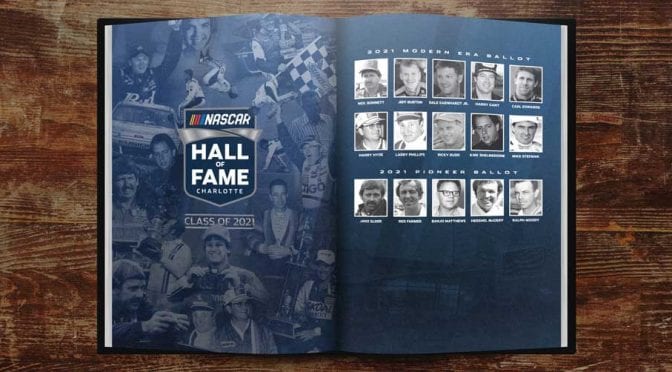
Secondly, this will be the first year the Hall of Fame inducts three members instead of the five that made up the previous 11 classes. There are 15 nominees for the NASCAR Hall of Fame’s Class of 2021, and it’s the first instance of the Modern Era and Pioneer Ballots. Ten names are on the Modern Era Ballot (two will be selected for the Hall of Fame) and five names on the Pioneer ballot (one will be selected for the Hall of Fame).

The Landmark Award winner also will be announced tonight on NBCSN.

Read more below in advance of tonight’s reveal.

Jason Miczek | Getty Images

THIS YEAR’S NOMINEES

Modern Era Ballot

Neil Bonnett, won 18 times in the NASCAR Cup Series, including consecutive Coca-Cola 600 victories 

Jeff Burton, won 21 times in the NASCAR Cup Series, including the Southern 500 and two Coca-Cola 600s

Dale Earnhardt Jr., 15-time NASCAR Cup Series Most Popular Driver and two-time Xfinity Series champion

Carl Edwards, winner of 28 NASCAR Cup Series races and 2007 Xfinity Series champion

Harry Gant, winner of 18 NASCAR Cup Series races, including two Southern 500 victories

Harry Hyde, 1970 NASCAR Cup Series championship crew chief

Larry Phillips, first five-time NASCAR weekly series national champion

Ricky Rudd, won 23 times in NASCAR Cup Series, including the 1997 Brickyard 400

Kirk Shelmerdine, four-time NASCAR Cup Series champion crew chief

Mike Stefanik, winner of record-tying nine NASCAR championships

Pioneer Ballot

Jake Elder, three-time NASCAR Cup Series champion crew chief

Red Farmer, three-time NASCAR Late Model Sportsman champion; 1956 Modified champion

Banjo Matthews, built cars that won more than 250 NASCAR Cup Series races and three championships

Hershel McGriff, 1986 NASCAR West Series champion 

Ralph Moody, two-time NASCAR Cup Series owner champion as mechanical genius of Holman-Moody

Landmark Award

Janet Guthrie, the first female driver to compete in a NASCAR Cup Series superspeedway race

Alvin Hawkins, NASCAR’s first flagman; established NASCAR racing at Bowman Gray Stadium with Bill France Sr.

Mike Helton, named third president of NASCAR in 2000; career included track operator roles at Atlanta Motor Speedway and Talladega Superspeedway 

Dr. Joseph Mattioli, founder of Pocono Raceway

Ralph Seagraves, formed groundbreaking Winston-NASCAR partnership as executive with R.J. Reynolds Tobacco Company

The NASCAR Hall of Fame opened May 11, 2010, and is an interactive entertainment attraction honoring the history and heritage of NASCAR. The 150,000-square-foot facility includes artifacts, exhibits and a 278-person theater. Learn more here about the NASCAR Hall of Fame.

• Class of 2010: Dale Earnhardt, Bill France Sr., Bill France Jr., Junior Johnson, Richard Petty
• Class of 2011: Bobby Allison, Ned Jarrett, Bud Moore, David Pearson, Lee Petty
• Class of 2012: Richie Evans, Dale Inman, Darrell Waltrip, Glen Wood, Cale Yarborough
Class of 2013: Buck Baker, Cotton Owens, Herb Thomas, Rusty Wallace, Leonard Wood
Class of 2014: Jack Ingram, Tim Flock, Dale Jarrett, Maurice Petty, Fireball Roberts
Class of 2015: Bill Elliott, Fred Lorenzen, Wendell Scott, Joe Weatherly, Rex White
• Class of 2016: Jerry Cook, Bobby Isaac, Terry Labonte, Bruton O. Smith, Curtis Turner
• Class of 2017: Richard Childress, Rick Hendrick, Mark Martin, Raymond Parks, Benny Parsons
• Class of 2018: Red Byron, Ray Evernham, Ron Hornaday Jr., Ken Squier, Robert Yates
• Class of 2019: Jeff Gordon, Jack Roush, Roger Penske, Davey Allison, Alan Kulwicki
• Class of 2020: Buddy Baker, Joe Gibbs, Bobby Labonte, Tony Stewart, Waddell Wilson

With the 2020 NASCAR Cup Series All-Star Race set for July 15 at Bristol Motor Speedway, the All-Star Race Fan Vote opened on Monday.

Fans can participate by visiting here and voting for their favorite driver. You can only vote for one eligible NASCAR driver per submission and you may only submit one ballot per day per each unique email address.

Here are the drivers eligible for the Fan Vote: Quin Houff, Austin Dillon, Tyler Reddick, Aric Almirola, Ty Dillon, Clint Bowyer, Brennan Poole, Chris Buescher, Matt DiBenedetto, William Byron, Reed Sorenson, Corey LaJoie, Michael McDowell, David Ragan, Ryan Preece, John Hunter Nemechek, Cole Custer, Bubba Wallace, Ricky Stenhouse Jr., Chad Finchum, Joey Gase, B.J. McLeod, JJ Yeley, Brendan Gaughan, Timmy Hill, Ross Chastain, Christopher Bell and Daniel Suarez.

RELATED: All-Star Race moving from Charlotte to Bristol this year

Drivers are eligible for the Fan Vote by having attempted to qualify for the 2020 Daytona 500. Should a Fan Vote candidate win a 2020 NASCAR Cup Series race before the All-Star Race — Talladega, the Pocono doubleheader, Indianapolis and Kentucky stand as the five opportunities left — that driver is automatically in the field.

Should a driver win a stage in the NASCAR Open qualifying race ahead of the All-Star Race then that driver will be locked into the field and not eligible to be the Fan Vote winner. A driver must finish the NASCAR Open with their respective vehicle in a raceable condition at the time called as determined by the NASCAR Cup Series Managing Director in order to win the Fan Vote.

One Fan Vote winner has gone on to win the All-Star Race in the event’s history: Kasey Kahne in 2008.

Fifteen drivers are already locked into the All-Star Race by virtue of wins in 2019 and 2020 (to date) as well as a past win in the All-Star Race and will not be eligible for the Fan Vote. Those drivers are: Kurt Busch, Brad Keselowski, Kevin Harvick, Ryan Newman, Chase Elliott, Denny Hamlin, Ryan Blaney, Kyle Busch, Martin Truex Jr., Erik Jones, Joey Logano, Jimmie Johnson, Alex Bowman, Justin Haley and Matt Kenseth.

Voting will end at noon ET on Tuesday, July 14.

It’s the All-Star Race, baby!

The annual showcase pitting the brightest stars in NASCAR against each other under the lights is moving from Charlotte Motor Speedway to Bristol Motor Speedway, it was announced Monday evening on FOX Sports 1’s NASCAR Race Hub. The July 15 race at the world’s fastest half-mile will include a limited number of fans in attendance and will air at 7 p.m. ET on FS1, FOX Deportes, MRN and SiriusXM NASCAR Radio.

“The NASCAR All-Star Race is an event known for making history, and we will enhance that legacy by hosting the event at Bristol Motor Speedway,” Speedway Motorsports President and CEO Marcus Smith said in a release.

“While Charlotte will always be recognized as the birthplace and traditional home for the All-Star Race, the current data surrounding the pandemic in North Carolina makes Bristol a better option for fan access this summer,” Smith added.

RELATED: Make your voice heard in the All-Star Fan Vote

The first All-Star Race took place in 1985 — won by Darrell Waltrip — and has been held at Charlotte Motor Speedway every year but one. In 1986, Bill Elliott bested Dale Earnhardt at Atlanta Motor Speedway, but the event returned the next year to Charlotte, which is considered the home track for drivers.

“We are excited to take one of the most unique races in our sport to one of the most unique race tracks in our sport,” NASCAR Executive Vice President of Racing Development Steve O’Donnell said in a release. “Bristol Motor Speedway puts on classic short-track action every time we race there, and we’re anticipating an elevated level of intensity for the NASCAR All-Star Race.” 

The drivers will still compete for a $1 million prize. Additional details on the format will be announced at a later date.

Meanwhile, the Fan Vote opens today for eligible drivers who have not yet qualified for the event. Fans can go here starting at 7 p.m. ET to vote for their favorite driver. Whoever gets the most votes and doesn’t clinch a spot in the All-Star Open will advance to the main event.

MORE: See who has qualified or is eligible for All-Star Race

NASCAR officials released additional findings Monday from Ryan Newman’s severe last-lap crash in the season-opening Daytona 500, saying that previously announced rules changes designed to improve safety and competition at superspeedways should limit engine strength by an additional 35-40 horsepower.

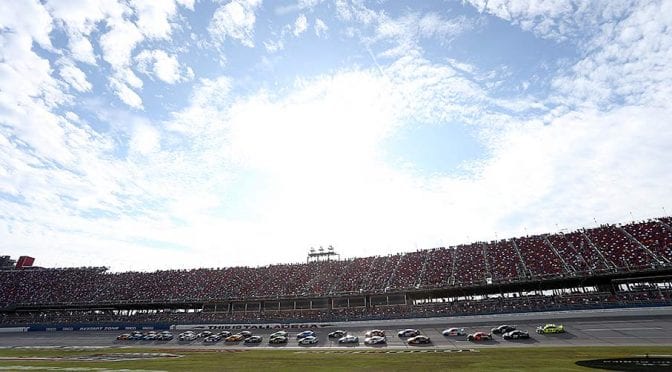
The details emerged from a Monday briefing with John Probst, NASCAR Senior Vice President of Innovation and Racing Development, and John Patalak, NASCAR Senior Director of Safety Engineering, who previewed the changes ahead of Monday’s GEICO 500 (3 p.m. ET, FOX, MRN, SiriusXM) at Talladega Superspeedway.

NASCAR had announced rules updates for superspeedway events on May 1, introducing safety enhancements with the addition of two roll bars and competition changes intended to slow the cars, including the elimination of aero ducts and a reduction in the size of the throttle body. The rules will be in effect for this season’s remaining Cup Series races at Talladega and Daytona International Speedway.

RELATED: Bulletin details safety, competition updates (May 1)

Officials indicated that many of the changes were a result of NASCAR’s investigation of the final-lap crash in the Daytona 500 in February. That incident, which came at the end of a crash-filled season opener, resulted in serious injuries for Newman, who was hospitalized after being removed from his Roush Fenway Racing No. 6 Ford. A NASCAR spokesperson indicated that a full, sit-down debrief with Newman and his Roush Fenway Racing team had not occurred because of COVID-19 restrictions.

“I think obviously when we go to superspeedways, as we said, any of our races, what we do is inherently dangerous,” Patalak said. “Stopping a wreck from happening, that would be pretty difficult. I would say that slowing the cars down surely should and would help from an aero liftoff standpoint. I would say our findings from the Ryan Newman crash, his liftoff was not due to an aero event but from him getting into the wall. The idea there is reducing the speeds of the car, slowing them down. We would expect speeds under the 200 mph barrier here. So from that standpoint slowing the cars down, keep from having as violent wrecks.

“Like I said, I mean, when the checkered flag is out for the Daytona 500, any of our races for that matter, the opportunity for accidents is high. I think the changes you see here that we’ve put forward, it’s to ensure that once a chain of events like that are set into motion, we have all the safety mechanisms in place to mitigate the outcome, negative outcomes, I should say.”

Superspeedway races have become especially crash-ridden affairs in recent years, with the closing rate and momentum for challenging cars with an aerodynamic push becoming too great for leading cars to easily stem those moves and keep the lead. NASCAR’s competition team shifted from restrictor plates to tapered spacers before last season to reduce horsepower at the sport’s largest ovals.

The changes announced in May are expected to shave horsepower figures from the 550 target at multiple tracks to around 510 for Daytona and Talladega. Probst said that the changes were expected to add more than a second to lap times at Talladega. For reference, Denny Hamlin led opening practice at the 2.66-mile Alabama track last October at 46.734 seconds for a speed of 204.904 mph. Adding one second to that clocking would net a lap speed of 200.612 mph.

“I can’t say that 200 (mph) is a magic number by any means,” Probst said. “… We have had races where we exceed that. Certainly it seems like in practice in particular at Talladega when they’re able to form a single line, not have to worry about protecting positions, speeds can sometimes be higher than what we see in the race. But certainly if we get up in that 205, 206, 207 kind of range, that’s generally where you start seeing us looking at ways to slow the cars down.”

The officials said an evolution of safety changes through the years kept Newman from being more seriously injured when his car made impacts with the outside retaining wall and Corey LaJoie’s No. 32 Ford. In the debut of the Gen-6 car for 2013, NASCAR added more roll bars, a laminate windshield and new window net mounting structure. Two years later, seat-belt improvements were introduced, and for 2016, an enhanced vehicle chassis made its debut at superspeedways before a full deployment the following year. “When you really look at the two vehicles, how they interacted, the severity and the orientation of it all put together, those couple things really stood out as highlights to the outcome that we had,” Patalak said.

Patalak and Probst indicated that the May 1 changes were also intended to reduce the frequency of tandem drafting, though they admitted that engineers and crew chiefs would likely try to offset the effects to gain a competitive advantage. “I’ve done this long enough to know that I will not make any bold, blanket statements that would challenge them to prove me wrong,” Patalak said. “I think with the reduction in power, the aero ducts going away, that will make sort of a smaller hole, if you will, that should make it much more difficult to get into that configuration.”

The officials also said that the addition of slip tape to the rear bumper cover at superspeedways would reduce friction during bump-drafting, decreasing the chance of hooking or spinning the lead car when bumpers make contact. “We’re trying to make the rear bumper of the car being hit like ice,” Probst said, “where they slide across, don’t contact and start influencing the car in front laterally, left to right, if you will.”

In another change adapted in the wake of Newman’s crash, NASCAR mandated a check valve for the oil reservoir tank or overflow expansion tank to mitigate the amount of fluid lost if a vehicle overturns in a crash.

Drivers’ first test run of the new superspeedway package will come in Sunday’s 500-miler, after NASCAR officials announced last weekend that the Cup Series will race without a scheduled practice session. The series has held eight races since returning to action after the COVID-19 outbreak, and none have included practice as officials try to limit travel time and exposure with coronavirus safety protocols still in place.

“That was something we had discussed with the teams, initially had protected for in our schedule,” Probst said. “Working through the changes with our teams, I would say that we’re at the point now with a lot of the simulation that while these changes, when we list them out, may seem like a lot for the teams, it boils down to a lot of power and drag type things. Having worked through it with them, we don’t feel right now we need to add any practice time to the Talladega schedule for this.”

MORE: Talladega weekend schedule

Hamlin, a winner Sunday at Homestead-Miami Speedway, said he had little concern about the field being able to adapt quickly to the new rules configuration without a practice shakedown.

“I’ll know in the first couple laps how big the runs are, what kind of gap I need to have to the person behind me to give me the run forward,” said Hamlin, who prevailed in the Daytona 500 for the first of three wins so far this season. “I’ll know pretty quick what to do with the package. I think we have probably a pretty good idea of it anyway. … These drivers are so good, they’re going to figure it out pretty quick. I wouldn’t expect anything out of the ordinary.”

Ryan Blaney wound up second to Hamlin at Daytona and was involved in final-lap contact with Newman’s car. The Team Penske driver is also Talladega’s most recent winner, having edged out Newman in a fender-banging duel there in the final lap last October.

After Daytona’s chaotic finish kicked off the year, Blaney said that drivers discussed the proposed changes with competition officials in an effort to make the difference in closing rates less drastic.

“The runs were gigantic. We get hooked up, that made your runs even bigger,” Blaney said after finishing third Sunday. “I hope the runs aren’t as big. There’s a fine line. You need the draft to work to where you get runs on cars, but not monstrous drafts where it’s dangerous to kind of block them and things like that. Hopefully we can find a fair in-between.”

“I’m looking forward to it. I know NASCAR did their research on hopefully trying to figure out a good balance of that.”
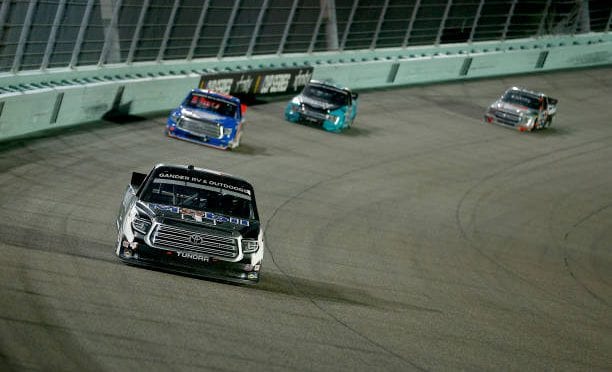
Raphael Lessard finished 11th in the Baptist Health 200 at Homestead-Miami Speedway on Saturday.

Lessard’s result added 30 points to his season total.

Lessard started in 14th position. The second-year driver has two top-10 finishes in his career.

The St.-Joseph de Beauce, Canada native began the race two spots behind his career mark of 12.1, but finished five places ahead of his career average of 16.

Lessard’s 11th-place finish was against 38 other drivers. The race endured seven cautions and 34 caution laps. There were eight lead changes.

Kyle Busch secured the victory in the race, and Tyler Ankrum finished second. Ross Chastain placed third, Chase Elliott took fourth, and Johnny Sauter rounded out the top five.

After Chastain won Stage 1, Busch took control and won Stage 2 before taking the checkered flag.

Raphael Lessard Driver Page | Get Lessard Gear | Race Center

Stewart Friesen finished 14th in the Baptist Health 200 at Homestead-Miami Speedway on Saturday.

Friesen’s result added 25 points to his season total.

Friesen started in 19th position. The fifth-year driver has tallied two career victories, with 23 top-five finishes and 39 results inside the top 10.

Over the course of his career at Homestead-Miami Speedway, Friesen has put together one top-five finish and two top-10s.

The Niagara-on-the-Lake, Ontario native began the race five spots behind his career mark of 14, but finished one place ahead of his career average of 14.8.

Friesen’s 14th-place finish came against 38 other drivers. The race endured seven cautions and 34 caution laps. There were eight lead changes.

Kyle Busch secured the win in the race, and Tyler Ankrum followed in second. Ross Chastain crossed the finish line third, Chase Elliott took fourth, and Johnny Sauter finished off the top five.

After Chastain won Stage 1, Busch seized control and won Stage 2 before driving to victory.

Stewart Friesen Driver Page | Get Friesen Gear | Race Center

Tyler Ankrum finished second in the Baptist Health 200 at Homestead-Miami Speedway on Saturday.

Ankrum’s top five finish added 35 points to his season total.

Ankrum started in 11th position. The third-year driver has one career victory, with three top-five finishes and nine results inside the top 10.

Saturday’s race was the first of Ankrum’s career at Homestead-Miami Speedway.

The San Bernardino, California native’s starting and finishing positions compared favorably to his career averages, starting at his career mark of 11.3 and completing the race 13 places ahead of his 14.6 career average finish.

Ankrum took on a field of 38 drivers on the way to his second-place finish. The race endured seven cautions and 34 caution laps. Prior to the checkered flag there were eight lead changes.

Kyle Busch earned the checkered flag in the race, followed by Ankrum’s second-place finish. Ross Chastain crossed in third, Chase Elliott secured fourth place, and Johnny Sauter came in fifth.

After Chastain won the first stage, Busch grabbed control and won Stage 2 before taking the checkered flag.

Tyler Ankrum Driver Page | Get Ankrum Gear | Race Center

Todd Gilliland finished sixth in the Baptist Health 200 at Homestead-Miami Speedway on Saturday.

The top 10 finish for Gilliland added 42 points to his season total.

Gilliland started in 18th position. The fourth-year driver has one career victory, with 13 top-five finishes and 28 results inside the top 10.

The sixth-place result on Saturday was the first time Gilliland has cracked the top 10 at Homestead-Miami Speedway.

The Sherrills Ford, North Carolina native began the race seven spots behind his career mark of 10.6, but finished seven places ahead of his career average of 12.6.

Gilliland’s sixth-place finish came against a field of 38 drivers. The race endured seven cautions and 34 caution laps. Prior to the checkered flag there were eight lead changes.

Kyle Busch brought home the win in the race, and Tyler Ankrum finished second. Ross Chastain placed third, Chase Elliott secured fourth, and Johnny Sauter finished off the top five.

After Chastain won the first stage, Busch grabbed control and won Stage 2 before earning the checkered flag.

Todd Gilliland Driver Page | Get Gilliland Gear | Race Center

Christian Eckes finished eighth in the Baptist Health 200 at Homestead-Miami Speedway on Saturday.

The top 10 finish for Eckes added 40 points to his season total.

Eckes started in fourth position and led 17 laps in the race, holding the lead a total of three times. The third-year driver has accumulated four top-five and eight top-10 finishes in his career.

Eckes had his career debut at Homestead-Miami Speedway in Saturday’s race.

The Greenville, New York native’s starting and finishing positions compared favorably to his career averages, starting two spots higher than his career mark of 5.6 and completing the race five places ahead of his 13.2 career average finish.

Eckes’ eighth-place finish came against 38 other drivers. The race endured seven cautions and 34 caution laps. There were eight lead changes.

Kyle Busch secured the win in the race, and Tyler Ankrum finished second. Ross Chastain placed third, Chase Elliott secured fourth, and Johnny Sauter finished off the top five.

After Chastain won the first stage, Busch grabbed control and won Stage 2 before taking the checkered flag.

Christian Eckes Driver Page | Get Eckes Gear | Race Center

Josh Williams finished 12th in the Contender Boats 250 at Homestead-Miami Speedway on Sunday.

Williams’ result added 25 points to his season total.

Williams started in 20th position and led one lap in the race. The fifth-year driver has three top-10 finishes in his career.

Sunday’s race was Williams’ third career start at Homestead-Miami Speedway. He’s completed all of those races, but has not earned a top-10 finish at the track.

The Port Charlotte, Florida native’s starting and finishing positions compared favorably to his career averages, starting nine spots higher than his career mark of 29.2 and completing the race 14 places ahead of his 26.4 career average finish.

Williams’ 12th-place finish was against 38 other drivers. The race endured six cautions and 28 caution laps. Prior to the checkered flag there were 20 lead changes.

Chase Briscoe earned the victory in the race, and Brandon Jones finished second. Ross Chastain placed third, AJ Allmendinger brought home fourth, and Noah Gragson finished off the top five.

After Ryan Sieg won the first stage, Gragson drove the No. 9 car to the win in Stage 2.

Josh Williams Driver Page | Get Williams Gear | Race Center