Chase Elliott pushed atop the speed chart in final NASCAR Cup Series practice at Phoenix Raceway as Hendrick Motorsports swept both Friday sessions.

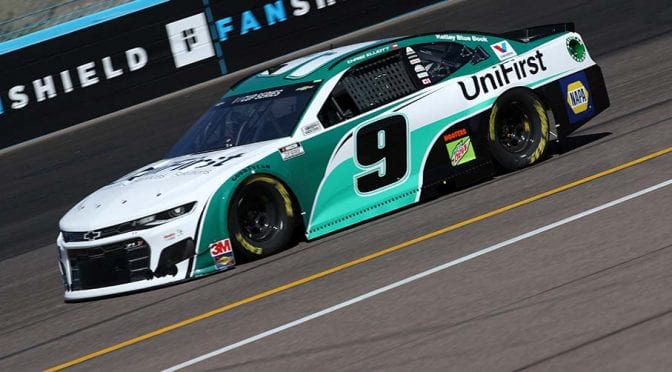
Elliott forged a 134.213-mph lap on the 1-mile Arizona track in Hendrick’s No. 9 Chevrolet. He was also second to teammate William Byron, who led opening practice and sealed the eighth-fastest speed in final practice.

RELATED: Final practice results | Lap averages | Weekend schedule

The 50-minute session was the final tune-up before Saturday’s Busch Pole Qualifying and Sunday’s FanShield 500 (3:30 p.m. ET, FOX, MRN, SiriusXM NASCAR Radio).

Kyle Busch landed the second-fastest lap at 134.203 mph — just .002 seconds off Elliott’s time — in the Joe Gibbs Racing No. 18 Toyota. Aric Almirola, Alex Bowman and Ty Dillon rounded out the top five in order.

Kevin Harvick, the series’ winningest driver at Phoenix with nine victories, was 13th in the Stewart-Haas Racing No. 4 Ford, but did have the best 10-lap average final practice.

Qualifying to determine the 38-car starting lineup is set for Saturday at 2:35 p.m. ET (FS1, MRN, SiriusXM NASCAR Radio).

NASCAR officials held three Cup Series teams for portions of final practice for technical infractions incurred last week at Auto Club Speedway. The following teams served 15-minute deductions: The No. 1 Chip Ganassi Racing Chevrolet of Kurt Busch and the No. 52 Rick Ware Racing Ford of JJ Yeley. The Joe Gibbs Racing No. 19 Toyota of Martin Truex Jr. had 30 minutes deducted from final practice for three inspection failures last weekend.

Byron leads 1-2 Hendrick sweep in first practice

William Byron powered to the top of the NASCAR Cup Series leaderboard in Friday’s opening practice at Phoenix Raceway, leading a 1-2 sweep by Hendrick Motorsports drivers.

RELATED: Practice 1 results | Best lap averages | Weekend schedule

Byron survived a minor wall scrape and registered a 134.595-mph lap in Hendrick’s No. 24 Chevrolet. He was just ahead of teammate Chase Elliott, who turned a 133.849 lap in the No. 9 Chevy.

“Just gotta know where the wall’s at, you know, and I was just trying to get my angle for Turn 1 and just nicked it a little bit,” Byron told FOX Sports. “Just got to figure out where it is. We have a little more windshield block out here, so my line of sight’s a little different. So just getting used to that. The car’s pretty good. I think we’re about P10 or 11 in race trim. Need a little more speed, but I thought qualifying trim was obviously good, too.”

Brad Keselowski, Clint Bowyer and Kurt Busch completed the top five in the 50-minute session.

Three teams absorbed minor tangles with the outside retaining wall. Corey LaJoie’s tap was the more pronounced of the three after his Go Fas Racing No. 32 Ford slipped out of the groove with 10 minutes left in the opening session. Aric Almirola and Byron pressed on after brief right-side scrapes.
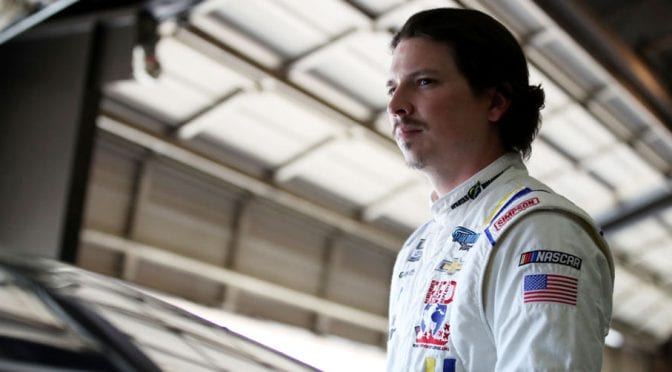
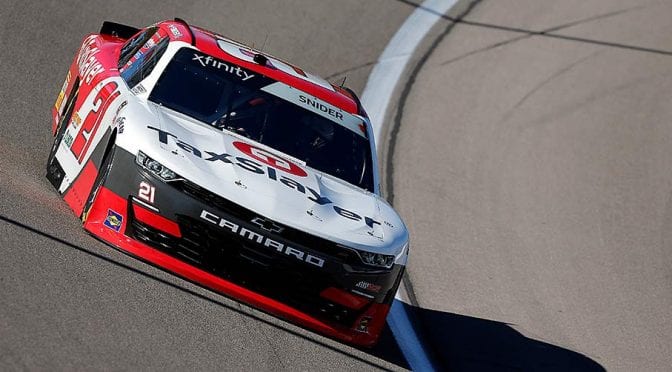
AVONDALE, Ariz. — Myatt Snider prefers to let his driving do the talking.

Two weeks after the fist-bump-that-wasn’t between Xfinity Series stars Snider and Noah Gragson at Las Vegas Motor Speedway, the Richard Childress Racing/RSS Racing driver doesn’t plan on smoothing the waters with the JR Motorsports product, instead opting to win the dispute on the track.

“No update, just going to keep racing,” Snider told NASCAR.com Friday at Phoenix Raceway, site of Saturday’s LS Tractor 200 (4 p.m. ET, FS1, MRN, Sirius XM NASCAR Radio). “Despite everything that happened, I still finished ahead of him last week (at Auto Club Speedway) so, karma I guess.

“I try and operate as independently as I can from everything and not think about any of that sort of stuff. I just race people how they race me.”

RELATED: Phoenix weekend schedule

The issue started when, after battling all race long, “impatience” led Gragson to dump Snider, prompting the latter to approach the former on pit road after the checkered flag to talk things over. The two were not able to come to agreement on what happened, though Gragson offered a fist bump at the end of the conversation … which Snider left hanging.

Gragson was called to the NASCAR hauler during Xfinity Series opening practice to discuss his recent on-track incidents, according to FOX Sports’ Jamie Little. A NASCAR spokesperson indicated that series director Wayne Auton simply wanted to have a conversation with Gragson.

The two young drivers — Snider is 25, Gragson 21 — do have a bit of history of their paths crossing in their racing careers, having both been in the Kyle Busch Motorsports stable with Toyota in 2017 before both eventually landing in the Chevrolet camp with their respective rides.

STATS: Career stats for Snider | Career stats for Gragson

But it sounds like it begins and ends with just being coworkers.

“Me and him were actually teammates at KBM in 2017; I was part-time and he was full-time. That’s about all the racing history we have there. He was just … there,” Snider said.

“We’ll just figure it out (on the race track). If we’re going to take it further, then so be it.”

Not only is 26-year-old NASCAR Cup Series championship leader Ryan Blaney off to the best start of his career, his Team Penske crew has duly taken note of his stellar record and high potential by rewarding his work with a multi-year contract extension.

Team Penske announced the news Friday from Phoenix Raceway, site of Sunday’s FanShield 500 (3:30 p.m. ET on FOX, MRN, SiriusXM NASCAR Radio).

“Ryan is a true talent with a long runway ahead of him and we are excited to have him as part of the future of Team Penske,” founder Roger Penske said. “Since joining our team, Ryan has developed into a championship-caliber driver and his personality and engagement with fans has made him a terrific ambassador for NASCAR.

In addition, Ryan has done a great job of working with our partners to support their activation and investment throughout each year. I am looking forward to even more success together.”

RELATED: Strong runs by Blaney a positive for Gordon | Key moments in Blaney’s career

That was high praise coming from the legendary owner, who first hired Blaney as an 18-year-old, giving him opportunity in a handful of NASCAR Xfinity Series races for the team. Blaney’s first career win for Team Penske came in that series in 2013. 

Blaney earned his first NASCAR Cup Series victory at Pocono Raceway in 2017, driving for Wood Brothers Racing with Team Penske backing. He moved into the No. 12 Team Penske Ford full time in 2018, winning at the Charlotte Motor Speedway road course and then again last year at Talladega Superspeedway during a NASCAR Playoffs run that resulted in Blaney’s career-best season finish (seventh).

“I am really excited to get that out there,” Blaney said. “It is something that we have been working on for a little while through the offseason. It is nice to finally announce it and all that stuff. I am really excited to continue with the Penske group for years to come.”

It’s certainly been a productive pairing.

Blaney began the 2020 season scoring his second runner-up finish in the Daytona 500, matching his 2017 effort in the season-opener. He then nearly won at Las Vegas Motor Speedway two weeks ago. He was leading when a late-race caution flew with two laps to go and his team opted to pit, ultimately finishing 11th. Then last week, Blaney was seemingly on track for another top-five finish when – while running second – he had to pit with three laps remaining for a quick tire change.

He is the only driver to lead laps in all three races to date, and he took the championship lead last week for the first time in his career.

Although Blaney hasn’t won previously in the NASCAR Cup Series at this week’s Arizona one-miler, he won the pole position for this spring race last year and earned career-best third-place finishes in both 2019 Phoenix races. 

“Honestly, it has been nice to start off the year good,” Blaney said. “We didn’t get the finishes we wanted, but to be running up in the top three every single race and working with a new team, that is just great.

“You are going to build off of that as (crew chief) Todd (Gordon) and I get used to each other and things like that. There are a couple things I wish I could have taken back last week that hurt us toward the end of the race. That is just learning.

“We are doing our job right and the finishes will come. We are working together but the big thing is staying on top of it all year. Teams will come around, ones that might be struggling right now will figure it out and be good and we will have to keep getting better ourselves. You can never be truly satisfied with where you are running because teams will continue to get better. You have to stay with the group.”

RELATED: Blaney’s back on ‘Glass Case of Emotion‘ | Where’s Blaney rank in Power Rankings?

To that end, Blaney and his fellow Ford drivers took part in some team-building exercises earlier this week led by the manufacturer. And as he’s done all season, Blaney proved to be on top of this game.

The Ford contingent all met up at Arizona State University’s football stadium and competed in a sort of “Punt, Pass and Kick” competition. Blaney won the field-goal competition, nailing a 35-yarder.

“Ford does a good job of trying to keep everybody pretty close,” Blaney said. “We are all competitors, but at the same time we drive for Ford and it is very important to try to get them to Victory Lane.”

Of his standout moment, Blaney said: “I am pretty proud of that. My leg is sore today, but I did it.”

Blaney shared how other drivers stepped up, too.

“(Corey) LaJoie is a pretty good athlete, he won the throwing competition,” Blaney said. “Surprisingly enough, Cole Custer won the punt competition. I don’t know why I said surprising, he seems like a good athlete, but that is what we do.

“Just kind of hang out with the drivers and the Ford Performance guys and things like that. Get everyone close. We have dinner and things like that. It is just something that they do to bring everyone together, which I think is good.”

Good all right. It’s been that kind of week, that kind of season for Blaney. 

Since Kevin Harvick’s first win at Phoenix Raceway in the spring of 2006, the Stewart-Haas Racing driver has rewritten the record books in the Arizona desert. He sits atop the charts among active drivers in wins, top fives, top 10s, laps led and average finish, leaving the question: Is Harvick really the undisputed “King of the Desert?”

Four other active NASCAR Cup Series drivers also have multiple wins at Phoenix: Jimmie Johnson (four), Kyle Busch (three), Denny Hamlin and Ryan Newman (two each).

RELATED: Harvick the pick to win at Phoenix?

Busch’s victory in the 2019 spring race gave him back-to-back trips to Victory Lane before teammate Hamlin raced his way to a crucial playoff win and made it three in a row for Joe Gibbs Racing.

Harvick’s most dominant winning stretch came from 2013 to 2016 when he won four Phoenix races in a row and five of six, only gapped by a runner-up finish in the 2015 fall showcase. In total, he has finished inside the top six in 12 of the last 13 races here, with a ninth-place result in the spring race a year ago the lone exception.

Two of the last three seasons, however, have resulted in winless trips to Phoenix for the No. 4 team, leaving the door open for Busch to perhaps become the new driver to beat at the 1-mile oval.

Like Harvick, Busch’s status at the desert track has risen to red hot in recent years, boasting four consecutive top fives and 11 top 10s in his last 12 starts. In his last nine, Busch team tops the series leaderboard for the most runner-ups, top fives and laps led.

Harvick has yet to take home the checkered flag at Phoenix since the start-finish line was moved before the 2018 fall race, while JGR remains undefeated post-adjustment.

RELATED: Backseat Drivers pumped up for Phoenix

Overall, Harvick and the No. 4 team have been off to a strong start for the 2020 season with a top 10 finish in each of the three races so far, making them the only team to accomplish this feat. Heading into Sunday’s FanShield 500 (3:30 p.m. ET, FOX, MRN, SiriusXM NASCAR Radio), he aims at becoming the fourth different driver to win a NASCAR Cup Series race this season.

With the debut of the new short-track package and a preview of this year’s Championship 4 venue, there may be more to prove for Harvick after finishing third place in the final standings for three consecutive years.

Harvick’s consistency and front-running speed may help him become the first double-digit race winner at Phoenix in premier series history and creep closer to claiming the title of the undisputed “King of the Desert.” But to reach those accomplishments, Harvick and crew will have to end Busch and JGR’s recent Phoenix reign.

Source: Racing Insights

NASCAR Finish Line, a free-to-play gaming app from Penn National Gaming, has launched for the 2020 NASCAR Cup Series season. Each week, there will be six groups of six drivers for the upcoming race. Users will predict which driver will finish first among each group and then also the overall race winner for a chance to win $50,000 each week if all seven scenarios are correctly selected.

Last week’s race at Auto Club Speedway saw no jackpot winners earn the $50K prize.

RELATED: Download NASCAR Finish Line

The second of six groups for Sunday’s FanShield 500 (3:30 p.m. ET, FOX/FOX Sports App, MRN, SiriusXM NASCAR Radio) at Phoenix Raceway consists of Ryan Blaney, Kurt Busch, Jimmie Johnson, Erik Jones, Brad Keselowski and Joey Logano. Three of those drivers — Busch, Johnson and Logano — have NASCAR Cup Series victories at the 1-mile track.

The 2020 short-track package that will be used this weekend is an added wrinkle of which we have no data to go on yet, so we will lean on the past to offer some insight before on-track activity. For a stats look, NASCAR.com has compiled the results of the last three races at Phoenix — all since the reconfiguration of the track took place — and the early returns from the 2020 season to see who is entering the desert hot.

A point system has been assigned to each year, starting with one point for the best finisher and counting up to six points for the worst finisher. Those numbers were then added up. The lowest total signifies the strongest driver (green) and the highest total represents the weakest driver (red) — at least in recent years.

Driver Phoenix-2 results (’18) Phoenix-1 results (’19) Phoenix-2 results (’19) 2020 avg. finish Total
Ryan Blaney Finished 34th (5) Finished 3rd (1) Finished 3rd (1) Avg. finish: 10.7 (1) 8
Kurt Busch Finished 32nd (4) Finished 7th (2) Finished 11th (5) Avg. finish: 20.3 (6) 17
Erik Jones Finished 17th (3) Finished 29th (6) Finished 7th (2) Avg. finish: 17.0 (5) 16
Jimmie Johnson Finished 15th (2) Finished 8th (3) Finished 14th (6) Avg. finish: 15.7 (3) 14
Brad Keselowski Finished 2nd (1) Finished 19th (5) Finished 10th (4) Avg. finish: 16.0 (4) 14
Joey Logano Finished 37th (6) Finished 10th (4) Finished 9th (3) Avg. finish: 13.0 (2) 15

The stats show Blaney is the overwhelming favorite in Group 2. His early results of the 2020 season would also back up he is the driver to pick in NASCAR Finish Line’s Group 2.

Editor’s Note: This story was first published when the rules package for short tracks and road courses was announced on January 14. This weekend’s race at Phoenix Raceway marks the first time that package will be used. 

NASCAR officials announced rules changes Tuesday for the 2020 Cup Series season, introducing a reduced-downforce package designed to enhance competition on road courses and the circuit’s shorter oval tracks.

The changes include significantly smaller spoilers, splitters and other aerodynamic devices in an effort to place a greater emphasis on handling and driver input with less stabilizing downforce on those tracks. The package draws inspiration from similar rules used in the 2017-18 seasons.

MORE: 2020 Cup Series schedule

“Our first and foremost core goal is to deliver great racing, and I think that we constantly evaluate the things that we do on the race track, however and wherever we need to, to improve that situation for them,” said John Probst, NASCAR Senior Vice President, Innovation and Racing Development. “And as part of our normal ongoing critique of ourselves and how we’re doing, we just felt like this was a good opportunity for us to improve the on-track product at the short tracks and road courses.”

Among the changes for those specific tracks:

  • A significantly smaller rear spoiler, which shrinks from an 8-inch height to 2.75 inches.
  • The front splitter’s overhang will now measure a quarter-inch (down from 2 inches), with approximately 2-inch wings (reduced from 10.5 inches).
  • Alterations to the radiator pan, removing its vertical fencing in an effort to reduce front-end downforce. The dimensions of the pan remain the same.

The changes will be in effect for nine of the 24 layouts — three road courses and six ovals — that the NASCAR Cup Series will visit in 2020.

The six oval tracks that will use the new rules this season:

  • Bristol Motor Speedway (.533 miles)
  • Dover International Speedway (1 mile)
  • Martinsville Speedway (.526 miles)
  • New Hampshire Motor Speedway (1.058 miles)
  • Phoenix Raceway (1 mile)
  • Richmond Raceway (.75 miles)

All three road courses on the Cup Series schedule will have the new rules in place:

  • Charlotte Motor Speedway Roval (2.28 miles)
  • Sonoma Raceway (2.52 miles)
  • Watkins Glen International (2.45 miles)

“When we consider changes to the aero package, we often can look back on our playbook, if you will, from seasons past,” Probst said, “and there’s obviously some trade-offs that you make between introducing something completely new that the industry has never seen versus something that we have run before where we have a playbook from our side and (teams) have setup books from their end. We felt like we were going to look at aero packages that we have run in the past, and looking back at a lot of competitive metrics that we track, we feel like the 2017 levels of downforce on those types of tracks had pretty good side-by-side racing that our fans enjoyed.

“So instead of just coming out and creating a completely new aero spec that’s unknown to possibly us and more importantly the industry, we felt like we’d go back to something that’s tried and true for us and go back to a package that we had run recently. At the same time, we did make some small adjustments to that package so that it would fit with our current intermediate speedway package so that we’d minimize further the necessity of the teams to have to develop this package.”

Probst said that the aerodynamic changes were met with a “broad base of support” in meetings that were initially held with stakeholders — spanning drivers, team engineers and managers, Goodyear representatives, manufacturers and broadcast partners — during NASCAR Champions Week in December at Nashville, Tennessee.

“Certainly from our standpoint, we feel like this is a step in the right direction to create more side-by-side, exciting moments during the race,” Probst said. “Obviously the proof will be in the pudding, but this is certainly something that we have run before that’s had good results.”

Martin Truex Jr.’s pit-stop woes started back in 2019, the last race of last season.

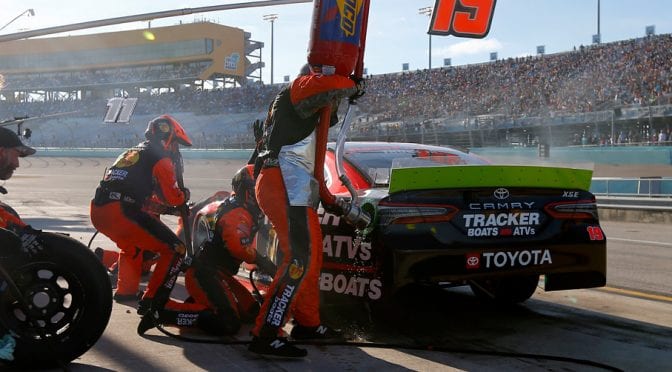
On Lap 120 of 267 at Homestead-Miami Speedway, Truex pitted his No. 19 Joe Gibbs Racing Toyota from the lead under green. It was a routine stop at that point. When Truex returned to the track in third place, though, there was something wrong: The left and right tires had been swapped, forcing Truex to pit a second time on Lap 122 so his team could fix the error. That placed him 13th and a lap down.

It’s unfair to say the mistake cost Truex the championship since he still finished second in his race — as Kyle Busch claimed his second title — but it surely didn’t help the 2017 champion’s cause. Truex ultimately came home second in the final standings for the second year in a row.

RELATED: NASCAR moving to single lug-nut design

Now, three races into the 2020 season, Truex sits 13th in the standings and pit-stop agony continues to haunt the No. 19 team.

— Daytona International Speedway, Lap 132 of 209: Truex’s car hit a gas can on pit road from Chase Elliott’s stall, resulting in his return to pit lane on the next lap to check the damage on the No. 19’s front end. Truex finished 32nd (crash).

— Las Vegas Motor Speedway, Lap 164 of 267: Truex took the lead after a round of pit stops but had to immediately bring the No. 19 back for a loose left-side lug nut. Truex finished 20th.

— Auto Club Speedway, Lap 159 of 200: Truex pitted from second place, running 1.588 seconds behind the leader, and his No. 19 team had a long lug-nut issue when the tire changer’s wrist and hand appeared to cramp up. Truex finished 14th.

Here is a deeper look at Truex’s pit stops at Auto Club last weekend:

PIT STOP FLAG IN FLAG OUT TIME TIRES RANK IN RANK OUT GAIN/LOSS
1 Green Green 46.16 4 17 32 -15
2 Yellow Yellow 45.12 4 12 13 -1
3 Green Green 43.02 4 4 6 -2
4 Yellow Yellow 42.86 4 5 4 +1
5 Green Green 55.79 4 3 16 -13

(Data provided by Racing Insights.)

The last time Truex opened a season with three straight finishes outside the top 10 was 2014. Another thing the 2014 and 2020 seasons have in common already: Cole Pearn is not Truex’s crew chief. Pearn worked with Truex from 2015-19. James Small now stands atop the No. 19 pit box.

This could all just be a series of unfortunate events Truex puts to an end this Sunday at Phoenix Raceway in the FanShield 500 (3:30 p.m. ET, FOX, MRN, SiriusXM NASCAR Radio). He’s definitely going to need his team’s help to capture his first win at the 1-mile track in Arizona, though.

In 28 starts, Truex has just four top-five and 11 top-10 performances at Phoenix. He averages a 15.5 finish after a 12.1 average start. Last year saw him come in second (spring) and sixth (fall).

Phoenix will host two events yet again this season, and the second is the title race — just like the one that sparked these pit-stop concerns.

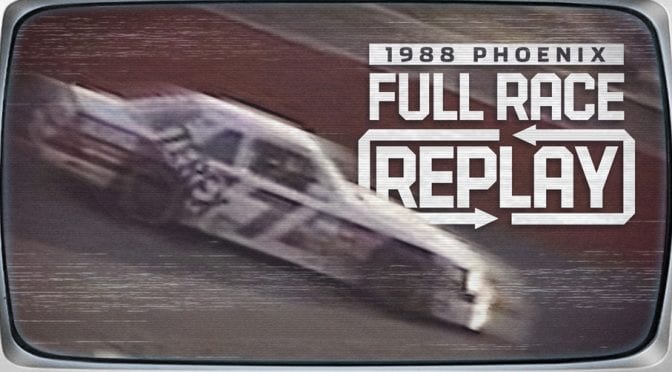
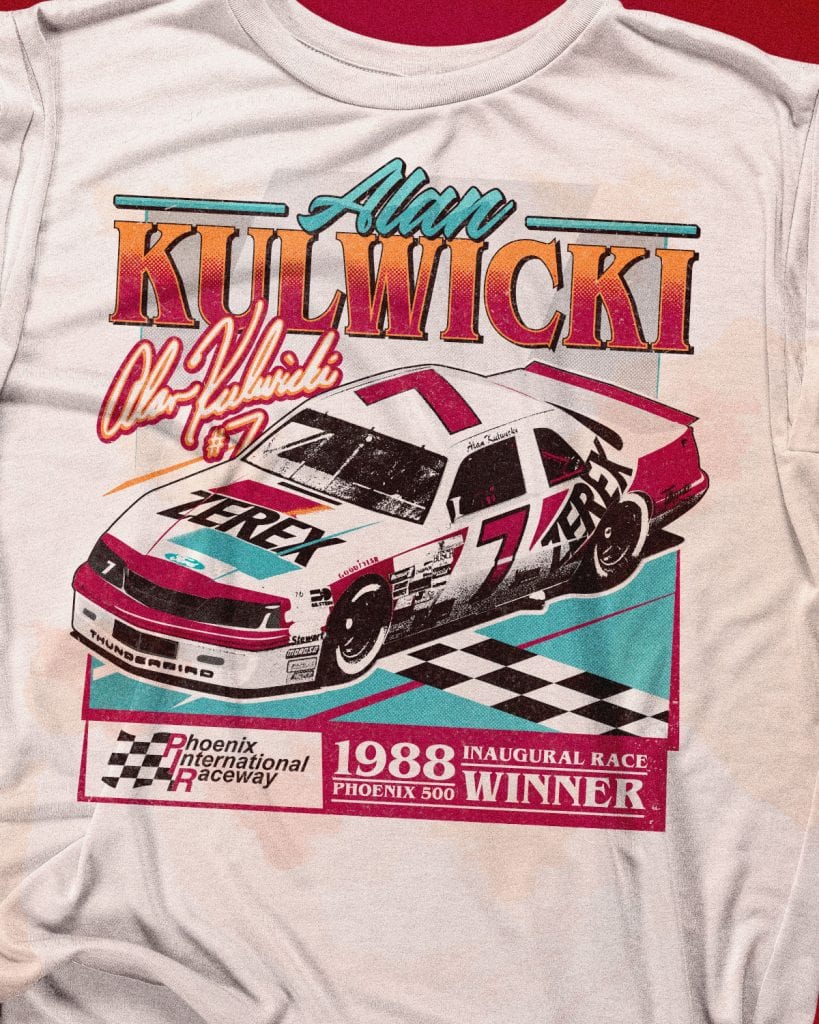
The 1988 fall race at Phoenix Raceway was the first in track history … and also site of the first-ever Polish Victory Lap.

The Checker 500, run on a Sunday and the next-to-final race of that season, consisted of 312 laps on the 1-mile course — the final 60 of them especially captivating and leading to a first-time winner.

RELATED: Full race results | Alan Kulwicki’s career highlights

Ricky Rudd led the most laps (183) on the afternoon, but would be out of the running on Lap 296 due to engine problems.

As Bill Elliott and Rusty Wallace battled in the throes of a championship hunt, it was Alan Kulwicki who would outlast everyone for his first career NASCAR Cup Series win.

Tbt 1988phoenix Ig
Harris Lue | NASCAR Creative Design

After taking the checkered flag, Kulwicki turned the car around and completed what he eventually referred to as a “Polish Victory Lap.” Kulwicki, of Polish heritage, wanted to be able to wave to the fans directly from his driver’s side window during his celebratory lap.

The tradition would live on and be associated with Kulwicki forever, especially following his passing in 1993.

Relive Kulwicki’s first career win — and the final top-10 finish of Benny Parsons’ career — in this NASCAR Full Race Replay of the 1988 Checker 500.

RELATED: More from our YouTube channel

It’s time for short-track racing, as the series lands at Phoenix Raceway for a preview of the 2020 NASCAR Cup Series Championship 4 venue.

With the long-awaited debut of the new short-track package and the season off to an electrifying start, take a look at all the information you should know before Sunday’s FanShield 500 (3:30 p.m. ET on FOX/FOX Sports App, MRN, SiriusXM NASCAR Radio).

RELATED: How to follow the race

TRACK DETAILS

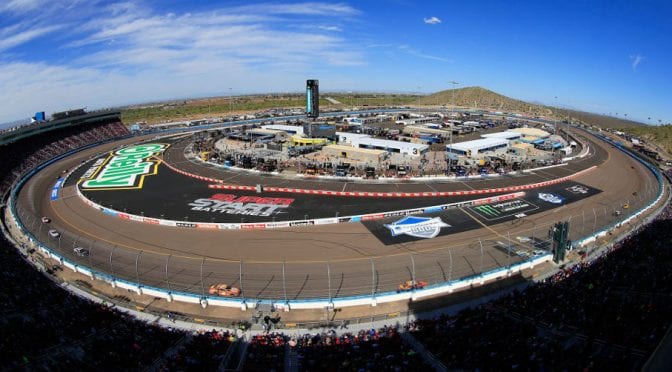
Phoenix Raceway is a 1-mile desert track with an asphalt surface that was constructed in 1964 and repaved in 2011. The start-finish line was relocated to the previous exit of Turn 2 in 2018.

The track features a 1,551-foot front stretch and a 1,179-foot backstretch with a unique dogleg, allowing for bold moves and wide racing. Turns 1 and 2 have 8-9 degrees of variable banking, while Turns 3 and 4 have a 10-11 degree variation.

Sunday’s race marks the 48th time the Cup Series has run at Phoenix, with Alan Kulwicki winning the inaugural race in 1988.

STAGE LENGTHS

Stage 1 is set to end at Lap 75, Stage 2 Lap 190, and the Final Stage slated to conclude on Lap 312.

RULES PACKAGE

The enhanced 2020 short oval and road course package will be in effect for the first time this year, featuring a significantly shorter rear spoiler and front splitter.

Maintaining tapered-spacer engines with a targeted 750 horsepower, new aerodynamic changes factor in for less downforce to further emphasize handling and driver performance.

Bristol, Dover, Martinsville, New Hampshire and Richmond — as well as the three road courses — will operate under this rules package.

MORE: Full weekend schedule | How to watch the race

GOODYEAR TIRES

As Cup Series action switches to a short track for the first time this season, it marks the season debut of the Goodyear Eagle Intermediate Radials.

Teams will be allowed three sets of Goodyear tires for practice, one set for qualifying and nine sets for the race (eight new sets plus one transferred from practice or qualifying).

Brand new tire developments to accompany the lower downforce run at Phoenix include increased wear and more stagger to help offer better balance and handling in the turns.

“We were involved in the decision on the 2020 short track package,” said Greg Stucker, Goodyear’s director of racing. “At that meeting with all the industry leaders, integrating tire performance into a reduced downforce package was a key part of the conversations. Our experience with the 2018 rules package, along with recent compound testing on the Next Gen vehicle at Phoenix, gave us a good baseline on increasing mechanical grip through the tires to compliment the reduced aero loading. This decision process was truly a joint effort — stakeholders from all areas coming together to make the sport better.”

STATS TO KNOW

— Phoenix Raceway is now the site of the championship race. The track that has hosted the season finale has hosted an earlier race 22 times throughout Cup Series history’s modern era: Atlanta (14), Riverside (6), Rockingham (1), New Hampshire (1).

— The driver who went on to win the first race at the finale track has only went on to win the championship three times: Terry Labonte (1984), Dale Earnhardt (1990), and Jeff Gordon (1995).

— With a recent Phoenix trend of late-race cautions and restarts, five of the last nine races have had a final green-flag stretch of three laps or less.

— Joe Gibbs Racing drivers have won four of the last five Phoenix races and led the most laps in each of the last six races.

Source: Racing Insights

LIVE COVERAGE

Tune in to television coverage from Phoenix Raceway on FS1 and the FOX Sports App starting at 2 p.m. ET on Sunday — then switch over the FOX for the remainder of pre-race and in-race action. For complete radio coverage, listen in to MRN and SiriusXM NASCAR Radio on-air at 2:30 p.m.

For a more interactive experience, head over to NASCAR.com or the NASCAR app to check out an enhanced Race Center, live Lap-by-Lap coverage, the customizable live leaderboard with Scanner, and the return of Drive (featuring in-car cameras).

Be sure to set your lineup in Fantasy Live and make your picks in the NASCAR Finish Line App!

2019 RACE WINNER

Kyle Busch powered his No. 18 Joe Gibbs Toyota to a dominant win in the 2019 FanShield 500 at Phoenix Raceway. Busch led 177 laps — his most since the career-high mark of 237 set in 2012 — en route to his third career win in the Phoenix desert.

RELATED: Odds, lines for Phoenix

ACTIVE PHOENIX WINNERS

Kevin Harvick (nine); Jimmie Johnson (four); Kyle Busch (three); Denny Hamlin and Ryan Newman* (two each); Joey Logano and Kurt Busch (one each). Note: Newman remains sidelined for this weekend’s race at Phoenix.