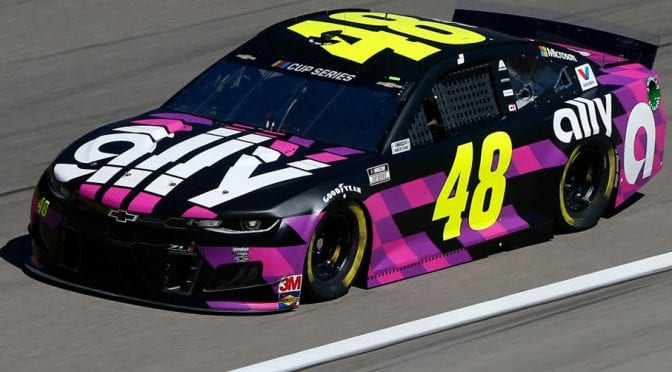
Seven-time NASCAR Cup Series champion Jimmie Johnson led the circuit’s final practice Friday at Las Vegas Motor Speedway, pacing the field at 179.432 mph. The No. 48 Hendrick Motorsports Chevrolet driver turned 46 laps overall at the 1.5-mile oval in Nevada.

After Johnson, five Fords dominated the leaderboard, starting with Clint Bowyer’s No. 14 Stewart-Haas Racing car at 179.271 mph. Teammate Aric Almirola was then third in his No. 10 entry at 179.170 mph. Kevin Harvick (179.015 mph) and Matt DiBenedetto (178.814 mph) rounded out the top five.

RELATED: Practice 2 results | Lap averages | Las Vegas weekend schedule

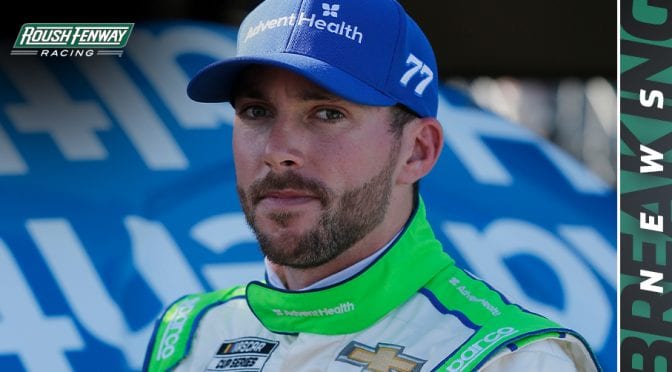
Ross Chastain, who is filling in for Ryan Newman this weekend in the No. 6 Roush Fenway Racing Ford, came in sixth at 178.660 mph. Kyle Larson, Ryan Blaney, rookie John Hunter Nemechek and Alex Bowman completed the top 10.

Defending race winner Joey Logano checked in at 13th at 177.930 mph.

Last weekend’s Daytona 500 winner, Denny Hamlin, was further back in 19th at 177.526 mph.

Busch Pole Qualifying is set for Saturday at 2:35 p.m. ET on FS1 and SiriusXM NASCAR Radio.

PRACTICE 1

Aric Almirola set the pace in opening NASCAR Cup Series practice Friday at Las Vegas Motor Speedway, leading a 1-2 sweep by Stewart-Haas Racing Fords.

Almirola turned in a best lap of 178.654 mph on the 1.5-mile track in the No. 10 Ford. The 35-year-old driver edged SHR teammate Clint Bowyer’s No. 14 (178.383 mph) in the 50-minute tune-up session before Sunday’s Pennzoil 400 (3:30 p.m. ET, FOX/FOX Sports App, PRN, SiriusXM NASCAR Radio).

“I’ve been so impressed with our race car from the time we unloaded,” said Almirola, who also was fastest in the consecutive 10-lap averages category. “First laps on the race track, it was driving really good. (Crew chief Mike Bugarewicz) and all the guys on this team have done a great job, everybody back at the shop. We licked our wounds a lot last year and everybody went to the drawing board on figuring out what we need for race cars. This is our first stab at a mile-and-a-half race track with a new build and a lot of new stuff that we’ve learned over last season, and I feel really good about it.”

RELATED: Practice 1 results | Lap averages | Las Vegas weekend schedule

Ty Dillon was third fastest in the No. 13 Germain Racing Chevrolet. Defending race winner Joey Logano was fourth, with Alex Bowman completing the top five.

Daytona 500 winner Denny Hamlin logged the 25th-best lap (175.12 mph) in an abbreviated session for the Joe Gibbs Racing driver. Hamlin and four other Toyota teams (for drivers Christopher Bell, Kyle Busch, Erik Jones and Martin Truex Jr.) were penalized with 15-minute practice holds for using unapproved body filler on a fender. Hamlin’s team had previously drawn a 15-minute penalty for failing Daytona 500 pre-race inspection twice, so the No. 11 was only eligible for 20 minutes of practice.

Ross Chastain posted the 18th-fastest speed (176.022 mph) in a substitute role for Ryan Newman in the No. 6 Roush Fenway Racing Ford. The organization announced Wednesday that Chastain would fill in this weekend as Newman recovers from a final-lap crash in Monday’s conclusion of the Daytona 500.
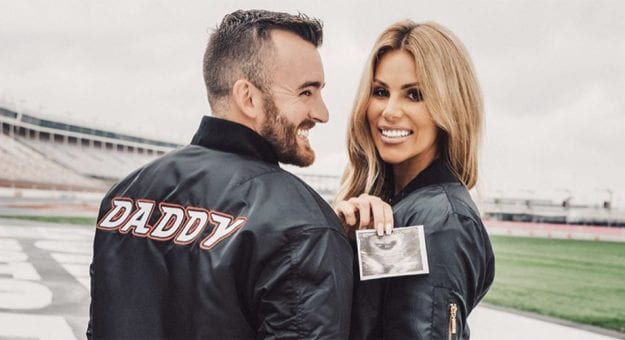
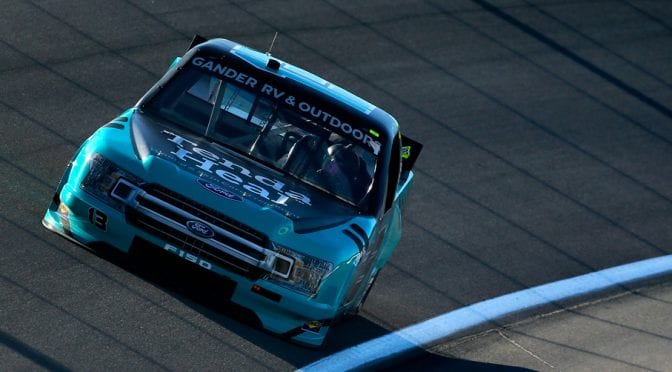
Austin Dillon picked the perfect weekend to announce the name of his soon-to-be son, with NASCAR in Las Vegas for Sunday’s Pennzoil 400 (3:30 p.m. ET, FOX/FOX Sports App, PRN, Sirius XM NASCAR Radio).

The Richard Childress Racing driver announced Friday on Instagram he and expectant wife Whitney will bring “Ace RC Dillon” into the world this June.

RELATED: Austin Dillon, wife Whitney expecting first child

https://www.instagram.com/p/B81abDjH2ty/?igshid=ccf4wkjcfo29

Dillon was asked about the naming choice Friday at the Nevada track.

“Yeah, we got a name. It’s Ace RC Dillon. I’m pumped about it,” Dillon said. “‘RC’ obviously is for my grandfather. My logo has always been the Ace of Spades and my grandfather always said ‘ace in the hole’. So, I was like this is a good time to make my kid the ace in the hole and hopefully he’s better than me.”

Dillon will look to ride a 12th-place finish at last weekend’s Daytona 500 into his first top 10 at Las Vegas Motor Speedway since finishing fifth in this race in 2016.

NASCAR officials handed down L1-level penalties Friday to four teams in the Gander RV & Outdoors Truck Series for technical violations discovered in opening-day inspection at Las Vegas Motor Speedway.

NASCAR deducted 10 championship points in both the driver and team owner standings for the following teams:

  • No. 13 ThorSport Racing Ford for driver Johnny Sauter
  • No. 26 GMS Racing Chevrolet for driver Tyler Ankrum
  • No. 88 ThorSport Racing Ford for driver Matt Crafton
  • No. 98 ThorSport Racing Ford for driver Grant Enfinger

All four trucks were found with the same infraction in Sections 20.9.3.2 in the NASCAR Rule Book, which pertains to the engine oil reservoir tank. The four teams specifically violated portion 20:20 of the rule: “Aerodynamic panels not permitted/engine oil reservoir tank mounting brackets/supports.

The series is scheduled for the second of 23 races this season with Friday night’s Strat 200 (9 p.m. ET, FS1, MRN, SiriusXM). The event is set for 134 laps (201 miles) on the 1.5-mile Las Vegas track.

Looking to bounce back after rough finishes last weekend at the Daytona 500, seasoned veterans Brad Keselowski and Joey Logano have plenty of reasons to be optimistic as the NASCAR Cup Series heads out west to Las Vegas Motor Speedway.

The dynamic Team Penske pairing have combined for four wins — three for Keselowski, one for Logano — and 12 top-five finishes in the last nine races at the track. In a remarkable show of consistency, the last time either driver ended up outside the top 10 at the checkered flag came all the way back in March of 2013 when Logano finished in 12th.

RELATED: Las Vegas odds, lines | Vegas: ‘The Race of Champions”

While Logano has the most recent Las Vegas victory within the organization after his impressive performance in the 2019 edition of the Pennzoil 400 presented by Jiffy Lube, Keselowski’s 3.2 average finish over the last nine Sin City showdowns and nine consecutive finishes of seventh or better remains the class of the series. The driver of the No. 2 Team Penske Ford managed to be the runner-up finisher in Logano’s win and third in last year’s playoff-opening race won by Martin Truex Jr.

In spite of this long track record of success at the 1.5-mile Las Vegas track, it is still too early to tell if the new organizational pairings will reap the same rewards. With the shuffling of crew chiefs for Keselowski and Logano, the comfort of the longstanding relationships the teams formed to win each of their Cup Series championships has faded and left both in search of an alleviating win.

Joe Gibbs Racing’s Truex also been hot at the southern Nevada intermediate track, winning two of the last five. However, much like Keselowski and Logano, Truex’s transition from long-time partner Cole Pearn to new crew chief James Small solidified the disbanding of the last three Vegas-winning combos.

Event Date Race Winner Crew Chief
9/16/18 Brad Keselowski Paul Wolfe
3/3/19 Joey Logano Todd Gordon
9/15/19 Martin Truex Jr. Cole Pearn

The key to winning this upcoming 400-mile race may be found by the driver who spends the most time at the front of the pack. Four of the last six spring Las Vegas races have been won by the driver with the most laps led, and the Stage 2 winners have gone on to win the last five.

RELATED: Full Las Vegas schedule

With new team outlooks and much more to prove this season, expect the No. 2 and No. 22 Team Penske Fords to be right in the mix to compete for their first win of the new decade on Sunday.

Source: Racing Insights

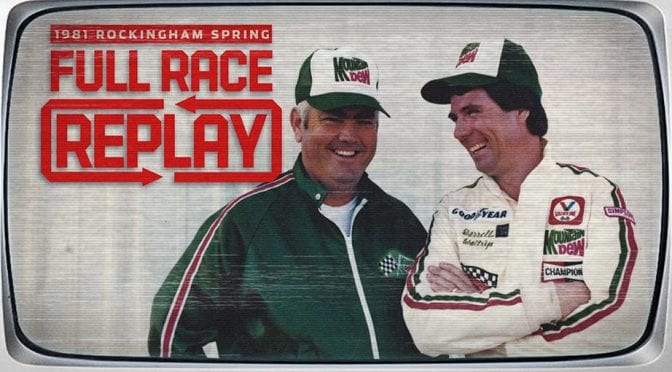
The 1981 spring race at Rockingham was a battle royale among NASCAR titans in Darrell Waltrip, Cale Yarborough, Richard Petty and Neil Bonnett. 

The Carolina 500 was the first race to be broadcast on ESPN and consisted of 492 laps on the 1.017-mile paved track for a prize purse of $21,655.

Yarborough dominated most of the race, leading a race-high 320 laps. But it would be Waltrip who would surge late to take the lead away from Petty with three laps to go. The win was Waltrip’s first of four at Rockingham, and he went on to sweep the season’s races there. The win was his second for team owner Junior Johnson in the No. 11 after replacing Yarborough as the team’s driver at the start of the 1981 season.

RELATED: Full race results of the 1981 Carolina 500 | Darrell Waltrip through the years

The ’81 season would turn out to be one of the best of Darrell Waltrip’s NASCAR Hall of Fame career. Waltrip whittled away at Allison’s points lead with a series of wins and top-five finishes before taking the points lead for good at Dover with six races to go. That was followed by a run of four straight wins that led to his first of three NASCAR Cup Series titles. On the season, he won 12 races, compiled 2,517 laps led, 21 top fives and 25 top 10s. 

Relive one of Waltrip’s wins in his championship-winning season in this NASCAR Full Race Replay of the 1981 Carolina 500.

NASCAR Finish Line, a free-to-play gaming app from Penn National Gaming, has launched for the 2020 NASCAR Cup Series season. Each week, there will be six groups of six drivers for the race ahead. Users will predict which driver will finish first among each group, and then also the overall race winner for a chance to win $50,000 each week if all seven scenarios are correctly selected.

RELATED: Download NASCAR Finish Line

The second of six groups for the Pennzoil 400 presented by Jiffy Lube at Las Vegas Motor Speedway (Sunday, 3:30 p.m. ET on FOX, PRN, SiriusXM NASCAR Radio) features Denny Hamlin, Chase Elliott, Kyle Larson, Alex Bowman, William Byron and Christopher Bell. The rookie Bell is at a disadvantage in our analysis because he just made his first NASCAR Cup Series start, but he does have three top fives in four Xfinity Series starts at the track and has proven to be a quick study at previous stops on the NASCAR national series ladder.

Another interesting factoid amid an offseason that saw a number of crew chief changes: All six drivers have the same crew chiefs as last year and none have won at Las Vegas in the sport’s top series.

For a stats look, NASCAR.com has compiled the finishes of each driver at both Las Vegas races in 2019, their 1.5-mile results in 2019 and their last five races at Las Vegas. Why a heavy emphasis on 2019 stats? That’s because the 1.5-mile rules package is pretty much the same as last year. For Bell, we have taken the results from 2019 for the car he is driving in this year — the No. 95 Leavine Family Racing Toyota.

From those results, we’ve created a ranking in each category of 1 (best) to 6 (worst) and then tallied up the totals to see who is the best option. The results of the highest-finishing driver in each category is bolded in green.

*Note: The numbers associated with Bell here are from the No. 95 car (driven by Matt DiBenedetto) in 2019 and over the No. 95 car’s last five races at Las Vegas. Average finish numbers for Bowman and Byron are based on four Las Vegas starts.

Driver Las Vegas-1 (’19) Las Vegas-2 (’19) 1.5-mile results (’19) Las Vegas last 5 Total
Denny Hamlin 2 (finished 10th) 5 (finished 15th) 3 (avg. finish: 11.8) 3 (avg. finish: 16.0) 13
Chase Elliott 1 (finished 9th) 1 (finished 4th) 2 (avg. finish 10.9) 4 (avg. finish: 17.2) 8
Kyle Larson 4 (finished 12th) 4 (finished 8th) 5 (avg. finish: 17.2) 1 (avg. finish: 5.4) 14
Alex Bowman 3 (finished 11th) 2 (finished 6th) 1 (avg. finish: 8.7) 2 (avg. finish: 13.0) 8
William Byron 5 (finished 16th) 3 (finished 7th) 4 (avg. finish: 14.5) 6 (avg. finish: 21.8) 18
Christopher Bell* 6 (finished 21st) 6 (finished 21st) 6 (avg. finish: 23.5) 5 (avg. finish: 18.2) 23

Based on the chart, Elliott or Bowman are the clear-cut picks. I’d lean toward the recency bias of Elliott finishing better in both Las Vegas races last year as my tiebreaker. But given Elliott’s popularity and the odds that he will be a favored choice, you could make a pick against the field and go against the grain and take Bowman.

DAYTONA BEACH, Fla. — Standing on pit road, with cars lined up and drivers posted nearby, everybody faces in the same direction toward the national-anthem singer and the start-finish line. There are a number of poses and a variety of people. Some have one hand placed on their heart, while others hold both in front or behind their back. Parents grasp onto children. Men and women hold removed baseball and sun hats.

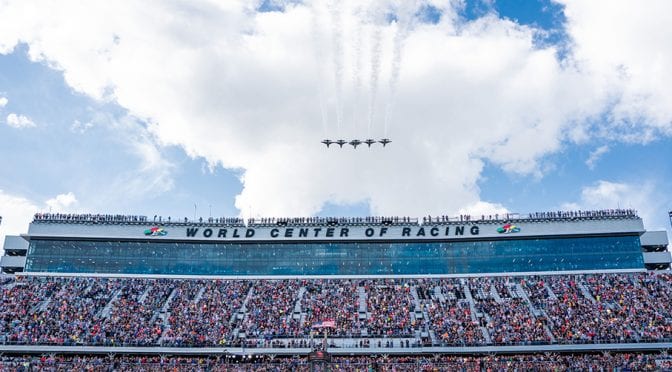
Almost in sync, heads tilt upward and turn to the left. Shielded eyes track down the six-jet squadron and follow its Delta formation across the sky. Only the U.S. Air Force Thunderbirds fly from south to north at Daytona International Speedway, passing over the middle of the superstretch, infield and frontstretch in order.

By the time the jets clear the grandstands and tower, the final note of the national anthem is falling to a close.

“It’s unbelievable what it does for the fans,” said Brandon Igdalsky, NASCAR’s managing director of event marketing and promotion. “No matter how many times you sit through them – and granted, you know it’s coming – the hair on the back of your neck still stands up and you get a little bit of goosebumps. It’s just badass.”

RELATED: At-track photos from the Daytona 500

Unlike other sports, flyovers are not a rarity when it comes to NASCAR. Almost all – if not all – Cup Series events feature one during pre-race festivities.

The season-opening Daytona 500 had the Thunderbirds last weekend for the 10th consecutive year and 11th time overall. This Sunday’s Pennzoil 400 at Las Vegas Motor Speedway (3:30 p.m. ET, FOX/FOX Sports App, PRN, SiriusXM NASCAR Radio) will have four aircrafts fly over from the Nellis Air Force Base, which is three miles from the track.

DAYTONA BEACH, FLORIDA - FEBRUARY 16: The United States Air Force Thunderbirds perform a flyover during the NASCAR Cup Series 62nd Annual Daytona 500 at Daytona International Speedway on February 16, 2020 in Daytona Beach, Florida. (Photo by Mike Ehrmann/Getty Images) | Getty Images
Mike Ehrmann | Getty Images

“Flyovers just really put a period on how patriotic our sport is,” DIS president Chip Wile said. “To have a military flyover at the end of the national anthem is something every race track is really proud of, and it’s really hard to do because of all the things that have to line up.”

Timing is everything.

The perfect flyover crosses the track at “brave,” the last word in the national anthem, and there are three parties involved in making sure that is timed correctly. There is the singer, the on-ground contacts and the pilots themselves. Everyone has to be on the same page at all times.

“Doing a flyover is really easy,” Thunderbird No. 1 Lt. Col. John Caldwell said. “Doing a flyover well is very difficult.”

In the Thunderbirds’ case, No. 7 Lt. Col. Kevin DiFalco and No. 8 Maj. Jason Markzon are on the ground with the national-anthem singer, whose sole job — as it relates to the flyover — is to be consistent. DiFalco already has the singer’s line-by-line timing from rehearsals and is following along to make sure everything matches up. Markzon then relays the updates to Caldwell up in the air since he leads the formation.

Those updates coincide with the TOT (time over target) since the jets start their run about 20 miles away at 500 mph.

“He’s got a little airspeed carrot, if you will,” Markzon said. “It’s just marking the airspeed he need to fly to hit the time that we pass to him. … If we get down to it and the singer is like three seconds ahead, for example, ‘Boss, new TOT, speed up.’ So, he gets that new time, he plugs that in, and it changes his airspeed carrot.”

Caldwell then shares that information with the other pilots. He’s also telling them when he’s going to make a turn or change his speed – anything and everything, so that there is no ripple effect and the jets stay in a clean formation.

DAYTONA BEACH, FLORIDA - FEBRUARY 16: The Air Force Thunderbirds perform a flyover prior to the NASCAR Cup Series 62nd Annual Daytona 500 at Daytona International Speedway on February 16, 2020 in Daytona Beach, Florida. (Photo by Jared C. Tilton/Getty Images) | Getty Images
Jared C. Tilton | Getty Images

The Delta formation looks like a V with one aircraft – known as the slot – flying behind the leader. There are then the left and right wings, along with the lead and opposing solos.

“My job is, I say, super simple and complicated at the same time,” said No. 6 Capt. Kyle Oliver, whose first flyover as the Thunderbirds’ opposing solo was the Daytona 500. “It’s very simple in the fact of being in this exact spot, three feet from another airplane. That in and of itself, though, is a fairly difficult and demanding task.”

The flyover itself lasts maybe 10 seconds from a fan’s perspective, then it’s on to the command for the main event.

Unless it was obvious, a normal spectator wouldn’t be able to tell if the pilots even hit their mark. Daytona looked like it was perfect.

“Literally I’ve never been more nervous during a national anthem than during a flyover for a national anthem,” Markzon said. “It’s just I can see the jets and know what’s all going on. I don’t want to screw it up. I don’t want them to screw it up. I was us to look good, make sure the timing is good and get the crowd to go crazy. My heart races when that happens, as I see them approaching and am counting down the time. I’m watching them – is it going to work, is it not going to work – and they crush it every time.”

The Daytona 500 has added to its prestige by pairing with the Thunderbirds’ elite squad of flyers. Other tracks tend to have relationships with local flying communities to replicate the pageantry on a smaller scale. NASCAR heavily supports the military as a whole, too.

Flyovers are usually planned anywhere between 90 and 180 days out from the race. NASCAR uses a third-party sports marketing and entertainment company called CSM Production to help coordinate the logistics with the tracks. There’s not a specific budget set aside for flyovers, but they’re accounted for in each event’s overall cost.

All those involved in the pre-race ceremonies don’t truly relax until the green flag waves.

“It’s the cool behind-the-scenes stuff in this sport that fans don’t really get a chance to witness and see – how much work actually goes into everything to pull off the day,” Igdalsky said. “It’s part of the addiction I have for this sport: seeing all that, putting it all together and working with all these great folks internally and externally to make this stuff happen.

“At the end of the day, when it all goes off seamlessly and you can look around and see those smiles on the fans and the excitement in their eyes, that’s when I know we’ve done our job and it’s time for the boys on track to do theirs.”

DAYTONA BEACH, FLORIDA - FEBRUARY 16: The United States Air Force Thunderbirds perform a flyover during the NASCAR Cup Series 62nd Annual Daytona 500 at Daytona International Speedway on February 16, 2020 in Daytona Beach, Florida. (Photo by Brian Lawdermilk/Getty Images) | Getty Images
Brian Lawdermilk | Getty Images

Ross Chastain has been named the substitute driver of the No. 6 Roush Fenway Racing Ford this weekend at Las Vegas Motor Speedway, the team announced Wednesday.

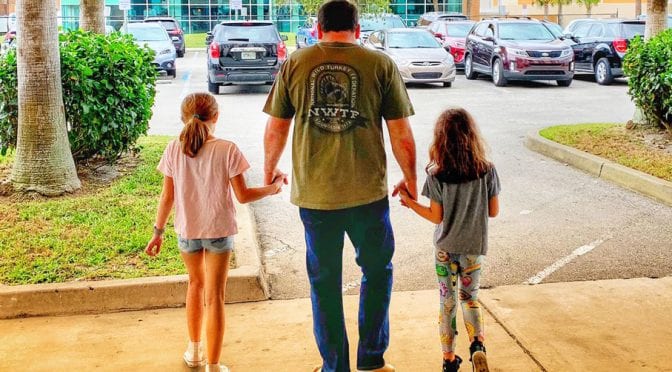
Roush Fenway Racing driver Ryan Newman was hospitalized with non-life threatening injuries after a wreck at the finish of Monday’s Daytona 500. He was released from the hospital on Wednesday — the team’s official Twitter account posted a photo of Newman leaving with his two daughters.

Currently there is no timetable for Newman’s return. Additional updates will be provided as they become available.

“First and foremost, our focus remains with Ryan and his family as he continues to recover,” Roush Fenway president Steve Newmark said in a press release. “We also want to express our sincere gratitude to all of those who have offered support and taken the time to send their thoughts and prayers to Ryan, his family and everyone at Roush Fenway Racing.

“The NASCAR community has long prided itself on being a close-knit family. That is never more evident than during these types of moments, and we want to express our appreciation to everyone at Chip Ganassi Racing as well as Kaulig Racing for allowing Ross to fill in for Ryan in the No. 6 on such short notice.”

Chastain took to Twitter shortly after the news was announced to say he would do his best to make Newman and the team proud as the fill-in driver this weekend.

Chastain has 72 career starts in the NASCAR Cup Series with one top-10 finish. He has five total wins at the NASCAR national series level and was part of the Championship 4 field in the NASCAR Gander RV & Outdoors Truck Series in 2019. His first career national series win came in 2018 at Las Vegas Motor Speedway in the NASCAR Xfinity Series. Chastain is the full-time driver of the No. 10 Kaulig Racing Chevrolet in the Xfinity Series for the 2020 season.

The Pennzoil 400 presented by Jiffy Lube (3:30 p.m. ET on FOX, PRN, SiriusXM NASCAR Radio) is the second race of the 2020 NASCAR Cup Series season.

RELATED: More on Las Vegas

Roush Fenway Racing driver Ryan Newman has been treated and released from Halifax Medical Center, according to the team’s official Twitter account.

He had been hospitalized with non-life threatening injuries after a wreck at the finish of Monday’s Daytona 500.

Earlier Wednesday, the team announced that Newman “continued to show great improvement.” According to Roush Fenway, Newman was joking with staff members, friends and family while playing with his two daughters.

Hours later, he was officially released.


The NASCAR Cup Series heads out west for a pit stop at Las Vegas Motor Speedway and Sunday’s running of the Pennzoil 400 presented by Jiffy Lube (3:30 p.m. ET on FOX/FOX Sports App, PRN, SiriusXM NASCAR Radio).

Before the green flag drops, here is all the information you need to know leading up to the first 1.5-mile race of the 2020 NASCAR season.

RELATED: Weekend race coverage | How to follow the races

TRACK DETAILS

Sunday’s Cup Series event marks the 25th race hosted by Las Vegas Motor Speedway in the series’ history after the track held a single race each year from 1998-2017 and two each since the 2018 season.

Source: Racing Insights

The 1.5-mile tri-oval located in Las Vegas Valley, Nevada, has an asphalt racing surface with 20 degrees of banking in each turn and nine degrees on the front and backstretch.

While the track first opened in 1996, the Cup Series held its inaugural race at the track in 1998 with NASCAR Hall of Fame inductee Mark Martin leading 82 of 267 laps and taking home the first-ever checkered flag in Sin City.

STAGE LENGTHS

Stage 1 ends at Lap 80, Stage 2 ends at Lap 160 and the Final Stage is slated to end at Lap 267.

RULES PACKAGE

Cup Series cars will feature the same 1.5-mile racing package used in 2019, with aero ducts and a tapered-spacer engine generating a targeted 550 horsepower.

Each team will be allowed three sets of Goodyear Eagle Speedway Radials for practice, one set for qualifying and nine sets for the race (eight new race sets, plus one transferred from practice or qualifying).

Las Vegas’ smooth asphalt track does not naturally wear tires. However, with tire wear being such an important factor for cooling and optimum performance, Goodyear has modified the tire to have increased wear on the racing surface.

“The track surface at Las Vegas is one that generates minimal tire wear so we have to design our tread compounds to account for that,” said Greg Stucker, Goodyear’s director of racing.  “Excessive heat is the enemy of a race tire and tire performance. On track surfaces that don’t naturally promote wear, it’s important to design a tire that can wear quicker and dissipate that heat. This tire setup, specifically this right-side tire, utilizes a tread compound formulation which does that.”

KEY STATS

— Martin Truex Jr. has won 12 races on 1.5-mile tracks since 2016, almost twice as many as the next closest driver.

— The Stage 2 winner at Las Vegas has won all five races in the stage-racing era.

— Four drivers have won 24 of the 33 races on 1.5 mile tracks since 2017: Martin Truex Jr. (10), Kevin Harvick (six); Kyle Busch and Brad Keselowski (four each).

— The Las Vegas race in March of 2019 had an average green-flag stretch of 85 laps.

Source: Racing Insights

LIVE COVERAGE

Tune in to live coverage from Las Vegas on FS1 and the FOX Sports App starting at 2 p.m. ET on Sunday — then switch over the FOX for the remainder of pre-race and in-race action. For complete radio coverage, listen in to PRN and SiriusXM NASCAR Radio on-air at 2:30 p.m.

For a more interactive experience, head over to NASCAR.com or the NASCAR Mobile App to check out an enhanced Race Center, live Lap-by-Lap coverage, the customizable live leaderboard with Scanner, and the return of Drive (featuring in-car cameras).

Be sure to set your lineup in Fantasy Live and make your picks in the NASCAR Finish Line App!

2019 RACE WINNER

Joey Logano picked up the first Las Vegas win of his career in last year’s spring race, leading 86 laps — second only to Kevin Harvick’s 88 laps led. With this victory, Logano is the only driver under the age of 30 to win in the last 12 races at the track, including the 2019 fall race.

RELATED: Odds, lines for Las Vegas

ACTIVE LAS VEGAS WINNERS

Jimmie Johnson (four); Brad Keselowski (three); Kevin Harvick and Martin Truex Jr. (two each); Kyle Busch and Joey Logano (once each).