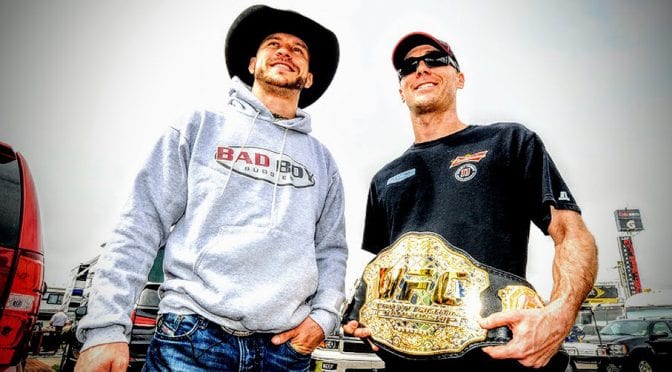
Kevin Harvick is a force as a driver in the NASCAR Cup Series, but he’s also the driving force behind one of his off-track ventures in KHI Management.

The full-service sports and celebrity marketing agency — and NASCAR national series team once upon a time —  has allowed the championship-winning driver of the No. 4 Stewart-Haas Racing Ford to branch out into different business opportunities, representing clients ranging anywhere from his fellow competitors (Harrison Burton, Ty Dillon, Ryan Preece, Ricky Stenhouse Jr.) to broadcasters (Shannon Spake) to golfers, motocross stars and more.

Harvick also represents an elite athlete that many across the country will be tuning in to see Saturday night in Ultimate Fighting Championship veteran Donald “Cowboy” Cerrone.

RELATED: Kevin Harvick’s career highlights

The UFC’s all-time winner Cerrone (36-13-0, one no-contest, +215 underdog) will hit the octagon this weekend in UFC 246 just outside Las Vegas at the T-Mobile Arena to square off in a welterweight bout with former UFC Featherweight and Lightweight champion Conor McGregor (21-4, -280 favorite), who is making his long-awaited return after a 15-month hiatus.

Two of the sport’s most electric and outspoken figures will capture the attention of the masses on Saturday night. It’s a moment that will only help solidify Harvick’s side hustle which, over the years, has looked more and more like where his full-time passion might lie after the 44-year-old’s racing days are up.

Our business model is a lot different than a lot of agencies because we cross-promote our athletes amongst each other with our sponsors,” Harvick told NASCAR.com Thursday afternoon. “Donald has branched out to do a lot of things from a personal services side and he’s just a good person that really has bought into our model. He’s actually our original client and really the reason that KHI Management started was because of Donald Cerrone and him asking the question ‘Why couldn’t you represent me?’ That’s really what started our company, just drinking a beer beside the bus at Texas Motor Speedway. It’s evolved from that into what it is today; he’s responsible for the management company even starting.”

Knowing how crucial his small faction of clients has been to his business successes, Harvick doesn’t hesitate to pump them up any chance he can.

KHI has been on the ground in Vegas this week as well, following along as the moments unfold between Cerrone and McGregor. Harvick and wife DeLana, an invaluable resource in KHI’s business management, are expected to host 140 people and 11 sponsors at the event this weekend.

It’s little things like that — overwhelming support for your biggest client on one of the greatest stages of his career — that help the small-statured, big-minded KHI stand out as an attractive destination for athletes far and wide across several disciplines.

“Sometimes I feel like there’s a lot of things that the really big agencies can do for you if you’re a really big athlete and a really big household name, but most of us aren’t that,” said the 2014 Cup Series champ. “For us, it’s a little bit different world. I’d refer to us as a boutique agency just because of the fact that we’re a lot smaller and it’s something that is run based upon the things that I’ve experienced and gone through and refined through the years.”

Wednesday’s press conference for Cerrone and McGregor was expected to be a bit fierier between the two strong-headed competitors after a serious jawing between them at a 2015 news conference — when they weren’t even slated to fight each other.

It appears McGregor has a sincere appreciation for his counterpart, however, as the press conference was fairly subdued and without drama.

“It’s hard not to respect Donald right now at this stage,” McGregor said, according to ESPN. “He has my respect. And although there will be blood spilled on Jan. 18, it will not be bad blood.”

So where does that leave things heading into the fight? While Harvick is hesitant to make any sort of prediction on Saturday’s winner — he’s admittedly biased and careful with his forecasting, he noted — he’s comfortable with the work Cerrone has put in to put himself in the best possible position to succeed.

“I feel good about where Cowboy’s at, the things he’s done, where he’s at mentally,” Harvick said. “I think, obviously, he’s fighting a tough opponent. There’s a lot of things that come with fighting Conor that aren’t like fighting with other people, just with all the outside noise. I think Cowboy’s dealt with that well. Watching the press conference, there’s obviously a lot of respect between them. They’re both pretty experienced guys, but in fighting it usually comes down to a moment. Sometimes you’re on the right side, sometimes you’re on the wrong. … We’re confident in Donald and the things that he’s done and love being a part of his team.”

And as the 36-year-old Cerrone is likely nearing the final rounds of his fighting career, it appears the bell has just rung on a long and prosperous stretch for Harvick’s KHI Management group.

“It’s definitely turned into a real business accidentally,” Harvick said. “… It’s not something that’s going to go away any time soon because of the way that it has morphed into what it is today and we’re going to keep trying to grow in ways that let us still be small and capitalize on opportunities. That’s really the way it started.”

UFC 246 goes down Saturday night with prelims starting at 6:15 p.m. ET and the main card starting at 10 p.m. ET on ESPN+ PPV.
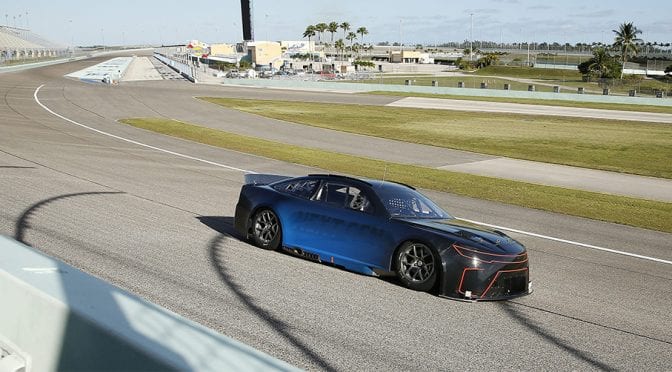
Erik Jones became just the third NASCAR Cup Series competitor to take a spin in the Next Gen car this week at Homestead-Miami Speedway.

The Joe Gibbs Racing driver spent two days on Florida’s 1.5-mile track piloting the prototype in its third test. Throughout the process, Jones definitely noted a few differences between this future car and the current model. Next Gen is set to make its competitive debut in the 2021 season.

PHOTOS: Jones tests Next Gen at Miami

“It’s definitely a big aero change,” Jones said Thursday. “We have a lot of sideforce in our cars now and there is a lot to lean on – when you get loose the car kind of corrects itself and straightens itself out. This car doesn’t really have any of that. The quarter panels are so short and there’s no offset in the car – it’s very symmetrical – so there’s not a lot to lean on in this car. I think a lot of the aero changes they’ve done are going to help as far as racing goes, especially racing in a pack.

“Other than that, as we were working on things, some driving characteristics are similar. I think there is definitely more grip to be had as far as what the car is capable of. I think as far as development goes, there is going to be a lot more mechanical grip available than what we currently have.”

Jones posted a video to Twitter midway through the second day of testing to share initial thoughts and a sneak peek inside the Next Gen car.

In the video, Jones brings viewers into the cockpit, pointing out the sequential shifter he was able to test. It’s different from what drivers use now in that shifting is a quick hit rather than more conventional throws. This will allow drivers to change gears faster.

“I’ve never done anything other than normal H-pattern shifting in my career,” said Jones, who has been full time in the Cup Series since 2017. “You can bang right through the gears; we did a restart at the end of the day (Wednesday) and it was fun learning about that and how you can push that gear box. That really gets you excited for the road courses and what it’s going to be capable of there.”

Road courses, along with superspeedways, have yet to be tested.

A Next Gen vehicle first hit the track in 2019. Austin Dillon piloted the prototype built by Richard Childress Racing in collaboration with NASCAR back in October at Richmond Raceway. Joey Logano then had a run with it in December at Phoenix Raceway, home of the 2020 season finale.

RELATED: Dillon’s initial thoughts | Logano’s early impressions

All three testing spots so far have been a different length by virtue. Richmond is a short track at 0.75 miles. Phoenix is a 1-miler. Miami is then the first intermediate oval. This has allowed officials to progress through different lengths, speeds and loads to help further develop and improve the Next Gen car before 2021.

“We continue to work in the wind tunnel,” said John Probst, NASCAR’s senior vice president of racing innovation. “We’re developing rear diffusers to generate more rear downforce. One of the big things we have here that we didn’t have at Phoenix is we added some of the lift-off devices that we’ve developed over the winter, including roof flaps. We also have a few other related items in development that aren’t on the car right now such as flap-down doors for the diffuser to get the liftoff speed even higher than what we run today.”

Probst also revealed construction of the Phase 3 prototype is underway. Once that is built, the car that Jones, Logano and Dillon have already tested will be used to start simulating traffic.

The Next Gen car will go through its fourth on-track test at Auto Club Speedway in Fontana, California, after the NASCAR Cup Series’ race in March. Once again, it’ll be a two-day trial. A driver has not been announced.

“I’ve never been a part of developing something new in any series,” Jones said. “So, to be the first guy in it on a mile-and-a-half has been cool. It’s been a learning experience for everybody, but it’s been fun. I think we’ve come a long way in a short time here. I think NASCAR’s learned a lot, I know I’ve learned a lot, and there will be a lot of cool stuff going forward.”

The 2020 NASCAR Cup Series schedule will offer a variety of changes that are set to spice up the action and create fan interest.

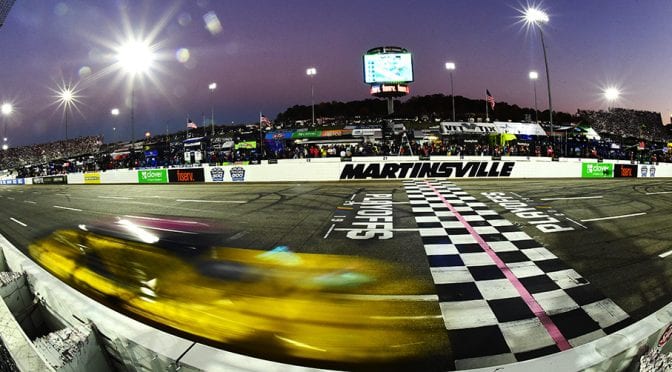
Drivers will race under the lights for the first time at Martinsville Speedway in May, Daytona International Speedway is home to the regular-season finale in August and Bristol Motor Speedway’s night race sneaks into the NASCAR Playoffs, just to name a few.

But with all the swaps in the 36-race stretch, how is it even possible to pick one you’re looking forward to the most? Well, NASCAR.com’s Pat DeCola and Chase Wilhelm take a crack at it.

RELATED: 2020 schedule

DECOLA: I’m well aware I named the finale at Phoenix Raceway as the most impactful change for the 2020 schedule on Wednesday — and trust me, I’m looking forward to that one, too — but scanning up and down the schedule, I can’t help but land on Daytona’s summer race as the one I’m circling.

Superspeedway racing has always been incredibly captivating to me as-is. Moving Daytona’s summer event from its traditional July 4 weekend to later on in the schedule … so it can be the regular-season cutoff? If I wasn’t already sitting down while typing this, I most certainly would need to.

I think we’ll definitely see some drivers attempt to play it safe, hoping they can get through and advance on points if they’re on the good side of the bubble. I also expect that tactic will quickly dissipate as every driver in the top 30 in points who needs a win scrambles to get to and stay at the front. Superspeedways are the great equalizer among the field and putting one in position to be the last opportunity to make the playoffs only ramps up the excitement.

Just imagine a scenario where someone like Corey LaJoie — who placed 29th in points last year but finished in sixth place in the second Daytona race — makes the playoffs because of a last-ditch, last-lap effort at the “World Center of Racing.” Pure madness. Pure entertainment.

RELATED: Debate: Most impactful schedule change?

WILHELM: NASCAR Cup Series racing at Martinsville from start to finish under the lights … do I really need to say more?

This is what we’ve all been waiting for since the installation of the track’s state-of-the-art LED lighting system in 2017. We’ve seen three NASCAR Playoffs races end under them, and all of them had about as much drama as we could handle.

In 2017, Denny Hamlin bumped Chase Elliott out of the way for the lead, sending Elliott into the outside wall and a heated confrontation between the two after the race. More of the same came in 2018 when it was a head-to-head battle to the finish line between Joey Logano and Martin Truex Jr., as Logano took the victory, leaving Truex heated on pit road after the race. As for 2019, it was Hamlin and Logano left ready to throw hands on pit road after an on-track incident late in the race.

When the lights come on for the green flag in May at the 0.526-mile Virginia short track, we can grab a Martinsville hot dog, sit back and watch tempers flare as history is made.

LAS VEGAS – Two-time and reigning NASCAR Cup Series Champion Kyle Busch will make his return to The Bullring at Las Vegas Motor Speedway Feb. 20 to compete in the Star Nursery 100 Super Late Model Open Comp.

Busch, a Las Vegas native and Durango High School graduate who developed his skills on the 3/8-mile Bullring track, will compete in the 100-lap race, which will be followed by the Star Nursery 150 ARCA Menards Series West race.

Busch compiled more than 50 wins on LVMS property between 1999 and 2003, as well as a U.S. Legends-Pro season points championship in 2000. He last competed at the Bullring in 2007 in the Fall Classic.

“It’s going to be great to get back to where it all began,” Busch said. “My family and I spent many Friday and Saturday nights racing at the Bullring, and it will always hold a special place for me. I’m really looking forward to racing against a few guys I raced against back in the day as well as some of the new drivers who are cutting their teeth coming up through the ranks.”

Busch has accumulated 208 career wins across all three NASCAR national series including 56 in the NASCAR Cup Series. His 96 NASCAR Xfinity Series wins and 56 NASCAR Gander RV and Outdoor Truck Series wins rank him first all time for both series.

RELATED: Kyle Busch 2019 season review

Busch, along with all other drivers in both the super late model and ARCA races, will take part in a pre-race autograph session from 5:30 to 6:30 p.m. on race day. The Super Late Models race begins at 7 p.m. followed by the Star Nursery 150 at 8 p.m. Tickets for the doubleheader can be purchased here.

The full 2020 NASCAR weekend schedule can be viewed here.

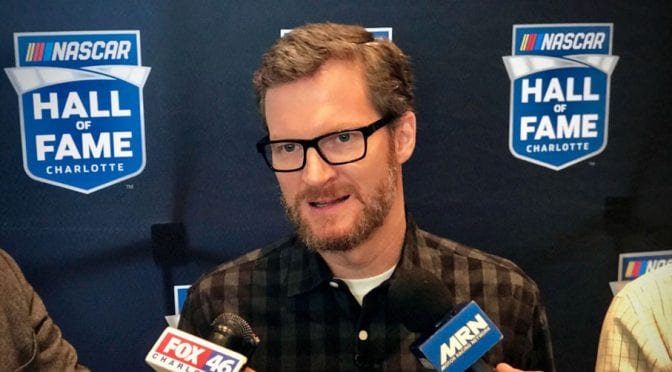
Dale Earnhardt Jr. wears many hats in the NASCAR world. Driver. Commentator. Team owner. Historian of the sport. Curator. The latest hat comes as he chose the theme and the 18 cars for the fourth generation of Glory Road at the NASCAR Hall of Fame that is now open and will run for three years: “Dale Jr.: Glory Road Champions.”

“It was a real honor to be asked,” Earnhardt Jr. said of his participation in the exhibit. “To have any involvement with anything that goes on at the Hall of Fame — this is where you learn about our sport. This is where you can really understand and grow the sport. This is where you learn everything you need to know about NASCAR right here.”

PHOTOS: See the cars that are on display

Executive Director of the NASCAR Hall of Fame Winston Kelley said a guest curator project was a concept he and his team had kicked around quite a bit and there was one standout reason to have Dale Jr. be the first to do it.

“One of the things we pride ourselves on is being authentic,” Kelley said. “We’ve talked about this concept for a long time and candidly, Dale Jr. was the first one we wanted to work with because of his authentic passion for the sport.”

Earnhardt Jr. indicated that while the theme was a no brainer to represent the “best of the best,” the process of getting down to 18 cars was a bit tougher. Two on the initial list of 18 (Dale Jarrett’s 1999 Ford Taurus and Bobby Labonte’s 2000 Pontiac Grand Prix) were committed elsewhere. The 15-time NMPA Most Popular Driver Award winner is proud of the selections and to have the actual cars in one place.

BUY TICKETS: Explore the NASCAR Hall of Fame

“These aren’t remakes. These aren’t cars that someone else drove or painted it like Rusty Wallace’s car,” Earnhardt Jr. said. “That’s the car that he competed in in that particular year. That to me means the most. When the fans come here and they look at that exhibit, they know in their heart and they know in their mind, that car was out on the race track and getting the job done. There’s no better representation of the history of the sport than the real stuff.”

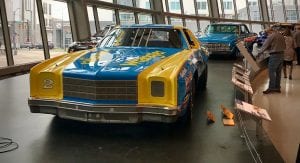
One of the cars – the 1980 Blue and Yellow Chevrolet Monte Carlo driven by his father, Dale Earnhardt, kicks off the exhibit and is Dale Jr.’s favorite in the display. The NASCAR history buff was involved in restoring part of the vehicle himself and the car has a special meaning to him.

RELATED: See the paint scheme for Dale Jr.’s lone 2020 start

“Dad drove that car at Ontario in the final race of the season,” Earnhardt Jr. said. “He asked (car owner) Rod (Osterlund) to let him have it. That car came to the shop that’s next to Martha’s (Dale Jr.’s grandmother) house in Kannapolis and sat on jack stands around the shop for probably three years. Stripped down, no motor. And me and Tony (Eury) Jr. would run circles around that car and pick Bondo off of it. Dad hit the right side a little bit so the car’s got a ton of Bondo on it. I tried to go to that shop all the time with dad because I loved hanging out there.”

Daleearnhardtcar Main
Zack Albert | NASCAR Digital Media

“He sent it to a guy in Kannapolis around 1984 and got it restored and then it went directly to the (International Motorsports) Hall of Fame in Alabama. And it had been there ever since and then they gave it to me in 2017. Through the 80’s, 90’s, anytime I would be in Alabama, I’d go look at that car because I knew its history. Once I got the car, I wanted to decal it just the way it raced in Ontario when it came off the race track after he won his championship.”

Earnhardt Jr. did a lot of research on the car and learned even more about the car than he could have imagined. It turns out that car won at Atlanta and Charlotte in 1980 and David Pearson won with it at Darlington in 1979.

“My quest to learn more about history is unfulfilled and experiences like this add to it and improve my knowledge,” Earnhardt Jr. said. “Anytime you get included in the conversation about history, it is an opportunity to learn and I certainly jumped at the chance to do this.”

The exhibit’s theme of champions covers 18 cars with 15 drivers – each of the three seven-time champion’s in the sport (Dale Earnhardt, Richard Petty and Jimmie Johnson) have two cars on display — from their first and seventh championships. The 15 drivers represented account for 46 of the 71 NASCAR Cup Series championships, 1,076 race wins and 14 of those drivers are in the NASCAR Hall of Fame – Johnson remains active and is not eligible for induction yet.

The full list of cars on display:

Year Champion Driver Car Model
1951 Herb Thomas Hudson Hornet
1957 Buck Baker Chevrolet 150
1964 Richard Petty Plymouth Belvedere
1968 David Pearson Ford Torino
1973 Benny Parsons Chevrolet Chevelle
1978 Cale Yarborough Oldsmobile Cutlass 442
1979 Richard Petty Oldsmobile Cutlass 442
1980 Dale Earnhardt Chevrolet Monte Carlo
1981 Darrell Waltrip Buick Regal
1983 Bobby Allison Buick Regal
1988 Bill Elliott Ford Thunderbird
1989 Rusty Wallace Pontiac Grand Prix
1992 Alan Kulwicki Ford Thunderbird
1994 Dale Earnhardt Chevrolet Lumina
1997 Jeff Gordon Chevrolet Monte Carlo
2002 Tony Stewart Pontiac Grand Prix
2006 Jimmie Johnson Chevrolet Monte Carlo
2016 Jimmie Johnson Chevrolet SS

Indianapolis Motor Speedway announced Wednesday that its NASCAR Xfinity Series race scheduled on July 4 will be held on the facility’s road-course layout.

New track owner Roger Penske and IMS president Doug Boles made the announcement during a press conference at the historic track, where NASCAR’s annual doubleheader will occupy a new calendar slot on Independence Day weekend in 2020.

Matt DiBenedetto is scheduled to be at the track next Wednesday to test on the road-racing layout. The track has used a 2.439-mile circuit for its GMR Grand Prix since 2014, using part of the oval connected by infield sections in a clockwise configuration.

The Xfinity Series race is the top preliminary to the NASCAR Cup Series race, which is set for July 5. The Xfinity Series’ event scheduled the previous day will mark the first time stock cars have run on an IMS layout other than the 2.5-mile oval. Indy has hosted the Xfinity Series since 2012.

“As we’ve seen in recent years, road-course racing in the NASCAR Xfinity Series provides some of the most thrilling action of the entire season, and we are excited to bring it to an iconic venue like Indianapolis Motor Speedway,” said Ben Kennedy, NASCAR managing director of racing operations and international development. “Roger, Doug and the entire IMS team have been tremendous partners in growing the Brickyard weekend, and we’re looking forward to what promises to be a must-see event during July 4th weekend.”

The Xfinity Series will now contest five of its 33 races this season on road courses. The IMS layout joins Mid-Ohio Sports Car Course (May 30), Road America (Aug. 8), Watkins Glen International (Aug. 15) and the Charlotte Motor Speedway Roval (Oct. 10) as road races on the 2020 schedule. The Cup Series is scheduled for three road-course races this season, and the Gander RV and Outdoors Truck Series has one.

Indianapolis used a 2.605-mile oval-road course layout for Formula One’s United States Grand Prix from 2000-07 and a 2.621-mile counterclockwise circuit for MotoGP events from 2008-15. Next week’s test will help determine any layout modifications for July’s stock-car debut.

Other NASCAR weekend bonuses announced Wednesday at the Brickyard:

TV coverage of Saturday’s Xfinity Series race will shift to the main NBC network.
Florida Georgia Line will perform in concert before Sunday’s 400-miler.

The 2020 NASCAR Cup Series season will see a plethora of changes on the schedule come to life.

Some of those changes include: Martinsville Speedway’s first night race in May and a national tripleheader in November, the Pocono Raceway doubleheader in June, Indianapolis Motor Speedway moving back to July, Daytona International Speedway’s second date shifting to the playoff cutoff race in August, Darlington Raceway’s throwback weekend kicking off the NASCAR Playoffs and Bristol Motor Speedway’s night race in the postseason.

With all the highly anticipated new race dates coming up, which one will provide the most impact? NASCAR.com’s Pat DeCola and Chase Wilhelm debate.

RELATED: 2020 schedule | Daytona Speedweeks schedule

DECOLA: Lots of the changes coming in 2020 rank high on the uniqueness/intriguing scale — Daytona as the playoffs cutoff, Pocono’s doubleheader, etc. — but to me, the most impactful change is where the championship will be decided: Phoenix Raceway.

After several years of Homestead-Miami Speedway putting on thrilling finale after thrilling finale, the bar will be set high out in Arizona. It’s one I think will be cleared handily, however, particularly after Tuesday’s announcement of a reduced-downforce package for short tracks and road courses specifically designed to enhance competition.

Considering exactly half of the tracks in the 2020 playoffs will be affected by this new rules package, I anticipate some seriously wild races as the season winds down, all culminating with the duel in the desert for the Championship 4. Just think of the story lines and rivalries that will emerge from Bristol and Richmond Raceway under the lights back-to-back weeks and then Martinsville and Charlotte Motor Speedway’s Roval functioning as round cutoffs.

It seems pretty likely the series won’t be running low on vendettas by the time we head west. Putting a championship trophy on the line while all of those feuds get resolved only adds to the intensity.

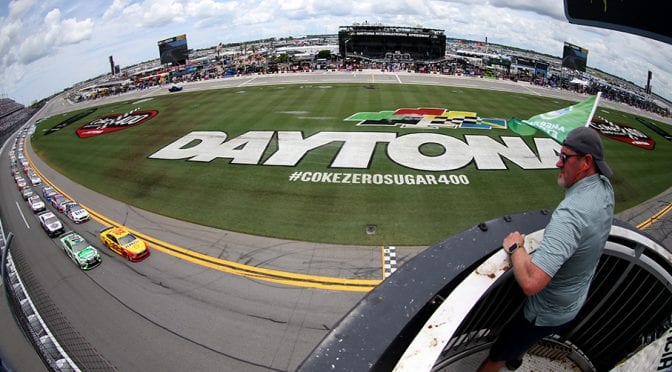
WILHELM: Without question, the most notable change, in my opinion, is Daytona’s second date moving to the final race of the NASCAR Cup Series regular season. The major unknowns a superspeedway race has to offer is the highest spectacle to set the stage for who will make up the 16-driver playoff field.

Every weekend we say anything can, and usually does, happen, but this statement holds a substantial amount of weight for the Coke Zero Sugar 400. Anyone has a chance to win at Daytona. It doesn’t matter if a driver has dominated the season or hasn’t produced the results the team had hoped, he still has a chance to make the postseason.

There’s only one way to eliminate the stress and worry of this race: win in the first 25 races that come before it. But if not, drivers will make any aggressive move possible to make the playoffs on the 2.5-mile high banks. You want edge-of-your-seat, hold-your-breath drama? Well, there we are guaranteed to have it.

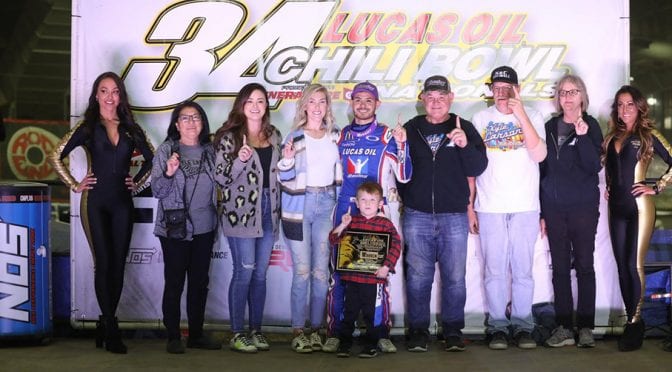
Racing in his own equipment for the first time at the Chili Bowl, NASCAR Cup Series driver Kyle Larson had a perfect night en route to the preliminary A-Feature victory during Tuesday’s Warren CAT Qualifying Night at the Chili Bowl Nationals in Tulsa, Oklahoma.

Larson won the second heat of the night, as well as the second Team Toyota qualifier, setting him up to start second for the 30-lap preliminary main event. It didn’t take Larson long to find the front of the field shortly after the green flag dropped, wheeling the No. 01 midget to earn a spot in Saturday night’s A-Feature finale. Pole sitter Jonathan Beason finished second, also guaranteeing his spot in the big dance.

RELATED: Full results from Day 2

Though not in action for Tuesday’s qualifying, NASCAR Cup Series rookie Christopher Bell still found Victory Lane in the Vacuworx Invitational Race of Champions (VIROC), which essentially serves as an all-star race within the race week. Bell, racing for Tucker-Boat Motorsports for the first time in the Chili Bowl, flexed his muscle by beating Rico Abreu by over four seconds after starting second. Larson also competed in the event, finishing fourth after an eighth-place start.

NASCAR Cup Series driver Alex Bowman also competed in the second qualifying round of the week, racing in his own midget under the Alex Bowman Racing umbrella. Bowman finished fourth in the fifth heat, but only managed an eighth-place finish in the fourth qualifier while fighting a tight setup throughout the night.

Forced to go through the B-Feature to make the A-Feature, Bowman fought from a seventh starting spot to finish second. After starting 19th in the A-Feature, Bowman finish 10th to round out the night, which means he’ll have to resort to Saturday’s last-chance qualifying rounds to qualify for Saturday night’s grand finale.

MORE: Full Chili Bowl roundup

NBC Sports pit reporter Dillon Welch was also in competition, finishing fourth in the final heat of the night. After starting 16th in the A-Feature, Welch made an impressive run to the front, finishing fourth, just short of the top-two transfer spots. Like Bowman, Welch also will have a second opportunity on Saturday to advance.

Next up on track is Wednesday’s Hard Rock Casino Qualifying Night where NASCAR Cup Series driver Ryan Newman, J.J. Yeley and Rico Abreu will be in competition.

Bobby Labonte had a big year in 1995. In just his third full-time NASCAR Cup Series season, he switched from racing for Bill Davis to driving for coach Joe Gibbs.

In Labonte’s first two years, he had a lone top-five finish and only eight top 10s. The 1995 season, however, would prove to be a much different story.

RELATED: Bobby Labonte through the years

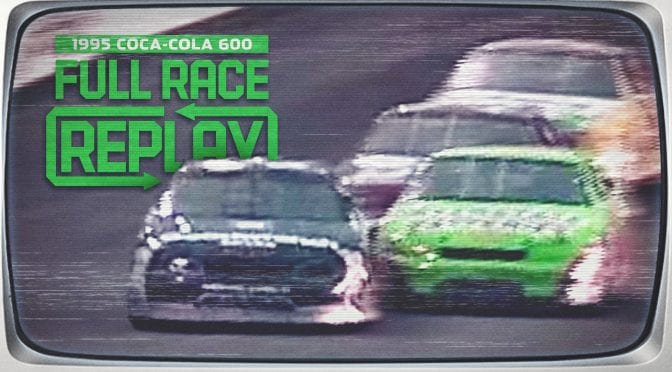
Paired with crew chief Jimmy Makar, Labonte scored three top-five finishes and one pole through the first 10 races of the year. Then, on Week 11, he broke through and scored his first win in the 1995 Coca-Cola 600 at Charlotte Motor Speedway.

The victory didn’t come without a bit of drama when late in the race Labonte made contact with Dale Earnhardt and upset Richard Childress, the owner of the No. 3 car, who commented on the race broadcast, “He had him sideways on the straightaway, then he turned him sideways on the backstretch. I can see a guy rubbin’ you in the corner but hitting you on the straightaway? You know, maybe he can’t see over the steering wheel, I don’t know!”

In the end, Labonte was able to secure the checkered flag, finishing 1-2 with his brother, Terry, in NASCAR’s longest race.

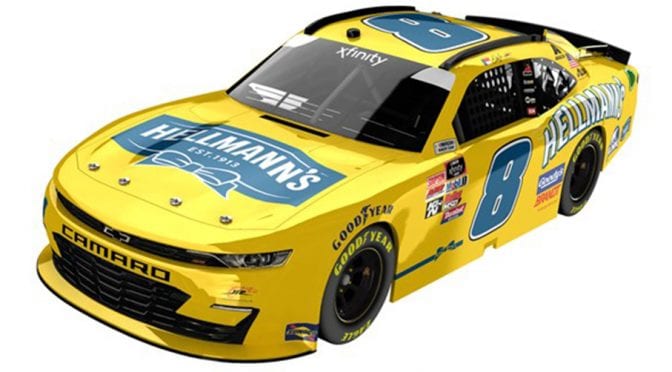
MOORESVILLE, N.C. (Jan. 14, 2020) – Dale Earnhardt Jr. and Hellmann’s have a long history together, one dating back to 2009 and one that will continue in 2020, JR Motorsports confirmed Tuesday. The 15-time NASCAR Most Popular Driver and owner of JRM will add another chapter to the partnership when the 43-year-old star will compete in the NASCAR Xfinity Series race at Homestead-Miami Speedway (March 21) in the No. 8 Hellmann’s Chevrolet.

The confirmation comes as part of an extension between parent company Unilever and JRM that carries the partnership into a 12th season, distinguishing Unilever as JRM’s longest-tenured partner and one of the longest-running active sponsors in the NXS. For 2020, JRM will also carry Unilever sponsorship in five races with its No. 7 team and driver Justin Allgaier.

RELATED: Shop Dale Jr. gear

“In our sport, partnerships are everything,” said Kelley Earnhardt Miller, JRM general manager. “We don’t throw the words ‘cornerstone partner’ around a lot, but when we do, Unilever exemplifies its meaning.”

The history between Unilever and JRM began in 2009, when Earnhardt Jr. raced a Hellmann’s-sponsored Chevrolet in the season-opening event at Daytona International Speedway. Earnhardt Jr. finished seventh that day, but it was the first of more than 110 races in which Unilever’s huge collection of brands would grace the hood and quarterpanels of JRM’s racing cars.

A number of current or former Unilever brands have been aboard a JRM machine since 2009, and three of them—Hellmann’s, Ragu and Dove Men+Care—have gone to Victory Lane with the team. Regan Smith won at Daytona in February 2014 driving a Ragu-backed Camaro, while Kasey Kahne nailed down the sweep at Daytona in July with Hellmann’s and Justin Allgaier claimed a thrilling win at Indianapolis Motor Speedway in 2018. Perhaps the most celebrated Unilever/JRM triumph came in 2016, when Earnhardt Jr. dominated the fall race at Richmond Raceway in a Hellmann’s Camaro.

RELATED: Dale Jr. joins Deegan podcast

That victory truly exemplified the nature of the partnership between JRM, Earnhardt Jr. and Hellmann’s, as it was the well-known “Banana-Mayo Sandwich” race, which leveraged Earnhardt Jr.’s affinity for Hellmann’s and sliced banana on white bread into more than $153,000 for Blessings in a Backpack, a leader in the movement to end childhood hunger by making sure as many at-risk children as possible do not go hungry over the weekends while away from school.

That’s what partnerships, like the one between Unilever and JR Motorsports, have done and will continue to do as the company moves toward its goal of making sustainable living commonplace.