Editor’s Note: This story was originally published on Aug. 12, 2017. In our Driver by Number series, Irvan was named as the driver of the No. 36. 

Ernie Irvan keeps all the trophies from his Monster Energy NASCAR Cup Series career in a display case. He and his family are moving this weekend from Charlotte, North Carolina, to Ocala, Florida, and he recently packed the trophies to prepare for the movers’ arrival.

He won the Daytona 500, the night race at Bristol and both road courses. He won at Talladega, the longest track in the sport, and at Martinsville, the shortest. He won 15 Cup races in all, and as he grabbed each trophy, memories of the circumstances behind each win came back.

“When I was packing them all up, I saw the one at Sears Point. You think of what happened at Sears Point. You see one at Watkins Glen, and think about what happened at Watkins Glen,” Irvan says. “Whenever you’re sitting there, you always reminisce.”

RELATED: Driver by Number — see our selections | Talking about picks for Nos. 31-40

When he picked up the Michigan trophy — his 15th and final win, 20 years ago this summer — the memories were particularly powerful. And not just because it was the last Cup race he ever won, but because of brutal crashes before and after that win and the life-saving maneuvers of a doctor who arrived at his car. Without that doctor and helicopter on site, he says, he would have died at the track and never gotten that final win.

“All the things put together, it was just kind of a miracle,” he says.

THREE WEEKS GONE

The mid-1990s were a brutally difficult time for NASCAR. On April 1, 1993, defending champion Alan Kulwicki died in a plane crash. On July 13, 1993, Davey Allison died in a helicopter crash. In February 1994, Neil Bonnett and Rodney Orr died in separate practices for the Daytona 500.

When Ernie Irvan joined Robert Yates Racing in late 1993 to replace Allison, he had long been considered a fiercely competitive and extremely talented driver. When he won his third race in the Yates car in the 10th race of the 1994 season, he appeared poised to take the next step and win a championship.

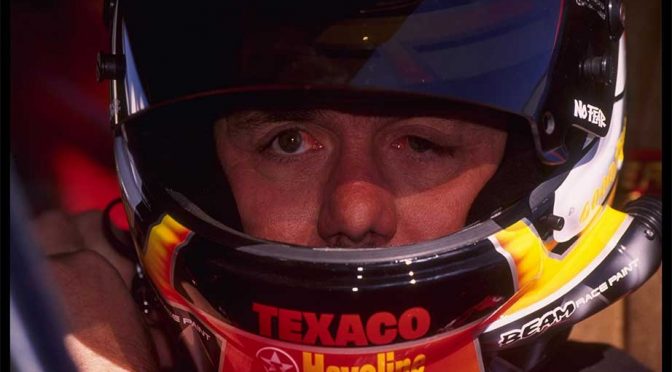
“It was just instant success, instant speed,” says Doug Yates, RYR’s chief engine builder and son of owner Robert Yates. “It was a perfect driver for our No. 28 Texaco Havoline Ford. We couldn’t ask for anybody better to succeed Davey Allison.”

With a new team, Ernie Irvan looked like a title contender in 1994 until his wreck at Michigan. | RacingOne

Through the first 20 races of 1994, Irvan had three wins and 13 top fives. He had been first or second in points every week of the season. It looked like he and Dale Earnhardt would have a season-long battle for the championship. Superstardom awaited.

The Friday of the August Michigan race, Irvan, Doug Yates and their wives played Monopoly in Robert Yates’ motorhome parked inside Michigan International Speedway. Throughout the game, Irvan made side deals. He accumulated first great wealth, then a bunch of hotels. Soon he stacked bills high in front of him and everybody else was out of money. He beat them all.

But he has a confession to make: “I was cheating really bad.”

Doug Yates laughs when he hears this … and confirms the outcome, if not the cheating. But he wouldn’t be surprised. Whatever Irvan did — cards, Monopoly, racing, pickup basketball — he did whatever he had to do to win.

That game of Monopoly is Irvan’s last memory for three weeks.

During practice the next morning, Irvan’s Ford Thunderbird cut a tire and slammed into the wall. He was bleeding badly and says now he would have died right there in the car if Dr. John Maino, who had been stationed nearby, hadn’t arrived so quickly. Irvan was in danger of drowning in his own blood, so Maino performed an emergency tracheotomy inside the car — he cut a slit in Irvan’s throat and inserted a tube to allow him to breathe. Irvan says he would have died without that. He was on a helicopter just 23 minutes later and flown to a hospital in Ann Arbor.

Irvan suffered a traumatic brain injury, skull fracture and chest injuries. Doctors gave him a 10 percent chance to live. “When something serious happens, an eeriness comes over the garage. It becomes very quiet. This was one of those situations,” says Dale Jarrett, who drove for Joe Gibbs Racing at the time. “As we got more information, about just how serious an accident it was, our attention turned to hoping that Ernie was going to be OK. Many of us have been through blown tires, this was one of the severe cases of what can happen.”

‘WASN’T A PRETTY DEAL’

Marc Reno had been friends with Irvan for years. They had raced together and lived next door to each other when they were trying to launch their racing careers. Reno was working at the time for an XFINITY Series team and by coincidence, his hauler had been parked next to Irvan’s in the XFINITY garage that weekend.

After a dispute about tires that weekend at Michigan, Reno’s team opted to leave instead of race. Reno had just gotten home to Florida when he heard about the wreck. He immediately flew back to Michigan. “I was in on a good part of the doctors’ meetings and stuff when they told him he had a 10 or 15 percent chance of living — if he made it 48 hours,” Reno says. “It wasn’t a pretty deal.”

Reno says he flew back and forth to Michigan 10 times to be by Irvan’s side. It was unsettling to see his friend lying in the hospital bed. On one visit, he counted 21 tubes running into Irvan.

George Tiedemann photo

Irvan remembers waking up 20 days after the wreck wondering where he was. The TV was on, and he says he saw someone else — it turned out to be Kenny Wallace — driving his No. 28 car. He couldn’t talk, so he used hand gestures to ask questions. His wife, Kim, explained to him what had happened.

Irvan’s rehab was long and extensive. But he returned to the race car in late 1995, competing in three races for Robert Yates Racing and finishing sixth, 40th and seventh. Jarrett had replaced him; when Irvan came back, RYR expanded to a two-car team.

In 1996, Irvan won at Loudon in his 19th race back and again at Richmond a few months later. “It was just miraculous, really, that he could even be back driving a race car after everything he had been through,” says Jarrett, who won the 1999 championship for RYR and is now a NASCAR analyst on NBC. “He had such a near-death experience, and here he was performing at a high-level once again.”

The wreck left Irvan with lingering vision issues, so he raced with a patch over one eye. “He was as good or better as anybody with one eye,” Doug Yates says. “This guy is the most talented and toughest guy I’ve been around. It was truly amazing.”

‘WILL TO LIVE, COMPETE’

As the 1997 season approached, Larry McReynolds had left as Irvan’s crew chief and RYR was looking for a replacement. Reno went to the Robert Yates Racing office in Charlotte for an interview for the position. When he got back out to his car after the interview, he discovered somebody had broken into it and stolen all of his family’s Christmas presents, which had been in the trunk. But he got the job.

As the season started, the cars Reno built and Irvan drove were fast, but they both say they let a few wins get away. “I remember in 1997 thinking, ‘God, he is fast,’ ” says Kyle Petty, who drove for a team he owned that season and is now a NASCAR analyst on NBC . “He was back as a contender.”

At Michigan for the June race, Irvan and Reno must have had high expectations. Though Irvan had never won there, he had finished in the top five the two previous races. Throughout practice, Reno experimented with the car’s setup. “We started putting bigger rear springs on the car, getting the back of the car up in the air. And it would go faster and faster and faster,” he says. “Every time we would go up 50 pounds, it would just go faster.”

Irvan started 20th on June 15, 1997. He took the lead for the first time on Lap 163 (of 200) and led for 12 laps. He resumed the top spot on Lap 180. He started to cry with 10 laps to go.

“There were some tears shed in the pits as well,” says Doug Yates. “Any time you’re leading the race at the end, your stomach is in knots. The anticipation is building. Take all that and multiply it by 10, 100 or 1,000 because of everything that went on. It was a pretty special moment. It was a great day.”

As he took the white flag, Irvan thought about his wreck from three years before. He looked at the wall that nearly killed him as he zoomed past it. “I’m thinking, ‘Man, I’ve got to get through the corner, because that was the corner I crashed in,’ ” he says. “But everything went smooth.”

After he pulled to a stop in Victory Lane, his wife, Kim, leaned in to kiss him. “The first thing I thought of is, ‘I finally conquered this place. It didn’t get me, I got them,’ ” he says.

He climbed out of the car and was greeted by pit road reporter Mike Joy, then of CBS. Irvan seemed to have his emotions in check — he talked about sponsors and bad luck so far that year and getting a win in Ford Motor Company’s backyard. Joy asked Kim Irvan a question on live TV about the win being big for the family, and she was so speechless by what had just happened that she barely squeaked out an answer.

Joy, who now does play by play for FOX’s NASCAR coverage, compares Irvan’s win to Kevin Harvick’s win for Richard Childress Racing three weeks after Dale Earnhardt died and Jeff Gordon’s win in the first race at the Brickyard and last career win at Martinsville.

“It felt RIGHT,” Joy says via email. “Fitting, redemption, validation, relief, all yes. Historic? Moreso now than then.”

Ernie Irvan had to watch someone else (Kenny Wallace) drive his car for the rest of the 1994 season. | RacingOne

In the years since, Irvan’s win has come to represent what Irvan’s friends love about him — toughness, resilience and speed. “The victory at Michigan in ’97 really just closed a chapter on everything that happened that day in Michigan, all of the hard work and effort and will to live and will to compete again that Ernie had,” Doug Yates says. “That was gratifying for him, of course. But it was also gratifying for my dad and myself and everybody on the team. It gave some closure to that tough day that we had there in 1994. This was really a guy fighting for his life and fighting to do what he loved and validating he was one of the best ever to sit in a NASCAR race car.”

WRECKED, THEN RECOVERY

On Aug. 20, 1999, five years to the day after the wreck that almost killed him, Irvan had another bad wreck at Michigan. “He spun out and hit driver’s side flat against the wall,” Reno says. “His helmet had a dent in it from the roll bar, like an inch and three quarter. It looked like someone took a pipe and hit him with it.”

The impact knocked Irvan unconscious, and he was transported again to a hospital. While his injuries were less dramatic than the first Michigan wreck, they proved to be career ending.

After retiring, Irvan started the Race2Safety Foundation and ran it for a few years to promote head injury awareness. One of the foundation’s major fund-raising events was a track walk at Michigan, at which donors could walk a lap around the track that nearly killed him … then gave him one of the most memorable wins in NASCAR history … then ended his career.

As the Monster Energy NASCAR Cup Series races on Sunday at Michigan, Irvan will move into his new home in Florida. Somewhere deep in his moving truck will be that Michigan trophy. When he takes it out of the box and puts it up in his new trophy room, he will think again of those three incredible days at Michigan — two terrible wrecks sandwiched around an unbelievable win.

The strongest emotion he will feel is gratitude. Long ago, he decided to see his Michigan glass as half full instead of half empty. Yes, he got hurt, badly. But he prefers to be thankful there was a doctor positioned in the turn and thankful the track had a helicopter on standby during practice.

Take either one of those away, and he would have died in the seat of his No. 28 Thunderbird.

“I was very lucky because they had everything they needed to save my life,” he says.
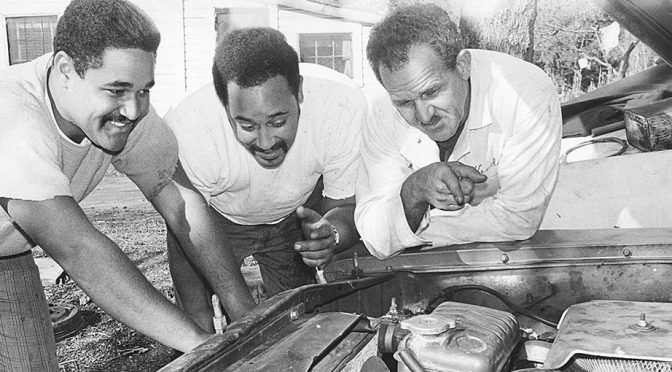
Editor’s Note: This story originally was published on March 26, 2015. Scott was inducted into the NASCAR Hall of Fame in 2015. In our Driver by Number series, Scott was selected as the driver for the No. 34.

SUTHERLIN, Va. — Perhaps he heard about it in the newspaper, buried in the WBTM “Radio Ramblin’s” community notebook on Page 11. The radio station’s call letters stood for “World’s Best Tobacco Market” or “World’s Biggest Textile Mill,” depending on which of the town’s primary industries was closest to your heart.

So it may not have been a big deal for most, sitting below the paper’s fold, after the news about celebrations planned for Dan River Mills’ 75th anniversary, below how many TV sets Vaughan Supply sold the previous week, and underneath flashy ads for cowboy westerns at the Rialto Theatre on Main Street.

RELATED: Driver by Number selections | Scott synonymous with the No. 34

“Danville has a new speedway,” began the three-sentence brief in The Bee on June 8, 1957 — a development that merited mention after well-wishes for recent high school grads and tips for frying bacon in the sweeping, ellipsis-heavy column.

Whether Wendell Scott read about the new facility in broadsheet print or heard about it through the murmurs from the promising racing scene in south central Virginia, no one can say for sure. But the news certainly had Scott’s attention. James Arness might’ve been the star of the shoot-’em-up picture show in town, but Scott was bent on making a name for himself, too.

So on the eve of the first race at the tight dirt track west of town, Wendell Scott — with his sons in tow as his de facto pit crew — pulled off Highway 58, making a slight detour from their route to a Saturday show at nearby South Boston Speedway to survey the new bullring. They looked over the fence to see a snug, quarter-mile layout of rich clay carved into a thicket of Virginia pines and oaks. But Scott saw something else in the new Danville Speedway — a vision of dollar signs at the pay window. 


Danville Speedway today. (Photo by Zack Albert)

“We walked up there and what’d Daddy say?” Wendell Scott Jr. recalled, sharing in re-telling the story with his brother, Franklin. “He said, ‘I’m going to win that damn race tomorrow.’ “

Scott did, backing up his guarantee and adding to the legend that would propel him from regional hotshot to a regular in stock-car racing’s big leagues to an eventual place in the NASCAR Hall of Fame.

“You can keep it or leave it,” Scott Jr. said, showing some reluctance to quote his father’s mild profanity, “but that was how adamant he was. … He won it just like he said it.”

‘WHAT ARE THE ODDS OF THAT?’ 

Knock on the door at the stately brick house on top of the hillside and Raymond Burdette greets you with a firm handshake. From his front porch, you can see rolling blue hills stretching into North Carolina on a clear day. Head around back and there’s a perfect blend of serenity and racing history.

“There’s some good memories down there,” Burdette, a mobile mechanic for Lorillard Tobacco Company, says from his front stoop.

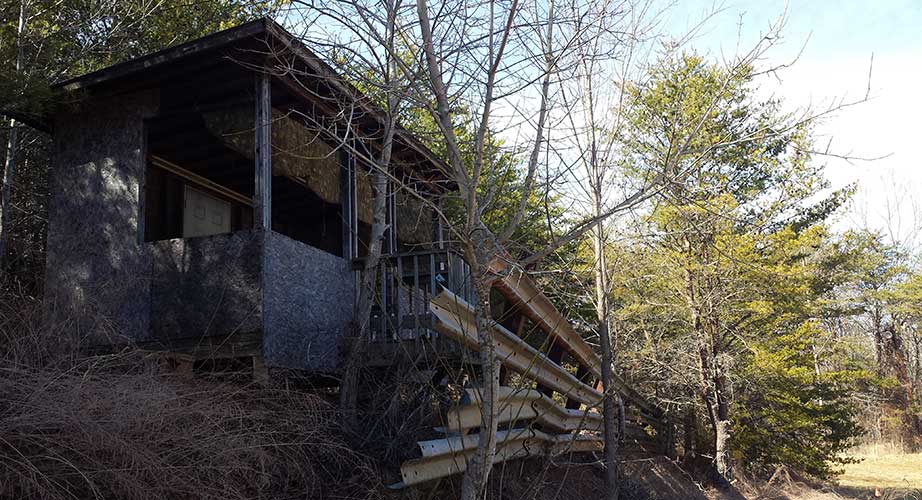
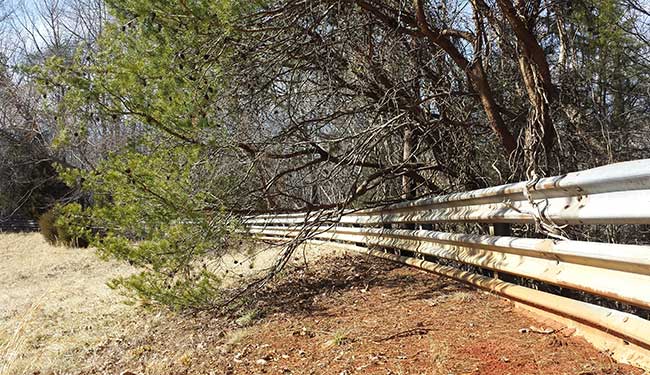
Have a look around? Raymond obliges, leading the way to the farm gate and unhooking the rusty latch to swing the door open. The tire tracks lead down the hill to the jersey barriers that formed the lanes for the pit entrance and exit, just off what used to be Turn 4. Walk through and set foot on the former racing surface and the track opens up, revealing the banked turns still encircling the weed-choked infield, the well-worn metal guardrails ringing the place and the ramshackle flagstand overseeing it all. The small, waferboard building is no longer a home base for race officials, but now serves as a capable deer stand for Burdette during hunting season. The grandstands are long since gone, but the lights that brought night racing to the speedway in the early 1990s still stand sentry over the remnants.

The break in the Turn 4 guardrails isn’t far from where Raymond first set eyes on the track on April 27, 1969. The date, barely three months before the Apollo 11 moon landing, is significant. Though this plot of land has given him a lifetime of warm memories, his first interaction with the speedway was a haunting one, prompting a full-circle story that Burdette opens by saying, “Now what’re the odds of this?”

Danville Speedway today. (Photo by Zack Albert)

That spring Sunday, a 10-year-old Raymond joined his older brother, Benny, and a friend in sneaking through the woods into the back side of the track, which was also called 58 Speedway in its on-again, off-again life span. They paid no admission, but the three youngsters still saw more than they had bargained for. In the fourth lap of the 50-lap feature for sportsman cars, Jack East — a veteran driver from Greensboro, N.C. — rolled over twice after his ’56 Ford lost a tire in the south turn. He was pronounced dead at a local hospital, succumbing to severe head injuries.

“There weren’t any regulations back then. His seatbelt came loose from the floor, his head went out, virtually cut his head off,” Raymond said, noting that it was the track’s only fatality to the best of his memory.

Raymond remembers drivers passing their helmets in the grandstand during the track’s next meet to collect donations for the East family. The speedway ceased operations not long after the accident, laying dormant for more than two decades. That’s where Raymond comes back into the picture to complete the circle.

His family bought the 3.8 acres that included the speedway in 1986. After hearing urgings from race fans and competitors in the community, Raymond brought the track back to life in 1992 — some 23 years after his first and only visit during the track’s first incarnation.

“I end up buying it years later. You tell me what the odds of that are, buddy,” Burdette, now 56, says with a laugh. “But I haven’t ever won the lottery, now.”

A TRAIL BLAZER AND A GENTLEMAN

With his family’s pedigree in the grading and excavation business, it’s only natural that Bert Sellers would have a hand in the speedway’s history. His father and uncle are credited with helping to build the track and were part of the four or five people — depending on whom you ask — among the original ownership group.

Sellers, 59, was a toddler when the track first opened, but he clearly knows the legacy, especially the one that Scott left with it. No matter where his travels have taken him, Scott’s name always seems to come up once his roots as a Danville native begin to show.

“They don’t ask me about the cotton mills, they don’t ask about other people that came from Danville,” Bert says, “it’s ‘do you know Wendell Scott?’ “

For locals, Scott stood out not only as the lone African-American driver in a primarily white sport but for his resilience. While Scott accepted assistance from his fellow competitors in the form of auto parts or advice, he remained largely a self-made man as a car owner, driver and mechanic all in one.

Both Sellers and Burdette recounted the story of Scott’s car rolling onto its roof during a race in the 1950s at the speedway. He crawled out unhurt, then politely asked Sellers’ father, Hubert, if he could adjust the brakes while the car was conveniently upside-down. Scott’s request was no joke. Within moments, he produced an old brake spoon tool needed to adjust the drum brakes, all while the wrecker crew waited to right the car — something Bert called “about the most uncommon thing in the world.”

“But during a race, for a driver to get out and adjust his brakes while his car was upside down, I guess will give some insight into how he operated,” he added. “He did it all himself, and did it at the most opportune times. When the need arose, he took care of it.”

His well-documented fight against the racial prejudices of the South during that time has posthumously shaped Scott as a hard-nosed driver with a fierce streak of independence. The uphill climb against rampant discrimination may have defined Scott’s career, but Sellers said a compassionate demeanor resided under that tough veneer.

In the track’s earliest days, promoters would occasionally hold women-only “powder-puff derbies” in an effort to drum up business. Bert’s mother drove in one of those novelty races, but a crash left her with a cut on her elbow that required stitches at a local hospital. As she recovered at home later that evening, Wendell Scott was among the first well-wishers to knock on the family’s door to check up on her.

“He had a good side to him that doesn’t get written about enough, about how humble he was and what a gentleman he was,” Bert says. “… There’s a lot of things, you hear the humorous side of it, but he had a good side to him and his family stuck behind him. A sign of a good man sometimes is how close his family will stick with him, and his family always stuck mighty close to him. I think that represented his character as much as anything.” 

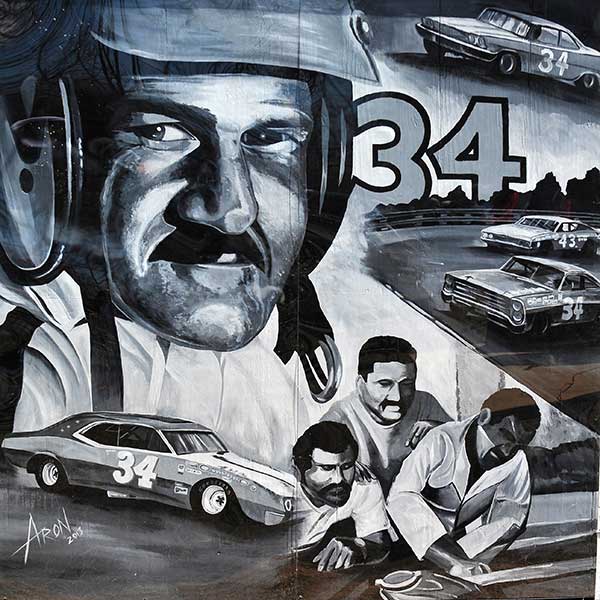
That spirit was a guiding factor in Scott’s 2015 induction into the NASCAR Hall of Fame as a trail blazer, the lone African-American winner in its premier series’ history. The ripple effect of Scott’s long-awaited honor was felt nationally, but the epicenter came in Danville, where historical markers and a panoramic mural commemorate his life and career.


A mural in Danville, Virginia, celebrates Wendell Scott’s racing achievements.


“His character kind of became bigger than life. Everybody felt like he deserved it,” Sellers says. “… The general consensus was with everybody in this area that they were glad to see him go in the Hall of Fame, and the people that knew him knew that he represented our area very well.”

Bert Sellers stayed involved in racing and then some. The bug didn’t skip a generation with his son, Peyton, who won the 2005 national championship in NASCAR Whelen All-American Series competition and locked up his second South Boston Speedway championship last season.

Peyton Sellers still calls Danville home, operating a successful race-car manufacturing business barely five miles away from the ghost track’s footprint. When NASCAR representatives came calling to celebrate the his national title nearly 10 years ago, a highlight of their visit was a lap around Danville Speedway’s dusty remains.

MEMORIES AND KEEPSAKES REMAIN

The rumble of racing engines has been silent at the track for more than 20 years now. Danville Speedway’s comeback lasted just three seasons (1992-94), ending when Raymond grew increasingly nervous about the rising cost of insuring the place.

An out-of-control car lifted and clipped the flagstand one season, a near-disaster that prompted him to double down on guardrails, adding a third and fourth row of retaining fence on the frontstretch. When an errant tire bounded over the first-turn embankment, landed beside a spectator area and eventually came to rest against a Toyota pickup in the parking lot, Raymond knew his days as a race track owner were almost done.

“I was never the same,” Raymond said. “That one wheel could’ve killed two or three people. We ran it one more season, and I’m like, ‘I can’t stand no more of this. We’re going to lose everything we got.’ “

But there’s still a twinge in Burdette’s voice that shows he still has the itch when he stands on the frontstretch, looks off into Turn 1 and talks about the old days running his outlaw track. 

The late-winter afternoon is so peaceful that you have to imagine the sights and sounds of wedge-shaped dirt late models, hustling in a power-slide through the banked corners.

“Them cats was crazy, God knows they were. They were wild,” Raymond says, reinforcing the slogan that souvenir programs touted in its comeback season — If you can’t sling ’em, don’t bring ’em.

The fond memories remain down here, not just for Burdette, but for Sellers, the Scott family and the rest of the Danville community. Raymond clings to the staple-bound program — signed by members of the Scott family — from Oct. 18, 1992, the night of the track’s Wendell Scott tribute race. Bert Sellers still has 8-millimeter color film footage from the track’s first stint that he had converted to VHS tape, but “I guess now that’s obsolete,” he says. “I need to have it put on a disk now.”

Keepsakes remain, but the track sits idle against the advancing march of nature. Erosion has taken its toll on the banking and the mangled guardrails, and trees now sprout from the low-lying land where a small pond once stood, between the third and fourth turns.

“Dirt racing seems to be coming back in this area some,” Bert says with a slight glimmer of hope, “but I think that track’s seen its day now.”

Mother Nature may be winning that race, taking back the man-made playground and making the odds of another comeback that much slimmer. But the reigning champion just off Highway 58 is racing folklore, an enduring legacy behind the latched farm gate that all started with Wendell Scott’s called shot on the eve of opening day in 1957.


Chase Elliott unveiled a new-look patriotic paint scheme on the No. 9 Hendrick Motorsports Chevrolet set to hit the track for the Coke Zero Sugar 400 at Daytona International Speedway on July 6 (7:30 p.m. ET, NBC, MRN, SiriusXM NASCAR Radio).

SHOP: Chase Elliott patriotic gear

The race is the final one of the NASCAR Salutes program, which honors all who have served in the United States armed forces. The program intended to express respect, appreciation and reverence for those who have served the nation in the past and present kicked off with the Coca-Cola 600 on Memorial Day weekend, and concludes the Fourth of July weekend.

9c19 Napa Daytona Patriotic0001 1024x576


Elliott, 23 years old, has one win in the Monster Energy NASCAR Cup Series this year, coming at Talladega Superspeedway.

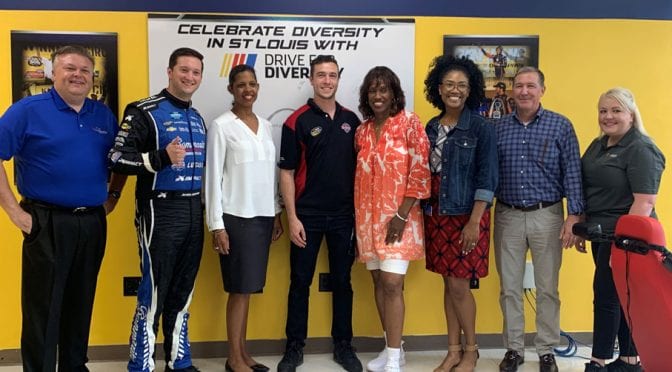
NASCAR and World Wide Technology Raceway at Gateway are partnering with the Jackie Joyner-Kersee Foundation to launch an iRacing league that commenced last week in East St. Louis. The center, located less than four miles from the track, provides after-school, summer and academic programming for youth in underserved communities. NASCAR provided iRacing rigs to the center as well as the required equipment and software for iRacing and NASCAR Heat 3.

iRacing is the leading simracing software. Developed as a centralized racing and competition service, iRacing organizes, hosts and officiates races on virtual tracks all around the world. NASCAR launched eNASCAR in 2018, including three main series’, the eNASCAR PEAK Anifreeze iRacing Series, featuring virtual replicas of Monster Energy NASCAR Cup Series cars, the eNASCAR Ignite Series, the first-ever youth racing competition on iRacing to attract and identify young talent and the eNASCAR Heat Pro League, featuring 14 of the top NASCAR teams battling for supremacy on NASCAR Heat 3, a racing video game developed by Monster Games and published by 704Games.

The efforts of the NASCAR Drive for Diversity program are on full display here at the Jackie Joyner-Kersee Center,” said Curtis Francois, owner and president of World Wide Technology Raceway. “This provides an incredible opportunity for World Wide Technology Raceway to fully engage with our local community and couple the excitement of racing with STEM education. Our intent is to build a STEM development structure for the kids that can be duplicated and used across the country in areas where there are similar opportunities.”

NASCAR Gander Outdoors Truck Series driver Jordan Anderson met with a group of summer camp participants. A NASCAR Gander Outdoors Truck Series truck provided by the track was also on display. Additionally, 250 tickets were provided to the youth, chaperones and families to attend both the ARCA and NASCAR Gander Outdoors Truck Series Race.

Jackie Joyner-Kersee, a highly respected, world-class Olympic athlete in the St. Louis community and beyond, has been personally involved with the partnership and is excited about its expansion.

“Having the partnership with Gateway and NASCAR allows us to expose our kids to different fields,” said Joyner-Kersee. “We talk about STEM and what greater way to have simulators where they can really figure out speed and distance while also having fun. This partnership will allow us to continue to grow what we’re doing in the community.”

The center consists of 150 children ages six to 14 and all have access to the simulators. The iRacing league runs from June to August and is divided into three age groups. The top three in each group will receive a trophy and be recognized at the NASCAR K&N Pro Series East race at World Wide Technology Raceway on August 24.

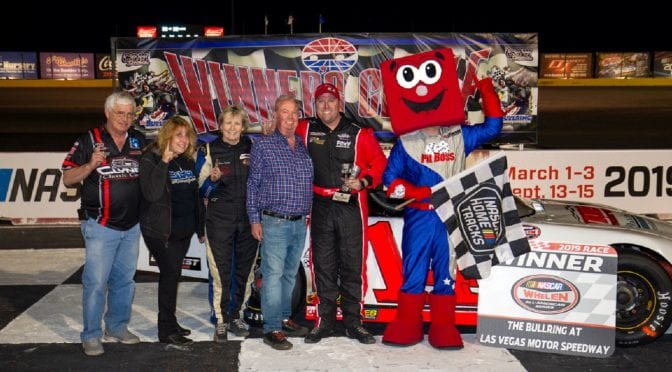
The plan for Chris Clyne at the beginning of the season was to just run the first three super late model races at the Bullring at Las Vegas Motor Speedway.

If he and his team were having fun after those three and leading the points, they’d run the next three. If they were still leading after those, and still having fun, they’d finish the season.

The first three races were definitely fun, as has the rest of the season. Clyne has won seven of eight races this season, and nine of the last 11 at The Bullring , a .375-mile asphalt oval. Clyne currently leads the tracks NASCAR Whelen All-American Series super late model points by 53.

The Bullring at Las Vegas Motor Speedway | Facebook | Twitter

“I haven‘t raced full time in a long, long time,” Clyne said. “We‘ve been having fun and we‘re leading the points so we‘re going to keep going.”

Chris Clyne

With so much going on for Clyne, racing full time has been tough to pull off the last few years. But when he’s not behind the wheel, he’s helping others who are, mentoring two young drivers, coaching, and serving as a crew chief or spotter for other friends.

Clyne also runs a business that restores, buys, and sells antique, classic cars.

He’s also on the board of Speedway Children’s Charities, an organization that puts on eight to 10 events per year, all designed around cars and racing, that raise money for over 50 different children’s charities around Las Vegas.

Clyne is in charge of a car show with the charity, which has sold out the last two years. They also do a PJ 5K, where people run around the speedway in their pajamas, and have a laps for charity event, where Clyne drives the pace car and allows fans to follow him around the track.

“My first one I went two maybe about four or five years ago, they were giving the money out and you see the little kids with cancer and Down syndrome and different illnesses and you see how emotional they get and you see what it means to them,” Clyne said. “Knowing they know that money is going to help them feel better or live a better life, that really fired me up to want to get involved more. It‘s really a special deal and I‘m proud to be a part of that too.”

Even though Clyne’s many activities revolve around cars and racing, this year’s schedule at The Bullring allowed him the chance to focus on his own driving. While he’s never been a driver who’s gone out chasing championships, he and his crew have been having so much fun this year he figured they might as well keep going.

“It wasn‘t that I wanted to get back full time, it was just we were having fun and we kept winning so why not keep going?” he said. “I‘ve always wanted to just be a guy who wanted to just win big races and be the threat and this year we‘ve just been having fun and been wining every weekend we show up.”

LAS VEGAS, NV - MARCH 30: Hometown Heroes Night at The Bullring at Las Vegas Motor Speedway on March 30, 2019 in Las Vegas, NV. (Photo by Jeff Speer/LVMS)

Clyne’s dad, Richie Clyne, founded the Bullring when the younger Clyne was just a kid. Since then, he’s been there every Saturday night. Clyne grew up his dad’s footsteps, getting into the antique car business like his father, and developing a love of short track racing from him too.

Given his history at the track, Clyne said winning a championship there would obviously be special. But a track title is about more than just himself.

“It would mean a lot to all my crew guys,” he said. “Because those guys, they work their 40-hour jobs and they get off and they come here for four or five hours a day. It‘s a team deal. It means just as much to them, if not more to them than it would to me. It‘s just special to everybody. To get to go to Charlotte and be up on the stage and represent Nevada. That would be the ultimate proud deal to get to represent our state.”

Seeing the joy wins bring Clyne’s team and sponsors is another reason they’ve kept going. He’s met so many people in the sport who have helped him since he was a kid himself.

“I‘ve got so many stickers on my car from all my friends helping me. Helping me with parts, and knowledge, and information. It‘s cool,” he said. “Over the years I‘ve made so many friends from racing, if I have any questions on any parts of the car I can call a guy at 10 o‘clock at night and they help me. That‘s another thing that really helps with racing too is having good relationships and friendships.”

The Bullring will race one more time, on Wednesday, July 3, for the “Night of Fire”, featuring the NASCAR Super Late Model Spirit of ’76 feature, Super Stocks, Bombers, 602 Modifieds, USLCI Legends and Bandoleros. The track will then take an extended break to avoid the heat of the summer, and return for two more races in August, one in September, and one in October.

Night of Fire race schedule

With the time off, Clyne said the key for keeping up the points lead the rest of the season is simply being smart.

“Bring the car home in one piece, and pick your battles,” he said. “I tell that to the kids I coach. It‘s more important to bring a car home in fourth than try to crash it for third and then you‘ve got to spend two weeks trying to rebuild it. Just pick your battles. July 3rd, if if think I can win I‘ll take it, but I‘m okay with second too.

“That‘s the biggest thing with racing. The long races, the short traces, you‘ve got to know when to go as hard as you can and when to be smart and take what you‘ve got and bring it home and work on it for the next show.”

No matter what happens the rest of the season, Clyne and his team are all in.

“I’m just a car guy having fun and racing on Saturday nights,” he said. “That‘s my passion. I‘m just really grateful for all the people who help me.

“Short track racing is my love, it‘s my passion. I‘m 37 now so racing is not my number one thing in my life, but I sure do enjoy it.”

SOUTH BOSTON, Va. — There are going to be some heavy hitters rolling into South Boston Speedway this weekend for the track‘s huge mid-season Late Model classic. Familiar names like Morris, Pulliam, Sellers, Peters and McCarty.

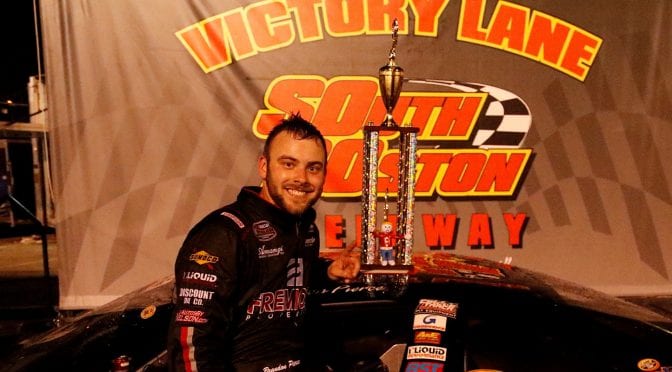
Poised not far behind that group, flying a bit under the radar is Brandon Pierce. While he may not have the stats and championships of Philip Morris, Lee Pulliam, Peyton Sellers, Timothy Peters or Bobby McCarty, Pierce has to be considered a legitimate contender in the Thunder Road Harley-Davidson Presented By Grand Atlantic Ocean Resort NASCAR Whelen Late Model 200.

RELATED: Short Track Summer | VIDEO: My NASCAR, My Excitement

He finished fourth in last year‘s event and was fifth in 2016. He picked up his first South Boston Speedway win last season and his first CARS Tour victory early this season. He is driving a car prepared by Pulliam this year and he says that partnership has accelerated the learning process.

“Everybody knows about all of Lee‘s success overall and especially at South Boston. There is always something you can learn from someone of his caliber,” Pierce said of the four-time NASCAR Whelen All-American Series national champion. “I‘ve asked him so many questions; he has taught me so much, about driving and about the car.”

Although Pierce hasn‘t raced at South Boston this year, he says he‘s learned so much about the .4-mile oval by watching Pulliam‘s performances at the track closely this season.

“I always thought I did pretty good at South Boston,” said Pierce, who ran at the track full time in 2016 and 2017, his first full seasons in Late Model. “But I‘ve learned so much about it this year. I‘ve been with Lee every week he‘s raced there this year, watching his car and his driving style.

“I‘ve taken a lot of notes. I‘m really looking forward to practice on Friday so I can put all of that to use.”

Pierce said he believes there is more buzz than normal about Saturday‘s race among both fans and drivers. There are several reasons, he said. The larger first-place payout, up from $6,500 in 2018 to $10,000 this year, has contributed, he says. So has the fact it is the first race in the Virginia Late Model Triple Crown, the coveted three-race series that includes stops at Langley Speedway and Martinsville Speedway.

“If you win this one, you‘ve definitely accomplished something. If it lives up to its billing, if everyone shows up that I hear is coming, the best of the best are going to be there.”

Pierce has been running the CARS Tour fulltime the past two seasons, but South Boston Speedway remains special to him.

“I definitely have this one circled because South Boston always feels like home to me. I ran there two years full time,” said Pierce, who is sponsored by Thunder Road Harley-Davidson, Grand Atlantic Ocean Resort, Fremont Properties, Discount Oil Company, Bondurant Brothers Distillery, Amanzi Marble & Granite and Mincey‘s Graphics.

“I love the track. I love everybody there. I developed some fan base there and it‘s always good going somewhere you‘ve got experience.”

Pierce and Pulliam have only raced head-to-head once this season. He ran in the top five most of that day with his boss and teammate Corey Heim. It was good, clean, fun racing, Pierce said. But what would happen Saturday night if Pulliam is leading and he is running second on the final lap?

“I‘d definitely give him a shot (in the bumper) and he would be mad if I didn‘t. I‘d give him big enough of a shot to get side-by-side. He‘d be grinning ear-to-ear. I‘d love that opportunity. And he‘d do the same to me.”

Saturday‘s Thunder Road Harley-Davidson Presented By Grand Atlantic Ocean Resort NASCAR Whelen Late Model 200 is going to be a celebration of racing and family fun. There will be racing in four divisions, a huge fan appreciation event on the track prior to the race and a spectacular fireworks display after the final race.

In addition to the 200-lap Late Model race, there will be a 75-lap Limited Sportsman race, a 40-lap Budweiser Pure Stock race and a 20-lap Budweiser Hornets race.

Advance tickets are $15 and may be purchased at the South Boston Speedway office or by calling 877.440.1540, Monday through Friday 9 a.m. to 5 p.m. On race day tickets will be $20 for adults. Children 12-and-under will be admitted free with a paying adult.

The Action Network specializes in providing sports betting insights/analytics and is a content partner with NASCAR. Check out more NASCAR betting analysis here.

Unlike recent weeks in which the Monster Energy NASCAR Cup Series visited unique tracks like Pocono, Michigan and Sonoma, we should have a solid amount of data to help make our Props Challenge selections this weekend.

For the first time since the Coca-Cola 600 in May, the Cup Series heads to a 1.5-mile racetrack for Sunday’s Camping World 400 at Chicagoland Speedway.

To make my NASCAR Props Challenge picks this week, I’ll be leaning heavily on performance from the five previous races run at 1.5-mile tracks (Atlanta, Las Vegas, Texas, Kansas and Charlotte), as well as historical race trends from Chicagoland Speedway.

1. Will a different driver win Stage 1, Stage 2 and the race? Yes or No?

There have been only two Monster Energy Series races at Chicagoland since stage racing was introduced, so there’s not much of a sample of data here to analyze.

As a result, I’m going with my gut and will say that Sunday’s race follows last year’s with different drivers winning Stage 1, Stage 2 and the race.

Pick: Yes


2. O/U 17.5 lead changes?

This average is skewed by 24 lead changes in last year’s Cup Series race at Chicagoland, while the previous three races finished with 12, 17 and 17, respectively.

Pick: Under


3. Will Sunday’s winner start inside the top five?

Over the last 10 Cup races at Chicagoland, the winner has started inside the top five just once — 2017 race winner Martin Truex Jr. started third.

Pick: No


4. O/U 35.5 race points for Kyle Larson?

In last year’s race, six drivers scored at least 36 race points, including Larson who finished with a race-high 52 points.

Download the FREE Action Network app to finish reading this article and get the rest of PJ Walsh’s NASCAR Props Challenge Picks.

Martin Truex Jr.’s Sonoma spectacular win will honorably earn most of the headlines coming out of the weekend’s Monster Energy NASCAR Cup Series’ first road course race of the season.

He joins NASCAR Hall of Famer Jeff Gordon as the only two drivers in Sonoma Raceway history to win back-to-back races. And, equally as important to the 2017 series champion, the victory was No. 4 on the season, tying him with Joe Gibbs Racing teammate Kyle Busch for most in the series.

Busch now trails defending series champion Joey Logano by a single point in the championship standings. And while Truex is ranked fifth in points – 100 behind Logano – he would move to second place if the playoff rankings (based on victories) were reset today.

RELATED: Series standings

But it was another group of competitors in Sunday’s field that find themselves immersed in a race-by-race, high-stakes battle to stay among the NASCAR Playoff Top 16 as the series moves to Chicagoland Speedway for this week’s Camping World 400 (Sunday, June 30 at 3 p.m. ET on NBCSN, MRN and SiriusXM NASCAR Radio).

Hendrick Motorsports’ William Byron, who finished 19th at Sonoma, is currently ranked 14th in the Monster Energy Series driver standings with a 29-point advantage over his Hendrick teammate, 17th-place Jimmie Johnson, who fell just outside the championship cut-off despite a 12th-place run at Sonoma. Chip Ganassi Racing’s Kyle Larson, who finished 10th at Sonoma, moved into 15th in the series driver standings and trails Byron by 11 points.

Roush-Fenway Racing’s Ryan Newman, who finished seventh at Sonoma, moved into the 16th and final playoff transfer position. He has the slimmest-of-slim, 1-point advantage over Johnson, who was 12th at Sonoma. Joe Gibbs Racing driver Erik Jones, who finished eighth on Sunday, is ranked 18th in the series driver standings, only five points behind Newman in the cutoff position with 10 races left to settle the playoff field.

There has been substantial movement between 15th and 18th place in the standings in just the last seven weeks. Newman, Johnson and Jones, for example, have changed points positions six times in the last seven races. Larson has moved four times.

There are 10 races remaining to set the 16-driver NASCAR Playoff field – naturally creating a sort of Playoff “Chase” within the playoff push. And it’s go-time.

RELATED: Monster Energy Series schedule

Byron, the second-year Monster Energy NASCAR Cup Series driver, scored only a pair of top-10 finishes at the 10 tracks ultimately setting this year’s playoff field. He was sixth at Pocono and eighth at Watkins Glen in his maiden Cup season (2018). However, he does have a pair of past NASCAR Xfinity Series and NASCAR Gander Outdoors Truck Series wins at both Daytona and Indianapolis – important venues in this next 10-race group.

Larson has fared very well at the upcoming venues – scoring 20 of his career 48 top-five finishes at one of these next 10 tracks. And he has a career best three wins at Michigan.

Judging by statistics, Newman should feel very optimistic about this stretch of the schedule, too. He certainly was enthused by his work at Sonoma. His seventh-place finish was his best showing since a seventh in 2008 at the famed road course – 11 years ago.

“We had good strategy and good pit stops, good everything,” Newman said. “We just didn’t quite have the speed to be able to get up there and pass those guys that were in front today.”

He’s equally as hopeful about the upcoming summer months – having earned half of his career 18 victory total at tracks in this next 10-race stretch of venues. And the winning has been diverse. He’s won at six of the tracks – three times at New Hampshire, twice at Michigan and once at Daytona, Indianapolis, Chicago and Pocono.

Of course with 83 trophies and seven series championships in his wheelhouse, Johnson cannot be counted out to qualify for the playoffs either. He is hoping to break a two-year-plus winless streak and surely likes his chances. He’s a former multi-time winner at Daytona, New Hampshire, Pocono, Bristol, Darlington and Indianapolis. He has a win at Michigan too. This week’s venue in Chicago, plus Kentucky (July 14) and Watkins Glen, N.Y. (Aug. 4) are the only tracks on the entire schedule where he’s yet to celebrate in winner’s circle.

Jones would be understandably enthusiastic about his summer slate. He scored his first career Cup win last July in the Daytona summer night race. And 11 of his career 18 top-five finishes have come at tracks in the calendar’s next 10-race stretch. He was runner-up at Bristol, Tenn. in the summer of 2017, leading 260 laps and he was runner-up at Indianapolis’s Brickyard 400 just last year. His four top-fives this season is already nearly half his career best season total (nine) set last year.

“It was good,” Jones said following his eighth place effort on Sunday at Sonoma. “We passed a lot of cars. I am just happy we were able to come out of here with a solid day.

“Wish we could have gotten some more stage points, but it was nice to get a good finish.”

And, he added: “We just needed track position. I think we were probably a few spots better than that, but it’s still good. It’s nice to get back on track. Hopefully this is good momentum for next week in Chicago.”

DAYTONA BEACH, Fla. (June 20, 2019) — International Speedway Corporation (“ISC”) announced today its Proud Partner status with the Veteran Tickets Foundation (Vet Tix), an organization providing event tickets through its Tickets for Troops program to all branches of currently serving military and veterans, including immediate family of troops killed in action. ISC’s Proud Partner designation spans across its 12 motorsports entertainment facilities throughout the U.S. that host NASCAR events.

“Patriotism in our sport runs deep and this is just another way that we can thank and honor our military members,” said Frank Kelleher, ISC VP, Sales and Marketing. “NASCAR embraces families and we look forward to helping military and veterans strengthen those family bonds with race experiences.”

ISC’s partnership includes hosting military service members and veterans and providing unique event experiences for them as well as at-track activation beginning with Chicagoland Speedway and its Camping World 400 Monster Energy NASCAR Cup Series race on June 30, and running through the DAYTONA 500 at Daytona International Speedway in February 2020.  Through the agreement, ISC tracks will participate in a social media campaign where fans may nominate a military member to win a race day experience.

“We are very excited for our military and veterans to experience NASCAR racing at ISC’s tracks,” said Mike Focareto, Founder and CEO, Vet Tix. “We have been connected to motorsports for many years and currently enjoy a great relationship with Monster Energy NASCAR Cup Series driver Kurt Busch and his KB100 Ticket Giveaway. This is just another way we can further our mission to help service members and veterans to reduce stress, encourage community building and build life-long memories.”

Vet Tix is a national 501(c) (3) which has provided over six million event tickets to more than one million members. The nonprofit organization spends over 95 percent back on its programs, giving back to those who have given so much. To learn more or to donate, please visit VetTix.org or 1stTix.org.

NASCAR Salutes Refreshed by Coca-Cola, the NASCAR industry’s expression of respect, appreciation and reverence for members of the U.S. Armed Forces past and present, continues with the Monster Energy NASCAR Cup Series’ Camping World 400 at Chicagoland Speedway on Saturday, June 30 at 3 p.m. ET on NBC and the Coke Zero Sugar 400 at Daytona International Speedway on Saturday, July 6 at 7:30 p.m. ET on NBC.

SONOMA, Calif. – Martin Truex Jr. hit Sonoma Raceway’s pit road on Lap 63, handing the lead to teammate Kyle Busch. Truex re-took it when Busch pitted three laps later.

And, thus, the chase was on.

With 22 laps remaining in Sunday’s Toyota/Save Mart 350, Busch’s No. 18 Joe Gibbs Racing Toyota trailed Truex’s No. 19 by 8.3 seconds – seemingly insurmountable without a caution.

And then it was 6.3 (Lap 71).

Then 4.3 (Lap 73) …

… 3.1 (Lap 75)

… 1.9 (Lap 78).

The caution never flew, but Busch got to within 1.5 seconds of Truex with 10 laps remaining and appeared set to run down his equally talented, equally competitive teammate.

But this is Martin Truex Jr. we’re talking about. Late-race mistakes aren’t exactly part of his repertoire.

The No. 18 managed to get within 1.3 seconds of Truex – on the final lap – but was unable to reach his teammate’s bumper to even think about making a move, with the 2017 champ wheeling it flawlessly on the final run of the race to hold off perhaps his best competition going these days. The win was Truex’s fourth of the season and second in a row at the road course.

MORE: Truex holds off Busch for Sonoma win | Full results

“He was beating us pretty good there for a while. I just had to try to manage my car the best I could to not burn the tires off trying to go faster than it wanted to go,” Truex said. “I knew if we could just maintain a decent gap for long enough, we would start to equal out. With 10 to go, we were equaling lap times. From there, all right, you got to run 10 perfect laps and not screw up. Was able to do that fortunately and hang onto it.”

Despite the unsatisfying second-place run, Busch was in an upbeat mood – a quick post-race, self-dousing with a water bottle in the 90-plus-degree temps certainly helped there – joking about his disdain for getting beat by his teammate.

“I hate him,” Busch quipped with a wide, toothy grin on pit road following the race. “I mean, yeah, I guess you could say there’s sibling rivalries, there’s teammate rivalries, whatever you want to call it. Truex and I, we’ve always had a good relationship with one another, ever since the (Xfinity) Series days when we were rookies together … now he’s on my team and I know he’s got the same stuff, so no excuses.

“ … He’s one of the best here. Year in, year out he’s kind of the guy to beat. Last few years he’s been the guy to beat.”

RELATED: All of Truex Jr.’s career wins | All-time road course winners

With fellow “Big 3” member Kevin Harvick still winless as the season reaches its halfway point, the top tier of talent thus far in 2019 firmly lies with the pair of former champions.

At this point, it’s hard to envision both of them not making runs all the way to the Championship 4 at Homestead-Miami Speedway, pushing each other hard as months tick off the calendar. You have to go back to 2016 for the last time both weren’t racing for the title, and 2014 for the last time neither was. They’re even better now.

The friendly rivalry will burn slowly all year before it all gets put on the line.

They’re good with it.

I consider anyone that you have to beat to win races and championships a rivalry. I think it’s a good rivalry,” Truex said. “We’re obviously teammates. … We’ve known each other a long time. We’ve been racing together a long time. We’ve raced each other really hard, but with respect. I think that’s part of what’s made us good teammates is that we have that mutual respect for each other.

“Kyle hates to lose. Everybody knows kind of how he is. For me, to me, he’s just been an amazing teammate. He’s really smart about his race car, gives great information, helps the team make the cars better. We’re all better for it. … We have that mutual respect where we know we’re both fast, we both have great teams, we can push each other to be better. It really elevates the whole company. We race hard as we can possibly race on the race track and respect each other off it. It works out pretty good.”

The pair has now combined to win exactly half – four apiece – of the season’s 16 races thus far, with no signs of slowing. In fact, they might even be getting stronger.

As the arms race between teammates continues as the regular season winds down and playoff season ramps up, it’s evident they’re going to continue to pile up wins.

Only question now – do they keep score?

“I don’t. I don’t know if he does. I do know they told me in Victory Lane we have finished 1‑2 seven times (in our careers). I beat him four out of the seven, so I got the upper hand right now. I had no idea till they told me that.

“No, I don’t keep track of it. I don’t know if he does or not. He might,” Truex joked.

RELATED: Every  1-2 finish from Busch and Truex Jr.

As the series now shifts to next weekend’s Chicagoland Speedway – where Busch and Truex have combined to win the past three races – it’s all knotted up.

Game on.