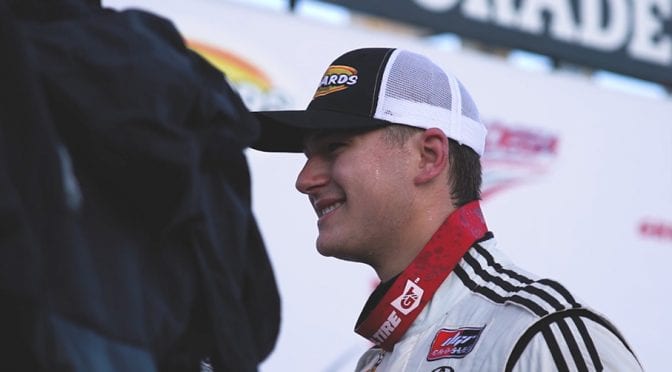
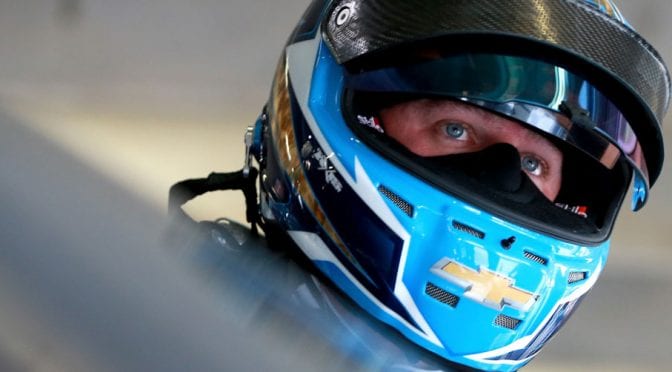
TALLADEGA, Ala. — Friday afternoon’s ARCA Menards Series race provided a boost for Todd Gilliland, who held off fellow NASCAR Next alum Riley Herbst for his first win of 2019. It also added a special father-son moment for the family as David Gilliland had two reasons to beam — one as a proud pop, the other as the winning car owner.
The elder Gilliland cheered from atop the DGR-Crosley No. 4 team pit box at Talladega Superspeedway as his son captured his first ARCA Series win since 2015. The victory pepped up the 18-year-old driver, who has had a slower than desired start to his first full-time NASCAR Gander Outdoors Truck Series campaign.
“This is really big for us,” Todd Gilliland said. “Obviously, my confidence has been down a little bit, but racing with these DGR-Crosley guys is definitely something special. Being able to come to the race track with such confidence in myself and everyone around me is huge. I think as soon as we can get that on the truck side, it’s definitely going to be a lot of wins coming.”
Gilliland made just his second ARCA start of the year at Talladega, following his runner-up effort in the series opener at Daytona International Speedway. It was just his seventh ARCA appearance overall; he prevailed in his debut at Toledo Speedway four years ago, setting a youth mark for the venerable series as a 15-year-old.
His move to Gander Trucks, which included 19 of 23 races last season, has been a steeper learning curve. That’s added pressure, some self-imposed and some from team owner Kyle Busch, who fields his No. 4 Toyota entry in the tailgate tour.
“It’s been a struggle,” says Gilliland, a two-time champ in the NASCAR K&N Pro Series West. “Just, I give 110% every single time I go to the race track. The last year, it’s gotten me in trouble sometimes, and sometimes right when I start to go 98% and race under my truck, I need to go harder. I don’t know. It’s just the balance I need to learn. I come to the ARCA Series or the K&N Series, I have so much confidence that when it comes down to a late-race restart, I can beat them. I don’t know how or what, but I need to be able to take that to the truck and just have confidence in myself.”
Friday’s triumph gave a needed lift, both for father and son.
“After the year he’s had, with all of the ups and downs, it’s great for him to come here and get a win like this,” David Gilliland said. “I had some really good runs here and finished second behind my teammate here one time. But watching this was better. Todd is a fighter. He’s a winner. He never gives up and I think this will be the boost he needs for the rest of the year.”
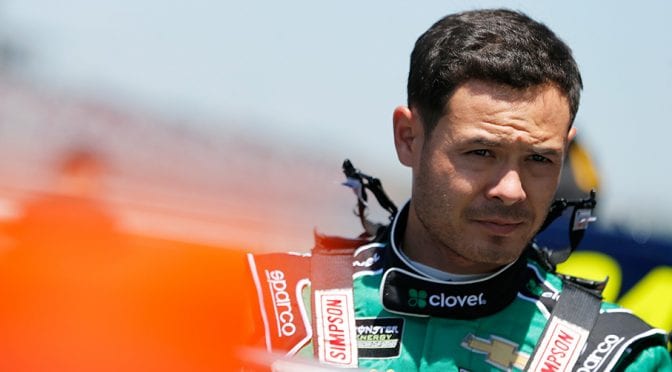
TALLADEGA, Ala. — Kyle Larson’s start to the 2019 season has been “pretty crappy” by his own admission, making that characterization after being the first driver out two weeks ago at Richmond Raceway and limping into the Easter off weekend.
Several factors have contributed to the Chip Ganassi Racing No. 42 team’s sluggish opening act to the Monster Energy NASCAR Cup Series season. One component that’s not a concern in Larson’s view: Crew chief Chad Johnston, who is in his fourth season atop the No. 42 pit box.
Larson offered a vote of confidence for Johnston on Friday afternoon at Talladega Superspeedway, site of Sunday’s GEICO 500 (2 p.m. ET, FOX, MRN, SiriusXM NASCAR Radio). The remarks came in response to comments from fellow competitor Kevin Harvick during his weekly “Happy Hours” program on SiriusXM NASCAR Radio earlier this week.
“I have all the confidence in the world in Chad,” Larson told NASCAR.com. “I think he’s an amazing crew chief. I mean, you can just look at the performance from when he came to our team and we were way better than we were the first couple years. As of late, I think people forget, they just look at the results and don’t look at what’s happened to us in the races to put us back where we were. Texas, I felt like we had a really fast car and we blew a right-front. Bristol, we had a loose wheel and then a pit-road penalty during that and we went three laps down and fought back to get to the lead lap, then had another flat tire. Richmond, me and the 8 car got together and we had a flat.
“So I don’t think our string of bad finishes have anything to do with our team other than just bad luck. Chad builds great cars and calls great races, so I’ve never had any doubt in him. It’s just been a bad month and a half or whatever it’s been now, so hopefully we can turn our luck around. That break came at a good time, so excited to get back going.”
Larson sits 19th in the Monster Energy Series standings, with just two top-10 finishes in nine races thus far. He headed into the off weekend with two last-place results in the previous three races.
Harvick, on his show, reiterated his praise for Larson’s talent, but said that he needed proper guidance to pull out of the team’s current tailspin. Harvick added that he wasn’t sure if that would come from Johnston, who has called the shots for all five of Larson’s premier-series wins.
“I think when you look at his environment, I look at his crew chief,” Harvick said. “I don’t think he’s the most positive guy in the world. When you have a driver that is in a slump, I don’t think it’s going to come from his crew chief. I think Chad is a pretty low-key guy that kind of complains a fair amount. I think as you look at that, I don’t know if it’s going to come from his crew chief.”
Johnston spent two seasons (2014-15) at Stewart-Haas Racing as Tony Stewart’s crew chief before joining the Ganassi organization to work with Larson. His tenure there overlapped with Harvick’s first two seasons at SHR.
“Kevin’s gotten to work around him, so I’m sure he formed some sort of opinion on him then,” Larson said, “but I don’t think he can really know what goes on between our team or the 1 team.
“You can make judgments. I mean, I can make judgments on other teams as well and be totally wrong. I think I’ve proven that in the past.” Larson added with a chuckle as his eyes panned the Talladega garage. “It’s just, everybody’s got opinions.”
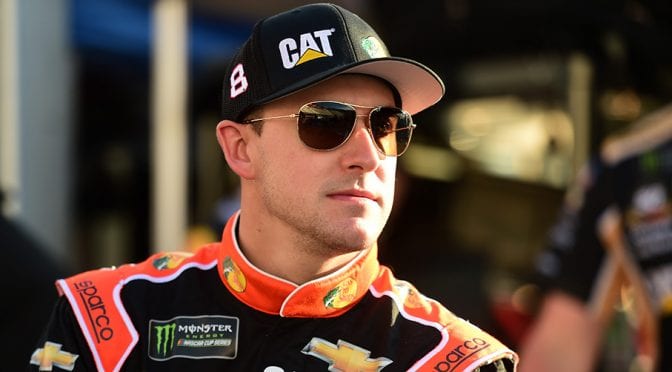
TALLADEGA, Ala. – The No. 8 holds a special distinction at Talladega Superspeedway thanks to Dale Earnhardt Jr.
That car number has six wins at the Alabama track — with Junior providing five of the triumphs, including four straight from 2001 to 2003. The car number’s only other win came from Bobby Hillin Jr in 1986.
Earnhardt’s success is not lost on Richard Childress Racing’s Daniel Hemric, the current driver of the car bearing that number. The 28-year-old Kannapolis, North Carolina, native knows firsthand how big Earnhardt leading and winning at Talladega was. The No. 8 made its return to full-time Monster Energy NASCAR Cup Series racing this season after an 11-year absence from the top series’ field; Aric Almirola last drove the number in Talladega in 2008.
“Throughout the last couple weeks, a lot of the hype of the 8 being back again and all that kind of dwindled out and personally it felt like we were just going to the race track to race the car with that number,” Hemric said. “When you come into this place, I remember as a kid watching Junior take the lead here and the place go crazy.
“I felt a certain pride when I pulled through the tunnel (Friday) morning at Talladega because of that. I know there’s a lot of fans that want to see the number back in Victory Lane and that’s why we come here to try and give ourselves a shot and our fans a shot to get in Victory Lane.”
Sunday’s GEICO 500 (2 p.m. ET on FOX, MRN, SiriusXM NASCAR Radio) will mark Hemric’s first Cup race at the 2.66-mile superspeedway. The Sunoco Rookie of the Year contender has had some rookie bumps in his maiden run at thetop level with with a best finish of 18th (at Phoenix) while he is 28th in the standings.
A promising run was foiled by a flat tire at Atlanta, where he was running in the top five late in the final stage. A good qualifying effort at Texas (seventh) went by the wayside after contact with the wall.
“I haven’t put a full race together I don’t feel like, from a mistake-free standpoint — pit road, whether it’s on the race track, whether it’s bad timing pulling out of line to make a move. On that side of it, I just haven’t fully done my job.”
All that adds up to Hemric assessing the first-quarter of his rookie year with brutal honesty.
“I’d give myself about a D,” Hemric said of his first nine races in 2019. “I’ve made more mistakes here in the past five to six weeks than in all of my personal career. I feel like our race cars have been 10 to 15 spots better averaging finishing quality than where I’ve finished with them and that’s the opposite of what I’ve tried to pride myself off of.
“It’s all about putting one foot back in front of the other and that’s what we’ve been doing through Richmond and hopefully we can do the same thing this weekend.”
It was the last question reporters asked Martin Truex Jr. on Friday before opening practice at Talladega Superspeedway and it was the biggest smile they received.
How important was it for the 2017 Monster Energy NASCAR Cup champion to score his first win of the season – and first since joining Joe Gibbs Racing team – two weeks ago at Richmond Raceway?
“It definitely felt good’’ Truex said, adding a grin. “It was nice to go into an off-weekend with a win under your belt and be a winner for two weeks instead of one.
“But, you know, I think just getting that first one of the season out of the way, it always seems to be the toughest one and especially this year being on the new team and all that comes with it. It was definitely a big boost for our team and for all of us. So good confidence builder and definitely a good time to win and hopeful that we can continue to put ourselves in position.’’
Richmond also marked Truex’s first career short-track win – a milestone he’d like to complement with his first superspeedway victory in Sunday’s GEICO 500 (2 p.m. ET, FOX, MRN, SiriusXM NASCAR Radio).
He currently sits sixth in the championship standings with six top-10 and three top-five finishes through the opening nine races. He’s led 200 laps across three races – but 186 came in his convincing showing at Richmond.
As with several of his fellow drivers, Truex insisted he arrived at Talladega without specific expectations. That is a common approach for drivers because of the nature of pack racing, but it is especially true as the series debuts a new technical package this weekend on the wide, high banks.
Ford drivers have won the past seven consecutive races at Talladega. And Truex acknowledged the style of racing at the big tracks is often dictated by drafting partners. This weekend may not be much different.
Or it may be very different. That’s the nature of this track.
“It definitely could change this weekend,’’ Truex said. “You know, I think there’s already a lot of talk about tandem possibly being able to happen and if it does and it fits the way to go, then you know, teamwork for certain kind of goes through a whole other level where you have to kind of commit to just one guy.
“As far as Toyota kind of starting the teamwork deal back at Daytona a couple of years ago, I think how it’s changed is that everybody’s caught on to it manufacturer-wise. And for us at Toyota, there’s a lot less Toyotas than anything else. So its changes a lot for us. I would say more than anyone.
“Strength in numbers I think has been, you know, kind of against us. But in general, the manufacturer really worked hard at getting their teams all together and try and do the best job they can and get their manufacturer to Victory Lane.’’
This year’s Daytona 500 winner Denny Hamlin was the last Toyota driver to celebrate in Talladega Victory Lane – hoisting the 2014 trophy. Counting retired Chevy driver Dale Earnhardt Jr.’s win in 2015 – Fords have won eight of the past nine races.
Talladega has been a rare thorn in Truex’s side, specifically. In 28 career Cup races at the big track, Truex has 13 DNFs (Did Not Finish) – the most among the current top-ranked 16 drivers. For perspective, Kyle Busch has 27 starts and only six DNFs.
Truex spoke with the media only minutes before jumping in his No. 19 JGR Toyota Camry for opening practice – something he believes will set the tone for the weekend and the race specifically.
“I think we’ll get a good idea, but race conditions are always different,’’ Truex said. “The race, the win is on the line – a lot of changes, you know the energy gets going and the guys are willing to take a lot more risk. I think you’ll get a good idea of it today (in two practice sessions). But you know Sunday has opportunities to be a little bit different.’’
Following a consultation with teams after opening practice at Talladega Superspeedway, NASCAR officials tweaked the rules package for the 2.66-mile track, adding a 1-inch wicker to the cars’ spoiler in an effort to quell concerns with engine rev and closing speeds.
With the addition of the wicker — an angled metal strip attached to the top end of the spoiler to increase drag — teams also have the options of changing gears without being penalized, provided that change occurs before qualifying.
Kurt Busch led opening practice Friday, putting his No. 1 Chevrolet to the top of the board at 202.654 mph. All told, 21 drivers recorded laps of 200 mph or faster in that session, and eight topped the 202 mph mark.
Friday’s session was the first at a superspeedway under the 2019 rules package, which uses 0.922-inch tapered spacers instead of restrictor plates, a 9-inch rear spoiler and a 1-inch bolt-on track bar mount, which raises the rear of the car by an inch.
NASCAR Senior Vice President of Competition Scott Miller and Jay Fabian, managing director of the Monster Energy Series, made rounds in the garage during opening practice to check in with teams and to seek feedback on the speeds and cars.
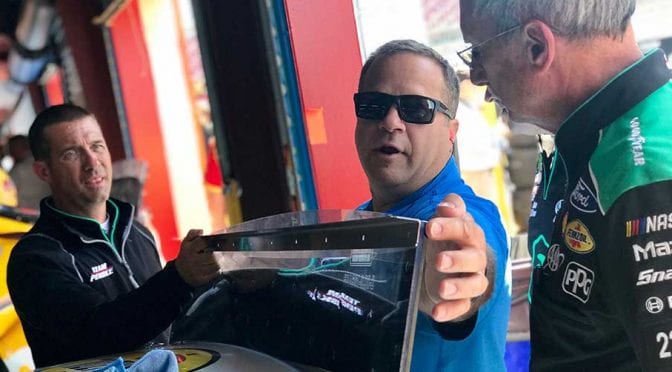
Fabian was in the garage prior to final practice Friday afternoon showing teams how to install the wicker.
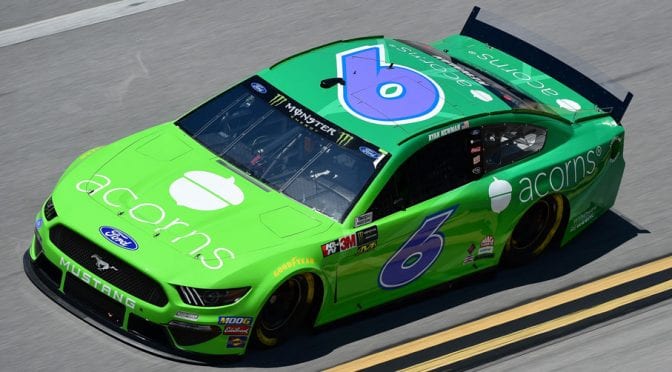
Roush Fenway Racing led the way in a speedy final practice Friday at Talladega Superspeedway as Ryan Newman topped the charts with a lap of 204.157 mph in his No. 6 Ford. Teammate Ricky Stenhouse Jr. was right behind him in his No. 17 Ford at 204.127 mph.
The two Fords were among six cars to log a lap of 204 mph or faster in a session that also included 24 drivers, in all, that circled the track at 200 mph or faster.
Those fast laps came even after the final practice included tweaks to the superspeedway rules package — namely, adding a 1-inch wicker to the cars’ spoilers in an effort to quell concerns with engine rev and speeds. The change was made after NASCAR officials consulted with teams following the opening practice at Talladega.
Martin Truex Jr. in the No. 19 Joe Gibbs Racing Toyota (204.114 mph) , Matt Tifft in the No. 36 Front Row Motorsports Ford (204.092 mph) and Kyle Busch in the No. 18 Joe Gibbs Racing Toyota (204.079 mph) rounded out the top five in the 50-minute practice session.
The Monster Energy Series returns to the track Saturday at approximately 4:40 p.m. ET for Busch Pole Qualifying (FOX, MRN, SiriusXM NASCAR Radio).
FIRST PRACTICE
Kurt Busch led five Chevrolets in the top 10 when he paced the leaderboard in the Monster Energy NASCAR Cup Series’ first look at Talladega Superspeedway with the 2019 rules package in Friday afternoon’s first practice.
Busch wheeled his No. 1 Chip Ganassi Racing Chevrolet around the 2.66-mile track at 202.671 mph in the first practice in preparation for Sunday’s GEICO 500 (2 p.m. ET, FOX, MRN, SiriusXM NASCAR Radio).
David Ragan in the No. 38 Front Row Motorsports Ford and Erik Jones in the No. 20 Joe Gibbs Racing Toyota were both just behind, logging equal laps of 202.654 mph.
Michael McDowell in the No. 34 Front Row Motorsports Ford (202.641 mph) and Chase Elliott in the No. 9 Hendrick Motorsports Chevrolet (202.624 mph) rounded out the top five.
In all, 21 drivers recorded laps of 200 mph or better in the practice session.
This practice was the first look at the 2019 rules package for superspeedway racing at Talladega. The package includes a 0.922-inch tapered spacer (replacing the restrictor plate), 9-inch rear spoiler, 1-inch bolt-on track bar mount (raising the rear of the car by an inch), a tapered radiator pan, 2-inch splitter overhang and aero ducts.
The spoiler and rear-end aerodynamic guidelines were altered after a two-day, three-car test session at Daytona International Speedway following this year’s Daytona 500. Findings from that three-car session prompted NASCAR officials to increase the height of the rear spoiler from 8 to 9 inches, along with the track-bar mount addition to create more drag in an effort to slow the cars down.
The NASCAR Xfinity Series next stop on the schedule is at Talladega Superspeedway for the MoneyLion 300 (Saturday, April 27 at 1 p.m. ET on FS1, MRN, SiriusXM NASCAR Radio) which presents a new chapter for all the championship contenders. For the first time this season there are no former Talladega winners or pole-winners entered in the race.
Add to that the Dash 4 Cash $100,000 bonus is up for grabs between four of the series hottest drivers – Cole Custer, Austin Cindric, Justin Allgaier and reigning series champ Tyler Reddick – and this weekend’s 300-miler on the series’ fastest track couldn’t be more wide open. The highest finisher among those drivers earns the $100,000 check from Xfinity and qualifies for next week’s Dash 4 Cash. In addition, the highest top-three championship contending Xfinity finishers this week at Talladega will also qualify to compete for the big check next week at Dover International Speedway.
Among those talented drivers, Allgaier, in particular, is eyeing this race to get back in Victory Lane. The veteran is on a remarkable run of six consecutive top-eight finishes at Talladega – including a runner-up showing in 2016 and a third-place finish last year. His average finish (10.0) is tops among those with more than one start Talladega and the worst he’s finished since 2011 is eighth (twice). He’s currently fifth in the driver standings – 87 points behind leader Reddick. Only two-time race winners Cole Custer (227 laps) and Christopher Bell (438 laps) have led more than Allgaier’s 224 laps this season.
Not only will the JR Motorsports driver Allgaier be a car to watch, but so will Jeffrey Earnhardt, who will be back behind the wheel of the Joe Gibbs Racing No. 18 Toyota this week. Earnhardt, the grandson of the late 10-time Talladega Monster Energy NASCAR Cup Series winner Dale Earnhardt, was a major storyline in the series’ first superspeedway race in Daytona Beach in February. He started on the outside pole at Daytona and led a career-best 29 laps in the perennial contending JGR No. 18. This will be Earnhardt’s first start for JGR since Texas last month and first Xfinity Series Talladega start since a career best 12th-place finish there running a part-time schedule for a different team in 2015.
Championship leader Reddick is still looking for his first victory this season and Talladega has traditionally been a positive place for him. He finished eighth last year in the Xfinity race and has two top-five finishes in three starts in the NASCAR Gander Outdoor Truck Series, winning the pole position in his first race (2014) at the superspeedway.
CHARLOTTE, N.C. — Before Kyle Busch takes on the high banks of Talladega Superspeedway this weekend, he and wife Samantha have been busy helping others and spreading the word about something all-too-personal for them: National Infertility Awareness Week.
From New York City to Charlotte, North Carolina, Kyle and Samantha are giving back this week in a number of ways through their Bundle of Joy Fund, which provides grants and other support to cover the costs of various treatments necessary to couples facing fertility challenges.
Kicking off the week with the TODAY Show on Tuesday morning, Kyle and Samantha shared their own journey with infertility, and with the help of Progyny, a company that specializes in fertility solutions and benefits to large corporations, they also surprised a couple with a $20,000 grant for fertility treatments.
The surprise also came full circle when Kyle and Samantha discovered that the wife of the couple they selected to receive the grant works at the NASCAR Hall of Fame.
Chase Wilhelm | NASCAR Digital Media
“Through (Progyny), we formed a lot of partnerships,” Samantha told NASCAR.com. “With National Infertility Awareness Week coming about, they said we want to explain to people what we do with our patient care, with our benefits. They said we love your Bundle of Joy Fund and we would like to grant money to it and surprise a couple.”
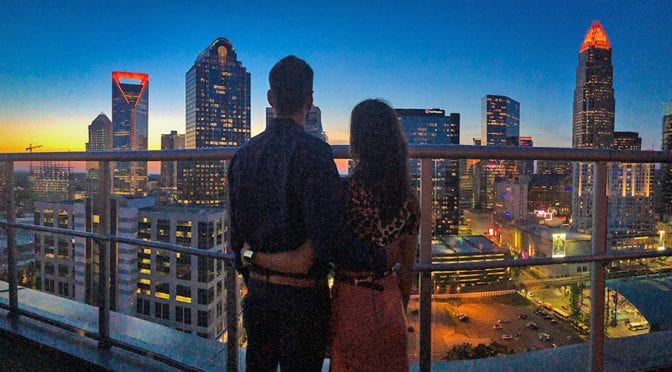
Kyle and Samantha also held a “Let’s Get #IVFINGReal about Infertility and IVF” panel discussion in Uptown Charlotte on Wednesday night through the Bundle of Joy Fund and REACH Clinic of Charlotte. The panelists included Samantha, former Mrs. North Carolina Nichelle Sublett, Bundle of Joy recipient Nena Glass, REACH infertility specialist Dr. Seth Katz and REACH IVF lab director Tyl Taylor. The event allowed couples the opportunity to ask a wide range of questions about the process and costs of fertility treatments and experiences.
The night concluded with various buildings in Uptown Charlotte lighting up in orange, the official color of National Infertility Awareness Week. Participants included the Bank of America Tower headquarters and Wells Fargo’s Duke Energy Center. A specialty orange cocktail, created by Samantha, was also provided with the part of the proceeds going toward the Bundle of Joy Fund.
“It’s nice to be able to see a community that supports you so much, even though we’re all kind of strangers,” Samantha said. “But then we get to come together. … It’s been an overwhelming response just with people sharing their stories and putting it all out there.”
Kyle and Samantha have other ways of support on tap beyond the awareness week. In collaboration with Omaze, an online fundraising company, the couple is giving a fan a chance to enter to win a Toyota Camry Rowdy Edition II car and a VIP experience during this year’s Coca-Cola 600 weekend at Charlotte Motor Speedway, with proceeds supporting the Bundle of Joy Fund.
The Busch family even made waves on social media with a used car salesman ad to promote the Omaze campaign. A testament to the loyalty of the NASCAR fan base, the campaign has exceeded fundraising expectations, as fans across the country are entering for their chance to win and supporting this amazing cause.
Kyle and I have teamed up with @omaze to give a lucky fan the chance to win a Toyota Camry Rowdy Edition ll and a VIP race weekend with our family. 🏁 Hit the gas and enter: https://t.co/j59wYMK83g
“The NASCAR community are the best fans in the world,” Samantha said. “I think that’s been a big reason why we’ve been able to do better than a lot of other people. At the end of the day, too, Kyle, as great as his driving skills are, he has some really good acting skills. And then throw in Brexton’s little cameo, I think people just love to see a different side of him.
“Obviously on the race track, he’s the best, aggressive and always focused, but then to see him fun and silly and see, I think, his authentic used car salesman side helps out the video.”
Aside from the assistance and awareness Kyle and Samantha have been able to provide away from the race track, there are also people within the industry that have benefited from the Bundle of Joy Fund, including employees at Joe Gibbs Racing and Hendrick Motorsports. They have even received a high amount of outreach from fans at the track.
“People have always just stopped and said we’re getting ready for our journey, we’ve read your blogs and had questions during their journey,” Samantha said. “It’s really great to hear people say thank you, thank you for telling your story and helping me feel less alone, or understanding what’s about to happen. We’re very happy we’re able to share it so openly because we’ve seen a very positive response from people.”
“I’ve had fans and team members come up to me as well and say, ‘oh, my sister, or my uncle, or my cousin is an IVF baby,'” Kyle added. “There’s a lot of people that know, but it’s not very well talked about. It’s very cool that people are speaking up and saying I’m an IVF baby, or whatever that might be.”
Between the initial struggle to get pregnant, Samantha’s diagnosis with Polycystic Ovarian Syndrome (PCOS), the birth of son Brexton and an unsuccessful second In Vitro Fertilization (IVF) attempt last year, the couple has been through it all. But being able to share their difficult experiences to help thousands of other couples who face the same challenges has given Samantha the strength to push forward, despite the intense physical and psychological pain of a recent miscarriage.
“This is what keeps me going,” Samantha said. “We are a community and it is support and for as much as I’m able to have these panel discussions and reach out to women on social media, I’ve gotten just as much back from them to help me kind of cope through this time along with family and friends.”
Chase Wilhelm | NASCAR Digital Media
For Kyle, the balance between the responsibilities that come with being a NASCAR superstar and offering support for Samantha has undoubtedly been a challenge, including his own battle with infertility. But together, the family is able to thrive and use their massive platform to help others in need.
“I think the biggest thing is trying to be there for her and trying to be her support system through all of it,” Kyle said. “It’s obviously very tough on the woman’s side because of their mental thoughts and processes about not being a true woman and being able to get pregnant on our own. But then come to the male side and figure out there’s male factors as well, which I have, that we were just never meant to have a kid together naturally.
“I keep Samantha and Brexton going with me on the road every single weekend, traveling with me and going to all these places just to keep that unit together and keep that family aspect going in order to have that support system going for her, her for me and both of us for Brexton.”
To date, the Bundle of Joy Fund has given away 37 grants total up to nearly $500,000, assisting in the birth of 19 babies with three more on the way in thanks to those grants awarded.
But for the couple, this is just the beginning. Among other issues they would like to tackle include insurance coverage and the astronomically high cost of fertility drugs. Kyle recently made a trip to Washington D.C. with NASCAR to meet about the issue, while Samantha will be traveling with RESOLVE (National Infertility Association) in May to find out more information about what needs to happen to get the costs down.
“It’s a spider web,” Kyle said. “We’re in the middle of it and it can go any different way. I think you have to look at insurance coverages, that’s where we’re trying to go. … We’d like to get to the federal level and make laws about some of this stuff.”
“We’re starting the very basic level of groundwork right now for what’s out there, but I do feel like having panels like this and this community and this voice, that if their are bills or if we help create one, then we’ll have a big support behind it,” added Samantha. “… As we grow as a community and we grow as one united voice, I think that’s how we’re going to see change.”