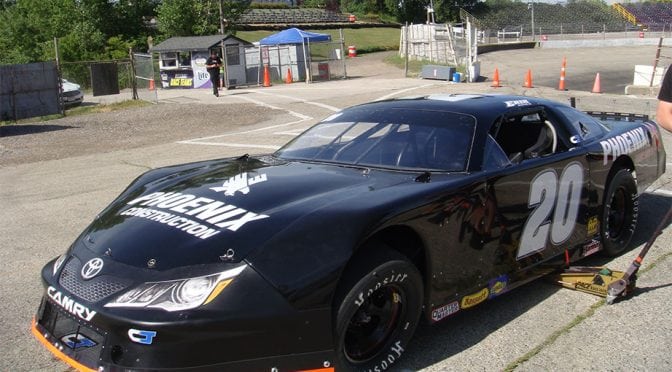
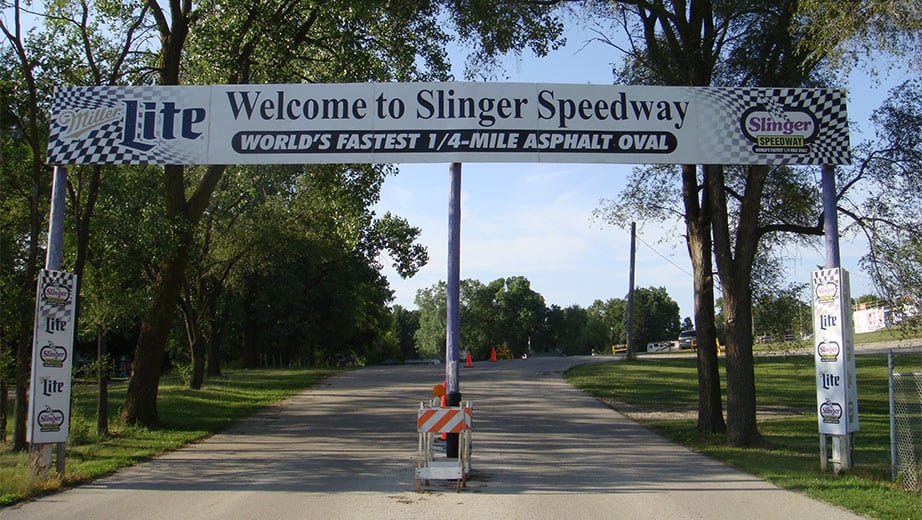
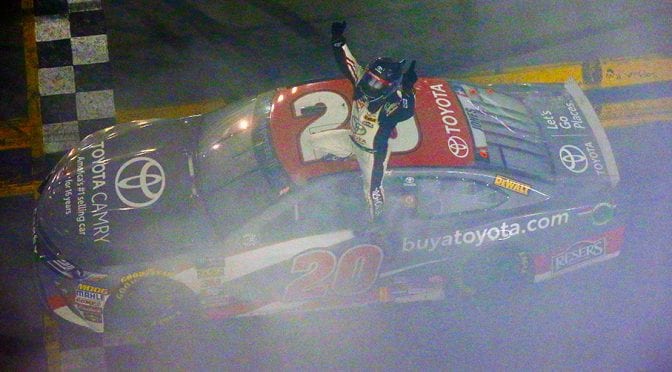
SLINGER, Wisc. — The car is a No. 20 Toyota, though this is not Daytona International Speedway, where Erik Jones drove that same manufacturer-number combo to victory in the Coke Zero Sugar 400 on Saturday. This is actually the Wisconsin heartland, at Slinger Speedway, where Jones will be driving a No. 20 Toyota super late model in the Slinger Nationals Tuesday night.
Twelve hours after edging Martin Truex Jr. to win his first career Monster Energy NASCAR Cup Series win, Jones was on a plane Sunday morning flying to Wisconsin. Going right from NASCAR’s signature speedway to a quarter-mile oval for a $10,000-to-win race may seem like an unusual way to celebrate one’s first win at NASCAR’s top level.
Photo credit | Jordan Bianchi
Yet, Jones wouldn’t have it any other way.
“It is funny how it worked out,” Jones told NASCAR.com. “Getting my first win at Daytona then coming up here I thought was kinda neat to go right back to racing and do something special.
“Honestly, it’s pretty cool that I have a shot to win a couple of different races within a few days. It gives me a chance to get back to my roots; this was what I grew up doing.”
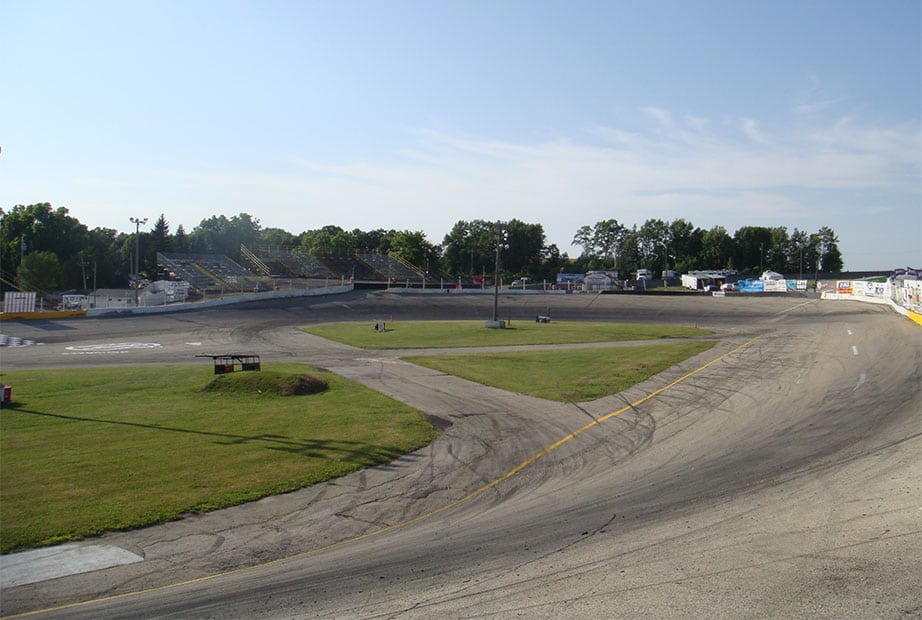
This passion is why Jones is at Slinger, a quintessential bullring where lap times are so quick the track’s slogan “The world’s fastest quarter-mile” is more than just a catchy marketing phrase. The Nationals also happen to be one of the more prestigious super late model races in the country, featuring a list of previous winners that includes Matt Kenseth, Kyle Busch, Alan Kulwicki and Mark Martin.
Photo credit | Jordan Bianchi
Jones, however, has not visited Slinger’s Victory Lane, making it is one of the few prominent short-track races he hasn’t won. His robust short-track résumé includes three wins in the Winchester (Ind.) 400 and two in the Snowball Derby held in Pensacola, Fla. And he nearly added a Slinger Nationals trophy to his collection in 2016, but a spirited battle with then-Joe Gibbs Racing teammate Matt Kenseth did not go in Jones’ favor.
After several laps that featured multiple instances of contact between them as they raced for the lead, Kenseth got the better when he nudged Jones out of the groove in Turn 2 on the final lap. Jones saved his car, though he couldn’t rally to catch Kenseth, who won for a seventh time.
How the race ended created some tension between Jones and Kenseth, and even though they were JGR teammates it would be a few months before the two spoke — “about anything,” Jones said. Eventually the ice was broken and any hard feelings subsided.
“We just both disagreed with each other,” Jones said. “I disagreed with what happened, he disagreed with how I had raced him before that. But once we talked about it, we were fine. We started laughing about it.”
Jones didn’t contest last year’s edition, but returns Tuesday seeking the win that slipped away two years ago. Among those he’ll be competing against are defending champion and current Camping World Truck Series points leader Johnny Sauter, and Roush Fenway Racing Xfinity Series driver Ty Majeski.
“I thought we had a really good car in 2016, and Matt had a really good car as well,” Jones said. “I wouldn’t say redemption is the right word, but I feel like I gave one away a bit in that race. So I’m back to get the win I feel like I should’ve had then.”
The transition from racing at Daytona on Saturday to practicing at Slinger on Sunday was not seamless, and Jones admits it took some time to acclimate himself. Speeds at Daytona flirt with 200 mph — Chase Elliot’s pole-winning lap was 194 mph — whereas it only takes 11 seconds for the best cars to navigate a Slinger lap.
“It’s a lot different, no doubt,” Jones said. “Getting readjusted to these cars and what you need to do to be fast, it took a couple runs to get used to Slinger. It’s a tough track; so tight and technical. It’s hard to get back in the groove of things.”
CONCORD, N.C. – Jordan Anderson couldn’t pass up the opportunity to allow his hero to run the race truck he owns in the NASCAR Camping World Truck Series.
Jordan Anderson Racing announced Tuesday that Monster Energy NASCAR Cup Series driver Ryan Newman will drive the team’s No. 3 Chevrolet Silverado at half-mile Eldora Speedway.
Anderson, accompanied by Newman, made the announcement during the Charlotte Motor Speedway road course test, unveiling the paint scheme the Daytona 500 champion will run in the Eldora Dirt Derby on Wednesday, July 18 (9 p.m. ET, FS1, MRN, SiriusXM NASCAR Radio).
“For Ryan to be a part of this, it not only brings his wealth of knowledge to the table, but his experience, his credibility and everything he has done in this sport,” Anderson said following the official announcement. “On top of that, he’s the guy that I looked up to as a kid. We first met out here (Charlotte Motor Speedway) in 2001. I ran a bandelero out here on pole night and he was running the Alltel car. It seems like yesterday, but it was a long time ago.
“It’s cool to have things come full circle for a guy that I looked up to and really tried to emulate my racing career after his where I went to college and did everything.”
Newman said running the NASCAR Camping World Truck Series’ only event on dirt just seemed like the right fit.
“It just made sense for us to do it,” Newman said. “It’s a great opportunity for him. It’s a great opportunity for me, for VRX eSports, for Chevrolet. It all lines up. It’s important for us to have the right partners to go up there and have some fun.”
Newman has competed in the Eldora event once before, finishing third in the inaugural race in 2013.
“It’s going back home. It’s going back dirt racing,” he added. “I enjoy all of that. I have a lot of friends and family up in that area. But ultimately, it’s just a good experience. It’s a lot of fun. I’m glad NASCAR has put a truck race on the dirt.”
According to Anderson, there was also one catch to Newman agreeing to the offer.
“I think the coolest thing is when Ryan and I made the deal, he said there’s one thing that you have to make sure you let me do – I want to come to the shop and work on the race truck,” Anderson said. “He said I’m not going to do the deal unless you let me do that. He said I want to be hands on and get the set up dialed in. So, to have him in the shop with us doing that stuff has been really cool.”
Although Anderson will drop the driver role to focus on the owner side of the business for one race, he is very appreciative that Newman wanted to partner up with a smaller team at Eldora to have more of an input into the truck’s setup.
“I was a little nervous at first, but he’s a super laid-back guy and super smart,” Anderson added. “He knows a lot more than I could have ever imagined. To have him helping us out and wrenching on the truck is really cool.”
After an engine issue forced Anderson out of the event on Lap 5 in 2016, he was looking forward to giving it another shot. But the deal with Newman was just too good to pass up from many perspectives.
“I definitely wanted some redemption there,” said Anderson. “But when Ryan and I started talking and thinking about not only what this meant for me as an owner, but for Jordan Anderson Racing as a team, for the guys that work for me, for the sponsors that help us grow this team — the health of this team and how well it does is good for everybody.
“The fact that everything came together the way it did and the pieces came together with a guy like Ryan, with his history and is place in the sport and the kind of driver and person he is, is really special.”
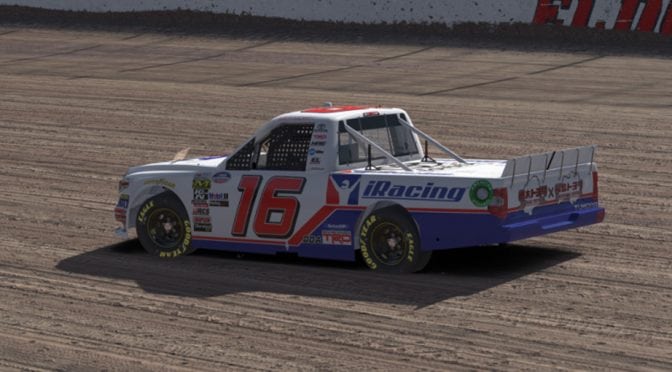
MOORESVILLE, N.C. — Hattori Racing officials are pleased to announce iRacing, the leader in online sim racing, will sponsor Brett Moffitt’s No. 16 Toyota Tundra at Eldora Speedway on July 18th. As part of iRacing’s 10th anniversary, the partnership with HRE and Moffitt, a three-time race winner in the NASCAR Camping World Truck Series (NCWTS) this season, keeps the Grimes, Iowa native and former IMCA dirt modified driver in contention for the 2018 championship.
“To have this support from iRacing to step up and partner with this race team is really special,” Moffitt said. “I have some dirt experience running modifieds back in Iowa, but have never run a truck on dirt, so racing at Eldora on iRacing is definitely going to be a benefit. It’s pretty cool to be part of iRacing’s 10-year anniversary. I was just a teenager when iRacing first went live to the public and I joined right away. I raced online a ton for a few years and really enjoyed the racing and community aspects of iRacing. It will be fun to get back in it again with the fans to see how far they have come and to experience running the Toyota Tundra at Eldora before we race there later this month.”
iRacing, the leader in online racing since launching its complete racing service in August 2008, allows real world racers like Moffitt, and everyday fans to compete, online, from their home PC, in racing disciplines including NASCAR, IMSA, World of Outlaws and USAC, IndyCar, rallycross and more.
In addition to using iRacing’s digital, laser-scanned version of the Earl Baltes-built Eldora Speedway to prepare for his first start in the Eldora Dirt Derby, Moffitt will also race against fellow iRacers in hosted sessions at Eldora in advance of the NCWTS’ showcase on dirt.
“We have been following the NASCAR Camping World series all season and have seen stories in Autoweek by Matt Weaver and listened to Michael Waltrip on the TV broadcasts – talking about the need for Moffitt to compete in every race of the season in order to qualify for the playoffs – despite having won several races already,” iRacing Executive Vice President and Executive Producer Steve Myers said. “We have a history of helping aspiring drivers from the online racing world find opportunities in real world cars and this felt like something we almost had to do – support a racer who really deserves a shot but needs a little help getting to the finish line.”
Moffitt currently sits third in the NCWTS championship standings and holds the second position on the Playoff Grid after 11 races. Moffitt will pilot the No. 16 iRacing Toyota Tundra in his first ever start at Eldora Speedway on Wednesday, July 18th in the Eldora Dirt Derby, live on FOX Sports 1 at 9:00 p.m. ET.
To learn more about iRacing and take advantage of their special offers, visit www.iRacing.com.
Getting ready for racing at Kentucky Speedway this weekend? You’re not alone. NASCAR Xfinity Series rookie Christopher Bell is spending his week preparing for Friday night’s race by turning laps on iRacing.
Hopping on to do a little @iRacing tonight, time to get tuned up for @KySpeedway this weekend!! 🏁🏁
Bobby Zalenski won his second consecutive race at Sonoma Raceway in Round 9 of the NASCAR PEAK Antifreeze iRacing Series on June 26.
The series heads to Chicagoland Speedway Tuesday, where Lockdown Racing driver Taylor Hurst is the defending race winner. Three-time champ Ray Alfalla is in his famous Ray Alfalla form, leading the points by 22 over rookie Keegan Leahy.
IRACING PAINT SCHEMES OF THE WEEK
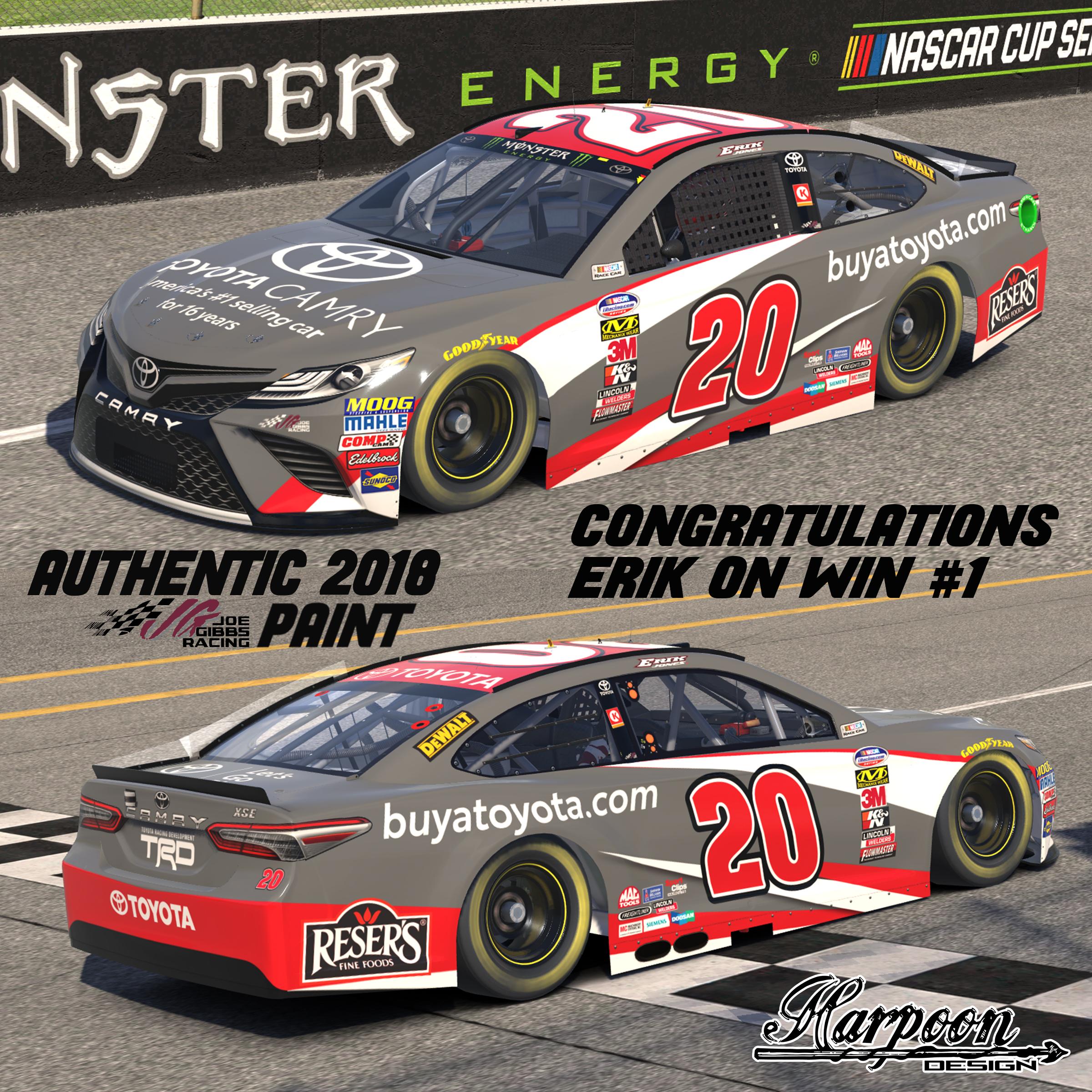
Want to be as fast as NASCAR’s newest winner? Thanks to Brantley Roden’s re-creation of the No. 20 Joe Gibbs Racing Toyota raced in last Saturday night’s Coke Zero Sugar 400, you can progress through your iRacing career as “that Jones boy.”
Tyler King brought the No. 22 Pirtek Ford Mustang to virtual life in iRacing, originally driven in the NASCAR Xfinity Series by Ryan Blaney and Austin Cindric. She’s a beaut.
How about a throwback? Darrell Waltrip drove a multi-sponsored Chevrolet for a few races in the beginning of the 1998 season for his own team. iRacing painter Zac Campbell revived the short-lived paint scheme for iRacing — with a modern update.
DON’T TRY THIS AT HOME
Like in NASCAR, this week marked Daytona week on iRacing, where the major oval series held regular superspeedway races throughout the week. All the elements of restrictor plate racing transfer to the virtual world, too — drafting, strategy, and, well, multi-car crashes.
Take a look as one driver shows the best way to navigate through a clogged track (hint: it involves slowing down immediately).
Editor’s note: The following article was written by Team Penske driver Brad Keselowski.
Follow him: Facebook | Instagram | Twitter
Sometimes, you just have a great story to tell.
This is one of those times. So sit back, relax and enjoy.
For some reason, after every racing season, I always get sick. It happens every year. Like right when things wrap up, I’m sick for a week. Even when I won the championship in 2012, I was sick at the banquet for like three days. It was terrible. It’s like my whole body just lets itself go and says, “The season’s done, and I’m done, too.”
In the winter of 2007, I had just moved to North Carolina, and been there three or four months, tops. I was 23. Not that I wasn’t old enough to be out on my own, but it was the first time my mom and dad were thousands of miles away.
And sure enough, I got sick right after the racing season. Only I didn’t just get a little sick. I got near-death sick. Two days went by where I was almost literally dead to the world, just laid up in my townhouse.
It got to the point where I needed someone to take me to the hospital.
This is the moment when, under normal circumstances, you’d call home and let your folks help you out. But I couldn’t do that — or didn’t feel that I could — because I thought I might give my mom a heart attack for the second time in a few months.
A few months earlier, not long after I had started driving part-time for Dale Earnhardt Jr., I was at a road course, Virginia International Raceway. I was tooling around on a four-wheel ATV in the infield while I watched another driver, Andy Pilgrim, test a car.
Andy was a professional road-course racer. (Side note: Andy was Dale Jr. and Dale Sr.’s teammate in the ALMS series in 2001. Running Andy in Dale Jr.’s Nationwide car for the 2007 road course events was a tribute to their enduring friendship.) So I was riding the ATV to the corners of the infield to study Andy’s techniques, and then just screwing around.
The thing was, I’d never ridden a four-wheeler before, and I’d gotten braver as the day went on—until I got too brave. I was probably going 50 or 60 miles per hour with no helmet, wearing sunglasses, when I lost control of the ATV and ran smack into a chain link fence.
Believe me when I tell you: I have no idea how I lived through that one. That crash should have killed me.
First off, I bet I flew 40 or 50 feet through the air. I literally knocked down 30 feet of chain link fence with my body. When I was finally able to get up — and I’m not really sure how long that took — there was a decent amount of damage.
Recovered from his injuries, Keselowski nabbed his first two NASCAR Xfinity Series wins in 2008. Grant Halverson | Getty Images
I had this huge hematoma on my leg, a massive pocket of blood where my leg probably should have broken, but didn’t. My whole face was bleeding. The only thing that kept me from losing an eyeball were my sunglasses, but when my face hit the fence, the sunglasses pressed into my head so hard they broke my left eye socket. And to add injury to injury, I was wearing braces at the time, so my mouth was full of blood where I’d cut my gums on my braces.
I was a mess. So I started stumbling toward the nearest building to get help. And when I got there, guess what that building turned out to be?
A summer camp for kids.
I limped into the doorway, blood pouring out of my face, dragging my leg like a zombie, and a roomful of 5-year-olds looked up at me. Then the kids screamed like they’d just seen Jason or someone else out of a horror movie. An adult yelled, ‘Oh my God!’
A few minutes later, an ambulance came to pick me up. As they started to load me in, I spotted what was left of the four-wheeler. It was totaled. Half the suspension was 30 feet from the rest of the suspension.
Also, the ATV belonged to Dale Jr., and was worth about $10,000 or $15,000.
I began to freak out. I think I said to a paramedic, “Oh my God. I’m going to get fired!” I remember starting to walk back to the ATV like I was going to put it back together, and the ambulance guys saying, “No, man! We need to take care of you!”
Finally, the ambulance did carry me off and drive me back to pit road, which took a while. Virginia International Raceway is a pretty big road course, and where I’d wrecked the four-wheeler was a good mile away from where pit road was.
Imagine what it must have been like for Andy and the rest of the team when I reached them. They had been practicing and testing all day. It’s 5 o’clock. An ambulance shows up and says, “We’ve got your driver.” And they’re like, “What are you talking about? The test is done. The car’s loaded up and there isn’t scratch on it.”
Then the paramedic says, “No, your other driver.”
They put the four-wheeler on a flatbed and drove it back to North Carolina, but it was basically destroyed. The whole ride home, I was spinning. I couldn’t afford to fix the ATV, and on top of it, I tore down 30 feet of fence, which I’d also have to pay for. And worse yet, I had to explain all of this to Dale Jr. because he wasn’t there.
At that point in my life, this was a top contender for the worst day ever.
T.J. Majors, a friend of Dale’s — and eventual friend of mine — talked me off the ledge.
“All right — it’s the NASCAR off-week,” he said, which it was. “Dale Jr. is on vacation. Here’s what you need to do. Wait till about nine o’clock at night, and then call him. You’ve got to tell him what happened, and you’ve got to tell him tonight before somebody else does. But wait till tonight. He’s having people over — because it’s the off-week — and he and the boys will start partying around eight or nine o’clock. And when you tell him, he’s going to be cool about it. As long as you tell him. He can’t hear it from someone else.”
Brad Keselowski got a great tip on how to tell Dale Earnhardt Jr. that his ATV was wrecked. Rusty Jarrett | Getty Images
So that’s what I did. At nine o’clock that night, I called Dale Jr. He answered. I told him what happened, and like T.J. had said, he was in a great mood.
“Oh s—, man,” Dale Jr. said, “Don’t worry about it. Stuff like that happens all the time. That’s just part of it.”
It was the biggest sense of relief ever, almost like your dad saying, “Don’t worry about it. When I was a kid, I wrecked stuff, too.” I never heard another word about it. He never made me pay for the four-wheeler, and he didn’t fire me.
Sometimes, I think about what would have happened if I would have called him the next day, or didn’t call him, and he heard it from somebody else. (Dale Jr., thank you for not firing me.)
The thing was, I didn’t tell my mom about the whole episode. She got so nervous about me when I raced. I’m her youngest son, her baby. The four-wheeler crash would definitely cause her to lose it.
But of course, not long after, she wound up coming to a race. And when my mom saw the cuts and bruises on my face, she just about had a stroke.
GETTING WELL
So fast forward back to me in the house, death-bed sick. I didn’t want to call Mom, and I needed someone to get me to a doctor.
So I called Dale Jr., and his stepfather, Willie Jackson, answered. He came by and took me to Urgent Care, and when I got there, I started going into convulsions.
Then I passed out. I was really, really sick.
When I woke up, it took me a minute to get my bearings. I was in the house of Dale Jr.’s mom, Brenda Jackson. Turned out I’d had a horrible case of the flu, and if Willie hadn’t shown up when he did, there was a good chance I might have died in my townhome.
The hospital was too nervous to send me home alone, so Brenda and Willie took care of me at their home for four or five days, until I was finally strong enough to recover on my own. To this day, I’m incredibly grateful to both of them for doing that.
Brenda kept checking on me for the next few weeks, but once I was home, I made sure to do one thing I should have done back in the beginning.
Numbers mean plenty when it comes to building out your Fantasy Live teams each week. NASCAR.com will examine the stats outlook for each track to help give you an edge as you go to set your lineups and bonus picks ahead of the race weekend.
Don’t forget to check back on NASCAR.com for additional insight from fantasy expert RJ Kraft as well as to watch Fantasy Fastlane with Jessica Ruffin and NBC Sports’ Steve Letarte.
Top five average running position (per loop data from 2005 to the present):
Driver
Average running position
Kyle Busch
4.607
Matt Kenseth
8.044
Erik Jones
8.099
Kevin Harvick
8.161
Martin Truex Jr.
10.711
Top five in stage points earned at Kentucky in 2017:
Driver
Stage points
Stage wins
Martin Truex Jr.
20
2
Kyle Busch
18
0
Kevin Harvick
14
0
Matt Kenseth
13
0
Jamie McMurray
11
0
Top five in points earned in last two races at Kentucky:
Driver
Race points
Race wins
Martin Truex Jr.
92
1
Kyle Busch
79
0
Kevin Harvick
76
0
Jamie McMurray
75
0
Matt Kenseth
67
0
Most laps led in last two races at Kentucky:
Driver
Laps led
Martin Truex Jr.
198
Kevin Harvick
128
Kyle Busch
112
Brad Keselowski
75
Kurt Busch
10
Average starting position for last 7 winners*: 5.6, four of seven winners have started on the front row.
*Kentucky has only run seven Monster Energy NASCAR Cup Series races.
Active drivers to win pole: Kyle Busch (2), Kevin Harvick (1),Jimmie Johnson (1), Brad Keselowski (1) and Kyle Larson (1)
Active drivers to win at Kentucky: Brad Keselowski (3), Kyle Busch (2), Matt Kenseth (1) and Martin Truex Jr. (1)
Most recent pole winner: Kyle Busch, 2017
Last time pole-sitter won here: Brad Keselowski, 2014
Where stage winners started from: Second (2)
Winning manufacturers of last 7 races: Toyota-4, Ford-2, Dodge-1
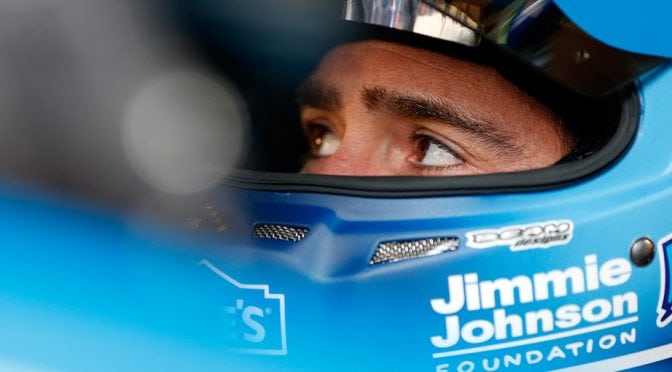
CHARLOTTE, N.C. — Seven-time NASCAR Cup Series Champion Jimmie Johnson will highlight the Jimmie Johnson Foundation this weekend during the Quaker State 400 NASCAR Cup Series race at Kentucky Speedway in Sparta. In addition to wearing the Blue Bunny Helmet of Hope, which honors five charities working to improve K-12 public education, a special Jimmie Johnson Foundation (JJF) paint scheme will be featured on his No. 48 Lowe’s Chevrolet. As a show of support for Johnson’s efforts to raise funds for K-12 public education, a number of his NASCAR Cup Series competitors will join him in displaying JJF-branded decals on the visors of their helmets.
“I’m thrilled to be able to share and celebrate the work of the Foundation this weekend,” said Johnson. “Chandra (wife) and I are so grateful to Lowe’s for allowing us to run the Foundation paint scheme for the thirteenth time, Blue Bunny for sponsoring the Helmet of Hope program again this year, and all of the drivers participating in the visor campaign. Thanks to the overwhelming generosity of our partners and the NASCAR community, we are able to provide much needed financial support to some outstanding non-profits and schools through Foundation programs.”
The Blue Bunny Helmet of Hope program allows fans and consumers across the country to nominate and vote on not-for-profit (501c3) organizations that support K-12 public education. Each of the recipients was also awarded a $25,000 grant and a Blue Bunny Ice Cream party.
The five grant recipients are:
● Hamilton Heights Educational Foundation in Arcadia, Indiana
● Life Pieces to Masterpieces in Washington, DC
● Read Better Be Better in Phoenix
● Siouxland Ag in the Classroom in Moville, Iowa
● The Pencil Box in Tulsa, Oklahoma
“We are extremely proud to once again support the incredible work and commitment displayed by each of the organizations to assist K-12 public education,” Mike Wells, President & CEO, Wells Enterprises, Inc., maker of Blue Bunny ice cream said. “The passion around the mission of each of these organizations is evident through the rallying of their supporters to vote and ultimately secure additional needed funding. It never ceases to amaze me at how creative and driven all of the organizations are to securing the votes needed.”
A number of competitors will sport a specially designed JJF strip on the visors of their respective helmets. At the conclusion of Saturday’s 400-mile race at Kentucky, participating drivers will sign the visors. The signed visors will be available in an online auction to raise funds to support K-12 public education. Participating drivers include: AJ Allmendinger, Aric Almirola, Alex Bowman, Clint Bowyer, Chris Buescher, Kurt Busch, Kyle Busch, William Byron, Matt DiBenedetto, Chase Elliott, Erik Jones, Kasey Kahne, Michael McDowell, David Ragan, Ricky Stenhouse Jr., Daniel Suarez and Martin Truex Jr. Drivers Austin Dillon, Kevin Harvick, Joey Logano, Paul Menard and Jamie McMurray will donate visors for the auction.
In addition to the Blue Bunny Helmet of Hope program, the Foundation operates the Champions Grant program, which provides cash grants to schools in the Johnsons’ hometowns and where they currently live; and Team Up For Technology, a $48,000 technology makeover open to schools nationwide. Each of these programs will be featured on the special JJF paint scheme.
About the Jimmie Johnson Foundation
Chandra and Jimmie Johnson launched the Jimmie Johnson Foundation in February 2006. Johnson, the seven-time NASCAR Cup champion, drives the No. 48 Lowe’s Chevrolet Camaro ZL1 in NASCAR’s top series. The mission of the Foundation is to assist children, families, and communities in need throughout the United States. The Foundation has committed more than $11 million to various charities. The Foundation currently focuses on K-12 public education. For additional information on the Jimmie Johnson Foundation, please visit www.jimmiejohnsonfoundation.org.
It was wild, often chaotic and featured no shortage of drama. The kind of race that either seemingly rewards the patience of a veteran, or where the spotlight shines on an unlikely winner whose turn comes via favorable circumstances brought about by half the 40-car field not seeing the finish due to being involved in one of the multitude of accidents.
Erik Jones is not a veteran of the Monster Energy NASCAR Cup Series, nor should his first career Cup win Saturday night in the Coke Zero Sugar 400 at Daytona International Speedway be considered much of a surprise. Instead, the triumph was the breakout moment for the 22-year-old where he outdueled reigning series champion Martin Truex Jr. by completing a last-lap pass.
“How ‘bout that race, boys and girls?” Jones said.
Amidst a time when a throng of young drivers have garnered attention for their exploits on the track and what their personalities may do for NASCAR beyond the confines of the speedway, Jones has often found himself falling behind Kyle Larson, Chase Elliott, Ryan Blaney and others when the discussion centers around who will carry NASCAR forward.
But while Jones may not always garner the majority of the headlines, his résumé speaks of someone more than capable of picking up the slack created by the recent retirements of Jeff Gordon, Dale Earnhardt Jr., Carl Edwards and Tony Stewart. It is something he’s proven at every level on his way to Cup and now doing so at stock car racing’s highest rung.
As a 16-year-old, Jones beat Kyle Busch to win the prestigious Snowball Derby late model race. That victory caught Busch’s attention and he signed Jones to drive for his own late model team. And Busch wasn’t the only one impressed by Jones’ talent. Also enamored was Toyota, which made Jones one of the first prospects of its driver developmental program, a specifically designed feeder system where the manufacturer cultivates young talents by gradually advancing them through each step of the development process that includes all three NASCAR touring series, its regional divisions, ARCA and midget cars.
Aligned with Toyota and with Busch acting as big brother/mentor, Jones quickly ascended from relative obscurity to a driver many within the garage believe will be an eventual Monster Energy Series champion.
“I think Erik is fast,” team owner Joe Gibbs said. “That’s one thing about him. I think wherever he goes, he’s not afraid to push it.”
Jones’ climb up the NASCAR’s development ladder included him becoming the then-youngest winner in NASCAR Camping World Truck Series history when at 17 years, five months and eight days he won at ISM Raceway in November, 2013. Two years later, he captured the series championship in the first season he was eligible to run every race. Promoted to the NASCAR Xfinity Series full-time in 2016, Jones nearly won the championship as a rookie. The following year saw Jones win Monster Energy Series Sunoco Rookie of the Year honors.
“I think a year in the Cup Series you grow a lot,” Jones said. “You learn so much. I never learned as much in any other series in any other year racing as I did last year, and things that I learned last year are things that I’ll take with me probably for the rest of my career in NASCAR.
A successful rookie season with Furniture Row Racing, and the promise of what was to come, prompted Gibbs to move Jones over to his four-car team to replace former series champion Matt Kenseth in the No. 20. Joining Joe Gibbs Racing brought heightened expectations and opened up Gibbs to criticism if the move backfired, though any concerns have been extinguished with Jones turning in a fine second season in Cup — even before winning Saturday night.
“You feel the pressure, for sure, coming into the year taking over and working with almost the same group that was with Matt last year,” Jones said. “You feel that, and you want to go out and perform and run really well.
The Daytona win came in Jones’ 57th career start, fewer than it took Larson (99) and Blaney (68). Meanwhile, Elliott is still searching for his first win in his 96th start Saturday night at Kentucky Speedway.
“All of these young guys, myself, Chase, Ryan, Daniel (Suarez), are going to all win races,” Jones said. “It just takes time to learn and grow. We’re racing guys that are 10-, 15-year veterans of the sport, and they’re pretty good at it. It takes time to catch up, but I feel like we’ve all done a pretty good job, and we’re getting closer every week.
As for Jones, it is evident it won’t take him nearly as long to get his second win even if his first win did occur in relatively short order. Now a virtually lock to qualify for the Playoffs, he doesn’t have to concern himself with life on the postseason bubble.
“It’s great to get our first win knocked out,” Jones said. “I hope and I’m sure we’re going to have opportunities to win some of these next nine [races] before the playoffs, and hopefully have a nice little championship run here coming up.
“I definitely feel like this race, this win has lifted a lot of weight off my shoulders, for sure.”
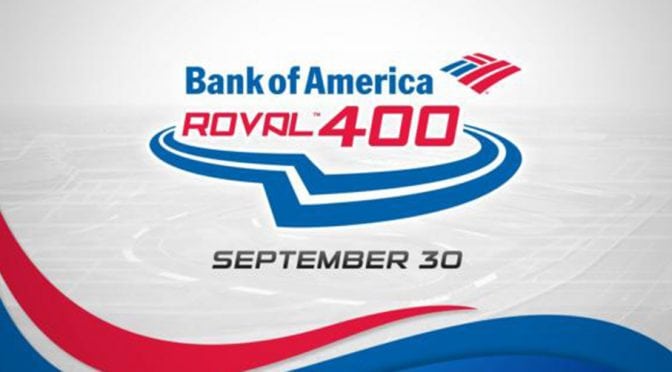
CONCORD, N.C. — Charlotte Motor Speedway expanded on its groundbreaking new era of innovation on Monday, with the unveiling of a new, dynamic logo for the Sept. 28-30 Bank of America ROVAL™ 400 race weekend – which will feature the first playoff road course races in NASCAR history.
The first-ever 400-kilometer Bank of America ROVAL™ 400 will be the longest road-course race in NASCAR.
The stars of the Monster Energy NASCAR Cup Series will practice, qualify and race on a 2.28-mile, 17-turn road course oval that is sure to test top drivers and thrill a spectacular crowd of race fans. The drama of the NASCAR Playoffs will be on full display in the first cutoff race of the 10-race Playoffs, which will see drivers take on a world-class course – the newest track in NASCAR competition – with a 35-foot elevation change.
“This is history in the making, and it marks the next chapter in our legacy of providing innovative, show-stopping entertainment that’s never been seen before,” said Marcus Smith, the president and CEO of Speedway Motorsports, Inc. “Like NASCAR’s first 600-mile race and the first superspeedway race at night, the inaugural Bank of America ROVAL™ 400 is going to be a can’t-miss event that fans will remember forever. We’re about to witness a dramatic, historic, unforgettable race weekend Sept. 28-30.”
“Following a number of test sessions in preparation for the much-anticipated playoff race at Charlotte, we felt that this race length made the most sense,” said Steve O’Donnell, NASCAR executive vice president and chief racing development officer. “In the end, we believe the race length will accomplish the primary goal which is to showcase the best race for our passionate fans.”
Charles Bowman, Bank of America’s market president for North Carolina and Charlotte, said the race announcement marked an important moment for Charlotte.
“Charlotte Motor Speedway and the Smith family have transformed the city of Charlotte with the growth of the motorsports industry in this region,” Bowman said. “We are privileged to be the title sponsor of this extraordinary event, and we look forward to making history with the speedway when the Bank of America ROVAL™ 400 roars to life in September.”
Speedway officials also revealed a new logo and race length for the 200-kilometer Drive for the Cure 200 presented by Blue Cross Blue Shield of North Carolina on Sept. 29. The rising stars of the NASCAR Xfinity Series will lock horns in a 200-kilometer playoff duel in the Saturday afternoon sun.
Bojangles’ Qualifying – a take-no-prisoners battle for the all-important pole position – will kick off the proceedings on Friday afternoon, Sept. 28.
Prior to race weekend, fans can watch drivers test the ROVAL™ at Test Fest, a pair of FREE day-long shakedowns featuring the Monster Energy NASCAR Cup Series field, from 9 a.m.-5 p.m. on July 10 and 17. Fans can also enjoy mechanical bull rides, food and drink and test-drive their race weekend seats during the tests from the Whisky River frontstretch area.
In addition, fans who have purchased Bank of America ROVAL™ 400 tickets will get to experience the ROVAL™ from behind the wheel on Saturday, July 14. Charlotte Motor Speedway will allow ticket holders to drive their personal cars three laps around the innovative new course from 4 p.m.-8 p.m.
In the ninth race of the NASCAR PEAK Antifreeze iRacing Series season, Bobby Zalenski defended his 2017 Sonoma victory by dominating at the virtual road course, leading 52 of 55 laps. The virtual racing stars head to Chicagoland for Race 10 Tuesday night, where Taylor Hurst is the defending winner.
Even though his Sonoma performance was lackluster, points leader Ray Alfalla’s a safe bet for Chicagoland — mostly because there are no right-hand turns.
2: Bobby Zalenski (–)
Two of Bobby Zalenski’s three victories have come at road courses, which, by definition, makes him a road-course ringer, right? Zalenski’s riding some momentum after a big win at Sonoma and holding tight to third in points.
3: Keegan Leahy (+1)
Keegan Leahy’s won a race at a 1.5-mile track — Kansas — but Chicagoland’s a different beast. The Canadian rookie has scored more finishes in the top five this year than anybody else.
4: Matt Bussa (+3)
Gale Force Radicals Online’s Matt Bussa has hit a rhythm at the right time, riding a wave of three consecutive finishes seventh or better.
5: Michael Conti (+4)
Las Vegas marked Michael Conti’s only top 10 at a 1.5-mile track this season, but he’s scored three top-fives throughout his career at Chicagoland. Plus, we have to rank car No. 5 fifth.
6: Ryan Luza (-3)
The good news: Ryan Luza’s won half the races he’s started this year. The bad news: he’s only started six of nine races, which isn’t really nice if he wants to defend his championship.
7: Logan Clampitt (-1)
Logan Clampitt has finished seventh every time he’s raced Chicagoland. We’re heading to Chicagoland Tuesday. Get ready for another P7, #ClampNation.
8: Nickolas Shelton (-3)
Sure, Nick Shelton won a 1.5-mile race this season and hasn’t finished worse than third in any of the three 1.5-milers this season, but he hasn’t finished in the top 10 in any other race. If he can step up the consistency, he’ll become a weekly threat.
9: Nick Ottinger (-1)
Nick Ottinger’s improved his finish in the past four consecutive races, meaning he’s worth a look at Chicagoland — though his Daytona win is his lone top-five finish in 2018.
10: Christian Challiner ()
Great Britain’s iRacing star had a disastrous race in his lone start at Chicagoland — a 36th-place result last year — but it’s hard to ignore his momentum in the past five races, where he’s scored four top-10s.