Editor’s note: This is the 14th in a series in which we review the top 30 drivers in the NASCAR Cup Series in reverse order of the 2025 final standings.
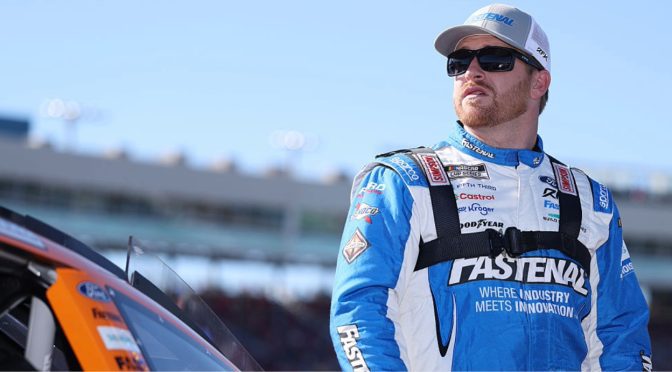
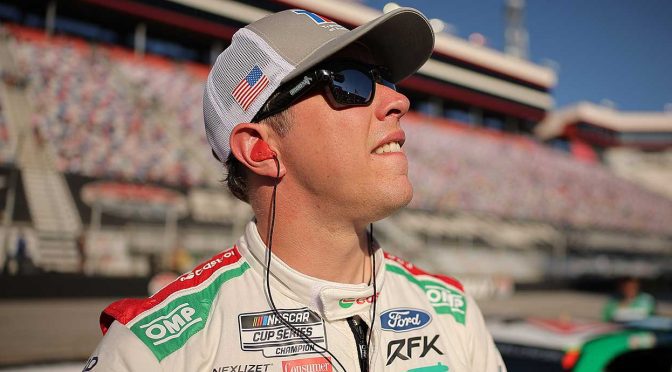
Driver: Chris Buescher, No. 17 RFK Racing Ford Crew chief: Scott Graves Final 2025 ranking: 17th Key stats: 0 wins, 5 top fives, 16 top 10s, 47 laps led
How 2025 ended: For the second consecutive year, Chris Buescher missed the Cup Series Playoffs and finished 17th in the final standings, the highest non-playoff driver. The RFK Racing driver’s number of top fives and top 10s was nearly identical to his total a year ago, but the most noticeable improvement was the speed of the No. 17 Ford in qualifying despite going winless in 2025. Buescher’s average starting position jumped six positions from 18.5 to 12.5. Although the 33-year-old native of Prosper, Texas, did not take a Busch Light Pole Award this year, he started on the front row twice at Kansas and Pocono.
Best race: Buescher came a position short of winning at Michigan after finishing runner-up to Denny Hamlin in a fuel-mileage thriller. After starting sixth in the Irish Hills, the No. 17 Ford driver led 13 of his 47 laps this season in a good showing in the Blue Oval’s backyard.
Other season highlights: One year after besting Shane van Gisbergen at Watkins Glen in NASCAR Overtime, Buescher returned to the Finger Lakes region of Upstate New York in 2025 and continued to show his road-course prowess after finishing third, behind SVG and Christopher Bell. He also had a solid showing at the Charlotte Roval, with a fourth-place result. In the final two laps of the Talladega fall race, Buescher appeared to be in position for his first win of the year until he spun off the front bumper of William Byron while leading and crashed hard into the inside wall on the backstretch.
Stat to know: In the final 10 races of the 2025 season, Buescher finished worse than 18th place just twice.
Quotable: “Fast race cars bring points with them. I think if we stick with this over the next handful of weeks, um, that part will come with it. Again, I think we figured for the last couple of months, it’s gonna be a must-win situation. I feel like these playoffs constantly do that, and you get to the end, and one or two slip in on points. But you gotta win races.” — Buescher on playoff pressure in a post-race interview with Amazon Prime Video at Pocono.
Looking ahead: Despite RFK missing out on the postseason and Victory Lane across the board as an organization in 2025, look for the returning Buescher to bounce back in 2026. RFK expanded to three cars this year, with Ryan Preece joining Buescher and Brad Keselowski in the driver lineup. After a year of experience as a three-car team and showing improvement in the second half of 2025, the No. 17 driver and his teammates could make some noise in 2026. If all goes well, there is a possibility that we may get the 2023 and 2024 versions of the Texan driver, who led more than 200 laps in those seasons.
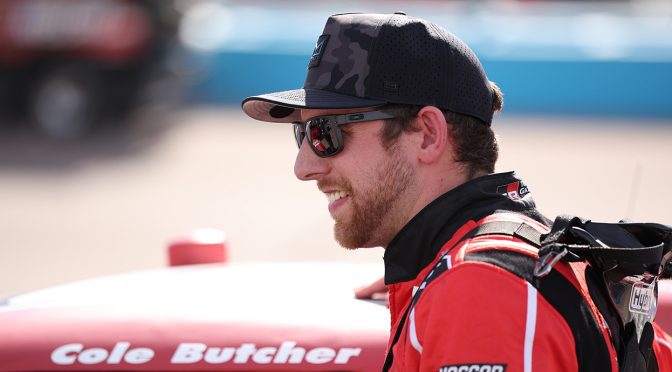
Of the 50 drivers entered in Sunday’s prestigious Snowball Derby at Five Flags Speedway in Pensacola, Florida, Cole Butcher’s 2025 season stands out as one of the most efficient.
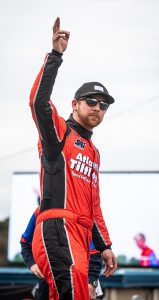
The Porters Lake, Nova Scotia, native is just a month removed from his first championship in the ASA STARS National Tour. Butcher accomplished this by winning four of the 12 events on the schedule, including his second triumph in the Redbud 400 at Anderson Speedway.
All the success in 2025 has Butcher convinced his ninth Snowball Derby appearance could be his best opportunity to prevail in the crown-jewel event. Despite dealing with a pre-race setback, Butcher said he and Wilson Motorsports have everything they need to keep their momentum.
“We feel pretty good,” Butcher said. “The other day we tested; we blew up a motor in our primary car. We were able to get it swapped, but then we actually decided to race our backup car, which we raced at [the All American 400]. We’re pretty [good] with all our race cars, so hopefully we can put a solid lap down Friday night [in qualifying].”
Unlike many of his contemporaries, Butcher’s path to this point started on two wheels instead of four.
At the age of 5, Butcher started competing in motocross, a passion he maintained until he turned 15. In between motocross events, Butcher developed an interest in four-wheeled racing, methodically climbing the developmental ladder from Bandoleros to Super Late Models.
Butcher dealt with several learning curves during his transition to full-bodied cars. He struggled to manage horsepower and tires at first but gradually ascertained how to execute races, even as the tire compounds changed over the years.
Butcher also familiarized himself with a seasoned group of Super Late Model competitors such as Bubba Pollard, whose resumé includes victories in the All American 400, Oxford 250 and other noteworthy events. For as intimidating as someone like Pollard can be to a rookie, Butcher said every race shared with the veteran has made him a better driver.
“I’ve learned a lot from Bubba,” Butcher said. “Bubba is a very respectful racer and very quiet when it comes to his racing. You don’t know if he’s good or if he’s bad until the green flag flies. He’ll either pass you and leave you in the dust or you’ll have a good race with him. Bubba has taught me a lot of things about respect and how you need to race each other.”
It took Butcher some time, but his name, too, gradually became synonymous with efficiency in Super Late Model competition.
Butcher joined Pollard as an Oxford 250 winner in 2022 before defending his crown the following year. Some of Butcher’s other accomplishments in a Super Late Model include two wins in the Redbud 400, a Winchester 400 victory and a triumph in the Florida Governor’s Cup at New Smyrna Speedway last month.
In 2025, Cole Butcher picked up eight Super Late Model victories and earned his first ASA STARS National Tour title. (Photo: Ted Malinowski/NASCAR)
Butcher’s accolades helped him earn an opportunity to compete in the NASCAR Craftsman Truck Series this season. He made two starts in a second truck for Halmar Friesen Racing and finished 23rd in both appearances, the second of which, at Phoenix Raceway, was cut short by seven laps due to a late-race crash.
What surprised Butcher the most about the trucks was how much heavier and downforce-dependent they were compared to Super Late Models. He wishes the two starts with Halmar Friesen had unfolded more favorably, but he credited Toyota and everyone in his support system for ensuring he was prepared.
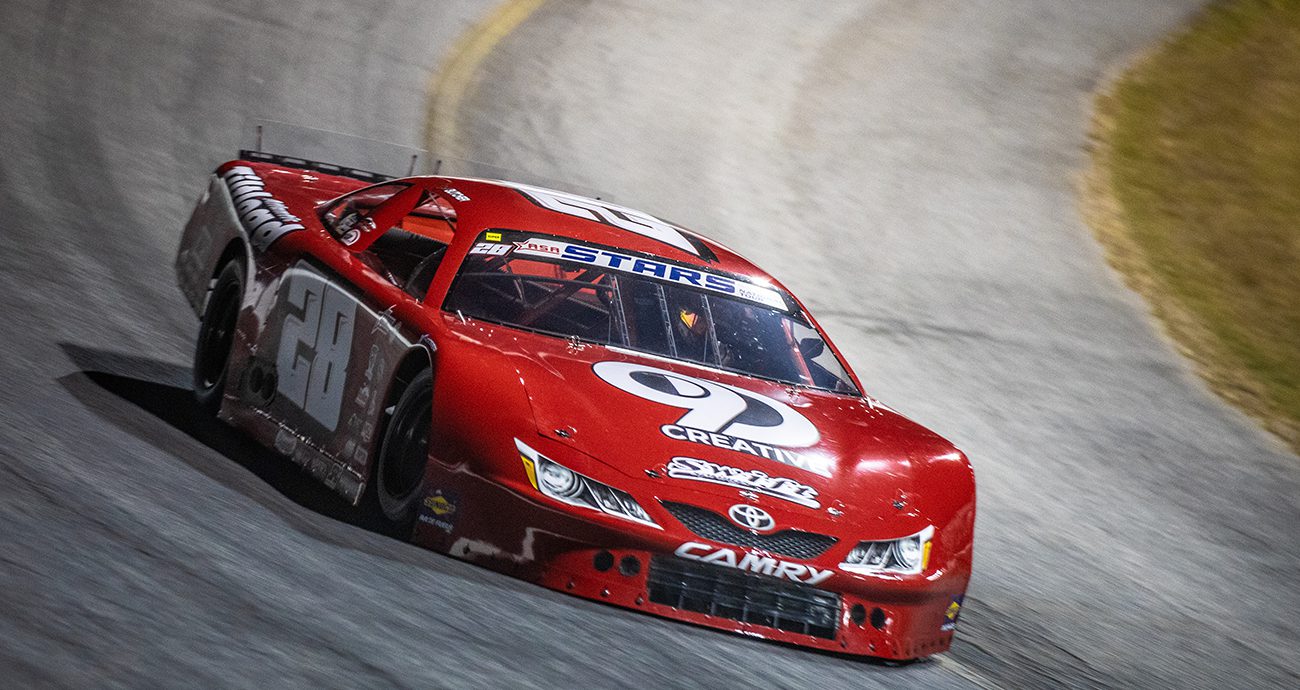
Toyota’s influence has been a crucial component of Butcher’s continued improvement on short tracks, from their rigorous fitness program to the resources they provide to car owner Donnie Wilson. For Butcher, eight Super Late Model victories in 2025 alone highlight how much of a powerhouse Wilson’s team has become with Toyota by its side.
“It means that we’re doing our job personally and in the shop,” Butcher said. “Everyone at Wilson Motorsports does a great job, whether it’s the [No.] 28, 24 or 22 car. This is a testament to what we have going on at Toyota, the Performance Center and at the shop. We have a pretty good baseline wherever we go, and we’re able to unload and be confident.”
With plenty of momentum on his side, Cole Butcher looks to cap off a stellar 2025 with his first Snowball Derby win. (Photo: Ted Malinowski/NASCAR)
Nothing would thrill Butcher more than to end his stellar year with a sweep of the Snowball Derby and Snowflake 125. Although Butcher has not missed a Snowball Derby the last eight years, this weekend will be his first Snowflake 125 attempt since 2016.
Across his Snowball Derby starts, Butcher has finished inside the top five on four occasions and has not recorded a performance worse than 20th. The closest Butcher came to winning the crown-jewel event was 2019, when he managed to lead two laps from the outside pole before settling for third.
The presence of numerous Super Late Model stalwarts, along with NASCAR Cup Series drivers and past Snowball Derby winners Kyle Busch and Noah Gragson, puts heavy emphasis on securing solid track position in qualifying. Butcher has overcome poor qualifying efforts in the past, but he admitted Sunday carries less stress with a starting position inside the top five.
For as much intensity as the Snowball Derby brings, Butcher has grown to enjoy the quieter moments throughout the week. He admires being able to strengthen the bonds he already shares with everyone on his team while simultaneously spending time with family like his brother Jarrett, who is also entered in the Snowflake 125.
Now that Butcher is a father to his young son Brody, the Snowball Derby carries a little more sentimental value. Butcher’s dad Darrin was a racer himself, so assuming a parenting role has provided him a fresh perspective on motorsports and how important it is to value family despite dealing with constant pressure.
Carrying on Darrin’s passion in racing required plenty of sacrifices and patience on Butcher’s behalf to hold his own with the established names in Super Late Model racing. Two more standout races this weekend in a year full of them would cement Butcher’s name in history while validating his efforts.
“A win would mean the world, not just for myself, but for my team and my family,” Butcher said. “My dad, my mom and my brother have been doing this for a long time together, and I’m fortunate enough to bring my wife and my child into the atmosphere I was brought up in. This is a big group, and it would be a big party afterwards.”
The 2025 season has been everything Butcher could have imagined as a driver. All that remains are two crown-jewel races at Five Flags, where everyone will be eager to see what Butcher has prepared to close his career year.
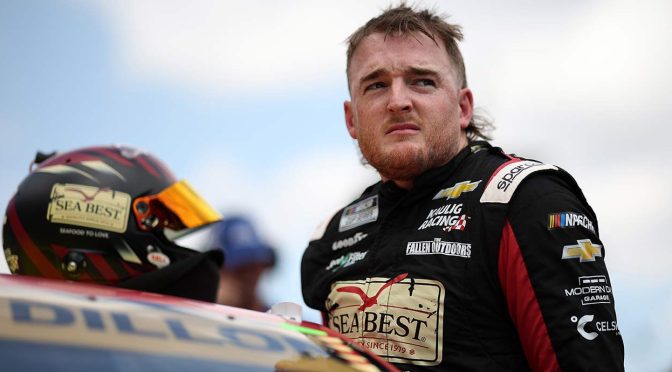
Kaulig Racing announced Wednesday that Ty Dillon will return to the No. 10 Chevrolet in the 2026 NASCAR Cup Series, with primary sponsorship from Sea Best on board for eight races. Andrew Dickeson will return as Dillon’s crew chief.
“I am incredibly grateful for another opportunity to run full-time in the Cup Series and honored to do it with the men and women at Kaulig Racing, which means a lot to me personally,” Dillon said in a team release.
Dillon competed in five Cup Series events for Kaulig in 2024 before joining the organization full-time this past season. The 33-year-old driver placed 33rd in the final series standings, but created a highlight with his Cinderella run through the inaugural In-Season Challenge bracket. Dillon reached the final at Indianapolis Motor Speedway, but was topped by Ty Gibbs for the $1 million prize.
Sea Best — a Jacksonville, Florida-based frozen seafood company — debuted as a Dillon sponsor in 2024 before backing his efforts in half the races this past season.
Since making his Cup Series debut in 2014, Dillon has competed in seven full-time seasons in NASCAR’s top division. He’s on pace to make his 300th big-league start on July 5 at Chicagoland Speedway.
The March of Dimes recognized NASCAR Commissioner Steve Phelps with the Corporate Leadership Award on Wednesday during its annual Sports Luncheon fundraising gala in New York City.
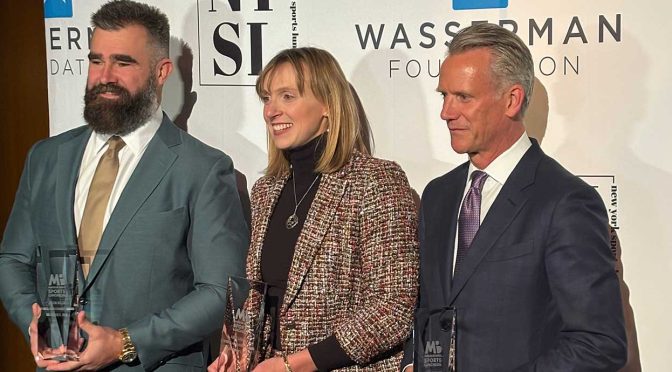
Phelps was honored at the Cipriani 42nd Street banquet hall alongside this year’s recipients of the organization’s Sports Achievement Awards — former NFL player-turned-broadcaster Jason Kelce and Olympic swimming legend Katie Ledecky. The three were each presented with trophies at the 42nd edition of the sports industry gathering, which benefitted the March of Dimes’ lifesaving services and research for maternal and infant health.
Phelps was named commissioner in March after serving a nearly seven-year term as NASCAR’s fifth president in the sport’s 77-year history. Phelps took on new responsibilities with his appointment to the commissioner’s post, including oversight of NASCAR, the International Motorsports Association (IMSA) sports-car series and all 15 tracks that the organization owns or operates.
Phelps joined NASCAR in 2005 as vice president for corporate marketing and was quickly promoted to chief marketing officer. He’s since been a trusted presence with NASCAR’s executive leadership, spanning two decades of service.
“Steve, you’ve been a great friend, a fantastic leader for NASCAR and our sport, and I’m very proud that you are our commissioner,” said Jim France, NASCAR Chairman and CEO, addressing Phelps in a video presentation. Phelps’ appreciation was mutual, and he acknowledged the entire NASCAR industry in accepting the award on behalf of the stock-car racing community.
The annual luncheon — once described by Sports Business Journal as “the Super Bowl of charitable sports gatherings” with a who’s-who list of influential participants and award winners — has raised more than $20 million in support of March of Dimes’ mission. Past honorees include Simone Biles, Derek Jeter, Roger Goodell, Arthur Ashe and Patrick Ewing.
Goodell was among the sports executives applauding Phelps’ recognition with video messages. “Steve is the definition of a steady and reliable leader,” said NBA Commissioner Adam Silver. “It’s wonderful to see his 35 years of leadership and service in sports honored by the March of Dimes. No one is more deserving than Steve.”
CBS Sports President David Berson chaired this year’s event. Last year, the luncheon raised a record $1.5 million for March of Dimes. The 2024 honorees were former NFL quarterback Eli Manning, National Women’s Soccer League (NWSL) Commissioner Jessica Berman, and entertainment executive and sports agent Casey Wasserman — a former colleague of Phelps’ who heads the organizing committee for the 2028 Olympic Games in Los Angeles.
Editor’s note: This is the 13th in a series in which we review the top 30 drivers in the NASCAR Cup Series in reverse order of the 2025 final standings.
Driver: Ryan Preece, No. 60 RFK Racing Ford
Crew chief: Derrick Finley
Final 2025 ranking: 18th
Key stats: 0 wins, 3 top fives, 14 top 10s, 133 laps led
How 2025 ended: Preece stayed in contention for a playoff spot throughout the entire regular season before ultimately falling 66 points short of the final position. He and RFK Racing teammate Chris Buescher were the first two drivers out as the organization missed the postseason altogether. Despite that, Preece finished the 2025 season strong, recording seven top 15s in the final 10 races, including top 10s in four of the last five.
Best race: Finishing fourth at Indianapolis Motor Speedway, the mid-summer crown jewel wasn’t Preece’s best finish, but it was probably his best race. He overcame a 23rd-place starting position to lead 12 laps, positioning himself in contention for a win if the leaders ran out of fuel. Unfortunately for him, Bubba Wallace took the checkered flag on fumes without an additional rain shower to re-rack the field for another NASCAR Overtime attempt. With playoff implications and prestige on the line, the 35-year-old nearly pulled off a career-altering victory.
Other season highlights: Preece’s best finish of the season came early in the year at Las Vegas, gambling on strategy late to collect a third-place result that began a string of three consecutive top 10s. His strong Indy run was the first of back-to-back top fives, finishing fifth a week later at Iowa. Additionally, top 10s at intermediate tracks, Kansas and Charlotte, in the spring, and a seventh in the tight Chicago Street Course confines count for some of his strongest runs in 2025. Statistically, Preece’s strongest race came at Talladega in April, scoring the best Driver Rating over 500 miles of racing, but was disqualified after taking the checkered flag second.
Stat to know: With an average finish of 15.7, 2025 was Preece’s best Cup Series season by a long shot. His previous best was 2023, compiling an average finish of 20.8 in his first of two seasons with now-defunct Stewart-Haas Racing.
Quotable: “So a change in mindset was probably a big piece of that, as well as coming over to RFK and seeing what Brad’s been able to help build and continue to build back up of what we can be … We’re all frustrated we didn’t make the playoffs, but there’s a ton of potential between all three of us, and I’m excited for that. For me, it was probably a change in mindset as well as a great group of people that came together and are working on accomplishing the goal.” — Preece said at Phoenix Raceway before the season finale, recapping his first RFK Racing campaign.
Looking ahead: Preece will return to the No. 60 Ford for his second season in 2026 with postseason aspirations. He’s never made the playoffs in six full-time Cup bouts, and enters the year as a favorite to score his first victory. If Preece can find a bit more consistency, the New Englander is primed for a breakout season.
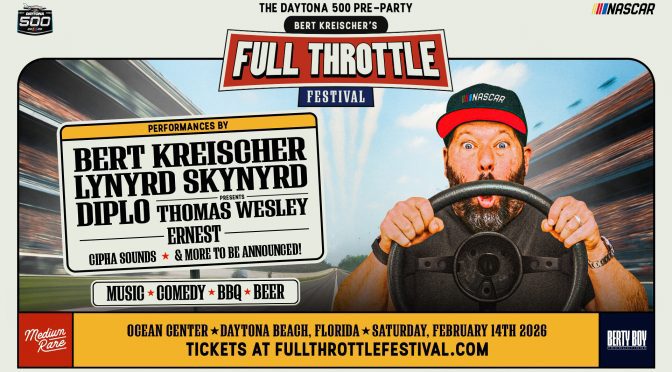
Comedian Bert Kreischer will headline the inaugural “Full Throttle Festival” in Daytona Beach, Florida, ahead of the 68th annual Daytona 500, featuring a full night of music, comedy and barbecue on the eve of the “Great American Race,” he and NASCAR announced Tuesday.
The pre-race bash will be held at the Ocean Center Convention Center in Daytona Beach on Saturday, Feb. 14, with live musical performances by legendary Southern rock band Lynyrd Skynyrd, Diplo’s country music project “Diplo Present Thomas Wesley” and breakout country artist ERNEST, with Kreischer set to perform as one of the festival’s founders alongside live-event producer Medium Rare.
The lineup for the Saturday night show sponsored by NASCAR was personally curated by Kreischer, according to a press release, setting up for a party set for up to 15,000 people before the 2026 Cup Series season gets underway.
“Race weekend in Daytona is the Super Bowl of speed, and for me, that means going absolutely massive,” Kreischer said in a release. “So, I figured, why not build the biggest, wildest, greatest pre-race party ever? We’re not just having a party; we’re bringing a rock show, a country show, a comedy show, and the kind of BBQ and beer that would make a pit crew chief proud. We’re stuffing all of that — the fun, the laughs, the meat sweats — inside the Ocean Center the night before the Daytona 500. It’s my ultimate dream NASCAR tailgate come to life, and I cannot wait to see Daytona go Full Throttle with us!”
Both barbecue and beer will be centered prominently throughout the Ocean Center event, featuring “a curated lineup of pitmasters and BBQ concepts from across Florida and beyond, along with festival-only dishes and race-weekend specials developed in collaboration with the event producers,” the press release said. Additionally, an expansive craft beer program and signature cocktails will be available for patrons age 21 and older.
Combining the barbecue and beverages with comedy and music is a match made in NASCAR heaven, with NASCAR sponsoring the event and Kreischer, co-host of the famed “2 Bears, 1 Cave” podcast with Tom Segura, leading the way. The festival will feature multiple NASCAR aspects, including interactive displays within the Ocean Center.
“Bert has cultivated one of the most passionate and dedicated fan bases in comedy, known for their love of a great time, high energy, and unpretentious fun,” Joe Silberzweig and Adam Richman, co-founders of Medium Rare, said in a release. “That profile is a direct mirror of the NASCAR fan community — they bring an unmatched level of intensity and celebratory spirit to race weekend. …
“With a lineup that’s built for that specific, fun-loving, American audience — hitting the best in music, comedy, BBQ, and beer — this event is engineered to become the essential annual party for the most electric fans in Daytona Beach.”
Tickets will go on sale Friday, Dec. 5, at 10 a.m. ET on www.FullThrottleFestival.com, and fans can pre-register for tickets now. A dedicated pre-sale opportunity will be available for select Daytona 500 ticket holders via email prior to the general on-sale opening, the release stated.
Tickets to the 2026 Daytona 500 are also available for the 68th running of the “Great American Race,” which will kick off the 2026 NASCAR Cup Series season on Sunday, Feb. 15 at 2 p.m. ET (FOX, MRN Radio, SiriusXM NASCAR Radio).
Editor’s note: This is the 12th in a series in which we review the top 30 drivers in the NASCAR Cup Series in reverse order of the 2025 final standings.
Driver: Ty Gibbs, No. 54 Joe Gibbs Racing Toyota
Crew chief: Tyler Allen
Final 2025 ranking: 19th
Key stats: 0 wins, 5 top fives, 10 top 10s, 304 laps led
How 2025 ended: The 2025 season ended swiftly for Gibbs. He finished no better than 16th in the first six races of the year and found himself 31st in points after the spring Martinsville race. Gibbs picked up the pace in the middle portion of the season, climbing inside the top 20 with an outside shot at the playoffs. However, Gibbs fell three positions shy of a postseason berth and completed his third full-time season still without that elusive first victory.
Best race: In a race of tire-shredding chaos, the Bristol Night Race was by far the No. 54 driver’s best performance of 2025. He dominated the evening, leading a race-high 201 laps. Unfortunately for Gibbs, he overshot his entry to pit road on a green-flag cycle late and fell out of contention for the win. He settled for a 10th-place result instead.
Other season highlights: Gibbs had a stellar summer run, finishing no worse than 14th and placing three top fives in a seven-race stretch between Michigan and Dover. That stretch also set up his run to become the inaugural champion of the NASCAR In-Season Challenge. Gibbs outdueled 31 other competitors and defeated Ty Dillon in the championship round at the Brickyard to take home the $1 million grand prize.
Stat to know: Gibbs’ 304 laps out front were the most a Cup driver led during the 2025 season without winning a race. Brad Keselowski was second in that category with 222 laps led.
Quotable: “For us, I feel the results have shown for sure. But there is not a time where I’ve felt I was down on my team or was bummed out. I just think it’s part of the process, we have a new team and I think our guys are really good and I have a lot of faith in our guys. There’s a lot of things behind the scenes and everyone makes a judgment call, but I know I can run good and that our team is capable of that. Sometimes it takes time, and we’ll get there. I have confidence in our team.” — Gibbs on his midseason rise after a poor start to 2025.
Looking ahead: If his third year wasn’t must-win territory, Year 4 has to be in 2026. Gibbs has already eclipsed the 100-plus start mark that typically sets the bar for when Cup drivers finally get over the hump and grab that first checkered flag. Road courses have been the young driver’s best discipline at the Cup level, so if that maiden win is coming, it is likeliest to occur in one of those five races next year.
Editor’s note: This is the 11th in a series in which we review the top 30 drivers in the NASCAR Cup Series in reverse order of the 2025 final standings.
Driver: Brad Keselowski, No. 6 Ford, RFK Racing Crew Chief: Jeremy Bullins Final 2025 Ranking: 20th Key Stats: 0 wins, 6 top fives, 13 top 10s, 222 laps led
How 2025 ended: RFK Racing wound up winless last season for the first time since 2021, and Keselowski finished third of the three drivers on the organization’s roster. All three — Keselowski, Chris Buescher and newcomer Ryan Preece — wound up in the “next five” just outside of the playoff field in the final standings, and each had close brushes with reaching Victory Lane. One the nearest misses for the 41-year-old co-owner/driver came in the season finale’s last lap, when he overcooked the entry for the final corner while leading in overtime, allowing Ryan Blaney to scoot past his No. 6 Ford for the victory at Phoenix Raceway.
Best race: A handful of candidates stand out among the races where the No. 6 team best contended, but besides Phoenix, Keselowski’s run in the heartland at Iowa Speedway was among his most stout performances. Keselowski started a season-best fifth and led a season-high 68 of the 350 laps in the Iowa Corn 350, and he appeared to get the upper hand when a crucial divide in teams’ pit-stop calls materialized in Stage 2. William Byron, however, made the most of the strategy split by stretching his fuel payload over the final 144 circuits, leaving Keselowski to settle for third place. While the victory fizzled, Keselowski gained five spots in the Cup Series standings to aid his late push for a postseason berth.
Other season highlights: Two more podium results this past year illustrated the No. 6 team’s potential. Keselowski led 46 laps — including at the white flag — at Atlanta, where Chase Elliott rode a teamwork train with Alex Bowman to a narrow victory, leaving the No. 6 team second again. After missing out on the 16-driver postseason field, he nearly accepted the role of playoff spoiler in Bristol’s annual night race, leading down the stretch before a late caution. A jam-up on the final restart gave Christopher Bell the avenue to escape for the victory, with Keselowski a hard-luck runner-up.
Stat to know: Keselowski’s average starting spot this season (20.9) was his lowest since his rookie Cup Series campaign in 2010. His last pole position was in September 2022 at Texas Motor Speedway, a 114-race drought.
Quotable: “We had a few flashes, but didn’t get any wins. So, you know, that’s what we need to do in this sport right now. It’s what it rewards. We had a couple really good runs, like Iowa was probably our best race, and a handful of seconds. So just need to convert those into wins going forward.”– Brad Keselowski, summing up his year on the eve of the Phoenix season finale.
Looking ahead: Keselowski grew RFK Racing into a three-car operation last season, and it appears its Cup Series roster will head into next year with its core largely intact. Keselowski hinted that RFK has some advanced interest in Ford’s IMSA operations, which would be a nod toward team founder Jack Roush’s run of sports-car success. On the personal side, the veteran driver is set to reach a milestone with his 600th Cup start on March 29 at Martinsville. Only 34 drivers in Cup Series history have reached that plateau.
Editor’s note: This is the 10th in a series in which we review the top 30 drivers in the NASCAR Cup Series in reverse order of the 2025 final standings.
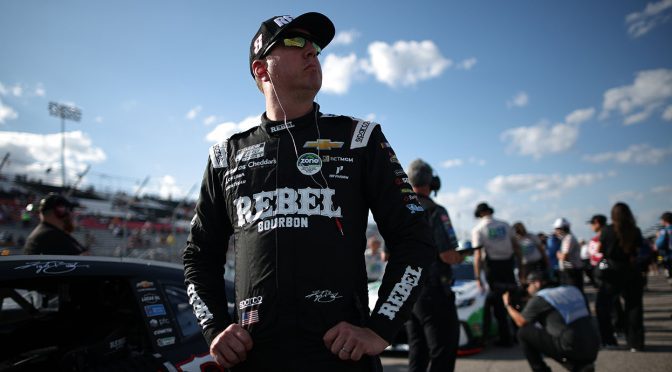
Driver: Kyle Busch, No. 8 Chevrolet, Richard Childress Racing Crew chiefs: Randall Burnett (31 races) and Andy Street (five races) Final 2025 Ranking:17th Key Stats: 0 wins, 3 top-fives, 10 top 10s, 88 laps led
How 2025 ended: The two-time NASCAR Cup Series champ closed out the season at Phoenix with a fifth-place finish, matching his best result of 2025. After missing the playoffs for the second consecutive year — and only second time of his career — Busch rallied to close out the season with three top 10s in the final 10-race stretch; notably doing so with two different crew chiefs. Randall Burnett, who guided Busch for most of his three-season tenure at Richard Childress Racing, announced he would move to a new team in 2026, and Andy Street was moved atop Busch’s pit box to close out the year.
Best race: For a driver who has been dominant on ovals for much of his celebrated career, Busch actually turned in his top single-day showing at the Circuit of The Americas road course in Austin, Texas. Busch started eighth and led six times for a season-best 42 laps out front before losing the lead to Christopher Bell and finishing fifth.
Other season highlights: Busch, who owns 34 Busch Light Pole Awards in his career, earned a pair of front row starts on the year, starting second at Talladega Superspeedway in the spring and then again at Michigan International Speedway five weeks later. Two of his best finishes happened on road courses — fifth at COTA and fifth again in the Chicago Street Race. While the two-time champion continues to regain form at RCR, he did put together a season-best three-race string of top 10 efforts in the early-going at the 1.5-mile Atlanta Motor Speedway (seventh), the Austin road course (fifth), and the one-mile Phoenix oval (eighth).
Stat to know: Busch’s low tally of two DNFs on the season was bettered by only one other full-time driver, Tyler Reddick, who had one. And while Busch’s average finish of 17.9 is not what is expected of the former champion, it did improve upon last year’s mark of 18.3.
Quotable: “There’s still a building process that’s got to take place to get us to that avenue. Being most consistent each and every week and finishing consistently in the top five is the easiest way to prove that you’re capable of your next win. So we’ve got to get to that point first.” — Busch said of returning to winning form and doing so with a new crew, Jim Pohlman, in 2026.
Looking ahead: Certainly, Busch was frustrated with the 2025 season outcome, but he is a champion, and there’s a reason he is the winningest national series driver in NASCAR history. The 40-year-old has said nothing about retirement and is clearly keen to turn the page and start fresh with a new crew chief (Pohlman), who expects to return the No. 8 team to playoff form. Pohlman led fellow Chevrolet driver Justin Allgaier to the 2024 NASCAR Xfinity Series championship and previously worked at RCR, spearheading the organization’s Next Gen car development. There is a lot of high hope for the team’s reorganized technical assets next season, which will include RCR’s former technical director. Mike Dillon, who will be taking a more active role. All of the restructuring looks promising for Busch, who started his now three-year tenure with the team in 2023 with a three-trophy season. His last win was on June 4, 2023, at Gateway, where he started from pole and led a dominating 121 of the 243 laps.
Editor’s note: This is the ninth in a series in which we review the top 30 drivers in the NASCAR Cup Series in reverse order of the 2025 final standings.
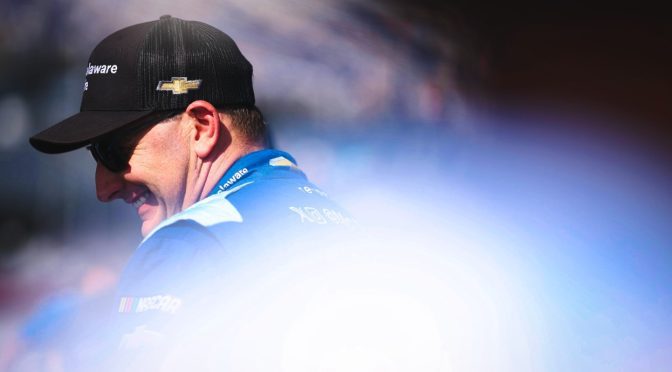
Driver: Michael McDowell, No. 71 Chevrolet, Spire Motorsports Crew chief: Travis Peterson Final 2025 Ranking: 22nd Key Stats: 0 wins, 3 top fives, 6 top 10s, 96 laps led
How 2025 ended: McDowell moved to Spire Motorsports for 2025 after a seven-year tenure with Front Row Motorsports. He ended his first year with Spire with a few high points, particularly in the playoffs with one top-five finish (fifth at Charlotte Roval) and two other top-10 finishes (eighth at both New Hampshire and in the season finale at Phoenix, his home track), as well as capturing the pole in the fall race at Talladega. Earlier in the season, he also earned a pole (spring race at Las Vegas) and had two other top-five showings on the road course events at Mexico City (fifth) and Sonoma (fourth). All in all, it was another usual, solid season from the Cup veteran whose 41st birthday is around the corner on Dec. 12.
Best race: McDowell’s best finish of the season was a fourth-place finish in Wine Country. However, extrapolating that a bit, he once again showed why he’s one of the most underrated road-course racers: his three best finishes of 2025 all came on road courses, fourth at Sonoma, and fifth at both Mexico City and Charlotte Roval. Another highlight was the Chicago Street Race, where he dominated, leading the first 31 laps (a season-high for him) and staying at the front of the field when a throttle cable broke. His team repaired the car after a lengthy pit stop, but the damage was done and he finished a disappointing 32nd.
Other season highlights: In addition to his road-course prowess, McDowell is a strong superspeedway racer (like when he won the 2021 Daytona 500). He led laps in the “Great American Race” and spring event at Talladega, but just missed the top 10 by finishing 11th in both races. McDowell continued to be one of the most consistent drivers in the series, with just two DNFs, both due to crashes (Texas and Pocono).
Stat to know: Of his 537 career Cup starts, McDowell has two wins (Daytona 500 and Indianapolis Road Course). Of his 14 career top-five finishes, seven have been on drafting-style tracks and seven others have been on road or street courses.
Quotable: “I know what would have happened. We would have won the race.” — Michael McDowell lamented what might have been in the Chicago Street Race if it had not been for the broken throttle cable.
Looking ahead: McDowell is scheduled to return to the No. 71 Spire entry next season alongside crew chief Travis Peterson, who made the move with McDowell over from Front Row Motorsports before the 2025 season. He will have a new teammate in Daniel Suárez, who joins the three-driver fold under a one-year contract to drive the No. 7 Chevrolet in 2026.