NASCAR.com spent a day at the Stewart-Haas Racing shop last month in Kannapolis, North Carolina, and here’s a list of the behind-the-scenes content that was produced:

Harvick, Childers look back at five years in racing
Stewart-Haas Racing at 10 years old, looking back at humble beginnings
Organization’s crew chiefs gearing up for big 2018 season
Tony Gibson’s new role: Getting back to the grass roots of racing
New addition, veteran presence prepares SHR for 2018
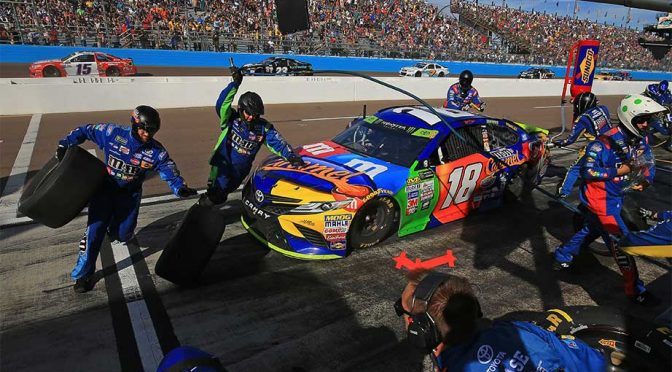
Exclusive: See SHR practice the five-person pit stop
Reggie Ruggiero’s legend lives on at Stewart-Haas Racing

RELATED: Paint scheme preview for 2018

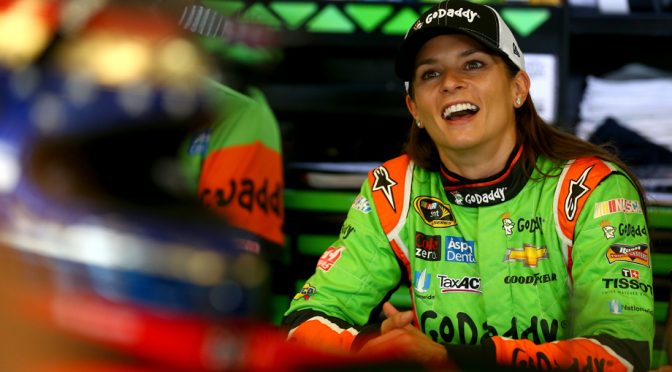
Danica Patrick took to Twitter to reveal the paint scheme for her Daytona 500 entry Friday morning, unveiling the Premium Motorsports No. 7 Chevrolet she’ll drive in what is scheduled to be her final NASCAR start.

The car is awash with plenty of signature green from longtime sponsor GoDaddy, which announced its backing for Patrick’s pair of farewell races on Jan. 18. Her car and fire suit will also include a “Danica Double” logo to commemorate her 2018 schedule of crown-jewel races — the Daytona 500 (Feb. 18, 2:30 p.m. ET, FOX, MRN, SiriusXM) and the Indianapolis 500 on May 27.

BUY: Danica Double gear


Other sponsorship locations on the car will be filled by Patrick’s other business endeavors. Her Warrior by Danica Patrick apparel line, Somnium Wine and her “Pretty Intense” health and fitness book are represented.

MORE: Patrick signs on with Premium, Eury Jr. for Daytona

Patrick, 35, announced her retirement from full-time driving last November after five full seasons in the Monster Energy NASCAR Cup Series. In setting the stage for her departure, she also announced plans for Daytona and Indy, though the details for those rides were sparse.

Many of those plans have since come together. GoDaddy, which supported her in both NASCAR and IndyCar, signed on to support both efforts. Patrick’s agreement with Premium was announced the following week, reuniting her both with the No. 7 and crew chief Tony Eury Jr.

Premium Motorsports has a charter, which guarantees her a spot in the 40-car field for The Great American Race.

PHOTOS: Danica through the years

With the rumbling of engines and roaring of fans working together in sync like the force of a speed metal band every weekend, NASCAR has to be considered the most rock ‘n roll, man of all major American sports.

I mean, the literal description for speed metal is “extremely fast, abrasive and technically demanding.” Sound familiar?

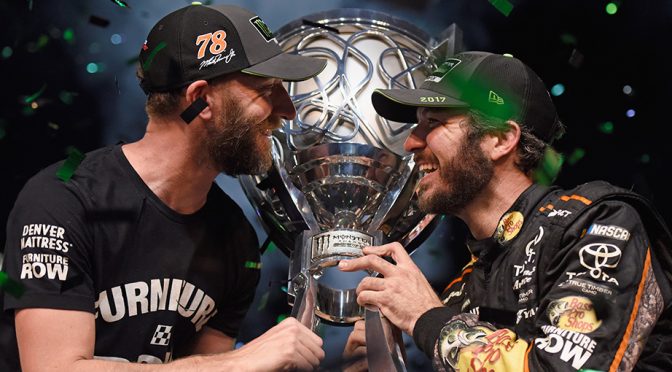
And Cole Pearn — the T-shirt-wearing, backcountry-skiing, hockey-playing Furniture Row Racing crew chief from Canada — might just be the embodiment of the perfect front man.

MORE: Cole Pearn guides No. 78 team through season of highs and lows

Reigning Monster Energy NASCAR Cup Series champion Martin Truex Jr. was asked at the NASCAR Media Tour presented by Charlotte Motor Speedway if his crew chief held “rock star status in his mind.”

Truex deadpanned, “To me, yes.”

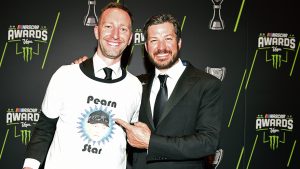
Heck, Pearn even has a T-shirt with his face on it and the nickname “Pearn Star” (that goes surprisingly well over a tuxedo), courtesy of our own @nascarcasm. If that isn’t as rawk as it gets, I don’t know what is.

Martin Truex Jr. Cole Pearn
Getty Images

He’s basically the next Neil Young or Geddy Lee, if they were ever to put on a headset atop a pit box.

“I don’t know about that (laughs),” Pearn told NASCAR.com. “You just do the best you can do and try as hard as you can and that’s really all you can do. I guess that’s for other people to decide on that.

“I think really our team as a whole is put together really well and we work well together. A lot of times I get the credit, but there’s a lot of people involved in that success, for sure.”

Alright, so maybe not the front man, but perhaps the mild-mannered bassist off to the side who secretly stays up at night writing all the songs and keeps everyone in time together on stage. Either way, he’s leading the charge and setting the tone.

RELATED: Cole Pearn honored with champion crew chief award

And finding that abrasive, extreme speed.

He’s relentless,” said Truex, who paired with Pearn for a series-high eight wins in 2017. “His work ethic and what he’s willing to do; he’ll do anything to win and to be competitive and get the job done. You know, him and all of our guys feed on that, whether it’s the shop guys or the road guys or even the pit crew. They feed off of that, and it’s been a big reason for our success.”

If the crew feeds off Pearn’s energy, then then the old saying is right — you are what you eat. Because the whole team is full of people that have that same drive.

“I think what’s fortunate about our group is there’s a lot of people that have that (machine-like work ethic) attitude,” Pearn said. “So you get a group of people with that similar never-give-up, relentless attitude then you all motivate each other and you all pick up each other and before long you’re way further ahead than any of you would be on your own.

Martin Truex Jr. Cole Pearn
Getty Images

“I’m really fortunate that, yeah, I’m like that, but we’ve got a lot of other people like that as well.”

That mentality sets quite the example for other teams across NASCAR, particularly the No. 78 Toyota’s competitors at the Monster Energy Series level.

Furniture Row was in a class of its own throughout all of 2017, with 19 stage wins paving the path to Truex’s first championship.

“I think the whole style is just trying to go faster than everybody else. I don’t know that there’s really any strategy,” said Pearn, a former NASCAR Pinty’s Series driver, himself. “ I think we were fortunate enough to qualify well most weeks and run up front which typically bodes well in the stages. … I don’t think anything changes from that standpoint.”

Either way, it’s apparent the old “underdog” title Furniture Row Racing seemed to be anointed with for so long is completely shed — championships tend to do that — and instead it’s now whatever the speed-metal equivalent of a Grammys-sweeping Bruno Mars is. Every other artist/driver/team is aiming to dethrone the champs.

Don’t expect anything to change in the FRR shop, however. Cole and the Pearn Stars never saw themselves in that dark horse light, anyway.

“I don’t think we ever really looked at ourselves as the underdogs. We always felt like we were as capable as anybody and in a great situation, especially since we were fortunate enough to get in with Toyota and be able to work with Joe Gibbs Racing. It really made it seem like running well on a weekly basis was definitely possible,” he said.

“I think we continue to have that confidence.”

And if there’s one thing all rock stars have in common, it’s confidence.

RELATED: Larson, Byron lead Wednesday Las Vegas test sessions

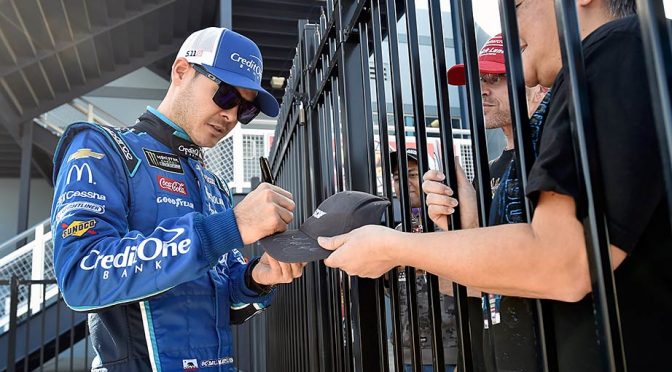
Kyle Larson scooted to the top of the leaderboard in the Thursday afternoon session as Monster Energy NASCAR Cup Series teams wrapped up a two-day organizational test at Las Vegas Motor Speedway.

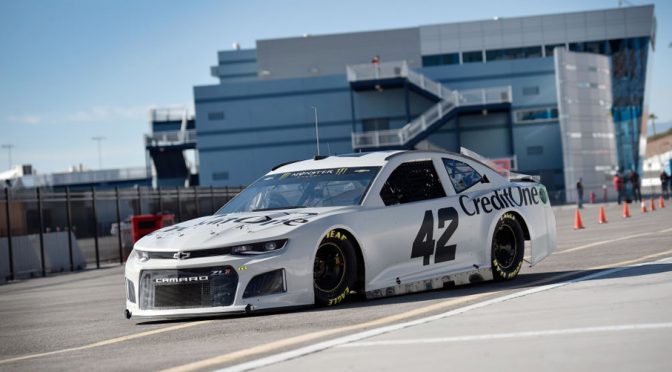
Larson lapped the 1.5-mile track in the Chip Ganassi Racing No. 42 Chevrolet with an unofficial speed of 191.259 mph, the fastest of the two-day test. Speeds rose significantly in the closing session, with several teams deploying their cars in qualifying trim near the end of the day.

“I mean, I feel like it was a good test and nice to know that we have a lot of speed still in our cars with all the changes and the new Camaro ZL1,” Larson said, “so we will see how it goes when we get to Daytona and on into the season at the 1.5-miles and stuff.”

Thursday was a repeat of Wednesday’s opening day, with Larson fastest in the afternoon and rookie William Byron topping the morning session.

Ryan Newman was second-fastest in the Thursday afternoon closing session, posting a 190.027 mph lap in the Richard Childress Racing No. 31 Chevrolet. The result made for a 1-2 sweep for Camaro ZL1 models, which will make their competition debut later this month at Daytona International Speedway.

“It’s good to see a couple of Chevrolets, two or three Chevrolets up on the top,” Newman said. “It wasn’t a true test to when 40 cars come back so we will go through our notes and see how well we can do with our homework.”

Erik Jones notched the third-fastest lap (190.007 mph) in the Joe Gibbs Racing No. 20 Toyota. Ricky Stenhouse Jr. and Kasey Kahne completed the top five.

The two-day show in the desert marked one of the first times fans saw the Chevrolet Camaro ZL1 in action. It’s also the final opportunity for teams to gather data before heading to Daytona International Speedway for Speedweeks — and ultimately to Atlanta, the first intermediate track on the schedule, following the Daytona 500.

The test is comprised of one car per organization and one wheel force test car each for Chevrolet, Ford and Toyota.

Pole qualifying for the Daytona 500 and the Advance Auto Parts Clash race are set for Feb. 11 at Daytona with the season-opening Daytona 500 on Feb. 18 (2:30 p.m. ET, FOX, MRN, SiriusXM NASCAR Radio).

Rank Driver Team Speed
1. Kyle Larson Chip Ganassi Racing 191.259
2. Ryan Newman Richard Childress Racing 190.027
3. Erik Jones Joe Gibbs Racing 190.007
4. Ricky Stenhouse Jr. Roush Fenway Racing 189.827
5. Kasey Kahne Leavine Family Racing 189.009
6. William Byron Hendrick Motorsports 187.689
7. Chris Buescher JTG Daugherty Racing 187.318
8. Darrell Wallace Jr. Richard Petty Motorsports 187.298
9. Ty Dillon Germain Racing 187.156
10. Cole Custer Go Fas Racing 186.761
11. Brad Keselowski Team Penske 185.656
12. Kurt Busch Stewart-Haas Racing 185.529
13. Paul Menard Wood Brothers Racing 185.077
14. Drew Herring Toyota Wheel Force 182.156
15. Justin Allgaier Chevrolet Wheel Force 181.099
16. David Ragan Ford Wheel Force 179.874

Byron sets pace in early Thursday session

William Byron continued his impressive display of speed in the Thursday morning session of a 16-driver organizational test at Las Vegas Motor Speedway.

The Hendrick Motorsports Sunoco Rookie of the Year candidate logged a lap at 189.281 mph on the 1.5-mile track, the fastest speed so far in the two-day test. Byron, the 2017 NASCAR Xfinity Series champion, drives the iconic No. 24 Chevrolet.

“It’s been awesome,” Byron said. “It’s been really a dream come true to get in one of these cars and have Hendrick Motorsports behind me, it’s really cool. It’s been a lot of fun; it’s been a blast.”

Fellow Chevrolet driver Kyle Larson of Chip Ganassi Racing was second on the speed charts at 189.129 mph, one day after posting the fastest overall speed.

MORE: Behind the scenes at Las Vegas test

Team Penske’s Brad Keselowski (188.745 mph), Richard Childress Racing’s Ryan Newman (188.686) and Stewart-Haas Racing veteran and defending Daytona 500 winner Kurt Busch (187.754 mph) completed the top five. Full results of the morning session can be found below.

In an odd note: there were two instances of two different drivers logging the exact same best-lap speed, a rarity. Paul Menard and Ty Dillon both ran a fast lap at 187.500 mph; Chris Buescher and Kasey Kahne each ran a best lap of 186.845 mph.

Rank Driver Team Speed
1. William Byron Hendrick Motorsports 189.281
2. Kyle Larson Chip Ganassi Racing 189.129
3. Brad Keselowski Team Penske 188.745
4. Ryan Newman Richard Childress Racing 188.686
5. Kurt Busch Stewart-Haas Racing 187.754
6. Paul Menard Wood Brothers Racing 187.500
7. Ty Dillon Germain Racing 187.500
8. Erik Jones Joe Gibbs Racing 187.240
9. Darrell Wallace Jr. Richard Petty Motorsports 187.195
10. Ricky Stenhouse Jr. Roush Fenway Racing 187.000
11. Chris Buescher JTG Daugherty Racing 186.845
12. Kasey Kahne Leavine Family Racing 186.845
13. Cole Custer Go Fas Racing 185.675
14. Drew Herring Toyota Wheel Force 184.319
15. Justin Allgaier Chevrolet Wheel Force 183.824
16. David Ragan Ford Wheel Force 180.542

With a series of larger-scale enhancements in recent years — the additions of stage racing and major modifications to the postseason format — the theme to 2018’s rules update from the NASCAR Research & Development Center relies on a defter touch.

Advancements in inspection technology, a streamlined system for pit stops and standardized at-track personnel sizes and the introduction of the Chevrolet Camaro ZL1 for the Monster Energy NASCAR Cup Series are among the highlights in this year’s update. Other changes governing car specifications and improving safety are numerous but more subtle, an evolution of the updates that have preceded them.

“The past couple years, we’ve had quite a few changes, so in this year, we’re kind of heading more into a stabilization mode,” said Gene Stefanyshyn, NASCAR Senior Vice President for Innovation and Racing Development. “We’re pretty happy with the racing that we have on the track.”

FIRST LOOK: 2018 inspection process

In the Monster Energy NASCAR Cup Series, the most noticeable vehicle change will be the introduction of the Camaro ZLI, which replaces the outgoing Chevrolet SS model. The new Chevy made a splashy debut in Detroit last August and will get its first taste of competition later this month at Daytona.

For Stefanyshyn, it’s a project with personal roots that span back to his time as an executive with General Motors.

“It does pull a bit at my heartstrings because I was responsible for the 2010 Camaro, which had been in hiatus for five years,” he says. “I was fortunate enough to run that project and put it back on the street. It’s very good to see the evolution of it.”

The recent trend of reducing vehicle downforce will continue, but without altering spoiler heights. The aerodynamic shifts will be achieved through use of a common splitter and radiator oil cooler, which Stefanyshyn says will drop downforce by approximately 225 pounds (185 in the front, 40 rear) to a level of 1,650 pounds.

RELATED: Chevrolet unveils Camaro ZL1

But the body changes have also extended to the realm of safety, with a superspeedway liftoff reduction to keep vehicles in all three national series from becoming airborne at NASCAR’s fastest tracks. The latest adjustments have added an estimated 30 mph to the liftoff threshold, Stefanyshyn says, in an effort to help reduce rollovers.

Other safety enhancements currently in development include a high-speed on-board camera designed to pair with Incident Data Recorders (IDR, or “black box”) to aid crash investigations. When the data recorder is tripped by a crash impact, the camera will also engage, capturing footage of the driver’s movement in the accident and providing another reference point for competition officials.

“This is going to be a very, very powerful tool,” Stefanyshyn says, indicating that the system is projected to be in place a third of the way through the season. “We have about 10 years of incident data recording. We have a very robust database that we use to continue to learn and improve. This will just be the next installment of analytical capability, which will allow us to be very precise and move very quickly.”

Changes are also in store for the NASCAR Xfinity Series, which will enter a transitional year for the new flange-fit composite bodies ahead of a full 2019 rollout. The series will also make improvements in the area of superspeedway bump-drafting, using a lower front fascia at Daytona and Talladega. The goal of mismatched front and rear bumper heights is to deter teams from locking on in the aerodynamic draft, a practice that’s currently officiated from race control.

The Xfinity tour will also expand the use of the aerodynamic package that debuted last year at Indianapolis Motor Speedway to largely positive reviews. That package — which utilized a taller rear spoiler, a restrictor plate and aero ducts to reduce the advantage of a leading car in ‘clean’ air — will also be used at Pocono Raceway and Michigan International Speedway this season.

For the Camping World Truck Series, the most impactful change is under the hood with the introduction of the optional NT1 engine. The Ilmor-produced powerplant, Stefanyshyn says, is intended to reduce engine development costs in the sport’s entry-level national series.

Other highlights of the 2018 NASCAR national series rules update, with some moves previously announced:

NASCAR will reduce the number of over-the-wall crew members from six to five for pit stops. The move will push teams to find new, creative ways to execute pit service.

 NASCAR will move to a standardized team roster for at-track personnel, helping to more clearly define the roles of teams’ support staff.

 A new inspection station, developed in conjunction with Hawk-Eye innovations, will provide more comprehensive scans of vehicle bodies. The system will replace the former Laser Inspection System and several measurements previously done by templates.

 Common pit guns will be in use for the 2018 season, in an effort to reduce the performance premium on equipment and place the emphasis on the pit crews’ athletic performance.

A new system for enforcing practice time penalties will be in effect for 2018. Instead of having car and driver sit idle on pit road, practice-time deductions will be enforced by covering the car in the garage. Practice holds will also be enforced at the end of practice sessions instead of the beginning.

NASCAR pit crews received the equivalent of a summer reading list shortly after school let out last November at Homestead-Miami Speedway. That primary offseason assignment: Adjust to new rules that reduce the over-the-wall crew from six people to five.

The move has pushed teams to tap into their collective creativity in the offseason, devising and practicing new choreography for quickly swapping four tires and adding fuel. But NASCAR’s competition department has had to make its own adjustments, learning from the teams’ feedback to clarify the guidelines for the new world order in pit service.

“We’re always throwing ideas back and forth,” says Scott Miller, NASCAR Senior Vice President of Competition. “A lot of the things we ultimately come up with as the final rules were not done by us in a vacuum, but done with lots of input from the people that it affects most.”

MORE R&D: Explaining inspection process | 2018 rules updates revealed 

Those regulations for pit crews and other team personnel were among the items unpacked Thursday at the NASCAR Research & Development Center in Concord, North Carolina, during what’s become an annual media briefing of the 2018 rules update. The related topic of standardized team rosters also was on the discussion docket, with at-track personnel numbers in place starting later this month at Daytona International Speedway.

The primary goals of the pit crew reduction were not only to reduce the number of team members on pit lane for safety reasons, but also to highlight the sports performance of over-the-wall crew members, some of whom will now be adapting to double-duty during stops.

“Not that there wasn’t a strong emphasis on the athlete in the old system, but we believe this even puts more emphasis on it,” Miller says. “One of the things that we’re really looking forward to is we’ve given them in the rules some flexibility with how they can use the men that are over the wall. So I think it’s going to be interesting to see how the teams develop the concept and who comes up with the best way to skin the cat, so to speak. We expect to see some varied strategies on that, which I think will be a very interesting story in the coming year.”

MORE: NASCAR to standardize rosters FAQ on roster moves

Tire carrying, tire changing and jacking up the car will now be handled by a group of four. One member of that quartet who performs double-duty will be allowed to stand on the ‘hot’ side of the pit wall, springing into action once the approaching car is one full pit box away from their stall. That move is intended to keep crew members from jumping off the top of the pit wall with both hands full, especially with a heavy tire.

A fifth person will serve as the fueler, who is prohibited from any other pit-stop duties. A light-duty extra person will be allowed over the wall only as a driver assist, with such responsibilities as providing food or drink to the driver and changing windshield tear-offs.

Pit-road officiating with a camera-based replay system went into effect before the 2015 season. This year, more monitoring will be in place to govern the use of standardized pit guns. Starting this year, NASCAR will issue standardized air wrenches, air hoses, regulators and control boxes to teams at each event, re-collecting them at the end of a race weekend.

The pit guns, made by Italian manufacturer Paoli, will feature a parity monitoring system to detect and deter any tampering. Competition officials indicated a similar system will eventually monitor and officiate lug-nut tightness, once the procedure passes through beta testing.

“That kind of goes along with the crew, back to emphasis on the athlete rather than emphasis on the equipment,” Miller says. “I think the athletes are certainly part of the show and part of the story, and the more emphasis that we can put on their performance as opposed to a fast jack or a fast pit gun, the better the level playing field and the better stories we have to tell.”

As announced last November, organizations will also need to comply with standardized sizes of at-track personnel once the season begins. The rules now delineate organizational staff (such as tech director, competition manager), road crew (engineers, crew/car chief, spotters) and pit crew.

RELATED: Teams in development mode with new pit-stop rules

Monster Energy NASCAR Cup Series teams will be allotted 12 road crew slots and five pit crew positions per vehicle. Three organizational staff will be allowed for one- or two-car teams; an additional organizational member will be permitted for larger teams. Positions such as team owners, public relations staff and the hauler driver are exempt from the cap.

“Several goals, but one of them is to just standardize the size of the team that’s at the race track. There was a lot of different things going on and we’re always trying to create a level playing field in every aspect of our sport, and I think just another element of that was … football teams have X amount of people on them and baseball teams have X amounts of people on them and now race teams have a defined number of team members.”

The new rules also allow for cross-over duties within an organization, such as a member of Hendrick Motorsports’ No. 24 team helping on the Hendrick No. 9 team. Roster spots can be shared outside of an organization — for instance, a Joe Gibbs Racing road crew member assisting with Furniture Row Racing, an allied team — but the crew member must be listed on both rosters.

Enforcement will be assisted by RFID chips embedded in credentials to monitor teams’ roster attendance. A roster cap infraction would result in the ejection of the offending individual from a race weekend, plus at least one other rostered crew member’s removal, to be chosen at NASCAR’s discretion.

NASCAR officials will also have visual cues regarding their proper roles, with crew members wearing two patches — one identifying their car number and a second, with an abbreviation denoting their duties. The patches will be affixed with Velcro, so that the car numbers and abbreviations can be switched when a crew member transfers to a different team or role.

“Ultimately, the fans will learn those designations and be able to relate to those crew members as say, the underneath guy on my favorite car,” Miller says. “… I think it will start to put faces to the people behind the scenes supporting the drivers, which I think ultimately will be a good thing for the sport.”
NASCAR will have a new inspection system in place for the 2018 season, with a full-fledged rollout of a process that was tested at four tracks last year. But by the time the garage opens for business later this month at Daytona, the procedure will already be a familiar one.

The process — developed by Hawk-Eye Innovations, the company that oversaw the debut of NASCAR’s Pit Road Officiating technology — will replace the laser inspection system (LIS) and claw template station that previously measured vehicle bodies. The new system is expected to be far more thorough in its scanning process, creating a three-dimensional heat map of a particular car and comparing it to the computer-aided drawing (CAD) for each manufacturer.

RELATED: Rules updates revealed for 2018Inside look at pit road officiating

It’s the latest evolution in technical rules enforcement that dates back to its primitive origins with manual measurements and wooden templates.

“It’s part of our DNA to try to innovate,” says John Probst, NASCAR Managing Director, Competition and Innovation. “I think if you look at the technology partners that we have — Microsoft and even Hawk-Eye, the supplier of this particular system — this isn’t our first step into this arena. … This is a natural extension for us to go in and start going from the officiating side of using technology and now starting to employ it on the inspection side.”

Two inspection stations will be a fixture at the race track this year, one in the Monster Energy Cup Series garage and the other for the NASCAR Xfinity Series. A third rig is set to be permanently stationed at the NASCAR Research and Development Center, and it’s already getting plenty of use.

Competition officials have kept that dedicated inspection bay open to teams in the offseason, allowing them to become better oriented with the setup. Since that open-door policy was established, organizations have booked more than 100 appointments and conducted more than 800 scans in preparation for the season.

“I think that as you go back and look at how NASCAR has evolved their inspection process over the years, not always did we have a lot of team involvement,” Probst says, noting that organizations have contributed design time, parts and engineering time to help develop the inspection efforts. “… I think that’s a really good step and a good omen for the industry moving forward in that we had such a collective effort to put this thing together.”

One notable difference is the new inspection bay’s appearance — a black tent with a collection of 16 cameras and eight projectors attached to its inner structure. An additional camera is positioned below the vehicle to measure the underside.

MORE: Pit road emphasis on athletesTeams rework pit stop techniques

Once a car rolls in, the projectors cast light in a series of lines and dots over the body to create a coordinate system for the cameras. In roughly 30 seconds, those cameras capture the measurements of those light patterns and create a 3-D heat map — also called a point cloud — that helps officials determine whether a car is in compliance.

“I think that the initial reaction may be that NASCAR’s changed something and oh, they’re clamping down on it harder, more difficult, and in a sense the biggest difference is we used to officiate in slices and templates,” Probst says. “Your body had to fit in a particular slice across the car or the length of the car. Now with this technology, we are inspecting the entire surface of the vehicle.”

The tolerances have changed. Last season, common elements of the car were officiated to 100-thousandths of an inch tolerance with manufacturer-specific parts measured to 190 thousandths. Now teams are measured to plus or minus 150 thousandths of an inch tolerance on all metal surfaces with 200 thousandths of an inch on glass surfaces.

The 3-D scans will be compared to manufacturer standards. Areas of the body in compliance will show up on the computer screen in green; areas outside the allowable tolerance will display in red or blue. The entire process is expected to take approximately three minutes for each car.

The system’s reliability has already been tested last season and into the winter months. Much like with the pit-road officiating system, the amount of cameras in the inspection bay create redundancies, so that if any camera were to fail, others would make up the difference. And in the event of any doomsday-style scenario where the new system was rendered inoperable, the old manual system would be held in reserve as a backup.

“It is, I believe, just like every other aspect of the sport, whether that be the way we officiate pit road or the way we execute timing and scoring,” said Scott Miller, NASCAR Senior Vice President of Competition. “It’s all as technology develops, we are trying to adapt technology to best serve the industry. This is just another example of that. I think obviously one of the big goals is just to create a level playing field for the competitors and that it goes a long way with its accuracy and capabilities to getting to that end.”

Editor’s note: This is the first in a series of 14 team previews on NASCAR.com. Next up: Richard Petty Motorsports on Feb. 2.

Front Row Motorsports


Manufacturer:
 Ford

Engine: Roush-Yates 

Drivers: Michael McDowell, No. 34; David Ragan, No. 38

Crew chiefs: Derrick Finley (McDowell), Seth Barbour (Ragan) 

2017 standings: McDowell, 26th in final standings (with Leavine Family Racing); Ragan, 30th in final standings; Landon Cassill piloted the No. 34 Ford to a 31st-place finish in the standings, as well.

What’s new: Once again, half of the Front Row lineup will look different. Michael McDowell makes the leap over to Ford and Front Row after a career-best 26th-place finish in the Monster Energy NASCAR Cup Series standings. He’ll have Derrick Finley calling the shots from atop the pit box after the crew chief held those duties for Ragan in 2017. Ragan, meanwhile, will have Seth Barbour leading the way. The duo previously worked together when Barbour was an engineer on Ragan’s No. 6 Roush Fenway Racing team.

What to watch: The team took a small step back in 2017 after making the NASCAR Playoffs the year before with then-driver Chris Buescher. Look for Ragan to be a little more competitive this season, his second straight with the organization and fifth overall with FRM. Keep an eye on McDowell, as well, as his career continues its slow, but steady climb.

Key question(s): Can this team get back to Victory Lane? Is a top-20 standings finish realistic for either Ragan or McDowell? If either can sneak into the NASCAR Playoffs, can they make a run?

DRIVERS

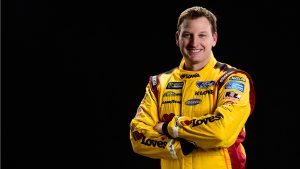
Michael McDowell, No. 34 Love’s Ford: McDowell has been a mainstay in the Monster Energy Series on a part-time basis since 2008, but the 33-year-old finally started all 36 races in 2017, his best year yet. The first top-five finish of his career came in July at Daytona and just about all of his peripheral stats marked career highs.

Michael McDowell
Jared C. Tilton | Getty Images

The veteran seems to perform well at restrictor-plate tracks (Daytona and Talladega are two of his three best tracks based on average finish) so the move to an organization known for being among the typical wild cards at those venues bodes well for how he’ll fit in.

“This, for sure, is the best piece I’ll sit in or have sat in for the Daytona 500 – not just because it’s got a Roush Yates powerhouse underneath it, but just the fact that the Fords are so strong at the plate races,” McDowell said at NASCAR Media Tour presented by Charlotte Motor Speedway. “Roush has worked really hard on making sure that we can be the same as them at the superspeedways, so that we can operate like a four-car team, and then we really feel like we’re gonna have an opportunity to challenge for a win there.”


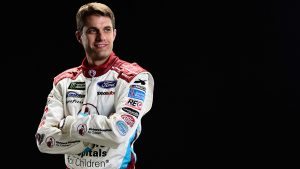
David Ragan, No. 38 Shriners Hospitals for Children Ford: There were some pros and cons to Ragan’s first year back at Front Row after a one-year stop at BK Racing. While he did have three top-10 finishes — his most with the team and most since 2011 with Roush Fenway Racing — his 30th-place finish in the standings was his second worst with FRM. The seven lead-lap finishes is tied for the second-worst showing of his career, as well. Perhaps a full year back at FRM under his belt and a veteran-laced roster helps boost the team in 2018.

David Ragan
Jared C. Tilton | Getty Images

Ragan knows the road to competitiveness week in and week out at this level is a winding one, but the organization is on the right path. “I feel like Front Row Motorsports has taken another step to being more competitive on the race track and off the race track,” the veteran said at NASCAR Media Tour presented by Charlotte Motor Speedway. ” … Ford has stepped up their program a little bit and committed to Front Row Motorsports as much as they ever have. It is a long hard process to turn from a startup team into a race winning team, which Front Row has won a couple races, to be a consistent contender for top-10 and top-15’s. That is our next goal.”

William Byron of Hendrick Motorsports and Kyle Larson of Chip Ganassi Racing led the morning and afternoon sessions, respectively, during open testing Wednesday at Las Vegas Motor Speedway.

Byron’s top speed of 188.298 mph was good enough to beat out Ryan Newman, who was second at 188.186 mph for Richard Childress Racing. Stewart-Haas Racing’s Kurt Busch, Larson and Joe Gibbs Racing’s Erik Jones rounded out the top five during the morning session. Full results are at the bottom of this story.

RELATED: Behind the scenes at Las Vegas test

In the afternoon session, Larson led with a top speed of 188.403 mph, which held up as the top speed of the day. Newman again finished second (187.162 mph) with Byron, Kurt Busch and Jones rounding out the top five. Sixteen drivers tested Wednesday on the 1.5-mile track, site of the third Monster Energy NASCAR Cup Series race of the 2018 season and the NASCAR Playoff opener in September.

The test concludes tomorrow after another round of practices.

Wednesday was also the first time for some drivers of the Chevrolet Camaro ZL1 to try out the new model on the track.

“It’s nice to get back in a stock car,” Larson said. “I’ve still done a fair bit of racing this offseason. But it’s been a couple of months since I’ve been in a (stock) car. It was nice to get some laps here and feel like we’ve got some pretty good speed and good balance with our new Camaro ZL1.”

Rank Driver Team Speed
1. Kyle Larson Chip Ganassi Racing 188.403
2. William Byron Hendrick Motorsports 188.298
3. Ryan Newman Richard Childress Racing 188.186
4. Kurt Busch Stewart-Haas Racing 187.846
5. Erik Jones Joe Gibbs Racing 186.722
6. Brad Keselowski Team Penske 186.574
7. Ricky Stenhouse Jr. Roush Fenway Racing 186.245
8. Kasey Kahne Leavine Family Racing 186.200
9. Darrell Wallace Jr. Richard Petty Motorsports 185.970
10. Paul Menard Wood Brothers Racing 185.701
11. Chris Buescher JTG Daugherty Racing 185.631
12. Ty Dillon Germain Racing 185.052
13. Drew Herring Toyota Wheel Force 184.887
14. Cole Custer Go Fas Racing 184.225
15. Justin Allgaier Chevrolet Wheel Force 182.761
16. David Ragan Ford Wheel Force 181.971


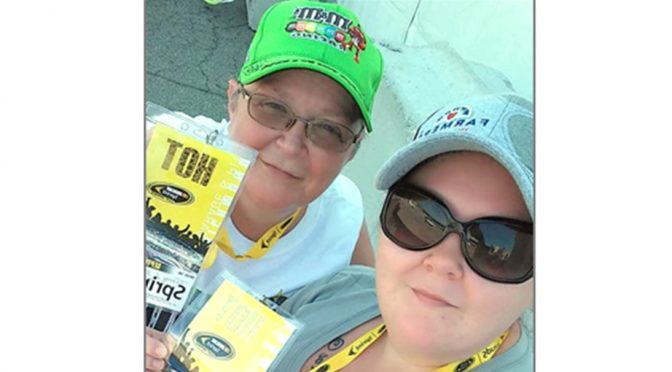
Name: Tammy
Originally From: Ohio
Current City: Newport News, Virginia
Member since: 2008

Getting to know Tammy

Q. Why did you join the Official NASCAR Fan Council?
“I heard that the NASCAR Fan Council would really listen to the voice of the fans and I wanted to become a part of that! I knew if they were really listening that some things would change, for example, when they asked us about the double file restarts. I thought it was awesome.”

Q. How did you first become interested in NASCAR?
“I remember when I was a kid, my Dad would listen to NASCAR on the radio. Every once in a while, it was on television. We would go camping every weekend and we would listen to the race on the radio. My Dad is responsible for my addiction to NASCAR. It is something that we have in common and can talk about at any given moment.”

Q. What makes NASCAR special for you?
“It is such a family sport. I have now gotten my daughter into NASCAR. We go to the races together either on the weekend or for vacation. It brings people together. The drivers are so accessible to the fans, which makes it all the more special!”

Q: Do you have any favorite NASCAR memories or traditions?
“One of my favorite memories surrounding NASCAR is when I won hot passes for myself and my daughter at Richmond the weekend of September 2016. We got to do the pace car ride, go to the driver’s meeting, be at the stage for driver intros and go to Victory Lane for the celebration. I even got Jeff Gordon’s autograph while in the garage. That had to be the best experience and the most fun I have ever had!! I cannot even describe the anticipation of that weekend.”

Q: If you could go to any NASCAR race/track, where would you go?
“The Daytona 500 is on my Bucket List, but I also love going to Charlotte Motor Speedway!”

Q: Do you have a favorite in any of the following categories?
Driver: “Kyle Busch”
Track: “Charlotte Motor Speedway”
Memorabilia: “I have a Hoodie that has over 80 autographs on it including Kyle Busch, Jeff Gordon, and Dale Earnhardt Jr.  I was also able to get a race-used tire from Jeff Gordon’s final race at Darlington!”

Q: What do you like to do in your free time?
“Watch NASCAR and attend races!!! If there is no race, then just relax and watch a movie.”

Q: What is your family like?
“I have 2 kids. My Daughter, is my best friend and race buddy for all the races that we go to. I also have a son who followed his parents’ footsteps and joined the Navy! He is now in the Military Sealift Command.”

Q: What would be your dream vacation?
“I would Love to go to Daytona for all of Daytona week and the 500, that would be my dream vacation!”

From all of us at NASCAR, we thank Tammy for her continued support and look forward to hearing from her in 2018.