RELATED: Buy tickets for Indianapolis races

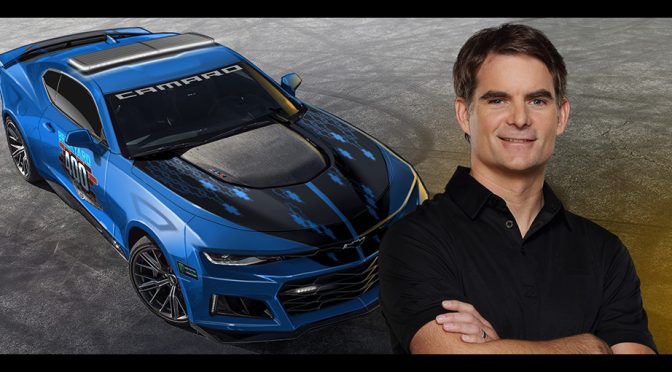
INDIANAPOLIS, Thursday, June 29, 2017 – NASCAR legend Jeff Gordon will drive the 2017 Chevrolet Camaro ZL1 Pace Car to lead the field to the start of the 24th annual Brickyard 400 on Sunday, July 23 at the Indianapolis Motor Speedway.

Four-time NASCAR Cup Series champion Gordon will return in the Pace Car to the historic, 2.5-mile oval at IMS, where he is the only driver to win the Brickyard 400 five times (1994, 1998, 2001, 2004, 2014).

California native Gordon, who grew up in nearby Pittsboro, Indiana, has served as a NASCAR analyst for FOX Sports since retiring full time from the Cup Series after the 2015 season. He competed in the 2016 Brickyard 400 for Hendrick Motorsports as part of a limited schedule while serving as a replacement for the injured Dale Earnhardt Jr.

“It’s hard to believe this is the 24th running of the Brickyard 400,” Gordon said. “This has been a very special race over the years – for me and NASCAR. Winning at the famous Indianapolis Motor Speedway was a dream of mine as a kid. I’m excited to lead the field to green at this year’s Brickyard 400, and I appreciate Doug Boles and Chevrolet for giving me this opportunity.”

Gordon’s 23-year career in the Cup Series was one of the greatest in NASCAR history. His five Brickyard 400 victories and three Daytona 500 victories are among the 93 Cup Series wins he earned during his career, third on the all-time list. His four season championships stand fourth on the all-time NASCAR list.

The incomparable career of Gordon received a huge boost when he won the inaugural Brickyard 400 on Aug. 6, 1994 at IMS. It was the first race for vehicles other than open-wheel cars at the facility since 1909 and the first race of any kind at IMS other than the Indianapolis 500 since 1916.

Gordon competed in the first 23 Brickyard 400 races, with five victories, three poles and 17 top-10 finishes.

Hoosier racing fans also remember Gordon for his success in United States Auto Club (USAC) competition before moving to NASCAR. Gordon was the 1990 USAC National Midget Series champion and followed with the 1991 USAC Silver Crown Series championship.

“Jeff Gordon is one of the greatest drivers to ever compete at the Indianapolis Motor Speedway, and we’re honored to welcome him back to pace the 24th annual Brickyard 400,” IMS President J. Douglas Boles said. “It’s only fitting Jeff will be out front and leading, a place where the fans of this great race are accustomed to seeing him.”

Gordon will drive a 2017 Camaro ZL1 that features:

  • LT4 6.2L direct-injected, supercharged V-8
  • All-new 10-speed automatic transmission
  • Magnetic Ride Control
  • Electronic limited-slip differential
  • 20-inch forged aluminum wheels
  • Goodyear Eagle F1 Supercar tires
  • Brembo brakes with six-piston front calipers and two-piece rotors
  • 1.02g max cornering
  • 0-60 mph in 3.5 seconds
  • Performance Data Recorder

The only content separating the pace car from a production model is unique graphics and an integrated Whelen LED safety lighting system.

Chevrolet has a storied history with the Indianapolis Motor Speedway. Chevrolet was founded in 1911, the year of the inaugural Indianapolis 500-Mile Race, and company cofounder Louis Chevrolet, along with brothers Arthur and Gaston, competed in early Indy 500 races. Arthur Chevrolet competed in the 1911 race, and Gaston Chevrolet won it in 1920.

A Chevrolet has won the Brickyard 400 16 times, more than five times as many victories as the next-closest manufacturer.

“This year marks the 24th anniversary of NASCAR racing at the Brickyard, and it is truly special that Chevrolet has been there from the beginning racing and pacing,” said Steve Majoros, director of marketing, Chevrolet Cars and Crossovers. “The Camaro ZL1 delivers unprecedented levels of technology and track capability, and we are proud to have Jeff Gordon behind the wheel of the Camaro ZL1 Pace Car.”

Practice and qualifying for the 24th Brickyard 400 take place Saturday, July 22 at IMS, with the 160-lap race starting at 2:30 p.m. (ET) Sunday, July 23. NASCAR XFINITY Series racing also will take place during the event with the Lilly Diabetes 250. Practice and qualifying are Friday, July 21 and Saturday, July 22, with the 100-lap race starting at 3:30 p.m. Saturday.

Visit IMS.com to purchase tickets for the Brickyard 400 and Lilly Diabetes 250, and for more information on the complete event schedule.
BUY TICKETS: See the Daytona races
RELATED: Full schedule for Daytona

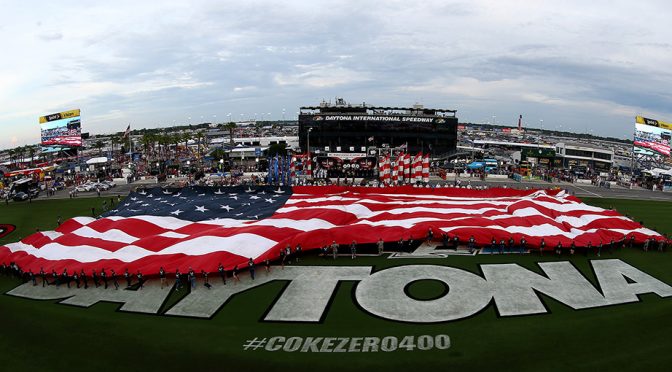
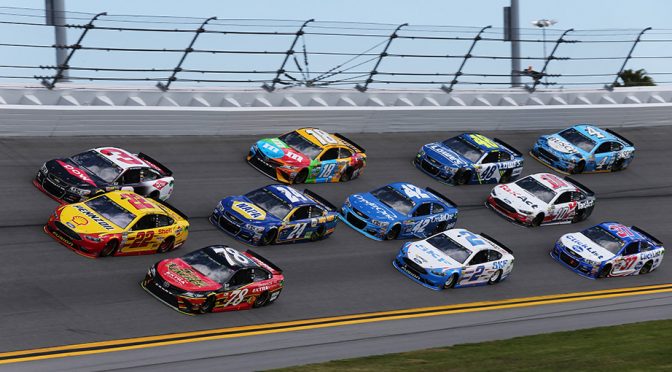
The Monster Energy NASCAR Cup Series and NASCAR XFINITY Series head to Daytona International Speedway for some racing ahead of the Fourth of July holiday.

Below are the stage lengths for each race: Click here to bookmark stage lengths for every race this season.

Monster Energy NASCAR Cup Series (Race is Saturday, 7:30 p.m. ET, NBC)

Stage 1: Ends on Lap 40
Stage 2: Ends on Lap 80
Final Stage: Scheduled to end on Lap 160

NASCAR XFINITY Series (Race is Friday, 7:30 p.m. ET, NBCSN)

Stage 1: Ends on Lap 30
Stage 2: Ends on Lap 60
Final Stage: Scheduled to end on Lap 100

RELATED: 2017 iRacing

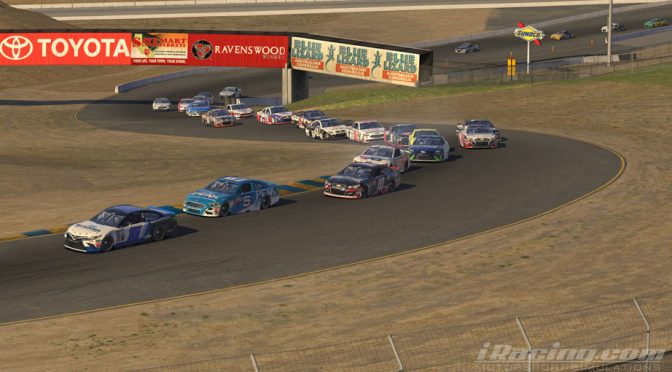
Bobby Zalenski dominated the second half of the NASCAR PEAK Antifreeze Series race at Sonoma Raceway, leading the final 29 laps on the way to his second victory of 2017. Zalenski started fifth and had one of the strongest cars in the field but used pit strategy to pass Corey Vincent for the lead. Zalenski pitted a lap earlier than Vincent and that extra lap on new tires made all the difference as Zalenski pulled away to win by 4.5 seconds.

Vincent finished second after leading eight laps, but could not keep up with Zalenski over the long run. Nick Ottinger came home third after briefly looking like he could run down the two front-runners before losing several seconds when he nearly crashed in in Turn 9. Matt Bussa was fourth and Taylor Hurst fifth at the checkers as none of the top five finishers started farther back than ninth, a testament to how important qualifying and track position were to the outcome.

The race started with a flurry of activity as Zack Novak led from the pole until Lap 8 when Michael Conti, who had been hounding Novak in every braking zone, finally slipped past. Conti looked to have a very strong car but a blown engine took him out of the race on Lap 10.

Conti’s misfortune handed the lead back to Novak, who proceeded to hold it until Vincent passed him after Novak got loose exiting Turn 3A and the two made slight contact. During the scuffle Zalenski also slipped by Novak and into second place.

Vincent continued holding a slight lead for the rest of the first run, but Zalenski chose to forgo the optimal strategy and pit on Lap 20 of 55, hoping that his one-lap advantage on tires would give him the lead. The strategy worked as Zalenski passed Vincent after the leader pitted the next lap.

Farther back in the field, Ottinger decided to run a more conventional strategy, pitting on Lap 26. This would give him fresher tires at the end of the race but it cost him time in the short run. Ottinger had more than 10 seconds to erase in the last 28 laps but quickly got to work, cutting into Zalenski’s lead at more than half a second per lap.

With 14 laps to go, Ottinger had cut the gap to under four seconds before his Turn 9 “moment.” Check that — moments. Ottinger slid sideways for most of the corner and dropped back to eight seconds behind the leader, ending his shot at catching the two cars in front of him.

Meanwhile, Zalenski had to work for the first 15 laps of the final run as Vincent was quick on new tires. However, he faded late, effectively handing the race to Zalenski so long as the leader could successfully work lapped traffic.

Zalenski’s win also gave him the series points lead over Ray Alfalla who finds himself 23 points back following an uncharacteristically poor race. Alfalla could only manage a 23rd-place starting spot and never made much headway before crashing in Turn 4 late in the race, leaving him classified 23rd at the finish. Logan Clampitt is third in the standings, 44 points out of the lead despite missing a race earlier in the season, while Vincent and Novak round out the top five. Notably absent is Ryan Luza, who fell to sixth in the standings after getting into a wreck with Cody Byus which left him 38th at the finish.

With the NASCAR PEAK Antifreeze Series playoffs quickly approaching the sim racers head back to an oval for Round 10, New Hampshire Motor Speedway to be exact. Overtaking on the flat, 1-mile track is notoriously tough, often leading to chaotic sim racing, especially on restarts. Look for qualifying and pit strategy to be even more important than usual.

Can Luza and Alfalla rebound from their dismal runs at Sonoma? Can Zalenski keep riding the wave of momentum to his third win of the season? Find out in two weeks on iRacing Live!

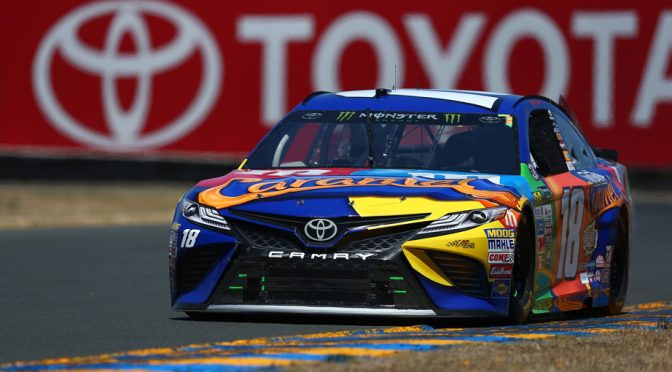
The No. 18 Joe Gibbs Racing team in the Monster Energy NASCAR Cup Series was penalized Wednesday for lug nuts not properly installed in last weekend’s race at Sonoma Raceway.

Per the penalty, crew chief Ben Beshore was fined $20,000 and suspended for one race.

Kyle Busch finished fifth in the Toyota / Save Mart 350 in the No. 18 Toyota, working with a team that already had been utilizing an interim crew chief in Beshore, who was a replacement for Adam Stevens. Stevens is due to serve the final race of a four-race suspension Saturday in Daytona, a penalty incurred for an errant wheel during the Monster Energy NASCAR Cup Series’ June 4 event at Dover International Speedway.

RELATED: More on Stevens’ suspension

A spokesperson for Joe Gibbs Racing said that team engineer Jacob Canter would serve as crew chief for the No. 18 this weekend at Daytona International Speedway.

Busch led once for three laps at Sonoma. Sunday marked his third consecutive top-10 finish on Beshore’s watch.

In the XFINITY Series, the No. 21 Richard Childress Racing team was penalized following last weekend’s race in Iowa for lug nuts not properly installed. Crew chief Danny Stockman Jr. was fined $5,000.

Daniel Hemric drove the No. 21 Chevrolet to a 21st-place finish in last Saturday’s XFINITY Series American Ethanol E15 250 Presented by Enogen.

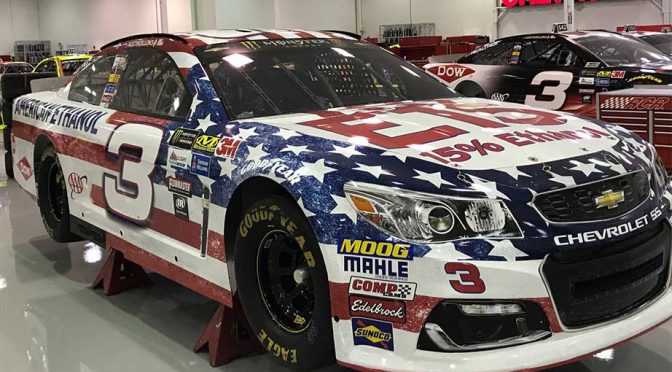
There typically are plenty of stars and stripes at the Daytona summer race. Austin Dillon’s No. 3 Richard Childress Racing Chevrolet will keep that tradition going this weekend at the 2.5-mile track.

The July 1 Coke Zero 400 Powered by Coca-Cola (7:30 p.m. ET, NBC, MRN, SiriusXM NASCAR Radio) also is the conclusion of the annual NASCAR Salutes Refreshed by Coca-Cola initiative, something in which American Ethanol — the sponsor on Dillon’s No. 3 — wanted to take part.

Veterans make up 19 percent of American Ethanol industry’s work force, so the scheme coincides nicely with the Independence Day Weekend race.

On Tuesday, NASCAR also announced NASCAR XFINITY Series drivers will bear the names of active military units and installations on their race car windshields during Friday’s Coca-Cola Firecracker 250 (7:30 p.m. ET on NBCSN, MRN and SiriusXM NASCAR Radio) as part of the NASCAR Salutes platform.

Military installations like U.S. Coast Guard Station Port Canaveral, USS William P. Lawrence (DDG-110) and 2nd Infantry Brigade Combat Team, 3rd Infantry Division are among the military units and installations from all five branches of the U.S. Armed Forces that will replace the XFINITY header on NASCAR XFINITY Series cars.

Here’s another look at Dillon’s scheme:

RELATED: Appreci88ion for fans prevalent in Junior’s final season

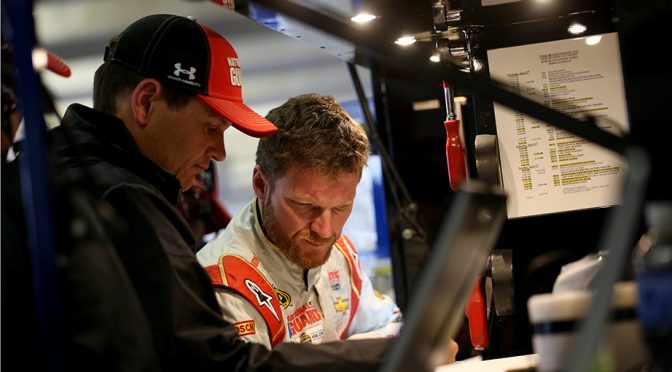
For his final full-time season as a driver, NASCAR.com will offer an analytical preview on Dale Earnhardt Jr. ahead of every remaining Monster Energy NASCAR Cup Series race.

Race: Coke Zero 400 powered by Coca-Cola at Daytona International Speedway

Date: Saturday, July 1, 7:30 p.m. ET (NBC, MRN, SiriusXM NASCAR Radio)

Previous five results at Daytona: 37th, 21st, 36th, 1st, 3rd

RELATED: See every Dale Jr. win in the sport’s top series

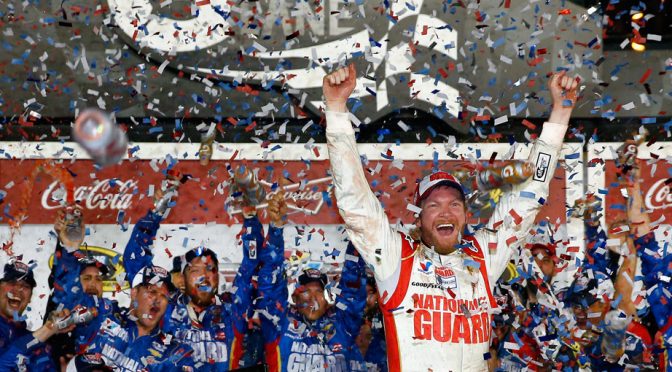
Notable: Dale Earnhardt Jr. has four wins at Daytona International Speedway, with two coming in his last seven starts — one at the Daytona 500 (2014) and one at the Coke Zero 400 (2015). Junior has 13 top-five finishes at Daytona and an average finish of 14.3. Two of his last three starts at Daytona have ended with wrecks.

Memorable moment: Probably the most iconic win of Dale Jr.’s career came at Daytona in July 2001. With NASCAR still reeling from the death of his father, Dale Earnhardt Sr., on the last lap of the Daytona 500, his namesake son led 116 laps and captured his first win at the track in just his fourth start there.

Quotable: “I have great memories at all of these tracks, Daytona included,” Earnhardt Jr. said in a team release. “I am going to be coming back to these tracks whether I’m driving or not, and I want to continue to be part of the sport. It’s hard for me to put into words what it being my last Cup race at Daytona might feel like because I don’t know what that is going to feel like, and you never say never. Our whole idea on finishing up the season is to try to show our appreciation and express that to our fans and everyone in the industry on making this an incredibly enjoyable ride.”

The Coke Zero 400 at Daytona International Speedway is this weekend. Vote on Dale Earnhardt Jr.’s potential final Daytona race, which young gun might break through and more.


DAYTONA BEACH, Fla. — There is absolutely no hint of what awaits inside this building a half-mile from Daytona International Speedway — its façade is simple, all-white siding and there are no neon signs to identify it or even to pique interest.

The structure blends in naturally with its parking lot neighbor, the speedway’s all-business offices handling the comparatively mundane tasks of race credential pick-up and NASCAR licensing.

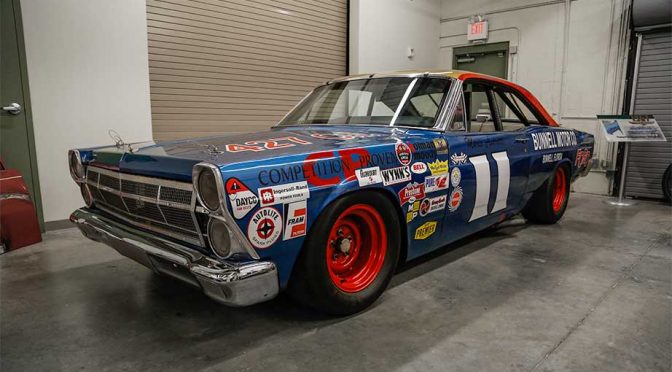
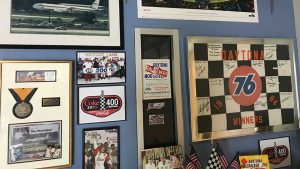
The white building next door, purposely free of any distinctive branding, is the ISC Archives & Research Center and inside is a racing fan’s version of Santa’s delivery on Christmas morning.  When you walk in the door, your eyes widen and then you blink and shake your head at what greets you — an involuntary reaction to the rooms of racing treasure before you.

Hundreds of framed photos of racing heroes and Hall of Famers hang from the walls — black and white shots of Richard Petty, Ralph Earnhardt, the Wood Brothers, the Allison family and A.J. Foyt.

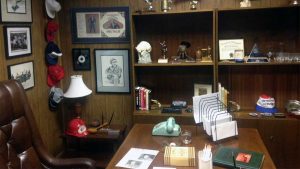
There are tall trophies and antique typewriters, a replica of Mario Andretti’s 1967 Daytona 500 winning race car, and a re-creation of NASCAR founder Bill France Sr.’s office — complete with painstaking detail of the sport’s decades-old nerve center, his actual pencils and business cards sitting on his desk and light brown paneling on the walls.

Artifacts crowd the tables lining every wall — shelving from floor to ceiling displays memorabilia.

It is a racing fan’s dream field trip — a compelling, carefully maintained exhibition of sport and life from bygone eras.

“The best part about it may be when during the tours three times a week the grown ups come in and start acting like kids when they see all the memorabilia and trophies,” said Herb Branham, director of the ISC Archives and Research Center and a public relations representative with the NASCAR Foundation.

“It’s nice to see people get excited about stuff like that. This place is a good reminder of how many people still love the sport and how much they love the sport.”

This isn’t only a historical exclamation point for NASCAR either.

The archives are a collection and reflection of all those who have raced on the storied Daytona high banks and its infield road course located a half-mile away — sports cars, stock cars and motorcycles, too.

Branham has carefully researched and revived this important holder of history and it is a five-sense experience to visit.

It is purposely not open to the public, but is only part of the VIP Tour experience at the World Center of Racing. Three days a week, those visitors are treated to the collection.

“That’s kind of always been the way NASCAR and ISC have wanted it,” Branham explained. “It goes back to Bill France Jr. when the archives were at another facility even. He purposely wanted it to be low key because it’s like a treasure chest of all the memorabilia that’s been gathered over the years.”

The famed Daytona beach races — the start of it all here – hold a sizable presence, as you might expect. There is a fantastic photo of the late Ralph DePalma pointing to his name on a “Measured Mile” sign. He drove the distance 149 mph on Feb. 12, 1919 setting what was a world land speed record, at the time.

There are original versions of the track’s timing and scoring devices. Many of the decades-old mechanisms once used are now rusted and yellowed. Sitting next to one is a photo of Joe Epton, the original Chief of Timing and Scoring for NASCAR wearing his uniform — a black and white striped shirt and white pants, similar to a football referee.

Sitting atop a 1950s-era Associated Press-used tele-type machine is a black and white photo from 1956 showing the sign for “NASCAR Press Headquarters” planted in the Daytona Beach sand.

There is, of course, also one of NASCAR’s most famous photos. The late-arriving Air Force One plane landing at the Daytona airport behind the speedway just as the 1984 Firecracker 400 field is racing on the track’s long back straightaway. President Ronald Reagan gave the starting command for the race from inside the plane in the air as it approached the airport. Eventual race winner, Richard Petty’s iconic No. 43 blue car is appropriately centered in the photo.

Next to the photo is the black and white checkered flag from Victory Lane that afternoon with Petty’s signature and the number “200” wrapped in Petty’s “y” from the autograph. It would be Petty’s 200th and final Victory Lane celebration as a driver.

There is an area named “Earnhardt Corner,” dedicated to the family’s three generations of legendary racers. A large framed poster from 2001 promoting the non-points Budweiser Shootout race at Daytona features “Earnhardt vs. Earnhardt.” It shows the great seven-time champ Dale Earnhardt Sr. wearing sunglasses and a smirk standing alongside his then 26-year-old son Dale Jr., sporting his blond hair highlights at the time.

There are what seems like hundreds of filing cabinets — each drawer meticulously alphabetized and marked. Dale Earnhardt and Bill Elliott share a drawer. So too do Greg Sacks and Elliott Sadler. “The King” Petty has one all his own.

Inside these cabinets are thousands of printed photos, early NASCAR business documents and even Bill France Sr.’s personal correspondence.

Dale Earnhardt’s first NASCAR license application and the original minutes from that famed NASCAR organizational meeting at Daytona Beach’s Streamline Hotel are among the cherished artifacts, too.

“It’s a combination of all kinds of classic photos and important documents and race records,” Branham said. “It’s a mixture of the real, real confidential papers and a lot of fun stuff.”

Branham has learned in his three years in this position that race car drivers are as interested in the archives as the fans who have cheered those drivers on. The Wood brothers and Bobby and Donnie Allison have come to tour the building. Dale Earnhardt Jr. was here recently.

“Dale Jr. came by and did an hour and a half visit with us, which was just absolutely awesome,” Branham said. “You really never know who’s going to show up during the years, especially during Speedweeks and again this week (for Saturday’s Coke Zero 400.) I’d be surprised if a couple visitors from yesteryear didn’t come by.”

If so, there is certainly one part of the tour Branham is most proud to show off. Bill France Sr.’s office re-creation is so close to original it has even impressed members of France’s own family.

“After he died, his things were put in storage,” Branham explained. “Then there was another re-creating with the archives at another facility. When it moved over here it went back in storage.

“When I came over, I knew I wanted to do the restoration again. I got real encouraged when I saw online how Ferrari offices have a complete restoration of Enzo Ferrari’s office. That kind of got me fired up.

“We got all the stuff out of storage and looked at a lot of pictures and laid it out the best we could and Jim France came by and said, ‘Don’t change a thing. You’ve pretty much got it like it used to be’ and that was the best endorsement you could get, by far.”

It’s an endorsement Branham should perhaps get used to. The sport’s most treasured artifacts, beloved photos and most compelling storylines await those curious to share in the speedway’s storied timeline and fortunate to get an opportunity.

The ISC Archives & Research Center is simultaneously a learning experience and chance to revel in the sport’s history — good for those who’ve been following the sport for decades or just appreciate a healthy dose of the ultimate in racing Americana.

As NBC Sports prepares to take over the Monster Energy NASCAR Cup Series race broadcasts for the second half of the season, NBC executive Sam Flood said Tuesday that the possibility of having Dale Earnhardt Jr., set to step out of the No. 88 Chevrolet at year’s end, in the sport’s broadcast booth in 2018 wasn’t a bad idea.

“I think he’d be an excellent broadcaster,’’ Flood said. “Obviously, we need to see what he decides to do. I think it’s up to him where he wants to be in the future. He’s a talented guy and I think he’d be quite an addition to any broadcast because he’s curious, asks good questions and cares deeply about the sport.”

Earnhardt hasn’t revealed all his plans for 2018 beyond acknowledging he will compete in a handful of XFINITY Series races. He’s been open-minded about his future, and NASCAR’s reigning 14-time Most Popular Driver will undoubtedly have broadcast opportunities.

He worked in the broadcast booth earlier this season during the non-points “Clash” race at Daytona International Speedway and also has been on the television team for a handful of XFINITY races.

“I think the thing about Dale is his love for the sport,’’ said Earnhardt’s former crew chief Steve Letarte, now an analyst for NBC Sports. “He by no means takes for granted his situation and the legacy he is trying to continue on with his father’s success and his success.

“I think anything Dale does to continue to be a part of the NASCAR group, whether as team owner or racing a partial schedule or in the TV booth, any of that would be good for NASCAR because of how much he cares about the sport. From all the quotes I’ve heard, it sounds like to me he hasn’t closed any doors (on broadcasting.) What I’ve learned from Dale is you never know what you can expect.”

Letarte’s partner’s in the television booth Jeff Burton agreed that it would not be a surprise to see Earnhardt holding a microphone and calling races.

“It allows you to, quite honestly, talk about something you’d be watching anyway,’’ Burton said. “Junior’s no different. It’s been a great transition (for me) and I think it would be for Junior as well.’’

For now, Earnhardt is focused on kicking off his “Appreci88ion” farewell tour as he visits the Cup tracks in the second half of the season. And he is particularly excited to race on the Daytona high banks where he is a four-time winner — twice each in the Daytona 500 and Coke Zero 400.

Winless on the season, a victory in Saturday night’s Coke Zero 400 would likely be his ticket to a playoff berth in his final run at his first Monster Energy Series title; the happy ending he and his devoted fans would love to see.

“From everything we’ve talked about this year, this race is important to Dale and to his team and his sponsors,’’ Letarte said. “The year probably hasn’t gone exactly like they hoped, but arguably from here to Chicago, this is the race I have circled. It is without a doubt the best chance for the 88 to make the playoffs.”

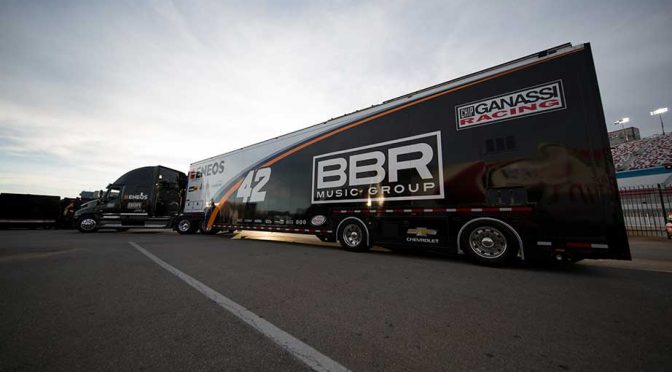
The Fourth of July means a lot to Dan Collins, the No. 42 XFINITY Series hauler driver for Chip Ganassi Racing.

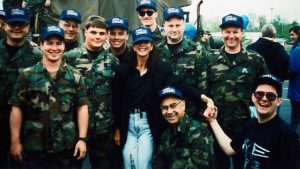
A veteran of the U.S. Air Force, Collins was an aircraft mechanic crew chief from 1990-1996 in the 121st Air Refueling Wing. Patriotism in the Collins family runs deep, and service was a way of giving back to a country that provided them with opportunity.

At Daytona International Speedway this weekend, NASCAR will recognize the United States Armed Forces during the XFINITY Series race with its NASCAR Salutes Refreshed by Coca-Cola campaign.

The No. 42 team of Tyler Reddick has chosen to put Collins’ name on the windshield for the Coca-Cola Firecracker 250 (Friday, 7:30 p.m. ET, NBCSN, MRN and SiriusXM NASCAR Radio).

It is a gesture that brings Collins plenty of pride.

“I’d been around that my whole life growing up and once I graduated high school, (I went) into the same unit as my dad and worked with him for about three years before he passed away,” Collins said. “Pride because it had been my life up until I got out in 1996 and got into racing.”

Dan Collins (lower left) with his unit (photo courtesy of Chip Ganassi Racing)

The youngest of five, Collins going into the Air Force wasn’t surprising. Both of his older brothers served, one also in the Air Force and one as an officer in the Navy. His father, Master Sgt. John Collins, put in more than 40 years.

Collins’ role was very much like his current one for Ganassi, with responsibility for the organization and presentation of his vehicle. Instead of a hauler, though, it was an airplane. Maintaining the aircraft, prepping it for flight, keeping it fueled in addition to any inspections and other maintenance.

“After I got back from basic training I got to my unit and the first plane I signed off on, that I did the whole pre-flight inspection, saying this plane is 100 percent ready to fly, my dad was flying,” Collins recalled. “I see him getting out of the crew van to come into the plane and I’m like, ‘Oh great, crew’s here and my dad’s flying on it.’

“At 19 years old, I had a big wakeup call that everything I do regarding this plane has lives on the line. After that you take a little bit more time and attention to detail because if something goes wrong with that plane, I’m responsible for it.”

Born and raised in Columbus, Ohio, Collins was as familiar with race cars as he was the Armed Forces. Around the house it was common for him and one of his brothers to race to the television, because whoever got the remote picked what they watched.

Collins always turned to motorsports.

But content to follow his father’s footsteps, racing only came to the forefront of his life when hearing in one of his college classes that an open wheel team was expanding. Hired to help out, Collins then spent six years in the series before making a change in 2002.

“NASCAR looked a lot stronger at the time than IndyCar did,” Collins said. “I didn’t have anything to lose and I remember one thing my dad always said was, ‘Live your life to the fullest and have no regrets.’

“I had the opportunity to go to North Carolina and ended up getting hired by Petty Enterprises.”

When Harry Scott and Chip Ganassi joined forces in the XFINITY Series in 2014, Collins blended into the Ganassi group. Previously he worked with some other high-profile teams, such as JR Motorsports, Roush Fenway Racing and Team Penske.

Dan Collins (photo courtesy of Chip Ganassi Racing)

Collins has both an XFINITY Series and Monster Energy Series championship on his resume. Both came while working with Brad Keselowski at Penske.

“That was an awesome feeling to be able to accomplish both of those,” Collins said. “Here at Ganassi, we’re trying to get an owner’s championship (in XFINITY) and, hopefully, Kyle (Larson) can do the Cup deal and we get them both. It would be a big feat.

“Roger Penske’s first stock car championship, I was there for that and now I’m here at Ganassi and could be in the same position.”

A win at Daytona would help both efforts. And since there can only be one winner, expect Collins to root for the car with a windshield he can call his own.

“I think they do a great job at it,” Collins said of NASCAR Salutes. “It’s a small section of what NASCAR is doing with ‘Salute the Troops’, but it’s really salute the troops all year long from Daytona to Homestead.

“They do a good job of recognizing (military members) in and out of uniform. Prior service. And those who have sacrificed.”