DAYTONA BEACH, Fla. (Feb. 22, 2017) — NASCAR TrackPassu2122, the sport’s first digital subscription product developed specifically for the international market, will now offer live racing action to more NASCARu00ae fans than ever before. Fans around the world can watch all 38 Monster Energy NASCAR Cup Seriesu2122 and 33 NASCAR XFINITY Seriesu2122 events either through NASCAR’s local television partner or by subscribing to NASCAR TrackPass. The product will be available in 120 countries and territories at launch, with plans to continue expanding the NASCAR TrackPass footprint throughout 2017.

NASCAR TrackPass will offer full race replays and features like a live leaderboard and highlights to give fans the complete race experience. International NASCAR fans in most territories outside the U.S. and Canada can go to TrackPass.NASCAR.com to subscribe to the product or download the application for Android and iOS through the iTunes and Google Play stores. Subscription costs start at $125 per year and $15 per month and vary by individual country and territory.

“Exploring new distribution channels for race content across both broadcast and digital platforms allows NASCAR to continue strengthening its global presence and diversify the sport’s fan base,” said Steve Herbst, senior vice president, broadcasting and production at NASCAR. “Given their experience in the sport and expertise around live streaming, NBC was a natural choice to lead our development of NASCAR TrackPass, providing our international fans more choice than ever before.”

NASCAR Track Pass is powered by Playmaker Media, NBC Sports Digital’s technology service providing end-to-end support for companies in need of best-in-class live streaming and VOD solutions.

International viewers can subscribe now to kick off the 2017 Monster Energy NASCAR Cup Series season by watching the DAYTONA 500u00ae at Daytona International Speedway this Sunday, Feb. 26.

RELATED: Tire limits, plate-race tweaks among rules updates

Editor’s Note: The 2017 rules package was announced in October of 2016, which is when this story was originally published. The package will be used for the first time in 2017 this weekend at Atlanta Motor Speedway.

A further reduction of downforce and the implementation of additional safety developments highlight the 2017 Monster Energy NASCAR Cup Series rules package, which NASCAR officials announced last fall at Kansas.


Aerodynamic adjustments similar to those in place for races at Kentucky Speedway and Michigan International Speedway in 2016 form the framework for the 2017 performance platform. However, slight modifications to the overall base package have been made.


According to officials, the 2017 race package will include:


• Rear spoiler dimensions for all non-restricted events will be 2 3/8 inches x 61 inches. Current spoiler dimensions are 3 1/2 x 61; for the Kentucky and Michigan races, the dimensions were 2 1/2 x 53 inches.


• Splitter measurements for the 2017 package will be the same as those for the 2016 Kentucky and Michigan races, with a 3-inch reduction in the outboard (side) areas;


• A tapered rear deck fin;


• Net rear steer setting of zero.


The aero changes are the next evolution of the platform first rolled out for select events in 2015. Mandatory for 2016, those changes reduced downforce (the pressure exerted on a vehicle as it moves through the air) from 2,700 pounds to approximately 2,000 pounds. The 2017 package is expected to reduce downforce by approximately 500 pounds, landing in the 1,500-pound range.


"The objective there is to give the drivers, put the driving back in their hands a bit more … take less aero dependence off the car," Gene Stefanyshyn, NASCAR Senior Vice President of Innovation and Racing Development, told NASCAR.com last year. "That’s the big thing. The amount we are taking off the front and the rear is the same proportion; we try to keep the balance of the car identical. So it’s been taken off in the same proportion to maintain the balance of the car as it was last year."


Safety enhancements, which include strengthening the interior driver compartment, will be mandatory for superspeedway events at Daytona International Speedway and Talladega Superspeedway and optional at the remaining venues for 2017.


Officials previously announced thicker anti-intrusion plating where it already existed in the cockpit as well as additional plating in areas not currently covered. Toeboard foam will also be mandatory at superspeedways, as will the addition of a roof hatch.


Changes to steering column mounting and the use of a garage-only fuel coupler (mandatory for all events) complete changes in the safety arena.


"Basically … there is going to be a strengthened dash firewall; (on the) front left of the chassis there will be a piece zippered in; also in the back, near the rear clip, another piece that will be zippered in," Stefanyshyn told NASCAR.com. "The floorboard and toe board area will be made out of one piece, beefed up, also.


"This has a couple of elements to it; one is to manage front crash, the other to manage if you are hit in the side."


A stronger floorboard, with toe board foam, should lessen the odds of a driver involved in a hard impact suffering a broken limb.


The fuel coupler designated for garage use only is intended to lessen spillage by more efficiently closing the valve upon disengagement. It is a safety as well as environmental initiative.


The aero package for superspeedway races at Daytona and Talladega will remain unchanged, although there will be a decrease in restrictor plate size (from 57/64ths to 7/8ths of an inch) to combat increasing speeds at the two tracks.


Additionally, the vehicle weight will increase by 20 pounds to accommodate structural changes to the cars.


NASCAR will also reduce the tire allotment provided to teams next season and require teams to start the race on the tires used in qualifying.


"We’ve been tracking tires for two or three years now and we see how many are purchased and how many remain," Stefanyshyn said. "We are seeing that there is an opportunity to trim some tires. … Also we’re starting to creep up to trying to bring some strategy around the tires.


"It’s not a huge reduction, it’s a comfortable reduction but it’s kind of moving in that direction."


Officials said unveiling the potential packages in advance, as was done in ’15 at Kentucky and Darlington, and again in ’16 at Kentucky and Michigan, provides the opportunity for optimum feedback.

But those tracks are not locked in a "test" venues.

"We’re always looking at different ways to do things … we would hope that next year’s package can be a continuation and a little bit more of a long-term, stable rules package," Scott Miller, Senior Vice President of Competition for the sanctioning body, said.

"But nothing ever stays the same. Moving forward we will look at more efficient ways to potentially test possible packages for the future.

"I think we did a good job the last few times with the races, that’s really the best way to collect data in an actual event … hopefully we can get out in front of it even a little bit further and get a little bit more of a cross section of race tracks if we have some proposed new things."

RELATED: NASCAR 101

NASCAR sanctions more than 1,200 races in more than 30 U.S. states, Canada, Mexico and Europe. Known for its passionate fan base, one-of-a-kind playoff format, development of the modern sports sponsorship and commitment to enhancing auto racing through technology, NASCAR produces many of the most highly attended sporting events in the world.

NASCAR did not gain the success or popularity it has today overnight. The sport has evolved to entertain its fans and continuously prosper.


NASCAR's first race

Early stock car racing

In the years immediately following World War II, stock car racing was experiencing the greatest popularity it had ever seen. Tracks throughout the country were drawing more drivers and bigger crowds.

Nonetheless, there was a serious lack of organization. From track to track, rules were different. Some tracks were makeshift facilities, producing one big show at a county fair or something similar to capitalize on the crowds flocking to the events. Other tracks were more suited to handle the cars, but not the crowds. Some could manage both, but did little to adhere to rules set by other tracks.

NASCAR is born

Bill France Sr. organizes NASCAR

In December of 1947, Bill France Sr., of Daytona Beach, Florida, organized a meeting at the Streamline Hotel, across the street from the Atlantic Ocean, to discuss the problems facing stock car racing.

France had come to Florida from Washington, D.C., in 1935. He operated a local service station and also promoted races on the city’s famed beach-road courses, often racing himself. He was a man of strong will — and ambition. Thus, by the time that meeting at the Streamline Hotel was completed, the National Association for Stock Car Auto Racing was born. Few knew when the meeting adjourned if the organization would be successful. In fact, there were skeptics who believed it never would work.

Not even France, who believed a sanctioning body was exactly what stock car racing needed, could have envisioned what NASCAR has become today.

Things came together quickly. The first NASCAR-sanctioned race was held on Daytona’s beach-road course Feb. 15, 1948, just two months after the organizational meeting. Red Byron, a stock car legend from Atlanta, won the event in a Ford Modified. Six days later on Feb. 21, 1948, the National Association for Stock Car Auto Racing was incorporated.

NASCAR's first race

The Monster Energy NASCAR Cup Series is born

It was 1949, however, when what is now the Monster Energy NASCAR Cup Series, the premier racing division in America, was born.

Jim Roper of Great Bend, Kansas, was the winner of the first ever NASCAR Grand National event, held at the Charlotte Fairgrounds on June 19, 1949. A tremendous crowd attended the event to see race cars that looked like passenger cars compete door-to-door. The new racing series was off-and-running. And it was an immediate success.

Plans were made to bring bigger, faster races to bigger, hungrier crowds and less than a year later (1950), the country’s first asphalt superspeedway, Darlington Raceway in South Carolina, opened its doors for the new division.

The first decade for the premier series was one of tremendous growth. Characters became heroes and fans hung on every turn of the wheel, watching drivers manhandle cars at speeds fans wished they could legally run themselves.

Names like Lee Petty, Fireball Roberts, Buck Baker, Herb Thomas, the Flock brothers, Bill Rexford, Paul Goldsmith and others became as well-known to race fans as Willie Mays, Mickey Mantle and Duke Snider were to baseball fans.

Bill France Sr.

Daytona International Speedway ushers in a new age of speed

Looking to the future, and invigorated by the success of Darlington, Bill France Sr. began construction of a 2.5-mile, high-banked superspeedway four miles off the beach in Daytona Beach.

France had helped lead the fight to keep racing affiliated with the city. When those looking to set land speed records began opting for the Bonneville Salt Flats in Utah so the incoming and outgoing tides at Daytona Beach would not be a factor, the city wanted to maintain one of its main attractions — fast cars and the beach. By the end of NASCAR’s first decade, the city not only had held on to its racing roots, but had outgrown the beach and, in 1959, moved events to Daytona International Speedway. With its long back straightaway and sweeping high-banked turns of more than 30 degrees, the 2.5-mile tri-oval was one of the largest speedways in the world.

Lee Petty

The first Daytona 500

In the first race, fans were treated to something that each year still brings millions of fans to NASCAR races — close competition. The first Daytona 500 didn’t end, technically, for three days. It took that long for NASCAR officials to study a photograph of the finish between Petty and Johnny Beauchamp before declaring Petty the winner.

The hook had been set.

The following year (1960), superspeedways were opened just outside Atlanta and Charlotte. ABC televised the 1961 Firecracker 250 from Daytona Beach as part of its “Wide World of Sports.”

As the sport expanded, new heroes emerged.

Lee Petty’s son Richard, who would eventually be referred to as “The King” of stock car racing, Buddy Baker, Cale Yarborough, Ned Jarrett, David Pearson and Bobby Allison led NASCAR racing through an era that featured a schedule of more than 60 races a year on tracks from Florida to California to Maine.

Fan interest grew and the demand for bigger, faster tracks was heard. In 1969, France opened the 2.66-mile Alabama International Motor Speedway (now known as Talladega Superspeedway), the largest and fastest motorsports oval in the world. New tracks sprang up in Brooklyn, Michigan, (70 miles Southwest of Detroit), Dover, Delaware, (between Philadelphia and Baltimore) and Pocono, Pennsylvania, two hours from New York City).

NASCAR's first race

Bill France Jr. becomes NASCAR President

The decade of the 1970s brought further change, including one at the top when Bill France Sr. passed the torch of leadership of NASCAR to his son Bill Jr. on Jan. 10, 1972.

Corporate sponsorship of the series by the R.J. Reynolds Tobacco Company through its Winston brand began in 1971 and NASCAR’s premier division became known as the NASCAR Winston Cup Series. Reynolds’ involvement later led to the NASCAR Winston West Series and the NASCAR Winston Racing Series (now NASCAR Dodge Weekly Series) — weekly events held at tracks nationwide with drivers vying for 10 regional titles and a national championship.

In 1976, NASCAR’s premier division took the lead in worldwide motorsports attendance for the first time with more than 1.4 million spectators making their way to events, according to figures from the Goodyear Tire and Rubber Company. That lead never has been relinquished.

Television exposure grew as well. The 1979 Daytona 500 became the first 500-mile race in history to be telecast live in its entirety. In 1981, NASCAR moved its annual awards ceremony to New York City from Daytona Beach for the first time.

By the mid 1980s, Fortune 500 companies not only were involved in sponsoring NASCAR, but individual races and teams as well.

Drivers such as Darrell Waltrip, Dale Earnhardt, Bill Elliott and others were rising to challenge Petty and Allison and Yarborough, displaying the colors of detergents and coffees and cereals on the hoods of their cars while doing it.

Major consumer packaging companies like Kellogg’s, General Foods, and Procter & Gamble were realizing what Bill France knew in the late 1940s — stock car racing had a fervently loyal fan following.

Bouchard and Allison

The XFINITY Series debuts

In 1982, NASCAR consolidated the Late Model Sportsman Division into a new series. Since rising costs had made weekly racing for the Late Model stock cars difficult, the idea behind the creation of the series was to build big races, and to bring all of the regional-stars of the series together for all of the races.

Anheuser-Busch, Inc. of St. Louis, Missouri, became the sponsor of the new NASCAR Budweiser Late Model Sportsman Series. In 1984, the Busch brand took over the sponsorship in what would become the NASCAR Busch Series. Starting in 2007, the series became known as the NASCAR Nationwide Series, via a new sponsorship deal with one the world’s largest insurance providers. At the start of 2015, the series changed to the NASCAR XFINITY Series.

Jeff Gordon Brickyard Indianapolis

Expansion continues through the 1990s, includes Indianapolis

By 1989, just 10 years after the first 500-mile race to be broadcast live flag-to-flag, every race on the Monster Energy NASCAR Cup Series schedule was televised, nearly all of them live.

As the decade of the 1990s began, perhaps no one but the sports visionaries could have imagined the growth NASCAR would undertake. Without question it was an exciting time. NASCAR began its meteoric rise by expansion in 1993 to New Hampshire International Speedway — 70 miles north of Boston — and in 1994, to the famed “Brickyard,” Indianapolis Motor Speedway.

NASCAR's first Camping World Series Truck race

The Camping World Truck Series starts up

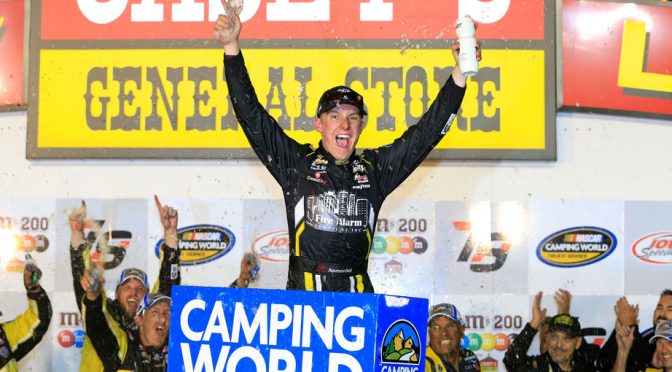
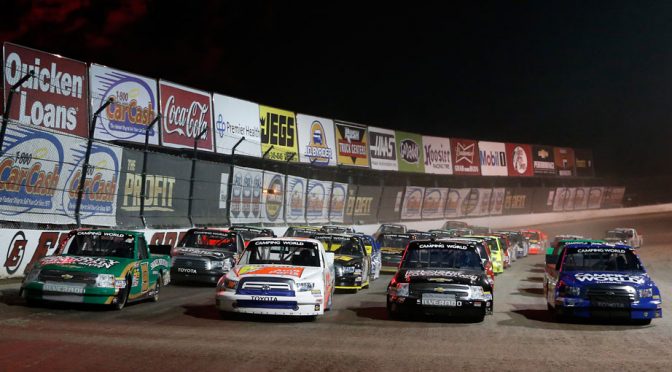
In May of 1994, NASCAR introduced a new series, the NASCAR Craftsman Truck Series, involving full-sized, full-bodied pickup trucks. After several exhibition events, the first points event in the new series was held in February of 1995 in what would become the NASCAR Camping World Truck Series.

NASCAR lifestyle phenomenon

The NASCAR Lifestyle becomes a national phenomenon

At the same time, NASCAR’s at-track attendance was growing monumentally. The NASCAR Lifestyle was becoming a national phenomenon with cover stories in Forbes and Sports Illustrated. To help feed the tremendous growth, NASCAR launched its official website in 1995 (www.nascar.com) and in 1997, NASCAR branched out again, adding races in top 10 markets like Los Angeles, Dallas/Ft. Worth and a second date in New Hampshire.

The 1998 season marked the celebration of NASCAR’s 50th anniversary, honoring NASCAR’s past, present and future. NASCAR’s top division expanded once again, this time to Las Vegas.

From 1993 to 1998, the Monster Energy NASCAR Cup Series‘ at-track attendance alone grew 57 percent (by 2.2 million) to over 6.3 million and its top three divisions combined grew a staggering 80 percent (by 4.1 million), to over 9.3 million.

Topping off NASCAR’s explosion in the ’90s was the announcement in November 1999 of a consolidated television package with FOX Sports/FX and NBC Sports/TNT for NASCAR’s top two series beginning in 2001. At the same time, DaimlerChrysler announced intentions to return its Dodge nameplate to NASCAR’s top division for 2001, after a 15-year hiatus. In 2007, a new TV package was introduced, with ABC and ESPN returning to the NASCAR fold.

As the sport’s fan base grew, NASCAR grew internally as well. In November of 2000, Mike Helton became the third president in NASCAR history as the torch of leadership passed to a non-France family member for the first time. Bill France became Chairman and CEO, leading the newly created NASCAR Board of Directors.

By the turn of the century, new stars emerged such as Jeff Gordon, Bobby Labonte and second-generation driver Dale Jarrett. NASCAR’s drivers, teams and tracks once again saw unprecedented exposure, this time with the aid of an expanded 36-race schedule and its new television package in 2001.

The TV story was proving a remarkable success as viewership for the Daytona 500 grew 48 percent (over 6 million) to 18.7 million viewers between 1993 and 2002. When FOX Sports aired its first Daytona 500 in 2001, viewership increased 32 percent (4.1 million) to over 17 million from the 2000 broadcast.

NASCAR's first race

Brian France becomes NASCAR Chairman and CEO

In 2003, NASCAR made two major announcements to help the dawn of the new era become even clearer. NASCAR announced in June that Nextel would become the new series sponsor in 2004, replacing R.J. Reynolds’ Winston brand after 33 years. Three months later in September, Brian Z. France was named as NASCAR’s CEO and Chairman of the Board replacing his father, Bill France.

A steady parade of changes has followed. The Chase for the NASCAR NEXTEL Cup was announced at the start of 2004, ushering in a new format to determine the champion of NASCAR’s premier series. In 2006, Toyota announced a move into all three of NASCAR’s national series.

In 2007 it was announced that the premier series’ name would be changed to the NASCAR Sprint Cup Series beginning in 2008. In addition, Nationwide Insurance was announced as the replacement for Anheuser-Busch as main sponsor of NASCAR’s series born from Late Models in 1982.

The 2007 season also marked the beginning of NASCAR’s new car in premier series competition, a car designed to be safer than ever while also reducing costs to compete — all the while enhancing the racing itself. The new car could not slow down Jimmie Johnson who captured a record five consecutive championships from 2006-2010, becoming only the second driver to win three consecutive titles (Cale Yarborough 1976-1978).

During the late 2000s, NASCAR began further expanding by creating series internationally. The NASCAR Canadian Tire Series and the NASCAR Toyota Series (Mexico) launched their inaugural seasons in 2007. The sanctioning body extended its reach across the Atlantic when it founded the NASCAR Whelen Euro Series in 2012. Today, NASCAR runs three national series, four regional series, one local grassroots series and three international series.

Kevin Harvick Ryan Newman Homestead-Miami 2014

Winning formula: Gen-6 car, new Chase for the NASCAR Sprint Cup format, new series sponsorship

In 2013, NASCAR continued enhance its racing, debuting its Gen-6 car that enhanced body designs to better resemble the cars found in showrooms across the United States and improve on-track performance. NASCAR also secured its television rights through 2024 by agreeing to a 10-year rights deal with NBC Universal and an eight-year rights extension with FOX.

To emphasize winning races, NASCAR created a new Chase for the NASCAR Sprint Cup playoff format for 2014 and unveiled its new grid format for advancing drivers.

In 2015, XFINITY replaced Nationwide as the title sponsor for the series “Where Names are Made.”


Late in 2016, France would introduce Monster Energy as only the third premier series entitlement sponsor in league history. The Monster Energy NASCAR Cup Series would help usher in a new era of NASCAR, which included an enhanced-race format that saw each race run in three stages.

Resources


Can you believe it? ! I’ve seen everything now. This was the Daytona 500 since

This race had it all: , , and most of all, .

I don’t think anybody expected to see . I haven’t seen anything that crazy since .

And how about ! Unbelievable, right? He’s such .

This was the first race with . It was a big change, which made me feel , yet . This Daytona 500 was also the first one , which makes me so !

I’m just glad this race didn’t go too much longer than it did. After all, I’ve got to .

BUY TICKETS: See the races in Atlanta

Young drivers recap from Daytona

2018 DAYTONA 500 VIP Ticket Packages are now available from PrimeSport! As the Official Ticket Exchange of Daytona International Speedway, PrimeSport has your access to all the action at the World Center of Racing! Receive $50 off per reservation when you book your 2018 DAYTONA package by Saturday March 4th. Use code DAYTONA18 at checkout. Coupon code DAYTONA18 is active now through Saturday March, 4th. | GO HERE

BUY TICKETS: See the races in Martinsville 

MARTINSVILLE, Va. — As Martinsville Speedway celebrates its 70th anniversary in 2017, fans will get more value for their ticket to the fall race, as the Monster Energy NASCAR Cup Series will qualify and race on the same day, Sunday, October 29.


Saturday will have an “old-school” feel as well, as NASCAR will return to a true “happy hour” practice session, immediately following the Alpha Energy Solutions 200 NASCAR Camping World Truck Series race. All kids 12-and-under are admitted free on Saturday.


“I think the weekend schedule is really going to add value to a Martinsville Speedway ticket,” Martinsville Speedway President Clay Campbell said. “The fans are the ones who are the real winners here. A Sunday ticket gets fans all of the same excitement they’ve always had, but now they get to watch qualifying as well.


“On Saturday, you can bring the kids for free and treat them to a full day of action, as they will get to see the current Cup stars practice and the future of the sport race in the Alpha Energy Solutions 200.”


Martinsville Speedway and NASCAR are also planning a fan event on Friday, October 27, featuring some of NASCAR’s top stars. More information on the event will be available in the coming months.


NASCAR makes its first visit to Martinsville Speedway March 31-April.


This year the historic track celebrates its 70th anniversary.


The weekend starts on Friday with Virginia Lottery Pole Day and continues on Saturday with the Alpha Energy Solutions 250 NASCAR Camping World Truck Series Race. Kids 12-and-under are admitted free Friday and Saturday.


The Monster Energy NASCAR Cup Series will be in action on Sunday with the running of the STP 500.


The race is the first short-track race of the season and marks the series’ return to the east coast after the “West Coast Swing.”


Last year Kyle Busch became the first driver in the tracks storied history to win both the Truck and

Premier Series races in the same weekend.


In addition to buying tickets at the track, tickets can be purchased by calling 1.877.RACE.TIX or online at www.martinsvillespeedway.com.

BUY TICKETS: See the races in Atlanta

DAYTONA BEACH, Fla. — Tony Gibson was still grinning, a little worse for wear and tear perhaps, but still grinning when he arrived inside the Bill France Room of the Ticket and Tours building here at Daytona International Speedway Monday morning.

Make that early Monday morning.

Tired? A good tired. A winning tired. A little more than 12 hours earlier, Gibson, 52, had helped guide his driver to victory in the Daytona  500, the season-opening event for the Monster Energy NASCAR Cup Series. It’s the race in NASCAR and nothing puts an exclamation point on a racing career like saying you’ve won the Daytona  500.

Now Kurt Busch is finally a Daytona  500 champion. And Gibson, who has accomplished so much in NASCAR, is finally a Daytona  500 champion crew chief.

2018 DAYTONA 500 VIP Ticket Packages are now available from PrimeSport! As the Official Ticket Exchange of Daytona International Speedway, PrimeSport has your access to all the action at the World Center of Racing! Receive $50 off per reservation when you book your 2018 DAYTONA package by Saturday March 4th. Use code DAYTONA18 at checkout. Coupon code DAYTONA18 is active now through Saturday March, 4th. | GO HERE

RELATED: Race results | Standings | Detailed breakdown

DAYTONA BEACH, Fla. — Kyle Larson could only shrug his shoulders and muster a smile standing on the far end of pit road following a heart-breakingly close effort at winning the Daytona  500 on Sunday.


His No. 42 Target Chevrolet led Lap 199 of the 200-lap race but he ran out of gas on the final half circuit, gliding around to finish 12th in NASCAR’s "Great American Race."


The 24-year-old Californian was both disappointed not to collect the trophy, but also quite encouraged to have run so well on his sport’s biggest stage. 


"We had pitted on our window and thought I had saved enough (fuel)," Larson said. "We got single file there at the end but I knew we had to make a move and I had my fingers crossed I had saved enough. But we were half a lap short and lost the race.


"Disappointing way to lose the 500, but satisfying to know we could pass cars and get to the lead and have fun. I tried my best to stay out of trouble and almost had a shot to win."


Larson’s Ganassi team looked strong leading into the sport’s biggest race.


His teammate Jamie McMurray was runner-up in Thursday’s first Duel qualifier and he ran up front for significant time Sunday, too — leading 13 laps and earning four points for his Stage 1 effort. He ultimately was caught up in a multicar accident on Lap 142 and finished 28th.


Larson also picked up points in both stages — enough to put him one point below fourth-place Daytona  500 finisher Aric Almirola in the overall standings at seventh. Larson earned five points for finishing sixth in Stage 1, and three points for finishing eighth in Stage 2.


It shows great progress — and promise — at Daytona International Speedway giving him three straight top-12 showings. He was seventh in last year’s Daytona  500 and sixth in the summer’s Coke Zero  400 — after finishing 34th or worse in his first four Cup starts at the track.

2018 DAYTONA 500 VIP Ticket Packages are now available from PrimeSport! As the Official Ticket Exchange of Daytona International Speedway, PrimeSport has your access to all the action at the World Center of Racing! Receive $50 off per reservation when you book your 2018 DAYTONA package by Saturday March 4th. Use code DAYTONA18 at checkout. Coupon code DAYTONA18 is active now through Saturday March, 4th. | GO HERE

RELATED: Results | Standings | Blaney amongst sport’s next class of greats


DAYTONA BEACH, Fla. – All things considered, Ryan Blaney‘s runner-up finish in Sunday’s Daytona  500 was essentially an early season victory for the 23-year old driver.

He started from the rear of the field in a backup No. 21 Motorcraft Ford, avoiding several multiple-car crashes and surviving a final-lap push to the front despite concerns about running out of gas.


Any runner-up finisher – especially one in the Daytona  500 – would concede some disappointment on the day, but Blaney still left Daytona Beach deservedly feeling accomplished. And encouraged.


"I thought we had a good car all day to start off," Blaney said. "We showed that definitely in the first half of the race. Then we got some damage there in one of those big wrecks about middle of the race. Kind of hurt our car a little bit."

But, Blaney explained, he finally got some well-timed help going forward in the final laps.


"I started kind of running out the gas there into (Turn 3), we started sputtering pretty bad," Blaney said. "Luckily made it back to the line. It was a good showing for us. It was a good way to start off the year. Stinks to be so close. But I think that’s good momentum for our team, to be good at the beginning of the day, get some damage and be able to rally for a good finish."


While Blaney’s final lap effort was certainly dramatic, his Wood Brothers Racing team felt all along the car was good enough to challenge for the trophy. And that Blaney was good enough to challenge for the trophy.


Blaney joked that not having his "rookie stripe" — or yellow tape — on the rear of his Ford may have helped encourage the veterans to stick with him.


Of course, driving a super-fast car doesn’t hurt either.


"I thought our car in the Duel race was spectacular and it’s a shame it got torn up, but our backup car was honestly, I felt like, just as good," Blaney said. "We came from the back really early and were able to drive up through the middle, and our car handled correctly where we could be up the middle and be aggressive when the time was right. We were able to stay up there."


Blaney’s crew chief Jeremy Bullins said he will arrive in Atlanta later this week feeling very encouraged by the work of the team and his driver.


"Obviously, we showed speed in the 150s [Daytona qualifying race], but we tore that car up," Bullins said. "It was an easy decision to get this car out. It was built just the same, just as fast. Had a good car all day, got ourselves up front pretty quick, got a little bit of damage a couple of times and had to work on it a little bit, but phenomenal job by Ryan of timing his moves and getting back through there at the end.


"We knew we were close on fuel, got him to save a little bit, which was just enough to get us to the end. Almost where we wanted to be, but really close."


It is Blaney’s best Daytona finish in four races (three Daytona  500 starts) and places him second in the series points standings heading to Atlanta Motor Speedway – all in all, an impressive mark for him and a fine start to the season.


"Any time you get a good finish anywhere, no matter what track, it always propels you into the next week," Blaney said. "Maybe it feels a little better when it’s the Daytona  500.


"It doesn’t mean your car is going to be great when you go to Atlanta [next week], doesn’t mean your car is going to be great when you go out West. Until you get nine or 10 in, then you can kind of get a good judge of how your cars are and where your team stacks up.


"No matter where it is, if you get a good finish, it definitely helps your team confidence‑wise for the next week and maybe a couple weeks after that."

2018 DAYTONA 500 VIP Ticket Packages are now available from PrimeSport! As the Official Ticket Exchange of Daytona International Speedway, PrimeSport has your access to all the action at the World Center of Racing! Receive $50 off per reservation when you book your 2018 DAYTONA package by Saturday March 4th. Use code DAYTONA18 at checkout. Coupon code DAYTONA18 is active now through Saturday March, 4th. | GO HERE