BUY TICKETS: See the Daytona 500 live!

In celebration of his return to racing at this Sunday’s Daytona  500, Dale Earnhardt Jr. donned a Goodyear Blimp pilot uniform and took a different kind of lap in the Goodyear Blimp on Wednesday, surprising a U.S. military veteran with the experience of a lifetime. 


Earnhardt Jr., who missed 18 races last season while recovering from a concussion, will get behind the familiar wheel of his No. 88 car Sunday seeking his third Daytona  500 victory on the confidence of Goodyear tires. But it was an altogether different experience sitting at the controls of the iconic Goodyear Blimp.


"This was such a cool day — being able to co-pilot the Goodyear Blimp and connect with a fan who has so honorably served our country," said Earnhardt Jr. "I’m proud to be involved with Goodyear. Ever since we started working together, I’ve wanted to ride in the blimp, so this was a great experience I will never forget."


With weather less than ideal in the Daytona Beach area Wednesday, the blimp was limited in flight and only got off the ground for a few minutes. But the day was all about Paul Siverson, a Vietnam and Gulf War veteran who served in the military for 30 years. Siverson describes Earnhardt as his "first, second and third favorite NASCAR driver."


Coupled with his Earnhardt Jr. fandom, it was Siverson’s dedication to NCServes, a charitable organization that provides comprehensive services to veterans, service members and their families, that made Siverson the perfect candidate for the surprise ride with NASCAR’s most popular driver.


In honor of soldiers like Siverson, Goodyear donated $10,000 to NCServes with Earnhardt Jr. on hand for the check presentation. In addition to the blimp flight, Siverson will receive access at Daytona Speedweeks including tickets to the Great American Race on Sunday.

Goodyear has more than 100 years of history building innovative tires and equipment to help support and protect U.S. troops and is the largest producer of military tires in the country. The tire manufacturer has helped build more than 150 blimps for the U.S. Navy and continues to recognize the skills of Veterans through a robust hiring program and was recently recognized with the Secretary of Defense Freedom Award.


"We’re honored to celebrate the return of Dale Jr. to NASCAR and recognize an American hero like Paul," said Seth Klugherz, Goodyear’s director of North America marketing. "Connecting American icons NASCAR and the Goodyear Blimp to provide an experience for a military veteran is a natural way to extend Goodyear’s unwavering support to the U.S. Armed Forces."


Tune-in to watch the Daytona  500 on Sunday, Feb. 26 at 2 p.m. ET on FOX, SiriusXM NASCAR Radio and MRN.

BUY TICKETS: See the Daytona 500 live!

DAYTONA BEACH, Fla. — Following a season highlighted by some of the closest, side-by-side racing NASCAR® fans have seen in years, NASCAR today announced the return of its 2017 season launch marketing campaign, Ready. Set. Race.


The new integrated campaign, including television creative promoting the Monster Energy NASCAR Cup Seriesu2122, will launch during the 2017 DAYTONA 500® on Sunday (2 p.m. ET, FOX, MRN and SiriusXM NASCAR Radio).


NASCAR fans received a first look at "Sensory Overdrive" Friday on Facebook, Twitter and Instagram. A 30-second thrill ride, the spot brings to life the high-stakes drama and intensity drivers experience competing in the sport’s premier series.


The campaign also includes social media videos featuring Monster Energy NASCAR Cup Series drivers shared this week and throughout the season.


"The Ready. Set. Race campaign was so popular with our fans last year that we couldn’t wait to bring it back with even more intense racing action," said Jill Gregory, NASCAR senior vice president and chief marketing officer. "The Monster Energy NASCAR Cup Series creative is unlike any advertising we’ve ever done. Monster Energy has built a bold, edgy brand, so we wanted to deliver creative that first and foremost is NASCAR but that also complements our new entitlement partner."


The new Ready. Set. Race creative was developed in conjunction with agency partner 77 Ventures and acclaimed commercial director Gary Land. Additional creative breaking Sunday on FOX includes "A New Season," an action-packed, 60-second spot that accentuates the NASCAR racing experience across all three national series.

Building on the Names Are Made Hereu00ae positioning, NASCAR will air "The Path" promoting the NASCAR XFINITY Series and featuring the sport’s up-and-coming drivers during the season-opening PowerShares QQQ 300 at Daytona International Speedway on Saturday (3:30 p.m. ET, FS1, MRN).


The new creative will be available on NASCAR.com and shared via NASCAR social platforms as part of a busy weekend on social media. The DAYTONA 500 Hour Countdown social campaign in partnership with FOX will continue up until Sunday’s green flag as FOX and NASCAR post original DAYTONA 500-themed content on Facebook, Twitter and Instagram.    


The first Snapchat Live Story of the season is planned for DAYTONA 500 race day. NASCAR XFINITY Series driver Darrell Wallace Jr. will serve as Live Story correspondent and bring the sights and sounds from the track to users across the world using Snapchat Spectacles.


Earlier this week, NASCAR and Twitter launched a DAYTONA 500 Twitter emoji. Every time a fan Tweets with #DAYTONA500, the colorful, waving flags of the DAYTONA 500 logo appear in the Tweet. Fans can also expect unique, behind-the-scenes content all weekend from NASCAR on Facebook and Instagram.


For additional coverage of The Great American Raceu00ae, fans can visit Race Center on NASCAR.com.


Tickets to NASCAR national series events are available at NASCAR.com/tickets.

BUY TICKETS: See the Daytona 500 live!

DAYTONA BEACH, Fla. — Three-time Daytona  500 winner and four-time Monster Energy NASCAR Cup Series champion Jeff Gordon will lead the field to the start of Sunday’s Daytona  500 (2 p.m. ET, FOX, MRN, SiriusXM NASCAR Radio) behind the wheel of the new 2017 Camaro ZL1 pace car.
 
"Chevrolet and I have a great history at the Daytona  500 and it’s an honor to drive the 650-horsepower Camaro ZL1 pace car for the largest, most historic race of the season," Gordon said.
 
Chevrolet will also pace the NASCAR Camping World Truck Series Nextera Energy Resources 250 with a 2017 Silverado on Friday evening. A 2017 Camaro SS — featuring a new Krypton Green exterior color — will pace the NASCAR XFINITY Series Powershares QQQ 300 on Saturday.
 
"Chevrolet is proud to pace the ‘Great American Race’ on the high banks of the iconic Daytona International Speedway," said Steve Majoros, director of marketing, Chevrolet Cars and Crossovers. "The Camaro ZL1 delivers unprecedented levels of technology, refinement and track capability."
 
Gordon has plenty of experience leading the field at Daytona. In addition to winning the Daytona  500 in 1997, 1999 and 2005, he shared the overall win last month at the Rolex 24 at Daytona.
 
All three Chevrolet pace vehicles share graphic theme highlights in silver and black, along with selected accessories and personalization features.


BUY TICKETS: See the Daytona 500 live!

RELATED: Logano signs new long-term deal

DAYTONA BEACH, Fla. — If the headline to this story doesn’t read: Logano says, ‘I don’t know what the hell I’m doing,’ don’t blame the Team Penske driver.

"That’s the headline right there," Logano says, laughing.

Clearly that isn’t the case. When it comes to restrictor-plate racing, Logano, 26, obviously knows a thing or two. In fact, he and teammate Brad Keselowski have become two of the best at understanding the nuances of the draft and pack racing on the Monster Energy NASCAR Cup Series‘ two biggest venues — Daytona International Speedway and Talladega Superspeedway.

Since the fall Talladega race of 2014, the two have won six of nine races at the two tracks, including Logano’s win in the Daytona  500 two years ago. Last season, the duo went three-for-four in plate races.

"I’ve learned a lot about this whole thing, mainly because I just started studying it," Logano said of his recent success in plate races. "I had to."

There was a time, he said, when he bought into the belief that success on the restrictor-plate tracks was simply a product of luck. Finding oneself in the right place at the right time. Choosing the right line instead of the wrong one. Guesswork at 200 mph.

"But when you look at statistics, that’s not the case," he said. "If it was luck, there would be a different winner every single time. But it’s not."

It’s strategy. Understanding the draft and not only which moves to make, but when to make them. Likewise, the crew chiefs have to understand "what to do and when to do it. Spotters understanding everything," he said.

"I guess as a driver and as a team we put the effort into it and we see some results because of it. What does Roger (Penske, team owner) say all the time? ‘The harder I work the luckier I get?’ "

It’s also being able to process all that information, combine it with what a driver knows about his car and those around him and making decisions in the blink of an eye.

Something of what Keselowski describes as a "culture change" at Team Penske has had an impact as well.

"I think we got really tired of people saying that restrictor-plate tracks were about luck," the 2012 series champion said. "And the culture really changed for us when, as a company, we decided this isn’t luck anymore, this is a concerted effort to put on your best moves, your best face, your best cars and quit saying it’s luck.

"As soon as we stopped saying that at Team Penske we had a lot more success. I think it’s a lot more about culture than anything else."


RELATED: Logano nabs victory at ‘The Clash’ after wild final lap


Physically, restrictor-plate racing might be the easiest form of NASCAR competition. Mentally it’s the most taxing.

"Mentally you’re just completely shot," Logano said. "It’s like your computer is just on overload with all the information. And some computers work quicker than others, right? It’s a mental race."

Hendrick Motorsports driver Dale Earnhardt Jr., who will start on the outside of the front row for Sunday’s Daytona  500 (2 p.m. ET, FOX, MRN, SiriusXM NASCAR) is an accomplished plate racer. So too are Denny Hamlin (Joe Gibbs Racing), the defending Daytona  500 champion, Kevin Harvick (Stewart-Haas Racing) and Kyle Busch (JGR). Toss in Matt Kenseth and Jamie McMurray as well.

Logano said he isn’t surprised that those are the drivers most often competing for wins and finishing in the top five on a regular basis at Daytona and Talladega.

"They just get it," he said. "They know what to do. They make these moves on the race track and you go ‘Yeah!’ You’ll see only those guys do it.

"Every now and again you’ll see those moves happen and you’re like ‘They knew what the hell was going on.’ It all came together. And then you see other people that go for it and sometimes it doesn’t work out; they may luck into one every now and again, they may completely lose it and go all the way to the back. Some guys just ride and they pick them off as some cars go backwards. But you’re never going to get to the lead that way.

"You have to be confident in your decision and the only way you’re confident is through prep. Without preparation you can’t be confident in anything. That’s how I look at it."

Keselowski scored his first Monster Energy Cup Series win in a restrictor-plate race, at Talladega in ’09. It was career start No. 5 and helped open the door to his arrival at Team Penske. Five of his 21 career wins have come on the plate tracks.

Looking back on past races, Keselowski said he’s "almost embarrassed" by what he sees.

"Because I see all the moves that were open," and not taken, he said.

"I think that speaks to just having the experience and to learning the tactics and those changing, evolving, being developed.

"Certainly the sport has changed and the drivers continue to get better. But the basics continue to be the same — you’ve always had to have a good car to win this race. You’re going to have to have a good car to win it this year, but you’re going to have to have those tactics right."

RELATED: NASCAR is France family business
MORE: Daytona Days: A France family affair


December 1947: Bill France Sr. organizes a meeting at the Streamline Hotel in Daytona Beach, Fla., to discuss the future of stock car racing. NASCAR is incorporated.


1971: RJ Reynolds is introduced as the entitlement sponsor of NASCAR’s premier series, creating a sponsorship structure that still exists today and introducing the "modern era" of NASCAR.


1972: The founder of NASCAR, Bill France Sr., hands over the reins of leadership to his son Bill France Jr., who becomes the second president in NASCAR’s history.


1996: Lesa France Kennedy’s leadership launches Daytona USA (known later as the Daytona  500 Experience) at Daytona International Speedway, opening the destination’s first year-round motorsports attraction and museum.


1999: Brian France, Bill Jr.’s son, leads effort to consolidate the television package. NASCAR announces multi-year partnerships with FOX, NBC and Turner Sports.


2000: Bill France Jr. announced that he would serve as chairman of a newly formed five-member board of directors for NASCAR that consisted of him, Jim France, Brian France, Lesa France Kennedy and Mike Helton with responsibility for developing policy and vision for the sport.


2002: Kennedy led two development projects, creating Kansas Speedway and Chicagoland Speedway, and expanding ISC’s portfolio into two major Midwest markets.


2003: As a result of Brian France’s major successes consolidating the television rights, increasing sponsorship and various other areas, he is named NASCAR Chairman and CEO. NASCAR also opens the 61,000-square foot NASCAR Research and Development Center. This has led to the safest era in NASCAR history and the unveiling of cutting-edge technology including the Air Titan, Pit Road Technology and the Digital Dashboard.


2004: Brian France announces the formation of The Chase, a playoff format for the NASCAR Sprint Cup Series. He also creates NASCAR’s Drive for Diversity program dedicated to bringing more minority and female drivers into the sport.


2013: Brian France negotiates the largest television deals in NASCAR history, with 10-year agreements with FOX and NBC reported to be worth $8.2 billion.


2014: Brian France enhances the Chase format, introducing the first-ever elimination style playoff format in motorsports.


2016: Kennedy opens the World’s First Motorsports Stadium, a $400 million reimagining of an American icon – Daytona International Speedway, for the Rolex 24 Hours At Daytona and DAYTONA 500. Brian France leads the industry in forming a Charter business model for the teams. At the end of the season, he announces that Monster Energy will be the new premier series partner of NASCAR.


2017: Brian France leads the industry in the introduction of a new three-stage format of racing across all three national series racing. On the eve of Daytona Speedweeks, Kennedy unveils a flagship tenant, Bass Pro Shops, at ISC’s ONE DAYTONA, a 300,000-square foot premier mixed-use and entertainment destination across the street from Daytona International Speedway.

RELATED: Key moments in family history
MORE: Daytona Days: A France family affair

Bill France Sr.: Founder and President from 1947 – 1972

Anne Bledsoe France: Secretary and Treasurer of NASCAR and International Speedway Corporation (ISC) from 1959 – 1992

Bill France Jr.: President from 1972 – 2003


Betty Jane France: Chairwoman/Chairwoman Emeritus of The NASCAR Foundation from 2006 to 2016


Jim France: Vice Chairman of NASCAR and Chairman of International Speedway Corporation (ISC) and International Motor Sports Association (IMSA)


Brian France: Chairman and CEO of NASCAR from 2003 – present (Son of Bill France Jr.)


Lesa France Kennedy: CEO and Vice Chairperson of the Board of Directors for ISC. She also serves as a Vice Chairperson of NASCAR. (Daughter of Bill France Jr.)


Ben Kennedy: NASCAR XFINITY Series driver (Son of Lesa France Kennedy)

RELATED: Key moments in family history | NASCAR is France family business


It’s been one year since a red ribbon was cut to signal the official opening of DAYTONA Rising, a $400-million overhaul of NASCAR’s iconic venue—the Daytona International Speedway (DIS). It was an exciting time for Brian France, Chairman and CEO of NASCAR, and his sister, Lesa France Kennedy, CEO of International Speedway Corporation (ISC) and Vice Chairperson of the NASCAR and ISC Board of Directors.


This year brings similar excitement as they gather for Daytona’s three NASCAR national series races, highlighted by Sunday’s 59th running of the DAYTONA 500.


There are a number of reasons why. A green-and-white checkered flag will wave twice during each race, followed by the traditional black-and-white checkered flag at the finish. More than just colorful flags, they will usher in a dynamic format in which races will be contested in three stages designed to deliver more dramatic moments over an entire race, where every lap matters and every moment can have a massive impact on a season.


While Kennedy’s ISC projects include a modernization of Phoenix Raceway and construction of ONE DAYTONA, the premier mixed-use retail and entertainment destination sprouting across the street from DIS, France looks to continue to build on the collaboration that has impacted the NASCAR industry over the past several years.


MORE: France talks key to running family business


“Brian has such diverse talents,” says Kennedy. “He has a great feel for the racing side of the sport, yet he’s also great at marketing, a true visionary. He doesn’t always get the credit he deserves for running this sport, but he was there early thinking ‘big’ alongside my father (Bill France Jr.), and he’s still thinking big today, not only with our family but also now with the entire industry.”


"I am so proud of what Lesa has done here, from DAYTONA Rising to ONE DAYTONA — and that’s only in the last few years,” says France. “She’s done it with passion and persistence, two of her biggest attributes. Lesa is without a doubt the best developer in the family. We are ushering in the next era of motorsports entertainment facilities, something this industry needs as our sport continues to focus on modernizing itself for the next 10, 20 and 30 years.”


IN-DEPTH: Daytona rises even higher

France always is looking ahead, though he occasionally pauses to reflect on his past. This includes the time his father dispatched him to work at a family-owned motorsports facility in Tucson, Arizona.


"I really enjoyed my time at the track, and learned a ton," France said. "Lesa and I did everything related to motorsports when we were growing up here. I gravitated toward the racing side — I even served as Race Director for a while for what’s now known as the XFINITY Series — while she enjoyed the financial and fan-consumer side of the business. But we did it all, from picking up trash to operations.”


"One thing Brian and I both learned early,” says Kennedy, “was that nothing was promised to us.”


France and Kennedy now oversee the two primary family businesses — NASCAR and ISC — and work together to drive and evolve the sport. They have pushed the industry the past several years to work more collaboratively, leading NASCAR’s decision to grant five-year sanction agreements to tracks. The previous single-year agreements made it tough for many promoters to make long-term capital investments in their facilities. They also ushered in a new Charter business model for NASCAR teams, tying the teams’ business interests directly to NASCAR while also providing team owners with an improved long-term operating model.


MORE: Lesa lends own vision


This week, the "Great American Race" is under the vibrant banner of a new premier series entitlement partner, Monster Energy. More than 100,000 fans will enjoy the DAYTONA 500 in person on Sunday, but many more millions will consume it in other fashions, whether via the FOX television broadcast, NASCAR.com, a live Snapchat story or many other ways.


NASCAR fans spend an average of nearly 10 hours a week following NASCAR, according to data compiled by research agencies. Last year, FOX and NBC Sports broadcasts attracted 58 million unique viewers, with an average of 4.6 million viewers tuned in to the Monster Energy NASCAR Cup Series race each week. NASCAR’s digital platforms boasted 55 million unique visitors last season, garnering one billion page views for the third consecutive year, while NASCAR’s social media accounts (Facebook, Twitter, Instagram, etc.) generated more than four billion impressions.


Despite its large scale and reach, NASCAR remains a family business. Last year, France served as keynote presenter at a family business conference in Phoenix, Arizona. He shared stories about everything from learning the business from the ground up to emphasizing communications with every member of the family, something he reiterated this week.


“I talk to Lesa probably seven, eight times a week on average,” France says. “If I have any problem within the industry, or something personal, she will be my first call. I want you to know this is coming down the road … Here’s what we’re facing… Can you please give me your view on this… That kind of interaction.”


As Brian and Lesa prepare for another historic DAYTONA 500, with different but closely tethered responsibilities, they both know the sport is driven first and foremost by its fans.


"We can’t do enough for our fans," Kennedy says. "Most people don’t realize that when our grandfather built this track, the high banks were constructed not just to make the racing more exciting and fast, but also to make it easier for fans to watch the action from anywhere in the facility. DAYTONA Rising was built with the same philosophy in mind. There’s not a bad seat in the house.”


"The DAYTONA 500 is NASCAR’s must-attend race," France adds. "It’s an iconic, distinctly different sporting event that provides an entertainment experience unlike any other, now against the backdrop of the world’s only motorsports stadium. This year, we’ve got the return of Dale Earnhardt Jr. competing against the new generation of hard-charging drivers such as pole winner and Duel winner Chase Elliott, a second-generation driver. Also competing will be former NASCAR Drive for Diversity and NASCAR NEXT driver Daniel Suarez, and the brothers Austin and Ty Dillon.


“It’s an exciting time to be a NASCAR fan,” France concludes. “NASCAR is, and always will be, about the fans. We know that, and we work hard every day to deliver the best racing possible for the fans."

BUY TICKETS: See the Daytona 500 live!

RELATED: Johnson ready to tackle new format


DAYTONA BEACH, Fla. — Words of encouragement and inspiring slogans fill the window separating Daytona International Speedway‘s "Fan Zone" and Jimmie Johnson‘s garage stall. There are dozens of congratulatory messages alongside several "I love yous" scribbled in yellow marker. One note simply says "win."


Even fans wearing other drivers’ souvenir hats and memorabilia make a point to stop by, peer in and see what the reigning seven-time Monster Energy NASCAR Cup Series championship team is up to. People are lined up five and six deep outside Johnson’s pit stall window all day, every day.


"I think people used to boo Jimmie when he was constantly winning, but people are understanding now (that) he’s an awesome driver and they’re starting to like him more," said Kevin Waring, 43, of Schenectady, New York — donning Jimmie Johnson gear from head to socks. He brought his whole family — including his Harvick-Elliott-Logano-loving wife Tammy and kids Chase, 12, and Chelsea, 8 — to their first ever Daytona  500. And he’s quite optimistic about seeing "his" favorite driver walk away with a trophy.


And a historic eighth championship.


"Jimmie is a down-to-earth guy, you see it every time he does an interview and he’s a family man like I am," Waring said. "He’s won a championship every way you can, by points, in the Chase, and they’re changing things again this season. And I think people are beginning to respect that more. I think they’re coming around. I really do."


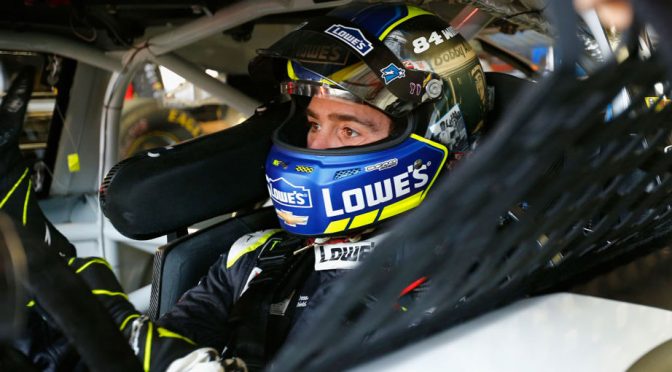
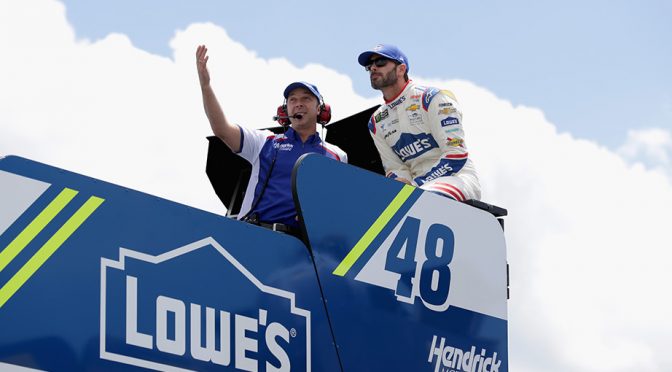
The two-time Daytona  500 winner Johnson will start the "Great American Race" from the rear on Sunday. He had to go to a backup No. 48 Lowe’s Chevrolet after an incident in Thursday’s Can-Am Duel qualifying race.


MORE: Johnson to run in backup car


His fans aren’t overly worried by the circumstance, however. Johnson claimed his record-tying seventh Cup championship at Homestead-Miami Speedway last November by winning the race despite starting last in the field.


One of the most easy-going, popular drivers among his competitors, Johnson himself has noticed a distinct — some would say seismic — shift in the sport’s vast audience. Fans may not have initially been sure what to think of this laidback, California dirt-bike racer-turned one of the greatest NASCAR champions of all time.


He was too nice, too approachable, too humble, too talented — and somehow that didn’t immediately play into the comfort of NASCAR fandom.


But the fans now seem to appreciate the hard work Johnson has always put in and certainly, if nothing else, the opportunity to watch a legend become legendary.


"I think it was … not only did I stop giving him advice, I started going to him for advice," said Johnson’s former teammate-turned FOX Sports analyst Jeff Gordon.


In some regards it’s been easier for Johnson to earn trophies than it has to convince NASCAR’s hardcore fans to accept and appreciate his championship form.


He still has a good laugh at the reception he often gets — although the boos are noticeably softer. How can someone be disliked because — as fans are quick to claim — he is too good or too nice? But it has long been a common anomaly in this sport.


"Certainly more fans are eager to get the autograph," he acknowledged, laughing and shaking his head, still admittedly unsure what is expected of him.


What he expects of himself is a far simpler notion. He is quick to say he has surpassed his own expectations.


At just 41 years old, Johnson has already become the youngest seven-time champion in NASCAR history, younger than both Richard Petty and the late Dale Earnhardt when they hoisted their seventh titles.


His 80 wins are most among active drivers and he needs only 14 more to pass Jeff Gordon for third place on NASCAR’s all-time wins chart. David Pearson’s 105 wins are second to the great 200-race winner Richard Petty.


Johnson has won no fewer than four races a year in the last five seasons. He’s won multiple races in all 15 years he’s competed full time — including a personal best 10 trophies in 2007.


These are marks — from race trophies to championship rings — unlikely to be repeated anytime soon, if ever.


So the question Johnson gets now is whether he can win that historical eighth Cup championship.


His team owner, recent NASCAR Hall of Fame inductee Rick Hendrick, joins many who think it should be considered a very legitimate opportunity.


"You know I think Jimmie is in the prime of his career with the way he goes after things, the way he works out, Chad and their time together," Hendrick said. "I think to me, getting the seventh (championship) was the challenge. It’s hard to explain but I think it took some of the pressure off just getting the seventh.


"And now, he can just race and if eight happens, great. I think he’s got as good a shot as anybody out there. It’s exciting. And one of the neatest things was to watch the crowd when he won (at Homestead) and see all the people in the stands get up. They saw history. We’ve said it before but Dale Earnhardt will always be ‘The Intimidator’ and Richard Petty will always be ‘The King’ but Jimmie has a shot to do something that, through different situations, he can be in a position all on his own.


"He’s as cool about it as I’ve ever seen him. I don’t think there’s any pressure on him. And we don’t feel the pressure now that we’ve tied it. I think he’s got as good a shot as anyone and now until the end, he knows how to win.


"We’re just honored to have what we have but looking forward to having the opportunity to do something no one else has done."


If the thought of eight titles is head-shaking to fans, it is equally as jaw-dropping to Johnson. His start in the sport was humble, with a surplus of networking and winning paving the road to success. His stardom in the sport is a combination of hard work, talent and grit.


"I got a phone call to run a late model race in 1997 for Hendrick Motorsports," Johnson recalled. "Five days later I bought a one-way ticket, called (former Camping World Truck Series champion Ron) Hornaday and moved to Charlotte and just spent every day of the week going to lunch spots and passing out business cards.


"Any business card I got, I’d write a letter and send to the person. I got a fax machine so if I got a business card from someone I would add their fax number for the Chevy press release that went out after my off-road races.


"I was obsessed with networking and establishing myself."


Johnson smiles when recalling his humble start, something he thinks people forget about when they see him now as a NASCAR superstar.


"I don’t think I could have had this healthy lifestyle doing what I had to do then," allowed Johnson, who is a successful triathlete in addition to winning in his race car. "I wouldn’t have made it. I wouldn’t have stood out as the guy super hungry who wanted it so badly. Plus, it took some time to learn these cars and learn the industry.


"I think the timing has worked out well for me and helped me prolong the second half of my career, but the first half I really had to be the guy at Big Daddy’s restaurant eating hushpuppies or that gas station by DEI (Dale Earnhardt Inc.) where there was barbecue on the side.


"I’d literally go over there and sit with a big sweet tea and pass out business cards. It’s all kinda served its purpose."


It has indeed.


And so Johnson begins his historic quest for eight — with the wonderful and rare security of knowing that he’s already legend-worthy.


His dedication to being fit, to being prepared mentally, to maintaining a competitive edge, isn’t really about making history, however. It’s about the thrill of winning, of making a living doing something he so genuinely enjoys. And is so incredible at.


"No, I don’t (feel I have to) win eight," Johnson said breaking into a grin. "But I’m sure as hell going to try."


RELATED: Race results | Series standings | Detailed breakdown

DAYTONA BEACH, Fla. — In the space of 100 laps, Kaz Grala went from youngest NASCAR national series pole winner at Daytona International Speedway to youngest NASCAR national series race winner at Daytona.

What happened between the first green flag and the checkers, however, could fill volumes.

Miraculously, Grala slipped through a wild wreck on the backstretch on the final lap of Friday night’s NextEra Energy Resources 250 to win the first NASCAR Camping World Truck Series race contested in stages under NASCAR’s new competition format.

That final wreck, ignited when Ben Rhodes spun from the outside lane off the bumper of ThorSport Racing teammate Grant Enfinger, wiped out veteran contenders Johnny Sauter, Timothy Peters and Matt Crafton.

RELATED: In-car look at last-lap melee

But Grala — 18 years, 1 month and 26 days old — drove through the melee as trucks bounced off each other like pinballs on either side of him. Grala claimed the trophy for his first national series victory and the five playoff points that go with a race win under NASCAR’s new scoring system.

Austin Wayne Self took the runner-up spot, followed by Chase Briscoe, and the father-son combination of John Hunter Nemechek and Joe Nemechek in fourth and fifth.

“That was freaking awesome! I can’t believe we won Daytona,” Grala said in Victory Lane. “I couldn’t see a lot there. I knew it was a little bit risky. It was the last lap, and we had to do what we had to do.

“I saw coming out of (Turn) 2 it starting to get crazy. There wasn’t going to be any way I was going to be lifting (off the accelerator). I was just going to go low, cross my fingers and close my eyes a little bit.

“Luckily, it worked out for me. I just can’t believe it. It’s so surreal.”

Self put it much more succinctly.

“When all hell broke loose, we were in the right spot.”

The race didn’t wait until the last lap to get crazy. On the second lap, Briscoe, racing for the first time in the Truck Series, gave Noah Gragson’s Toyota an off-center tap on the rear bumper, sending Gragson bouncing off the outside wall in Turn 1 and out of control.

By the time the smoke cleared, 17 trucks — one more than half the field — had sustained varying degrees of damage in the wreck.

RELATED: One lap in, wreck shakes up Daytona field

Gragson, Austin Cindric and Ryan Truex couldn’t continue. Same for Ross Chastain and Clay Greenfield. John Hunter Nemechek stayed on the lead lap but fell victim to a flat tire as Stage 2 of the race came to an end with Sauter in the lead.

“I took a few hard hits out there,” said Gragson, who was unhurt in the wreck. “Just a bummer. I didn’t want to end the race like this, but I had a good time for the lap I got.

“Felt like the 29 (Briscoe) hit me in the wrong part of the bumper going through the tri-oval. It just got me loose, and it got pointed into the outside wall.”

In the final 60-lap stage, all four GMS Chevrolet pitted early on Lap 68. Though Spencer Gallagher and ultimate sixth-place finisher Scott Lagasse Jr. drew speeding penalties while exiting pit road, Sauter reclaimed the lead, with Grala trailing him, when Christopher Bell‘s Toyota got loose in Turn 4, slowed and spun off the bumper of Timothy Peters‘ Tundra.

Sauter, the defending series champion, looked to be in control of the race until John Hunter Nemechek‘s spin off Turn 2 on Lap 95 of 100 caused the fifth and final caution and set up a chaotic two-lap run to the finish.

Wrecked on the backstretch, Sauter was credited with a 15th-place finish but collected two playoff points for winning both the first and second stages, each lasting 20 laps.

Bell, one of the preseason favorites for the championship, sustained heavy damage in three wrecks, including the last one, but his seemingly indestructible No. 4 Kyle Busch Motorsports Toyota Tundra made it to the finish line in eighth-place, salvaging a respectable result from a potentially disastrous night.


BUY TICKETS: See the Daytona 500 live!

MORE: Busch through the years | Busch marries fiancée

DAYTONA BEACH, Fla. — Three hundred and fifty-five days. Give or take a week, perhaps.

That’s how long losing the Daytona 500 sticks with you, according to Kurt Busch.

And Busch, driver of the No. 41 Ford for Stewart-Haas Racing, should know.

Three times Busch has been in position to win the Monster Energy NASCAR Cup Series season-opening event. Three times he has been denied, taking the checkered flag before everyone else except for the race winner.

Second is a lonely place.

Others have finished second in the 500-mile race held annually here at Daytona International Speedway more often than Busch. NASCAR Hall of Fame member Dale Earnhardt finished second five times. Fellow Hall cohort Cale Yarborough did it four times.

Dale Earnhardt Jr. has been runner up four times, as well.

But the sting of a second-place finish in the season’s biggest event isn’t as painful when there are Daytona 500 trophies in the trophy case, and that’s the case for the Earnhardts, Yarborough and a host of others.

For Busch, the lack of a Harley J. Earl trophy, presented to the Daytona 500 victor, is the lone omission on an otherwise solid resume. He’s a former series champion (2004), and enters the 2017 season with 28 wins over a 17-year career.

This year’s race, scheduled for Sunday (2 p.m. ET, FOX, MRN, SiriusXM NASCAR Radio) will be his 16th attempt at being known as a Daytona 500 champion.

"You go with all the optimism you can to win it," Busch said. "You apply all the knowledge from years past being so close to try to win it. (But) it sticks with you."


WATCH: Busch and Kenseth talk Monster Energy, Daytona 500


Restrictor-plate races contested at Daytona and Talladega Superspeedway haven’t been kind to Busch, although he did win an IROC race at Talladega in 2003 en route to the championship for that four-race series. He’s also won the non-points "The Clash" at Daytona as well as one of the Can-Am Duel qualifying races that determine the bulk of the lineup for the 500.

"But both those (Clash and Can-Am) wins were when we were doing the tandem (draft)," Busch said of the NASCAR victories. "I mastered the tandem really well I felt like."

What he’s yet to master, he said "is the aggressive blocking, making the car as wide as it can be at the end of the race to hold that position.

"I was in position, I thought, to win the April race at Talladega last year and Brad (Keselowski) got around me at the end. I made a mistake. Coming to the line here in July running second, third, behind Brad. Joey (Logano, Keselowski’s teammate) is behind me pushing and I got spun coming to the line.

"So many close opportunities and yet nothing to show for it as far as a points win. I just have to be more aggressive and strategic in blocking at the end."

Perfect planning

The 2008 Daytona 500, the 50th annual event, wasn’t rain-shortened nor did it go into overtime. It was 200 laps, 500 miles and ended with a three-lap shootout thanks to a late caution for an incident involving Casey Mears.

When the green flag waved for the final restart, Busch was sixth, outside of Earnhardt Jr. and trailing Jeff Burton, Kyle Busch Tony Stewart and Ryan Newman. Newman pushed Stewart to the lead and with two to go, it was Stewart, Newman and Kurt Busch.

When Stewart dropped low exiting Turn 2 to pick up the fast-closing Kyle Busch and others on the inside, Kurt Busch was able to push Newman, his teammate at Team Penske, into the lead.

"As I settled off the banking … and went on to the straightaway, I had this run and it timed out perfect to catch Newman," Busch said. "And I was like, ‘Alright, I’m going to push him through (turns) 3 and 4, maybe those (guys) will catch us by the time we come off 4 and they can push me and then I’ll worry about how to win.’

But help never arrived. Newman streaked across the finish line under the lights with Busch .092 second behind.

RELATED: Closest finishes in Daytona 500 history

"It was the mile-per-hour that we had on the others," he said of the Penske tandem. "We entered Turn 3 doing 208 mph and the field was stuck at 200. We had such a mph difference that nobody was going to catch us by the time we got back around.

"That one worked out as far as being a Penske team player. It was great to be a part of that 1-2 finish."

It was the first Daytona 500 victory for team owner Roger Penske and the first 1-2 finish for his organization.

"That was when we knew the race started during the day and ended at night," Busch said. "So we went with a night-time setup. I was a lap down during the daytime portion of that race. That was full-on execution to go for nighttime and it turned out perfect.

"What that taught me was you have to have a plan and you have to stick with it. And you hope you’re on the cutting edge to be ahead of everybody."