BUY TICKETS: See the Daytona 500 live!
RELATED: How ‘The Clash’ works

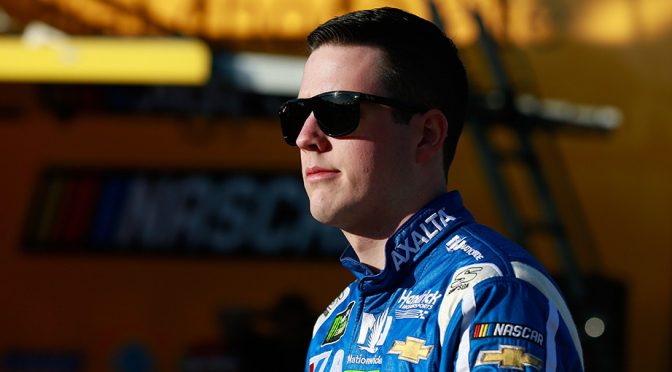
DAYTONA BEACH, Fla. — Alex Bowman made his case for a spot in the season-opening exhibition for 2016 pole winners, claiming his first Coors Light Pole at his home track at Phoenix as part of his substitute stint in Dale Earnhardt Jr.’s place.


But even though he’d earned eligibility, so had Earnhardt as a former winner. With only 10 starts as an interim driver in the Hendrick Motorsports No. 88 Chevrolet, Bowman didn’t exactly feel like he could pipe up and volunteer.


"I just kind of let it go quiet," Bowman said Friday at Daytona International Speedway. "I didn’t want step on any toes, or ask anybody and have it seem like I was begging for something. I wasn’t really asking."


It didn’t stop him from joking about a possible one-off effort with his crew chief under the banner of Greg Ives Racing so that both he and Earnhardt could be in the field. But the word came from Hendrick Motorsports general manager Doug Duchardt on the chilly December day at Darlington Raceway while Earnhardt completed the compulsory on-track preparations to gain medical clearance in his return from concussion.


Earnhardt will defer his comeback one week, joining the FOX Sports team to call the action in Saturday night’s Advance Auto Parts Clash (8 p.m. ET, FS1, MRN, SiriusXM NASCAR Radio) from the TV booth. But his influence will still resonate in his vote of confidence for Bowman’s ability.


RELATED: Dale Jr. to be in the broadcast booth for ‘The Clash’

"I am very thankful for the opportunity," Bowman said. "Dale’s been so great to me. I wouldn’t be here without him. He is the one that pointed me out when he wasn’t feeling good. I feel like I owe a lot to him, and I am very thankful for him to put me in the car for this race."


Bowman will start eighth in Saturday night’s invitational, the only race currently on his 2017 schedule. The 23-year-old driver, who drove part-time in the XFINITY Series last year, participates in simulation tests for Hendrick Motorsports and some testing duty for Chevrolet.


His 10-race stint during Earnhardt’s recuperation was impressive enough to attract the eyes of a handful of prospective car owners with full-time positions in the Monster Energy NASCAR Cup Series. But none were enough to make Bowman jump.


"There was just really wasn’t anything that was going to make me leave Hendrick Motorsports," Bowman said. "I feel like I want to be part of a winning organization whether I am driving, just working for the team, doing testing or doing the simulation stuff. Whatever I’m doing, I want to be part of a winning team. Nothing was going to drag me away from here."


With this event shaping up as a "one night only" performance, Bowman says he isn’t treating the race as another audition. And the fickle nature of restrictor-plate racing has him prepared for all possible outcomes.


The only additional pressure, he says, comes from having a superspeedway expert in Earnhardt observing his efforts with a vested interest from the TV booth. But much like last year, Bowman says he’ll savor the moment.


"It’s another race," Bowman said. "It’s another opportunity to have a lot of fun with Hendrick Motorsports. That is something I kind of tried to do all last season was just to have fun and that is what we are going to try to do on Saturday night and hopefully bring home a trophy."

BUY TICKETS: See the Daytona 500 live!
RELATED: How ‘The Clash’ works | Complete starting lineup

At a Glanc
e
Where: Daytona International Speedway, 2.5-mile tri-oval in Daytona Beach, Florida
Start time: 11:35 a.m. ET on Sunday, February 19
TV/Radio: FS1, MRN, SiriusXM NASCAR Radio 
Forecast: Partly cloudy, high of 71 degrees with Northeast winds of 8 mph
National anthem: Candace Walker, from Orlando, Florida
Grand Marshal: Marcus Herman, owner of Triangle Auto of Merritt Island
Race distance: 75 laps, 187.5 miles 
Pit road speed: 55 mph
Caution car speed: 70 mph

BUY TICKETS: See the Daytona 500 live! 
RELATED: Lineup for ‘The Clash’ | Hamlin, Kes top practices

DAYTONA BEACH, Fla. — Joe Gibbs Racing drivers have won the last three Advance Auto Parts Clash races at Daytona International Speedway and four of the last five.


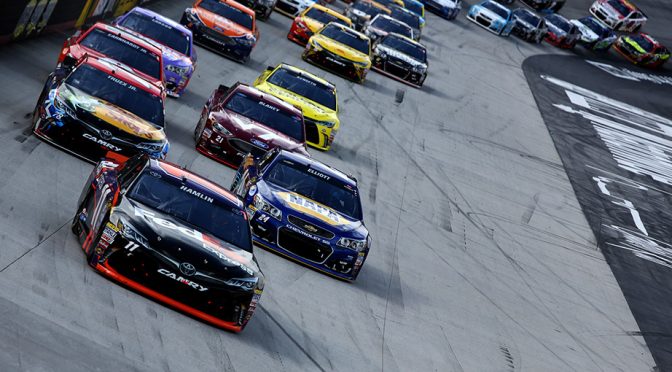
They’ve visited Victory Lane often enough, recently enough, to be considered the favorites when this year’s 75-lap, non-points event gets underway Saturday night here at the 2.5-mile superspeedway (8 p.m., FOX Sports 1, MRN, SiriusXM NASCAR Radio).


Two of those victories belong to Denny Hamlin, who won from 15th a year ago and first in 2014. More than a decade ago, the JGR driver won the non-points event for the first time — also from 15th.


"I was at the very back for the first 20-some laps last year," Hamlin said Friday before practice got underway at DIS. "We had some pit strategy, we worked a few things, we got up front and never left.


"We’ve won it from the front (and) back; I actually can’t remember starting up front in this race. I think I always start in the back, but we’ve been very fortunate. I actually had one … I thought we had four wins but evidently we went below the yellow line in one of them."

RELATED: Hamlin honors J.D. Gibbs on his car


Hamlin sounds a familiar refrain when asked about the season’s first on-track action — the Clash is a "fun race" with no concerns about points clouding the picture. It’s a chance, he said, "to knock that rust off, have fun and see if you can’t win."


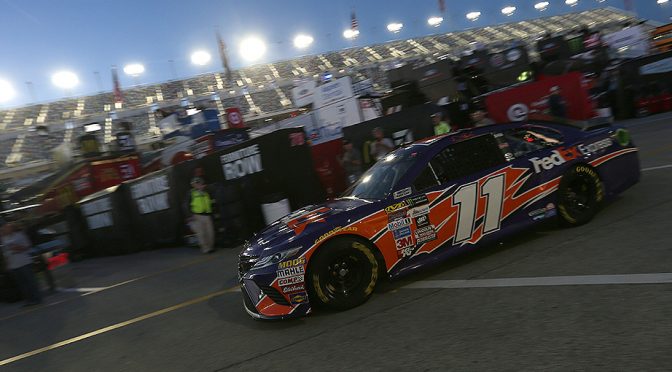
This year Hamlin will start second in his No. 11 Toyota, alongside the No. 2 Team Penske Ford of pole-sitter Brad Keselowski.


Jamie McMurray (Chip Ganassi Racing No. 1 Chevrolet), Austin Dillon (Richard Childress Racing No. 3 Chevrolet) and Martin Truex Jr. (Furniture Row Racing No. 78 Toyota) round out the top five in the 17-car field. Starting positions were determined via blind draw Friday.


Others of note include Daniel Suarez, who will start 16th, and Alex Bowman, who will line up eighth on the grid.


Suarez, the 2016 NASCAR XFINITY Series champion, replaces Carl Edwards in the No. 19 JGR Toyota this season. Bowman is making a one-race appearance in place of Dale Earnhardt Jr. in the No. 88 Chevrolet for Hendrick Motorsports. Bowman won the pole at Phoenix last fall while filling in for Earnhardt.


RELATED: How ‘The Clash’ format works


The 75-lap race will be run in two segments – an opening 25-lap segment followed by a 50-lap finish. It’s an entirely different animal from the Daytona 500, thus the approach is different as well, according to Hamlin.


"I think you get a little more aggressive from Lap 1 (in the Clash)," he said. "In the 500 you’re kind of working (your way) toward the checkered flag.


"I think the race is so short, that’s why you see a lot of the wrecks. … A) because we’re a little rusty and B) because we’re all going for it because we know it’s win or nothing."


Stewart-Haas Racing‘s Kevin Harvick also has three Clash victories. Jimmie Johnson (HMS), Kurt Busch (SHR), Kyle Busch (JGR) and Matt Kenseth (JGR) will be looking for their second career Clash win.


"I haven’t driven anything since my last lap at Homestead, no testing for me or anything, which is kind of the same as last year and we fired off and won the Clash," Hamlin said.


"I’m pretty confident that it just takes a (few) reps during practice to kind of feel the car out. I’ve done all the homework that I can do at home, studying tapes, studying data to figure out the best moves to make. I always like to kind of picture myself in certain situations and look at the data and see what I need to do to succeed. For me, that’s why we’ve had the success we’ve had on these tracks."


RELATED: Fast facts on race enhancements
BUY TICKETS: See the Daytona 500 live!

DAYTONA BEACH, Fla. — NASCAR announced the 2017 stage lengths for each race in all three of its national series. A number of factors went into determining the lap count for Stage 1, Stage 2 and the Final Stage of each race, with a singular goal in mind — the best racing for NASCAR fans.

“Every track is unique for its characteristics in length, surface and overall racing conditions,” said Scott Miller, NASCAR senior vice president of competition. “We worked closely with race teams on expected fuel and tire runs over the entirety of an event when considering stage lengths. And in the end, stage lengths were decided based upon what would provide the best race for fans.”

Last week, NASCAR announced the stage lengths for the Monster Energy NASCAR Cup Series season-opening DAYTONA 500 (Feb. 26 at 2 p.m. ET on FOX, MRN and SiriusXM NASCAR Radio). For “The Great American Race,” the stages are scheduled to end on Lap 60, Lap 120 and Lap 200.

For the full list of stages for the remainder of the Monster Energy NASCAR Cup Series season, as well as the NASCAR XFINITY Series and NASCAR Camping World Truck Series seasons, see below.

* Note: Laps listed below are what lap each segment will end

MONSTER ENERGY NASCAR CUP SERIES
RACE STAGE 1 STAGE 2 FINAL STAGE
Daytona 60 120 200
Atlanta 85 170 325
Las Vegas 80 160 267
Phoenix 75 150 312
Auto Club 60 120 200
Martinsville 130 260 500
Texas 85 170 334
Bristol 125 250 500
Richmond 100 200 400
Talladega 55 110 188
Kansas 80 160 267
Charlotte 100 200 (Stage 3: 300) 400
Dover 120 240 400
Pocono 50 100 160
Michigan 60 120 200
Sonoma 25 50 110
Daytona-2 40 80 160
Kentucky 80 160 267
New Hampshire 75 150 301
Indianapolis 50 100 160
Pocono-2 50 100 160
Watkins Glen 20 40 90
Michigan-2 60 120 200
Bristol-2 125 250 500
Darlington 100 200 367
Richmond-2 100 200 400
Chicagoland 80 160 267
New Hampshire-2 75 150 300
Dover-2 120 240 400
Charlotte-2 90 180 334
Talladega-2 55 110 188
Kansas-2 80 160 267
Martinsville-2 130 260 500
Texas-2 85 170 334
Phoenix-2 75 150 312
Miami 80 160 267
NASCAR XFINITY SERIES
RACE STAGE 1 STAGE 2 FINAL STAGE
 Daytona 30 60 120
Atlanta 40 80 163
Las Vegas 45 90 200
Phoenix 60 120 200
Auto Club 35 70 150
Texas 45 90 200
 Bristol 85 170 300
Richmond 75 150 250
Talladega 25 50 113
Charlotte 45 90 200
Dover 60 120 200
Pocono 25 50 100
Michigan 30 60 125
Iowa 60 120 250
Daytona-2 30 60 100
Kentucky 45 90 200
New Hampshire 45 90 200
Indianapolis 30 60 100
Iowa 60 120 250
Watkins Glen 20 40 82
Mid-Ohio 20 40 75
Bristol-2 85 170 300
Road America 10 20 45
Darlington 45 90 147
Richmond-2 75 150 250
Chicagoland 45 90 200
Kentucky-2 45 90 200
Dover-2 60 120 200
Charlotte-2 45 90 200
Kansas 45 90 200
Texas-2 45 90 200
Phoenix-2 60 120 200
Miami 45 90 200
NASCAR CAMPING WORLD TRUCK SERIES
RACE STAGE 1 STAGE 2 FINAL STAGE
Daytona 20 40 100
Atlanta 40 80 130
Martinsville 70 140 250
Kansas 40 80 167
Charlotte 40 80 134
Dover 45 90 200
Texas 40 80 167
Gateway 35 70 160
Iowa 60 120 200
Kentucky 35 70 150
Eldora 40 90 150
Pocono 15 30 60
Michigan 30 60 100
Bristol 55 110 200
Canadian Tire Motorsports Park 20 40 64
Chicagoland 35 70 150
New Hampshire 55 110 175
Las Vegas 35 70 146
Talladega 20 40 94
Martinsville 50 100 200
Texas-2 35 70 147
Phoenix 40 80 150
Miami 40 80 134

This story was originally published on Feb. 16, 2017.

NASCAR competition officials issued an updated deterrence system Thursday for its three national series, shifting toward an officiating process that penalizes pre-race infractions within a given race weekend. The updated system is months in the making, with the sanctioning body and teams working concurrently on the new procedures.

The move was one of several fundamental changes made to the penalty structure ahead of on-track activity this week at Daytona International Speedway.

The new system replaces the P1-through-P6 penalty classification which had been in effect since the start of the 2014 season. The new structure grades significant penalties into Levels 1 and 2, both of which involve points deductions and crew chief or team member suspensions that increase with a given violation’s severity.

Elton Sawyer, NASCAR Vice President of Officiating and Technical Inspection, said that in the event that less severe infractions are found before a race, teams or crew members would be disciplined from a menu of penalty options available to NASCAR’s three series directors. Those range from the loss of practice time to loss of lap(s) at the start of a race.

“Our goal was to be able to, more like football or basketball or any sporting event to where we could officiate and police within the event,” Sawyer told NASCAR.com. “I think the real message is that we want to get these infractions, the smaller infractions, we want to get them corrected at the race track.

“It’s very similar to a 15-yard penalty. If you can get three 15-yard penalties and you can still win the game or drive down and score a touchdown, then good for you. If we can issue these penalties and you lose pit selection or you start at the back or a drive-through (penalty), and you can still come back and win the race, well then we feel like what that infraction was, the penalty fits the crime.”

A chief reasoning behind the updated policy is to mete out potential penalties more closely to the time – and at the event – in which they occur.

“The Tuesday penalties, they wouldn’t necessarily go away,” Sawyer told NASCAR.com. “We’re hoping that we don’t have to write those penalties. That’s not what we look forward to. We want all the positive storylines to be around the excitement of the race, and as the stewards of the sport — or the umpires, if you will — we want to kind of be in the background. But we have a role and responsibility in this as well to make sure it’s a level playing field for all.”

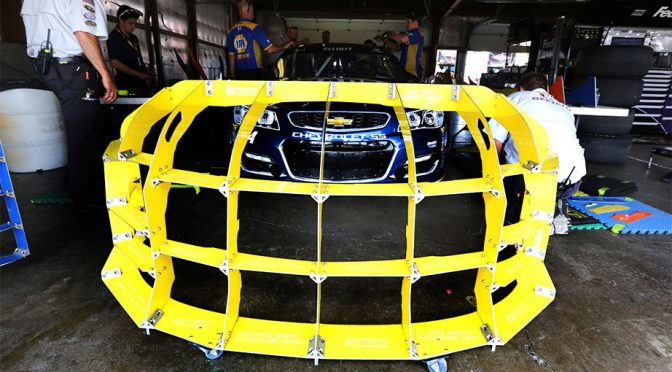
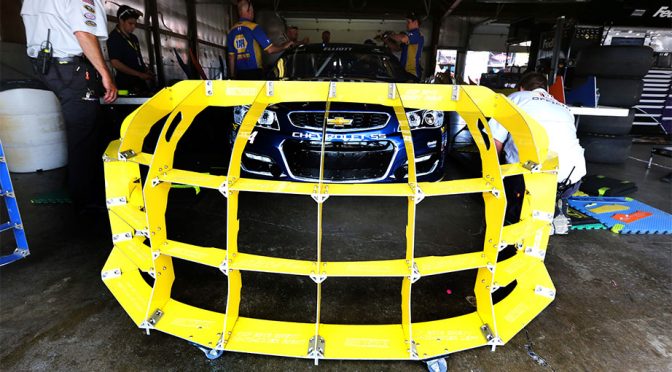
The updates also detail the schematics of a new pre-race inspection protocol, which requires that vehicles must proceed through all four inspection stations, regardless of whether issues are found in any stage in the process. Fixes must now be made in each team’s garage stall, rather than off to the side of any given station, and then vehicles must proceed through all four inspection sites again.

Sawyer said that the additional time it takes to make a full inspection pass serves as a deterrent for teams, which could miss portions of practice or qualifying in the event of an issue. Eliminating repairs made off to the side of inspection stations also tightens up any gray areas on the fringes of the garage.

“I think it’s fair to say that if we make them go back to the garage, then that’s a central location for all cars to be fixed,” Sawyer told NASCAR.com. “They know they have to come back through every station again, so it does put the deterrent back on the teams and puts the responsibility back on the teams to present their vehicles in compliance with the rule book.”

Among the other highlights from Thursday’s updates to the rule book:

The penalty structure for violations that rise to the L1 or L2 level were unveiled, subject to enforcement at the following event(s):

L1 penalties concern areas of minimum heights and weights, the Laser Inspection Station (LIS), gear ratios, and flagrant lug nut violations where 17 or fewer are properly secured. L2 penalties involve more egregious infractions concerning tampering with the three “no man’s land” technical areas of tires, engine and fuel. Major safety violations, the use of telemetry or traction control, plus breaches of the testing policy also fall under the L2 designation.

Penalty options for all three NASCAR national series call for the deduction of 10 to 40 points for L1 violations and 75 points for L2 infractions. In the Monster Energy NASCAR Cup Series, L1 penalties call for crew chief or team member suspensions for 1 to 3 races, plus a $25,000 to $75,000 fine. L2 penalties in the Monster Energy NASCAR Cup Series come with a six-race suspension and fines ranging from $100,000 to $200,000.

The disciplinary action is scaled back in the other two national series. In the NASCAR XFINITY Series, L1 penalties will result in the same one- to three-race suspension range, but with fines from $10,000-$40,000. L2 violations in XFINITY events also come with a six-race suspension guideline, but a $50,000-$100,000 range for fines.

In the NASCAR Camping World Truck Series, L1 penalties carry a one- or two-race suspension with fines from $5,000 to $20,000. L2 infractions will result in a four-race suspension with monetary penalties of $25,000 to $50,000.

Specific penalties were outlined for lug-nut and LIS violations in the Monster Energy Series.

LIS infractions discovered after Coors Light Pole Qualifying will result in a team’s time being disallowed. Post-race, the violation falls under an L1 heading with a three-race crew chief suspension, a $65,000 fine and the loss of 35 championship points.

Teams with one improperly attached or missing lug nut post-race are subject to a $10,000 fine. That fine doubles and includes a one-race suspension for the crew chief if two lug nuts are improperly attached or missing. If three or more lug nuts are in violation of the rules, the penalty rises to the L1 level with three-race suspension for the crew chief, a $65,000 fine and the deduction of 35 championship points.

“Encumbered” finishes — a rules concept introduced before the Monster Energy Series’ playoffs last year — will remain in effect this season for post-race L1 and L2 violations. The rules allow a victory to stand in the event of an infraction, but a winning team will be stripped of the benefits associated with the win.

The list of pre-race penalties within a race weekend at the series directors’ disposal, in order of increasing severity: Loss of annual “hard card” credential, loss of practice time, loss of pit selection position, tail of the field penalty, a green-flag pass-through on pit road after the initial start, a green-flag stop-and-go in the pits after the start, and lap(s) penalty.

Sawyer said that NASCAR competition officials will continue the practice of taking select cars back to the R&D center for further inspection after a race weekend.
RELATED: Fast facts on race enhancements
BUY TICKETS: See the Daytona 500 live!

DAYTONA BEACH, Fla. — NASCAR today announced the 2017 stage lengths for each race in all three of its national series. A number of factors went into determining the lap count for Stage 1, Stage 2 and the Final Stage of each race, with a singular goal in mind — the best racing for NASCAR fans.

“Every track is unique for its characteristics in length, surface and overall racing conditions,” said Scott Miller, NASCAR senior vice president of competition. “We worked closely with race teams on expected fuel and tire runs over the entirety of an event when considering stage lengths. And in the end, stage lengths were decided based upon what would provide the best race for fans.”

Last week, NASCAR announced the stage lengths for the Monster Energy NASCAR Cup Series season-opening DAYTONA 500 (Feb. 26 at 2 p.m. ET on FOX, MRN and SiriusXM NASCAR Radio). For “The Great American Race,” the stages are scheduled to end on Lap 60, Lap 120 and Lap 200.


For the full list of stages for the remainder of the Monster Energy NASCAR Cup Series season, as well as the NASCAR XFINITY Series and NASCAR Camping World Truck Series seasons, see below.

* Note: Laps listed below are what lap each segment will end

BUY TICKETS: See the Daytona 500 live!


CHARLOTTE, N.C. — The Kyle Petty Charity Ride Across America, one of the most successful and popular charity rides in the country, today announced the route for its 23rd annual motorcycle trek. For the first time in almost a decade, the Ride led by former NASCAR driver and NBC Sports racing analyst Kyle Petty, will travel across the Pacific Northwest.

With Manheim, North America’s leading provider of used vehicle services, as returning presenting sponsor, the Ride will leave Portland, Oregon, on May 13 and arrive in Milwaukee, Wisconsin, on May 19, covering eight states in seven days. Petty will lead 200 bikers on the weeklong, 2,400-mile route to raise funds and awareness for Victory Junction – a camp dedicated to providing life-changing camping experiences for children with chronic or life-threatening illnesses.


What started out as Petty and a small group of friends riding together for fun in 1995, has grown into one of the most successful and popular charity rides in the country. This year, more than 20 first-time riders will join the dedicated team of men and women riding for the cause, along with new sponsors and a continued sense of passion. 

"It’s pretty straightforward: every single mile we ride is for one cause, and that is to send chronically ill children to camp at Victory Junction at no cost to their families," said Petty. "The Ride is an enriching experience for everyone involved, and this year we’ll be riding through some spectacular parts of the country like Mount Rushmore, and for the very first time the Columbia River Gorge."


The Ride will see many of our country’s historic landmarks including Yellowstone and Badlands National Parks; Bighorn National Forest; and the iconic Harley-Davidson Museum, the birthplace of the all-American motorcycle manufacturing company. Emblematic of the American open road, riders will also take in roadside attractions, including the world’s largest ball of twine rolled by one man in Darwin, Minnesota.


Fans are encouraged to come support the cause and greet riders at one of the Ride’s seven overnight stops or daily pit stops. Spectators along the route may also purchase memorabilia or contribute to the Ride’s "Small Change. Big Impact." program, which accepts donations at each stop.


23rd Anniversary Kyle Petty Charity Ride Across America Schedule:

(Information about scheduled pit stops can be found on the Ride’s Facebook page.)

  • Day 1, Saturday, May 13 – Portland, Oregon to Walla Walla, Washington
  • Day 2, Sunday, May 14 – Walla Walla, Washington to Missoula, Montana
  • Day 3, Monday, May 15 – Missoula, Montana to Cody, Wyoming
  • Day 4, Tuesday, May 16 – Cody, Wyoming to Deadwood, South Dakota
  • Day 5, Wednesday, May 17 – Deadwood, South Dakota to Mitchell, South Dakota
  • Day 6, Thursday, May 18 – Mitchell, South Dakota to Minneapolis, Minnesota
  • Day 7, Friday, May 19 – Minneapolis, Minnesota to Milwaukee, Wisconsin


As a result of the Ride, 7,985 children have attended Victory Junction at no cost to their families. Last year alone, the Ride raised more than $1 million, sending 100 children to camp. Victory Junction has served as the Ride’s primary beneficiary since its establishment by Petty and his family in 2004 in honor of his late son, Adam.


This year’s Ride will feature several celebrity riders, including:

  • NASCAR Hall of Famer and seven-time champion Richard Petty
  • NASCAR legends Harry Gant, Hershel McGriff and Donnie Allison
  • Former NFL great and ESPN’s 2016 Coaches Poll greatest college football player of all time, Herschel Walker
  • Heisman Trophy winner (1980) and Super Bowl champion (XXII) George Rogers
  • NBC Sports NASCAR personalities Rick Allen and Rutledge Wood
  • Harley-Davidson Museum president, Bill Davidson, who comes from a long list of Harley-Davidson greats starting with his great grandfather who founded the company.


"As we travel to new parts of our country – or ones we haven’t seen in a while – the Ride brings with it a passion for sharing the great work of Victory Junction and a comradery that can’t be matched. That’s what makes it one of the most popular motorcycle rides in the country," said Kyle’s father Richard Petty.


The 2017 Ride is made possible by presenting sponsor Manheim, as well as Coca-Cola, Harley-Davidson Motor Company, FCA Fleet, Racing Electronics, WinCraft Racing, FLUIDYNE Racing Products, Petty Family Foundation, Krispy Kreme Doughnuts, Headbands of Hope, Piedmont Moving Systems, ArticBlu, Select-A-Vision and Goody’s.


"Giving back to the community is a core value of Manheim, so we’re thrilled once again to be supporting Victory Junction and the children who camp there," said Janet Barnard, president, Cox Automotive Inventory Solutions. "Our teams are excited to welcome the Ride at two of our operating locations, Manheim Portland and Manheim Minneapolis, and offering their local support to this worthwhile cause."


To keep up with Petty and the riders live, follow along on social media:


For more information about the 23rd Annual Kyle Petty Charity Ride Across America or to make a donation, please visit www.kylepettycharityride.com.

BUY TICKETS: See the Daytona 500 live!
RELATED:
Suarez’s rise to NASCAR stardom


SUWANEE, Ga. —  ARRIS International today announced that it has renewed its multi-year sponsorship agreement with Joe Gibbs Racing (JGR).


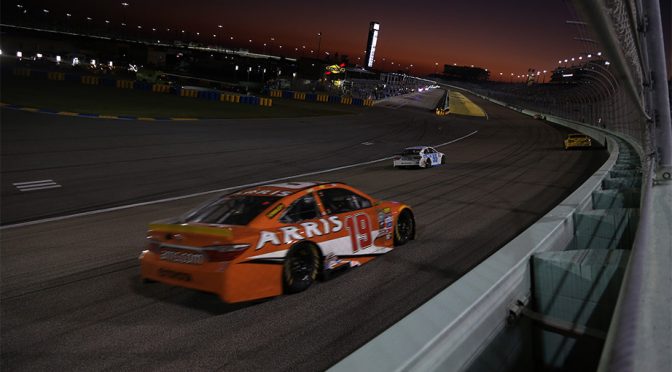
Under the agreement, ARRIS will extend its primary sponsorship of Daniel Suárez to 22 races (up from 17 last year) in this season’s Monster Energy NASCAR Cup Series, following Carl Edwards‘ decision to step away from racing in January. Following his momentous win as the first foreign-born driver to win a NASCAR championship, Suárez will move up as the driver of the No. 19 ARRIS Toyota Camry to compete in NASCAR’s highest series.


From the start, ARRIS Racing has shared a passion for developing young talent in racing, alongside Carlos "Slim" Domit and Escudería. Today, ARRIS also announced that it is continuing its support of young Latin American drivers — renewing its sponsorship of Abraham Calderón, who last season won the Freightliner Truck Series in Mexico, and sponsoring 21-year-old Mexican driver Fabián Welter, who is currently Driver 1 in the Telmex Driver Development Program.


"ARRIS is a strategic and dedicated partner on and off the track," said Joe Gibbs, founder and owner of JGR. "Their commitment to advancing the sport — from a sponsorship and technology perspective — makes them a genuine leader that our fans have recognized and embraced. We look forward to years of rewarding collaboration and to many more trips to Victory Lane."


"Our partnership with JGR and our involvement with NASCAR has been instrumental in introducing the ARRIS brand to millions of NASCAR fans. We had a great run with the legendary Carl Edwards, and now we’re proud to continue our work with JGR by extending our race-day sponsorship to 22 events in support of Daniel Suárez’s history-making trajectory," said Ron Coppock, Executive Vice President, Global Marketing and Customer Operations at ARRIS. "Daniel represents the future of racing, and we’re looking forward to joining him on the podium in his first Monster Energy NASCAR Cup Series season.


"ARRIS Racing is also proud to play an important role in the development of young Latin American racing talent," continued Coppock. "Fabián and Abraham are two drivers who, like a young Daniel Suárez, show great potential on the Mexican racing scene. We are excited to contribute to their growth as drivers and as the next generation of this sport."


"It’s a dream to be competing for the first time in the Monster Energy NASCAR Cup Series," said Daniel Suárez, JGR driver. "With the full support of ARRIS and JGR, I know the whole team will be able to make the most of this coming season and give us every chance of success."


ARRIS joined the NASCAR family in 2014 with its primary sponsorship of JGR drivers Carl Edwards and Daniel Suárez. In 2016, the company installed the most comprehensive Wi-Fi deployment in NASCAR history at Daytona International Speedway, which serves tens of thousands of fans on race days. The company also powers the communications between NASCAR drivers and their teams through its SURFboard SB6183 modem, E6000 CER, and integration and support from its Global Services team.

RELATED: Stage lengths revealed for 2017 races

NASCAR competition officials issued an updated deterrence system Thursday for its three national series, shifting toward an officiating process that penalizes pre-race infractions within a given race weekend. The updated system is months in the making, with the sanctioning body and teams working concurrently on the new procedures.

The move was one of several fundamental changes made to the penalty structure ahead of on-track activity this week at Daytona International Speedway.

The new system replaces the P1-through-P6 penalty classification which had been in effect since the start of the 2014 season. The new structure grades significant penalties into Levels 1 and 2, both of which involve points deductions and crew chief or team member suspensions that increase with a given violation’s severity.

Elton Sawyer, NASCAR Vice President of Officiating and Technical Inspection, said that in the event that less severe infractions are found before a race, teams or crew members would be disciplined from a menu of penalty options available to NASCAR’s three series directors. Those range from the loss of practice time to loss of lap(s) at the start of a race.

“Our goal was to be able to, more like football or basketball or any sporting event to where we could officiate and police within the event,” Sawyer told NASCAR.com. “I think the real message is that we want to get these infractions, the smaller infractions, we want to get them corrected at the race track.

“It’s very similar to a 15-yard penalty. If you can get three 15-yard penalties and you can still win the game or drive down and score a touchdown, then good for you. If we can issue these penalties and you lose pit selection or you start at the back or a drive-through (penalty), and you can still come back and win the race, well then we feel like what that infraction was, the penalty fits the crime.”

A chief reasoning behind the updated policy is to mete out potential penalties more closely to the time – and at the event – in which they occur.

“The Tuesday penalties, they wouldn’t necessarily go away,” Sawyer told NASCAR.com. “We’re hoping that we don’t have to write those penalties. That’s not what we look forward to. We want all the positive storylines to be around the excitement of the race, and as the stewards of the sport — or the umpires, if you will — we want to kind of be in the background. But we have a role and responsibility in this as well to make sure it’s a level playing field for all.”

RELATED: Tire limits among ’17 rules updates | Learn about the rules package

The updates also detail the schematics of a new pre-race inspection protocol, which requires that vehicles must proceed through all four inspection stations, regardless of whether issues are found in any stage in the process. Fixes must now be made in each team’s garage stall, rather than off to the side of any given station, and then vehicles must proceed through all four inspection sites again.

Sawyer said that the additional time it takes to make a full inspection pass serves as a deterrent for teams, which could miss portions of practice or qualifying in the event of an issue. Eliminating repairs made off to the side of inspection stations also tightens up any gray areas on the fringes of the garage.

“I think it’s fair to say that if we make them go back to the garage, then that’s a central location for all cars to be fixed,” Sawyer told NASCAR.com. “They know they have to come back through every station again, so it does put the deterrent back on the teams and puts the responsibility back on the teams to present their vehicles in compliance with the rule book.”

RELATED: New participation guidelines put limits in place for 2017

Among the other highlights from Thursday’s updates to the rule book:

The penalty structure for violations that rise to the L1 or L2 level were unveiled, subject to enforcement at the following event(s):

L1 penalties concern areas of minimum heights and weights, the Laser Inspection Station (LIS), gear ratios, and flagrant lug nut violations where 17 or fewer are properly secured. L2 penalties involve more egregious infractions concerning tampering with the three “no man’s land” technical areas of tires, engine and fuel. Major safety violations, the use of telemetry or traction control, plus breaches of the testing policy also fall under the L2 designation.

Penalty options for all three NASCAR national series call for the deduction of 10 to 40 points for L1 violations and 75 points for L2 infractions. In the Monster Energy NASCAR Cup Series, L1 penalties call for crew chief or team member suspensions for 1 to 3 races, plus a $25,000 to $75,000 fine. L2 penalties in the Monster Energy NASCAR Cup Series come with a six-race suspension and fines ranging from $100,000 to $200,000.

The disciplinary action is scaled back in the other two national series. In the NASCAR XFINITY Series, L1 penalties will result in the same one- to three-race suspension range, but with fines from $10,000-$40,000. L2 violations in XFINITY events also come with a six-race suspension guideline, but a $50,000-$100,000 range for fines.

In the NASCAR Camping World Truck Series, L1 penalties carry a one- or two-race suspension with fines from $5,000 to $20,000. L2 infractions will result in a four-race suspension with monetary penalties of $25,000 to $50,000.

Specific penalties were outlined for lug-nut and LIS violations in the Monster Energy Series.

LIS infractions discovered after Coors Light Pole Qualifying will result in a team’s time being disallowed. Post-race, the violation falls under an L1 heading with a three-race crew chief suspension, a $65,000 fine and the loss of 35 championship points.

Teams with one improperly attached or missing lug nut post-race are subject to a $10,000 fine. That fine doubles and includes a one-race suspension for the crew chief if two lug nuts are improperly attached or missing. If three or more lug nuts are in violation of the rules, the penalty rises to the L1 level with three-race suspension for the crew chief, a $65,000 fine and the deduction of 35 championship points.

“Encumbered” finishes — a rules concept introduced before the Monster Energy Series’ playoffs last year — will remain in effect this season for post-race L1 and L2 violations. The rules allow a victory to stand in the event of an infraction, but a winning team will be stripped of the benefits associated with the win.

The list of pre-race penalties within a race weekend at the series directors’ disposal, in order of increasing severity: Loss of annual “hard card” credential, loss of practice time, loss of pit selection position, tail of the field penalty, a green-flag pass-through on pit road after the initial start, a green-flag stop-and-go in the pits after the start, and lap(s) penalty.

Sawyer said that NASCAR competition officials will continue the practice of taking select cars back to the R&D center for further inspection after a race weekend.
BUY TICKETS: See the Daytona 500 live!

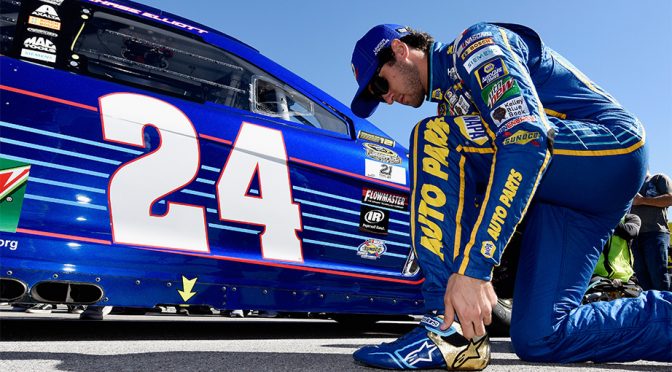
Chase Elliott can’t make fans forget the legacy of the No. 24 car, but by all indications, he’s ready to make his own distinctive mark in that vaunted ride.


The history of the No. 24 car is monumental, and Elliott inherited that ride last year from the driver who made it famous.


The No. 24 has won 93 Monster Energy NASCAR Cup Series races in 1,414 starts since the number debuted in 1950. All 93 victories belong to Jeff Gordon, who retired from full-time racing at NASCAR’s highest level at the end of the 2015 season.


When Gordon made his first premier series start in the 1992 season finale, he took over the number from Butch Gilliland, who had driven a family-owned No. 24 Pontiac at Phoenix two weeks earlier. The No. 24 made only two appearances in 1992, with Gilliland behind the wheel, before Gordon ran the number at Atlanta Motor Speedway.


As he made his debut in the Hendrick Motorsports Chevrolet, Gordon did so with no weight of history on his shoulders.


The same can’t be said of Elliott, who followed a four-time champion who is third on the all-time Monster Energy NASCAR Cup Series victory list.


But Elliott has adjusted. By all measures, he exceeded expectations in a 2016 season that saw him claim Sunoco Rookie of the Year honors. Elliott was a couple of blown restarts away from becoming the only driver other than Gordon to win in the No. 24 car, and he’s ready to build on his strong performance this season.


Sophomore jinx? Forget it.


"You hope you can continue forward and not look at it as ‘Year 2’ or look at it from that perspective," Elliott said. "You have to go about it as a new season, as boring an answer as that is. You have to see the challenges as they come. One thing I’m excited about, which I haven’t had in the last few years, is having the same crew chief two years in a row. I haven’t had that.


"I really enjoyed working with Alan (Gustafson) last year. I think he’s one of the best. Everyone says that about their crew chiefs, but I’m pretty confident saying that. He does a great job and is underrated in what he does and how hard he works in trying to make a race team go. For us, it’s about starting another year, improving in areas that we wanted to get better in and also improving some of the areas we succeeded in and try to keep it as simple as that."


It also helps that Elliott has a different primary sponsor (NAPA) from the ones that dominated the hood of Gordon’s car. Elliott’s souvenir sales have been robust, and his fans are easily identifiable.


"I want to be me and try to keep things as straightforward as I can," Elliott said. "I try not to be a very complicated person and try to keep things as simple as possible. I certainly appreciate the support we’ve had. It was incredible to see some of that last year.


"Darlington stands out in my mind. We went there and saw a bunch of new 24 gear, which goes a long way. It doesn’t go unnoticed and it means a lot. I certainly appreciate that support, but you want people to support you for who you are and no other reason. I hope that’s the way it is for me. I’m trying to be myself."


The transition from Gordon to Elliott, in the fan base as well as in the car, is emblematic of the youth movement that’s evolved in the past few years from a groundswell into a full-fledged tsunami. The 2017 season brings three full-time newcomers to the Monster Energy NASCAR Cup Series in Erik Jones, Daniel Suarez and Ty Dillon.


They follow by a year the talented trio of Elliott, Ryan Blaney and Chris Buescher. Before that, Austin Dillon and Kyle Larson joined the series.


Elliott recalled once again his experience at Darlington, where, as he sat in his car waiting to leave the track, he noticed a large group of fans wearing No. 24 NAPA gear.


"I happened to see a big group of people," Elliott explained. "That’s why it stood out in my mind. As the year went on, I guess you did see a little more of the newer 24 stuff, which I thought was cool.


"But I’m perfectly cool with seeing Jeff Gordon gear, too. Jeff’s been good to me and has a great fan base who still enjoy going to the races. New or old 24 gear, I’m happy with it."


Just as Elliott’s growing cadre of fans will continue to coexist with the long-time backers of Gordon, so will their two legacies.


And as the 2017 season begins to unfold, Elliott appears ready to add considerable substance to his.