RELATED: New guidelines put limits in place


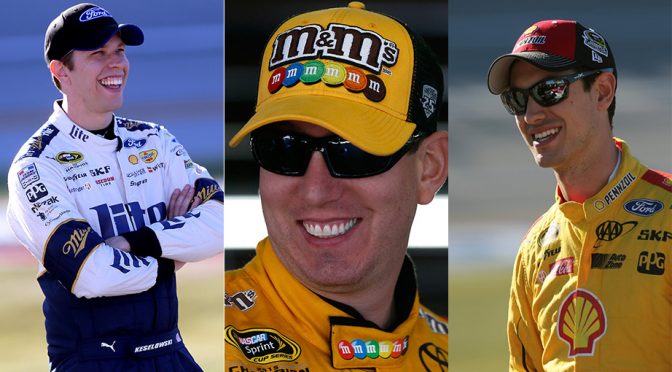
CHARLOTTE, N.C. — When a driver has accomplished as much as Kyle Busch has across all three NASCAR national circuits in his career, new participation guidelines might naturally seem to be tailored to “Busch-proofing” the XFINITY Series and Camping World Truck Series.
 
Instead, the intent — according to NASCAR Senior Vice President of Racing Operations Jim Cassidy — is not to single out one driver or team, but to broaden the reach of the sport’s up-and-coming stars as they climb the developmental ladder.
 
“Certainly, we’re not going to focus on any one participant and make a rule based upon that. That’s certainly not our approach to rule-making,” Cassidy said. “What our approach is in this case is making sure that the brands of these drivers have a chance if they are successful on-track, that people understand who these drivers are and that they continue to have a chance to build their brands.”
 
NASCAR announced updated guidelines for driver participation in 2017 on Wednesday, releasing rules that place limits on the amount of races drivers with more than five years of experience in its top series can enter in the two other national divisions. The rules establish a maximum for those Cup Series veterans of 10 additional races in the XFINITY Series and seven additional events in the Camping World Truck Series.
 
Busch has won six or more XFINITY Series races in eight of the last nine seasons, including nine victories in 16 starts this season. While the reigning Sprint Cup champion might be the most prolific driver competing across multiple series, he’s not the only one.
 
A total of nine full-time Cup Series drivers — Busch, Joey Logano, Austin Dillon, Dale Earnhardt Jr., Chase Elliott, Michael McDowell, Denny Hamlin, Kyle Larson and Aric Almirola — have combined to win 19 of the 30 XFINITY races so far this year. Of that list, Dillon, Elliott and Larson would not be subject to participation caps next year based on their experience levels.

Similarly, this season a total of six full-time Sprint Cup drivers — Busch, Logano, Dillon, Larson, Brad Keselowski and Matt DiBenedetto — have competed in 10 or more XFINITY events. Of those, only Busch, Logano and Keselowski — all with a full-time tenure of five or more years in NASCAR’s premier series — would be affected by the restrictions under the 2017 guidelines.
 
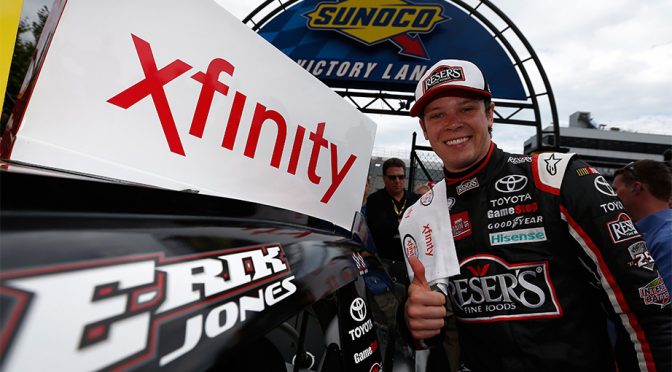
A total of six XFINITY Series regulars finished second this year in races won by full-time Sprint Cup drivers. In those events, Joe Gibbs Racing‘s Erik Jones was a runner-up five times with JR Motorsports teammates Justin Allgaier and Elliott Sadler each finishing second twice. While it might be overly simplistic to chalk those second-place finishes down as wins under the new system, the guidelines theoretically stand to create more opportunities for developmental drivers.
 
The updated guidelines likely have a greater impact on the XFINITY Series, where double-duty participation by Sprint Cup Series drivers is higher, than on the Camping World Truck Series. On the truck tour this season, only three of the 19 races thus far have been won by full-time Cup Series drivers, with Kyle Busch prevailing twice and Larson once. No full-time Sprint Cup drivers have competed in more than seven truck races this year; Busch and Reed Sorensen have four starts each.
 
Cassidy said in both series’ cases, the experience component was an important link to the ceiling on driver starts.
 
“Quite frankly, that’s what you see some of the limitations tied to five years of experience so that some of the drivers that are still building can continue to build on and off the track in more than one place,” Cassidy said. “The ultimate goal is to strengthen the entire sport and by having a driver base that fans are familiar with and that they can attach to. From a fandom standpoint, it’s really the overarching opportunity here.”
RELATED: Who is most affected? | Driver reaction, analysis of rule change


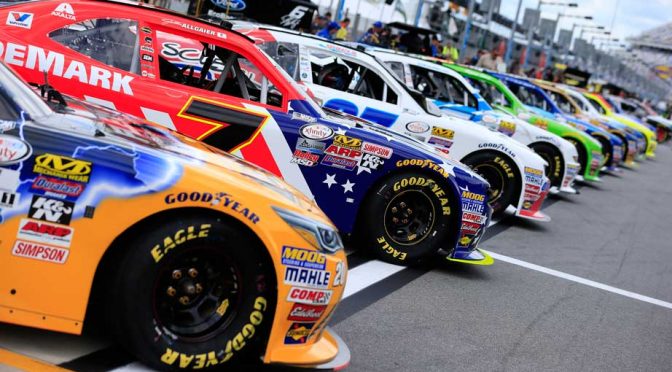
CHARLOTTE, N.C. — NASCAR announced new participation guidelines for its three national series Wednesday, limiting the amount of NASCAR XFINITY Series and NASCAR Camping World Truck Series races that full-time drivers in its premier series will be allowed to compete in, starting in 2017.


Beginning next year, the rules parameters will limit Cup Series drivers with more than five years’ full-time experience to a maximum of 10 races in the NASCAR XFINITY Series and seven events in the NASCAR Camping World Truck Series.


The new guidelines will also prohibit premier series drivers at that experience level from participating in those two series’ final eight events of the year — a span that includes the regular-season finale and the seven-race Chase playoffs for both circuits. In the case of the XFINITY Series, full-time Cup Series competitors will also be restricted from the four races in the Dash 4 Cash program.


The guidelines don’t apply to drivers with fewer than five years of full-time premier series experience, which includes, among others, Kyle Larson, Austin Dillon and Chase Elliott.


There are 33 XFINITY Series races next year. Not participating in the regular-season finale, the seven-race playoff or any of the four yet-to-be-announced Dash 4 Cash races means those impacted can race in 10 of the remaining 21 events, four of which are stand-alone races. In the Camping World Truck Series, 23 races are scheduled for next year. Not competing in the seven Chase races gives impacted drivers 16 races in which they can compete, five of them being stand-alones.


Rumblings about the concept were stoked last week by NASCAR Executive Vice President and Chief Racing Development Officer Steve O’Donnell, who acknowledged that the sanctioning body was considering the rules updates in an Oct. 17 appearance on SiriusXM NASCAR Radio.


RELATED: Hear O’Donnell’s initial comments


Jim Cassidy — NASCAR’s Senior Vice President of Racing Operations — told NASCAR.com that the potential for a rules update affecting driver participation was “certainly not a new discussion.”


Cassidy points out that the three national series already have a certain level of differentiation in the type of vehicles used; now, he says, the opportunity exists to make the identity of each series and its competitors more distinct.


“You see the number of drivers coming up through and the desire and the calling of the fan base to say, ‘we’re interested in who’s coming up through the system, we want to hear the stories, we want to understand who these drivers are,’ so that they can begin to formulate and build their future roster of drivers that they root for,” Cassidy said. “All three of the national series provide really an unprecedented level of competition; it’s on us to make sure that we find the right balance, as the league, to say that there is some level of participation by Cup drivers in Truck and XFINITY and what that balance is.”


Both series will end with a four-driver shootout for the title next month at Homestead-Miami Speedway, where full-time Cup-level drivers who qualified for the 2015 Chase — regardless of experience level — will be barred from the championship finales this year.


CHASE GRIDS: Sprint Cup | XFINITY | Camping World


It’s not the first such limitation on premier series drivers moonlighting in the other national tours’ competition. Before the 2011 season, NASCAR mandated that drivers select one of the three series in which to collect championship points. That rules change concluded a five-year reign of Cup Series drivers clinching the title as full-time double-dippers in what is now the XFINITY Series.


But the 2017 guidelines also make allowances for drivers with more than five years’ experience at the Cup level who elect to compete for championship points in the XFINITY or Camping World Truck Series. Based on this year’s competition roster, drivers who meet those exceptions are Elliott Sadler, J.J. Yeley, Jeff Green, Morgan Shepherd and Derrike Cope in XFINITY, and Travis Kvapil in trucks.


Wednesday’s move — the culmination of what Cassidy termed “a whole mountain of conversation with the industry” — still allows for extracurricular participation from top-division drivers, but is designed to provide a wider spotlight for the other two national series’ budding stars.


The restrictions for five-year veterans will apply to every XFINITY and Truck Series Chase event — and the cut-off regular-season finale — next year, potentially widening the door for those series’ regulars to visit Victory Lane under the rigors of postseason pressure.


“Those events are events that we felt would be obvious to say we want to make sure that we have a better chance of focusing on those drivers running for the championship,” Cassidy said. “The ability to win and advance is a significant story line and an opportunity.”

DAYTONA BEACH, Fla. — In an announcement that will put an even brighter spotlight on the next generation of stars and bolster the identity of all three of its national series, NASCAR announced on Wednesday driver participation guidelines for the 2017 season. The new guidelines limit the number of events a premier series driver can race in the NASCAR XFINITY Series and NASCAR Camping World Truck Series.

Starting next season, premier series drivers with more than five years of full-time experience will be eligible to compete in a maximum of 10 races in the XFINITY Series and seven races in the NASCAR Camping World Truck Series.

Additionally, drivers with more than five years of full-time premier series experience will be ineligible to compete in the final eight races in each series, as well as the Dash 4 Cash races in the NASCAR XFINITY Series. The final eight races are comprised of the regular-season finale and the entirety of the Chase in each series.

Drivers earning premier series points in 2017 also are not eligible to compete in the 2017 NASCAR XFINITY Series and NASCAR Camping World Truck Series Championship Races at Homestead-Miami Speedway.

“The updated guidelines will elevate the stature of our future stars, while also providing them the opportunity to compete against the best in professional motorsports,” said Jim Cassidy, NASCAR senior vice president of racing operations. “These updated guidelines are the result of a collaborative effort involving the entire industry, and will ultimately better showcase the emerging stars of NASCAR.”

Drivers with more than five years of full-time experience in the premier series still can run for an XFINITY Series or Camping World Truck Series championship, provided they have declared for championship points in the respective series.

Wednesday’s announcement signals the next step in NASCAR’s driver participation guideline evolution. Prior to the 2016 season, NASCAR announced that members of the 2015 Chase for the NASCAR Sprint Cup field would be ineligible to compete in the 2016 Championship Race in both the NASCAR XFINITY Series and NASCAR Camping World Truck Series. In 2011, NASCAR implemented a rule requiring drivers to select one of the three national series in which to collect championship points.

RELATED: Chase Grid | Race results

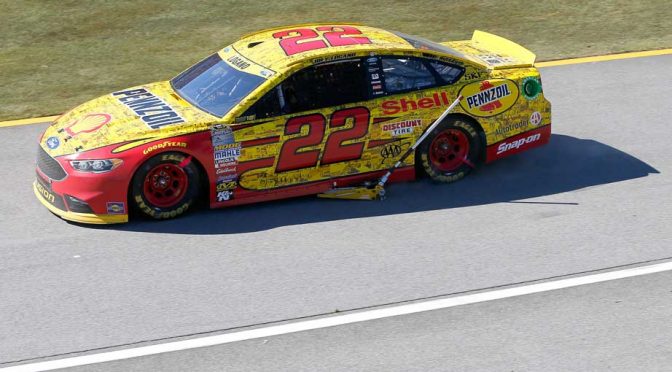
At one point during Sunday’s Hellmann’s 500 at Talladega Superspeedway, Joey Logano‘s chances for Chase advancement were on the verge of being hijacked — by a jack that stuck to his car during a pit stop, no less.

And for a few tense moments Logano circled the track with the jack stuck under the left side of his car, reaching speeds of 150 mph down the backstretch of the gargantuan 2.66-mile superspeedway, trying to swerve and get it loose.

Luckily for the No. 22 Team Penske outfit, Logano made it to pit road to get the unwanted stowaway removed from the underside of the car.

So, what happened to cause Logano to take such a ride on the wild side?

We asked pit coach Trent Cherry of Team Penske to clarify:

“The left side peg was set deep on the jack plate,” Cherry said. “When the car dropped on the left side, the peg slid off the back of the plate and got wedged in the jack.”


So in layman’s terms it’s explained like this. The peg that is attached to the race car was on the back of the jack plate. The jackman probably understood that and knew that he could still jack the left side and be OK. But when the car dropped, the jack slipped off the back of the plate and fell into a wedged position preventing the jack from releasing from the car.

Got all that?

Pit road mistakes can make a big difference this time of year, but the No. 22 team rebounded from the mishap as Logano won the race.

RELATED: Oral history of first race after 9-11


DAYTONA BEACH, Fla. — Immediately following this Sunday’s Chase for the NASCAR Sprint Cup coverage at Martinsville Speedway, NBCSN presents “NASCAR Seasons: 2001,” a new 60-minute documentary that chronicles a NASCAR season and a year that will never be forgotten. Unfolding through Dale Earnhardt’s tragic death at the 2001 Daytona 500, the enormous outpouring of emotions that followed, and Dale Earnhardt Jr.’s stirring victory at the July Daytona race, “NASCAR Seasons: 2001” also covers the sport’s passionate reaction to the tragic events of the September 11th attacks.

The story of this unforgettable year illustrates how NASCAR’s legion of supporters came together at times of sorrow and jubilation to exhibit a tremendous sense of unity, and how the experiences of 2001 generated several advancements in safety that continue to evolve today. Produced in partnership with NASCAR Productions, the documentary candidly presents the events through rarely seen archival footage and new interviews with those who experienced the season firsthand. “NASCAR Seasons: 2001” premieres Sunday at 6:30 p.m. ET on NBCSN.

Dale Earnhardt Jr. contributes, openly discussing his memories from the year he lost his father and NASCAR lost a racing icon. The special features interviews with winner of the 2001 Sprint Cup Championship, Jeff Gordon, and fellow drivers Dale Jarrett, Jeff Burton, Kyle Petty, Tony Stewart and Elliott Sadler. In addition, the documentary includes interviews with former NBC Sports Chairman Dick Ebersol, and longtime NASCAR senior executive Mike Helton, as they recall the challenges, healing and ultimately the pride that surrounded the sport and its millions of fans.

Below are excerpts from “NASCAR Seasons: 2001”:

Dale Earnhardt Jr. on his father’s impact: “When mainstream media was covering the death of my dad, how much attention that got kind of blew me away. Because I don’t even know if dad had an idea of what he was to the world, or what he was to this country.”

Kyle Petty on Dale Jr. returning to Daytona in July for the first race after his father’s passing: “The way he handled himself and didn’t shy away from it. ‘It is part of who I am and who I am going to be for the rest of my life.’ He became, in a lot of ways, a leader in the garage that day.”

Mike Helton on delaying the first race after September 11, 2001: “Sports and entertainment are good complements to a healing process. But there is a time and a place. I think we landed on you simply have to be aware of the fact that the magnitude of that day was one that deserved peace and quiet.”

Tune-in to watch the Goody’s Fast Relief 500 this Sunday, Oct. 30, at 1 p.m. ET on NBCSN, or listen live on MRN and SiriusXM NASCAR Radio. Fans can also purchase tickets to catch all the on-track action in person by visiting www.nascar.com/tickets.

Harvick is still on pace to be the only driver to make the Championship 4 all three years, but may have a bit of a distraction on his hands after mixing it up with teammate Kurt Busch after the race.


MORE: Harvick, Busch tussle

https://www.nascar.com/drivers/jimmie-johnson/
-1
Hendrick Motorsports

Johnson is the 1A (more on that in a bit) man to beat at Martinsville, with eight wins and a 7.5 average finish, both best among active, full-time drivers.

https://www.nascar.com/drivers/kyle-busch/
0
Joe Gibbs Racing

Busch got through what appeared to be his weakest round, and now returns to the site of one of his most dominant wins — when he was victorious at Martinsville in the spring with 352 laps led.


MORE: NASCAR: JGR strategy OK

Once again, Logano rides into the Round of 8 with a wave of momentum and should have a good shot at leading laps at Martinsville, where his three poles are tied for the most among active, full-time drivers.


MORE: Logano lands in Victory Lane

https://www.nascar.com/drivers/denny-hamlin/
6
Joe Gibbs Racing

After just barely edging his way into the Round of 8, Hamlin — our 1B option — is one of the best-positioned drivers remaining, as his five Martinsville wins will attest.

Kenseth advanced to the Round of 8 after being eliminated at Talladega last year. The 20 team has been strong at times and could certainly be racing for a title at Homestead.


MORE: JGR lands four cars in Round of 8

Not only does he have to worry about smoothing things over with teammate Kevin Harvick, but Kurt Busch’s 21.2 average finish at Martinsville is worst among Chasers.


 MORE: Trouble brewing at SHR?

JGR employed an interesting strategy when they started the Talladega race from the back. It obviously worked, as Edwards and his cohorts all advanced.


MORE: Bold JGR strategy pays off

https://www.nascar.com/drivers/brad-keselowski/
1
Team Penske

Despite having the strongest car and leading the most laps, Keselowski was eliminated from the Chase at Talladega. Tough pill to swallow, but them’s the breaks, kid.


MORE: Kes strong has bid end in heartbreak

Much like Keselowski, a poorly timed blown engine (is there ever a good time to blow one, though?) ended a title hopeful’s chance at a championship.


MORE: Blown engine ruins Truex’s Chase

https://www.nascar.com/drivers/chase-elliott/
1
Hendrick Motorsports

While Elliott was eliminated and has yet to win, this is still an encouraging season for the young stud. Still has time to pick up a trophy, too.


MORE: Elliott out, but not down

https://www.nascar.com/drivers/austin-dillon/
-3
Richard Childress Racing

Like with Elliott, no wins but this was certainly an encouraging season for Dillon, and something to build upon for 2017.


MORE: Dillon joins Kes, Truex in heartbreak

In the Round of 12, Larson had a pair of top-six finishes after having none on the opening round. 

Each of Stewart’s finishes got worse in the Round of 12, starting with a top 10 and winding up outside the top 30. Time is running out to see one last ‘Smoke’ win.

After having a nice run from Watkins Glen to Richmond to firm up his Chase bid, McMurray has fallen flat in the six races since.

Buescher didn’t impress in the Round of 16, but his results have greatly improved in the Round of 12, with a best finish of 16th.

RELATED: Full race results | Chase Grid
BRUCE: About that JGR strategy … | NASCAR: JGR did not violate rules

Love it. Hate it. Understand it. Disagree with it.

The strategy play by Joe Gibbs to have three of his four cars — the three that were in solid shape based on points of Kyle Busch, Carl Edwards and Matt Kenseth — ride around in the back for the Chase for the NASCAR Sprint Cup Round of 12 finale at Talladega Superspeedway to avoid any potential calamity has brought out a variety of opinions.


Denny Hamlin, who needed a strong finish to advance, spent most of the day at the front without the benefit of his teammates drafting with him. Hamlin finished third and advanced to the Round of 8 on a tiebreaker over Austin Dillon. That propelled all four JGR cars into the Round of 8, just as mastermind Joe Gibbs drew it up.


Was it cunning? Sure. Was it gamesmanship? Yes. Was it risky? Potentially. Was it within the rules? Absolutely. 

Nothing done Sunday was against NASCAR rules. NASCAR executive Steve O’Donnell said in a Monday morning appearance on SiriusXM NASCAR Radio that the strategy did not violate any rule.

“In this case, we look at the strategy decision that the team made, and they executed it,” O’Donnell said. ” … In this case, that wouldn’t be something that we look at that violated that rule.”

Kenseth, Busch and Edwards stood second through fourth in the standings entering Talladega. In the past two years of elimination races, the driver who was second in the standings entering the race ended up eliminated when the dust settled at Talladega. Coincidentally, both times it was a JGR car; Busch in 2014 and Hamlin in 2015.

RELATED: History shows second in points far from secure at Talladega

Perhaps with that history in mind, Gibbs was committed to the team’s strategy play.

“Everybody talked it over, crew chiefs and everything,” Gibbs said Sunday. “I think it was just a strategy we needed to start off with and really depended on how it would go.”

Ironically, that loophole will effectively be closed up with Talladega moving to the middle race of the Round of 12 in 2017.

All Gibbs and JGR did was a find an edge in the rules. Some will cry foul, others say it’s a sandbag move and others might even heap praise and call it genius. But there is no denying it worked. On the level, the move itself was smart and legal.


Given JGR’s dominance of late — the organization has 21 wins in the past 52 races and Kyle Busch won the 2015 Sprint Cup championship — you could argue that the four-car organization is NASCAR’s version of the NFL’s New England Patriots — disliked for its success and for its ability to find a way to take advantage of nearly every potentially advantageous situation.

ALL THEIR WINS: Busch | Kenseth | Edwards | Hamlin

Bill Belichick, the Patriots coach, is known as an innovator, someone who pushes the envelope in an effort to find a competitive advantage or loophole that will aid his team. Much as Gibbs did at Talladega.

Consider: In a 2015 playoff game against the Baltimore Ravens, the Patriots used a unique offensive formation on several plays that essentially caused confusion among the Ravens defense as to who was an eligible receiver and who was ineligible. Running back Shane Vereen lined up as the slot receiver on several plays, but was ineligible. Adding to the confusion was that the Patriots essentially only had four offensive linemen on the field, instead of the usual five. You can see that broken down a bit further here by CBSSports.com. The formation helped lead the Patriots on a touchdown drive in what was ultimately a 35-31 win for New England. 

That formation has since been deemed ineligible by the league. Yet at the time, it was perfectly legal according to the rule book, and the Patriots found and took advantage of it. The victory over the Ravens began New England’s march to a fourth Super Bowl title in 14 years for the duo of Belichick and quarterback Tom Brady.

Even in early part of the 2016 season, the Patriots worked around a new NFL rule. Starting this year, kickoffs that result in touchbacks will see the ball placed at the 25-yard line and eliminate kickoff coverage out of the equation. Yet, several teams have elected to have their kickers boot balls high and just short of the end zone to allow for coverage teams to get down the field and stop returners short of 25-yard line. Perfectly within the rules since a returned kick is more than likely to result in worse field position than a touchback.

Even before his stint as a head coach, Belichick was a defensive savant, serving as the defensive coordinator for two Super Bowl titles with the New York Giants, which came during one of Gibbs’ two stints as the head coach of the division rival Washington Redskins. In Super Bowl XXV, he called a defensive effort that slowed down one of the league’s most high-powered offenses in the Buffalo Bills in New York’s 20-19 win. As a defensive coach, he drilled his players on normal offensive signals teams would use to help them diagnose plays before they were run, as this New York Daily News article details. He over-prepares, using every little advantage he can find.

Maybe it roots from Joe Gibbs’ ties to football, but that is exactly what Gibbs did Sunday. He weighed the percentages, the numbers and the odds and knew it was in the team’s collective best interest to adopt a ride-around strategy rather than race up front.

Does that make JGR evil? No. It makes the team smart for finding a way to continue the path toward the main goal of a championship. And if the season ends in a championship for one of the team’s drivers, there will be no doubt.

RELATED: Full race results | Chase Grid
BRUCE: About that JGR strategy … | NASCAR: JGR did not violate rules

Love it. Hate it. Understand it. Disagree with it.

The strategy play by Joe Gibbs to have three of his four cars — the three that were in solid shape based on points of Kyle Busch, Carl Edwards and Matt Kenseth — ride around in the back for the Chase for the NASCAR Sprint Cup Round of 12 finale at Talladega Superspeedway to avoid any potential calamity has brought out a variety of opinions.


Denny Hamlin, who needed a strong finish to advance, spent most of the day at the front without the benefit of his teammates drafting with him. Hamlin finished third and advanced to the Round of 8 on a tiebreaker over Austin Dillon. That propelled all four JGR cars into the Round of 8, just as mastermind Joe Gibbs drew it up.


Was it cunning? Sure. Was it gamesmanship? Yes. Was it risky? Potentially. Was it within the rules? Absolutely. 

Nothing done Sunday was against NASCAR rules. NASCAR executive Steve O’Donnell said in a Monday morning appearance on SiriusXM NASCAR Radio that the strategy did not violate any rule.

“In this case, we look at the strategy decision that the team made, and they executed it,” O’Donnell said. ” … In this case, that wouldn’t be something that we look at that violated that rule.”

Kenseth, Busch and Edwards stood second through fourth in the standings entering Talladega. In the past two years of elimination races, the driver who was second in the standings entering the race ended up eliminated when the dust settled at Talladega. Coincidentally, both times it was a JGR car; Busch in 2014 and Hamlin in 2015.

RELATED: History shows second in points far from secure at Talladega

Perhaps with that history in mind, Gibbs was committed to the team’s strategy play.

“Everybody talked it over, crew chiefs and everything,” Gibbs said Sunday. “I think it was just a strategy we needed to start off with and really depended on how it would go.”

Ironically, that loophole will effectively be closed up with Talladega moving to the middle race of the Round of 12 in 2017.

All Gibbs and JGR did was a find an edge in the rules. Some will cry foul, others say it’s a sandbag move and others might even heap praise and call it genius. But there is no denying it worked. On the level, the move itself was smart and legal.


Given JGR’s dominance of late — the organization has 21 wins in the past 52 races and Kyle Busch won the 2015 Sprint Cup championship — you could argue that the four-car organization is NASCAR’s version of the NFL’s New England Patriots — disliked for its success and for its ability to find a way to take advantage of nearly every potentially advantageous situation.

ALL THEIR WINS: Busch | Kenseth | Edwards | Hamlin

Bill Belichick, the Patriots coach, is known as an innovator, someone who pushes the envelope in an effort to find a competitive advantage or loophole that will aid his team. Much as Gibbs did at Talladega.

Consider: In a 2015 playoff game against the Baltimore Ravens, the Patriots used a unique offensive formation on several plays that essentially caused confusion among the Ravens defense as to who was an eligible receiver and who was ineligible. Running back Shane Vereen lined up as the slot receiver on several plays, but was ineligible. Adding to the confusion was that the Patriots essentially only had four offensive linemen on the field, instead of the usual five. You can see that broken down a bit further here by CBSSports.com. The formation helped lead the Patriots on a touchdown drive in what was ultimately a 35-31 win for New England. 

That formation has since been deemed ineligible by the league. Yet at the time, it was perfectly legal according to the rule book, and the Patriots found and took advantage of it. The victory over the Ravens began New England’s march to a fourth Super Bowl title in 14 years for the duo of Belichick and quarterback Tom Brady.

Even in early part of the 2016 season, the Patriots worked around a new NFL rule. Starting this year, kickoffs that result in touchbacks will see the ball placed at the 25-yard line and eliminate kickoff coverage out of the equation. Yet, several teams have elected to have their kickers boot balls high and just short of the end zone to allow for coverage teams to get down the field and stop returners short of 25-yard line. Perfectly within the rules since a returned kick is more than likely to result in worse field position than a touchback.

Even before his stint as a head coach, Belichick was a defensive savant, serving as the defensive coordinator for two Super Bowl titles with the New York Giants, which came during one of Gibbs’ two stints as the head coach of the division rival Washington Redskins. In Super Bowl XXV, he called a defensive effort that slowed down one of the league’s most high-powered offenses in the Buffalo Bills in New York’s 20-19 win. As a defensive coach, he drilled his players on normal offensive signals teams would use to help them diagnose plays before they were run, as this New York Daily News article details. He over-prepares, using every little advantage he can find.

Maybe it roots from Joe Gibbs’ ties to football, but that is exactly what Gibbs did Sunday. He weighed the percentages, the numbers and the odds and knew it was in the team’s collective best interest to adopt a ride-around strategy rather than race up front.

Does that make JGR evil? No. It makes the team smart for finding a way to continue the path toward the main goal of a championship. And if the season ends in a championship for one of the team’s drivers, there will be no doubt.

RELATED: Full race results | Chase Grid
BRUCE: About that JGR strategy … | NASCAR: JGR did not violate rules

Love it. Hate it. Understand it. Disagree with it.

The strategy play by Joe Gibbs to have three of his four cars — the three that were in solid shape based on points of Kyle Busch, Carl Edwards and Matt Kenseth — ride around in the back for the Chase for the NASCAR Sprint Cup Round of 12 finale at Talladega Superspeedway to avoid any potential calamity has brought out a variety of opinions.


Denny Hamlin, who needed a strong finish to advance, spent most of the day at the front without the benefit of his teammates drafting with him. Hamlin finished third and advanced to the Round of 8 on a tiebreaker over Austin Dillon. That propelled all four JGR cars into the Round of 8, just as mastermind Joe Gibbs drew it up.


Was it cunning? Sure. Was it gamesmanship? Yes. Was it risky? Potentially. Was it within the rules? Absolutely. 

Nothing done Sunday was against NASCAR rules. NASCAR executive Steve O’Donnell said in a Monday morning appearance on SiriusXM NASCAR Radio that the strategy did not violate any rule.

“In this case, we look at the strategy decision that the team made, and they executed it,” O’Donnell said. ” … In this case, that wouldn’t be something that we look at that violated that rule.”

Kenseth, Busch and Edwards stood second through fourth in the standings entering Talladega. In the past two years of elimination races, the driver who was second in the standings entering the race ended up eliminated when the dust settled at Talladega. Coincidentally, both times it was a JGR car; Busch in 2014 and Hamlin in 2015.

RELATED: History shows second in points far from secure at Talladega

Perhaps with that history in mind, Gibbs was committed to the team’s strategy play.

“Everybody talked it over, crew chiefs and everything,” Gibbs said Sunday. “I think it was just a strategy we needed to start off with and really depended on how it would go.”

Ironically, that loophole will effectively be closed up with Talladega moving to the middle race of the Round of 12 in 2017.

All Gibbs and JGR did was a find an edge in the rules. Some will cry foul, others say it’s a sandbag move and others might even heap praise and call it genius. But there is no denying it worked. On the level, the move itself was smart and legal.


Given JGR’s dominance of late — the organization has 21 wins in the past 52 races and Kyle Busch won the 2015 Sprint Cup championship — you could argue that the four-car organization is NASCAR’s version of the NFL’s New England Patriots — disliked for its success and for its ability to find a way to take advantage of nearly every potentially advantageous situation.

ALL THEIR WINS: Busch | Kenseth | Edwards | Hamlin

Bill Belichick, the Patriots coach, is known as an innovator, someone who pushes the envelope in an effort to find a competitive advantage or loophole that will aid his team. Much as Gibbs did at Talladega.

Consider: In a 2015 playoff game against the Baltimore Ravens, the Patriots used a unique offensive formation on several plays that essentially caused confusion among the Ravens defense as to who was an eligible receiver and who was ineligible. Running back Shane Vereen lined up as the slot receiver on several plays, but was ineligible. Adding to the confusion was that the Patriots essentially only had four offensive linemen on the field, instead of the usual five. You can see that broken down a bit further here by CBSSports.com. The formation helped lead the Patriots on a touchdown drive in what was ultimately a 35-31 win for New England. 

That formation has since been deemed ineligible by the league. Yet at the time, it was perfectly legal according to the rule book, and the Patriots found and took advantage of it. The victory over the Ravens began New England’s march to a fourth Super Bowl title in 14 years for the duo of Belichick and quarterback Tom Brady.

Even in early part of the 2016 season, the Patriots worked around a new NFL rule. Starting this year, kickoffs that result in touchbacks will see the ball placed at the 25-yard line and eliminate kickoff coverage out of the equation. Yet, several teams have elected to have their kickers boot balls high and just short of the end zone to allow for coverage teams to get down the field and stop returners short of 25-yard line. Perfectly within the rules since a returned kick is more than likely to result in worse field position than a touchback.

Even before his stint as a head coach, Belichick was a defensive savant, serving as the defensive coordinator for two Super Bowl titles with the New York Giants, which came during one of Gibbs’ two stints as the head coach of the division rival Washington Redskins. In Super Bowl XXV, he called a defensive effort that slowed down one of the league’s most high-powered offenses in the Buffalo Bills in New York’s 20-19 win. As a defensive coach, he drilled his players on normal offensive signals teams would use to help them diagnose plays before they were run, as this New York Daily News article details. He over-prepares, using every little advantage he can find.

Maybe it roots from Joe Gibbs’ ties to football, but that is exactly what Gibbs did Sunday. He weighed the percentages, the numbers and the odds and knew it was in the team’s collective best interest to adopt a ride-around strategy rather than race up front.

Does that make JGR evil? No. It makes the team smart for finding a way to continue the path toward the main goal of a championship. And if the season ends in a championship for one of the team’s drivers, there will be no doubt.