BUY TICKETS: See the races in Las Vegas
RELATED: Second practice results | Third practice results

Martin Truex Jr. topped the leaderboard in the final Monster Energy NASCAR Cup Series practice at Las Vegas Motor Speedway on Saturday, logging a lap at 188.613 mph in his No. 78 Furniture Row Racing Toyota.


Right behind him was Chase Elliott, who led Monster Energy Series practice earlier in the day, in the No. 24 Hendrick Motorsports Chevrolet at 188.574 mph.


Rounding out the top five were: Dale Earnhardt Jr. in the No. 88 Hendrick Motorsports Chevrolet at 188.436 mph, Matt Kenseth in the No. 20 Joe Gibbs Racing Toyota at 188.258 mph and pole winner Brad Keselowski in the No. 2 Team Penske Ford at 188.140 mph.


Late in the practice, Ricky Stenhouse Jr. scraped the right side of his No. 17 Roush Fenway Racing Ford against the outside wall. His car suffered significant damage, and he will use a backup car in Sunday’s Kobalt 400 (3:30 p.m. ET, FOX).


Earlier in the day, Elliott led Saturday’s first practice in the Monster Energy NASCAR Cup Series, wheeling his No. 24 Chevrolet around the 1.5-mile track at 191.510 mph.

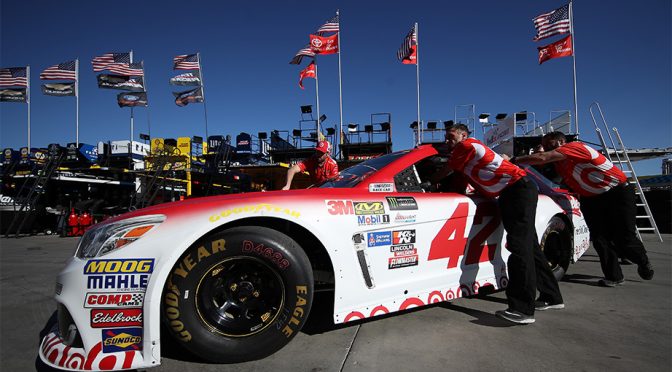
Kyle Larson was second in the No. 42 Chip Ganassi Racing Chevrolet at 188.818 mph. A pair of Toyotas — Joe Gibbs Racing’s Kenseth and Kyle Busch — were third and fourth, respectively. Hendrick’s Kasey Kahne rounded out the top five in the No. 5 Chevrolet.

The top Ford team was Ryan Blaney in sixth place in the No. 21 for Wood Brothers Racing. Blaney qualified third for Sunday’s race with fellow Ford driver Brad Keselowski winning the Coors Light Pole Award.

NASCAR opened up the timing lines on pit road for practice, allowing teams to practice pit road speeds following the race in Atlanta when there were 13 penalties for speeding.

Meanwhile, three teams served practice penalties: Kahne’s No. 5 and Truex’s No. 78 failed templates twice in pre-qualifying inspection and lost 15 minutes of practice time. And Erik Jones’ No. 77 failed weights and measures three times and lost 15 minutes of practice time, along with pit selection.

BUY TICKETS: See the races in Las Vegas

Last Sunday at Atlanta, Monster Energy NASCAR Cup Series drivers collectively were flagged for 13 pit road speeding penalties, with a late ticket to Kevin Harvick changing the entire tenor of the race.

Drivers had to deal with the addition of timing lines on pit road at Atlanta, creating scoring segments that were much smaller than those in play when the series visited the 1.54-mile track last year.

Similarly, for races this weekend at Las Vegas, drivers and crew chiefs are confronted with double the number of timing lines in place for last year’s events. To allow teams to get familiar with the smaller segments, NASCAR opened the timing loops for XFINITY Series practice on Friday and both Monster Energy Series practices on Saturday.

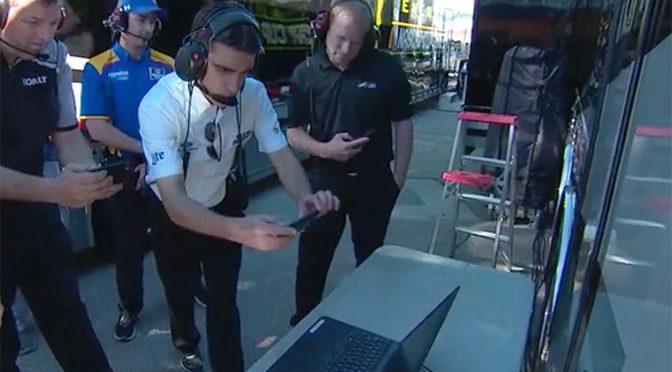
During Saturday’’s first session, teams seemingly spent as much time huddled around computers showing the speeds in pit road sectors as they did congregating around the cars.

Ryan Blaney, who qualified third on Friday in the No. 21 Wood Brothers Ford, was more concerned with getting in and out of his pit box cleanly than he was with speeding on pit road. That’s why crew chief Jeremy Bullins chose pit stall No. 40, closest to the entrance to pit road.

"You always want to be able to get in and out of your box clean and not have to worry about going around cars or cars coming around you," said Blaney, who was sixth fastest in Saturday’s first practice. "You can speed anywhere on pit road. Nowadays, your box really has a small role in playing with timing lines ever since they added a bunch of them.

"You just have to watch your speed, but it maybe helps a little bit coming in just so you can get in your box and reset, but then you have to focus on getting down all of pit road (without speeding)."

Blaney is not one to take chances by pushing the pit road speed limit (45 mph at Las Vegas with a tolerance up to 50 mph).

"I’ve got other things to worry about," Blaney said. "I know there’s been a lot of talk about all the speeding penalties last week, but I’ve always been on the conservative side when it comes to that. I think giving up a little bit there is a lot more beneficial than having to come back down pit road, so I’ve always been on the conservative side of the pit road speed stuff.

"Now that I say that, I’ll probably get a penalty (on Sunday), but it’s not something I really worry about."

RELATED: Starting lineup | 10-lap averages

What: Kobalt 400
Where:
 Las Vegas Motor Speedway, 1.5-mile D-shaped oval in Las Vegas
Green flag:
 3:46 p.m. ET
TV/Radio:
 FOX, PRN, SiriusXM NASCAR Radio
Forecast: Sunny with a high near 83 degrees. Light north winds, according to National Weather Service
National anthem:
 Night Ranger
Grand Marshal:
 John Fogerty, singer/musician
Race distance:
 267 laps, 400.5 miles
Pit road speed:
 45 mph
Caution car speed: 55 mph
Stage lengths:
 Stage 1 ends on Lap 80. Stage 2 ends on Lap 160. Final Stage is scheduled to end on Lap 267

BUY TICKETS: See the races in Las Vegas

LAS VEGAS – If you were to break out the bicycle in the infield of any given race track on a Saturday morning or afternoon, you’d likely have some elite company.


Matt Kenseth has embarked on both long and short cycling excursions. Kasey Kahne could show up, or Trevor Bayne.


But perhaps one of the most familiar faces and leaders among the cycling groups at the track is reigning Monster Energy NASCAR Cup Series champion Jimmie Johnson.


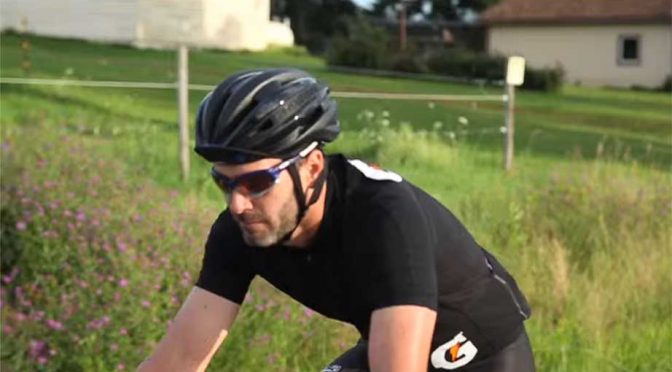
A seasoned athlete in a variety of athletic pursuits from cycling to running to snowboarding in his new home of Aspen, Colorado, Johnson has accomplished some feats that only experienced athletes could achieve: He and Kenseth completed a 130-mile ride for charity in March 2016 from Asheville, North Carolina, to Charlotte, North Carolina. He celebrated his 40th birthday in 2015 with a 101.2-mile bike ride, and joined Hendrick Motorsports teammate Kahne for Johnson’s first of many triathlons. That first one was in Charleston, South Carolina, in 2012, just one day after competing in the Coke Zero 400 at Daytona International Speedway.


The driver of the No. 48 Kobalt Chevrolet supplements his regular weekday training with these group cycling or individual running sessions during downtime at the track.


"It’s easy to sleep in in the motor home or sit on the couch between qualifying and practice and eat," Johnson told NASCAR.com on Friday morning at Las Vegas Motor Speedway, the site of Sunday’s Kobalt 400. "There’s a four-hour window there; you could be out on the bike, go for a run, burn some calories instead of ingesting them."


But the group rides at the track accomplish more than just an elevated heart rate — even with a group of competitive NASCAR drivers riding.


"It seems that during the week we’re serious about those disciplines, kind of putting in your gym time, your speed work — the weekend rides are much more (easygoing)," Johnson said. "So, we’ll sit side-by-side, chat, talk, talk about life. It’s much more of a social thing than really a hardcore ride.


"Granted, we do race in Pocono, we do race in upstate New York. There are some areas, what I’m getting at, where there’s some serious climbing. And the competitive spirit kind of kicks in and guys kind of try to bury each other and race up mountains."


It was the social aspect of physical fitness that became Johnson’s main case for his Hendrick Motorsports teammates to commit to a company-mandated workout on a regular basis.


"For me, the social component is what has made this last so long for me," Johnson said. "I think we all start a crash diet, we all say we’re going to the gym and you’re lucky to make three or four months because it’s kind of monotonous and not a lot of fun. There’s not a social element to it.


"So, I pushed hard to set some minimum requirements for our Hendrick drivers and then trying to get us together. Weekend rides, there are some great social media apps that keep you connected with what your friends are doing. You can follow them, they can follow you. The one we like to use is Strava and it’s amazing if you can just have a little spin on it and make it a social thing, your interest goes up tremendously. You have accountability and before you know it, you’re putting in quite a few hours a week and you’re pretty fit."


Johnson’s teammate Dale Earnhardt Jr. discussed the new workout plan at length on his Dirty Mo Radio podcast Monday. The drivers have set hours for cardio and strength exercises each week that they must complete and log into the Strava app. The drivers also have access to Hendrick Motorsports’ top-notch facilities, trainers and nutritionists used by the pit crews, as well as Johnson’s own personal triathlon trainer Jamey Yon, to help aid their health journeys.


RELATED: Junior talks about his first cycling trip


Earnhardt took his first cycling trip with Johnson last weekend at Atlanta Motor Speedway, pulling out the bike that "Seven-Time" gifted him about a year ago. The trip began with the humorous struggle of getting Earnhardt comfortable with the spandex cycling attire.


"I told Jimmie, I said, ‘Look, I’m going to meet you outside the track,’ " Earnhardt said on the podcast. "Ain’t no way in hell I’m going to let anybody see me ride through the infield wearing this bike gear, spandex stuff."


Johnson smiled at the experience.


"I couldn’t believe my eyes, to be honest," Johnson said of his reaction to Junior agreeing to a cycling trip. "He was a little worried about the attire, but I promised him you really feel weird standing around other people in street clothes when you’re in the attire. When you’re in a group of guys, proper attire really makes a big difference.


"So, he cleared that hurdle, which I wasn’t sure we could get on Ride 1, and through the course of the ride, his comfort grew tremendously. The speed came up and his bike handling skills and stuff came right around. So, he’s excited to ride this weekend and looking forward to getting him on a bike again."


Johnson’s passion for physical fitness is evident, his love for outdoor activities strong. He uses activities as a way to socialize, train and escape from the stresses of his high-speed career.


"It’s been really good for me physically, but more mentally on a lot of levels," Johnson said. "I can have an afternoon to clear my mind, I find that all I think about is the race car and I get my thoughts in order and really handle the race car situation to the best of my ability."    


But as Johnson’s interests in the field vary and grow, his passion also has transcended as a way to help others: In 2016, Johnson lent his personal trainer Yon to No. 41 crew chief and longtime friend Tony Gibson and offered to help him get on track physically.


RELATED: Crew chief’s health boost from Johnson


"He’s like, ‘Look, I’ve been thinking about you for the last three weeks,’ and he said I want to get you healthy," Gibson said prior to the start of the 2016 season. "He said, ‘We’ve known each other since I got into this and you’ve been a great friend to me.’ He said, ‘I’m worried about you. I’m worried about your health and I want to see you get healthy.’ So I’m like, ‘OK.’ The next step was we got together and he’s like, ‘I’ll take care of everything, I’ll handle everything. We’ll use my trainer. You just have to do it.’ 


"So I said, ‘You know, if he’s willing to go to the length of that and put that much effort into it, then I’m a fool if I don’t.’ So I took him up on it and I’ve been losing weight ever since."


But while Johnson enjoys helping others achieve their physical goals and has many fitness goals after he’s done driving ("there’s quite a few endurance races that I want to do from triathlons to mountain bike races," he says), he doesn’t necessarily envision a career in personal training after he’s hung up his fire suit.


"I love helping people — that’s in my DNA," Johnson said. "Fitness has been a hobby of mine, a passion of mine for a while now and I’ve been able to influence many. But I just enjoy being there for others and tell my story — maybe I can be there for them."


BUY TICKETS: See the races in Las Vegas

RELATED: Race results | Standings

LAS VEGAS — Saturday’s Boyd Gaming 300 at Las Vegas Motor Speedway wasn’t a drag race, but lane choice proved critical to Joey Logano’s 28th NASCAR XFINITY Series victory in the No. 12 Team Penske Ford.

Choosing the top side for a restart on Lap 196 of 200, after Ty Dillon’s spin on Lap 192 necessitated the ninth and final caution of the afternoon, Logano cleared Kyle Larson off Turn 4 after an intense side-by-side battle and pulled away to win by .602 seconds.

"It was hard to figure out what to do, what lane to pick," said Logano, who has won in each of his last three starts in the 12 car. "The one thing we did know is that we had a very fast Ford Mustang.

"(Crew chief) Brian Wilson and all the guys that bring this 12 car out, that’s three wins in a row for the 12 car, so that’s something I’m proud to be a part of and work with these guys. … It was a challenging day from the restart standpoint."

If lane choice was essential in the late stages of the race, the decision not to pit at the end of Stage 2, after pitting under the previous caution on Lap 72, was a key element to winning the race. That choice flipped track position and gave Logano the lead for a restart on Lap 99, a position he maintained through four subsequent restarts.

The ability to hold off polesitter Kyle Busch on older tires gave Logano confidence in the capability of his car.

"Man, it’s a lot of fun to have these Team Penske cars fast again in the XFINITY Series," said Logano who led 106 laps in winning for the first time this season in his first-ever Las Vegas start in the series. "Man, it feels good.

"But those restarts were crazy, though. You don’t know which lane to pick. You don’t know who is a good pusher. You try to remember what happened on the last (restart)."

Logano took over eighth place all-time in career NASCAR XFINITY Series victories.

Busch led each of the 45 laps in Stage 1 but faded to seventh at the finish after the handling of his No. 18 Joe Gibbs Racing Toyota deteriorated in the second half of the race.

Brad Keselowski, Logano’s teammate, won Stage 2, but Keselowski brought the No. 22 Mustang to pit road for an unscheduled stop on Lap 108 because of a loose wheel and recovered to finish 10th.

Daniel Suarez ran third, followed by Justin Allgaier — the highest finishing series regular — Austin Dillon and Darrell Wallace Jr.

Larson said a push from Suarez on the final restart might have helped him, but that assistance didn’t materialize.

"I needed Daniel to push me and not pull out (of line)," Larson said. "I think if Daniel would have ever gotten to my back bumper to help me, he probably would have taken that opportunity to pull out and pass me.

"It would have been hard to clear Joey, but I definitely needed some help behind me."

Elliott Sadler finished eighth to retain the series lead by four points over Daytona winner Ryan Reed, who came home seventh.

BUY TICKETS: See the races in Las Vegas

LAS VEGAS — Erik Jones stood on pit road at Daytona International Speedway in February with his family. The warm Florida sun shone brightly as Jordin Sparks sang “The Star-Spangled Banner” and drivers prepped for the “Great American Race” with hugs from loved ones and well wishes.

It was a special moment for Jones, making his debut as full-time Monster Energy NASCAR Cup Series driver. But he was missing someone.

His late father, Dave Jones.

“I definitely thought about him out at Daytona, standing out at pit road,” Jones shared at a roundtable discussion with media at Las Vegas Motor Speedway on Friday. “I wish he could have been there to take it all in. It was a pretty cool moment for my family and I, but (we) definitely knew that he was watching down.”

Jones’ father passed away on June 7, 2016, after a battle with lung cancer that had spread to his brain. He was 53 years old.

The loss understandably stung the younger Jones, and was something he hadn’t been able to discuss up until recently. His father’s diagnosis was unexpected, a trip to the doctor that went south very quickly.

Jones vividly remembers receiving that phone call that no one ever wants to answer.

“He had lost feeling in his arm one day and went to the doctor and thought he had a pinched nerve or something,” Jones recalled. “And they found the cancer and gave him around a year to live with treatment.

“That’s pretty hard news to take any time, but by April (2016), we’d seen some X-Rays and they’d really never seen it progress that quickly. It went from being, he was fine and we weren’t going to be able to cure it but we were going to be able to maintain it and manage life with treatment, and all of a sudden that kind of deteriorated and he was in and out of the hospital.”

But Dave Jones’ passing in June was more than the loss of his father for Erik. It was the loss of an adviser, a supporter.

His best friend.

“I was pretty holed up in my house,” Jones said. “Didn’t go anywhere, I didn’t want to talk about it to anybody. Most of my friends for a month didn’t even know he was sick. Slowly started to tell more people and kind of talk about it as time went on. But it wasn’t something I shared with many people or talked about it at all.”

Today is the first time he’s talked about his father in length with others outside his family. It feels good, he says. That it’s important to tell his story.

“I looked up to him so much for so many years,” Jones said. “He was really my best friend, I didn’t think of anybody that I felt closer with or felt that I could share more with at any time, so it’s nice to talk about him.”

•   •   •

Days after his father’s passing, Jones was scheduled to visit his home track — Michigan International Speedway — to compete in the XFINITY Series’ Menards 250.

He could have sat out. His crew would have understood, and he likely would have been OK in the points standings. But Jones felt like he had to race.

For his father.

“It almost seemed so surreal at the time it happens, you’re almost numb at that point,” Jones said. “I felt like that was somewhere I should be and felt like I had no reason not to be there … But it was definitely tough, it was a tough weekend.

“Honestly the one (thing) I wanted to do, I wanted to have a good run for him and felt like that would just kind of make everybody feel better.”

The Byron, Michigan, native finished fourth in the Irish Hills that day, a finish his dad likely would have been proud of. But that was just the beginning of what is a long process of grief, uncertainty and struggle for the 20-year-old driver, especially when it came to his career.

“The first few months after he was gone were tough going to the race track,” Jones said. “Not necessarily something I wanted to do right away was go back to the race track, but felt like it would get my mind off it at least, and knew it was something he would have wanted me to do.

“Honestly (I) worried about, funny enough, if I’d ever even win again. I didn’t know if I’d even be the same person after going through something like that.”

He did win again — and soon. His first win after his father’s passing came in July at Iowa Speedway, and then another at Chicagoland to kick off the playoffs.

Soon after that, Furniture Row Racing announced that it would expand its operation to field two cars and that Jones would pilot the No. 77 Monster Energy NASCAR Cup Toyota in 2017.

But Jones’ father knew his son’s future before most of the world knew.

All thanks to a visit from Coach Joe Gibbs.

“He was starting to get pretty ill and Joe Gibbs stopped by our house kind of out of the blue,” Jones said. “… We chatted together — him, me and my dad — and then I stepped out, just let them have some time together.

“I came back after Joe had left and kind of talked to him and said, ‘How was it?’ … and he said ‘I think you’re going to be well off … I was talking to Joe and it looks like next year you’re going to be with Furniture Row and you’re going to do this deal and I’m just really happy for you. It will be a great year.’

“I was glad at that point that Joe sat down and told him that. It wasn’t something we had fully engaged with at that point and weren’t sure exactly what was going to happen. Joe took the time to sit down and explain to him that everything was going to be OK and I was going to be competing at this level next year.”

It’s been a fast process in Jones’ rise in the racing ranks, as he just started full time in the XFINITY Series in 2015. It’s a process where he wishes he had his father alongside him.

“He always had the answer, I felt like,” Jones said. “And all of sudden, you lose that. In three, four months I went from having that to it was gone. I kind of felt like I was on my own. And trying to figure all that out myself at 20 years old — I don’t have a ton of experience in the world — and trying to figure that all out and trying to figure out how to do these things was challenging.

“At the end of it all, especially today, I feel like I’m more solid and knowing what’s going on more than ever. But it took a long time to get there. All of last year, I felt like some things were not in my control, like I didn’t know what was going on. I probably ignored a lot of things through the middle and later part of the year. Just didn’t deal with it. If there was an issue, I would sometimes throw it to the side and not worry about it.


“And now, I feel like this year in the offseason, I got a lot of things in order like I need to and I definitely feel like I have it under control.”


•   •   •


A 1965 Corvette and a leather and silver-faced Shinola watch are two pieces that remind Jones of his father. He keeps the watch close with him, everywhere he goes on the NASCAR circuit. A Michigan native, Jones said his father treasured the Detroit-made watch for its roots to his beloved home state.

Sometime after his diagnosis, Dave Jones thought his son should have it.

“He took it to a jeweler and had it engraved for me,” Jones said. “… It’s kind of the one thing that I have that connects me back to him.”

The Corvette is a little different — it’s more of a repayment to his father.

“He had it when I was a little kid,” Jones said. “He sold it when I was maybe 10 or 11 years old to fund my racing and I always wanted to buy it back for him. I finally got the point a year ago where I was like, ‘I can finally start thinking about buying this car back for him.’ Then he got sick. But I finally got the car back.”

But even with these objects aside, Jones’ father remains a presence in his life, even after his passing. He’s in his dreams, in his thoughts every day, beside him as he stands at the race track ready to take on another race, a dream of Erik’s that his father loved and supported.

“I always think about it,” Jones said. “And a lot of the things that I still do are with him in mind, and thinking about what he would think or what he’d want to do. I always feel like he’s there in some way.

“… There’s definitely been times over the last few weeks that I would have loved to call him and just talk to him … talk to him about racing in general, about life, everything that’s going on.

“I definitely think he’s proud and would be proud.”
Editor’s note: Every Friday during the season, "Tweets You Might Have Missed" presents eight of the best NASCAR-related tweets from the week. 


1.

2.

3.

4.

5.

6.

7.

8.

RELATED: Las Vegas adds race for 2018


New Hampshire Motor Speedway General Manager David McGrath says "nothing is off the table" as officials at the facility begin thinking through ways to engage racing fans following the loss of one of its two Monster Energy NASCAR Cup Series weekends.
 
On Wednesday, Speedway Motorsports Inc. President and Chief Executive Officer Marcus Smith, along with representatives of the Las Vegas Convention and Visitors Authority, announced plans to move New Hampshire’s fall NASCAR races to Las Vegas Motor Speedway for the 2018 season.
 
SMI owns both facilities, as well as six other tracks that host Monster Energy NASCAR Cup Series races each year.
 
New Hampshire will retain its July NASCAR race weekend while Las Vegas will now have two tripleheader race weekends featuring all three of NASCAR’s national series — Monster Energy Series, XFINITY Series and Camping World Truck Series.
 
"The reasons behind the decision are really quite simple," McGrath said Thursday during a press conference at the Loudon track. "The city of Las Vegas and the Convention and Visitors authority made an offer that our company felt was in the best interest of the business. As a general manager I support that decision and I understand that. Certainly … it’s also very difficult. No general manager wants to see one of their races be moved. But I understand the decision."  
 
New Hampshire Motor Speedway has two NASCAR weekends scheduled for this year: July 14-16 and Sept. 22-24. The September event is the second of this year’s 10-race playoff in the Monster Energy Series.
 
The 1.058-mile track has featured two Monster Energy Series races annually since 1997 after hosting one race each year from 1993-96.
 
McGrath said he urges fans and businesses to remember that the track will continue to "have a July race, and it’s going to be here for a long time.
 
"We will work as a team to make that race bigger and better than it’s ever been," he said. "More importantly we are not going to stop there, we are going to work to find new things to bring to this property. … We won’t stop."
 
"Give me some time," he added in a message to NASCAR fans. "Let me show you what we are capable of as a team. We are here to help you."

Rankings below are based on a mixture of expected output and DraftKings’ NASCAR salaries for that day. The ordering is not based on highest projected fantasy totals, but rather by value of each driver.


(fppk = average fantasy points per $1,000 of salary. The typical median fppk for a 2016 race was in the 3s. Plate tracks tend to be lower and short tracks tend to run higher due to the amount of laps.)