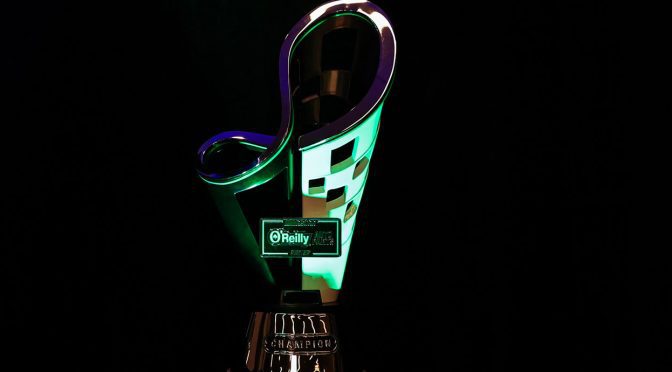
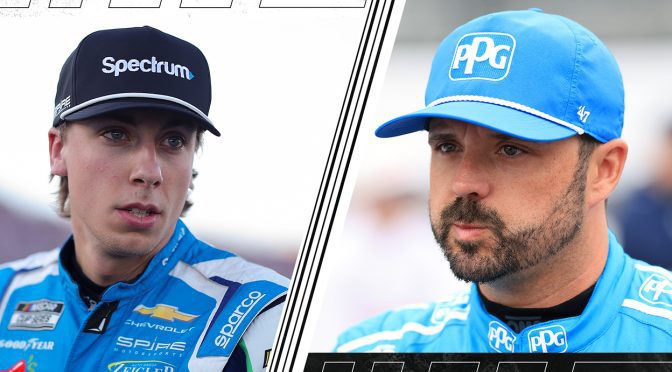
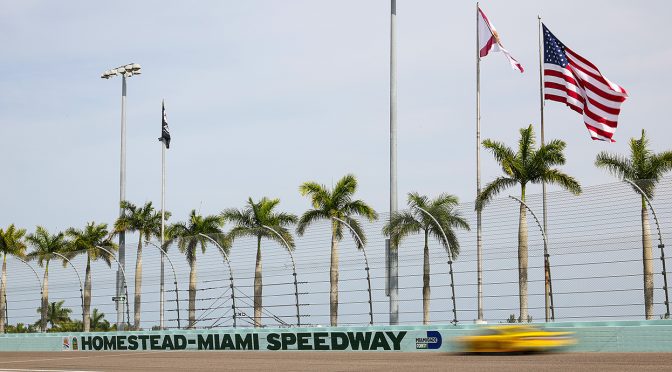
After 32 races and 5,423 laps logged, the 2026 NASCAR O’Reilly Auto Parts Series championship is down to five drivers, all with a shot to hoist the trophy in Saturday’s season finale at Homestead-Miami Speedway (5 p.m. ET, The CW, ESPN Unlimited, MRN Radio, SiriusXM NASCAR Radio). And if the numbers are any indication, the title fight is far from settled.
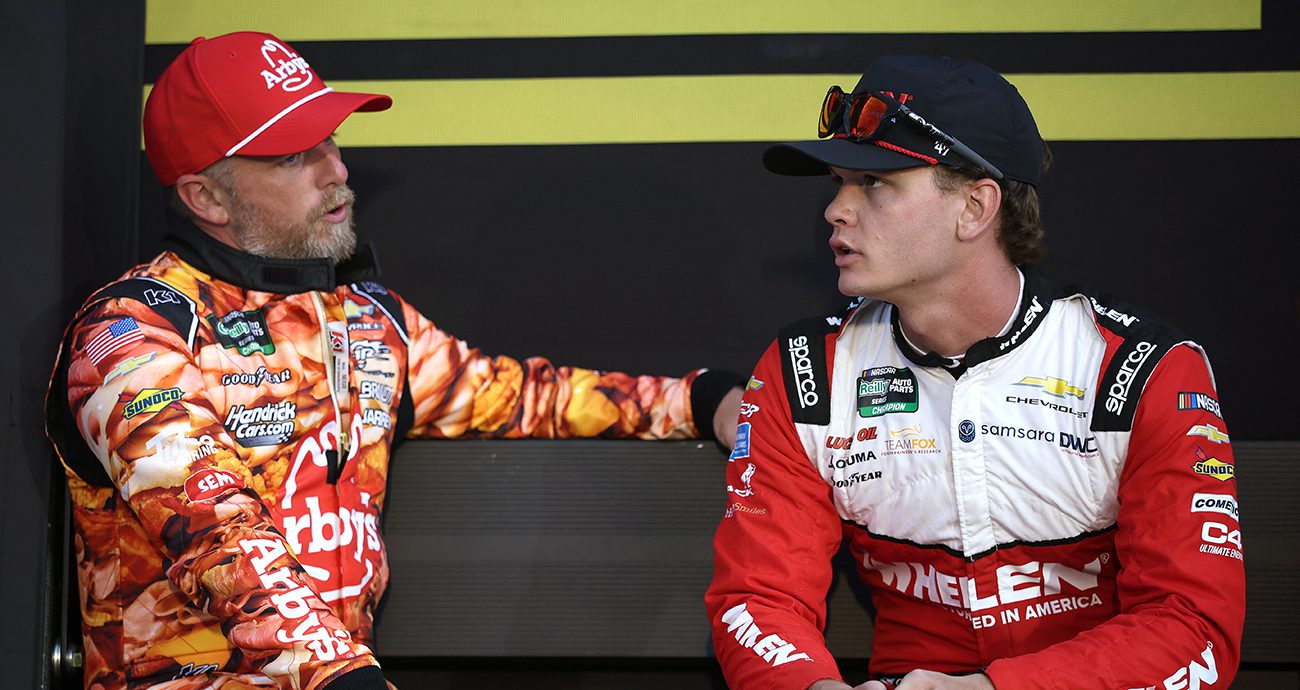
Justin Allgaier reclaimed the championship lead in the penultimate race of the 2026 season at Martinsville Speedway, putting himself in the driver’s seat heading into Homestead. Reigning champion Jesse Love remains within striking distance, 22 points back after a brake failure derailed his afternoon at Martinsville. Corey Day sits just one point further behind following a late-season charge.
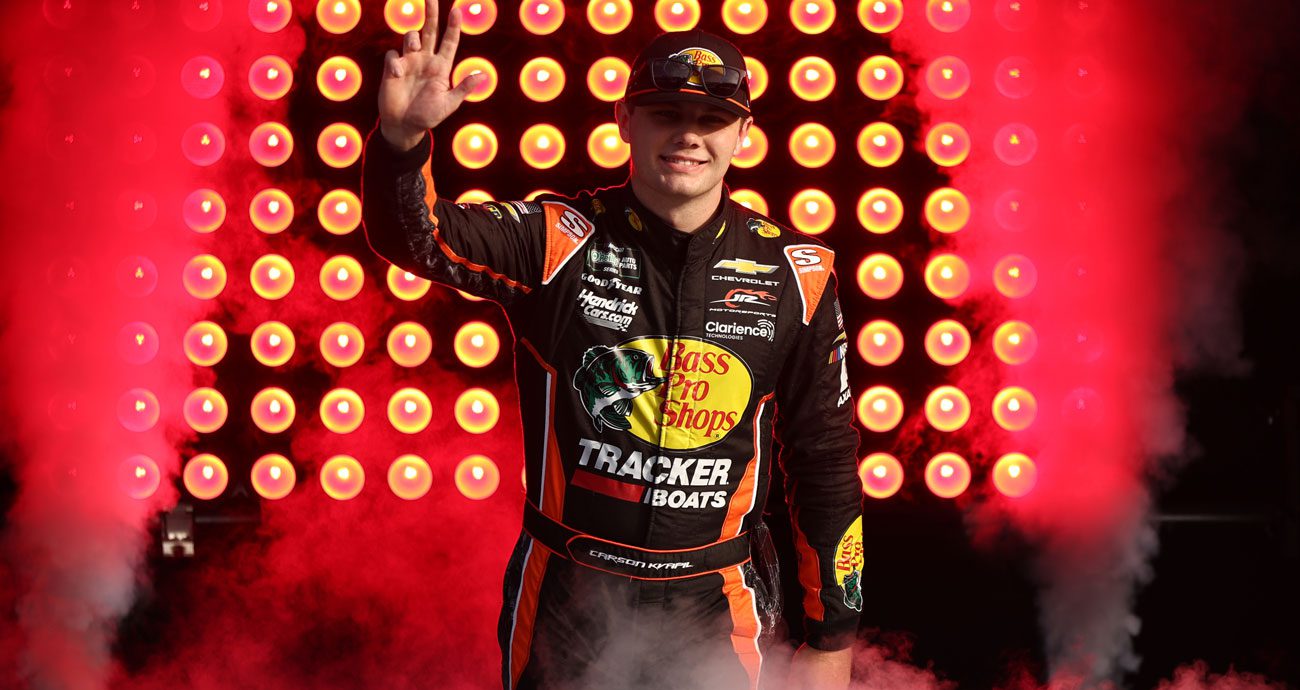
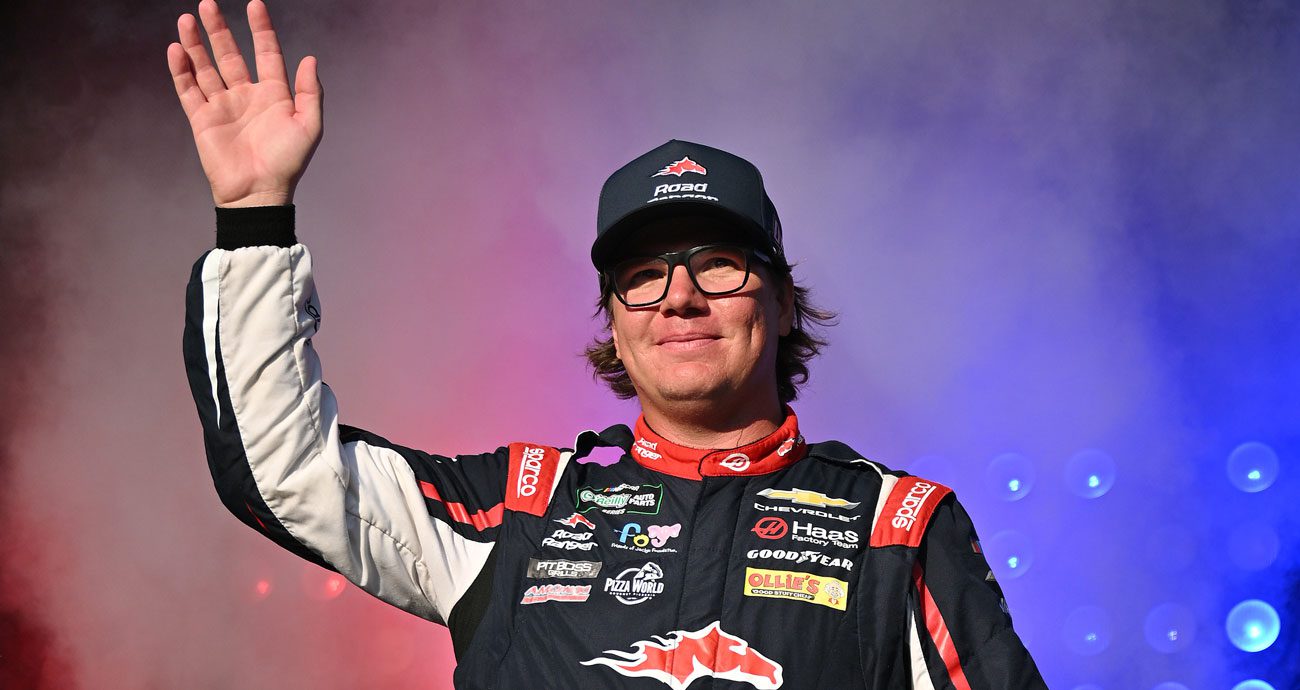
Martinsville winner Carson Kvapil enters Homestead 31 points off the lead, with just one previous start at the high-banked intermediate. Sheldon Creed faces the steepest climb, trailing by 42 points, but remains mathematically eligible to capture the title at one of his favorite tracks, where he’s among the best at running the high line.
With five drivers still in contention, let’s take a closer look at how each Chase presented by Mobil 1 pilot stacks up heading into the championship showdown.
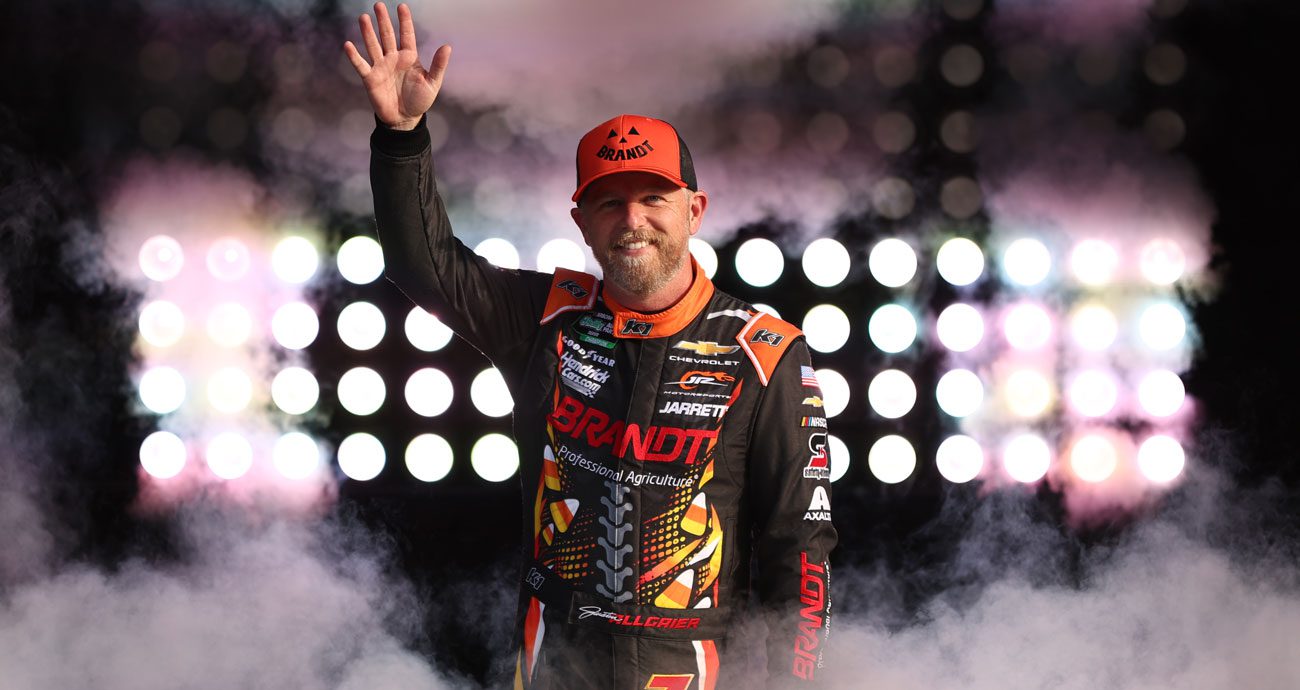
The veteran No. 1 Chase seed has more than twice as many starts at Homestead (17) as his four challengers combined (seven). Until taking the lead on a late restart last year, Allgaier had never banked a top five in 16 prior attempts in Vice City.
As Allgaier pointed out following Martinsville, his Homestead statistics don’t tell the entire story. The No. 7 car has shined at intermediates in 2026, winning at Darlington Raceway and Nashville Superspeedway in dominant fashion. Regardless of the outcome, this is arguably the best season of the 40-year-old’s career, with a personal best six victories and 19 top-five finishes.
“It’s always good to be the points leader,” Allgaier said after finishing runner-up at Martinsville. “At the same time, you would love to be farther ahead, have a 70-point lead and not have to worry about it. Either way, I’m proud of the team, proud of the effort. I think Homestead is a great race track for us.”
Love has proven he can deliver when the stakes are highest, and his performance throughout The Chase has been no exception. The reigning champion has scored two victories and five podium finishes in the first eight races, building on the momentum that carried him to his first title last year at Phoenix Raceway. Now, the 21-year-old is firmly in the championship hunt heading to Homestead before jumping to the NASCAR Cup Series with Wood Brothers Racing in 2027.
Although Love has made just two previous starts at the 1.5-mile track, both results have netted top-six efforts. His path to becoming the first repeat champion since Tyler Reddick (2018-19) is relatively straightforward.
“If we go out there and finish top three in both stages and win the race, I don’t know what anybody else could do to outpoint that,” Love told NASCAR.com after Martinsville. “I don’t think they can, especially because we will probably get the fastest lap at that point. I think that’s the avenue: top three in both stages and win the race. If we do that, we will be just fine.”
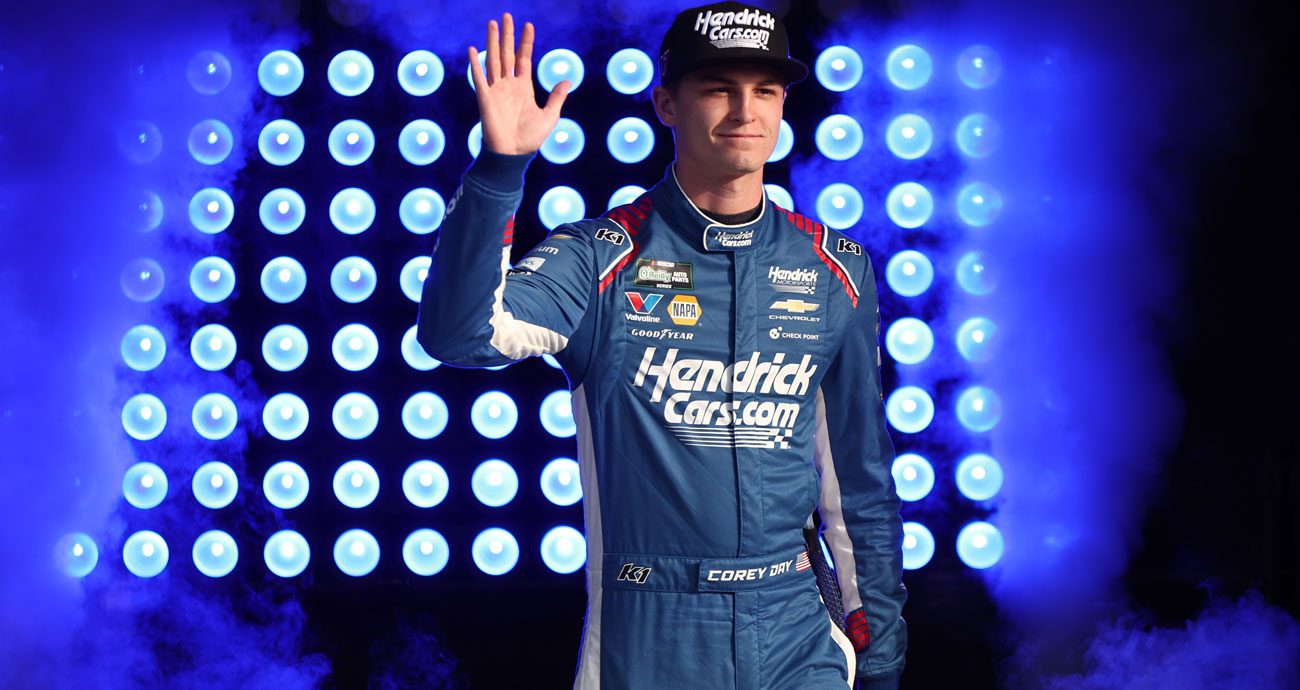
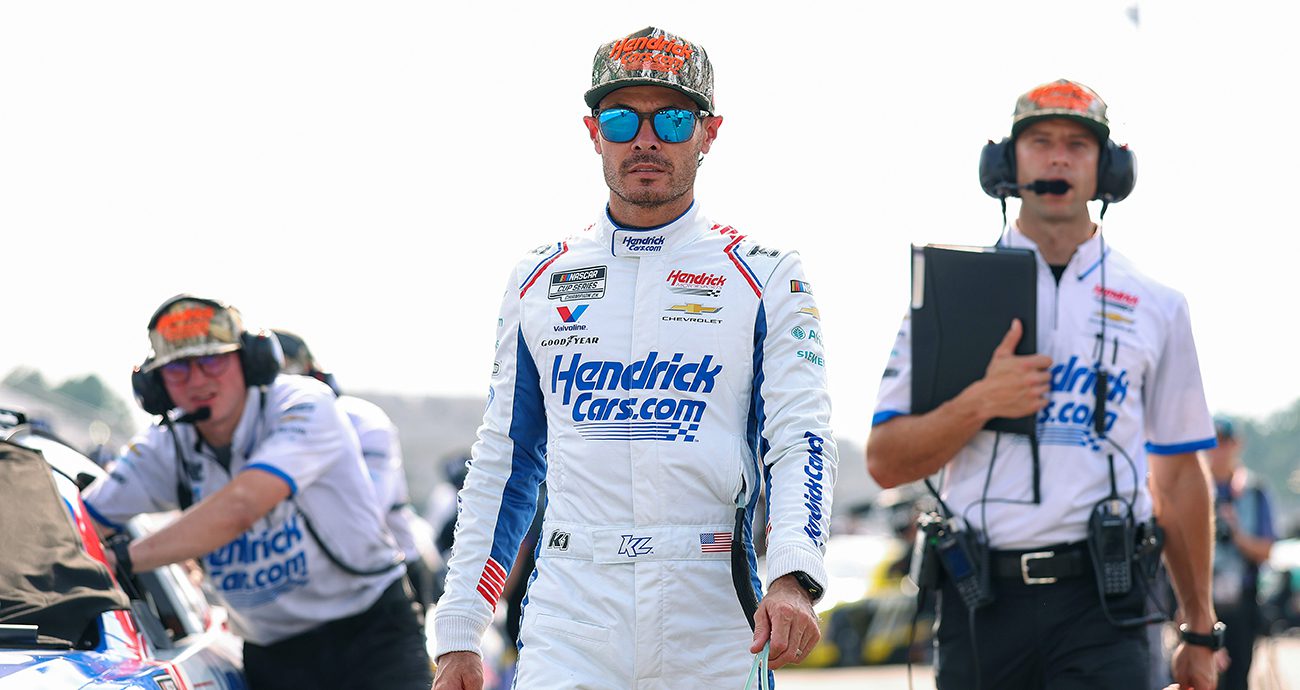
Day may be ahead of schedule in his first season with powerhouse Hendrick Motorsports, but the California native has an opportunity to deliver Rick Hendrick his first O’Reilly Auto Parts Series championship since Brian Vickers captured the title in 2003.
An avid dirt-track competitor, Day has the wherewithal to search for different lanes and run inches from the wall with the best in the series, a skill that will prove valuable at Homestead. Experience, however, is limited. He has just two previous starts at the track, both in the NASCAR Craftsman Truck Series. He plans to lean on advice from Kyle Larson and the momentum the No. 17 team possesses entering the weekend. The organization has won the two most recent O’Reilly races at 1.5-mile tracks, securing victories at Las Vegas Motor Speedway and Charlotte Motor Speedway.
“I would say we have a pretty good chance,” Day said of his title aspirations. “I would say we’re in a must-win. I don’t see [Allgaier] running worse than top five there. Must-wins are OK, though. I like those odds. It’s better than being out of it entirely.”
Like Day, Kvapil has a limited resume at the 1.5-mile Homestead oval, with just one previous start in the O’Reilly Auto Parts Series, a 10th-place finish last season with JR Motorsports. Still, the sophomore’s growth since breaking through to Victory Lane in July has been evident. He has won three of the last 11 races, highlighted by a dominant performance at Martinsville.
The short-track standout navigated plenty of adversity in 2026, driving for three different teams before taking over the No. 1 car for the remainder of the season at EchoPark Speedway in July. Although he has shown solid pace on intermediate tracks, he has yet to claim a victory at this style of track, making a 31-point deficit an especially steep hurdle to overcome.
“Being where we’re at in points is tough because we’re in championship contention, but it’s going to be a pretty tall task to get the championship,” Kvapil said. “It doesn’t deter us any. We’re going to go out, just like we did [at Martinsville] and try to win every stage, lead every lap and try to win the race to give ourselves a chance to win the championship.”
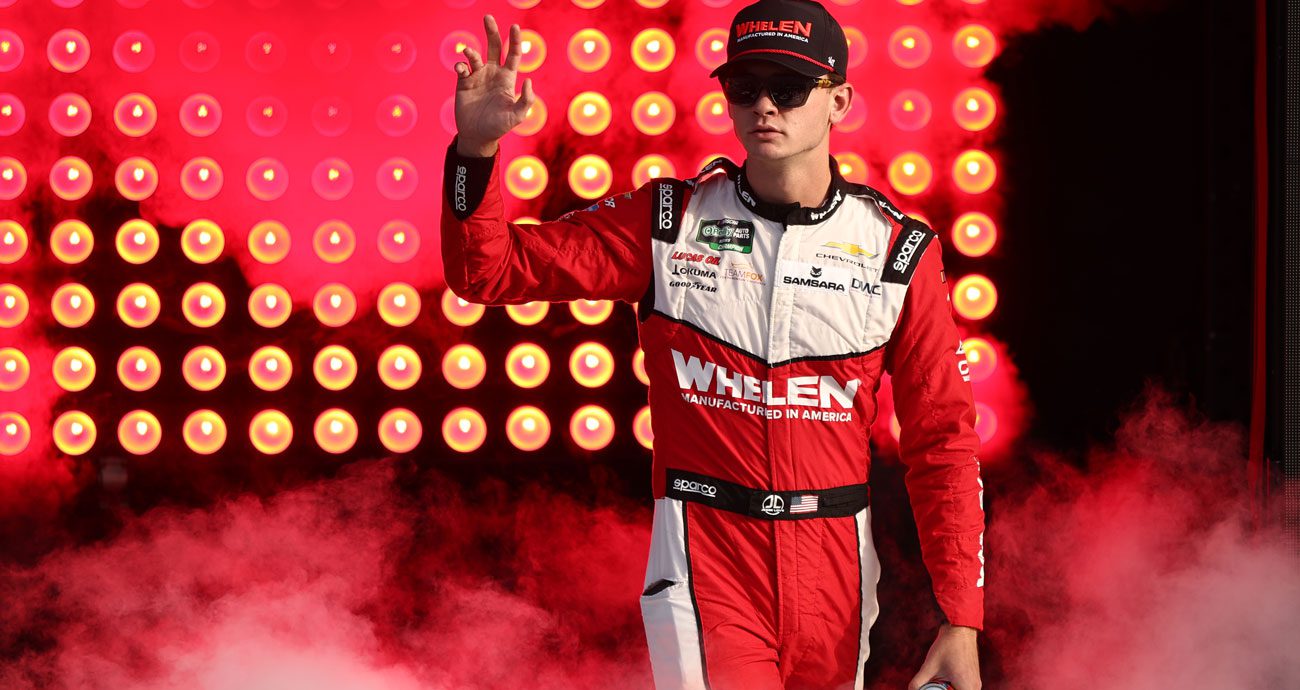
Don’t count out the always-positive, soft-spoken Creed, who could be poised to play the role of spoiler in the championship fight. Homestead ranks among his strongest tracks on the circuit, and he has contended for victories at the South Florida oval on multiple occasions.
Creed has enjoyed an impressive second — and final — season with Haas Factory Team, highlighted by three victories, including a long-awaited return to Victory Lane in February that snapped a 138-race winless streak. He is one of just three drivers with multiple victories during the postseason, including a win at Darlington, a track with similar characteristics to Homestead.
“It’s better than 50. I guess if you go run top two in the stages and win the race, you might have a chance, you might be close,” Creed said. “It kind of depends on what everyone else does. I think there’s only a few that can rip the fence pretty good there and [Allgaier and Love] aren’t none of them.”
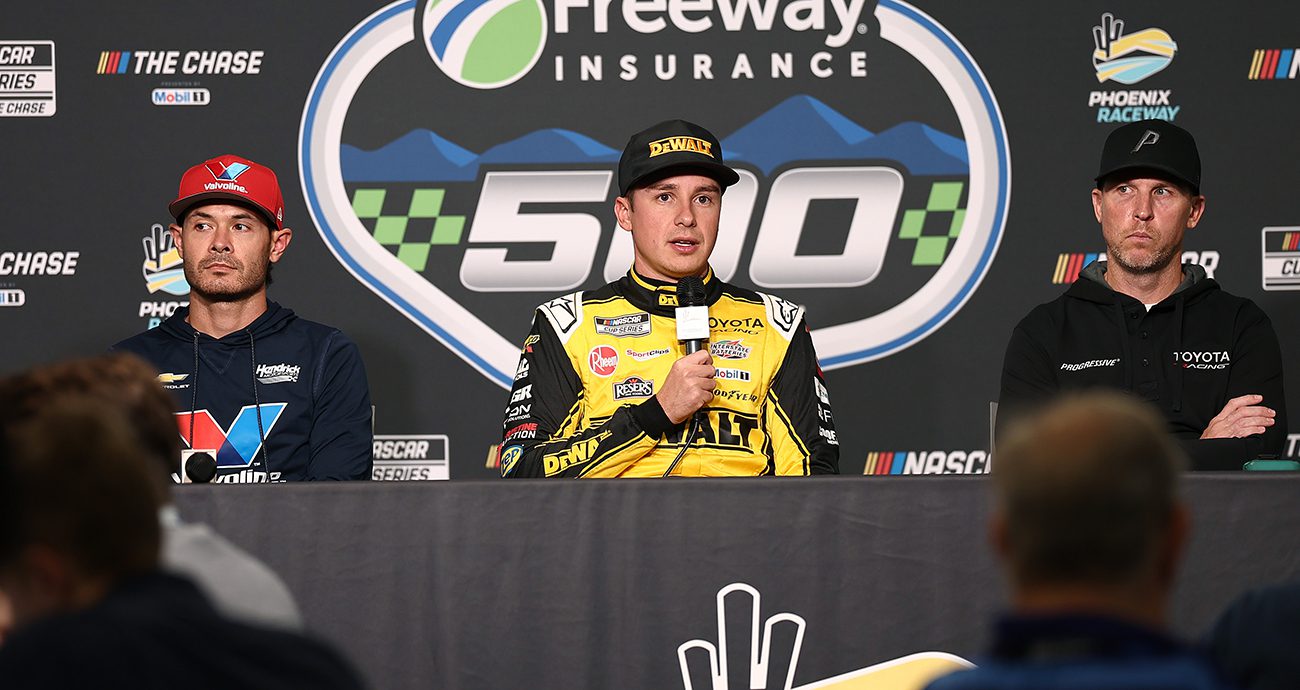
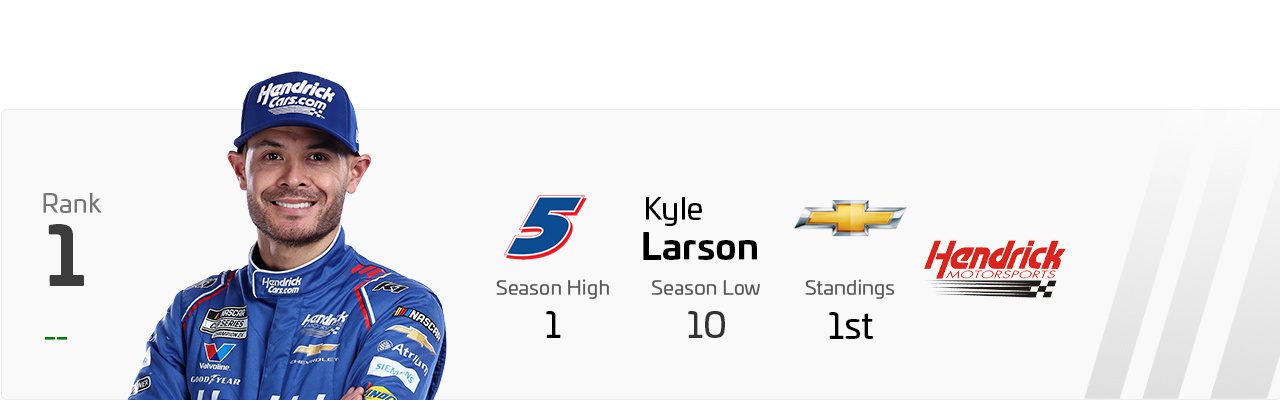
At the start of The Chase presented by Mobil 1, Kyle Larson was a seventh seed carrying a 50-race winless drought and a 55-point deficit to top-ranked Denny Hamlin. Just nine races later, he’s 70 points ahead of Hamlin, with only Sunday’s NASCAR Cup Series Championship Race at Homestead-Miami Speedway (3 p.m. ET, NBC, HBO Max, MRN Radio, SiriusXM NASCAR Radio) left to decide the 2026 title.
The math behind that reversal is rather staggering: Larson has outscored Hamlin, the regular-season’s clear best driver, by 125 points during the postseason, transforming the No. 5 Hendrick Motorsports Chevrolet from an inconsistent regular-season contender into the overwhelming championship favorite.
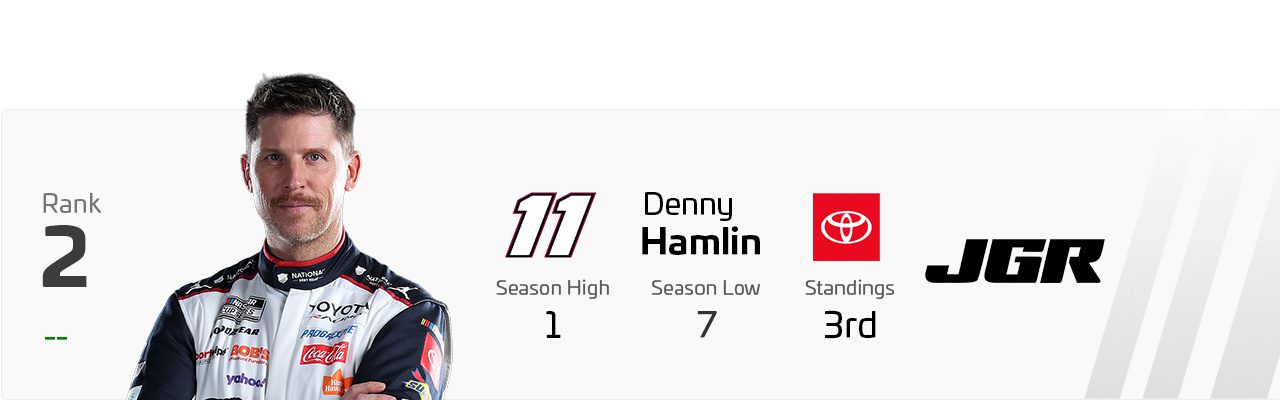
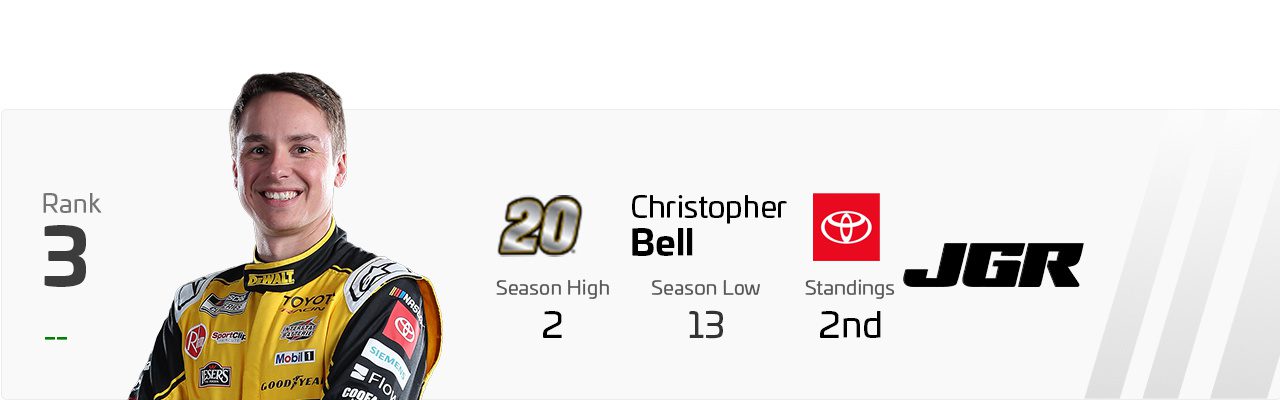
Larson enters with a 67-point advantage over Christopher Bell and a 70-point cushion over Bell’s Joe Gibbs Racing teammate Hamlin, the only other drivers still mathematically eligible for the title. He needs just nine points to guarantee his third Cup championship and second straight, but the points margin alone doesn’t fully capture the extraordinary work that put him in this position.
By several measures, Larson’s current Chase stacks up with some of the strongest postseason performances since the format debuted in 2004 — including his own two championship campaigns. Let’s dig in with numbers courtesy of Racing Insights.
Larson’s transformation is particularly striking considering where the two championship favorites stood before the postseason began. Hamlin entered The Chase as the No. 1 seed with four regular-season victories and an average of 39.5 points per race. Larson, meanwhile, had gone the entire 26-race regular season without a victory and averaged just 27.85 points per race — a season-long struggle to consistently turn the No. 5 team’s considerable speed into matching results.
That narrative, however, shifted almost immediately after the standings reset.
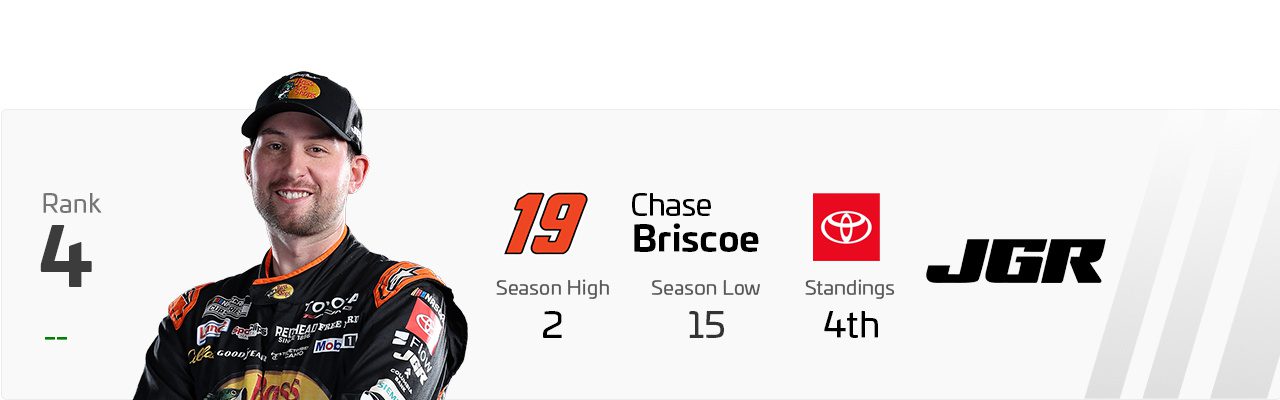
Through nine Chase races, Larson has amassed a series-best 424 points, averaging 47.1 per race — roughly a 69% increase over his regular-season scoring pace. Bell is a distant second with 352, followed by Joey Logano (331) and Chase Briscoe (330). Hamlin, despite entering the postseason with the largest points cushion, ranks fifth with 299.
And the separation extends well beyond the points themselves — Larson leads all Chase drivers with three victories, six top-five finishes, eight top 10s and 579 laps led. William Byron is next with 364 laps led, while no other Chase driver has managed more than six top 10s.
Interestingly, Larson hasn’t dominated every statistical category. Bell has collected more stage points — 103 to Larson’s 92 — while Logano leads the field with five stage wins to Larson’s four. Those distinctions help illustrate what has made the No. 5 so formidable: rather than relying exclusively on outright speed or stage domination, Larson has consistently assembled complete races, collecting valuable points even when the afternoon hasn’t gone entirely to plan.
Above all else, that alone has felt like the determining factor of this Chase.
A remarkable run, even with one major setback
Larson laid the groundwork for his remarkable championship advantage in the opening five races of The Chase, finishing fifth, first, second, first and second. His astonishing 2.2 average finish over that stretch was the best five-race start since NASCAR introduced a postseason format in 2004, and a sixth-place result at Charlotte left him with a 2.83 average through six events — the second-best six-race stretch in Cup postseason history.
That level of consistency made Larson appear increasingly difficult to catch. But as Phoenix Raceway demonstrated, even an extraordinary points run can unravel quickly.
Handling problems and a tire failure sent Larson to a 34th-place finish at Phoenix, where he collected a miserable three points and watched his once-comfortable 49-point championship lead shrink to just five, with arguably his worst track looming right after. What had been building toward a potentially decisive postseason suddenly looked like anybody’s championship again.
Then, in one of the season’s most improbable finishes, Larson produced perhaps his most consequential victory to date. Winless in his previous 58 drafting-track starts, he fell from the lead to 11th on the final lap before somehow finding a path through the tri-oval to snatch the victory and all but squash his competitors’ hopes. The remarkable rally delivered 71 points and expanded his championship lead from five to 73 in one afternoon.
A ninth-place finish at Martinsville Speedway brought that advantage down slightly, but left Larson with a 6.78 average finish through nine Chase races. Beyond championship material right there.
That figure becomes even more impressive when considering the weight of his lone disastrous afternoon. Remove the 34th-place Phoenix result, and Larson has averaged a stunning 3.375 finish across his other eight Chase starts, with no result worse than ninth.
For historical perspective, the champions of the original Chase era from 2004-13 combined for a 6.98 average finish across their respective 10-race title runs. Larson’s current 6.78 mark is slightly better, although the comparison comes with an important distinction that his final average won’t be established until Homestead, and the postseason formats and points structures aren’t identical.
Still, it provides a compelling measure of just how exceptional this stretch has been, and as the most recent Homestead winner, there’s a legitimate chance he whittles it away further.
David Jensen | Getty Images
Even his championship seasons weren’t quite like this
Perhaps the most revealing historical comparison isn’t with Jimmie Johnson, Jeff Gordon or any other Chase-era legend, but with Larson himself.
Through the first nine postseason races of his dominant 2021 championship campaign, Larson had four victories, five top fives, seven top 10s and an 8.11 average finish. Four years later, during his 2025 title run, those figures stood at zero wins, three top fives, five top 10s and a 12.33 average.
This year’s numbers — three victories, six top fives, eight top 10s and a 6.78 average — represent his most consistent opening nine postseason races of those three seasons, even if the win total doesn’t quite match his 2021 pace (in The Chase or season at large — he was a double-digit-winner that year).
The difference becomes more interesting, too, when considering how differently those two championships unfolded. In 2021, Larson overwhelmed the competition with 10 victories across the full season, punctuating a dominant first year with Hendrick Motorsports by winning the championship finale at Phoenix. His second title, however, was secured through a late strategic opportunity on pit road, when crew chief Cliff Daniels’ two-tire call helped Larson capitalize on the final caution and claim the 2025 crown despite never leading a lap.
This year’s Chase has seemingly required a combination of both approaches, showcasing the No. 5 team’s capacity to dominate when the speed is there and recover when things go sideways.
At Kansas Speedway, Larson swept both stages, led 235 of 267 laps and scored the maximum 76 points in one of the most commanding performances of the season. At Las Vegas Motor Speedway, a lengthy pit stop put him a lap down before he and Daniels rallied to finish second. And at Talladega, he collected 16 stage points, survived the chaos and capitalized on an unlikely opportunity in the final few hundred yards.
It’s all to say this hasn’t been a flawless Chase for the No. 5 group, but one in which it has repeatedly converted adversity into a considerable points haul. Given the nature of NASCAR’s restored 10-race championship format, that ability has proven nearly as valuable as the outright speed itself.
One race from another chapter
For Larson, there are certainly worse places to put the finishing touches on a championship than Homestead-Miami Speedway.
The 1.5-mile oval has produced two victories in his 12 career Cup starts, including the most recent race in March 2025, and his 645 laps led there are the most among active drivers. His recent intermediate-track record is similarly impressive, with finishes of seventh or better in 11 of his last 14 races on traditional 1.5-mile tracks.
The competition isn’t lacking credentials, either, particularly Hamlin, who owns three Homestead victories and has averaged a series-best 4.63 finish on traditional 1.5-mile tracks this season. But Larson has built such a substantial championship advantage that even another extraordinary performance from one of his rivals might not be enough.
Should he finish the job Sunday, Larson would become NASCAR’s first back-to-back Cup champion since Johnson completed his remarkable five-title streak in 2010, becoming the 11th driver with at least three Cup championships. He would also deliver Hendrick Motorsports its record 16th Cup title and become the third-youngest driver to win three championships, behind only Gordon and Johnson.
Those accomplishments would further cement Larson’s place among the sport’s greats, but the statistical story of this Chase is already compelling on its own.
From a hefty points deficit to an overwhelming advantage, Larson has transformed the championship picture through a combination of dominance, consistency and timely recoveries. The No. 5 team hasn’t simply been extraordinary on its best afternoons; it’s found a way to make nearly every afternoon count.
Whether that remarkable body of work ultimately earns Larson another championship remains to be seen, but whatever happens at Homestead, the numbers leave little doubt about just how special his 2026 Chase has been.
NASCAR has issued penalties to Carson Hocevar and Josh Berry following Sunday’s NASCAR Cup Series Chase race at Martinsville Speedway, the sanctioning body announced on Tuesday.
Hocevar has been docked 25 driver points and fined $100,000 for multiple violations of Sections 4.4a of the NASCAR Rule Book: Penalty Options; Actions detrimental to stock car racing. Berry has been docked 25 driver points and fined $50,000 for the same violation.
Specifically, NASCAR stated that the penalties relate to wrecking or spinning another vehicle, whether or not that vehicle is removed from competition as a result.
“The actions that these two drivers took on Sunday felt like we needed to get involved,” said Elton Sawyer, NASCAR senior vice president of competition, during a Tuesday SiriusXM NASCAR Radio interview. “What rose to a level of real concern for us is was that they had taken the structure of the front of the car and used that as an antic or a strategy to basically ruin other drivers’ days, and we felt like we had to step in.”
Spire Motorsports announced earlier Tuesday the suspension of Hocevar for Sunday’s season finale at Homestead-Miami Speedway (Sun., 3 p.m. ET, NBC, HBO Max, MRN Radio, SiriusXM NASCAR Radio) for his on-track actions at Martinsville. SMT data showed Hocevar brake-checked Austin Cindric in Stage 2 of Sunday’s penultimate season contest, resulting in terminal damage for the No. 2 Team Penske Ford.
Hocevar was also involved in a single-car spin that brought the caution out on Lap 198 as he was being put a lap down by leader William Byron.
Berry brake-checked another Team Penske driver, Ryan Blaney, on Lap 253 in a similar incident to Hocevar/Cindric. Blaney suffered heavy front-end damage before spinning in Turn 1, causing a caution. Penske shares a technical alliance with the Wood Brothers Racing team that Berry currently drives for. Sunday is Berry’s final race in the No. 21 Ford before turning to Legacy Motor Club for the 2027 season.
“As we reviewed both of those incidents, and you look at the 77, and with Carson being in situations before where we’ve had behavioral situations and penalties, we’ve had discussion with him, we just felt like after reviewing all of the data and the audio, that this one rose to a level that it needed to be more than just a $50,000 that Josh got, and the 25 points for both,” Sawyer said, comparing the incidents from each driver. “As we looked at it, trying to be as consistent as we’ve been in the past on the points side of it, and we landed on — with both of them — 25. Again, the difference being the monetary side of it, and we feel like that would have more of an impact than the points side of it.
“We didn’t take this lightly. We met all morning and part of the afternoon on this topic, and felt like this was the best place to land on it.”
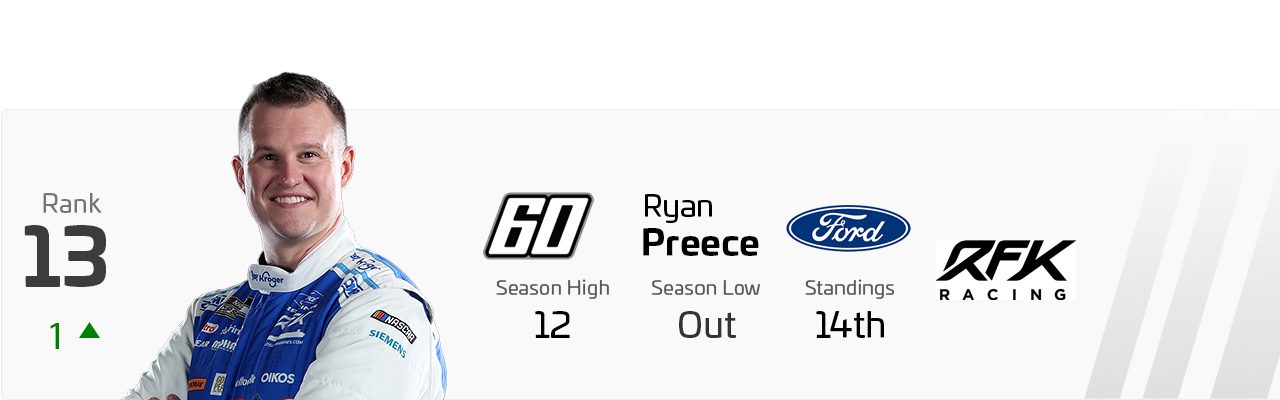
Additionally, the No. 60 RFK Racing Ford team was penalized under Sections 8.8.10.4 A&D: Tires and Wheels, Safety Violations, for the loss or separation of an improperly installed tire/wheel from the vehicle. On a restart on Lap 225, driver Ryan Preece’s right-rear wheel fell off, causing a caution. Jackman Samuel Wright and rear tire changer James Price have been suspended from the next two Cup Series events through the Wheatley Vodka Clash exhibition race on Feb. 13, 2027, at Daytona International Speedway.
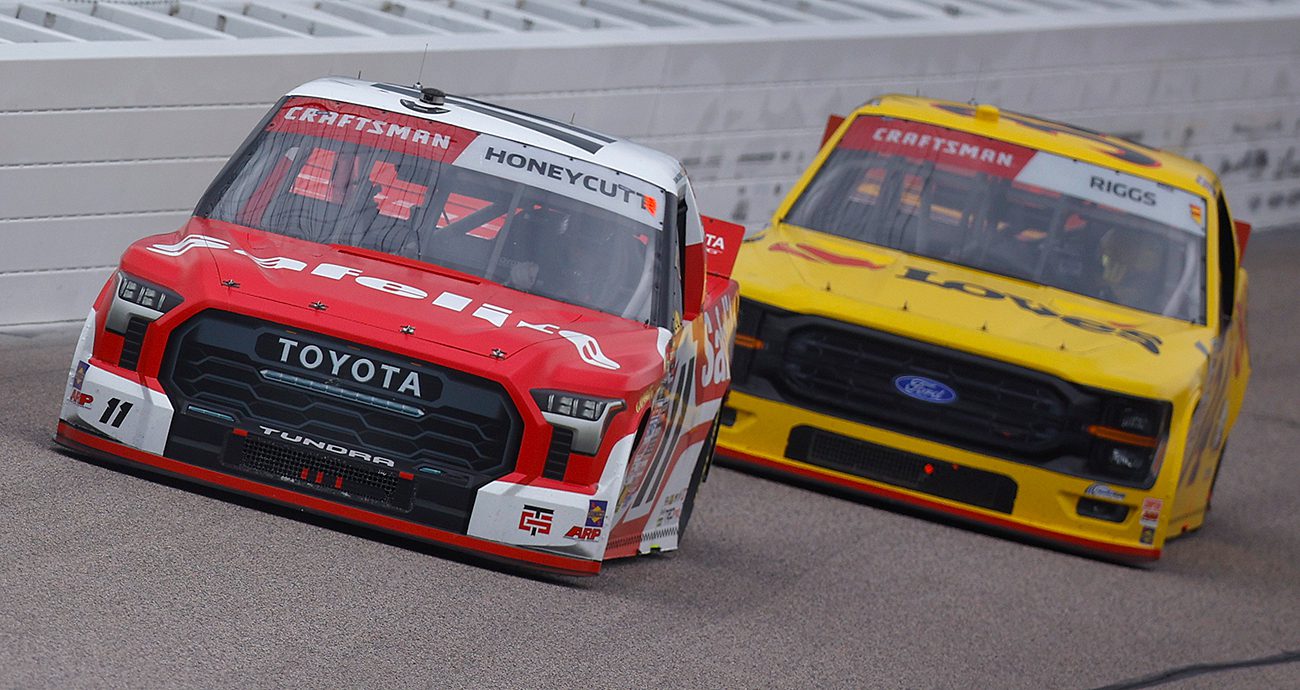
All three NASCAR national series will crown their respective champions this weekend at Homestead-Miami Speedway — the first time Championship Weekend has returned to South Florida since 2019. The Craftsman Truck Series kicks things off Friday (7:30 p.m. ET, FS1, FOX One, NASCAR Racing Network Radio, SiriusXM NASCAR Radio) with Kaden Honeycutt and Layne Riggs battling for the crown. Five drivers remain in the hotly contested O’Reilly Auto Parts Series hunt for Saturday (5 p.m. ET, The CW, ESPN Unlimited, MRN Radio, SiriusXM NASCAR Radio), and Kyle Larson looks to clinch his third title in the Cup Series on Sunday (3 p.m. ET, NBC, HBO Max, MRN Radio, SiriusXM NASCAR Radio).
See how eligible drivers in all three series can clinch championships this weekend, and how they navigated The Chase presented by Mobil 1.
NOTE: Tiebreakers are determined by the number of best finishes in The Chase. If drivers are tied in wins, it goes to the number of second-place finishes and so on.
Cup Series
KYLE LARSON (leads by 67 points)
How he got here:Earned No. 7 seed. Larson went on a heater as soon as the postseason started, recording top-six finishes and a pair of victories in the first six races. His only misstep came at Phoenix Raceway, where he battled an ill-handling race car before a cut tire resulted in a DNF, but immediately bounced back with a Talladega Superspeedway victory that snapped an 0-for-58 streak in the draft. His ninth-place effort last weekend at Martinsville Speedway wasn’t pretty, but the No. 5 Hendrick Motorsports Chevrolet team still exited Virginia with a healthy points margin.
How he can clinch: Larson needs just nine points at Homestead, regardless of what any other driver does. He can clinch with eight stage points and can lock up the title early by finishing third or better in Stage 1. Without any stage points, Larson needs to finish 28th or better. He has also secured every tiebreaker scenario. This season, Larson has finished with three or fewer points four times but has never scored fewer than 18 points in 12 Homestead starts. Racing Insights projects Larson’s championship odds at 99.4%.
How he got here:Earned No. 6 seed. Bell put seven regular-season runner-up finishes to the wayside in the opener, scoring a crown-jewel Southern 500 victory at Darlington Raceway. He had plenty of speed each week, but was involved in a multicar wreck at World Wide Technology Raceway at Gateway before suffering a power steering failure at Las Vegas Motor Speedway, resulting in a pair of disappointing finishes. The biggest mistake for the No. 20 Joe Gibbs Racing team came at Talladega Superspeedway, where he spun entering pit road under green and suffered heavy damage, finishing 35th and failing to score stage points.
How he can clinch: Bell must win and earn at least 14 stage points, or 13 stage points plus the Xfinity Fastest Lap point, to remain in championship contention, depending on Larson’s point total. He must finish eighth or better in Stage 1. The most that Bell has outscored Larson in a single race this year is 46 points, and adjusted to the new format, the most he has outscored Larson in a single race is 50.
DENNY HAMLIN (trails by 70 points)
How he got here:Earned No. 1 seed. Hamlin struggled to piece together full races throughout The Chase, surrendering his points lead three races in. His most crucial mistakes came at Las Vegas, where he failed to trap Larson a lap down early with pit strategy gone wrong before a Stage 1 spin, and then a tire issue at Phoenix that resulted in his worst postseason finish of 28th. A spin triggered by Joey Logano that also included Bell at Martinsville didn’t help the case either, but six top 10s in nine races is enough for the No. 11 Joe Gibbs Racing team to have a slim chance at Homestead.
How he can clinch: Hamlin must win and earn at least 17 stage points, or 16 stage points plus the Xfinity Fastest Lap point, to remain in championship contention, depending on Larson’s point total. He must finish fifth or better in Stage 1. The most that Hamlin has outscored Larson in a single race this year is 43 points, and adjusted to the new format, the most he has outscored Larson in a single race in the stage era is 62.
Meg Oliphant | Getty Images
O’Reilly Auto Parts Series
JUSTIN ALLGAIER (leads by 22 points)
How he got here:Earned No. 1 seed. Allgaier hasn’t quite had the world-beating results like his six regular-season wins, but so far, it’s been enough. The No. 7 JR Motorsports Chevrolet finished outside the top 10 in the first two Chase races at Darlington and Gateway, crashing out a few weeks later at Las Vegas. Top fives in the last four races have allowed Allgaier to make up a 31-point deficit in October and head to the finale back in the driver’s seat.
How he can clinch: Allgaier controls his own destiny and can secure his second title with 54 points scored, regardless of how his competitors fare. Allgaier currently loses the Chase tiebreaker to each of his four remaining challengers, all of whom have at least one postseason victory.
How he got here:Earned No. 4 seed. Love went winless in the regular season, but his No. 2 Richard Childress Racing team put it into gear come the postseason. He won dominant races at Gateway and Phoenix, but a plethora of issues last weekend at Martinsville — including a crash — resulted in a 30th-place finish, by far his worst of The Chase after entering with a 19-point series advantage. Late contact with Allgaier resulting in a 17th-place finish at Bristol also proved costly.
How he can clinch: Love controls his own destiny and can secure his second consecutive title with a perfect 76-point day, including the Xfinity Fastest Lap, regardless of how his competitors fare. Several tiebreaker scenarios apply, but Love would win them if he wins the race.
COREY DAY (trails by 23 points)
How he got here:Earned No. 7 seed. Day has exceeded all expectations — and maybe even his own — to enter Homestead in the thick of the championship fight. The No. 17 Hendrick Motorsports Chevrolet has finished inside the top 10 in seven of eight races, and impressive back-to-back victories at Las Vegas and Charlotte trimmed his deficit by 85 points alone. His only misstep came at Gateway, where contact with William Sawalich led to a DNF.
How he can clinch: Day controls his own destiny and can secure the title with a perfect 76-point day, including the Xfinity Fastest Lap, regardless of how his competitors fare. Many different tiebreaker scenarios apply, but Day would win tiebreakers if he wins the race.
CARSON KVAPIL (trails by 31 points)
How he got here:Earned No. 2 seed. Kvapil earned his third victory of the 2026 season and first in The Chase last weekend at Martinsville to jump back into the championship equation. He nearly made it two in a row, leading 67 laps at Talladega the week before but was passed by teammate Sammy Smith on the final lap. Kvapil had plenty of speed throughout the postseason, but the No. 1 JR Motorsports Chevrolet had a loose wheel at Bristol and suffered a mechanical issue at Charlotte, resulting in major setbacks.
How he can clinch: Kvapil can only secure the title with help.
SHELDON CREED (trails by 42 points)
How he got here:Earned No. 3 seed. Creed started The Chase scalding hot, earning a pair of victories and a second-place finish in the first three races. But the No. 00 Haas Factory Team driver scored just one stage point over the next two races before a power steering issue led to a 32nd-place result at Phoenix. Top-six finishes in the last two races kept him in championship contention heading to Homestead.
How he can clinch: Creed can only secure the title with help. Many different tiebreaker scenarios apply, but Creed would win tiebreakers if he wins the race.
James Gilbert | Getty Images
Craftsman Truck Series
KADEN HONEYCUTT (leads by 20 points)
How he got here:Earned No. 2 seed. Honeycutt’s postseason has been near-perfect so far, finishing eighth or better in five of the first six races and earning a pair of victories. The only flaw for the No. 11 Tricon Garage Toyota team came last weekend at Martinsville, when late contact from Tristan McKee shuffled Honeycutt out of the top five and to 14th in the running order.
How he can clinch: Honeycutt controls his own destiny and can secure the title with 57 points, regardless of how his competitors fare. He wins every tiebreaker as long as he finishes the race inside the top three.
How he got here:Earned No. 1 seed. Riggs’ postseason got off to a shaky start, but he’s found much more even footing as of late. The No. 34 Front Row Motorsports team had a loose wheel in The Chase opener at Bristol, finishing 32nd after late damage. A week later at Kansas, Riggs hit the wall battling Honeycutt for the win, falling to 19th at the checkered flag. In four races since, he’s finished inside the top eight each time and picked up a win at Charlotte.
How he can clinch: Riggs controls his own destiny and can secure the title with 75 points, regardless of how his competitors fare. If he wins the race, he’d only lose a tiebreaker if Honeycutt finished second or third.
Bill Janitz kind of knew. The first impression that Kyle Busch made on him that November morning gave him that hunch.
Janitz, Busch’s longtime public-relations rep, had orchestrated his driver’s weekend schedule for years, with pre-race engagements thoroughly planned down to the minute. Busch liked things organized. If there was a lapse in preparation, Janitz said Busch would let you know.
So Janitz made sure things were just so, to avoid the disruptions that could throw off a whole weekend’s rhythm. Busch’s schedule of events was shared through iCloud to their phones, but the two also kept a pair of hard-copy duplicates with line-by-line listings all color-coded by category — driver appearances, sponsor meet-and-greets, media events, all the way up to the drivers’ meeting and pre-race ceremonies. For most race weekends, Janitz said that schedule could fit on one sheet. But heading into the season-ending weekend in 2019 at Homestead-Miami Speedway, that schedule was packed with extra trimmings that spanned multiple ruled pages — volume rivaled only by the Daytona 500 in its extensiveness.
Busch was making his fifth consecutive appearance among the championship-eligible final four, so the extra Homestead hullabaloo was almost second nature by that point. But amid all the frantic fanfare, the buzzy add-ons and obligations that created one of the season’s biggest pre-race swirls, the aura that Kyle Busch projected upon Janitz’s arrival to his motorcoach in the 10 a.m. hour was that of sharply focused serenity.
“It was funny because over the years, in general, you could kind of tell within 30 seconds of him walking out of that bus in the morning for us to go to our hospitality visits, I kind of knew where his head was at. I could tell when he felt like he had a race-winning car,” said Janitz, who paired with Busch from his arrival at Joe Gibbs Racing in 2008 until his departure after the 2022 season. “Now that didn’t always turn out to be the case because it’s racing and things happen that are beyond his control, but I think you know when he went through practice and qualifying and everything during the weekend and the adjustments that they made, I think he always, he had this feel to him. He’d walk out of the bus, and I guess I would best describe it as a calmness — not overly happy, not overly upset. Just kind of this calmness to him that I would see, and you would kind of go, ‘All right, he’s going to have a chance to win today.’ ”
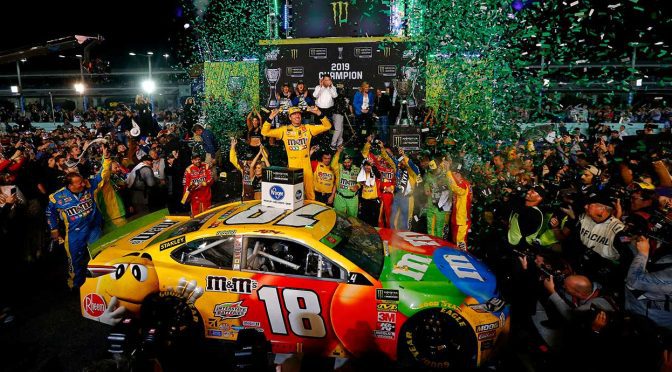
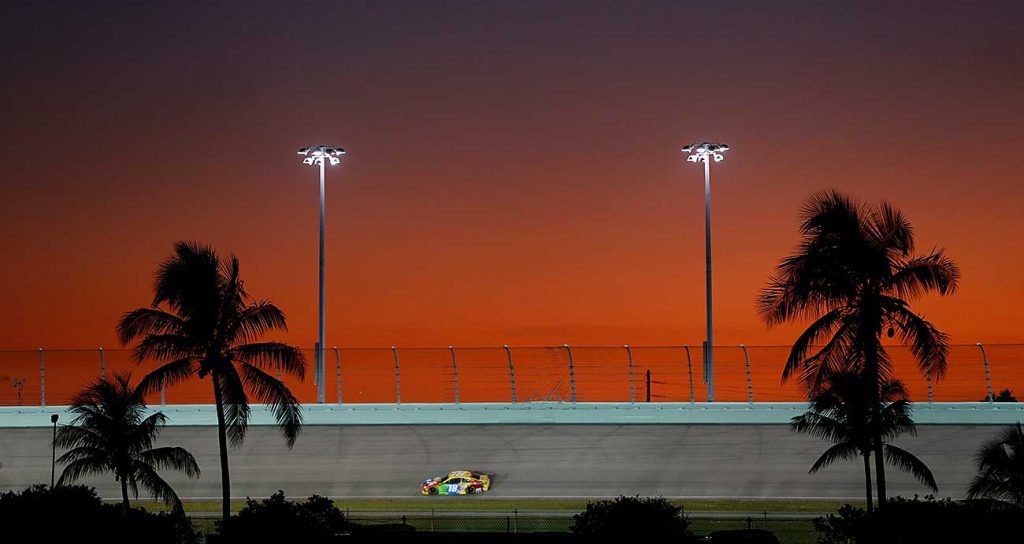
NASCAR’s championship weekend makes its return to Homestead-Miami this weekend, wrapping up an eventful first go-round with the new-look Chase presented by Mobil 1. The revival of the south Florida venue as the host track for a tripleheader of season finales has prompted remembrances and fits of nostalgia for the classic crowning moments that have unfolded through the years inside its pale blue walls. Those memories overlap with what’s been a lasting celebration of life this year for the late Kyle Busch, who hoisted the Bill France Cup for the second time in his career the last time Homestead hosted the season-long championship fight.
The story of Busch’s second Cup Series championship was a journey of redemption, perseverance through adversity and brilliant execution from a team and driver who shared an elite-level determination. It marked not just another chapter in Homestead’s rich history, but another top-shelf entry in Busch’s long list of racing achievements.
A locked-in sense of calm amid all the fanfare helped show the way.
* * *
The 2019 season was easily one of Joe Gibbs Racing’s most successful — 19 victories in 36 races, a second Daytona 500 win for Denny Hamlin and Busch’s clincher at Homestead that year. But a deep sense of loss weighed on the organization from the outset.
J.D. Gibbs, the eldest of Coach Joe Gibbs’ two sons and a beloved JGR executive, died that January after years of cognitive decline. His influence as team president and later co-chairman was instrumental in the organization’s growth, especially when his father returned to the NFL for a late-career coaching stint. But he was best remembered by colleagues for his kindness and the way he treated others.
“There wasn’t a corner or room or office of this shop that he wasn’t in every day or every other day, checking on every single person, knowing everybody’s name, knowing something about them and recognizing the work that everybody puts in — not just the drivers, not just the crew chiefs, not just the people that travel,” says Adam Stevens, who served as crew chief for Busch’s No. 18 that year and now sits atop the pit box for Christopher Bell’s No. 20 JGR Toyota. “But he knew how important everybody’s job was to the ultimate goal, and it was completely genuine, and he would go out of his way to stop you and thank you for the job you were doing and how hard you were working, whether it was a good weekend or a crappy weekend.
“I can’t tell you how many times I bumped into him right outside that door going home, and it was like he was standing there waiting on me, you know what I mean, just to put his arm around me and say thanks. Just a tremendous impact on the shape of this company and the way that we all try to run it.”
Jerry Markland | Getty Images
Hamlin’s Daytona triumph gave the organization a bittersweet moment to remember Gibbs’ impact, but his enduring spirit was celebrated throughout the 2019 campaign.
“There was definitely an angel driving with us throughout the year, and faith would make me think that he had a big impact on what was going on that year, but I think it was more of the legacy of the things that he had set up and the people that he had put in place,” said Matthew Tyrrell, the fueler then for Busch’s No. 18 who now serves as the gasman for the JGR No. 19 and driver Chase Briscoe. “So I think J.D.’s legacy was more how he treated people and the machine that he set up that was able to be successful even without him being here, and then I do feel like he was with us at the time as well.”
Compounding those hardships was a more personal family issue. Kyle and his wife, Samantha, had long been open about their struggles with fertility. The couple were overjoyed to welcome their son, Brexton, into the world in 2015 — the same year as Busch’s first Cup title — but their desire for a second child four years later were left unmet, with Busch emotionally noting in his champion’s speech later that year how the family had endured multiple setbacks.
It was under that context that Busch navigated the 2019 season, both as a driver and the owner of a successful Craftsman Truck Series operation.
“I think it weighed a ton on him,” Janitz says. “They obviously so badly wanted to have a second child, and obviously it was really exciting when they were able to have Brexton and they wanted to have a child again. I can’t even imagine what it’s like and how frustrating that could be and so yeah, I think he’d be lying if he said it didn’t permeate into other parts of your life. So I think one thing that he did do a good job of is, again, once he got to the race track, put on the helmet, he was able to focus on what was going on there. But I think that was very difficult for them.
“I felt for them. I think Samantha did a really nice job of being transparent and telling people what they were going through. Not many people get a peek behind the curtain like they gave people, but I think they also felt like there’s a lot of other people in this world kind of going through the same thing, and maybe that’s going to help someone else.”
Stevens, who worked with Busch for six seasons from 2015-20, saw the impact firsthand.
“I think that was a lot of the mental capacity and his ability to navigate adversity, I think, was diminished for a portion of the season because he had a very, very full plate with KBM (Kyle Busch Motorsports), with the foundations he was in and everything that he was involved with,” Stevens says. “Then to put you know some of that family struggle on top of it, it definitely had him in a little bit different headspace for a portion of the year, and the sum total of all of that was weighing him down and somehow or another, when the playoffs came around, kind of talking about that, his ability to increase his intensity and his focus, he was able to put some of those things aside.”
The extracurricular burdens — both public and private — didn’t show in Busch’s early on-track efforts. He grabbed the Cup Series points lead with a win in the fourth race of season at Phoenix, then went back-to-back with another dominant victory the next week at Auto Club Speedway. Later that spring, Busch added another tally to his Bristol bounty before taming Pocono’s triangle for his series-leading fourth win by that point.
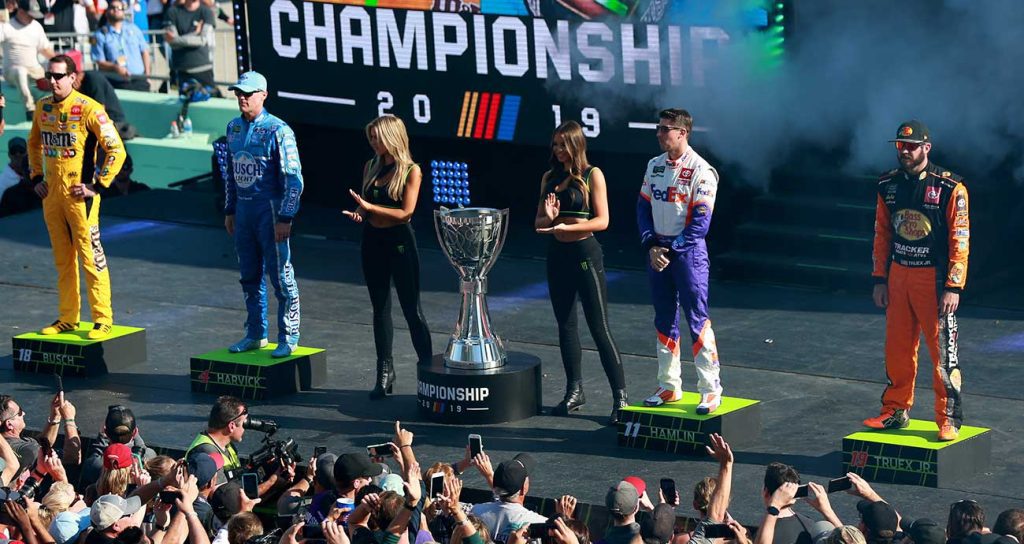
Those results, however, began to tail off, just as the competitors who would join him in the Championship 4 field that year — Hamlin, fellow JGR driver Martin Truex Jr. and Stewart-Haas Racing veteran Kevin Harvick — made significant strides. Busch’s losing streak eventually reached 21 races heading into Homestead-Miami, but his steady nature and stature as the postseason’s top seed helped him advance through the rounds of the elimination-style format.
Jonathan Ferrey | Getty Images
“Coming into the playoffs, I would say the last stretch of the summer, results got cold and a little bit up and down, and we didn’t come in there with what we felt like was a lot of momentum,” Stevens said. “… But you know, we were really good as a team and as a combo of not sticking our necks out too far, and just base-hitting that thing as far as it would go, and then when you needed a double, you tried for a double. You didn’t try for a triple. You weren’t swinging for the fence, and if there were times we needed to swing for the fence, we swung for the fence. But we were always able to progress through the rounds for five straight years and put ourselves in a position to make it to that final four. Then when you made it to Homestead, it’s a whole different ballgame again.”
Said Janitz: “I think he fed off of winning and momentum, definitely more than I feel like some other guys do. For him to kind of stay in the game, I guess, throughout that year was something probably he couldn’t have done very well in the early part of his career, but something that he learned as his career went on. Certainly, I think what he went through in 2015 sort of changed the game for him when it came to being able to face some adversity and not let it go the wrong direction on him.”
Recapturing the groove from the early season show of strength also boiled down to how Busch responded to pressure when it mattered most. The timing was right.
“The thing that always impressed me the most about KB was when the playoffs started, he always had another gear, and the amount of focus and mental toughness that he could drum up when it was time is like something I’ve still never seen. It was remarkable, and that intensity would only ramp up as the playoffs went,” Stevens said, noting how regular-season defeats were sometimes slightly easier for Busch to accept. “In the playoffs, it was just an intense level of focus and intensity, and just measured and calculated moves on his part, and I think it was so intense that it was probably something that a normal human couldn’t maintain for a whole season. So he kind of bottled it up and always saved it for the playoffs.”
Jonathan Ferrey | Getty Images
* * *
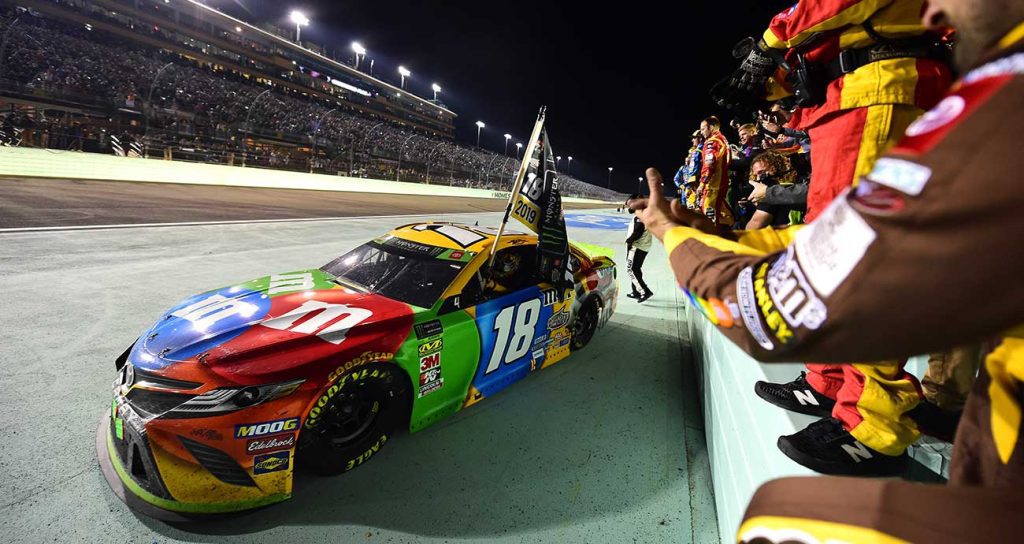
Though Busch was the face of the team and was by then well-established as a polarizing figure in the court of fan opinion, the supporting cast of the No. 18 group was just as fundamental to making their colorful M&M’s car go.
The chemistry was one thing, but the high-grade performance made it a more perfect match.
“Oh, it was insane how well we fit together,” says Tyrrell, now midway through his second decade of going over the wall for Joe Gibbs Racing. “That’s by far, I think this is my 19th season in the sport, and that group stands out head and shoulders above every other one that I’ve ever been a part of. Just from the get-go, all five of us were just, we clicked. Three or four of us had previously worked together and were reunited, so I think that was part of it, but you know, performance and achievements all lined up with our personalities, and we knew how to keep each other accountable and just how to push each other, how to push each other’s buttons — right and wrong — but it was that dynamic that like was able to keep us going and pushing.”
Stevens also had new cogs in place in the No. 18 team’s engineering staff. Ben Beshore had left his role as the lead race engineer to become a crew chief in JGR’s O’Reilly Auto Parts Series program, winning four times in seven races with Busch that year. In stepped Tyler Allen, now the crew chief for Ty Gibbs’ No. 54 Toyota, with William Hartman as part of the engineering staff’s support. Two years of working with Stevens had made their workflow and communications a smooth process. “But I was green,” Allen said, “and then we had William come on board as a second engineer, also very green, so there was some learning curve early in the year to get up to snuff.”
That easing-in process was made more challenging by major life events for Allen and his family. His son, Riley, was born Nov. 7 of that year, just before the next-to-last race of the season at Phoenix. Allen took a brief paternity leave and worked remotely on a lighter schedule, but returned to the track for Homestead, with Stevens welcoming his return.
“We worked together for quite a few years, and that’s not a puzzle piece that you can just pull out and find the exact same shape puzzle piece to put back in,” Stevens says. “So there’s always a transition when you have turnover in a high-level position like that, and certainly thankful to get him back when we did when it really mattered.”
There may have been a slight underdog vibe to Busch’s title bid. Besides the lengthy drought pre-Homestead, his JGR teammates entered the finale with more wins that season — Truex seven and Hamlin six.
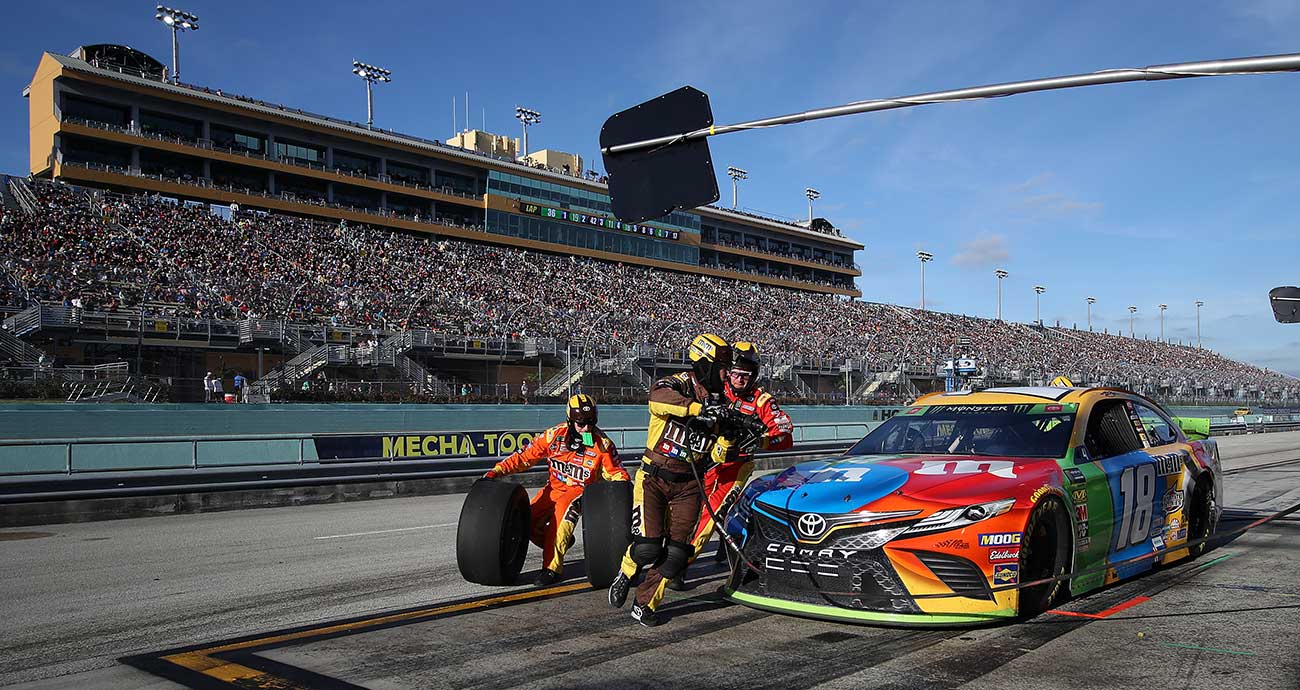
Along pit road, however, there was no seeming disadvantage. The No. 18 crew — Tyrrell, TJ Ford (jack), Camron Waugh (front tire changer), Joe Crossen (tire carrier) and Jeff Cordero (rear changer) — produced the fastest four-tire stop in 13 of the 36 races that season, six more than the next-best efforts of the No. 9 Hendrick Motorsports bunch. Three of those series-topping performances came in wins by Busch, including at Homestead, and the No. 18 crew improved upon their season-long average come playoff time.
“Maybe from a car/driver standpoint we were the underdogs, but I don’t think at any point in time, like the internal confidence and momentum that we had as a pit crew was like the polar opposite,” Tyrrell said. “We knew we were the tool that was going to make a difference, and so we were beyond excited. I don’t think that we used it as motivation, but like we had internal confidence throughout the course of that year, that just it didn’t matter what was going on. We knew we were going to be able to put them in contention.”
Some of that motivation stemmed from “Rowdy” himself.
“I think as a group, we all kind of followed KB’s lead in our preparation and how we ran the whole season, goal No. 1: win the championship. Everything else that happened between the Daytona 500 and Homestead was a stepping stone to reach that goal, and that’s how we all operated,” Stevens says. “Everybody tried to be at their absolute best once the playoffs started, with the goal of advancing through each round and getting into Homestead and winning that race. They worked toward that goal and made sure that mentally and physically and as a team preparation-wise over the wall that they were peaking at the right time.”
Chris Graythen | Getty Images
* * *
That year’s season-ending broadcast featured bite-sized interviews from each driver in the championship-eligible quartet, with vignettes shown in the pre-race run-up to the green flag. Busch’s outlook: “2015, we weren’t a favorite. We’re not a favorite this time. If we’re good enough, then we’ll be crowned at the end of the day.”
Busch’s callback to his first Cup Series crown was intentional. That season was abbreviated by injury after a crash in the season-opening O’Reilly Series race at Daytona that sidelined him for the first 11 races of 2015. The road back to competition and fine health was a long one, and NASCAR officials granted Busch a medical waiver to restore his postseason eligibility.
Though Busch powered to four-regular season wins in quick succession that summer and capped off his first title with his first Homestead victory, his accomplishment had its detractors. “There’s a lot of doubters from the first one,” Busch said later in the broadcast, “so obviously that would help that.” Four years later, it was a point that Busch had an opportunity to prove in the winner-take-all finale.
“He definitely wanted to show that he could do it without the waiver,” Janitz says. “If you saw what we all saw with how he worked so hard to get back, and then how focused and how hard they worked to get back in the championship fight in 2015, I think fans would appreciate it. I feel like and he felt like he was a worthy champion, but yeah, he wanted to prove it again. He had a lot of other shots, right? And so to be able to win one and not have people come up with something that questioned it, I guess. In his mind, he didn’t question it, but it was a big deal for him. …
“He definitely wanted to prove people wrong every day. It wasn’t just in that case, but yeah, he wanted to show that he could do it and people didn’t put an asterisk on it for him. I don’t think he felt it was an asterisk at all.”
Sean Gardner | Getty Images
Standing in between him were 267 laps and a formidable trio of fellow veterans, each of whom took turns leading in the early going. Stevens had set up Busch’s car knowing that the No. 18 Toyota might sacrifice an initial advantage with the hopes that it would come alive as the warm Florida sun set. It was a trade-off worth making, but the finale hinged on which teams would slip up first.
The first to crack was JGR’s No. 19 group, which mixed up its tires — right-sides bolted on the left and vice versa — during a Lap 121 stop, prompting Truex to make a second, unplanned trip down pit road. The No. 11 team faltered next, sealing off its grille with too much tape in a final-stage stop for service, forcing Hamlin to pit from third place with overheating issues and dimming his chances. Harvick and the No. 4 bunch were the last to fade, as his SHR crew opted for an off-sequence strategy of running long in the final stage, hoping for a caution flag that never came. The closest the No. 18 came to an unforced error happened early, with Busch nearly crossing too many pit boxes on his approach as he battled the afternoon sun’s glare over Turn 1.
“That doesn’t always happen,” Allen said. “I mean, I was hyper-aware of the mistakes that the other teams were making, and you almost get a sense of relief. You’re like, ‘OK, we just need a smooth day.'”
Busch & Co. found one on pit road. These were the days when five lug nuts were used to fasten wheels, and the No. 18 crew eclipsed the 12-second threshold twice in the Homestead finale. Across the whole series, sub-12s had only occurred seven times all season, and five of those lightning-fast stops belonged to the No. 18 crew, which had reason to celebrate after its final stop on Lap 211 helped Busch cycle back to the front.
“There was almost a second disparity between the pit stops we were putting Kyle out at and what like second and third place were doing,” Tyrrell says. “Like it wasn’t just a barely beat. It was like stomping the competition difference-wise. So, again, confidence just from stop to stop. We had a year’s worth of history that we knew we could do it. So, like I think going into it with confidence, but yeah, I mean, pure elation that you can do it when it counts and make a difference in a race.”
Busch crossed the line nearly four and a half seconds clear of Truex, the runner-up for the second consecutive year, and the celebration began in earnest. “Ol’ two-timer out there. Proud of you, buddy,” Stevens said over the No. 18 radio after the checkered flag.
Stevens smiles now when reflecting on the race-day execution. “I think we had the day that everybody was trying to have.”
Chris Graythen | Getty Images
* * *
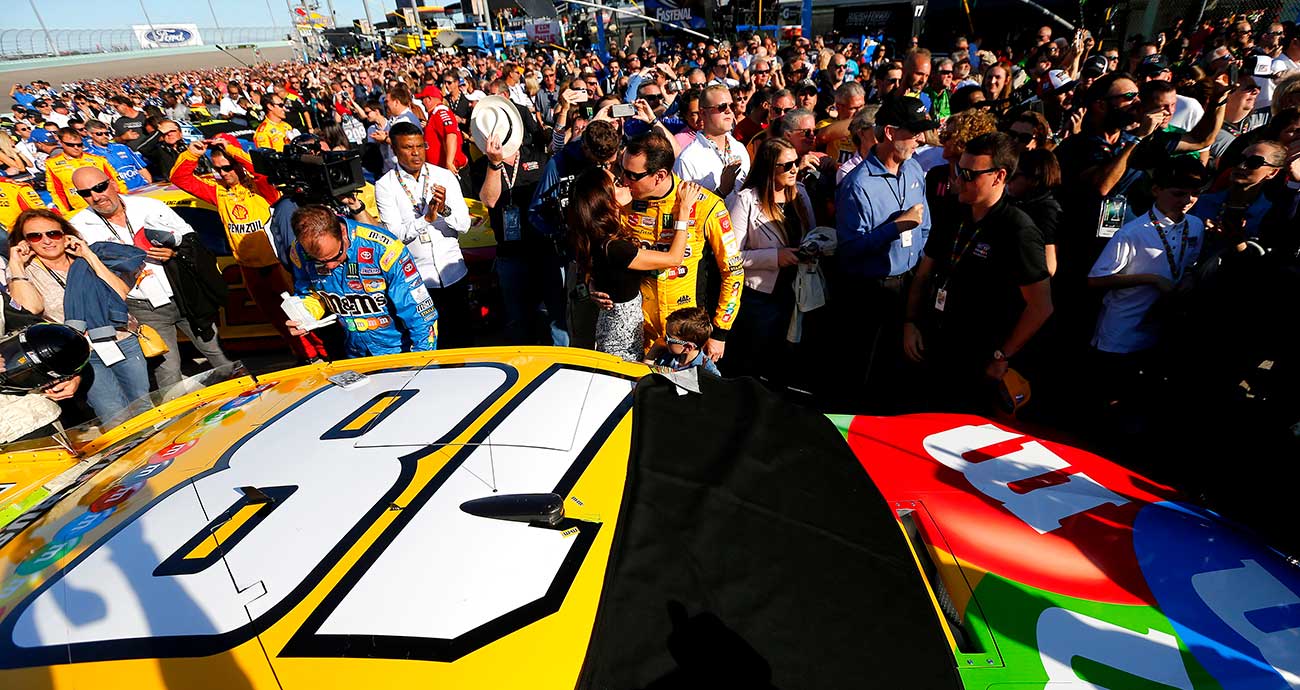
Knowing that his No. 18 ride would soon come under post-race inspection scrutiny, Kyle Busch turned to a NASCAR official and asked for permission. He wanted to give his son, Brexton, a passenger-seat ride around the 1.5-mile track before the confetti and champagne in Victory Lane, and was fearful of letting anyone else — even his own kin — touch the car.
Brexton Busch had been born just six months before his father’s first Cup Series title, but now as a wide-eyed 4-year-old, he was able to soak in and comprehend one of his family’s cherished moments.
“I think he really was proud and excited to be able to experience that not only with Samantha but with Brexton,” Janitz says. “You know, it kind of chokes you up a little bit now to think about it because that was the neatest part of that day even back then, and to think about obviously what’s transpired here in the last year. Those moments and what happened post-race and Brexton being able to get to ride in the car and do all those things after the race are even bigger, right? It’s even a bigger deal.”
Post-race was a mob scene. Allen recalled the sea of people and the difficulty he had in reaching his crew on the frontstretch. Tyrrell recalled pausing to take a breath and wait a beat, heeding the advice of Ford, the team’s jack man, to savor it all.
“You don’t know when, how, if you’re ever going to come across that scenario again, whether it’s a truck win with Kyle that season or whether it was a championship,” Tyrrell says, “and so I think just really taking a moment to reflect on everything and just try to take in all the sights, sounds, smells, like just to burn that into your memory, I guess, and just really enjoy the moment. So I feel like I did a good job at that time of just taking it all in and just observing the surroundings, and it’s a special memory that I have now.”
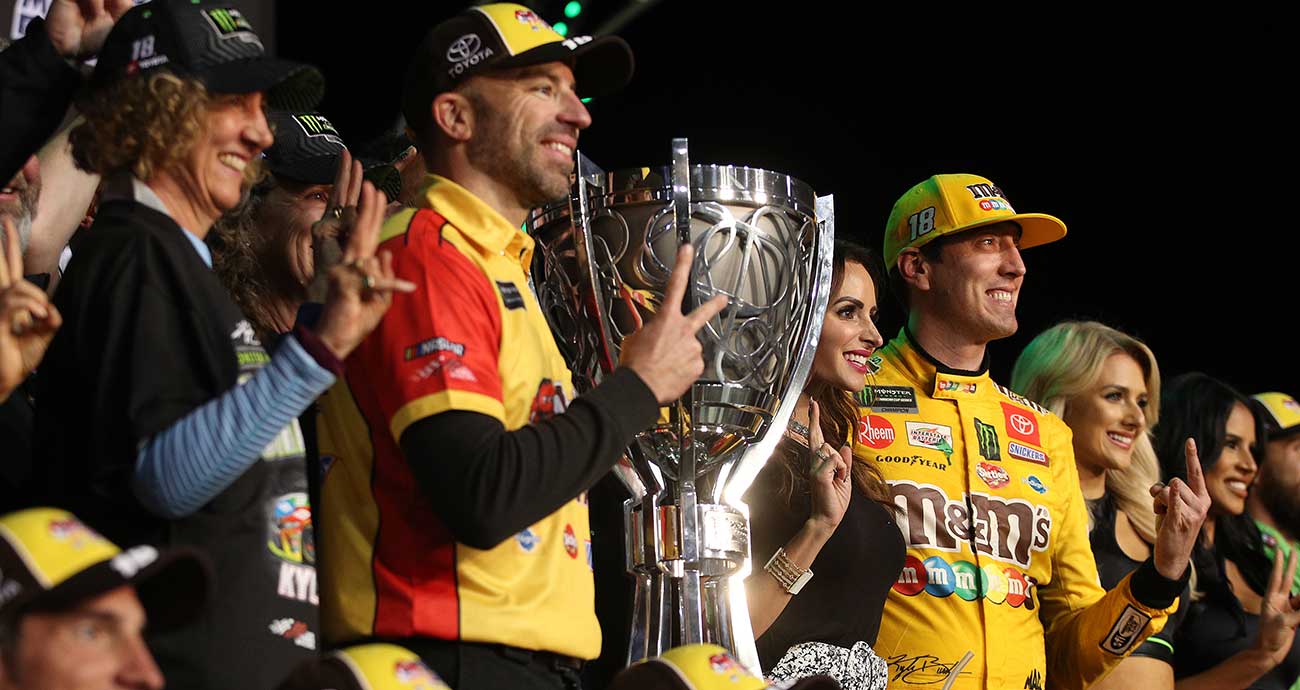
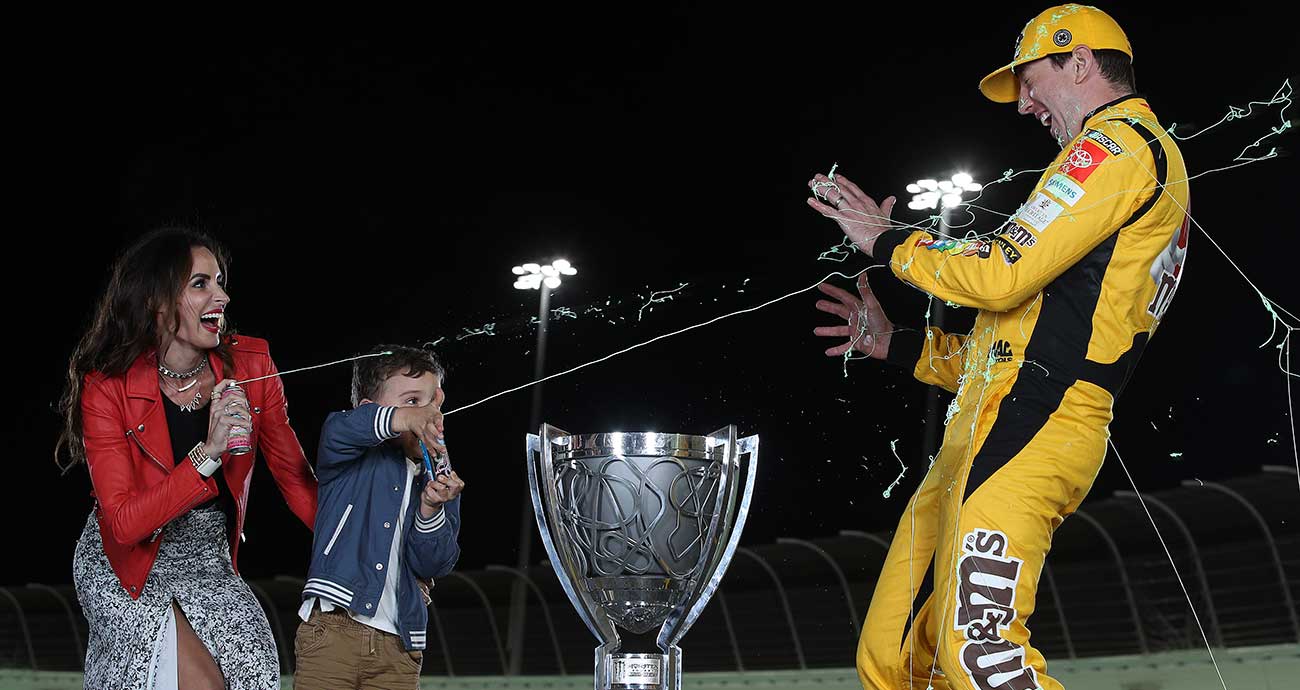
The lines in Janitz’s day planner didn’t run out until nearly 1 a.m. Monday morning, after all the post-race obligations. The Busch family posed for photos on the track with the Bill France Cup, with Brexton standing tall in the trophy’s basin and a silly-string battle providing a moment of levity for all three.
It wasn’t until later that the team was able to share a quieter moment away from the clamor, meeting outside Stevens’ bus for a smaller gathering over a cooler of beer. Janitz recalled Truex wheeling up on a golf cart to crash the celebration. “You son of a bitch!” Truex said with a wide grin, prompting a laugh and a shrug from the series’ newest champion.
“That was one of the funniest parts,” Janitz says. “Kyle was like, ‘yeah, sorry. It worked out for me today.’ … They had a lot of respect for each other, a ton of it. I think Martin came over, gave him a little bit of crap, and then obviously congratulated him. Martin’s a classy guy, and it was no surprise that he came over there.”
Jared C. Tilton | Getty Images
The discussion about Busch’s legacy has only gotten louder this year after his death from severe pneumonia and sepsis in May. The first-ballot call from the NASCAR Hall of Fame feels inevitable, and his second taste of the Cup Series crown is no small piece of his career resume.
Still, the reminders of how much more he accomplished becomes clearer just inside the front doors of Joe Gibbs Racing’s shop, where so many trophies with Busch’s name on them reside.
“Just like Superman powers out there, sometimes you just never doubted him,” Allen says. “You have an issue, he might be frustrated in the race car, never doubt him. Always in it. Just larger than life. It’s crazy to look back on his career and then to be lucky enough to be a part of so many wins and the championship is really cool.”
Homestead-Miami’s history of crowning champions will open its second stint this weekend, when Kyle Larson carries a sizable points lead over Bell and Hamlin for Sunday’s season-ending race (3 p.m. ET, NBC, HBO Max, MRN Radio, SiriusXM NASCAR Radio). It’s where Jimmie Johnson clinched all seven of his record-tying Cup titles, where Tony Stewart capped his thrilling 2011 Chase run in a tiebreaker over Carl Edwards, and where greats like Harvick, Truex, Matt Kenseth, Kurt Busch, Brad Keselowski and Joey Logano became champions for the first time.
As Homestead begins its next era this weekend, the memories will coincide with honoring Busch’s contributions to the track’s last championship chapter and the sport in general. For Janitz, Stevens and the rest of the No. 18 crew, those memories will include Busch’s pre-race calm, his unflinching focus and an intimate post-race toast shared by friends and colleagues.
“Just the sense of accomplishment and relief, that we went to battle like that all year, and we were able to put ourselves in position to pull it off,” Stevens says. “Just the hard work that we all put in and the belief in each other. For those couple hours, it’s just like they’re absolutely on top of the world.”
Spire Motorsports announced Tuesday that it suspended Carson Hocevar for Sunday’s 2026 NASCAR Cup Series Championship Race at Homestead-Miami Speedway (3 p.m. ET, NBC, HBO Max, MRN Radio, SiriusXM NASCAR Radio). Justin Haley will drive the No. 77 Chevrolet this weekend, the team stated.
Hocevar’s suspension came after an on-track incident with Austin Cindric last Sunday at Martinsville Speedway. SMT data showed the No. 77 Chevrolet driver brake-checking in front of Cindric’s No. 2 Team Penske Ford multiple times during Sunday’s Chase race presented by Mobil 1.
NASCAR also penalized Hocevar for his on-track actions Sunday. He was hit with a $100,000 fine and docked 25 driver points for behavioral conduct in Sections 4.4a of the NASCAR Rule Book: Penalty Options; Actions detrimental to stock-car racing. Per NASCAR, Hocevar has multiple violations of the code of conduct.
As a result of Hocevar brake-checking Cindric, the nose of Cindric’s car was crushed in, resulting in a DNF and 36th-place result for the No. 2 driver.
Spire Motorsports sent out the following in a statement:
“A decision like this has a lot of variables and a cascading effect across an organization like ours,” said Jeff Dickerson, co-owner of Spire Motorsports. “The easy thing would have been to leave this in NASCAR’s hands and let them decide what any penalty should be. To us, however, this isn’t about money or points. We believe in respect. Our integrity matters. This is the right decision for Spire Motorsports.
“Everyone here loves working with Carson, and we’ve enjoyed watching him thrive alongside our team. Sometimes the right decision for someone you care about hurts in the short term. The way Carson conducted himself at Martinsville doesn’t meet the standard we set for our drivers, team members or employees, and there are consequences for that. That doesn’t mean we don’t love him and support him.
“Racing at the Cup level is a privilege, and it comes with an expected level of professionalism from everyone who represents Spire Motorsports. We’ll go to Homestead united and compete as an organization. After that, we can get ready for Daytona in February with the right mindset to contend for a championship.”
“I just think it’s really important that I can be aggressive but still have some sort of respect for the garage, respect for my fellow competitors,” Hocevar said in the video. “I think they have the slogan of ‘protecting the shield’ in the NFL. In NASCAR, it’s actions detrimental. Ultimately, my move at Martinsville is not something that they’re going to put into a commercial. It’s not something I’m going to put into a highlight reel. It’s not something that anybody’s going to do ever that’s cool. It’s not cool to wreck somebody from behind. It’s just embarrassing, and it’s just disrespectful.”
Hocevar explained that he and the No. 77 team track the number of on-track incidents during the season, and he’s working to reduce that number “from 40 to maybe five or 10. That would be an upgrade or a better year or a cleaner year.”
Hocevar is expected to address the media at Homestead on Friday, and his press conference can be seen live at NASCAR.com/PressPass at 2:30 p.m. ET.
Goodyear is set to bring a familiar tire setup to Homestead-Miami Speedway for Sunday’s NASCAR Cup Series Championship Race (3 p.m. ET, NBC, HBO Max, MRN Radio, SiriusXM NASCAR Radio).
Although this particular setup has not been used at Homestead, the left- and right-side tires have been used 11 times during the 2026 season, including four times in The Chase presented by Mobil 1.
“As teams prepare for Championship Weekend’s return to Homestead, they have a year’s worth of mile-and-a-half data,” said Justin Fantozzi, Goodyear’s Director of Racing for the Americas. “The track’s variable banking and the rubber put down by our Goodyear Racing Eagles should give drivers multiple lanes to race around the track. We look forward to celebrating all three series’ champions.”
The O’Reilly Auto Parts Series will use the same tire compound introduced at Darlington Raceway in September – another high-wear intermediate oval similar to Homestead. Craftsman Truck Series teams haven’t used the left- and right-side tire combination yet, but both series have run each side of tires multiple times throughout the season.
It will be a unique weekend for Goodyear as the iconic blimp will fly a special livery over Homestead. The Goodyear Blimp will feature a special “Grand Theft Auto VI” scheme as activation for the highly anticipated game’s release later this month. The game is set in “Vice City,” a parody of Miami and the surrounding area.
Tire allotments for each team competing this weekend:
Cup Series: 12 total sets — 8 new sets for the race, 1 for qualifying, which transfers to the race and 3 for practice.
O’Reilly Auto Parts Series: 8 total sets — 5 new sets for the race, 1 for qualifying, which transfers to the race and 2 for practice.
Craftsman Truck Series: 7 total sets — 4 new sets for the race, 1 for qualifying, which transfers to the race and 2 for practice.
Another busy season of racing at North Carolina’s Hickory Motor Speedway concludes Saturday with the facility’s third and final crown-jewel event: the Fall Brawl.
The first edition of the Fall Brawl took place in 1998, when 2014 NASCAR Cup Series championship crew chief Rodney Childers took home a checkered flag. Nearly three decades later, many notable names have become Fall Brawl winners, among them being current Cup Series competitors Denny Hamlin and Josh Berry.
Headlining the evening is the 200-lap Late Model Stock feature, the longest race competitors in that division will experience at the track this year. The notoriously abrasive surface Hickory is known for presents its own challenge, as patience and tire conservation are going to be imperative through all 200 laps if drivers want to have a shot at the victory.
Hickory has its reputation as “The Birthplace of the NASCAR Stars” for a specific reason. Winning a championship or a big race there could be the catalyst toward sustainability at the top levels of stock-car racing. A pivotal opportunity awaits several drivers Saturday, one that could define their careers for years to come.
Below is everything to know ahead of the 2026 Fall Brawl at Hickory Motor Speedway.
Saturday will serve as the 29th edition of the Fall Brawl at Hickory Motor Speedway, a tradition that started in 1998. (Photo: Gardner Street Photography/Hickory Motor Speedway)
Fall Brawl at Hickory: 2026 TV Channel, live stream
Saturday’s Fall Brawl at Hickory Motor Speedway will be shown live on FloRacing, the official streaming home for all NASCAR Regional properties.
The race will not be shown on a traditional TV network.
Accompanying the Late Model Stocks at Hickory Motor Speedway for the Fall Brawl are the Limited Late Models, Mini Stocks and Street Stocks, along with a 100-lap feature for the Carolina Pro Late Model Series.
Each division gets one practice session starting at 1 p.m. ET. One practice concludes, qualifying will commence at 2:30 p.m. ET, with each field being set by the best time each competitor posts after two laps on track.
The championship race for the Mini Stocks kicks off the racing festivities at 4:15 p.m. ET. Immediately following Mini Stocks will be the 100-lap Limited Late Model feature, with the Late Model Stocks serving as the fourth event on the docket.
Wrapping up the night will be the Carolina Pro Late Model Series, with the Fall Brawl also serving as their championship race.
Below is the complete race-day schedule.
Saturday, November 7, 2026
(All times ET)
Time
Event
7:30 a.m.
Pit Sign In Opens
8:30 a.m.
Pit Gate Opens
11 a.m.-12:30 p.m.
Late Model Stock and Limited Late Model Inspection
12:30 p.m.
Drivers Meeting at frontstretch wall
1 p.m.
Practice (Limited Late Model from 1-1:20 p.m., Late Model Stock from 1:20-1:40 p.m., Street Stock from 1:40-1:50 p.m., Mini Stock from 1:50-2 p.m., Carolina Pro Late Model from 2-2:15 p.m.)
2:15 p.m.
Grandstands Open
2:30 p.m.
Qualifying (Street Stock-Mini Stock-Limited Late Model-Late Model Stock-Carolina Pro Late Model, 2 laps apiece)
To follow…
Autograph Session
4 p.m.
Pre-Race Ceremonies
4:15 p.m.
Fall Brawl — Mini Stock (25 Laps), Limited Late Model (100 Laps), Street Stock (30 Laps), Late Model Stock (200 Laps), Carolina Pro Late Model (100 Laps)
Entry list
The complete entry list for the 2026 Fall Brawl will be released later this week.
Analysis: Getting lapped by the teammate who eventually won the race isn’t exactly the ideal prelude to a championship celebration, but Larson still walked out of Martinsville feeling plenty good. Larson and crew chief Cliff Daniels gambled on staying out through Stage 1 at Martinsville, and William Byron promptly drove past the No. 5 on fresh tires. Larson eventually got his lap back, scratched out a ninth-place finish and watched the two drivers chasing him in points manage only sixth and 10th. It was hardly a convincing afternoon — NASCAR Insights rated him just 20th in speed — but the championship lead remains a commanding 67 points with one race left. The defending champion now returns to Homestead-Miami Speedway, where he won in March 2025, needing to score just nine points to clinch his third title regardless of what anybody else does. Quite the position for a driver who couldn’t buy a victory for 51 consecutive races earlier this season, and one of the greatest in-season turnarounds the sport’s ever seen.
Analysis: Hamlin started on the pole at his best track, then made it all the way to Turn 3 on Lap 3 before things started going sideways. A missed shift surrendered the lead to teammate Ty Gibbs, and a strategy call to stay on old tires through the opening stage ultimately backfired as the No. 11 dropped through the field. Contact involving Joey Logano and Bell later sent Hamlin spinning, though he eventually recovered to finish sixth. After leading 292 laps there in the spring and entering Sunday with six Martinsville victories and the 5 car not at its best, this was about as disappointing a way to gain three points on Larson as one could imagine. Hamlin’s three Homestead wins are certainly a reason to expect him up front this weekend. They’re not, by themselves, a solution to a 70-point championship deficit.
Analysis: Bell has managed to become Larson’s closest championship challenger while spending much of the past two weeks making life unnecessarily difficult for himself. The Talladega pit-road spin was bad enough, but Martinsville brought a speeding penalty during a green-flag stop, followed by an incident involving Logano and teammate Hamlin that sent both Joe Gibbs Racing cars spinning. Somehow, Bell still scored points in both stages, finished 10th and moved ahead of Hamlin into second in the standings. He won at Homestead in 2023, so there’s at least a reasonable track-history argument for the No. 20 making some noise Sunday. But considering he was only five points behind Larson entering Talladega, it’s a pretty remarkable development that Bell now finds himself 67 back with one shot remaining.
Analysis: Winning consecutive races at Las Vegas and Charlotte seemed like a pretty effective way to announce yourself as a serious championship contender. Briscoe did exactly that, yet he’ll arrive at Homestead mathematically eliminated after following those victories with 33rd at Talladega and 14th at Martinsville. The latter wasn’t particularly encouraging even without the misfortune that defined Talladega, with the No. 19 ranking 19th in speed despite another strong afternoon from the series’ top-rated pit crew. It’s been an undeniably impressive season for Briscoe, with three victories and a legitimate place among NASCAR’s elite, but the last two weeks have exposed just how difficult it is to sustain that kind of run. At least the accomplishments that preceded them aren’t going anywhere.
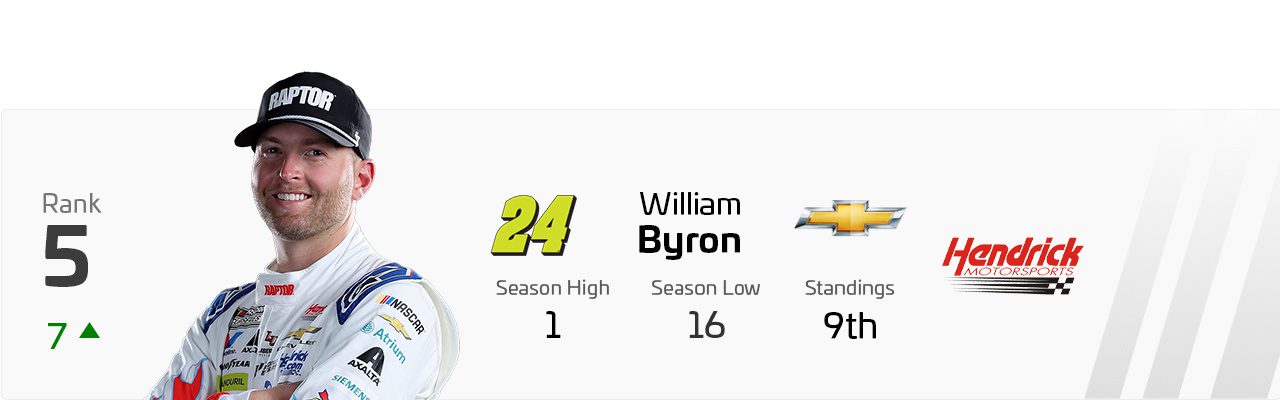
Analysis: By the time Martinsville reached Lap 303, Byron had led more laps Sunday than he had in the first 34 races of 2026 combined. He wasn’t even close to finished, either. After an early green-flag pit stop helped position the No. 24 to take control, Byron eventually led 362 of 500 laps, swept the stages and cruised to his fourth Martinsville victory, ending a 35-race winless drought dating to the same event last fall. His runner-up finish at Talladega and victory Sunday are now the two best results of a season that had been frustratingly ordinary by Byron’s standards. And while the championship is out of reach, the No. 24 certainly picked an interesting time to start looking like the dominant machine we’d expected to see all year. If nothing else, Homestead suddenly has another very credible contender for the trophy, and the arrow is still pointing up for 2027.
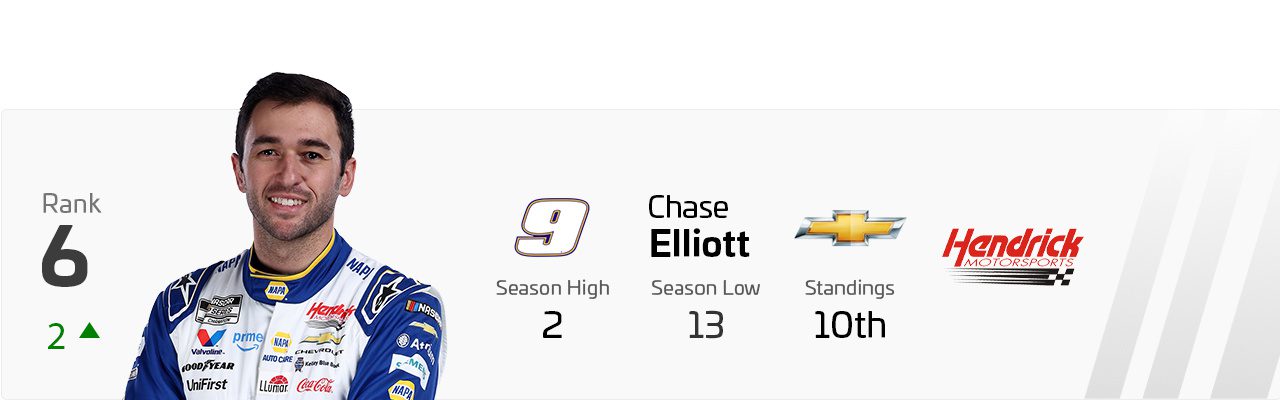
Analysis: Elliott has finished in the top four at Martinsville in six consecutive starts, including a victory this spring and Sunday’s runner-up. That’s a pretty tremendous stretch at one of the sport’s most demanding tracks, particularly considering how difficult it can be to pass there. He was second in speed Sunday, his pit crew ranked first and yet he still never led a lap. That’s what happens when your teammate has a car as thoroughly dominant as Byron’s was, and with No. 24’s consecutive-season win streak at stake. Elliott’s two-win season of his own has occasionally gotten lost in the larger Hendrick Motorsports conversation, especially with Larson about to collect another championship, but the No. 9 has hardly been an afterthought on the track lately.
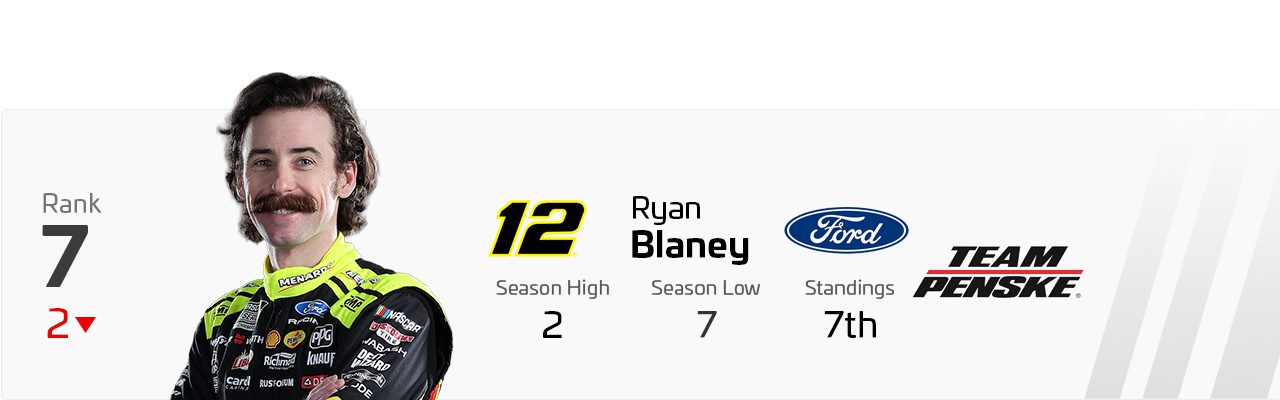
Analysis: Blaney was running eighth at Martinsville when he drove into the back of Josh Berry on Lap 252, heavily damaging the No. 12 and ultimately winding up 59 laps down in 35th. That followed a 38th-place finish at Talladega, a particularly miserable sequence for a driver who had strung together four consecutive top fives before the superspeedway trip. The absurd part is that NASCAR Insights still ranks Blaney first in season-long speed, passing and second in defense, and he’s no longer in title contention. And if that discrepancy seems familiar, Homestead in March 2025 was a bit of a microcosm of how much of this year went for him: Blaney led a race-high 124 laps before an engine failure ended his afternoon.
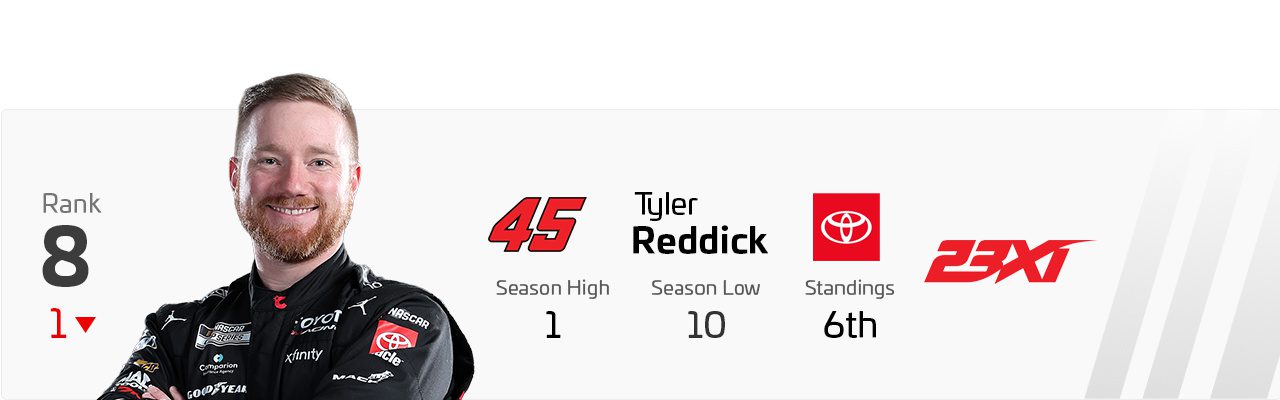
Analysis: Homestead is the site of one of the most spectacular moments of Reddick’s Cup career, when he passed Hamlin and Blaney on the final lap in 2024 to steal the victory and advance to the Championship 4. Two years later, he returns with six wins — more than anybody else this season — yet absolutely no chance of claiming the championship. That’s a pretty strange combination, though it accurately reflects a year in which the No. 45’s early dominance eventually gave way to a much less convincing second half before a minor Chase resurgence. His 12th-place finish at Martinsville wasn’t especially memorable, with the car ranking 16th in speed despite Reddick’s second-place passing rating. But if there’s one track where he might be able to conjure up something special to close on a good note, we’ve already seen what he can do at this one.
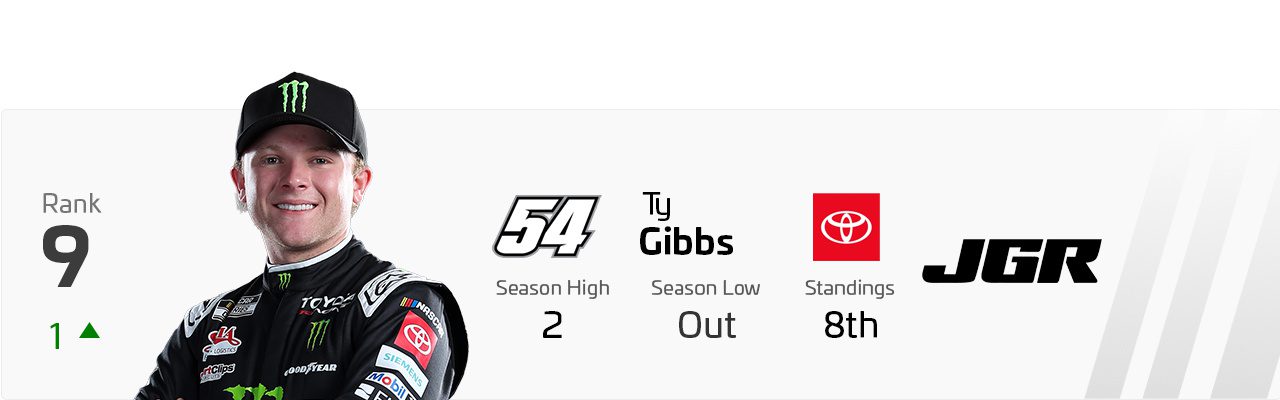
Analysis: While the championship attention at Joe Gibbs Racing remained primarily on Hamlin and Bell, it was Gibbs who delivered the organization’s best performance at Martinsville. He took advantage of Hamlin’s missed shift to grab the lead on Lap 3, paced the field for 44 circuits overall and scored 17 stage points before finishing third. NASCAR Insights rated him first in passing and third in speed, and his fourth-place finish there in March means he’s now recorded top fives in both Martinsville races this season. The two-trophy regular season established Gibbs as a legitimate Cup winner, but the past few months have certainly tested his consistency. Sunday, though, was a pretty convincing reminder that the No. 54 can be one of the best cars in the field on short tracks.
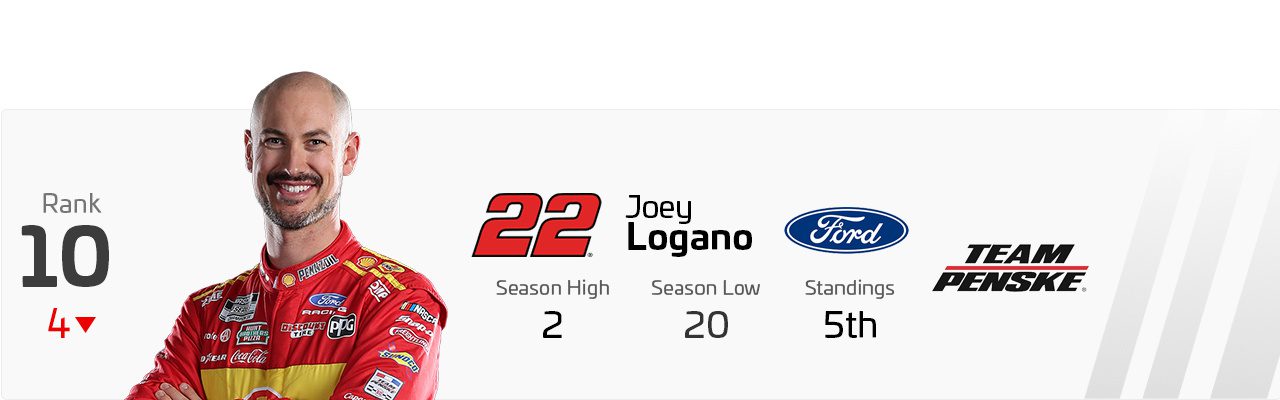
Analysis: Logano managed to get involved in a three-car spin, deal with a loose left-front wheel and leave pit road with a wedge wrench still in the window — all in the same Martinsville race. And this was just a week after flipping at Talladega. The particularly aggravating part for the three-time champion is that the car has been better than the results suggest but all the calamity took him out of contention. Logano ranked seventh in speed and first on restarts Sunday, was running third before the green-flag pit cycle that produced the wheel issue and ultimately finished 18th. Add in the Phoenix stage sweep and Talladega Stage 2 victory, and there’s plenty of evidence that Team Penske has found something recently. The execution, however, hasn’t been quite so convincing.
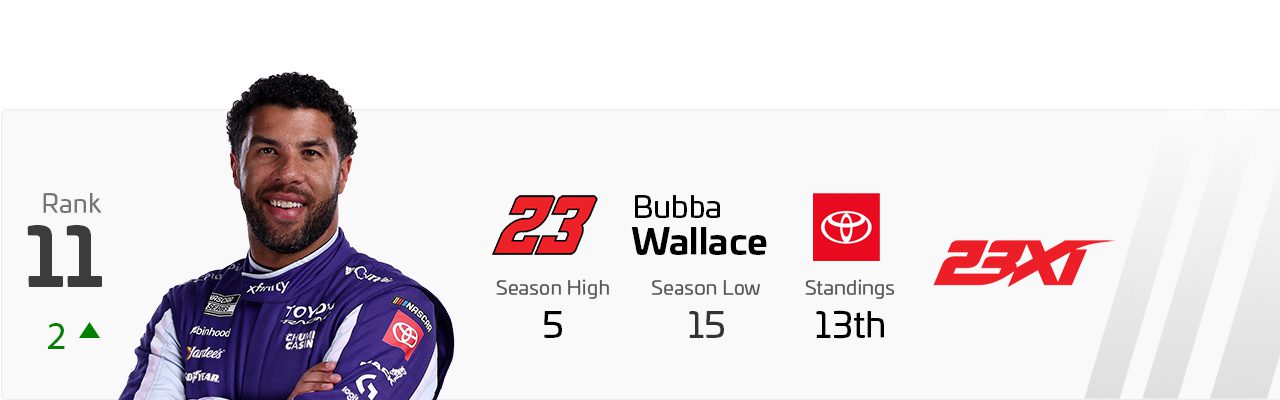
Analysis: One of the more encouraging details buried in Wallace’s recent results is that NASCAR Insights ranks him third in defense and ninth in speed for the season, which at this point is a tremendous sample size. His eighth-place finish at Martinsville offered a cleaner demonstration of that competitiveness after several races in which accidents or mistakes left the No. 23 with considerably less than it showed it was capable of. He also finished sixth in Stage 2 and had the fifth-rated pit crew Sunday. Homestead could be especially interesting: Wallace led 56 laps there in March 2025 before finishing third behind Larson and Alex Bowman. With the championship pressure gone and a car that has shown legitimate speed lately, he has an opportunity to finish 2026 on a much more satisfying note.
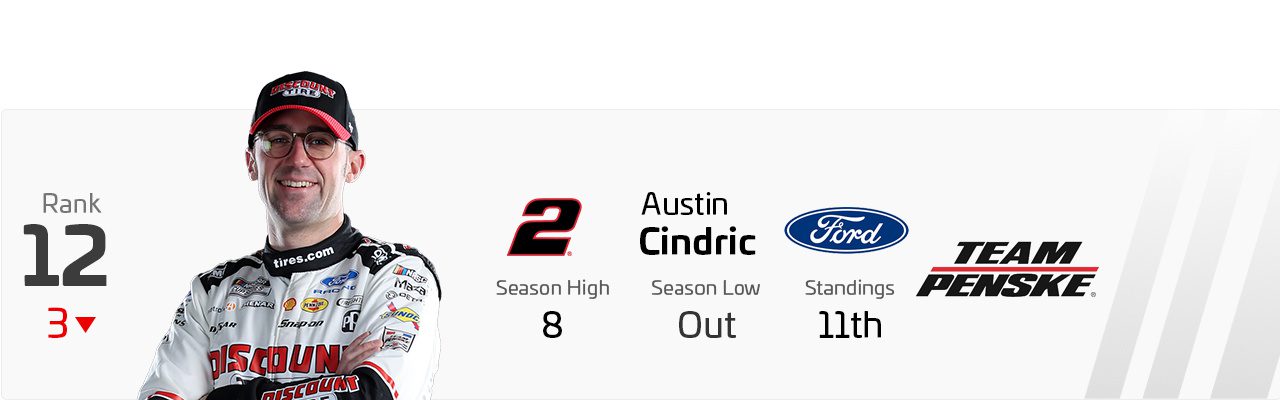
Analysis: Cindric’s Martinsville finishing position is almost completely disconnected from how the No. 2 actually performed. He qualified fourth, finished seventh in Stage 1 and ranked sixth in speed before contact with Carson Hocevar on Lap 210 badly damaged the front end and eventually sent him to the garage. The result was 36th, 278 laps down, following another wreck-marred afternoon at Talladega. After looking so strong at Kansas and Vegas, Cindric has now gone four consecutive races without a top 10. Not exactly the kind of return Team Penske had in mind for its late-season improvement, but Homestead’s worn-out intermediate layout offers one final opportunity to put that newfound speed to better use.
Analysis: For the second consecutive week, Preece was one of the more interesting drivers during the opening stage. He finished second in the first segment at Talladega after helping RFK Racing execute its unusual three-car breakaway, then led 41 laps and finished third in Stage 1 at Martinsville. Unfortunately, Sunday’s promising run ended when a right-rear wheel failure sent the No. 60 spinning from fifth on Lap 225. He eventually finished 23rd, with his pit crew ranking 36th of 37 teams for the afternoon. There was some genuine speed here, and Preece has been showing more of it than the recent finishes suggest. A broken wheel is a pretty lousy way to reward that progress, though.
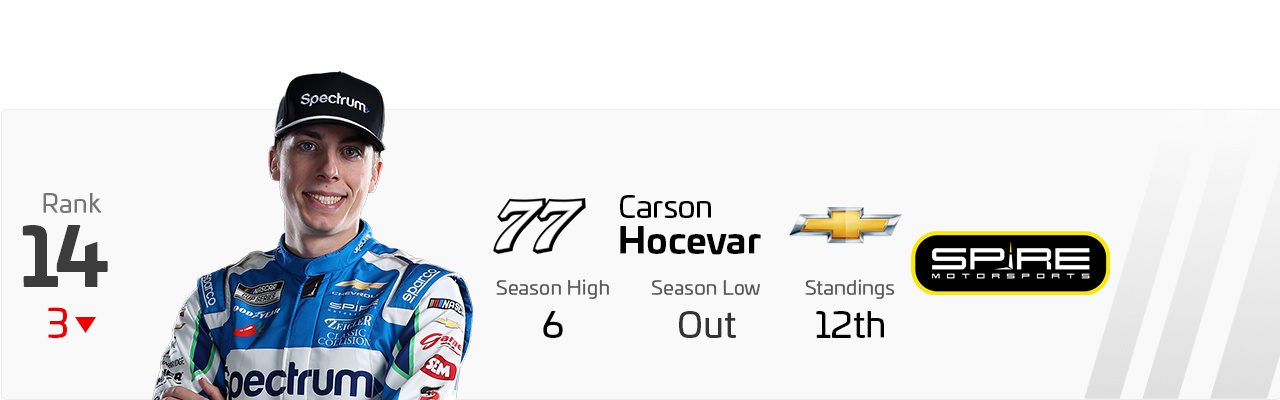
Analysis: There’s a lot of talent in the No. 77, but Martinsville was another reminder that Hocevar and Co. still have plenty of sharpening up to do. A 16-second green-flag pit stop came from difficulty removing the right-rear wheel, and the afternoon also included a spin in Turn 4 and questionable contact with Cindric that badly damaged the No. 2. Hocevar finished 21st, following yet another super-encouraging Talladega run with a rather forgettable trip to Virginia. More concerning is the pit-road picture: 14 crew mistakes and 112 net positions lost this season — the second-worst total in the series. For a driver who’s already demonstrated winning ability, that’s an awful lot of ground to keep giving away.
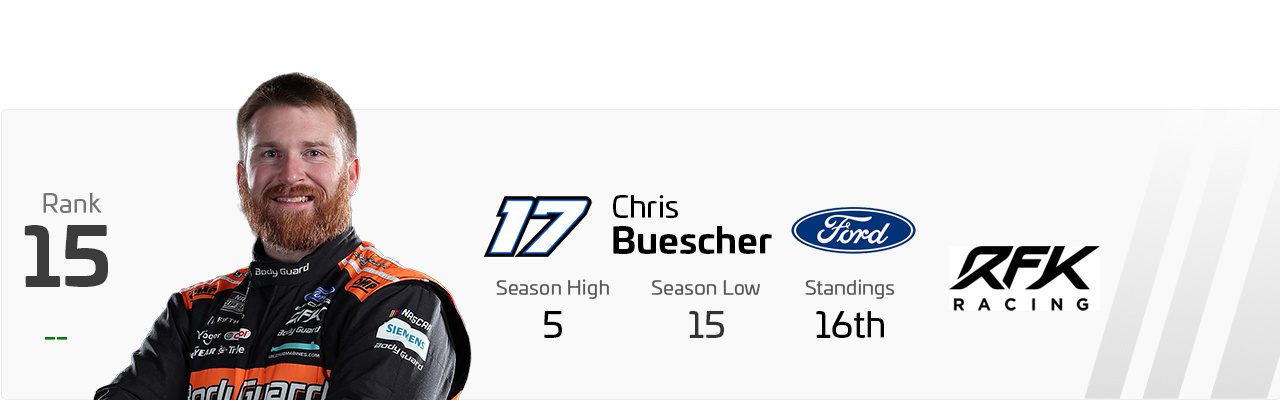
Analysis: Talladega at least gave Buescher an interesting story to tell, with 53 laps led, a stage victory and that remarkable RFK Racing strategy before the late wreck ruined his afternoon, but Martinsville offered considerably less to discuss. He started 18th, finished 24th, scored no stage points and never looked particularly threatening despite ranking an above-average 13th in speed. His pit crew continues to perform exceptionally well, sitting fourth in the series for the season, but even that hasn’t been enough to produce the kind of results Buescher was regularly delivering earlier in the year. A sixth-place finish at Homestead in March 2025 is at least a more promising reference point for the finale.
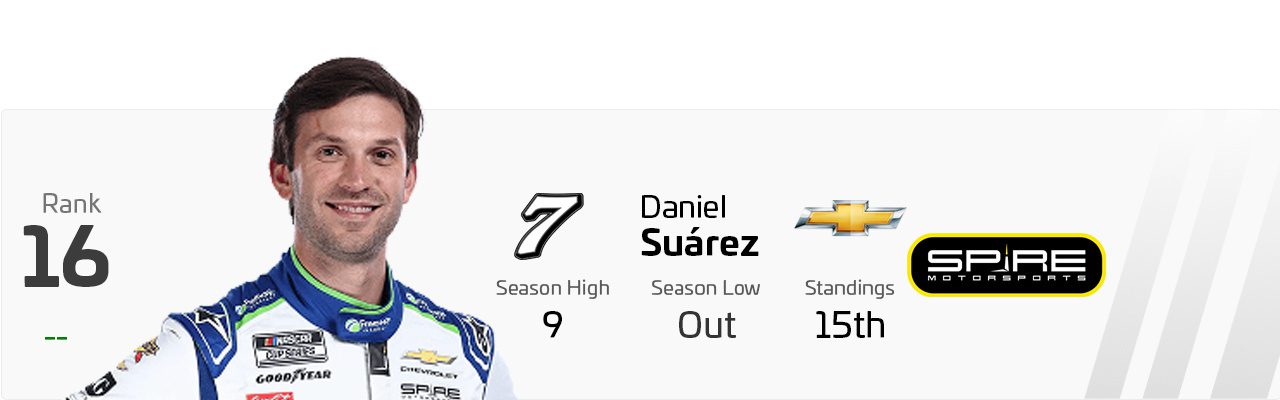
Analysis: Only eight cars ranked worse than Suárez in speed at Martinsville, where the No. 7 started 24th, finished 28th and failed to score a stage point. There wasn’t a mechanical failure or a major accident to explain away the result, either. It was simply another afternoon without much competitive pace, continuing a Chase that has rarely resembled the season Suárez envisioned after a signature Coca-Cola 600 win in May. That victory was memorable enough to stand on its own, but the overall performance since then has been difficult to comprehend.
Dodge, readying to return to NASCAR Cup Series racing in the 2027 season, can boast a long list of some of the most successful drivers in stock car racing, despite a history that has been interrupted over the decades.
To name a handful: Richard Petty. David Pearson. Bobby Isaac. Lee Petty. Bill Elliott. Rusty Wallace. Bobby Allison. Brad Keselowski. Kurt Busch.
Although Earnhardt would make his mark — and his money — driving Chevrolets, his first start in a Cup race came May 25, 1975, in the World 600 at Charlotte Motor Speedway in a Dodge. It was a curious choice for a debut, the 600 being one of stock car racing’s most physically demanding races. But the car, a hand-me-down of sorts owned by Ed Negre, was available, and Earnhardt jumped. He finished 22nd, 45 laps behind winner Richard Petty (in a Dodge, by the way), and was so beaten down by the experience that he pitted once simply to get a drink of water.
Still, Earnhardt, at 24 years old, started one of the most successful careers in the sport in a Dodge.
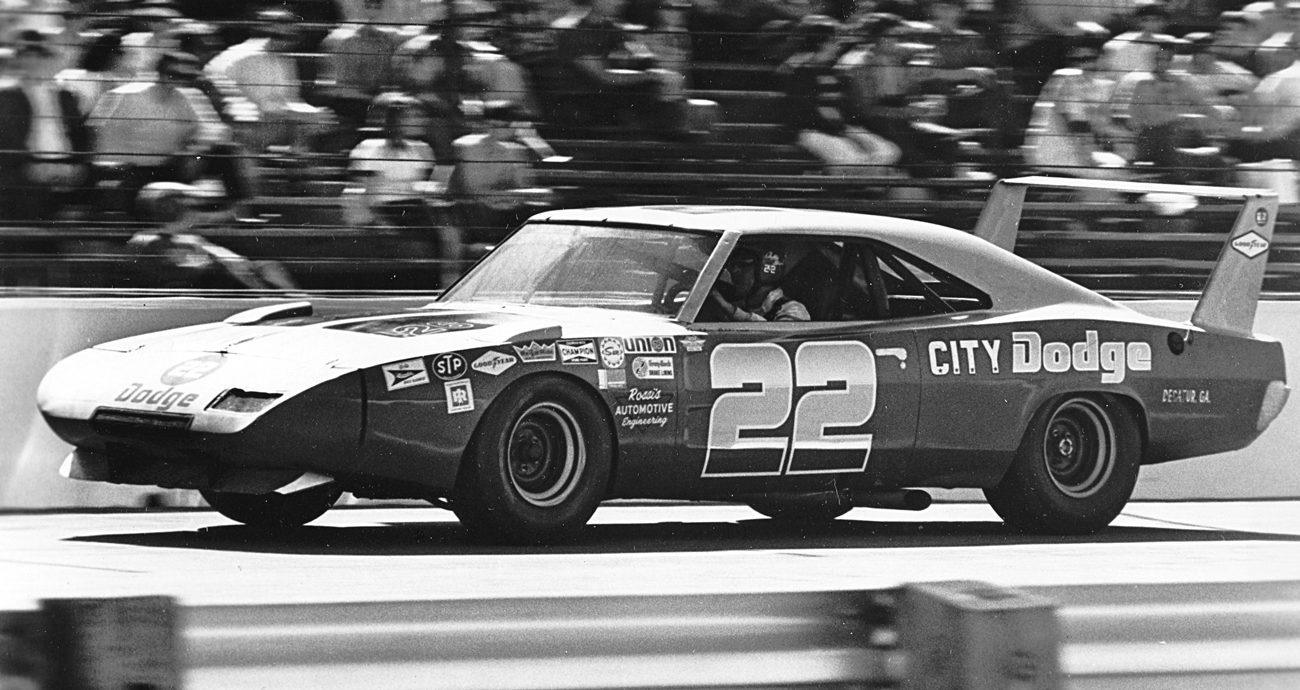
Across the years, with a few pauses, the Dodge brand — from Coronets to Chargers to Road Runners to Intrepids — has been a standout in NASCAR circles. Dodge drivers scored Cup championships and race wins from the sport’s hardscrabble beginnings into the 21st century, although the car manufacturer’s history in NASCAR has been one of both major success and difficult departures. For big chunks of years and for numerous reasons, Dodge has been absent from NASCAR racing lanes.
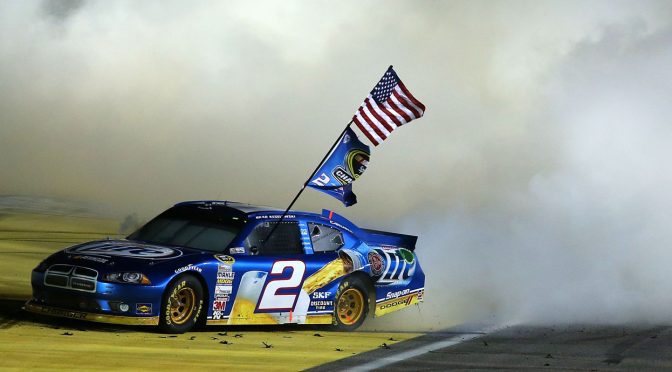
The 2027 return to stock car racing’s top series follows by a quarter-century a similar decision to put Dodges in Cup in 2001, a move that ultimately gave the car builder its most recent Cup Series championship, scored by driver Brad Keselowski and Team Penske in 2012. After that title, the Penske organization switched to Ford for the 2013 season, and Dodge closed the garage doors on its Cup program again.
Keselowski scored the most recent Cup race win for Dodge on Sept. 30, 2012 at Dover Motor Speedway on his way to the series title.
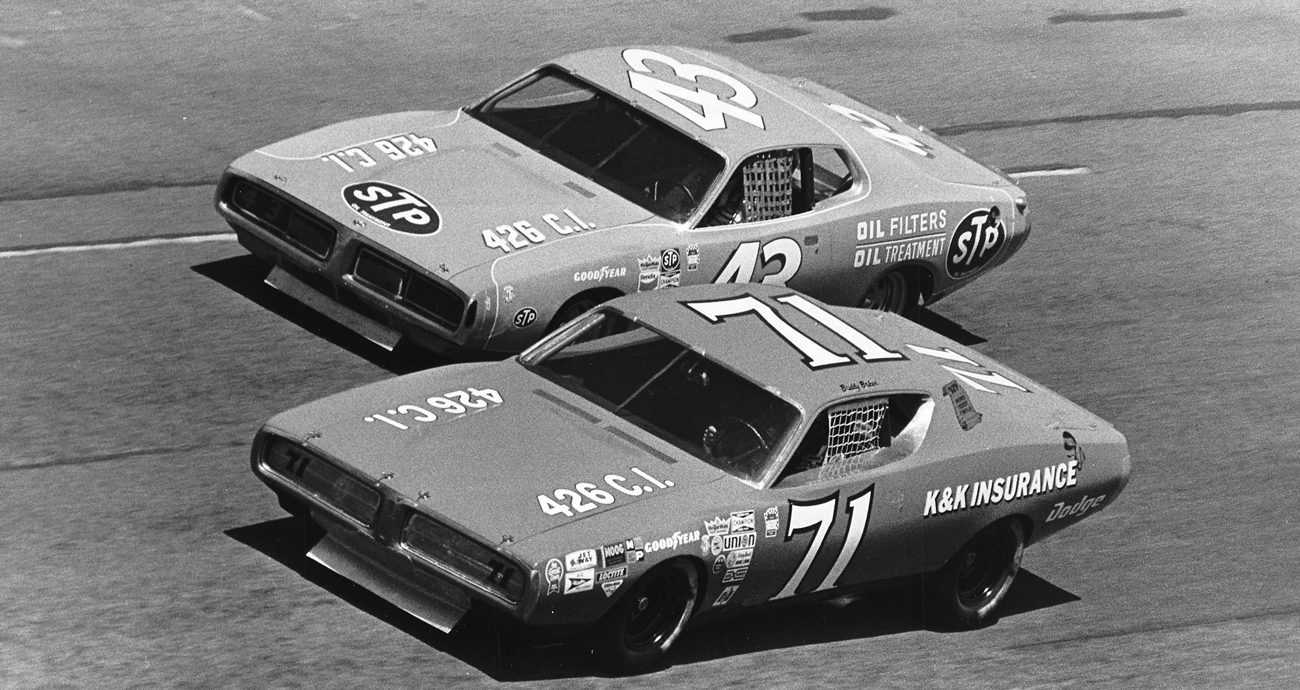
The most prominent Dodge pairing over the years was Petty Enterprises’ 1970s run with Richard Petty at the wheel of Chargers. Petty made the bright red and Petty blue Charger, which created a silhouette that defined the modern race car, a familiar presence with win after win across the country and Cup Series championships in 1974 and 1975. Although Petty’s years racing Chrysler products often placed him in Plymouths, he carried the Dodge insignia to success from big tracks to small.
As is the case with so many other records in NASCAR, Petty owns the most Dodge Cup driver titles with two. David Pearson, driving Cotton Owens Garage Dodges, won the car builder’s first driver title in 1966. Bobby Isaac won the championship in 1970 in the driver seats of very fast Nord Kraufkopf-owned, Harry Hyde-built Dodges, scoring 10 race wins on short tracks. Keselowski won the title in 2012 to end a 37-year stretch without a Dodge championship.
NASCAR Research & Archives Center | Getty Images
Lee Petty, Richard’s father and the patriarch of the Petty racing family, scored Dodge’s first Cup win Feb. 1, 1953 in the season-opening race at Palm Beach Speedway, a half-mile dirt track in West Palm Beach, Florida. Petty led 152 of 200 laps and won by two laps.
Lee Petty won the series championship in 1954, but that title was credited to Chrysler, not Dodge.
Pearson thus became Dodge’s first Cup champion in 1966, dominating the short tracks, scoring 15 victories and easily finishing atop the point standings. It was a hometown sort of championship, Pearson and team owner Cotton Owens both living in Spartanburg, South Carolina. The season underscored Pearson’s talents and was the next big step in a career that led to three Cup championships and 105 race wins.
In the 1960s, Chrysler’s racing program became a showcase for the manufacturer’s powerful Hemi engines. The introduction in 1964 of a monster Hemi contributed to engine wars that rattled NASCAR’s top series, dramatically increased speeds at the biggest tracks and kept engine builders working overtime to find more horsepower.
“That Hemi engine had a tremendous amount of torque,” said Dodge driver Dave Marcis. “If you could hook your car up and make the chassis work, the engine could accept anything you could give it. It would certainly move you forward. And if it wasn’t hooked up, you could damn sure spin the tires off of it, too.”
Dodge logged another major accomplishment in March 1970 when Buddy Baker drove a winged Dodge Charger Daytona at an average speed of 200.447 miles per hour in testing at the new 2.66-mile Talladega Superspeedway in Alabama. Baker’s lap was the first measured at more than 200 mph by a stock car on a closed course.
The Dodge Charger Daytona and its sister car, the Plymouth Superbird, are among the most famous, admired cars in NASCAR history. The cars had a needle nose and a huge, intimidating rear wing, and they flew through the air in impressive style. Race fans and car aficionados immediately wanted to own one.
“It was almost impossible to spin the thing out,” said Richard Petty, who drove the Superbird version. “It was so stable. It took us probably half a year to make it turn right. It was a fun car to drive, so much different from anything else. We had been running stock cars. This looked like a race car.”
The winged cars were so aerodynamically superior and race-track stable that they produced lap speeds at Darlington Raceway a full three seconds faster than the previous Dodge entries. The wings could be tilted at various angles. Eventually, the cars proved to be too fast, and NASCAR rules changes legislated them out of existence.
NASCAR Research & Archives Center | Getty ImagesMarcis enjoyed success in the Kraufkopf-Hyde Dodges in the 1975-76 seasons, winning races at Martinsville, Richmond, Talladega and Atlanta. Hyde, a longtime resident of NASCAR garages, was front and center with innovations and old-school knowledge that put more power in the bright red cars.
“In those days, the mechanics and crew chiefs had a tremendous amount of input into a race car as far as suspension, engine, everything,” Marcis said. “Harry put in all the time for that. I guess he just had an attitude, and he worked hard at trying to be up front and have the fastest race car. He used to go to bed at 6:30 at night, and he’d be the first one at the track the next day, working on the race car, trying to do something different, making the car a little faster in practice.”
Despite Petty’s run of success with the Charger model, his strength declined later in the 1970s with other Dodge models, eventually leading stock car racing’s king to abandon Dodge for Chevrolet in the middle of the 1978 season.
Dodge faded away again.
NASCAR enjoyed some of its best years in the 1990s, filling grandstands across the country and attracting impressive television viewership numbers. The sport’s rising popularity was among the factors that led to Dodge returning to NASCAR’s top series in 2001.
Daimler/Chrysler confirmed in October 1999 in media events in New York City and Talladega, Alabama, that it would return to NASCAR with its Dodge brand for the 2001 season.
Dodge’s rebound attracted some heavy hitters.
Richard Petty, with so many career connections to the manufacturer, brought his team along.
Ray Evernham, who had been ultra-successful as a crew chief for driver Jeff Gordon at Hendrick Motorsports, built a new team for the Dodge return and was named to manage the overall Dodge effort, calling it “the opportunity of a lifetime.”
Veteran driver and fan favorite Bill Elliott joined Evernham, the new team owner calling Elliott “the perfect guy to be the cornerstone of our new team.” Sterling Marlin, Ryan Newman and Kasey Kahne joined Dodge and won races. In 2008, Newman drove a Penske Dodge to victory in the Daytona 500. Team owners Roger Penske and Chip Ganassi joined the group, along with Bill Davis, whose team would handle much of the developmental work for Dodge.
The 2012 season marked both the pinnacle and the end of the latest Dodge ride. Keselowski won races at Bristol, Talladega, Kentucky, Chicago and Dover and was either first or second in the point standings for the final 11 races of the year. He finished 15th in the season-ender at Homestead-Miami Speedway, good enough to win the championship.
Keselowski, one of the sport’s rising stars, enjoyed a bizarre sort of celebration, guzzling celebratory beers in Victory Lane even as Dodge was concluding its most recent ride with NASCAR.