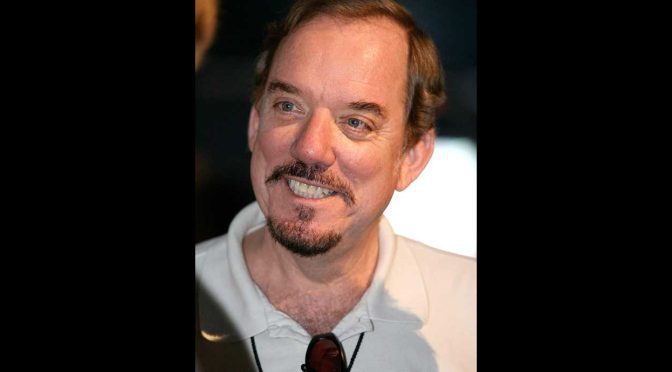
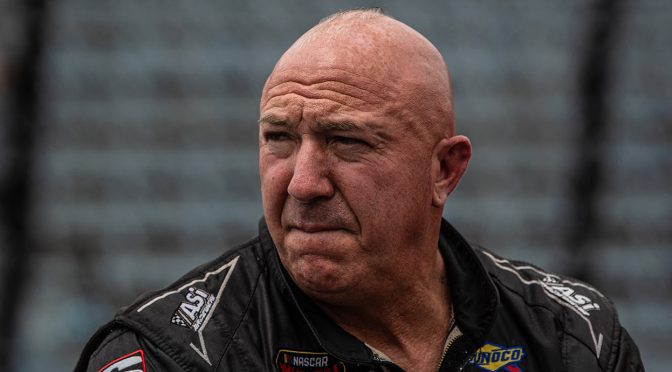
Steve Waid, an authoritative voice and storyteller in stock-car racing journalism across multiple eras of the sport, has died. He was 77.
Waid’s longtime colleague Rick Houston said that the veteran writer had died Monday afternoon after a lengthy battle with cancer. Waid was a recipient of the NASCAR Hall of Fame’s Squier-Hall Award for NASCAR Media Excellence, and was elected as a member of the National Motorsports Press Association (NMPA) Hall of Fame in 2014.
“For decades, Steve Waid was one of the most respected and trusted voices in NASCAR journalism,” NASCAR released in a statement. “He chronicled the sport with passion, integrity and an unmatched appreciation for its people, history and traditions. Through his work at NASCAR Scene, NASCAR Illustrated and several other outlets, Steve’s storytelling helped generations of fans better understand NASCAR and the personalities who shaped it. Deservedly, Steve was recognized for his exemplary work in 2019 as the recipient of the NASCAR Hall of Fame’s Squier-Hall Award for NASCAR Media Excellence, the culmination of a career that garnered him the admiration of competitors, industry members and fellow media professionals alike. NASCAR extends its deepest condolences to Steve’s family, friends and longtime readers.”
Waid’s career launched as a freshly minted Old Dominion University graduate in 1970, when he marched into the office of the Martinsville (Va.) Bulletin wearing a T-shirt and jeans to ask, “Do you guys need a sportswriter?” The answer was a yes from the paper’s managing editor, Waid recalled to The Roanoke (Va.) Times in 2019, and he was hired in 20 minutes’ time.
Waid covered a variety of sports, but his brief Martinsville tenure quickly introduced him to activities at Martinsville Speedway during some of NASCAR’s golden years. Longtime track public-relations director Dick Thompson helped Waid get his footing, and soon, he was accepted as a regular in the garage.
Waid later spent a decade with the Roanoke Times & World News, covering the stock-car circuit during the season and the town’s minor-league hockey team in the winter. In the early 1980s, he made a calculated risk with his career by joining Grand National Scene, then a fledgling outfit in Concord, North Carolina, with a circulation of about 9,000 readers.
“I walked into what was the converted country store of an office,” Waid told the Roanoke Times. “I had a metal desk, a chicken-wire in-basket and a Royal typewriter. That was my workspace, and I had left a newspaper with company cars, a marble building, expense accounts — everything like that. I said, ‘What the heck have I done?’ ”
But the management at Scene made good on their promise of growth, and Waid was a key contributor to the publication’s rise to a subscriber count that eventually reached six figures. If the sport was gospel, Scene served as the biblical texts — impressively delivered weekly in an era when sports-news saturation was far from the rampant digital heights of today.
Waid helped spread that gospel for nearly 30 years until his retirement from full-time reporting when Scene ceased publication in 2010. During that time, he served as NMPA president for 12 years and was honored with the association’s George Cunningham Writer of the Year Award in 1989, the same year he received the American Motorsports Media Award of Excellence. He also co-authored — with fellow legend Tom Higgins — a brilliant biography about the life and career of Hall of Famer Junior Johnson in 1999.
Waid was recognized as the eighth recipient of the NASCAR Hall’s Squier-Hall Award in 2019. The previous summer, he was informed of his selection by NASCAR vice chairman Mike Helton.
“I was so stunned that I asked him to repeat it, and he did!” Waid said. “It was almost overwhelming, you know? I’ve put 40 years into this, and a little bit more, and all I ever wanted to do was retire. But now this.”
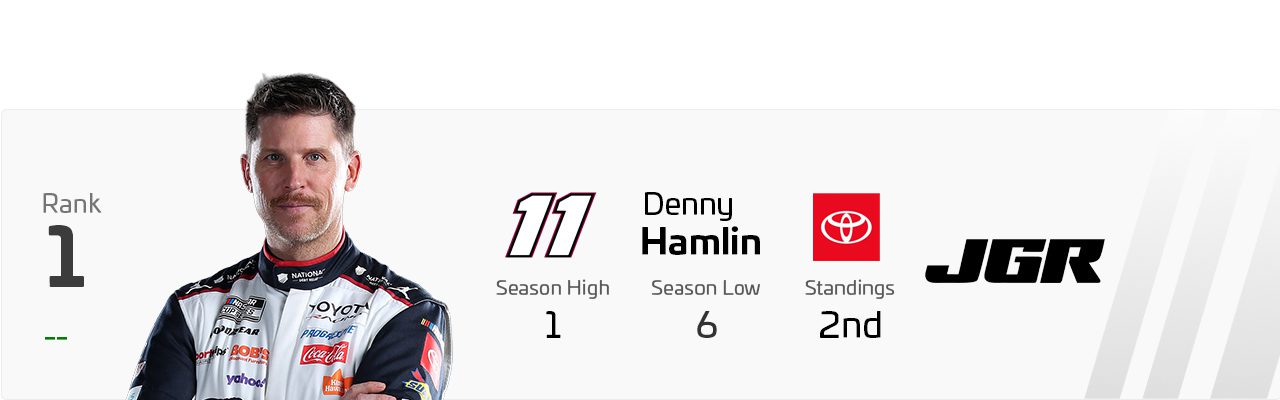
Analysis: Hamlin’s latest Pocono masterpiece gave him a record eighth Cup Series win at the “Tricky Triangle,” the first three-race winning streak of his prolific Cup career and 64 career victories overall, moving him past former teammate Kyle Busch for ninth on NASCAR’s all-time wins list. And after chopping Tyler Reddick’s points lead to just 19 markers, No. 11 is no longer just chasing the top spot; he’s made this the first real fight for No. 1 all season. San Diego is a brand-new venue and a very different challenge, but Hamlin’s road-course resume is not completely empty, either, with a win, 15 top fives and 22 top 10s in 63 starts. Until further notice, the sport is running through him.
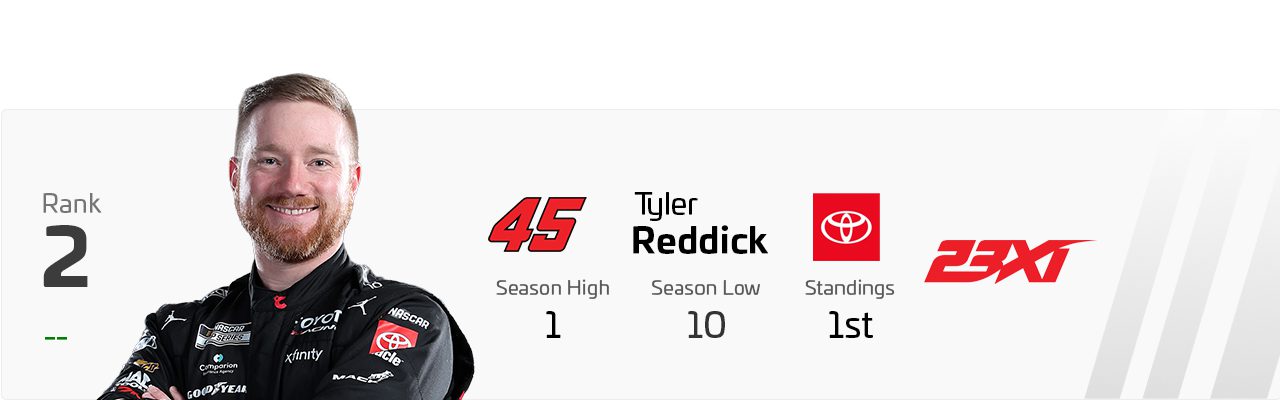
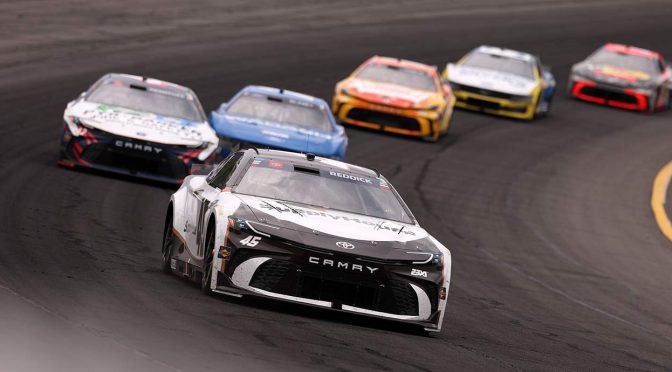
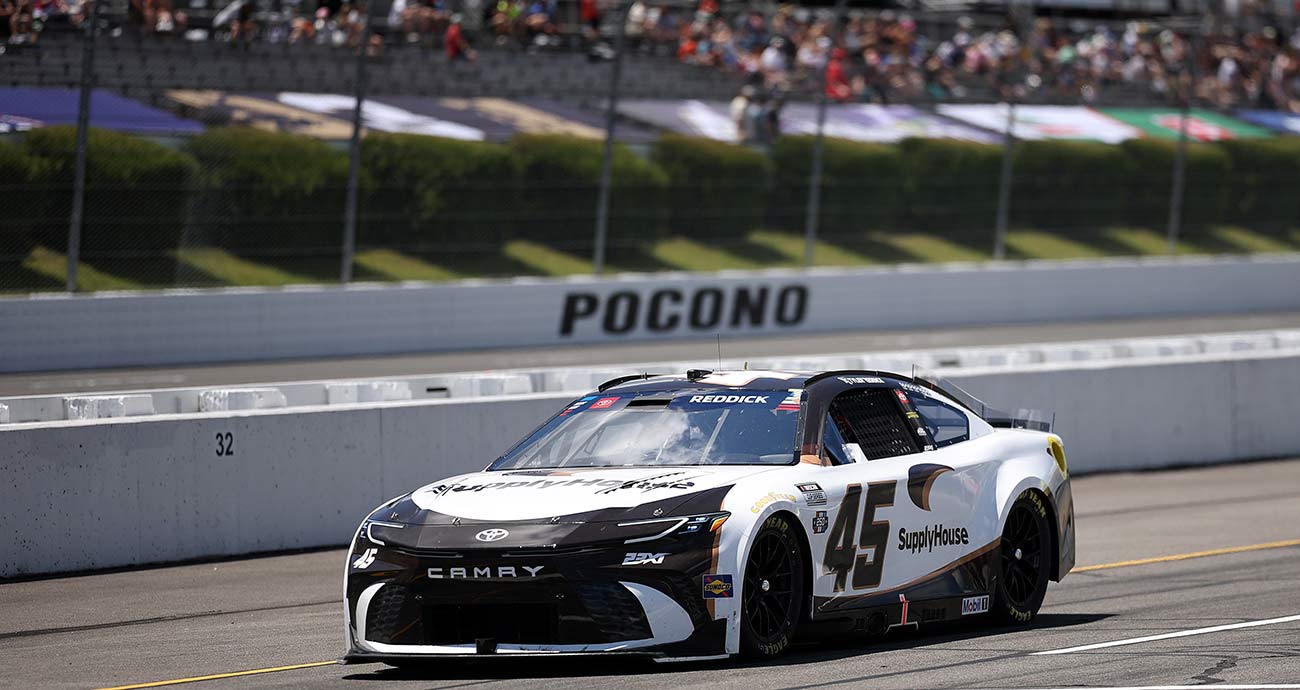
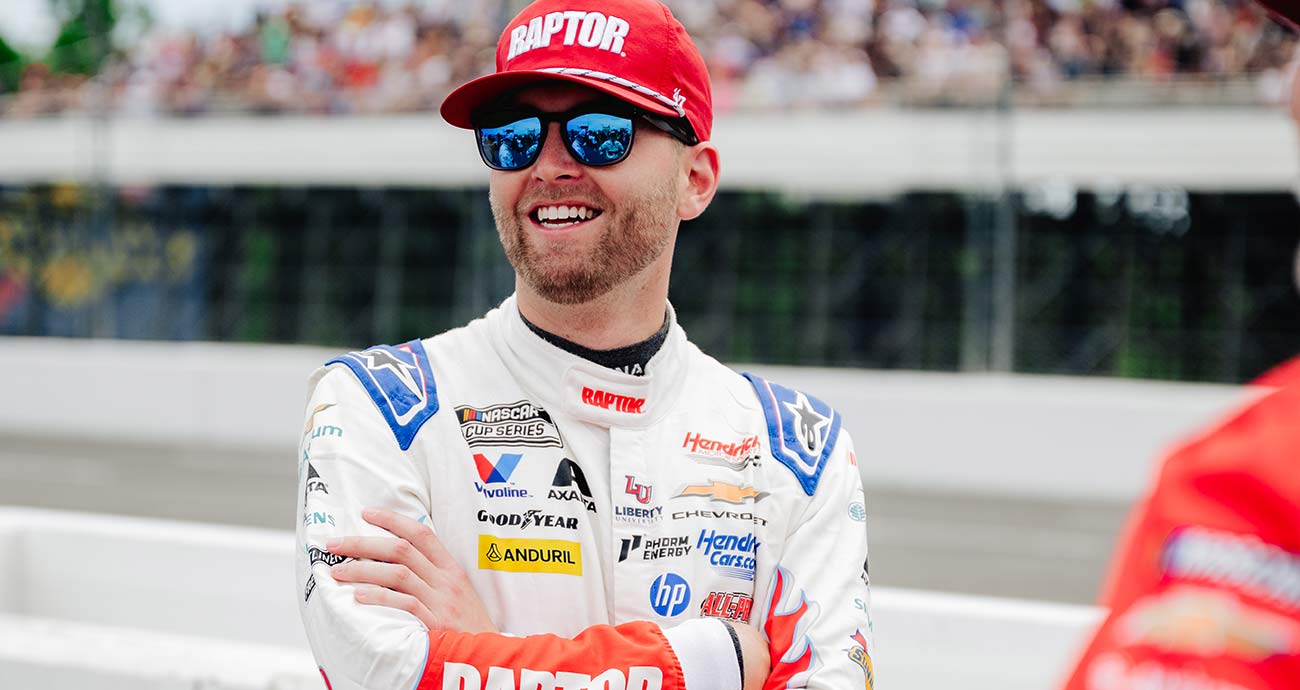
Analysis: Reddick did what he could at Pocono, and it still wasn’t quite enough to hold off the Boss Man freight train. The No. 45 rallied to second after late tire concerns, led 24 laps and continued a strong Pocono trend that now includes five top 10s in his last six starts there, including three runner-up finishes. The problem, of course, is that Hamlin keeps winning, and Reddick’s once-massive championship lead is down to 19 points. San Diego feels like an immediate counterpunch opportunity, though. Reddick owns four road-course wins, 12 top fives, 23 top 10s in 34 starts, making this the kind of week where No. 45 can remind everyone this is still very much his season, too.
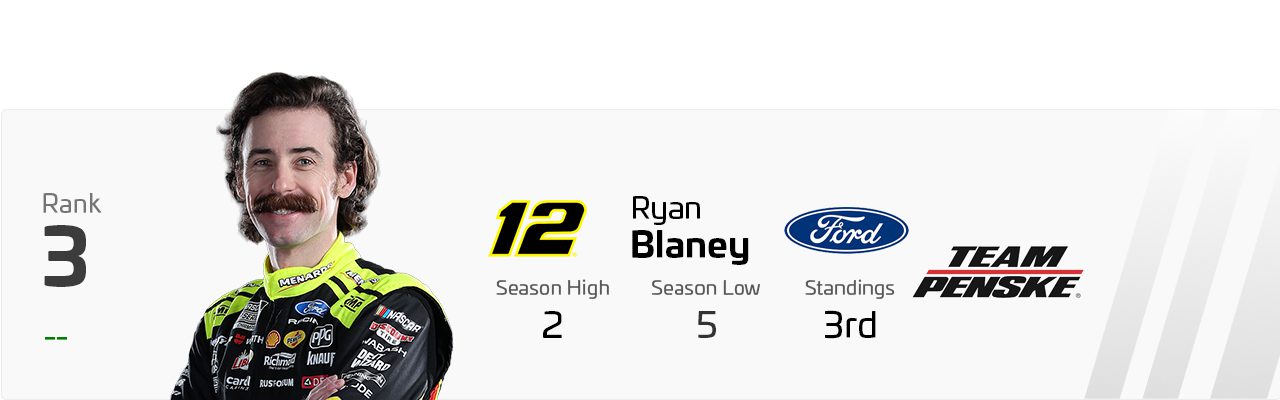
Analysis: Blaney’s Pocono weekend won’t be remembered for much, but 10th place keeps working just fine when the larger body of work looks this stable. He led three laps, stayed largely out of the mess and remains third in points with 11 top 10s through 16 races. The issue is that the gap between “reliably excellent” and “actually threatening Hamlin/Reddick” has become more obvious with every trophy for No. 11. San Diego offers a chance to shift that conversation a bit, with Blaney carrying one road-course win, five top fives and 18 top 10s in 44 starts. He doesn’t need to become the favorite on a first-time street course and win this weekend, but he does need to start turning solid into something louder again if he wants to break into that two-headed party at the top.
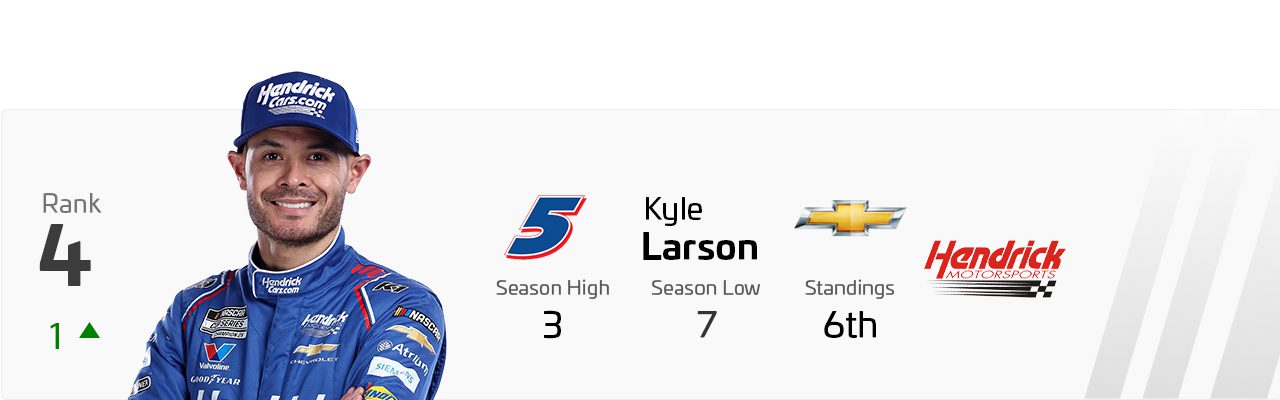
Analysis: Larson keeps climbing back toward where his speed says he belongs. He led the first 24 laps at Pocono, finished fifth and now has three top-five finishes in his last four races, which is a pretty good way to quiet concerns that the No. 5 team’s results had drifted too far from its weekly pace. The win column is still bizarrely empty for a driver with 573 laps led this year, but it feels less like a warning sign now and more like something ready to snap. San Diego could absolutely do it. Larson has six road-course wins, 12 top fives, 18 top 10s and 335 laps led on that track type, and a first-time layout may reward raw car control as much as anything.
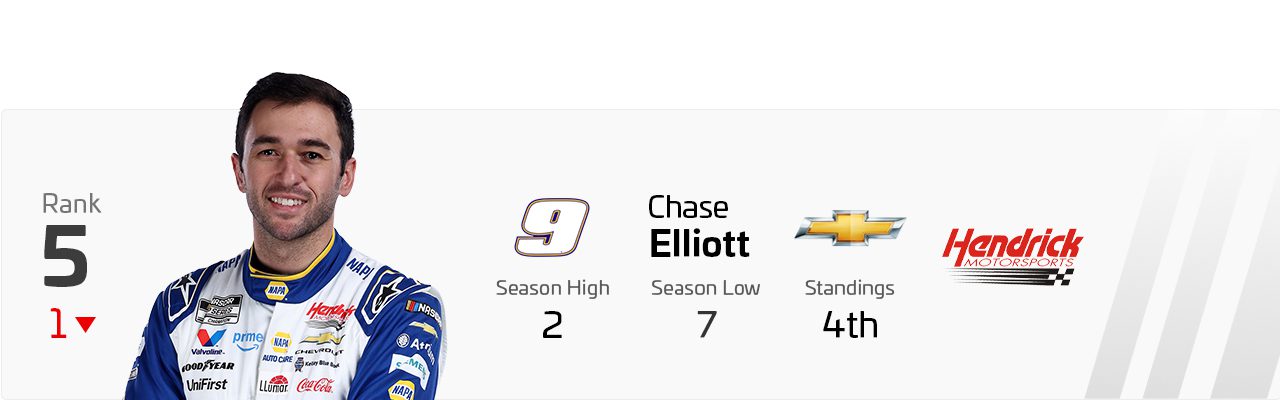
Analysis: Elliott didn’t quite extend his Pocono top-10 streak, but 11th was hardly a disaster after a day that still included nine laps led and Stage 2 points. He remains fourth in the standings and continues to carry one of the highest weekly floors in the series, even if the dominant weeks have been a little more sporadic lately. If ever there were a race to lean on reputation and past history, though, it’s this one. Elliott’s road-course record remains elite: seven wins, 22 top fives and 28 top 10s in 43 starts. There is no San Diego data to study yet, but there is plenty of Elliott history on this style of racing — and most of it says he should be near the front.
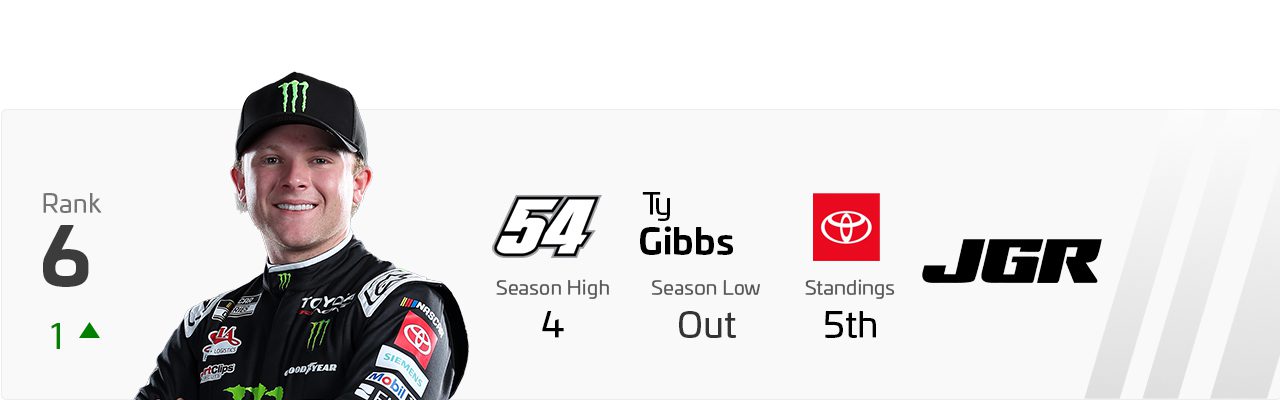
Analysis: Gibbs rebounded from the Michigan crash with a ninth-place finish at Pocono, adding Stage 1 points and keeping himself planted fifth in the championship standings. It wasn’t the flashiest day, especially after the No. 54 had to recover from a slow/re-jacked stop after Stage 1, but it was exactly the kind of clean reset he needed after letting one get away the week before. San Diego is an intriguing test for a driver whose road-course numbers are stronger than the win column suggests. Gibbs has seven top fives and 10 top 10s in 22 road-course starts, and if JGR keeps unloading the way it has this spring, his second win of 2026 does not feel far off.
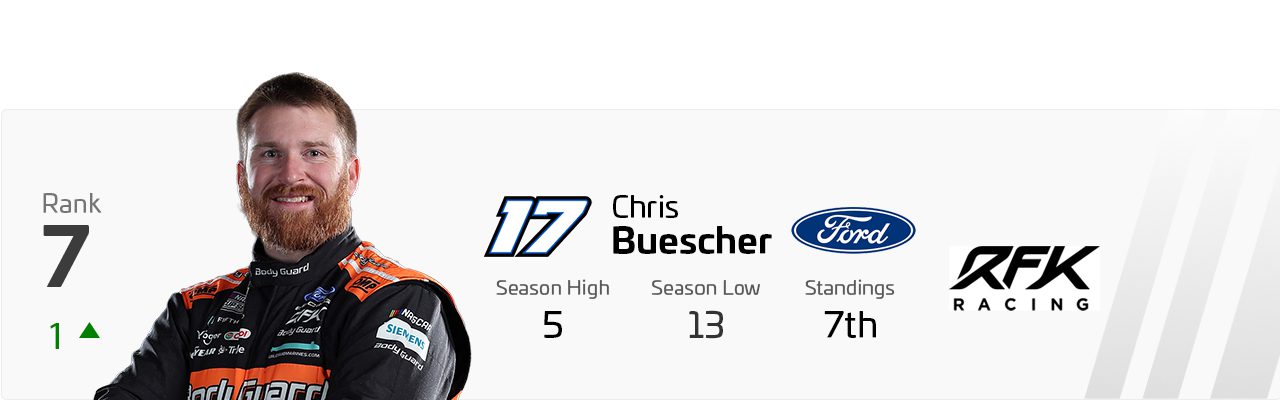
Analysis: Buescher continues to do the thing that has made his season so effective: show up, score, finish and move on. Seventh at Pocono came with Stage 1 points, which helped bump him to seventh in the standings, 110 points above the cutline, which is a pretty comfortable place for a driver who still doesn’t have a win. San Diego may be a blank slate, but Buescher’s road-course case is sneaky strong. He owns a win, eight top fives, 19 top 10s in 45 road-course starts, making this less of a survive-the-chaos week and more of a real opportunity. If the first San Diego race gets weird, No. 17 is exactly the kind of driver who can turn wacky into something useful.
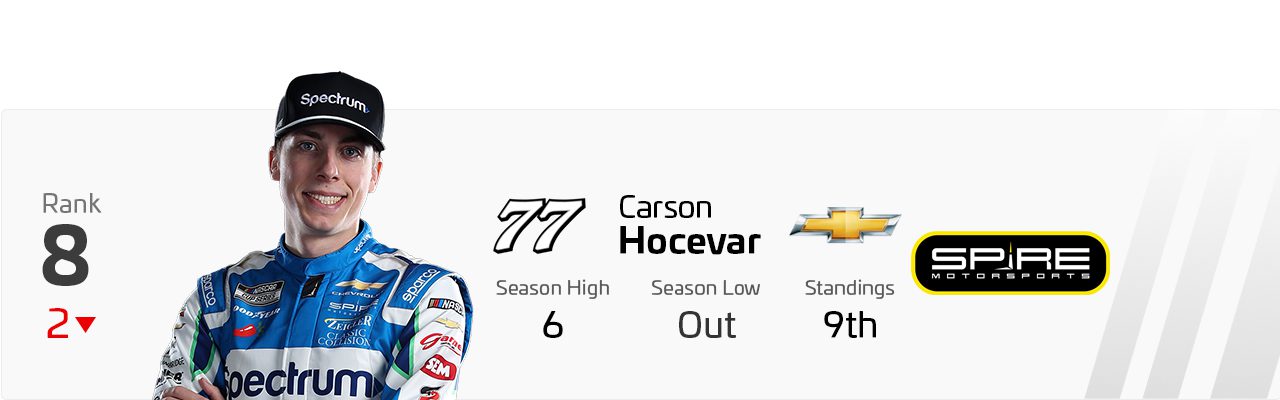
Analysis: Hocevar slips a couple of spots, but the larger season picture still looks better than almost anyone expected. Pocono was not the follow-up he wanted after the Michigan homecoming, with a 20th-place finish after starting 26th, though he still grabbed Stage 2 points and remains ninth in the standings. The ranking dip is more about others rising than the No. 77 falling apart. San Diego, however, is a tougher projection. Hocevar has one top five and one top 10 in 13 road-course starts, so this may be more about limiting damage than chasing a trophy, but he’s surprised us plenty before. The way he has rewritten expectations all season makes it dangerous to assume any ceiling is fixed.
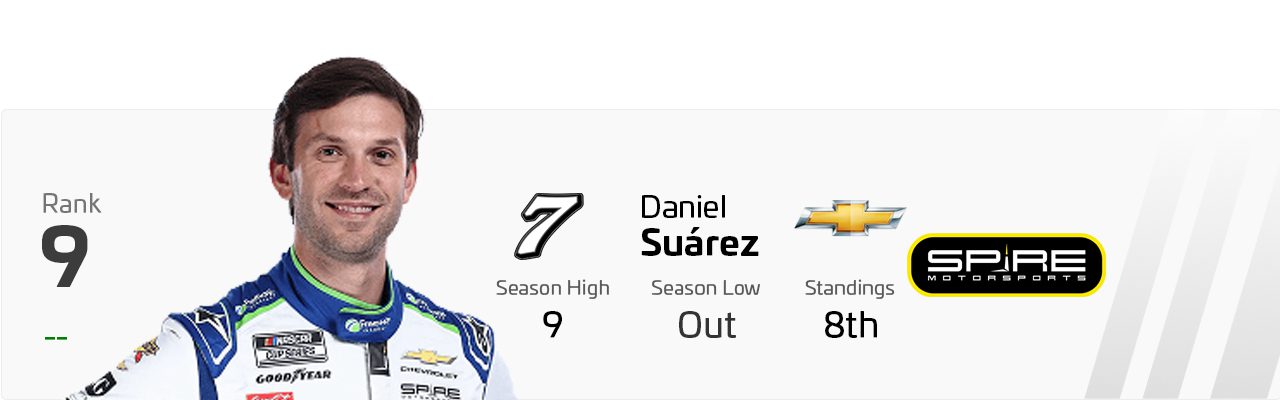
Analysis: Suárez keeps making himself hard to move down. Pocono produced another useful points day, with a 13th-place finish, stage points in both segments and another small step toward locking himself more firmly into the postseason picture. He is now eighth in points, 99 above the cutline, and the Spire Motorsports operation around him continues to look more legitimate by the week. San Diego could be a swing race, though, but it’s a bit of a question mark for him, specifically. Suárez does own a road-course win, six top fives, eight top 10s and a pole in 42 starts.
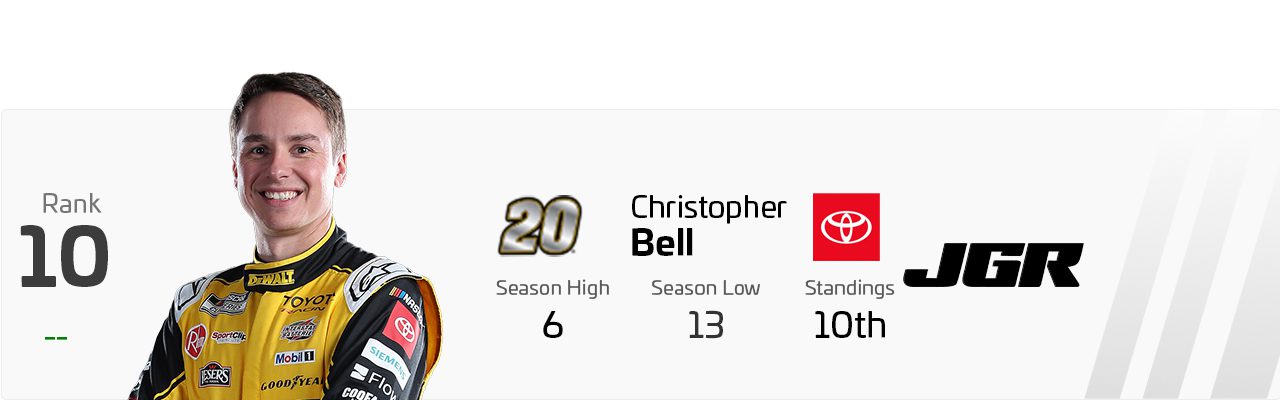
Analysis: Bell’s Pocono finish looks awful, but the story was more complicated than just “26th.” Driving with a broken left wrist after the Michigan crash, he nearly stole the race win on fuel strategy, leading 18 laps late before Hamlin chased him down and Bell ran out of gas coming to the white flag. That is now three straight weeks where the No. 20 has looked plenty capable of winning and still left without the trophy, which is becoming equal parts encouraging and maddening for one of the most talented drivers in the sport. San Diego is probably the best possible next stop, from a pure history standpoint. Bell has three road-course wins, 13 top fives, 19 top 10s in 34 starts, and a first-time street course may be exactly the reset he needs. The only question mark is how difficult it’ll be to shift and turn right — with a broken left wrist.
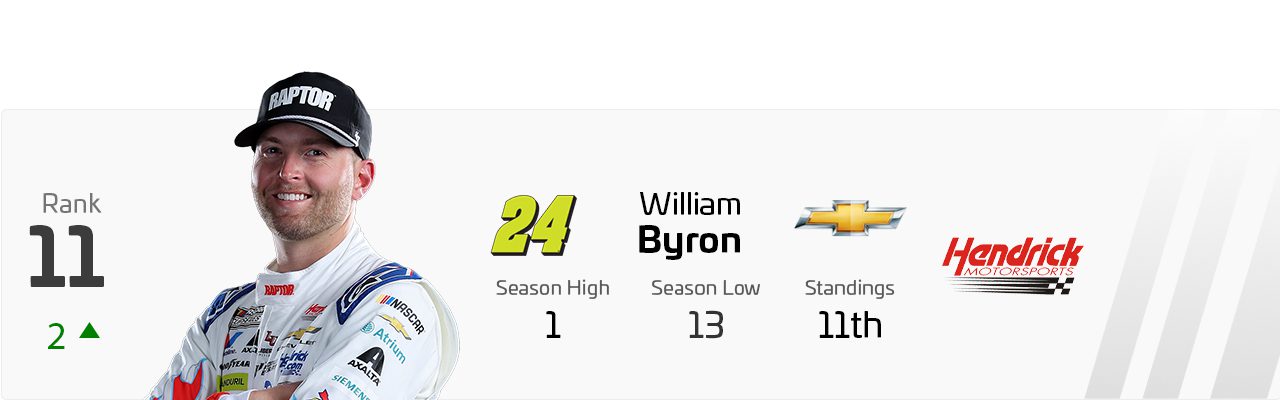
Analysis: Finally, a much-needed exhale for Byron. The No. 24 finished third at Pocono, matching his best result at the track and ending an eight-race stretch without a 2026 top-five finish. It does not erase the uneven run that knocked him out of the top 10 in these rankings, but it does stop the slide and offers proof that the speed has not gone missing. San Diego is another chance to keep the correction moving. Byron has two road-course wins, seven top fives, 16 top 10s and five poles in 40 starts, so if qualifying and track position matter as much as expected on a brand-new street layout, No. 24 has a legitimate path back toward the upper tier.
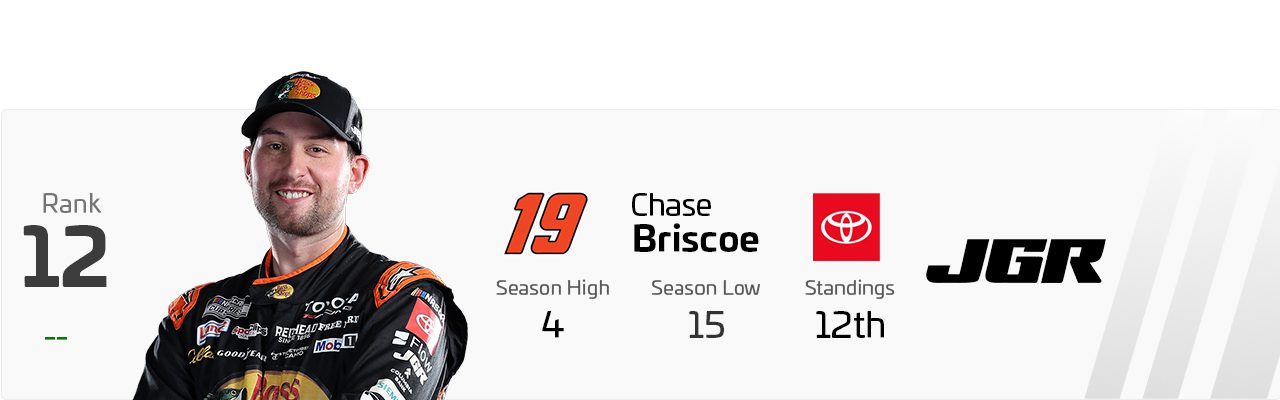
Analysis: Briscoe’s Pocono day was better than 12th suggests. He finished fourth in Stage 1, second in Stage 2, led four laps and spent large chunks of the afternoon in the top-five conversation before settling just outside the top 10 in the late stages of the race. That keeps him 60 points above the cutline and continues a quietly strong stretch for a driver who has become much more relevant over the past month. San Diego will test a different part of the resume, though. Briscoe has three top fives and 10 top 10s in 32 road-course starts, though he is still searching for his first Cup win on that track type after showing some sportiness in the O’Reilly Auto Parts Series on them. A first-time course tends to reward adaptability, and that may be exactly what No. 19 has been showing lately.
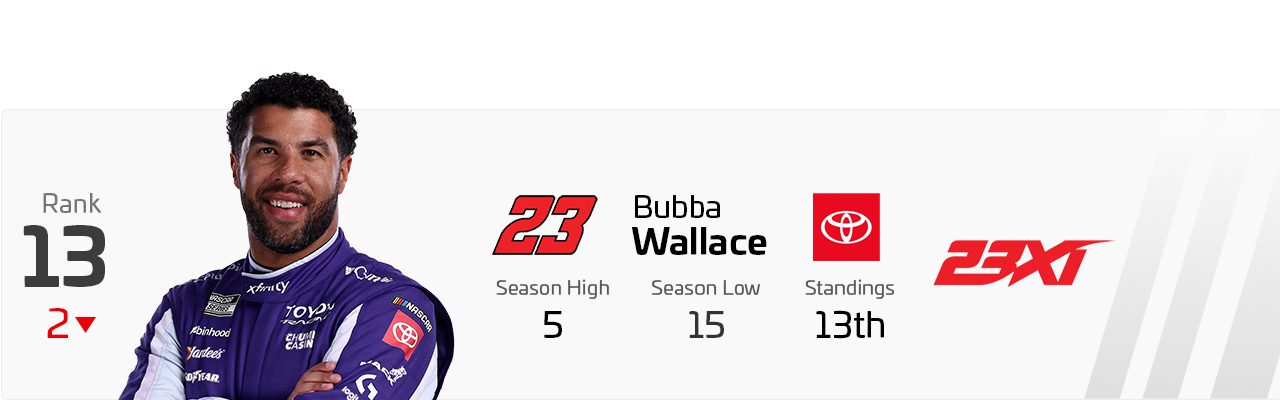
Analysis: Wallace drops two spots after Pocono turned into another frustrating missed opportunity. He started at the rear after unapproved adjustments, got swept into the nine-car crash at Lap 47 and finished 21st, losing ground at the exact time the cutline picture is starting to tighten. He is still 43 points to the good, but the cushion feels a lot smaller than it did a couple of weeks ago. San Diego does not exactly scream automatic rebound, either, with just one top five, four top 10s in 40 road-course starts. The No. 23 team has speed, but this weekend is more about survival and execution than making a statement.
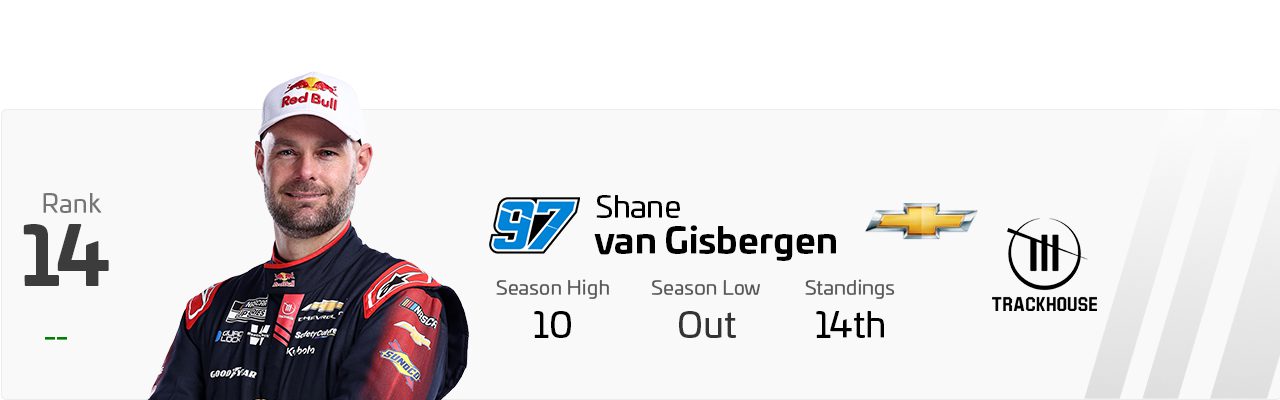
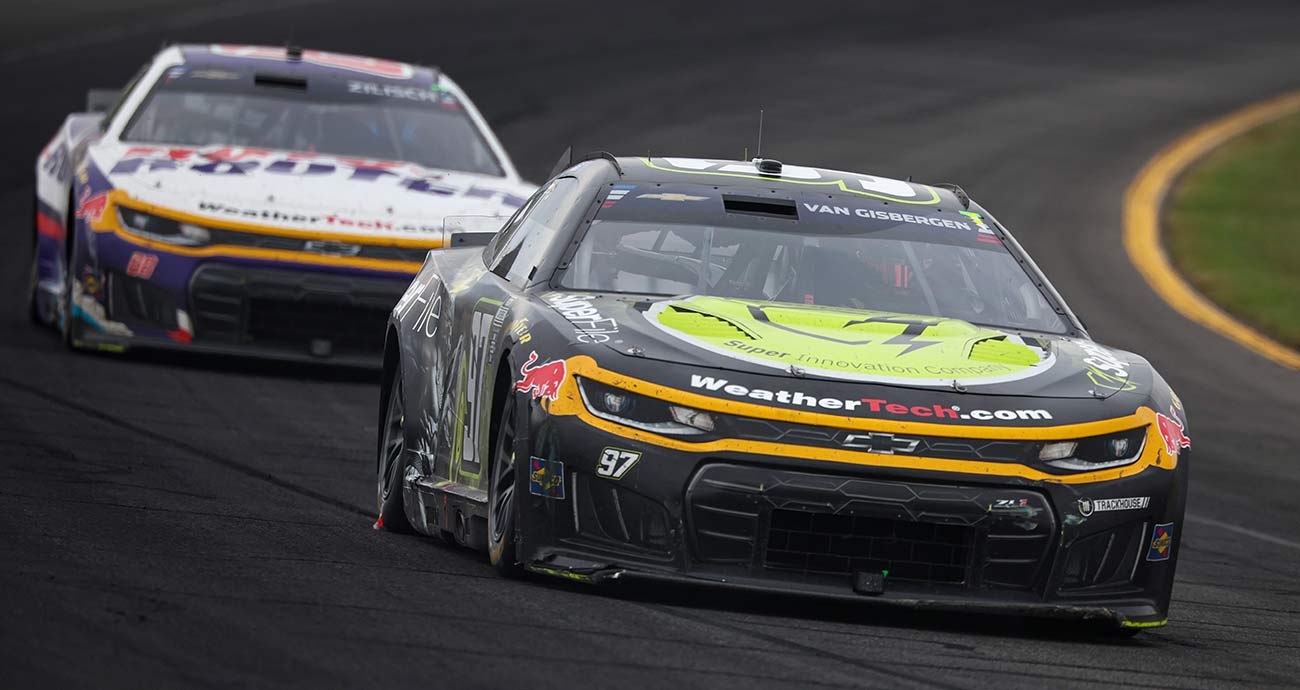
Analysis: Pocono is probably already the furthest thing from SVG’s mind after he got caught in the Lap 47 mess, finished 31st and lost 16 points to the cutline and for good reason. San Diego is the reason he stays at this rank, and it’ll maybe even feel too low just a few days from now. Van Gisbergen’s Cup road-course record, as we all know by now, is absurd: seven wins, nine top fives, 12 top 10s, five poles, 418 laps led in just 14 starts. There has never been a Cup race at Qualcomm Circuit, but if the first one turns into a pure street-course talent contest, the entire field knows exactly where the danger is coming from. He’s the 1A and 1B at all road courses until proven otherwise.
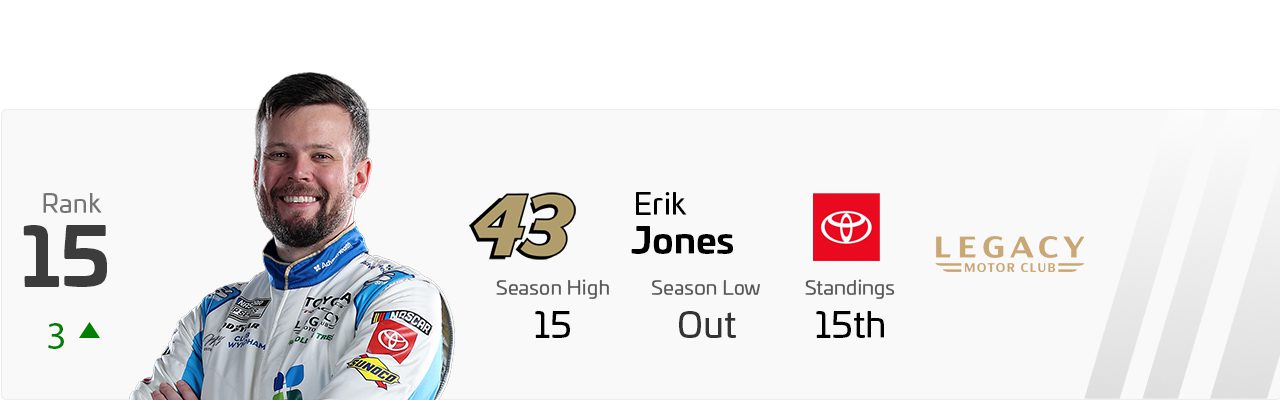
Analysis: Jones is no longer just hanging around the bubble — he is officially inside it. After a runner-up finish at Michigan, No. 43 backed it up with a sixth-place run at Pocono, giving him consecutive top 10s and enough points to climb into a tie with Austin Cindric for the final two provisional postseason spots. Legacy Motor Club suddenly looks alive and ready to compete, and the veteran Jones — who, at age 30, may still have a ways to go before reaching his ceiling — has been the clearest proof. The San Diego question is whether that momentum translates to a first-time road course or was perhaps a big-track phenomenon. His road-course numbers are modest but not empty, with three top fives and nine top 10s in 42 starts. At this point, another clean top-15 might be plenty.
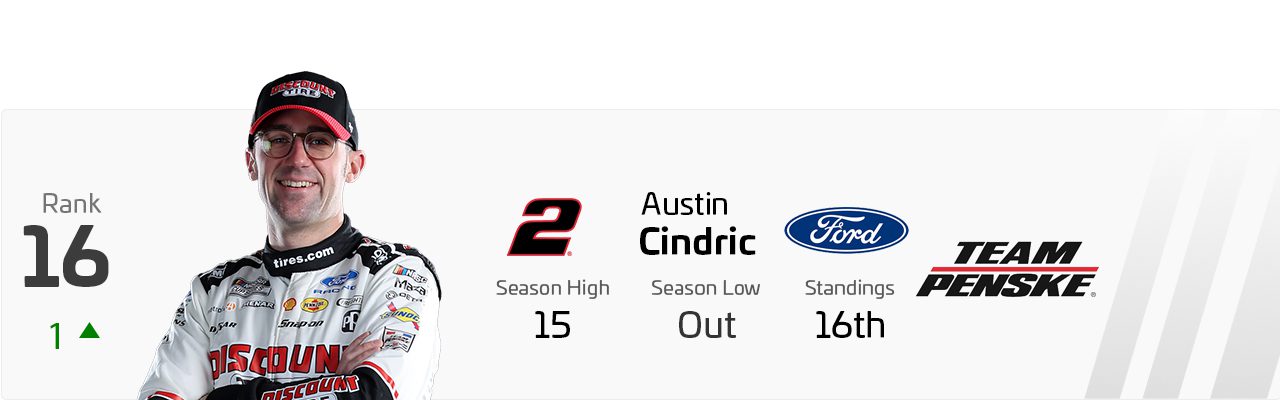
Analysis: Cindric remains planted on the bubble, which is both good news and terrifying news, with the grim reality starting to set in that Team Penske may field just one car in The Chase. He finished 14th at Pocono, led a lap and sits tied with Jones on points, just four markers ahead of Brad Keselowski, basically the thinnest of margins without falling out entirely. San Diego, though, should at least give him a track type that matches his background better than most. Cindric has three top fives and 10 top 10s in 24 road-course starts, and while that resume is not dominant, it is useful and suits his overall background.
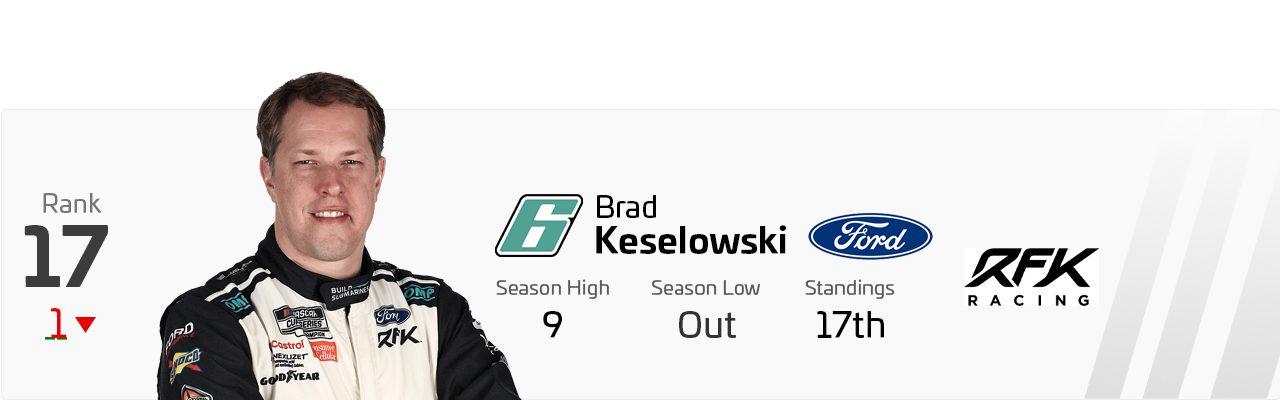
Analysis: Keselowski’s season is officially in danger. Pocono was brutal, landing 38th after getting caught in the Lap 47 crash with only one point scored and a drop to four points below the cutline after entering the weekend above it. The No. 6 team has shown enough speed to make the slump frustrating yet hopeful, but the finishes are starting to pile up in the wrong direction. San Diego does not offer the cleanest reset, either. Keselowski has never won a Cup road-course race in his lengthy career, with seven top fives, 11 top 10s in 56 starts. He doesn’t need magic this weekend, but he needs a clean, complete points day in the worst way just to stop the bleeding.
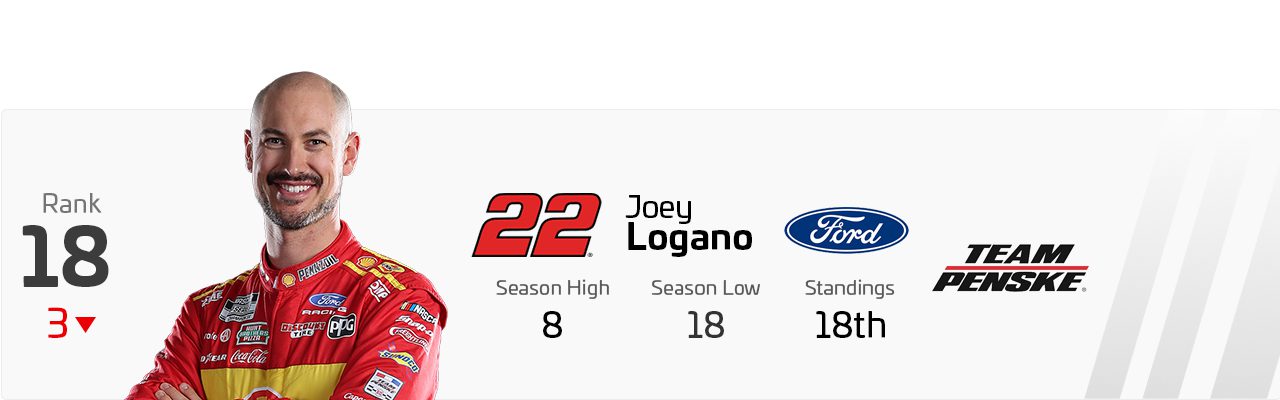
Analysis: Logano slides again, and the hole is getting uncomfortable. Pocono started with some promise — he scored Stage 1 points — but the Lap 47 crash damaged the No. 22, and a 34th-place finish dropped him 21 points below the cutline. This still does not feel like a driver or team anyone wants to write off, but the standings are what they are, regardless of reputation. San Diego could help if veteran road-course savvy is a factor, as Logano owns a road-course win, 12 top fives, 25 top 10s in 58 starts. If he’s going to stop the slide, a brand-new course (he’s pretty good when that’s the case) might actually be the kind of reset button he needs.
Analysis: Allmendinger maintains a spot in the top 20 for one obvious reason: the series is headed to a road course, and nobody’s raced it before. Pocono was nothing special — 22nd, no stage points and still 54 points below the cutline — but the San Diego conversation is different for No. 16 than it is for almost anyone else in this range. Allmendinger has three road-course wins, nine top fives and 26 top 10s in 51 starts, and there is absolutely a world where the inaugural Qualcomm Circuit race immediately plays to his strengths and a top five or more is in play. At this point, he likely needs a win to truly change his season, but this is the kind of weekend where that sentence at least feels plausible.
Analysis: McDowell returns to the rankings because this is exactly the kind of week where he belongs in the conversation. He finished 17th at Pocono, remains 49 points below the cutline and has not yet found the kind of peak result like his teammates that can fully jolt his season back to life, but San Diego gives him a much better lane than most upcoming races might. McDowell owns a road-course win, nine top fives and 18 top 10s in 55 starts, and his experience level matters on a brand-new layout where teams will be learning in real time. The Chase math remains difficult, but No. 71 is not out of relevant arguments yet, and this weekend could be impactful.
After a week off, the NASCAR Craftsman Truck Series returns to action with an inaugural visit to Naval Base Coronado for a race on Friday (7 p.m. ET, FS1, NASCAR Racing Network Radio).
The event will be the 13th points-paying race of the 2026 Truck Series season and the second street-course contest of the campaign. Layne Riggs won the first street-course race of the season, doing so at St. Petersburg in February.
Seven-time NASCAR Cup Series champion and NASCAR Hall of Famer Jimmie Johnson will pilot the No. 1 Tricon Garage Toyota in this weekend’s Truck contest. The Truck race will be the El Cajon, California, native’s second career Truck race and first since 2008 at Bristol Motor Speedway.
Thirty-five trucks are entered into this weekend’s event.
Battlestations! After tackling the “Tricky Triangle” in Pocono Raceway, the NASCAR Cup Series next treks across the country to take on the 3.4-mile Qualcomm Circuit at Naval Base Coronado on Sunday (4 p.m. ET, Prime Video, HBO Max, MRN Radio, SiriusXM NASCAR Radio).
The visit to the California military base will be a first for all three of NASCAR’s national series, with the street-course layout adding a unique, one-of-a-kind flavor to the schedule. Shane van Gisbergen is the most recent street-course winner in NASCAR’s premier circuit, doing so last July at the Chicago Street Course.
The NASCAR O’Reilly Auto Parts series transitions from the 2.5-mile Pocono Raceway to the 3.4-mile Naval Base Coronado for a race on Saturday (5 p.m. ET, The CW, MRN Radio, SiriusXM NASCAR Radio).
The visit to the California military base will be a first for all three of NASCAR’s national series. The street-course race will act as the 18th points-paying event of the 2026 O’Reilly season.
Canadian Alex Labbé will drive the No. 0 SS GreenLight Racing Chevrolet for the third time this season, most recently doing so at Watkins Glen International in May, where he finished 19th. In four O’Reilly races this season, Labbé has three top-20 finishes.
Thirty-seven cars are entered into this weekend’s event.
NASCAR’s regular season reached another crucial point, with 10 races remaining before the NASCAR Cup Series’ 16-driver Chase field is set. Denny Hamlin’s bid for the Regular Season Championship gained strength with his third consecutive win in another masterful drive at Pocono Raceway, one of his favorite old haunts.
Several other noteworthy performances stood out from 400 miles around the “Tricky Triangle” in the Pennsylvania wilds, some for all the right reasons and some on the downturn. Those drivers will aim either to regroup or keep the pressure on as the Cup Series prepares to make a big Sunday splash with the inaugural San Diego street-course event at Naval Base Coronado (4 p.m. ET, Prime Video, HBO Max, MRN Radio, SiriusXM NASCAR Radio).
What happened: “It almost worked,” Reddick said of a long-run pit strategy late in Sunday’s Great American Getaway 400 that nearly helped the 23XI driver convert for his sixth victory of the season. Reddick rebounded from his only DNF of the year in the previous week’s race at Michigan International Speedway, but the bounce-back effect was offset by Denny Hamlin chopping further into his lead atop the Cup Series standings.
What’s next: Reddick’s advantage — once as high as 129 points after last month’s race at Watkins Glen International — has now shrunk to just 19 points as Hamlin has turned on the jets with a midseason surge. Reddick will potentially have road-racing expertise on his side as the circuit heads to San Diego and Sonoma Raceway in back-to-back weeks.
James Gilbert | Getty Images
2. William Byron, No. 24 Hendrick Motorsports Chevrolet
Started: 9th
Finished: 3rd
What happened: Byron raved post-race about the balance of his No. 24 Chevy, which he said allowed him to make moves he hadn’t been able to pull off in months. The corresponding confidence helped him secure the team’s first top-five result since March 29 at Martinsville Speedway, providing him a one-spot bump in the Cup Series standings.
What’s next: Road courses statistically rank near the bottom of Byron’s career average-finish comparisons, though he has shown moments of glory on that track type — including a Watkins Glen win in 2023. The debut of the San Diego street course, though, holds plenty of uncertainty that Byron and the rest of the field will need to navigate. “A lot of unknowns,” he said post-race. “I’m kind of excited for it.”
Hannah Tallant | NASCAR Digital Media
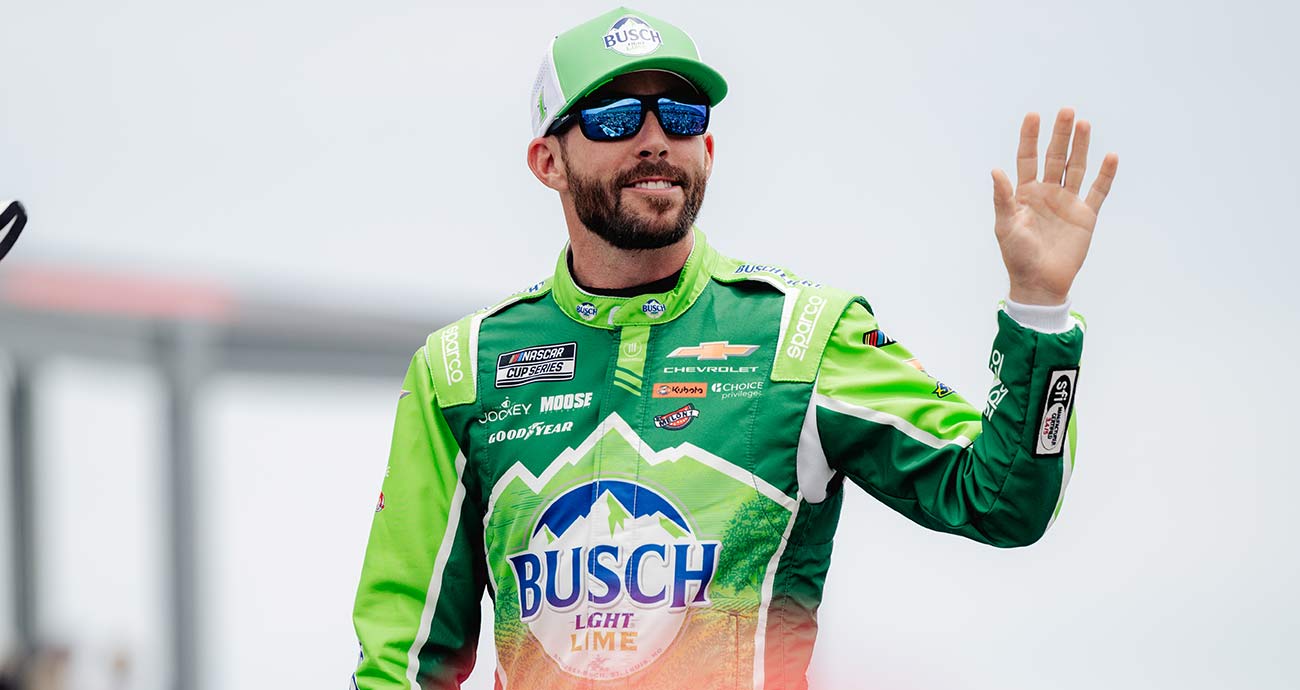
3. Ross Chastain, No. 1 Trackhouse Racing Chevrolet
Started: 24th
Finished: 8th
What happened: Some speed and some strategy were the right blend for Chastain and his No. 1 Chevy group, which turned a series of pit calls into a tire advantage near the race’s end. Chastain made the most of it, notching his first top-10 result on a non-drafting track this season.
What’s next: Chastain has qualified among the top five for both road-course events this year, starting off second at Circuit of The Americas and fourth at Watkins Glen. The outcomes of both races landed him outside of the top 25, but he’ll have an ace in teammate Shane van Gisbergen to lean on for advice.
Hannah Tallant | NASCAR Digital Media
THREE DOWN ⬇️
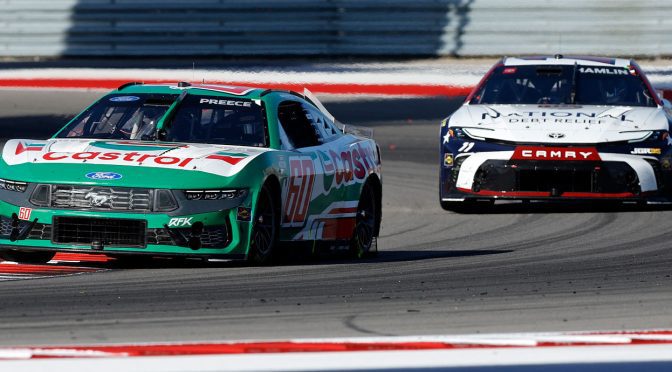
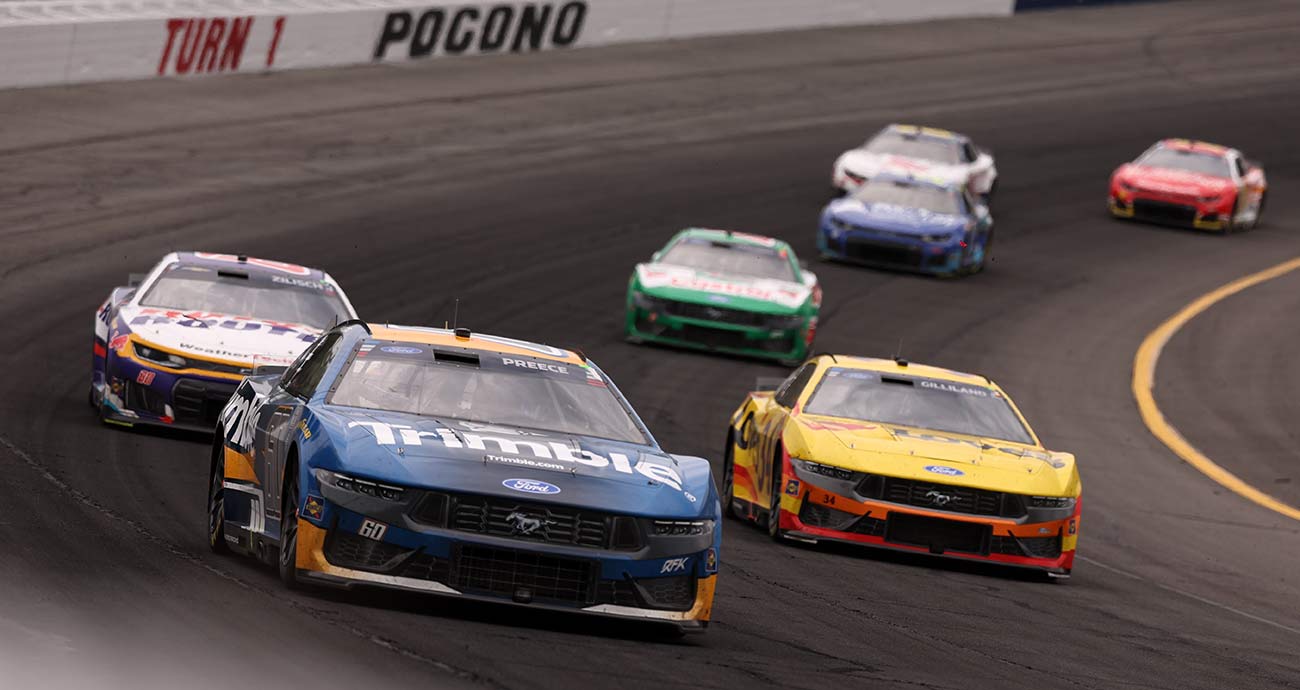
1. Ryan Preece, No. 60 RFK Racing Ford
Started: 35th
Finished: 28th
What happened: Preece sorely needed a positive finish after three consecutive weeks of DNFs. After dropping to the rear at the start because of unapproved adjustments, Preece was sitting 16th in the home stretch at Pocono until the fuel tank in his No. 60 Ford sputtered dry on his way to the white flag. The 35-year-old driver bemoaned the late-race communication breakdown and needed a push from RFK teammate Chris Buescher to reach the checkered flag. He was scored as the first driver one lap down.
What’s next: Preece enters San Diego still searching for his first Cup Series top-five finish on a road course. Perhaps worse, when the In-Season Challenge tournament begins the next week at Sonoma Raceway, Preece will draw road-racing star and heavy favorite Shane van Gisbergen in a first-round matchup, something he made light of in a Sunday evening social-media post.
David Jensen | Getty Images
2. Shane van Gisbergen, No. 97 Trackhouse Racing Chevrolet
Started: 31st
Finished: 31st
What happened: The four oval races since SVG’s victory at Watkins Glen last month have been a mixed bag, and Pocono presented a second straight week of disappointment. Van Gisbergen’s No. 97 Chevrolet was one of nine cars caught up in the event’s biggest wreck, and he wound up two laps down by the checkered flag.
What’s next: The schedule takes a fortuitous turn with a pair of road courses in the next two weeks, including the street circuit inaugural in San Diego this weekend ahead of Sonoma on June 28. Knowing how SVG made his grand Cup Series entrance in the debut of the Chicago Street Race, the biggest of turnarounds might be approaching.
James Gilbert | Getty Images
3. Joey Logano, No. 22 Team Penske Ford
Started: 11th
Finished: 34th
What happened: Logano earned points with a ninth-place effort in Stage 1, but a split in pit strategy put him back in the pack and right in the crosshairs of the same Stage 2 crash that corralled SVG and others. Logano’s No. 22 Ford sustained right-front damage in the melee, and he wound up four laps down as the last driver still running at the finish.
What’s next: Logano had assembled two top 10s in the last three weeks, but Sunday’s Pocono run thwarted that rhythm. “Just a matter of wrong place, wrong time for us today,” Logano said. “We were starting to build some good momentum over the last few weeks with some decent runs, so we need to get back in that rhythm again.”
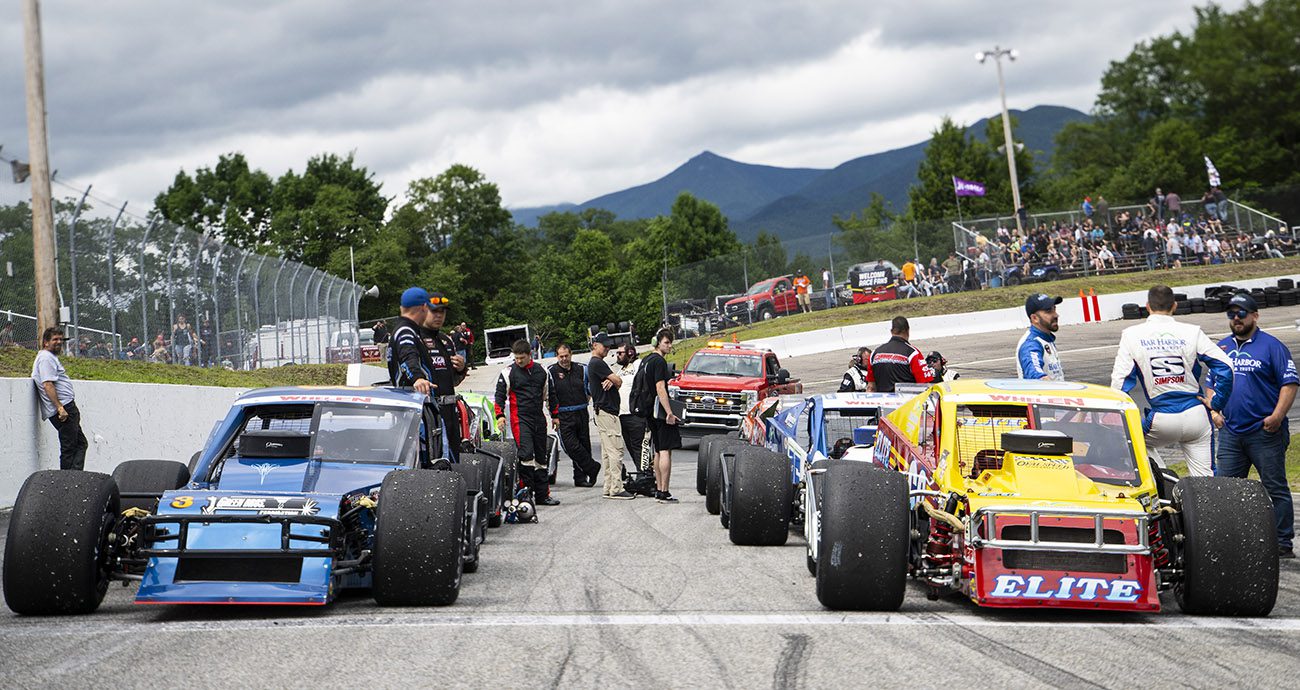
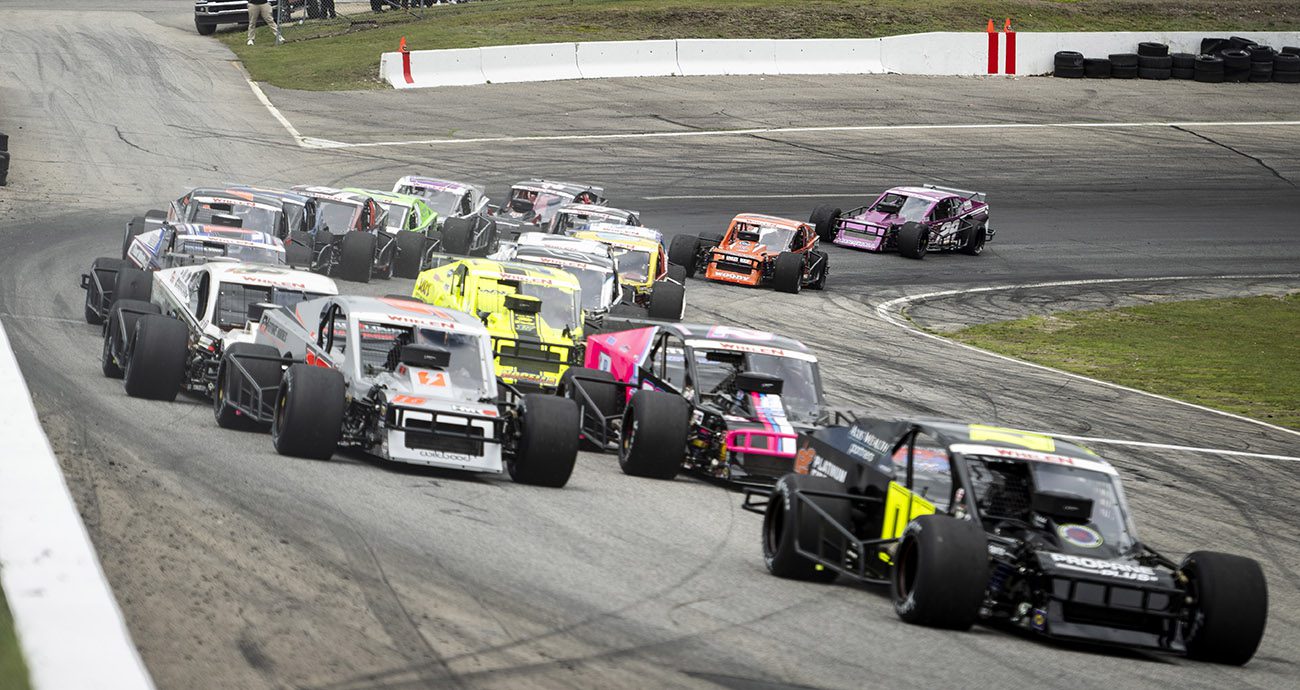
For just the fourth time in series history, the NASCAR Whelen Modified Tour will travel to White Mountain Motorsports Park in North Woodstock, New Hampshire, for Saturday night’s running of the Thunder in the Mountains 200 (8 p.m. ET on FloRacing).
The quarter-mile asphalt oval, which opened for business in 1993, first hosted the Modified Tour in 2020. Four-time series champion Justin Bonsignore won the first Modified Tour event at the track with Doug Coby and Kyle Bonsignore also collecting victories within the last few years.
This year, more than 20 drivers are expected to chase the checkered flag at White Mountain Motorsports Park, which will host the seventh race of the 2026 Modified Tour season.
Tickets to Saturday’s Thunder in the Mountains 200 are available trackside. Below is everything you need to know about Saturday’s race.
White Mountain Motorsports Park will host the NASCAR Whelen Modified Tour for the fourth time Saturday night. (Photo: Jaiden Tripi/ARCA Racing)
Thunder in the Mountains 200 at White Mountain Motorsports Park
Jon McKennedy seems to have figured something out.
The 2022 NASCAR Whelen Modified Tour champion has won two of the last three events on the schedule — at Seekonk Speedway and Oxford Plains Speedway — allowing him to pull within nine points of championship leader Stephen Kopcik after six events this season.
McKennedy will attempt to keep that momentum going Saturday at White Mountain Motorsports Park during the Thunder in the Mountains 200. He has a best finish of fourth in his three previous White Mountain starts and will attempt to add a win to his ledger Saturday night.
Stephen Kopcik continues to lead the Modified Tour standings entering Saturday’s race at White Mountain. One season ago, Kopcik finished a close second to winner Kyle Bonsignore, which automatically makes Kopcik a favorite to win the Thunder in the Mountains 200 aboard the Wanick Motorsports No. 21.
Doug Coby, who won the second Modified Tour race held at White Mountain in 2020, returns to the series for another start in the Jett Motorsports No. 28. Ronnie Williams, who is fresh off a top-five finish in the most recent Modified Tour event at Oxford Plains Speedway, will again join the field Saturday night at White Mountain.
Dave Sapienza could be a sleeper contender during Saturday’s race. In his two previous starts at White Mountain, Sapienza has secured a pair of top-10 finishes. He’s one of only seven drivers to finish in the top 10 during at least two of the previous three series events at White Mountain.
Other notable entrants include defending Modified Tour champion Austin Beers, Patrick Emerling, Tyler Rypkema, Mike Christopher Jr., Eric Goodale, Matt Hirschman, Paulie Hartwig III and Jayden Harman, among others.
The complete entry list for Saturday’s Thunder in the Mountains 200 will be available later this week.
White Mountain Motorsports Park is a tight quarter-mile asphalt oval tucked into the White Mountains of New England. (Photo: Jaiden Tripi/ARCA Racing)
SCHEDULE: Saturday, June 20: Practice from 3 – 3:45 p.m. ET … Final practice from 3:55 to 4:25 p.m. ET … American Racer Pole Award qualifying at 6 p.m. ET … Start of the Thunder in the Mountains 200 at 8 p.m. ET (200 Laps / 50 Miles)
QUALIFYING: Two consecutive qualifying laps. Faster lap determines qualifying position. Adjustments or repairs may not be made on the vehicle after the vehicle has taken the green flag at the start/finish line. NASCAR reserves the right to have more than one vehicle engage in qualifying runs at the same time. Starting field for the Thunder in the Mountains 200 is limited to 28 starters including Provisional Positions.
TIRE ALLOTMENT: The maximum tire allotment available for this event is ten (10) tires per team. All tires used for qualifying and the race must be purchased at the track and scanned by NASCAR Officials, unless otherwise approved in advance by the Series Director. Four (4) tires must be used for qualifying and to begin the race. All qualifying tires must remain in impound until released by NASCAR Officials. The remaining tire allotment may be used for practice and/or change tires during the event. A maximum of two (2) tires of the allotment may be used as change tires. The tire change rule is two (2) tires per stop. This includes “swapping” tires front to back.
RE-DRAW PROCEDURE: The fastest qualifier will spin the wheel to determine the number of drivers that will re-draw for their starting positions: 4, 6, 8 or 10 positions will re-draw. Once the fastest qualifier spins the wheel, NASCAR will have the various buckets ready to immediately start the re-draw procedure. Driver will re-draw in their qualifying order after qualifying has been completed (1 through 10, or however many are applicable). The pole position and/or any bonus point(s), if applicable, will be awarded to the fastest qualifier and will be the pole of record. If, due to adverse conditions, qualifying is canceled, the field will be set in accordance with the 2026 NASCAR Whelen Modified Tour Rule Book. The re-draw procedure will still take place regardless of how the field is set.
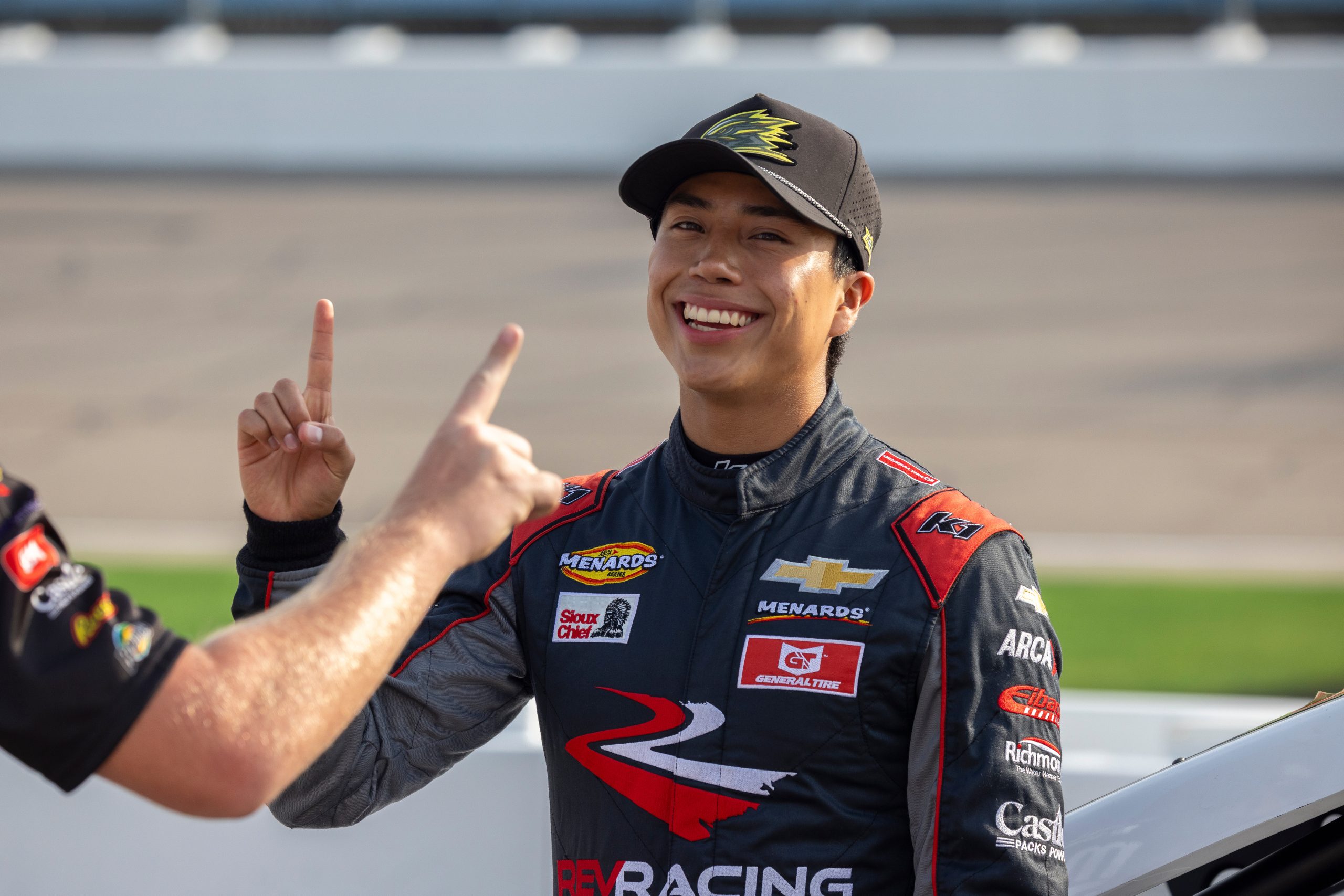
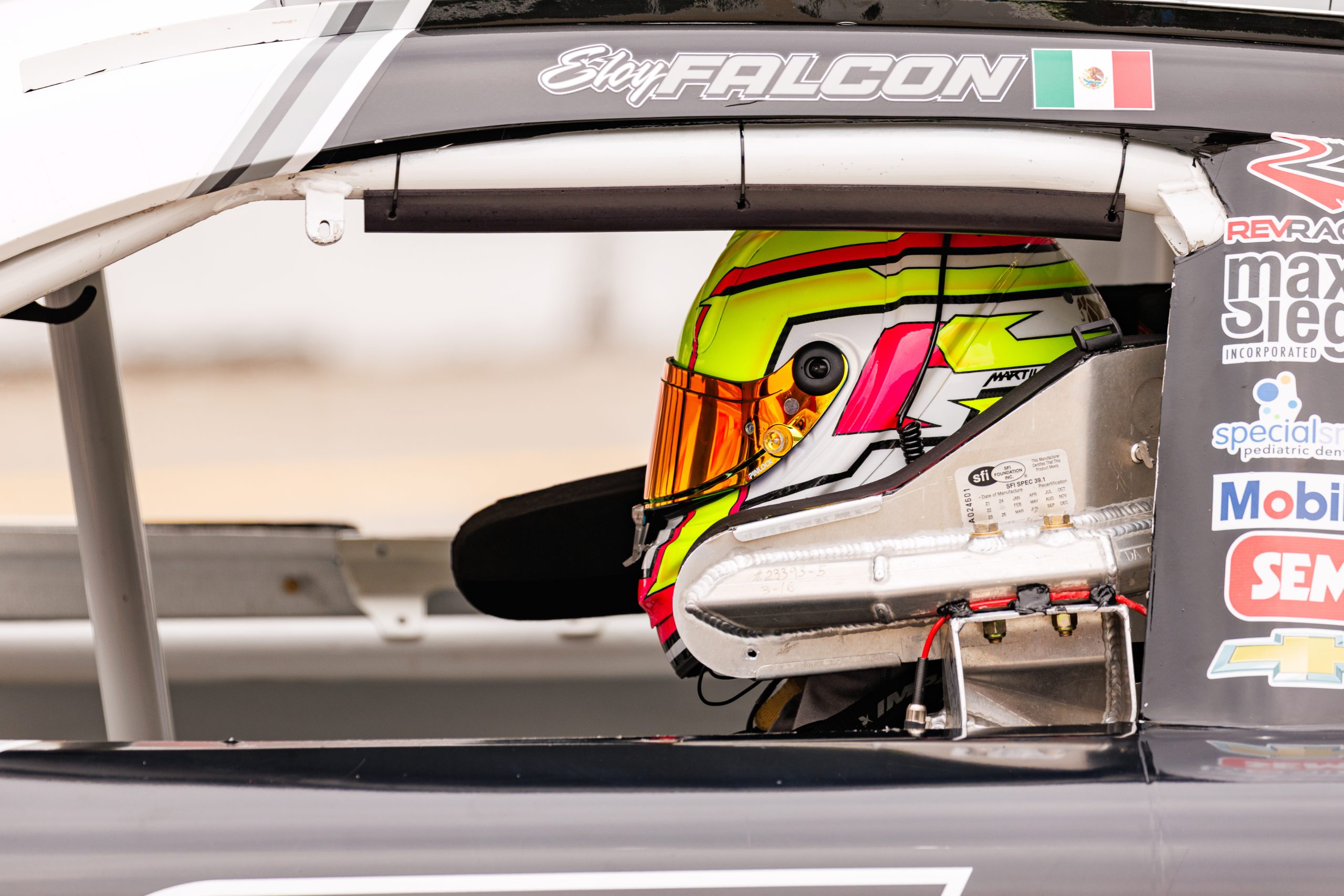
HICKORY, N.C. — Wherever Eloy Falcón competes, a smile hardly ever leaves his face.
That trait was prevalent Saturday at Hickory Motor Speedway for a good reason; it marked Falcón’s return to the United States after spending the first half of the year racing in his home country of Mexico. A NASCAR Drive for Diversity program alum, Falcón teamed with MCM Racing Development at Hickory with the goal of making a strong impression in his return stateside.
The night brought mixed emotions. Falcón was fastest in final practice for the Late Model Stock feature and qualified on pole, but his race ended after 50 laps due to a broken hub. Falcón was expectedly disappointed with such an outcome, yet he still found plenty of reasons to be optimistic.
Through all the highs and lows of Saturday, Falcón considered his first U.S. outing of 2026 a success.
“I’m really grateful to be back in the seat with a new team,” Falcón said. “I gained a lot of experience today. Obviously it was a frustrating ending for us. At the beginning, something [felt] weird on the car. It was out of our hands, but I’m really happy with all the effort the team [did] during the weekend. We had a pretty solid day.”
Eloy Falcón pictured during the ARCA Menards Series’ annual pre-race practice at Daytona International Speedway on Jan. 9th, 2025. (Photo: James Gilbert/ARCA Racing)
What started Falcón’s journey toward NASCAR was a Christmas present he received from his family at 5 years old: a go-kart.
The family began entering Falcón in events around Mexico once he had acquired enough practice. The success he enjoyed garnered plenty of attention, which led to an opportunity to contest the FIA-sanctioned F4 Spanish Championship in 2020.
The time Falcón spent in Europe did not yield the results he wanted, so he returned to his home country the following season to focus on the Mikel’s Truck Series, a key part of the developmental ladder in Mexico. Falcón’s first campaign in the Mikel’s Truck Series was a successful one that saw him record four top-five finishes.
One year later, Falcón was the Mikel’s Truck Series champion. Two victories and just one finish outside the top 10 were enough for the points lead, which helped him progress into the NASCAR Mexico Challenge Series full-time in 2023.
The Challenge Series sharing the track with the premier NASCAR Mexico Series was beneficial for Falcón in numerous regards. It gave him a chance to go up against some of the best drivers from his country and take away lessons that helped him chase a Challenge Series championship.
Just like in the Mikel’s Truck Series, a quiet-but-successful rookie season for Falcón in the Challenge Series translated to a title campaign the following year that saw him earn five victories, including a sweep of the final three events.
The accolades Eloy Falcón has accumulated in his home country of Mexico include titles in the NASCAR Mexico Challenge Series and Mikel’s Truck Series. (Photo: Rachel Mummey/ARCA Racing)
Falcón has leaned on several NASCAR Mexico Series alums throughout his journey. They include Rubén García Jr. and his current driving coach Rogelio López, both of whom are series champions who have also won in the ARCA Menards Series East. Their advice on competing in the U.S. guided Falcón as he started competing in the country more frequently.
“There is a lot of talent in Mexico, and there is a lot of good drivers,” Falcón said. “We run hard down there. All the experience [López and García] gave me was valuable for me. They helped me understand how the air works, how to run on [big tracks] and how to learn the differences [in the] cars and also the tires.”
Like García before him, Falcón found a pathway to the U.S. through Drive for Diversity, which he first applied for during his Mikel’s Truck Series title campaign. Falcón’s performance in the Drive for Diversity combine earned him a spot on Rev Racing’s roster for 2023, when he competed in Legends cars while balancing his commitments in Mexico.
The list of graduates from Drive for Diversity includes Kyle Larson, Bubba Wallace, Daniel Suarez and Nick Sanchez, so Falcón understood the expectations placed upon him. Being embedded with Rev Racing made Falcón understand why there so many successful Drive for Diversity alums. Every part of the program encouraged growth.
“They helped me a lot to develop my abilities,” Falcón said. “On the program, they prepared me [physically and mentally], but we also had a [driver’s coach] with a lot of experience in Mark Green. All the crew chiefs, all the mechanics and all the experience they have, they gave me all the knowledge, and I worked really hard all those years.
“It was pretty, pretty good years learning all the stuff.”
Falcón’s final year with Drive for Diversity in 2025 was his most adventurous. After spending a couple years progressing through Legends and into Late Model Stocks, Falcón embarked on a part-time season across the ARCA Menards Series platform with Rev Racing.
The first race could not have gone any better. In the second event of the East Series season at Rockingham Speedway, Falcón climbed from 10th in a 26-car field to finish third behind William Sawalich and race-winner Brent Crews.
In his three other starts, Falcón completed all but two laps and secured two top-10 finishes at Michigan International Speedway and Iowa Speedway. Falcón was brimming with confidence by the end of the year, eager to continue his American odyssey and start competing for victories on a regular basis.
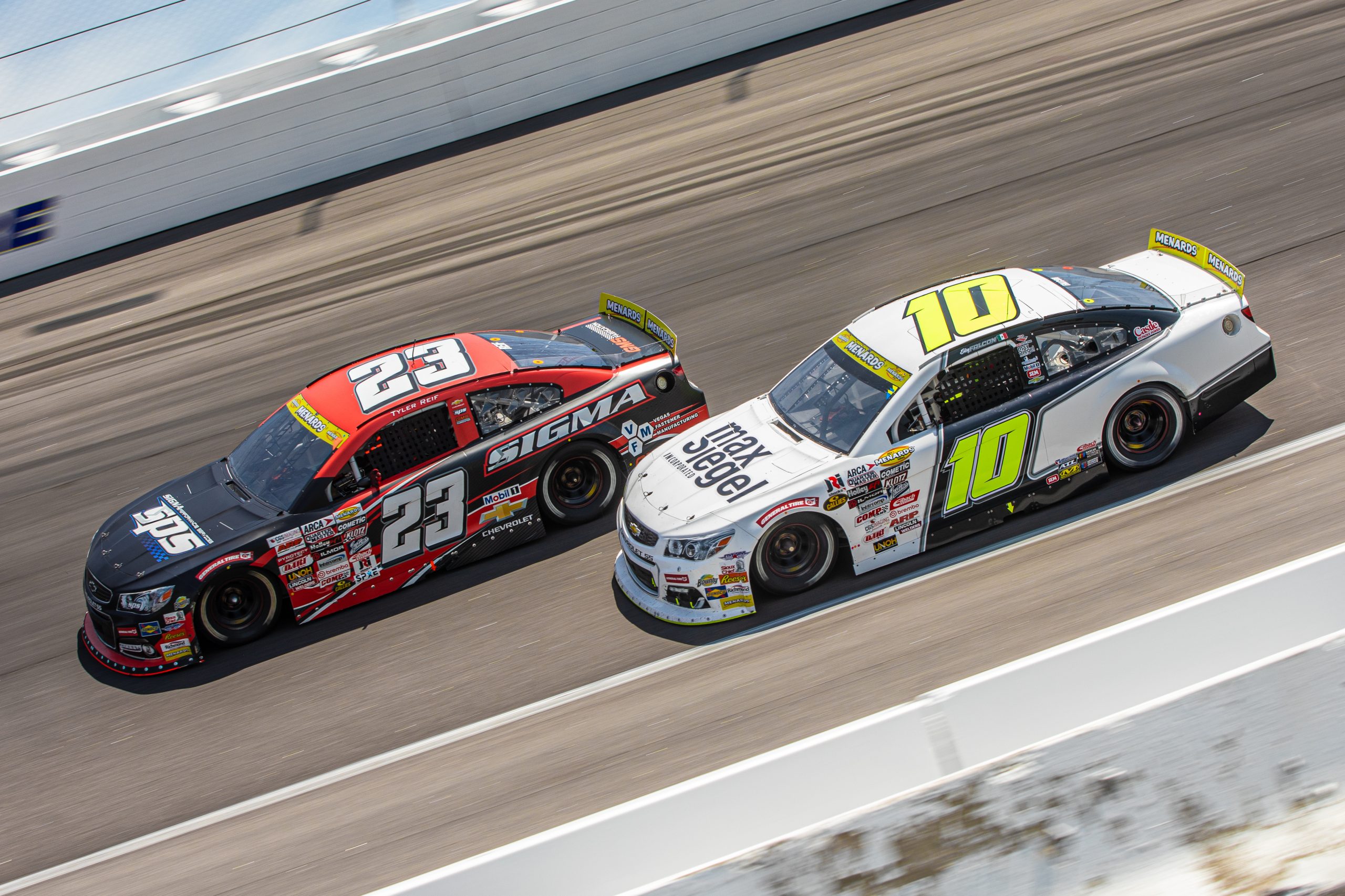
In his first ARCA Menards Series start of any kind last year, Eloy Falcón, No. 10, recorded a third-place finish at Rockingham Speedway. (Photo: Ted Malinowski/NASCAR)
Yet change was on the horizon for Falcón in a way he did not expect. He was left without an ARCA ride at the start of 2026 when Rev Racing ceased operations, forcing him to shift his focus back to Mexico for the time being.
Patience and persistence led Falcón to Max Calles, who established MCM Racing Development in the early 2020s with the goal of helping foreign-born drivers adjust to racing on American soil. While he wishes the circumstances were different, Calles is cherishing the chance to help develop Falcón as he resumes his quest to find sustainability in the U.S.
“It’s very sad that [Rev Racing] went away, because it built a lot of good drivers,” Calles said. “We’re not trying to be them, but we want to try and help the people who were around that and see how we can help them continue their careers. [Falcón] adapted quick, and I love having him around. He is from Mexico like I am, so it’s really cool to have this relationship.”
During MCM Racing Development’s lifespan, the program has fielded late models and Legends cars for drivers who hail from countries like Mexico, Brazil, Spain and others. Calles expanded his organization’s reach into the ARCA platform this season with Toro Rodriguez contesting races at Nashville Fairgrounds Speedway and Hickory.
Ahead of Saturday’s late model race, Falcón worked closely with Calles all week to ensure their No. 38 could reach its best possible performance. Both had experience at Hickory on which to rely, but Falcón felt the communication he shared with Calles was their biggest strength and translated to their early success.
Once the green flag waved, Falcón’s fortunes changed. After jumping the initial start, he began losing positions rapidly as he tried to find pace in his car while simultaneously managing his tires on Hickory’s abrasive surface. The broken hub in the feature’s closing moments prevented Falcón from regaining any lost ground.
Falcón knew his first race on U.S. soil in months was going to be both physical and mentally demanding at a track like Hickory. Saturday did not go in his favor, but Falcón is eager to build upon the strengths and weaknesses from the weekend so he can tackle his next Late Model Stock race with confidence.
“I need to learn more,” Falcón said. “I’m going to watch [a replay of] the race. I couldn’t run as I wanted, but [Hickory] is a track where you need a lot of laps. We’re going to take all this information home, and [Calles and I] are going to work together to make a faster car.”
Two additional races are planned for Falcón in Calles’ Late Model Stock in July, but there could be room for more events if the funding materializes. If everything goes the way Calles envisions, he believes Falcón could end up driving MCM Racing Development’s ARCA Menards Series car before the year ends.
Calles is taking everything with Falcón one step at a time. He knows Falcón has the talent to thrive in the U.S., so Calles wants to fulfill his role by providing Falcón everything he needs to take that next step forward.
“The main thing now is to get [Falcón] noticed in the U.S. again,” Calles said. “He is still trying to chase his career in the U.S., [so] hopefully we can win with him on this level and see if we can get some funding for him. We have a strong program in ARCA, and I feel like he can be a very good asset.”
Eloy Falcón’s journey has taken plenty of twists the past year, but he is ready to proudly represent his home country of Mexico while competing in the U.S.
Even though Falcón is just now returning to the U.S., he is by no means having a quiet year. Falcón broke through for his first NASCAR Mexico Series victory at Aeropuerto Internacional De Telum in April, defeating many of the same drivers he once idolized.
Mexico’s proud tradition of motorsports regularly carries over to the U.S. through drivers like Daniel Suárez, who in May became the first Mexican-born driver to win the Coca-Cola 600. Falcón is determined to continue that tradition and hopes his debut outing with MCM Racing Development restarts the momentum he enjoyed in the U.S. last year.
Falcón’s first stint in the ARCA Menards Series provided a preview. Now he wants to experience the euphoria of turning laps around the U.S.’s most prestigious tracks once again, something he believes is close to becoming a reality.
“At the beginning of last year, I made the test at Daytona, and it was like being in Disneyland,” Falcón said. “I was so happy to make this race. [It’s] still alive, that dream that I have. I want to be back on the wheel at good tracks and with good drivers. We’re going to work really hard, try to be [successful] and look for that win.
“When some doors close, others open. I think this is a new beginning, and I need to work really hard.”
A lot of unknowns await Falcón after Hickory. He still needs to find sponsorship and can do that by showing consistency across his planned starts with MCM Racing Development. Yet Falcón understands the best way to create clarity about his future is to win, something he has done plenty of times between the U.S. and Mexico.
No matter where Falcón’s racing journey takes him next, one thing is certain: He will have a smile on his face.
LONG POND, Pa. — All is right in the land of Legacy Motor Club lately.
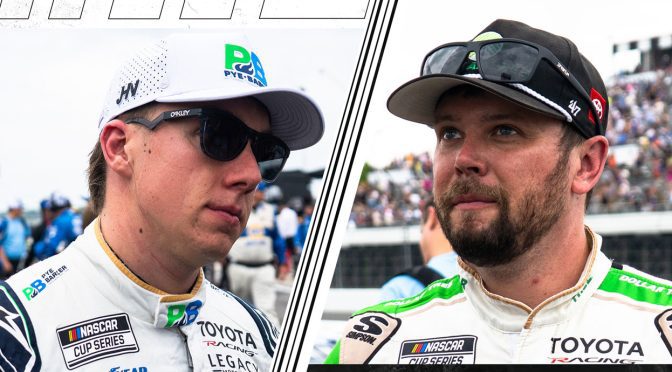
John Hunter Nemechek and Erik Jones combined to impress at Pocono Raceway, with both qualifying inside the top 10 on Saturday and running well enough Sunday to finish there as well. Nemechek wheeled the No. 42 Toyota to a fourth-place finish — his first top five of 2026, tying his career-best result — while Jones motored the No. 43 Toyota to a sixth-place finish around the “Tricky Triangle,” each earning 41 points in Sunday’s contest.
Legacy M.C. has flexed its muscle in recent weeks, particularly through a runner-up effort for Jones one week earlier at Michigan, which followed an 11th-place run at Nashville. Pocono felt different, though, with both teams displaying speed Saturday and executing sterling performances Sunday at Pocono.
“It’s huge,” Nemechek told NASCAR.com. “I think that we’ve seen a lot of potential out of both the 42 and the 43 the last few weeks, probably the last month and a half overall. And it’s one team. We’re here, we push each other. We all work really close alongside each other. Our processes and procedures that we have in place, there’s a lot of things that make this one team, and the culture continues to grow that way. So it’s exciting to see speed from the 42 and 43.”
Nemechek led a career-high 42 laps Sunday after qualifying eighth and capitalizing on strong restarts and track position early. One early restart resulted in a multi-lap battle with Cup Series points leader Tyler Reddick, circling the 2.5-mile triangle side-by-side turn after turn. That experience is invaluable for Nemechek, who, with an average finish of 21.4 this season, typically finds himself in a mid-pack hornet’s nest.
“It’s way different,” Nemechek said. “It’s just like restarts, right? Like, how to execute restarts up front compared to in the back; how to execute passes when you’re side by side, racing for the lead. That was really one of the first instances that I’ve been able to do that in the Cup Series with the speed and potential that we had in our race car today and how well we executed today.
“Definitely still a lot to learn on my side — not even close to being, I feel like, at the top level to contend for race wins and stuff yet. But we’re working on that and being able to run up front and get the experience from running up front, executing restarts, and racing for the lead and how to position your car in order to drag them back and make them tight aero-wise.”
Jones, Nemechek’s veteran teammate, has typically done well at Pocono Raceway, even dating back to his days in ARCA Menards Series competition. He made sure his newfound momentum didn’t go to waste, scoring 40 or more points in consecutive weeks for the first time this year. His points gain Sunday propelled him three spots to a tie for 15th, placing him inside the provisional 16-driver cutline for The Chase with 10 races remaining in the regular season.
“We’ve got to just keep putting them together, you know?” Jones said. “This was a race where, honestly, we just ran to our ability. It was nothing more, nothing less. I feel like we were maybe a little better than the 5 (Kyle Larson) at the end, but sixth place is kind of where we were. Got a bunch of stage points, which was good, in the second stage, and we’re doing what we need to do to work towards these playoffs. Proud of the speed, proud of the effort, continued speed, and continued, just, cars that are driving good right now and hopefully we keep going.”
The unity Nemechek referred to was top of Jones’ mind as well, especially now that both Legacy Toyotas were up front and collected similar data to share in Monday’s competition meetings.
“It just makes everything in the company simpler,” Jones said. “I feel like (when) we’re going to have our meeting (Monday), John Hunter’s balance is going to be way more similar to what I’m fighting when he’s running up front instead of 15th or 20th. That makes everybody’s life easier when you’re trying to build cars and work on the same things. Not just the momentum and the confidence in the company, the people that work and build these cars put together better race cars, cleaner, nicer, that momentum builds in the shop, too, when everybody’s running well.”