RELATED: Sunday’s full lineup


CONCORD, N.C. — Three NASCAR Sprint Cup Series teams picked up their fourth warnings for inspection issues Friday, meaning they will be the last three to select pit stalls Saturday for Sunday’s Coca-Cola 600 at Charlotte Motor Speedway.

Cited for inspection issues were the teams of six-time Sprint Cup Series champion Jimmie Johnson (Hendrick Motorsports), teammate Dale Earnhardt Jr. and Richard Petty Motorsports driver Aric Almirola.

Johnson qualified seventh Friday, while Almirola was 20th and Earnhardt was 25th.

The loss of pit stall selection does not affect the three drivers’ starting position in the 40-car lineup for Sunday’s 400-lap event.

NASCAR may issue warnings for minor infractions that occur during the pre-qualifying and pre-race inspection process. Once a team receives a fourth warning, the loss of pit stall selection is put into play. If the fourth warning is received prior to the pit selection process, it is enforced at that event. If the fourth warning comes after the pit stalls have been chosen, it will be enforced at the next scheduled race (or race in which that team participates).

Johnson’s team received its fourth warning after failing template inspection twice, thus requiring a third pass through that inspection station.

Earnhardt Jr.’s No. 88 team also required three trips through template inspection resulting in a fourth warning.

Almirola’s team was tagged for requiring more than the allotted number of trips through the template and the laser inspection station.

Once a team receives its fourth warning, its total is reset to zero. Warnings cannot be appealed.

RELATED: 2016 Cup schedule | Memorial Day weekend schedule

Changes to the rear spoiler, front splitter and rear deck fin will be put into play for two upcoming NASCAR Sprint Cup Series races as the sanctioning body continues to reduce aerodynamic downforce and sideforce in an effort to promote closer competition on the race track.


The changes, announced Thursday morning, will be in effect only for upcoming races at Michigan International Speedway (June 12) and Kentucky Speedway (July 9) and are in addition to previous adjustments made by the officials in recent weeks.


Initial moves implemented before the start of the season combined with a Goodyear tire matched more closely to the lower downforce package have resulted in closer competition through the season’s first 12 races. Why, then, continue to make adjustments in the overall package?


“I think we look at it as a never-ending journey; if we can improve we’re going to do that,” Steve O’Donnell, executive vice president of competition and chief racing development officer, told NASCAR.com. “We wanted to go the direction of low downforce, see how that worked, not kind of go all the way in and hope that we are directionally right. And we are seeing that play out. We’ve seen some great racing at the beginning of the year.


“But we also knew that we had some more levers that we could pull if the direction kind of proved out, so we’ve tried some of those things. We’ve tested it and what we’ve also wanted to do is lower some of the corner speeds to allow for even more passing. That was one of the areas where we’ve seen minimal change, but there are some levers we can pull to really drive that down.”


The changes for those races consist of a reduction in spoiler height from 3.5 inches to 2.5 inches, a splitter reduction of two inches and a re-sizing of the rear deck fin to complement the spoiler change.


Beginning with this year’s race at Kansas Speedway, NASCAR required teams to weld truck arm mounts; for the recently completed Sprint All-Star Race at Charlotte Motor Speedway, downforce-generating electric fans were removed and the rear toe alignment was reset to zero to reduce sideforce.


The changes to truck arm mounts and fans are to remain in place for the remainder of the 2016 season. The rear toe adjustment was initially only in play for the All-Star event but now will be incorporated into the June Michigan and July Kentucky races.


Downforce is the pressure created across the surface of a vehicle at speed. Likewise, sideforce is generated by the flow of air along the sides of the vehicle.


O’Donnell said limiting the latest changes to two upcoming races is beneficial in two ways: Teams have spent plenty of time in development of setups with the initial base package and that information will still be relevant; and focusing on two tracks will give teams and officials much-needed information as they look ahead to 2017.


“We have worked collectively on some directions we want to go in, but to do that right we think the final step is to let that play out on one or two tracks,” he said. “And these are the two — Kentucky and Michigan — that we’ve played out and let the teams concentrate really on what they’ve done to prepare for the year. We think that’s manageable and that’ll give us enough data to look at for 2017.”


Four teams recently tested the aero changes while taking part in a one-day Goodyear tire test at Michigan. Kentucky, which just completed a re-pave and redesign of its 1.5-mile layout, remains an unknown. It is expected to be fast with the additional grip provided by the new pavement.


Ray Evernham, winner of three premier series titles as crew chief for Jeff Gordon and currently in a competition role with Hendrick Motorsports, said rule changes don’t necessarily create more work for teams, but rather redefines the focus of what’s being worked on.


“Everybody works on something, no matter what,” Evernham told NASCAR.com. “… It just changes that focus because any of the good teams are working to the maximum on something all the time.”


Evernham said he had been impressed with how the previous changes had affected the racing this season. The All-Star Race, he said, provided “the best racing we’ve seen at Charlotte in awhile.


“That’s what’s coming around the corner. That’s exactly what everybody has been asking for — the drivers, fans, everybody,” he said. “That was some darn good racing in the daytime and in the nighttime. That’s what I’m focused on. I think that NASCAR and Goodyear and the teams are getting to a place now where the cars are competitive like they want them, but it gives the drivers, crew chiefs and teams a lot more options to have passing.”


All races with the rules package, with the exception of this year’s stop at Auto Club Speedway, have been contested on 1.5-mile or smaller venues. The package is not in play for restrictor-plate races at Daytona and Talladega.


Will the base package provide similar results at the larger venues? Pocono (2.5 miles), Michigan (2 miles) and Indianapolis (2.5 miles) loom ahead.


O’Donnell believes that will be the case.


“I think one of the biggest things we’ve seen from Goodyear is the ability to match the tire up now with where we’re going, the tire wear we’re seeing producing much better racing,” O’Donnell said. “If you take a Michigan for instance, one of the things with low downforce, if you don’t do anything to the tire, you’re going to go in and the speeds are going to continue to increase. We know that’s a challenge for us. How do we balance that with the corner speeds?


“By tweaking the package a little bit, it’s really going to keep what we’ve seen from the positive play out and then really lower that corner speed which should produce the best of both worlds.”

Buy Tickets: Michigan | Kentucky

RELATED: NASCAR tweaks rules package for Kentucky, Michigan


CONCORD, N.C. — The photograph in the back of the media center at Charlotte Motor Speedway shows the No. 5 Chevrolet of Geoff Bodine sideways coming out of the turn, smoke rolling off the tires with Dale Earnhardt and Bill Elliott right on his bumper.

It’s a photo from the 1987 running of The Winston at Charlotte Motor Speedway.

It’s a photo that captures the attention of Joe Gibbs Racing driver Carl Edwards.

The 2016 base rules package adopted by NASCAR for its Sprint Cup Series continues to evolve. Additional tweaks were announced Thursday, changes that will be adopted for races at Michigan International Speedway (June 12) and Kentucky Speedway (July 9) in a move to remove additional downforce and sideforce.

There are “absolutely no negatives” to the path NASCAR has chosen, according to Edwards.

“This sport, to me, and I can speak as a fan — until I got that call from Jack Roush, this was just something I dreamed of doing and watched on television and the things that I grew up watching drivers do with these race cars,” Edwards said Thursday during his media availability at CMS.

“Like that picture with cars sideways and hanging it out; stock car racing, NASCAR racing is built on that. I can’t applaud NASCAR enough for going that direction. I don’t see any negatives. I think we’re just going to have better and better racing.”

The latest revisions to the current package consist of decreasing the size of the rear spoiler (both height and width) and adjusting the rear deck fin as well as trimming two inches from the inside portion of the front splitter.

Previous moves included changes in the rear toe settings and the removal of electric fans used to move air out from underneath the cars. Requiring teams to weld all truck trailing arms, which also addressed skew, was put into play at Kansas.

NASCAR completed on-track testing of the latest moves a week ago during a Goodyear tire test at MIS.

Edwards was not a participant in the test but said that having less spoiler is a positive.

“I can only imagine that having a smaller spoiler and a narrower spoiler and less of a hole in the air not only makes your car drive better, but it also is going to disturb less air when you have a big pack of cars,” he said.

“At these big tracks, this is a big race car driving through the air at 195 mph and the smaller you can make that hole, the easier it is for people behind you to catch you and that’s what we want to see; we want to see guys who can get together. We’ve seen a lot of that this year and as we go this direction, I really believe and would be surprised if it doesn’t get better.”

A shorter spoiler will create less drag, which increases speeds. But the loss of downforce and sideforce should create more off-throttle time by drivers in the corners and open up passing zones.

“We’ve got a spoiler that’s 2-1/2 inches high and 53 inches wide; 53 wide is the same dimension as the superspeedway spoiler, but the superspeedway spoiler is 4-1/2 inches high,” Gene Stefanyshyn, NASCAR Vice President Innovation and Racing Development, said Thursday. “We narrow it up and we make it shorter; we’ve taken downforce off the back of the car and we’ve taken sideforce off the right side of the car (by making it shorter on the right side of the car).”

The tapered deck fin and neutral toe changes were “sideforce reduction” plays, he said, while the front splitter change will lessen front-end downforce.

Stefanyshyn said the combined changes dropped corner speeds by 10.5 mph on average; corner entry speed was up by 2 mph.

“They’re going to be going faster, but the fact that we took 10 (mph) out of the corner … they’ll only get part of it back because they’ll be coming out of the corner slower,” he said.

Chip Ganassi Racing driver Kyle Larson was one of the four drivers taking part in the MIS test.

“As we took the rule changes and put them in the car — I only got a couple of laps because it started raining — but I was already off throttle a lot more,” Larson said. “I think we were about 10 mph slower in the center of the corner.

“I expect the racing to be really good. I think with you lifting, the groove will move up some. It’s just going to, hopefully, be really exciting racing.

“I think you can see every race track we have been to this year has been much better racing. That was just a smaller step in downforce. Another step will just make it better, we hope.”

RELATED: Class of 2017 announced | See all the nominees


NASCAR’s latest group of Hall of Fame inductees has been determined, but as is often the case, there are questions that remain unanswered.

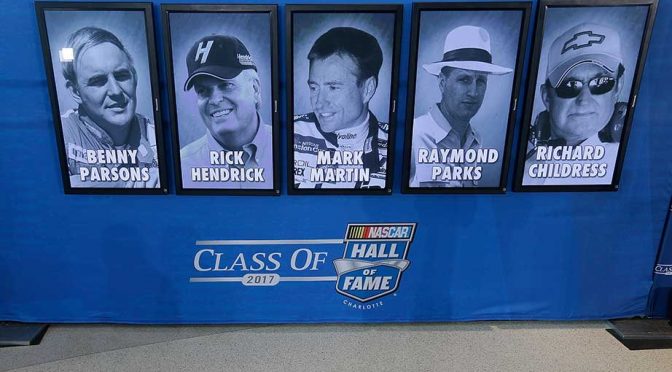
The selection of car owners Richard Childress, Rick Hendrick and Raymond Parks, along with driver Benny Parsons, as four of the five inductees for the Class of 2017 means that 24 of the 25 names on the inaugural list of nominees are now members of the NASCAR Hall of Fame.

The only nominee from that list who has not been chosen for induction is Red Byron, NASCAR’s first Modified and Strictly Stock (the forerunner of today’s premier series) champion.

Eight classes in and Byron, who won two races in just 15 career starts, appears no closer to selection than he did when the original list of nominees was released in July of 2009.

Byron, who passed away in 1960, has obviously been seen as worthy of consideration by the Nominating Committee, which meets annually to compile each year’s list for consideration by the Voting Panel. While it is not a requirement that those not chosen for induction remain on the list of nominees for the following year, it has often been the case.

Should there be a limit to how long a nominee can remain on the Hall of Fame ballot? If a nominee hasn’t been selected for induction after, say, 10 years, should his or her name come off the ballot?

It doesn’t appear likely that there will become an increasingly long list of nominees who continue to be passed over, but the possibility exists.

The formation of the Landmark Award, now in it’s third year, has eased some of the concern there, although one can be on the ballot for Hall of Fame consideration as well as the Landmark Award.

RELATED: Ty said grandfather is ‘hero’ | Childress, Hendrick, Parks chosen

A second concern often voiced involves inducting those who remain active in the sport, particularly car owners. Childress, Hendrick and Jack Roush remain at the helm of their respective organizations. Their careers are not complete.

Eligibility guidelines for drivers stipulate that he or she have competed in NASCAR for a minimum of 10 years and have been retired for two years. Additionally, any driver who has competed for 10 years and is 55 years old on or before Dec. 31 of the previous nominating year is eligible for consideration.

Any driver competing for 30 or more years is automatically eligible, regardless of age.

For non-drivers, the only requirement is that they have worked in the NASCAR industry for at least 10 years.

Anyone who has made significant achievements in NASCAR, regardless of occupation, but did not meet the previously mentioned minimum requirements may also be considered.

Should those still involved, in whatever fashion and to whatever extent, be considered when many others who are no longer active have yet to be nominated and/or inducted?

Well, would that person be chosen if he or she was no longer active?

In most cases, the answer has been yes. What then would be the purpose of delaying the inevitable?

Childress, Hendrick or Roush may decide to step aside at some point and turn their organization over to someone else. But what if they don’t? What if they remain at the helm until they are physically no longer able to do so?

Should they, or anyone else, not be considered simply because they’re still living? Fortunately, that is not the case.

Should each year’s group of nominees be categorized, with at least one driver, one owner, and one crew chief among those going into the Hall?

Drivers have been the overwhelming choices in recent years — nine of the last 10 members inducted have been selected for their accomplishments behind the wheel. The 2017 class favors car owners.


RELATED: Martin calls selection ‘crown jewel’ of his career


A crew chief hasn’t been inducted since Leonard Wood’s selection in 2013. And there are several worthy candidates on the list of nominees, led by Ray Evernham, a three-time champion with driver Jeff Gordon.

Waddell Wilson was not only a successful crew chief, but was equally successful as an engine builder.

Harry Hyde worked with some of the sport’s most talented drivers, including Hall of Fame member Bobby Isaac, Buddy Baker and Tim Richmond and is credited with 55 victories as a crew chief. Yes he was a colorful character. But he was also extremely successful.

The most obvious drawback is that such a plan could penalize a deserving candidate or candidates based on nothing more than the number of nominees in a particular category during a given year.

The current process is fair and it is deliberate. It is not easy.

Spending several hours with many of NASCAR’s legends and powerbrokers is a tremendous way to spend an afternoon.

But at the end of the day, everyone understands the importance of the process. Each of us is being asked to rate the value of a particular person’s career accomplishments.

That’s a pretty heavy undertaking. And it’s something that none of us take lightly.

MORE: Cain, Bruce reveal Hall of Fame ballots
PRACTICE 2: Results


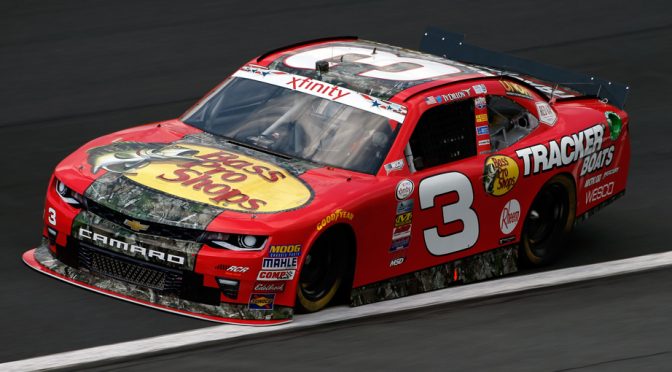
Richard Childress Racing‘s Ty Dillon topped the board in the XFINITY Series’ final practice at Charlotte Motor Speedway. Sitting behind the wheel of his No. 3 Chevrolet, Dillon laid down a field-fast lap of 181.342 mph. 


Landing in the runner-up spot was Joe Gibbs Racing‘s Daniel Suarez in the No. 19 Toyota (181.056 mph) with his teammate Erik Jones — who topped opening practice — right behind him to take third in the No. 20 (180.379 mph).


Defending race winner Austin Dillon, who is pulling double duty this weekend, was fourth-quickest on the speed charts at 180.210 mph. 


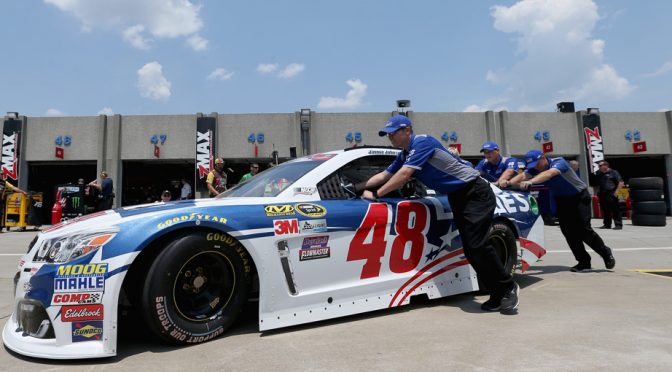
Rounding out the top five was the No. 48 Chevrolet of Brennan Poole, who wheeled his Chip Ganassi Racing entry around CMS at 179.958 mph. 


Next on the agenda for the XFINITY Series is Saturday’s Coors Light Pole Qualifying (11:15 a.m. ET, FS1) for the Hisense 4K TV 300 (2:30 p.m. ET, FS1). 


PRACTICE 1: Results


Two-time 2016 XFINITY Series winner Erik Jones scored the fastest lap during the series’ opening practice at Charlotte Motor Speedway. The No. 20 Joe Gibbs Racing wheelman topped the leaderboard at 181.159 mph.


Next on the speed charts was fellow JGR driver — and Sprint Cup Series regular — Denny Hamlin, driving the No. 18 Toyota at 180.584 mph. This weekend marks the first XFINITY Series start of the season for the Daytona 500 winner.


Fellow Sprint Cup regular Ryan Blaney was third-quickest after propelling his No. 12 Team Penske Ford around the 1.5-mile track at 179.874 mph. 


Daniel Suarez‘s No. 19 JGR entry (179.826 mph) and the No. 3 of Richard Childress Racing‘s Ty Dillon (179.468 mph) were fourth and fifth, respectively. 


Defending race winner Austin Dillon was right behind his brother in sixth (179.378 mph).

RELATED: Practice 1 results


Kurt Busch scooted to the top of the leaderboard in Thursday’s opening NASCAR Sprint Cup Series practice at Charlotte Motor Speedway.


Busch registered a fast lap of 192.843 mph in the Stewart-Haas Racing No. 41 Chevrolet in the first prep session for Sunday’s Coca-Cola 600 (6 p.m. ET, FOX, PRN, SiriusXM), the series’ longest race of the year.


Busch’s lap was .233 seconds faster than Jimmie Johnson, who leads the 1.5-mile track’s all-time win list with seven Charlotte victories. Johnson turned the second-fastest lap at 191.252 mph in the Hendrick Motorsports No. 48 Chevrolet.


Defending race winner Carl Edwards was third-fastest at 191.042 mph in the Joe Gibbs Racing No. 19 Toyota. Kevin Harvick (190.772 mph) and Kyle Larson (190.745) completed the top five.


Joey Logano, a winner at Charlotte last weekend in the NASCAR Sprint All-Star Race, encountered some trouble before turning the sixth-fastest lap. Logano’s Team Penske No. 22 Ford slowed with a broken rear spring as he exited pit road to open the sesssion, forcing him to the garage for repairs.


Reigning Sprint Cup champion Kyle Busch, Edwards’ JGR teammate, clocked the 10th-fastest lap of the 85-minute session in the No. 18 Toyota.


Coors Light Pole Qualifying for the 600-mile race is scheduled for Thursday at 7:15 p.m. ET (FS1). Two more Sprint Cup practice sessions are slated for Saturday.

RELATED: Photos of Voting Day, inductees


NASCAR.com was privileged to have two ballots cast as part of NASCAR Hall of Fame Voting Day on Wednesday. Senior writers Kenny Bruce and Holly Cain each submitted their five nominations for induction in the Class of 2017 and a vote for the Landmark Award for Outstanding Contributions to NASCAR.
 
A spirited discussion and voting process created one of the most intriguing classes in the stock-car shrine’s history with Richard Childress, Rick Hendrick, Mark Martin, Raymond Parks and Benny Parsons selected as Hall of Fame members. Martinsville Speedway founder H. Clay Earles received the Landmark Award.
 
Here are Holly’s and Kenny’s ballots cast Wednesday with their choices for induction:

Kenny Bruce


Ron Hornaday Jr.
No one dominated NASCAR’s Camping World Truck Series like Hornaday, the only four-time series champ. He remains the leader in career wins, top-five and top-10 finishes in Truck Series history.

Mark Martin. The working man’s racer; Martin finished second in the premier series points battle five times and earned 40 wins in 882 career starts. His XFINITY Series record wasn’t too shabby, either.


Benny Parsons. Folks who knew Benny the Broadcaster might not know just how talented Parsons was behind the wheel of a race car. The 1973 premier series champion, Parsons won 21 times, including victories in the Daytona 500 (1975) and World 600 (’80).

Raymond Parks. The Atlanta-based businessman not only provided much-needed financial assistance as the newly formed NASCAR governing body got up and running, but Parks was a successful car owner as well. His career as an owner peaked in 1949 when driver Red Byron won NASCAR’s first Strictly Stock crown. A year earlier, Byron had won the group’s first Modified title in a Parks-backed entry.


Robert Yates. As an engine builder, Yates helped power Bobby Allison, Darrell Waltrip and Cale Yarborough to 77 victories. As a car owner, his drivers won three Daytona 500 titles, 57 races and 48 poles.
 
Landmark Award
H. Clay Earles. His Martinsville Speedway was there from the beginning (actually before NASCAR was formed) and it remains a popular stop today as one of three short tracks on the premier series schedule. Keeping up with the changing landscape of the sport wasn’t easy, and no one did it better than Mr. Earles.

Holly Cain

These are the Hall of Fame votes I considered the most worthy and timely, considering a ballot of 20 of the sport’s most deserving people. I tried to decide on a well-balanced group of drivers, owners and technical people and considered time on the ballot, too.


Some I did not vote for this year I feel like will be definite choices in the upcoming Hall of Fame votes.

Red Byron. NASCAR’s first champion should be in its Hall of Fame for historic reasons. He won NASCAR’s very first race on Daytona Beach in 1948, won NASCAR’s first “season” championship and then its first Strictly Stock title, which is the modern era Sprint Cup crown.

Raymond Parks. He owned the first championship car driven by Red Byron and for many of the same reasons Bryon needs to be in the Hall, so does Parks. Even after the two early titles he fielded cars for greats such as Bob and Fonty Flock. He is the sport’s heritage, its beginning.

Benny Parsons. Many current NASCAR fans know Benny from his ease and skill behind the television microphone and camera once he retired from driving a race car, but he was an amazing competitor, too, winning NASCAR’s two biggest trophies — the 1973 Cup championship and the 1975 Daytona 500. Perhaps most amazingly, he finished among the top 10 in 54 percent of the races he ran.

Waddell Wilson. It is impressive Wilson was so successful both as an engine builder and a crew chief. He built the motors that David Pearson and Benny Parsons drove to titles and as a crew chief led Buddy Baker and Cale Yarborough (twice) to Daytona 500 wins. He built the first engine that broke 200 mph — driven by Parsons in qualifying for the 1982 Winston 500.

Robert Yates. This is another example of the ultimate in successful multi-tasking. Similar to Wilson, he built championship-quality engines (1983 with Bobby Allison) and then Yates owned a championship team, fielding the car with which Dale Jarrett won a title in 1999. He owns three Daytona 500 wins as part of a 57-win legacy as a team owner and won 77 races as an engine builder.


Landmark Award
Ralph Seagraves.
This was a tough category. My selection was based on his contribution really being a turning point for the entire sport. Under Seagraves’ leadership, RJ Reynolds provided top-dollar, high-promotion sponsorship of the sport that lasted for more than 30 years. It thrust NASCAR into another stratosphere as far as the American sports landscape was concerned and absolutely created a foundation that is still enjoyed today.

RELATED: Photos from the induction day


Mark Martin told the tale more than once on NASCAR Hall of Fame Voting Day this week, about his connection to fellow inductee Benny Parsons.

Martin was a teenager — “a nobody,” as he termed it — with racing dreams carved from his earliest days of wheeling cars on dirt. Parsons, in the prime of his driving career in the mid-1970s, took time for the Arkansas youngster and his father, sharing advice over lunch in his hometown of Ellerbe, North Carolina.

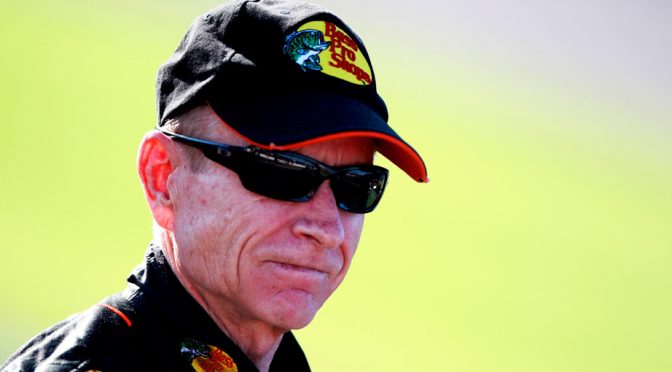
Talk about a follow-through. Martin, 57, joined Parsons among the five chosen for induction in the NASCAR Hall of Fame’s Class of 2017.

“It hasn’t soaked in yet,” Martin said by telephone Wednesday after the Hall’s announcement. “I didn’t expect it. It is, by far, the crown jewel of my career and I’m so grateful for the people that helped me get there.”

Martin wasn’t in Charlotte to hear his name called; instead, he was on his way to Indianapolis, reasoning that he wouldn’t be among the five inductees this year. Martin was named on 57 percent of the voting panel’s ballots, third-most among the 20 nominees. Still, he took the unexpected nature of being selected to heart, saying, “If I would’ve been on the voting panel, I would’ve probably voted another way.”

Martin’s credentials — both his success and his longevity across four decades in NASCAR competition — eventually won out in just his second year on the ballot. Martin won 40 times in NASCAR’s top division and combined for 56 more victories in its other two national series.

But Martin acknowledged the gaps in his resume, those that he came heart-wrenchingly close to achieving. Among those were his five runner-up finishes in the championship standings and his 0-for-29 career streak in the Daytona 500, the sport’s most prestigious race.

After Wednesday’s accomplishment, Martin said that Hall of Fame induction fills any potential voids.

“Look, I don’t have a Daytona 500 trophy and I don’t have a championship trophy, and I said many times that when people would complain about my not having one of those, I would ask the question: ‘How would my life be different if I had one?’ ” Martin said. “And I truly believe that my life would not be very different. But my life will be different from now on because I’m in that Hall, because that is my crown jewel.

“That speaks of not one year worth of success, not one great achievement, but a body of work, and that’s what I’m proud of.”

DAYTONA BEACH, Fla. (May 26, 2016) — NASCAR® is collaborating with Academy Award-winning director Steven Soderbergh on a feature film entitled Logan Lucky, starring Channing Tatum alongside Katherine Heigl, Daniel Craig, Riley Keough, Adam Driver and Seth MacFarlane. Depicting a theoretical heist at Charlotte Motor Speedway, the project will mark Soderbergh’s first feature film since announcing his retirement from the film industry in 2013. Soderbergh, who also directed heist film Ocean’s Eleven, is best known for his work on the critically acclaimed Traffic and Erin Brockovich, which garnered him two Oscar nominations and the accolade of Best Director.


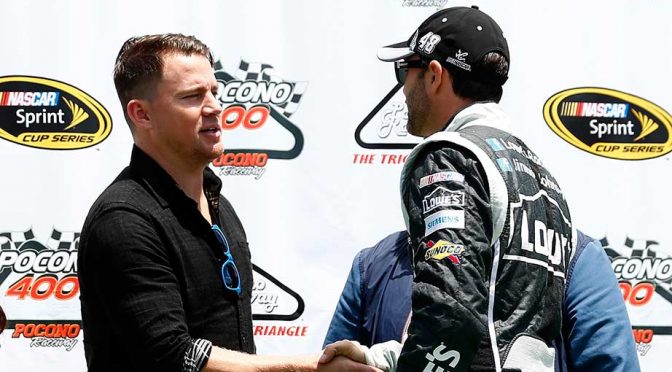
This will not be Tatum’s first experience working with NASCAR or Soderbergh. He and 22 Jump Street co-star Jonah Hill served as grand marshals for the NASCAR Sprint Cup Series™ Pocono 400 in 2014, while Tatum and Soderbergh previously teamed up for the Magic Mike films, Haywire and the 2013 thriller Side Effects, which was the most recent film project led by the acclaimed director.


“We are excited to work with Steven, Channing and all of Logan Lucky’s incredible cast and producers,” said Zane Stoddard, NASCAR vice president of entertainment marketing and content development. “It’s a big-hearted, fun story that showcases NASCAR and Charlotte Motor Speedway as the world-class sports entertainment property and venue that they are, much like the Bellagio in Steven’s Ocean’s Eleven.”

Logan Lucky is tentatively scheduled for release in Fall 2017. Mark Johnson, Gregory Jacobs and Reid Carolin are producing. Zane Stoddard is executive producing for NASCAR.


Pre-production filming will begin this weekend at the NASCAR Sprint Cup Series Coca-Cola 600, which airs live on FOX at 6 p.m. ET on Sunday, May 29.

RELATED: Lineup | See each car in Sunday’s race


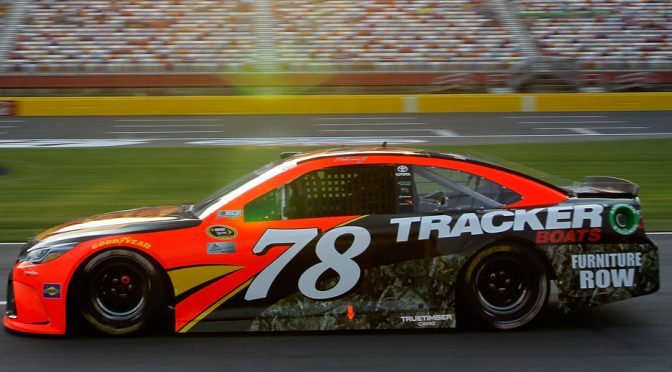
CONCORD, N.C. – Martin Truex Jr. crashed a Ford party on Thursday night, winning the pole for Sunday’s Coca-Cola 600 at Charlotte Motor Speedway (6 p.m. ET, FOX, PRN, Sirius XM NASCAR Radio).

With his team making adjustments to the No. 78 Furniture Row Racing Toyota throughout the qualifying session, Truex saved his best lap for the round that counted, covering the 1.5-mile distance in 28.077 seconds (192.328 mph) to edge Team Penske Ford driver Joey Logano (192.007 mph) by .047 seconds for the top starting spot in NASCAR’s longest race.

The Coors Light Pole Award was Truex’s second of the season and the ninth of his career. Both of the New Jersey driver’s poles this year have come on 1.5-mile tracks, the previous one at Kansas Speedway earlier this month.

“We really had to work pretty hard for it today,” said Truex, whose lap in the final round of qualifying was .27 seconds faster than his fastest practice lap. “It was just one of those Charlotte deals where the track was continuously changing.

“We were just chasing the race track and changing the car and really never got it close to right until that last run. I’m really just proud of the effort and proud of all my guys for that. It feels good – 600 miles, that first pit stall (the pole winner’s prerogative) … We’re going to be on pit road a lot on Sunday night, and that’s certainly going to be an advantage.

“Hopefully, we can take advantage of it and make it work for us.”

Logano led both the first and second rounds but couldn’t match Truex’s top speed in the third and final session.

“I got a little bit tight landing in (Turn) 1 and then a little bit free off (the corner),” Logano said. “It wasn’t much. And then (Turns) 3 and 4, I actually thought was a pretty good corner.

“So I would say most of it was down in 1 and 2 – probably at landing and through the center is where I lost most of my momentum. It’s not much. Half-a-tenth of a second doesn’t take long.”

Logano was the best of the Ford drivers, who held three of the four top spots in the first round of knockout qualifying and swept the top four in the second. In the final round, Fords were second, third and fifth.

Ricky Stenhouse Jr. qualified third at 191.428 mph, followed by Denny Hamlin (191.388 mph) and Brad Keselowski (190.968 mph). Joining Stenhouse in the top 10 were his Roush Fenway Racing teammates Greg Biffle (sixth) and Trevor Bayne (10th), marking the first time since the April race at Texas in 2014 that three RFR cars have made the final round of knockout qualifying.

Dale Earnhardt Jr. will start 25th after failing to advance past the first round by .014 seconds. Matt Kenseth (27th), Austin Dillon (28th) and Kasey Kahne (29th) also will have to come from deep in the field after disappointing efforts in time trials.

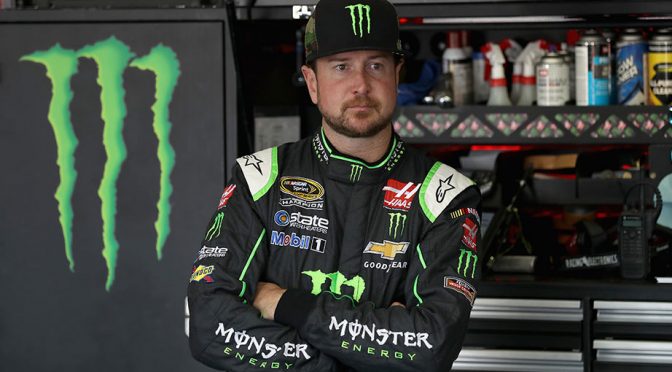
Kurt Busch, who topped the speed chart in opening practice with the fastest lap of the day (192.843 mph), will start 13th after failing to make the final round by .08 seconds.