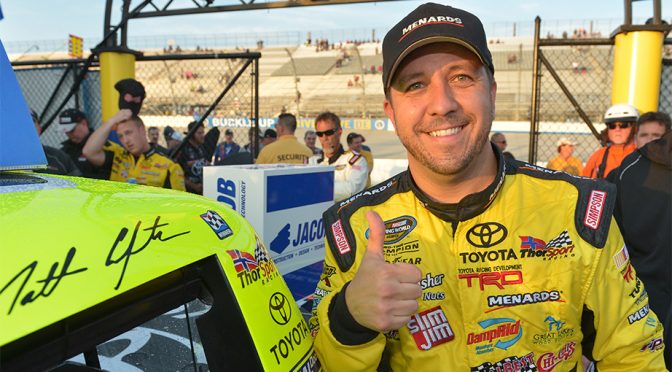
CONCORD, N.C. — Being a two-time champion in the NASCAR Camping World Truck Series has its share of perks for Matt Crafton. But besides the laurels, there’s also a certain amount of responsibility, one that involves helping the next generation of drivers learn their way.


For the third straight season, Crafton has helped preside over the series’ rookie orientation meetings, joining series director Elton Sawyer in providing insights for the truck tour’s new crop of talent.


In recent years, the duty has fallen to the reigning series champion, which Crafton achieved with consecutive titles in 2013 and 2014. But with last year’s champ, Erik Jones, shifting to the NASCAR XFINITY Series full-time this season, Crafton was asked back.


“If it’s something where I feel I can help the rookies and possibly make it better racing, that’s what it’s all about,” said Crafton, who’s back on top as the series’ points leader after last weekend’s victory at Dover International Speedway. “I remember being a rookie and going to some of these places and not having a damn clue what I was doing or what to expect on some new race tracks, so if you can give them a little bit of insight as a group and then I always tell them at the end, if you ever have any questions, they’re always free to ask me whatever they need to ask me in the trailer afterward. It’s part of it.”


It’s been 15 years since the 39-year-old Crafton was a truck series newbie, almost as long as the lifespan of some members of this year’s rookie crop. When Crafton was on the other side of the first-year drivers’ orientation, he learned from a rotation of the series’ pioneers — Ron Hornaday Jr., Mike Skinner, Todd Bodine.


Times may have changed over the course of Crafton’s career, with the driver roster seemingly skewing younger. But it’s also tilted to an even more ambitious and talented class in one of NASCAR’s most competitive divisions.


“Just to think they’re racing in the Camping World Truck Series at 16 years old like they can do, it’s nuts,” Crafton says. “It’s just crazy the amount of pressure that’s on these kids. The thing is, they’re in great, great equipment. I can honestly say, everybody always says each and every week that, ‘oh, there’s such a great group of rookies out there.’ There’s been a great group of rookies a lot of years in the Camping World Truck Series since I’ve been here, but not all of them have always been in great equipment.”


On this damp Thursday morning, Sawyer and Crafton hold court in the suites over Charlotte Motor Speedway‘s pit road. A group of 15 young drivers — some true rookies and some who were preparing for their first start on the 1.5-mile track — circled around, awaiting direction over the racket of the Air Titans drying the pavement.


Before diving into a discussion about race procedure, Sawyer singled out John Hunter Nemechek, attending his last required rookie meeting at Charlotte — the last track missing from his truck series portfolio. “I thought Elton was going to bring me a cake this week, a certificate or something for graduating,” the 18-year-old Nemechek joked later. “He said he forgot, so I may have to get a cake in to him that says ‘Race Director’ or something on it.”


Sawyer emphasized the high notes from the crew chief’s handout, providing watch-outs about gamesmanship on restarts and other procedures. But he also ceded plenty of time to Crafton, who answered a question from ThorSport Racing teammate Rico Abreu about the blend zone off pit road and how hard he could hustle back onto the race track.


The inquiry led to a detailed description from Crafton about one of the most finicky tracks on the circuit. In vivid terms, Crafton explained the speedway’s character, how much the groove widens in time, how delicate side-by-side racing can be, and what he called the “gnarliest” transition as trucks dive into the Turn 1 banking.


“When we go to a new race track, it’s just learning the basics of the things that we need to look out for, especially here,” says 18-year-old rookie William Byron, who became the series’ newest first-time winner two weeks ago at Kansas Speedway. “He’s talking about the transitions and just things to watch out for in the race. It’s good to have a broad perspective of what it’s going to be like racing here. It gets you a little bit more comfortable.”


Even Nemechek, already a two-time truck series winner on intermediate-sized tracks, has seen the benefits.


“It was a good experience. They all helped every time you went,” Nemechek says. “… Any veteran that you can get and talk to and listen to that you know is going to shoot you somewhat straight when you come to a new place, it can only help you — from race trends to how to get on and off pit road to the characteristics of the race track.”


Crafton’s 366 career starts — an all-time series best — count as an encyclopedic amount of experience, and the back-to-back titles speak to his success. But the longtime veteran says he still finds time to pick up on things from the cub drivers with single-digit starts on their record.


What does he learn?


“Some of these kids nowadays, they just know more than we do,” Crafton says with a playfully satirical grin. “I have a daughter who’s 3 and she already knows more than me.”
RELATED: Harvick through the years

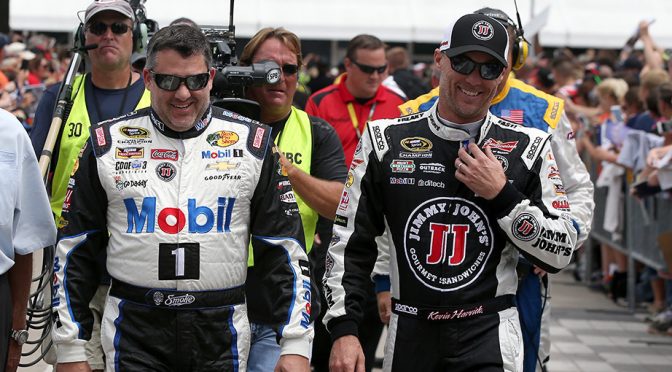
Stewart-Haas Racing announced Thursday that it has signed Kevin Harvick to a long-term contract extension, scuttling any outlying speculation about his future with the team. Details of the deal were not released.

Harvick, 40, is in his third year with the SHR No. 4 Chevrolet team and crew chief Rodney Childers. Harvick won his first NASCAR Sprint Cup Series championship in 2014, his first year with the operation co-owned by Tony Stewart and Gene Haas.

“It was a big decision to join Stewart-Haas Racing and it has turned out to be my best decision,” Harvick said in a release provided by the team. “I came to Stewart-Haas Racing to win championships. We have one, but that only made us hungry for more. I’m very happy to have my future secure with a team so dedicated to winning.”

Thursday’s news quashes speculation that Harvick might leave the team, which is moving from Chevrolet to Ford for the 2017 season. Harvick has made 550 starts in NASCAR’s top division, all in Chevrolets.

“Kevin’s results speak for themselves, and in addition to those numbers, he brings a presence to our team that makes everyone want to work harder,” Stewart said in the release. “Kevin Harvick has made Stewart-Haas Racing a better team and he will continue to be an integral part of our future.”

Childers signed a multi-year contract with the No. 4 team last June. Thursday’s announcement promises to keep one of the series’ most successful driver-crew chiefs pairings together for the indefinite future.


Harvick has notched nine of his 32 career Sprint Cup wins in Stewart-Haas equipment. Since making the transition to SHR, he has finished first (2014) and second (2015) in the driver standings, and ranks as the top point-earner so far this season.

Harvick will address the media Friday at 1:15 p.m. ET in the media center at Charlotte Motor Speedway, site of Saturday night’s NASCAR Sprint All-Star Race (9 p.m. ET, FS1, MRN, SiriusXM). Video of the news conference will be live-streamed on NASCAR.com.

CHARLOTTE, N.C. — Championships are nothing new for Joe Gibbs Racing. The organization won three premier series titles during a six-year stretch with drivers Bobby Labonte (2000) and Tony Stewart (2002, ’05).
 
But domination? Now, that’s something different.
 
“It’s one of those deals where you pinch yourself to try and find out if it’s real,” said Jimmy Makar, Senior Vice President of Racing Operations for the four-team outfit on Tuesday.
 
Makar, along with driver Kyle Busch and other team principals, was on hand at the NASCAR Hall of Fame to unveil the No. 18 team’s throwback paint scheme for this year’s Bojangles’ Southern 500 at Darlington (S.C.) Raceway. The look harkens back to 1993, when driver Dale Jarrett earned the organization its first win with a victory in the Daytona 500.
 
But while the focus was on the past, the present couldn’t be ignored.
 
JGR folks tread lightly around the subject. But the numbers say what officials won’t — that since the midpoint of the 2015 Sprint Cup Series season, no organization has been as consistent or as successful as Joe Gibbs Racing.
 
The four-team effort with drivers Busch, Denny Hamlin, Carl Edwards and Matt Kenseth won 11 of the final 21 races of the ’15 season, a year that ended with Busch claiming the championship.
 
Through this year’s first 12 races, those drivers already have won seven times, including six of the last seven. As a result, all four drivers are all but guaranteed a spot in this year’s 10-race Chase for the Sprint Cup.
 
It’s no overnight success story, Busch said, noting that the organization didn’t sit idle in early 2013 while engine supplier Toyota Racing Development (TRD) sorted though various engine issues.
 
“We worked on our cars, we worked on our setups, we worked on driver-crew chief communications,” he said. “We worked on all that stuff to get our cars better. And when the engines came, then it was all there. We had the total package.
 
“I feel like we’ve been able to take advantage of all that the last couple of years, of having all the right pieces in place.”
 
The 2013 season was the first that TRD began supplying engines to JGR teams. That was also when Kenseth came on board, winning seven times during his debut season in the No. 20 Toyota. Edwards won twice in ’15 after the Mooresville, N.C.-based organization expanded to four teams with the addition of the No. 19 entry.
 
For the better part of the past decade, it has been Hendrick Motorsports setting the standard among NASCAR’s competitors. So it’s not surprising that both Makar and Busch referenced HMS on Tuesday when talk of domination surfaced.
 
“You think about their runs that they have had over the years and how we’ve always tried to get like that,” Makar said. “Here we find ourselves in not exactly the same position but something where we seem to be on top of our game right now and people chasing us. It’s kind of fun.”
 
Busch was a part of the HMS program while it was the leader of the pack, earning the first four of his 37 career victories with Hendrick.
 
“This sport goes in cycles,” Busch said. “Hendrick was on top for a long, long time. I don’t want to hear about complaining that we’re on top and dominating and bad for the sport because I remember years that Hendrick won 12, 13, 14 races, whatever it was. And they won seven out of eight championships or something like that.”
 
Having top-shelf parts and pieces and some of the most talented drivers isn’t always a recipe for success. The difference today at JGR, it seems, is the willingness among the four teams to share information as well as opinions.
 
Each driver has a distinct personality, from fiery to subdued, as well as a different approach to racing.
 
“But the thing of it is, they work so well together,” Makar said. “That’s the one common thing that we’ve got going on — they share information with each other, they don’t hide things.
 
“The crew chiefs do the same thing. We try to emphasize that. Sometimes you can talk about it all day long but if the guys don’t want to do it, it doesn’t work.”
 
How long will it last? How long can it last?
 
“You always think about, when you’re on top, what’s it going to take to stay there,” Makar said. “It’s the hardest thing in the world to stay on top once you get there. Everybody’s working even harder to try and beat you. You have to make sure you don’t get any sense of overconfidence and quit pushing the limits … that’s the only thing you worry about, is if complacency sets in.
 
“Other than that, it’s what more can we find? How can we get faster and better, make our cars better and compete better? That’s what we do every day … whether you’re running 10th every week or first. The whole goal is to get better as a team. Make our race teams better from the inside and keep trying to push ourselves to be better.”
 
Gibbs, a Super Bowl-winning coach as well as a championship-winning car owner, perhaps understands the pitfalls better than most. That, and the drive to be on top.
 
“If you get to thinking you’re pretty good, that goes against you,” he said. “It takes hard work. The other teams are looking at you and they’re coming. … There are so many cars that are strong right now.”
 
Kenseth’s win at Dover on Sunday, he said, was a perfect example of the level of competition. An exciting battle between the veteran and youngster Kyle Larson (Chip Ganassi Racing) left the final outcome in question in the final laps.
 
“It came down at the end there, we’re (side-by-side) with the 42. Who’s going to win? The 42 or us?” Gibbs said. “I do think that’s what is exciting about our sport. People love that. It’s the greatest reality show in the world because we don’t know what’s going to happen.”
 
Busch doesn’t know what the summer months will bring, but he’s confident that the JGR group “is the strongest one.”
 
“I say that because I think Toyota is the best manufacturer in the sport,” he said. “I feel like all four drivers are probably among the best six or seven drivers in the sport, and we’re all on the same team working together. … You’ve got Joe, who is one of the best bosses in the sport, who pushes all of us, is a real people guy and he knows about putting the right people in the right places.
 
“Then too, the things that we all do to work together, not hide anything, share anything we possibly can.”
 
These days, that includes trips to Victory Lane.


Editor’s note: Table shows victories by organization from the 2015 Coca-Cola 600 through Sunday’s AAA 400 (does not include non-points events).

Organization Wins
Joe Gibbs Racing 19
Hendrick Motorsports 7
Team Penske 7
Stewart-Haas Racing 3
Furniture Row Racing 1

Ricky Rudd was a youngster in NASCAR at a time when the term described anyone under 30 that drove around in used equipment and hoped someone noticed their talent before the wheels fell off.


Richard Childress was a 36-year-old independent, an owner/driver with a potential sponsor that wasn’t interested in 36-year-old owner/drivers, independent or otherwise.


Brought together by nothing more than necessity — Rudd needed a ride and Childress needed a driver — the pair spent just two years together.


But in two years’ time, a stellar driving career and a legendary ownership role were launched.


“Even today I can’t thank Ricky enough for what he did for RCR,” Childress said recently during an unveiling of throwback paint schemes to be run by two of his organization’s three cars later this year in the Bojangles’ Southern 500 at Darlington Raceway. “Those were the breaking points that we needed to get both of our careers jump-started. I think it was a great time for both of us.”


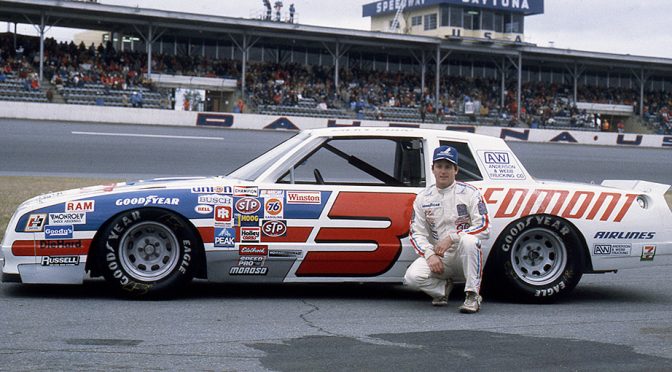
Austin Dillon, grandson of the team owner, will drive a No. 3 Chevrolet bearing the likeness of Rudd’s No. 3 Piedmont Airlines entry at Darlington.


“I’d been talking to Piedmont prior to that,” Childress said of the 1982 sponsorship agreement. “Even talked to them back when Dale (Earnhardt) was running … races (for us).


“They said, ‘We’re an up-and-coming airline, we want an up and coming driver.’ I said, ‘Well I know exactly the person.’ I convinced Ricky to run for us. We didn’t even have it done when he came over to drive for us.”


Childress had gone the independent route for roughly a dozen years, earning 76 top-10 finishes but never a victory in 285 career starts as a driver.


Rudd had begun to climb the racing ladder, but saw his career stall at the end of ’81 when he was replaced at DiGard Racing by veteran Bobby Allison.


“About that time I got a call from Richard,” Rudd said. “He said, ‘Hey, nothing concrete but I’ve got some good equipment that I’m going to Daytona with, would you be willing to drive our car?’ That’s how it started.


“That phone call didn’t take place until late December, maybe early January. … I didn’t have anything going that was better than what Richard had to offer. I went to the car that I thought gave me the best chance to win races. Even though the prior half season Dale Earnhardt was driving the car and everyone knows Earnhardt’s capabilities but they never really performed that well. There were reasons for that, but Richard was in a major rebuild during that time.”


Earnhardt drove for Richard Childress Racing for the final 11 races of ’81, but departed to spend the next two years with Bud Moore where he won three times.


Meanwhile, the RCR organization was beginning to make strides.


“Before we went to Daytona, things had started happening. Piedmont Airlines had stepped on board as a sponsor. Goodyear came on board and helped us out with some tires … there were a lot of people that got on board and liked what they saw,” Rudd said.


“The team just continued to snowball in the right direction after I was asked to join it, not because of me, but the timing was perfect for me as a driver and was perfect for Richard as an owner, through all the hard work and people he had. It came together and worked.”


Rudd and Childress went winless in their first season together, but the driver did finish ninth in points.


The following year, Rudd began the season with three consecutive poles — at Daytona, Richmond, Virigina, and Rockingham, North Carolina — career win No. 1, for Rudd and for Childress, came in the season’s 13th race, at Riverside (Calif.) International Raceway.


Rudd led 57 laps of the 95-lap race, including the final 41. The victory came in his 161st start in the series.


“It gave every one of us confidence,” Childress said. “It gave him confidence to progress in the sport, gave us confidence that we could win as a team and as a company and we just had to keep digging.”


“It wasn’t a road-race car,” Will Lind, now Business Director of Competition for RCR, said. “It was our Martinsville car with the gas hole moved and the oil cooler for the transmission. The only thing specialized about it was him (Rudd).”


Afterward, as Childress and crew chief Kirk Shelmerdine began the long trek back to the Carolinas, the team owner said he pulled off on the side of the road.


“Kirk and I looked at each other and Kirk said, ‘You know what we just did?’


“I said, ‘Yeah, we won.’ “


“He said, ‘No, you won right outside of LA, with all the big sports going on … we just won a major race here in Riverside, California.’ “


Rudd won once more that season, at Martinsville Speedway, and again finished ninth in points.


The following season, he moved on to join Bud Moore Engineering; Earnhardt, meanwhile returned to RCR where he went on to win six premier series titles for the former owner/driver.


Rudd retired from driving after the 2007 season, with 23 career wins and 374 top-10 finishes in 906 starts. He finished fifth or better in points five times, including second in 1991.


He is one of five new nominees on this year’s 20-person ballot to be considered for induction into the NASCAR Hall of Fame for 2017. The NASCAR Hall of Fame Voting Panel will meet Wed., May 25 to decide next year’s five-member class.


“It’s an exciting time for me,” Rudd said. “It would be great if I make it but there are some guys that are probably better qualified than me. I’d love to be elected this year but hopefully that day will come. At least I’m in the pool anyway; you’ve got to get in the pool before you can be elected. We’ll see how it turns out. But there are some guys that deserve to be in there before I do.”


It is Childress’ eighth year on the Hall of Fame ballot. In addition to six premier series titles and 105 victories, RCR teams have also XFINITY and Camping World Truck Series titles.


“You could tell early on that there was something special about it,” Rudd said of the organization. “Richard was more than just being a car owner … it was family. They live, eat, sleep and breathe racing. …


“At the time there were no victories here but as a group it all started happening. And it was just a neat time to be a part of it.”

MORE: Cast your NASCAR Hall of Fame ballot

As long as pit crews are knocking out stops and gaining spots, things are good. When the stops go south … so does the love.

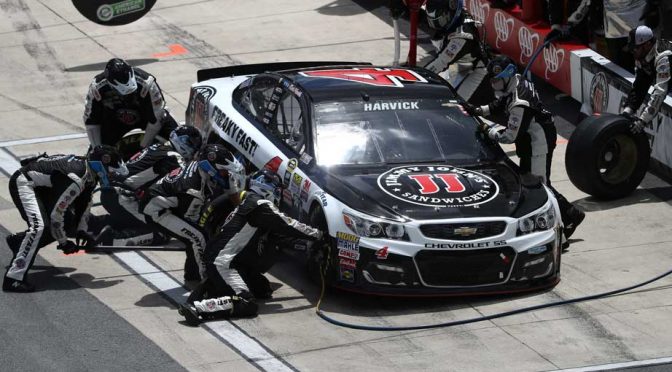
This was true last weekend at Dover when Kevin Harvick came unglued at his pit crew after losing the lead twice on pit road.

Pit crew members are adults and can handle the criticism. But when was the last time a driver spun out and a crewmen came on the radio and said “just park the (expletive), you no good (expletive). If you can’t keep the car straight, then we don’t have time to stand here and pit it”?

That never happens, nor should it, but the fact that a good pit crew has to stand there and get chewed out on the radio for a bad stop and then be expected to go out and produce a great stop the next time, well, that’s just not understanding people.

The pit crew that lost spots this past week in Dover is the same one that came in and helped win Harvick his first championship in 2014. He’s won plenty of races with this crew and some because of this pit crew.

If there is a problem with the pit crew, then handle it back at the shop. No need to vent your frustrations over a public radio and try to shame them.

No one feels worse after a bad pit stop than the pit crew member who messes up. One pit coach told us, “If you don’t think a pit crew guy knows when he’s lost a race or put his driver in a bad spot, then you’re crazy.”

No one is saying a driver doesn’t have the right to be mad at his pit crew for a bad stop, but understanding how to handle that will go a long way with how his crew performs moving forward.

For more pit crew news, go to PitTalks.com.

RELATED: Kenseth survives for Dover victory

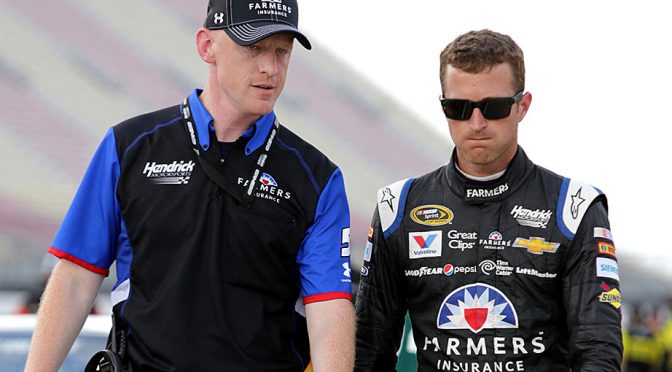
NASCAR officials handed down a P3-grade penalty Wednesday to the Hendrick Motorsports No. 5 team of driver Kasey Kahne for infractions last weekend at Dover International Speedway.

The Hendrick No. 5 team was found in violation of sections 20.17.3.1.2 (post-race general inspection measurements); 12.5.3.4.2 a, b, c, d; and 12.5.3.4.1 n,o (that spell out P3 penalty examples) in the NASCAR Sprint Cup Series Rule Book.

NASCAR fined crew chief Keith Rodden $25,000 and assessed Rick Hendrick a loss of 15 championship owner points and Kahne a loss of 15 championship driver points.

Kahne was 16th in the Chase Grid before his penalty. With the 15-point deduction, AJ Allmendinger climbs into the 16th and final postseason spot as it stands today.

A NASCAR spokesperson announced after Sunday’s AAA 400 Drive for Autism that the No. 5 Chevrolet failed the post-race laser inspection. The car was taken for further evaluation at the NASCAR Research and Development Center in Concord, North Carolina.

Kahne’s fourth-place finish at the Monster Mile matched a season best, equaling the fourth-place result he achieved at Richmond last month.

In a press release, Hendrick Motorsports said it would not appeal the penalty.


“We had an unintentional issue at Dover when our left- and right-side truck arms were bent at some point during the race,” No. 5 crew chief Keith Rodden said. “I’m disappointed in NASCAR’s decision, but we have to accept it and focus on the upcoming races. We have a great team with a lot of positive momentum that we hope to carry into the summer.”
 
NASCAR officials also penalized the Kyle Busch Motorsports No. 51 team in the Camping World Truck Series after its second-place finish last Friday at Dover.

The No. 51 Toyota operation was assessed a P2 for violations of sections 20.17.3.2.1 a, b, c; 12.5.3.3.1 g; and 12.5.3.3.2 a, b, c, d of the NASCAR Rule Book. Crew chief Kevin “Bono” Manion was fined $6,000 and placed on NASCAR probation through Dec. 31. The team was assessed with the loss of 10 championship owner points.

NASCAR officials announced after the Jacob Companies 200 that the No. 51 truck was found too high in the left rear during a post-race inspection. The NASCAR Sprint Cup Series scrapped rules on ride heights before the 2014 season, but the regulations remain in place for the other two NASCAR national series.

Daniel Suarez, who competes full-time in the NASCAR XFINITY Series, logged the fourth runner-up finish of his Truck Series career in Friday’s 200-miler.

In other penalty news from Dover:

— The No. 23 (David Ragan) in Sprint Cup and the No. 25 (Ryan Ellis) in XFINITY received P1s for violations of section 12.5.3.2.1 a — “failure by the driver or crew members to properly wear or secure mandatory safety apparel or equipment (i.e. head socks, under garments, helmet face shields, shoes, gloves, etc.) in accordance with the NASCAR Rules” — and a crew member for each team was fined $1,000.

— The Nos. 7 (Regan Smith), 42 (Kyle Larson), 88 (Dale Earnhardt Jr.) in Sprint Cup received written warnings for failing pre-race laser inspection twice, and the No. 24 (Chase Elliott) was given a written warning for failing pre-race template inspection twice.

— The No. 18 (Matt Tifft) in XFINITY received a written warning for failing pre-race laser inspection twice.

— The No. 07 (Cj Faison) in the Camping World Truck Series received a written warning because truck trailing arms did not meet specifications.

RELATED: NASCAR Next 2016-17 class unveiled | Meet the 2016-17 Next class


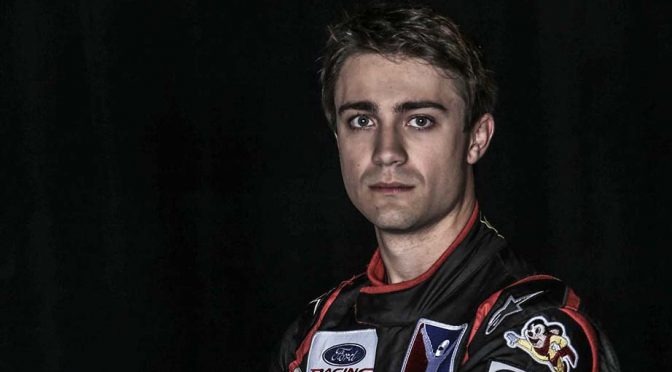
When Ty Majeski got the call informing him that he’d be part of the new NASCAR Next class of up-and-coming drivers, he was actually hitting the books — or in his words, “crunching before an exam” — in his University of Wisconsin-Madison dorm room.
 
For the third-year student pursuing a mechanical engineering degree, it was the perfect study break.
 
“It kind of cut into my studying time,” Majeski said with a laugh Wednesday during a gathering with his 2016-17 Next classmates. “But when they called me and said, ‘We need you in Charlotte next week,’ it was just very surreal.”
 
But his debut as a member of NASCAR Next wasn’t the only major development in the 21-year-old Majeski’s racing career this week. Monday, Roush Fenway Racing announced that they had signed the Wisconsin native to a driver development contract.

MORE: Full NASCAR Next coverage

 
The deal helped provide some direction for one of the most talked-about short track racers in the country. Even before Tuesday’s announcement, Dale Earnhardt Jr. had identified Majeski as a driver to watch in a tweet, and his name came up again during an appearance by reigning Sprint Cup champion Kyle Busch on SiriusXM NASCAR Radio.
 
“It’s definitely been crazy,” Majeski said. “Last week at this time, I didn’t think we were going to announce the Roush Fenway deal. I think there was kind of some media buzz a bit — Kyle Busch talked about me on (SiriusXM) NASCAR Radio and I think Roush Fenway wanted to announce it, and it lit a fire under them to get that out there, which is all good. Definitely been a surreal week, and just kind of weird that it wound up panning out that way.”
 
As part of the deal, Majeski will drive five ARCA Series races for Roulo Bros. Racing, the same team that helped groom Chris Buescher for a career in the NASCAR Sprint Cup Series. That partial schedule will mesh with continuing school work, his Super Late Model slate and competition in the ARCA Midwest Tour, where he’s won two championships.
 
His accomplishments — including Super Late Model triumphs this year in the New Smyrna World Series and the Rattler — might make it tempting to forgo a college education to focus full-time on racing. But Majeski is following in the footsteps of another Wisconsonite — former premier-series champion Alan Kulwicki — in earning his degree.
 
“It goes both directions,” says Majeski, who participated in the Kulwicki Driver Development Program last season. “I’ve got to have something to fall back on. Obviously, nothing’s for certain in this sport. We see it every day that things change by the day. You’re never locked into anything and I need to have something to fall back on. I’ve always wanted to be involved in racing, so if it doesn’t pan out, I’m hoping to be an engineer for a team someday and keep racing in my life.”

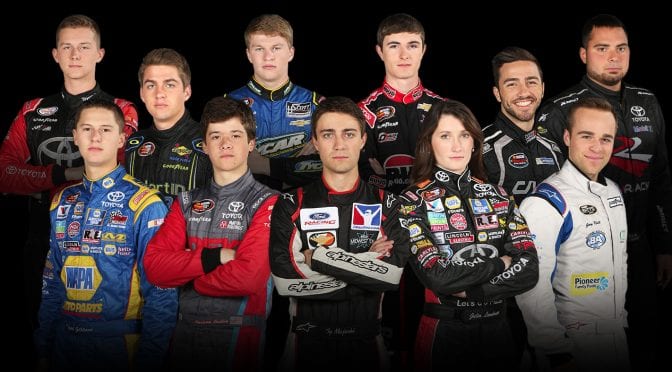
DAYTONA BEACH, Fla. — Two are following in the footsteps of their former NASCAR Cup Series driving fathers. One is a long-time racer who competed on the reality television show “Survivor,” and later added a degree from Stanford University. Another is one of the fastest rising stock car drivers in the Midwest. There is even a pair of international phenoms.

From Charlotte to New York City, and from Quebec to Israel, the 11 drivers who were announced as the 2016-17 NASCAR Next class today are primed for a successful and impactful future in NASCAR. This is the sixth edition of NASCAR Next, an industry-wide initiative designed to spotlight to best and brightest rising young stars in racing.

“The NASCAR Next program has introduced current stars such as Kyle Larson, Chase Elliott and Ryan Blaney to the NASCAR fan, and we believe this year’s class has the same potential,” said Jill Gregory, NASCAR senior vice president of marketing and industry services. “These drivers have shown the talent and intangibles to climb the NASCAR ladder, and we look forward to watching their careers grow.”

This year’s NASCAR Next class was selected through an evaluation process that included input from industry executives, the NASCAR Cup Series Drivers Council and media. Drivers must be between the ages of 15-25, have tangible and expressed goals in eventual competition in the NASCAR Cup Series and demonstrate the potential to realize that goal.

The following drivers have been selected to the 2016-17 NASCAR Next class:

Harrison Burton (@HBurtonRacing) – The 15-year-old from Huntersville, North Carolina, is the son of former NASCAR Cup Series driver Jeff Burton. He has climbed to the NASCAR K&N Pro Series after setting the record last year as the youngest Division I race winner in NASCAR Whelen All-American Series history.

Collin Cabre (@CollinCabre12) – In his second season driving for Rev Racing and the NASCAR Drive for Diversity in the NASCAR K&N Pro Series, the 22-year-old from Tampa, Florida, captured his first career win last October after making the successful move from racing sprint cars.

Spencer Davis (@SpencerDavis_29) – The 17-year-old Dawsonville, Georgia, driver has shown a proficiency in nearly everything he’s raced. After winning the Sunoco Rookie of the Year Award last season in the NASCAR Whelen Southern Modified Tour, Davis has transitioned to the NASCAR K&N Pro Series, where he has established himself as a championship contender with top six finishes in his first seven series starts dating back to last season.

Alon Day (@Alon_Day) – One of two international drivers on the list, Day is the first NASCAR Whelen Euro Series driver to earn a NASCAR Next recognition. Day, 24, from Ashdod, Israel, completed his first full season in the Whelen Euro Series as championship runner-up. Including the final two rounds of 2015, Day has won four of the last eight Elite 1 races and is again a threat win the title.

Tyler Dippel (@Tyler_Dippel) – An accomplished dirt racer, the 16-year-old from Wallkill, New York, has already scored his first NASCAR K&N Pro Series East victory in March. Dippel previously competed in the DIRTcar Racing Series in the northeast, earning the rookie of the year title and becoming the youngest race winner in that series.

Todd Gilliland (@ToddGilliland_) – The son of NASCAR Sprint Cup Series veteran David Gilliland, the 16-year-old from Sherrills Ford, North Carolina, made NASCAR history by winning his first four career NASCAR K&N Pro Series starts. He became the youngest winner in series history with his victory last fall, and has followed it up with wins in both the K&N Pro Series East and West season openers this year.

Noah Gragson (@NoahGragson) – The 17-year-old from Las Vegas finished second in the championship standings last year in the NASCAR K&N Pro Series West, collecting the Sunoco Rookie of the Year Award in the process. Gragson followed the path set by Kyle and Kurt Busch, learning his trade in the Legends and Bandolero Divisions at The Bullring at Las Vegas Motor Speedway. He earned a pair of K&N Pro Series West wins in 2015 and is again a championship contender.

Gary Klutt (@Garyklutt) – The second Canadian to be named to the program and the first full-time driver from the NASCAR Pinty’s Series, Klutt represents a crop of young drivers making an impact on Canada’s championship stock car series. The 23-year-old from Halton Hills, Ontario, earned his first career pole and win last year en route to being named the Jostens Rookie of the Year. He finished fifth in series points and will be among the title contenders when the series opens later this month.

Julia Landauer (@julialandauer) – Landauer, 24, from New York City, got her start racing a variety of cars – from Formula BMW to Ford Focus Midgets to stock cars. The versatile Landauer was a contestant on the hit reality show ‘Survivor’ before graduating from Stanford in 2014 with a Bachelor of Science degree in Science, Technology, and Society. She became the first female to win a Limited Late Model division championship at Motor Mile Speedway in Radford, Virginia, last year before graduating to the K&N Pro Series West this season.

Ty Majeski (@TyMajeski) – The 21-year-old from Seymour, Wisconsin, showcased his ability with a dominating display at Florida’s New Smyrna Speedway in February, collecting three wins and earning the 2016 Super Late Model championship in the 50th Annual World Series of Stock Car Racing. Majeski added a NASCAR Whelen All-American Series Late Model track record and victory in the FrostBuster at Wisconsin’s LaCrosse Fairgrounds Speedway in April.

Matt Tifft (@Matt_Tifft) – A development driver for Joe Gibbs Racing, the 19-year-old from Hinckley, Ohio, is driving part-time in the NASCAR Xfinity Series for JGL Racing as well as JGR, and racing in the NASCAR Camping World Truck Series for Red Horse Racing. He earned his first career pole in the NASCAR Xfinity Series at Talladega earlier this month.

Since its inception in 2011, 27 of the 35 drivers who have been selected as part of the program have gone on to compete in one of NASCAR’s three national series. Nearly a third of the drivers have made a NASCAR Cup Series start, with nine drivers winning a NASCAR national series race.

The last two NASCAR Cup Series Sunoco Rookies of the Year have been NASCAR Next alum, as are the top two contenders for this year’s award: Blaney and Elliott. The last three Sunoco Rookie of the Year winners in both the NASCAR Xfinity Series and NASCAR Camping World Truck Series were also part of the NASCAR Next program.

For more information, visit NASCARNext.com and make sure to follow the drivers on Twitter and on the track.

RELATED: Learn more about ‘Catwalk for a Cause’


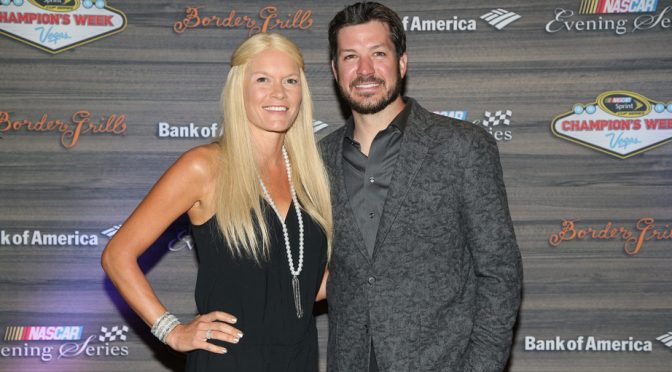
The Martin Truex Jr. Foundation hosts its biggest event of the year — “Catwalk for a Cause” — on Wednesday. 


The seventh annual fashion show helps raise awareness and funds for pediatric cancer. Sherry Pollex, Truex’s longtime girlfriend, plays a strong role in the campaign. She raised the idea in 2010, and the event has taken on new meaning since Pollex’s ovarian cancer diagnosis in August 2014.


The event is from 6-10 p.m. ET in Mooresville, North Carolina. Last year’s version had more than 600 people attend and raised more than $250,000.


Earlier this month, the NASCAR community rallied around Sherry Pollex on May 10 to send her well wishes on her birthday, a big day for the philanthropist after she completed her final chemotherapy treatment in January. Pollex had an extra special reason to celebrate her day as she launched her website SherryStrong.org — a platform for her to connect with those affected by cancer.


MORE: Learn more about ‘Catwalk for a Cause’

Editor’s note: This week we’re looking back at the 1987 Winston All-Star Race, one of the most historic races in NASCAR history.


RELATED: The 1987 Winston: Where Are They Now?


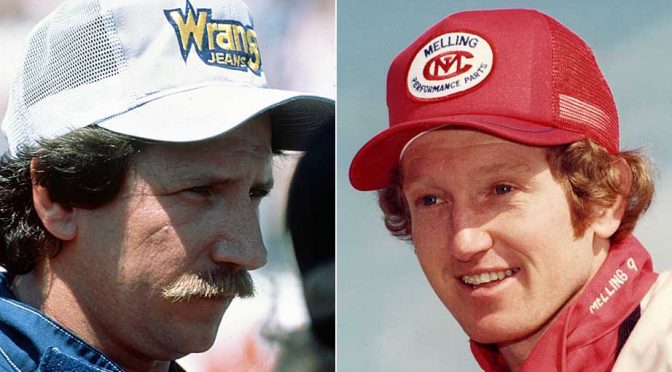
Nearly 30 years later NASCAR Hall of Famer Bill Elliott still says he has never been more frustrated in a race car than he was with the ending of the 1987 running of The Winston All-Star Race.


He led a dominating 121 of the 135 laps but came out on the wrong end of a hard-nosed door-to-door battle for the win with the “Intimidator” Dale Earnhardt in the final 10-lap segment.


The close-quarter, late-lap racing in The Winston between the season’s top two championship contenders famously resulted in Earnhardt’s “pass in the grass” — even though in reality it was much closer to a maintain-in-the-terrain, but it still became racing lore.


The race itself is a legitimately legendary story starring Elliott and Earnhardt with perhaps the most famous NASCAR driver lineups of all-time essentially playing supporting roles. Hall of Famers such as Richard Petty, Cale Yarborough, Bobby Allison, Terry Labonte, Rusty Wallace and Darrell Waltrip raced that day, joining many of the sport’s all-time most popular racers such as Neil Bonnett, Geoffrey Bodine and Tim Richmond.


As NASCAR prepares for the modern-day version of this event, the Sprint All-Star Race this weekend at Charlotte Motor Speedway, it’s a good stock-car history lesson to relive the 1987 event.


Many consider this the most famous All-Star running — a hard-nosed, win-at-all-costs race that raised the sport’s profile and its expectations.


In particular, the late-lap duel between Elliott and Earnhardt is considered required folklore for NASCAR fans, as it was the first instance of the All-Star Race having a 10-lap shootout to the finish.


Even today Elliott is still miffed about his missed opportunity, he told NASCAR.com


“That was probably the maddest I’ve ever been, but you just have to deal with it and go on,’’ said Elliott, who after being passed by Earnhardt had to pit in the waning laps to change out a flat tire, ultimately finishing 14th.

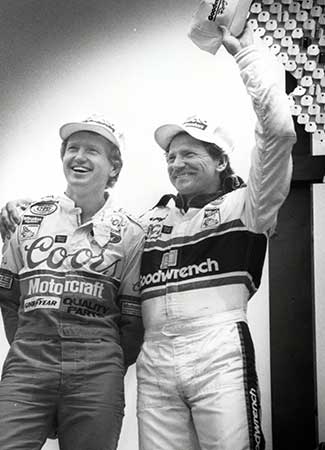
They smiled together later in the season at Michigan, but Bill Elliott never quite got over Dale Earnhardt’s late “pass in the grass.”

Earnhardt’s son and namesake Dale Earnhardt Jr. is also a huge fan of the event, remembering well his dad’s famous outing with sentimental appreciation. It was the first of three wins (also 1990 and 1993) for Earnhardt in the storied exhibition race.


“Those last 10 laps with Dad doing everything he could to hold off a faster Bill Elliott were exciting,’’ Earnhardt Jr. said. “It was a pretty basic format, but they had a lot of great cars, a lot of great drivers, and a lot of great racing going on.


“They only ran it for $200,000 back then, but that seemed like a lot of money at the time. It was really, really exciting. The cars moved around a lot — the way the cars raced really made the show.”


Elliott appreciates the 1987 event now for what it meant to the sport, how it grabbed fans’ attention and proved the intense level of NASCAR competition. But it is still a stolen opportunity to him.


Elliott unapologetically recalls driving his Ford over to Earnhardt’s Chevy after the checkered flag to show his anger over the way the race played out. He door-slammed Earnhardt’s car on the cool-down lap and kept it close even as Earnhardt pulled toward Victory Lane.


Considered one of the most mild-mannered gentlemen racers ever, Elliott was called to the NASCAR hauler after this race at the request of none other than Bill France Jr.


“We all sat and had a meeting with me, him (France), Earnhardt and (team owner Richard) Childress,” Elliott said. “I was still pissed. I’ll never forget. I hadn’t been so mad in … I can’t remember when.


“You have to remember, I worked on my race cars. My philosophy was to outrun someone fair and square rather than crash them up. It was just a turning point for me and Earnhardt. He had kinda been going at it with me here and there, but that was the end.”


When Earnhardt was interviewed from his car in Victory Lane after the race, he detailed in great frustration the direct run-ins with Elliott and declared of the race, “that was something else.’’


And indeed it was.


A star-studded lineup, strong emotions, fast cars and a dramatic ending — the 1987 running of The Winston was a race for the ages and one that has stood up through time.


“It’s one of those deals when you look back and say, ‘if this or if that,’ ” Elliott said. “That race tops all of them.”