RELATED: Complete Charlotte schedule | TV schedule
RELATED: Weather updates from the track
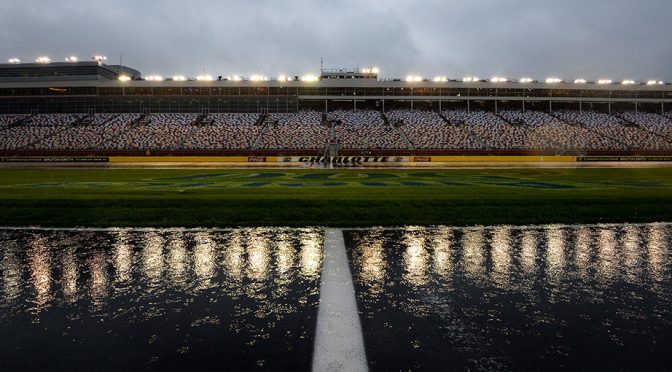
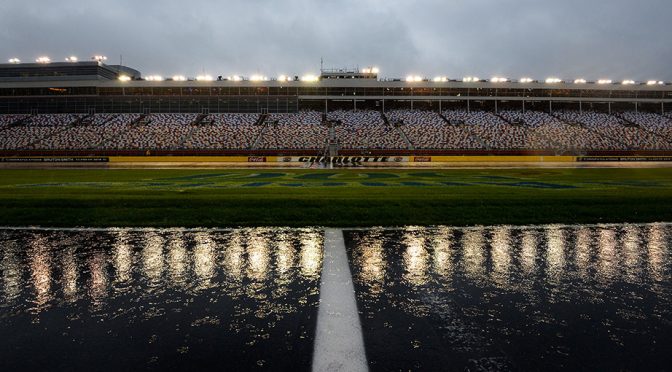
The start of Thursday’s NASCAR Camping World Truck Series practices were delayed due to wet weather at Charlotte Motor Speedway, but a persistent fleet of Air Titan track-drying units got trucks on the track at 6:45 p.m. ET for a one-hour session.
The opening one-hour session was set to begin at 12:30 p.m. ET, but was unable to get underway as crews worked to dry the 1.5-mile track. A second practice, originally set to commence at 2:30 p.m. ET, also was canceled. The final practice, scheduled for 4:30-5:55 p.m., got moved back but ultimately went into the books.
A NASCAR spokesperson said there were 12 Air Titans and eight conventional jet dryers on hand this weekend. Two more jet dryers were en route from Martinsville Speedway on Thursday afternoon.
Friday’s NC Education Lottery 200 is set for 8:30 p.m. ET with television coverage on FS1 and radio coverage on MRN and SiriusXM NASCAR Radio. Qualifying is scheduled for 5:30 p.m. ET on Friday with TV coverage on FS1.
RELATED: New format puts emphasis on intrigue
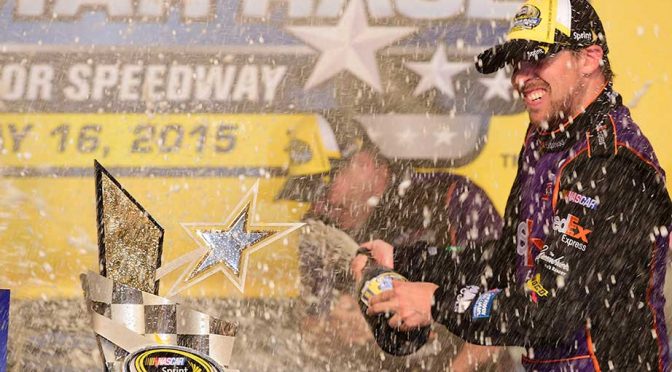
This year’s Sprint All-Star Race (Saturday, 9 p.m. ET, FS1, MRN, SiriusXM NASCAR Radio) format gets a fresh coat of paint when cars hit the track at Charlotte Motor Speedway.
For starters, there are three different segments composed of: an opening 50-lap segment, a second 50-lap segment and then a final 13-lap sprint to the finish of a third segment. Here’s how it all works.
THE RULES, SEGMENT 1
The lineup for Segment 1 is determined by qualifying run earlier Saturday night.
There is a mandatory green-flag pit stop for a minimum of two tires (teams can choose to take two or four) during the opening 50 laps.
After Segment 1, there is a 3-5 minute break. Cars must pit and take a minimum of two tires.
THE RULES, SEGMENT 2
The starting order for Segment 2 is set by the pit-road exit from the mandatory pit stop after Segment 1.
During Segment 2, there is a mandatory green-flag pit stop for a minimum of two tires during this set of 50 laps. The twist here is that the pit stop must occur before Lap 85.
After Segment 2 concludes, there is another 3-5 minute break.
THE RULES, SEGMENT 3
During the break between Segments 2 and 3, there is a random drawing in which the number 9, 10 or 11 is selected. That number determines the number of cars from the 20-car field (starting from whoever is leading the race) which must pit for a mandatory four-tire stop. Pit road is closed to the additional cars.
Those who did not pit will be on older tires and at the front of the field. The order off pit road sets the running order behind those cars. So it will be older tires at the front and fresher tires (and likely faster cars) at the rear. Plenty of strategy to be had.
Only green-flag laps count in Segment 3, and NASCAR Overtime procedures apply.
WHO HAS QUALIFIED?
Drivers who won points races in 2015 or thus far in 2016, plus previous Sprint All-Star winners and former series champions still driving.
SO THOSE LOCKED IN ARE …
Eligible drivers
| Driver | How qualified |
|---|---|
| Joey Logano | 2015 winner |
| Jimmie Johnson | 2015 winner |
| Kevin Harvick | 2015 winner |
| Brad Keselowski | 2015 winner |
| Denny Hamlin | 2015 winner |
| Matt Kenseth | 2015 winner |
| Kurt Busch | 2015 winner |
| Dale Earnhardt Jr. | 2015 winner |
| Carl Edwards | 2015 winner |
| Martin Truex Jr. | 2015 winner |
| Kyle Busch | 2015 winner |
| Jamie McMurray | Past All-Star winner |
| Ryan Newman | Past All-Star winner |
| Kasey Kahne | Past All-Star winner |
| Tony Stewart | Premier series champion |
| Trevor Bayne | Sprint Showdown Segment #1 winner |
| Greg Biffle | Sprint Showdown Segment #2 winner |
| Kyle Larson | Sprint Showdown Segment #3 winner |
| Chase Elliott | Sprint Fan Vote winner |
| Danica Patrick | Sprint Fan Vote runner-up |
HOW ELSE CAN A DRIVER MAKE THE RACE?
The Sprint Showdown (Saturday, 11 a.m. ET, FS1, MRN, SiriusXM NASCAR Radio) will have three transfer spots into Saturday’s race — the winners of Segment 1 (Trevor Bayne), Segment 2 (Greg Biffle) and Segment 3 (Kyle Larson) of the Sprint Showdown earn a spot in the main event.
From there, the top two finishers (Chase Elliott and Danica Patrick) in the Sprint Fan Vote will complete the 20-car field.
RELATED: Daytona through the years
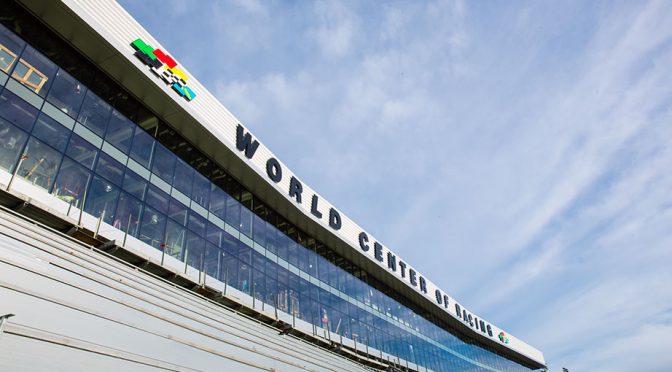
Daytona International Speedway won Facility of the Year at the 2016 SportsBusiness Journal Sports Business Awards, held Wednesday night at the Marriott Marquis in New York City’s Time Square.
The win came as a result of its $400-million Daytona Rising project. The world’s first motorsports stadium was unveiled at the 2016 Daytona 500 as the sell-out crowd witnessed Denny Hamlin win by the closest margin of victory in the race’s history.
Daytona International Speedway beat out the San Jose Earthquakes’ Avaya Stadium, Kansas State’s Bill Snyder Stadium, Texas A&M’s Kyle Field and the San Diego Padres’ Petco Park for the accolade.
“The incredible transformation of our flagship facility would not have been possible without the hard work and support of our employees, fans, partners, and the entire NASCAR industry,” said International Speedway Corporation Chief Executive Officer Lesa France Kennedy. “I’m so proud of Joie Chitwood and the Daytona International Speedway and ISC team. They truly earned this prestigious award.”
It is beautiful! pic.twitter.com/jcfFJ0rnic
— Lesa Kennedy (@LesaISC) May 19, 2016
The evening saw many members of the NASCAR industry nominated, including: NASCAR Chairman and CEO Brian France (Executive of the Year), NASCAR (League of the Year), Darlington’s Bojangles’ Southern 500 (Event of the Year) and Dale Earnhardt Jr. (Social Media in Sports)
Daytona Rising, which broke ground in 2013, produced five expanded and redesigned fan entrances called “injectors,” three new concourse levels for fans that span the frontstretch of the track, 40 new escalators, 17 elevators and 60 new trackside suites. The project also created 11 football field-sized social “neighborhoods” filled with video screens, widened 101,500 stadium seats, doubled the number of restrooms and tripled concessions and merchandise points of sale to deliver a more convenient fan experience.
The impact of the upgraded facility transcends sports. Daytona Rising’s economic impact provides 6,300 new jobs, $300 million in labor income and more than $85 million in new tax revenue. A plethora of companies have agreed to naming rights deals with Daytona International Speedway, including Toyota, Florida Hospital, Chevrolet, Sunoco and Axalta.
Remarkably, the facility remained open for business throughout the almost three-year period it took to rebuild its nearly mile-long fronstretch. During this time, the facility held two NASCAR events, the 2016 Rolex 24, 2015 Bike Week and hundreds of civic and social gatherings.
Launched in 2008 by SportsBusiness Journal and SportsBusiness Daily, the Sports Business Awards recognize leaders and visionaries who personify excellence in the business of sports. The nominees were judged by their achievements from March 1, 2015 through Feb. 29, 2016.
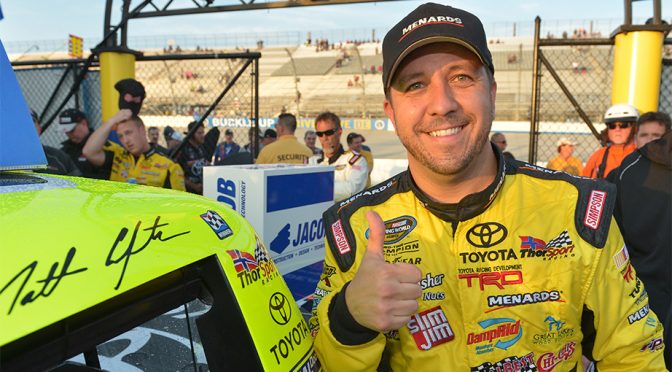
CONCORD, N.C. — Being a two-time champion in the NASCAR Camping World Truck Series has its share of perks for Matt Crafton. But besides the laurels, there’s also a certain amount of responsibility, one that involves helping the next generation of drivers learn their way.
For the third straight season, Crafton has helped preside over the series’ rookie orientation meetings, joining series director Elton Sawyer in providing insights for the truck tour’s new crop of talent.
In recent years, the duty has fallen to the reigning series champion, which Crafton achieved with consecutive titles in 2013 and 2014. But with last year’s champ, Erik Jones, shifting to the NASCAR XFINITY Series full-time this season, Crafton was asked back.
“If it’s something where I feel I can help the rookies and possibly make it better racing, that’s what it’s all about,” said Crafton, who’s back on top as the series’ points leader after last weekend’s victory at Dover International Speedway. “I remember being a rookie and going to some of these places and not having a damn clue what I was doing or what to expect on some new race tracks, so if you can give them a little bit of insight as a group and then I always tell them at the end, if you ever have any questions, they’re always free to ask me whatever they need to ask me in the trailer afterward. It’s part of it.”
It’s been 15 years since the 39-year-old Crafton was a truck series newbie, almost as long as the lifespan of some members of this year’s rookie crop. When Crafton was on the other side of the first-year drivers’ orientation, he learned from a rotation of the series’ pioneers — Ron Hornaday Jr., Mike Skinner, Todd Bodine.
Times may have changed over the course of Crafton’s career, with the driver roster seemingly skewing younger. But it’s also tilted to an even more ambitious and talented class in one of NASCAR’s most competitive divisions.
“Just to think they’re racing in the Camping World Truck Series at 16 years old like they can do, it’s nuts,” Crafton says. “It’s just crazy the amount of pressure that’s on these kids. The thing is, they’re in great, great equipment. I can honestly say, everybody always says each and every week that, ‘oh, there’s such a great group of rookies out there.’ There’s been a great group of rookies a lot of years in the Camping World Truck Series since I’ve been here, but not all of them have always been in great equipment.”
On this damp Thursday morning, Sawyer and Crafton hold court in the suites over Charlotte Motor Speedway‘s pit road. A group of 15 young drivers — some true rookies and some who were preparing for their first start on the 1.5-mile track — circled around, awaiting direction over the racket of the Air Titans drying the pavement.
Before diving into a discussion about race procedure, Sawyer singled out John Hunter Nemechek, attending his last required rookie meeting at Charlotte — the last track missing from his truck series portfolio. “I thought Elton was going to bring me a cake this week, a certificate or something for graduating,” the 18-year-old Nemechek joked later. “He said he forgot, so I may have to get a cake in to him that says ‘Race Director’ or something on it.”
Sawyer emphasized the high notes from the crew chief’s handout, providing watch-outs about gamesmanship on restarts and other procedures. But he also ceded plenty of time to Crafton, who answered a question from ThorSport Racing teammate Rico Abreu about the blend zone off pit road and how hard he could hustle back onto the race track.
The inquiry led to a detailed description from Crafton about one of the most finicky tracks on the circuit. In vivid terms, Crafton explained the speedway’s character, how much the groove widens in time, how delicate side-by-side racing can be, and what he called the “gnarliest” transition as trucks dive into the Turn 1 banking.
“When we go to a new race track, it’s just learning the basics of the things that we need to look out for, especially here,” says 18-year-old rookie William Byron, who became the series’ newest first-time winner two weeks ago at Kansas Speedway. “He’s talking about the transitions and just things to watch out for in the race. It’s good to have a broad perspective of what it’s going to be like racing here. It gets you a little bit more comfortable.”
Even Nemechek, already a two-time truck series winner on intermediate-sized tracks, has seen the benefits.
“It was a good experience. They all helped every time you went,” Nemechek says. “… Any veteran that you can get and talk to and listen to that you know is going to shoot you somewhat straight when you come to a new place, it can only help you — from race trends to how to get on and off pit road to the characteristics of the race track.”
Crafton’s 366 career starts — an all-time series best — count as an encyclopedic amount of experience, and the back-to-back titles speak to his success. But the longtime veteran says he still finds time to pick up on things from the cub drivers with single-digit starts on their record.
What does he learn?
“Some of these kids nowadays, they just know more than we do,” Crafton says with a playfully satirical grin. “I have a daughter who’s 3 and she already knows more than me.”
RELATED: Harvick through the years
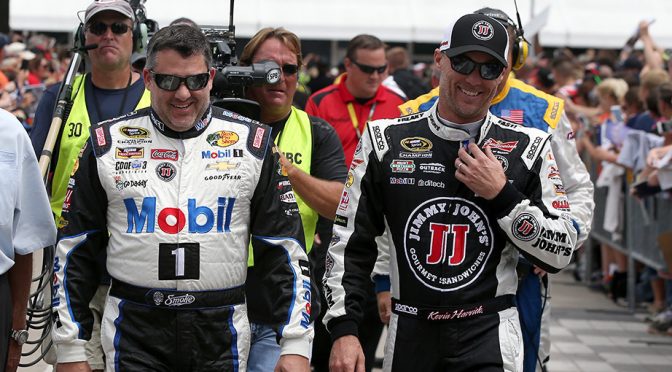
Stewart-Haas Racing announced Thursday that it has signed Kevin Harvick to a long-term contract extension, scuttling any outlying speculation about his future with the team. Details of the deal were not released.
Harvick, 40, is in his third year with the SHR No. 4 Chevrolet team and crew chief Rodney Childers. Harvick won his first NASCAR Sprint Cup Series championship in 2014, his first year with the operation co-owned by Tony Stewart and Gene Haas.
“It was a big decision to join Stewart-Haas Racing and it has turned out to be my best decision,” Harvick said in a release provided by the team. “I came to Stewart-Haas Racing to win championships. We have one, but that only made us hungry for more. I’m very happy to have my future secure with a team so dedicated to winning.”
Thursday’s news quashes speculation that Harvick might leave the team, which is moving from Chevrolet to Ford for the 2017 season. Harvick has made 550 starts in NASCAR’s top division, all in Chevrolets.
“Kevin’s results speak for themselves, and in addition to those numbers, he brings a presence to our team that makes everyone want to work harder,” Stewart said in the release. “Kevin Harvick has made Stewart-Haas Racing a better team and he will continue to be an integral part of our future.”
Childers signed a multi-year contract with the No. 4 team last June. Thursday’s announcement promises to keep one of the series’ most successful driver-crew chiefs pairings together for the indefinite future.
Harvick has notched nine of his 32 career Sprint Cup wins in Stewart-Haas equipment. Since making the transition to SHR, he has finished first (2014) and second (2015) in the driver standings, and ranks as the top point-earner so far this season.
Harvick will address the media Friday at 1:15 p.m. ET in the media center at Charlotte Motor Speedway, site of Saturday night’s NASCAR Sprint All-Star Race (9 p.m. ET, FS1, MRN, SiriusXM). Video of the news conference will be live-streamed on NASCAR.com.
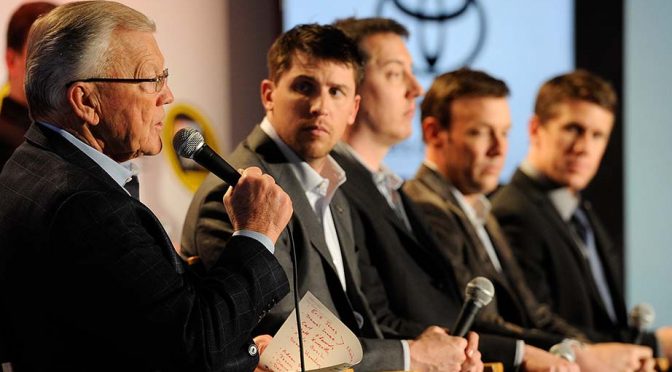
CHARLOTTE, N.C. — Championships are nothing new for Joe Gibbs Racing. The organization won three premier series titles during a six-year stretch with drivers Bobby Labonte (2000) and Tony Stewart (2002, ’05).
But domination? Now, that’s something different.
“It’s one of those deals where you pinch yourself to try and find out if it’s real,” said Jimmy Makar, Senior Vice President of Racing Operations for the four-team outfit on Tuesday.
Makar, along with driver Kyle Busch and other team principals, was on hand at the NASCAR Hall of Fame to unveil the No. 18 team’s throwback paint scheme for this year’s Bojangles’ Southern 500 at Darlington (S.C.) Raceway. The look harkens back to 1993, when driver Dale Jarrett earned the organization its first win with a victory in the Daytona 500.
But while the focus was on the past, the present couldn’t be ignored.
JGR folks tread lightly around the subject. But the numbers say what officials won’t — that since the midpoint of the 2015 Sprint Cup Series season, no organization has been as consistent or as successful as Joe Gibbs Racing.
The four-team effort with drivers Busch, Denny Hamlin, Carl Edwards and Matt Kenseth won 11 of the final 21 races of the ’15 season, a year that ended with Busch claiming the championship.
Through this year’s first 12 races, those drivers already have won seven times, including six of the last seven. As a result, all four drivers are all but guaranteed a spot in this year’s 10-race Chase for the Sprint Cup.
It’s no overnight success story, Busch said, noting that the organization didn’t sit idle in early 2013 while engine supplier Toyota Racing Development (TRD) sorted though various engine issues.
“We worked on our cars, we worked on our setups, we worked on driver-crew chief communications,” he said. “We worked on all that stuff to get our cars better. And when the engines came, then it was all there. We had the total package.
“I feel like we’ve been able to take advantage of all that the last couple of years, of having all the right pieces in place.”
The 2013 season was the first that TRD began supplying engines to JGR teams. That was also when Kenseth came on board, winning seven times during his debut season in the No. 20 Toyota. Edwards won twice in ’15 after the Mooresville, N.C.-based organization expanded to four teams with the addition of the No. 19 entry.
For the better part of the past decade, it has been Hendrick Motorsports setting the standard among NASCAR’s competitors. So it’s not surprising that both Makar and Busch referenced HMS on Tuesday when talk of domination surfaced.
“You think about their runs that they have had over the years and how we’ve always tried to get like that,” Makar said. “Here we find ourselves in not exactly the same position but something where we seem to be on top of our game right now and people chasing us. It’s kind of fun.”
Busch was a part of the HMS program while it was the leader of the pack, earning the first four of his 37 career victories with Hendrick.
“This sport goes in cycles,” Busch said. “Hendrick was on top for a long, long time. I don’t want to hear about complaining that we’re on top and dominating and bad for the sport because I remember years that Hendrick won 12, 13, 14 races, whatever it was. And they won seven out of eight championships or something like that.”
Having top-shelf parts and pieces and some of the most talented drivers isn’t always a recipe for success. The difference today at JGR, it seems, is the willingness among the four teams to share information as well as opinions.
Each driver has a distinct personality, from fiery to subdued, as well as a different approach to racing.
“But the thing of it is, they work so well together,” Makar said. “That’s the one common thing that we’ve got going on — they share information with each other, they don’t hide things.
“The crew chiefs do the same thing. We try to emphasize that. Sometimes you can talk about it all day long but if the guys don’t want to do it, it doesn’t work.”
How long will it last? How long can it last?
“You always think about, when you’re on top, what’s it going to take to stay there,” Makar said. “It’s the hardest thing in the world to stay on top once you get there. Everybody’s working even harder to try and beat you. You have to make sure you don’t get any sense of overconfidence and quit pushing the limits … that’s the only thing you worry about, is if complacency sets in.
“Other than that, it’s what more can we find? How can we get faster and better, make our cars better and compete better? That’s what we do every day … whether you’re running 10th every week or first. The whole goal is to get better as a team. Make our race teams better from the inside and keep trying to push ourselves to be better.”
Gibbs, a Super Bowl-winning coach as well as a championship-winning car owner, perhaps understands the pitfalls better than most. That, and the drive to be on top.
“If you get to thinking you’re pretty good, that goes against you,” he said. “It takes hard work. The other teams are looking at you and they’re coming. … There are so many cars that are strong right now.”
Kenseth’s win at Dover on Sunday, he said, was a perfect example of the level of competition. An exciting battle between the veteran and youngster Kyle Larson (Chip Ganassi Racing) left the final outcome in question in the final laps.
“It came down at the end there, we’re (side-by-side) with the 42. Who’s going to win? The 42 or us?” Gibbs said. “I do think that’s what is exciting about our sport. People love that. It’s the greatest reality show in the world because we don’t know what’s going to happen.”
Busch doesn’t know what the summer months will bring, but he’s confident that the JGR group “is the strongest one.”
“I say that because I think Toyota is the best manufacturer in the sport,” he said. “I feel like all four drivers are probably among the best six or seven drivers in the sport, and we’re all on the same team working together. … You’ve got Joe, who is one of the best bosses in the sport, who pushes all of us, is a real people guy and he knows about putting the right people in the right places.
“Then too, the things that we all do to work together, not hide anything, share anything we possibly can.”
These days, that includes trips to Victory Lane.
Editor’s note: Table shows victories by organization from the 2015 Coca-Cola 600 through Sunday’s AAA 400 (does not include non-points events).
| Organization | Wins |
| Joe Gibbs Racing | 19 |
| Hendrick Motorsports | 7 |
| Team Penske | 7 |
| Stewart-Haas Racing | 3 |
| Furniture Row Racing | 1 |
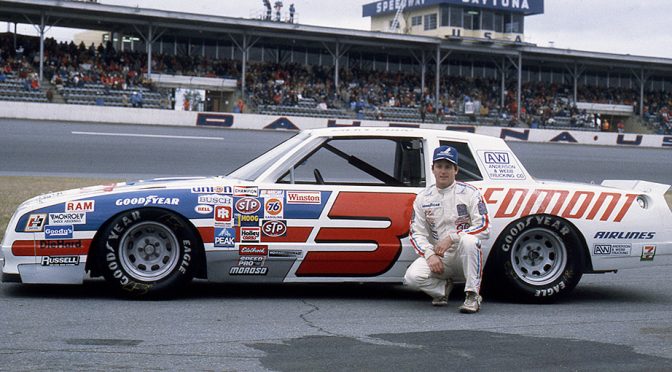
Ricky Rudd was a youngster in NASCAR at a time when the term described anyone under 30 that drove around in used equipment and hoped someone noticed their talent before the wheels fell off.
Richard Childress was a 36-year-old independent, an owner/driver with a potential sponsor that wasn’t interested in 36-year-old owner/drivers, independent or otherwise.
Brought together by nothing more than necessity — Rudd needed a ride and Childress needed a driver — the pair spent just two years together.
But in two years’ time, a stellar driving career and a legendary ownership role were launched.
“Even today I can’t thank Ricky enough for what he did for RCR,” Childress said recently during an unveiling of throwback paint schemes to be run by two of his organization’s three cars later this year in the Bojangles’ Southern 500 at Darlington Raceway. “Those were the breaking points that we needed to get both of our careers jump-started. I think it was a great time for both of us.”
Austin Dillon, grandson of the team owner, will drive a No. 3 Chevrolet bearing the likeness of Rudd’s No. 3 Piedmont Airlines entry at Darlington.
“I’d been talking to Piedmont prior to that,” Childress said of the 1982 sponsorship agreement. “Even talked to them back when Dale (Earnhardt) was running … races (for us).
“They said, ‘We’re an up-and-coming airline, we want an up and coming driver.’ I said, ‘Well I know exactly the person.’ I convinced Ricky to run for us. We didn’t even have it done when he came over to drive for us.”
Childress had gone the independent route for roughly a dozen years, earning 76 top-10 finishes but never a victory in 285 career starts as a driver.
Rudd had begun to climb the racing ladder, but saw his career stall at the end of ’81 when he was replaced at DiGard Racing by veteran Bobby Allison.
“About that time I got a call from Richard,” Rudd said. “He said, ‘Hey, nothing concrete but I’ve got some good equipment that I’m going to Daytona with, would you be willing to drive our car?’ That’s how it started.
“That phone call didn’t take place until late December, maybe early January. … I didn’t have anything going that was better than what Richard had to offer. I went to the car that I thought gave me the best chance to win races. Even though the prior half season Dale Earnhardt was driving the car and everyone knows Earnhardt’s capabilities but they never really performed that well. There were reasons for that, but Richard was in a major rebuild during that time.”
Earnhardt drove for Richard Childress Racing for the final 11 races of ’81, but departed to spend the next two years with Bud Moore where he won three times.
Meanwhile, the RCR organization was beginning to make strides.
“Before we went to Daytona, things had started happening. Piedmont Airlines had stepped on board as a sponsor. Goodyear came on board and helped us out with some tires … there were a lot of people that got on board and liked what they saw,” Rudd said.
“The team just continued to snowball in the right direction after I was asked to join it, not because of me, but the timing was perfect for me as a driver and was perfect for Richard as an owner, through all the hard work and people he had. It came together and worked.”
Rudd and Childress went winless in their first season together, but the driver did finish ninth in points.
The following year, Rudd began the season with three consecutive poles — at Daytona, Richmond, Virigina, and Rockingham, North Carolina — career win No. 1, for Rudd and for Childress, came in the season’s 13th race, at Riverside (Calif.) International Raceway.
Rudd led 57 laps of the 95-lap race, including the final 41. The victory came in his 161st start in the series.
“It gave every one of us confidence,” Childress said. “It gave him confidence to progress in the sport, gave us confidence that we could win as a team and as a company and we just had to keep digging.”
“It wasn’t a road-race car,” Will Lind, now Business Director of Competition for RCR, said. “It was our Martinsville car with the gas hole moved and the oil cooler for the transmission. The only thing specialized about it was him (Rudd).”
Afterward, as Childress and crew chief Kirk Shelmerdine began the long trek back to the Carolinas, the team owner said he pulled off on the side of the road.
“Kirk and I looked at each other and Kirk said, ‘You know what we just did?’
“I said, ‘Yeah, we won.’ “
“He said, ‘No, you won right outside of LA, with all the big sports going on … we just won a major race here in Riverside, California.’ “
Rudd won once more that season, at Martinsville Speedway, and again finished ninth in points.
The following season, he moved on to join Bud Moore Engineering; Earnhardt, meanwhile returned to RCR where he went on to win six premier series titles for the former owner/driver.
Rudd retired from driving after the 2007 season, with 23 career wins and 374 top-10 finishes in 906 starts. He finished fifth or better in points five times, including second in 1991.
He is one of five new nominees on this year’s 20-person ballot to be considered for induction into the NASCAR Hall of Fame for 2017. The NASCAR Hall of Fame Voting Panel will meet Wed., May 25 to decide next year’s five-member class.
“It’s an exciting time for me,” Rudd said. “It would be great if I make it but there are some guys that are probably better qualified than me. I’d love to be elected this year but hopefully that day will come. At least I’m in the pool anyway; you’ve got to get in the pool before you can be elected. We’ll see how it turns out. But there are some guys that deserve to be in there before I do.”
It is Childress’ eighth year on the Hall of Fame ballot. In addition to six premier series titles and 105 victories, RCR teams have also XFINITY and Camping World Truck Series titles.
“You could tell early on that there was something special about it,” Rudd said of the organization. “Richard was more than just being a car owner … it was family. They live, eat, sleep and breathe racing. …
“At the time there were no victories here but as a group it all started happening. And it was just a neat time to be a part of it.”
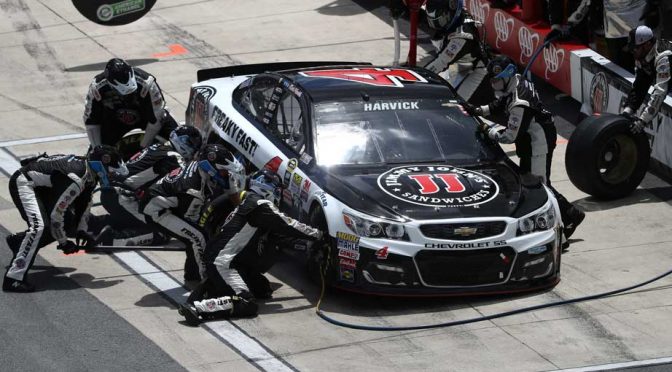
As long as pit crews are knocking out stops and gaining spots, things are good. When the stops go south … so does the love.
This was true last weekend at Dover when Kevin Harvick came unglued at his pit crew after losing the lead twice on pit road.
Pit crew members are adults and can handle the criticism. But when was the last time a driver spun out and a crewmen came on the radio and said “just park the (expletive), you no good (expletive). If you can’t keep the car straight, then we don’t have time to stand here and pit it”?
That never happens, nor should it, but the fact that a good pit crew has to stand there and get chewed out on the radio for a bad stop and then be expected to go out and produce a great stop the next time, well, that’s just not understanding people.
The pit crew that lost spots this past week in Dover is the same one that came in and helped win Harvick his first championship in 2014. He’s won plenty of races with this crew and some because of this pit crew.
If there is a problem with the pit crew, then handle it back at the shop. No need to vent your frustrations over a public radio and try to shame them.
No one feels worse after a bad pit stop than the pit crew member who messes up. One pit coach told us, “If you don’t think a pit crew guy knows when he’s lost a race or put his driver in a bad spot, then you’re crazy.”
No one is saying a driver doesn’t have the right to be mad at his pit crew for a bad stop, but understanding how to handle that will go a long way with how his crew performs moving forward.
For more pit crew news, go to PitTalks.com.
RELATED: Kenseth survives for Dover victory
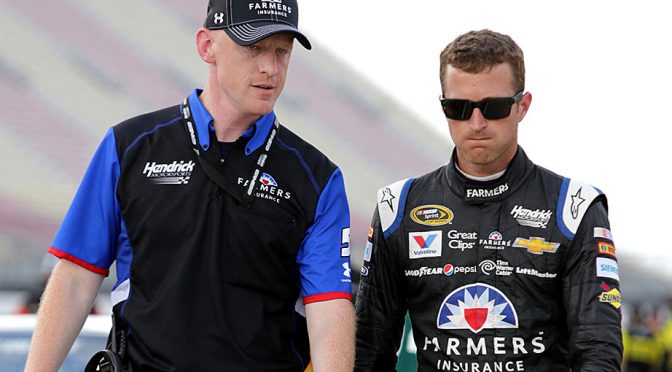
NASCAR officials handed down a P3-grade penalty Wednesday to the Hendrick Motorsports No. 5 team of driver Kasey Kahne for infractions last weekend at Dover International Speedway.
The Hendrick No. 5 team was found in violation of sections 20.17.3.1.2 (post-race general inspection measurements); 12.5.3.4.2 a, b, c, d; and 12.5.3.4.1 n,o (that spell out P3 penalty examples) in the NASCAR Sprint Cup Series Rule Book.
NASCAR fined crew chief Keith Rodden $25,000 and assessed Rick Hendrick a loss of 15 championship owner points and Kahne a loss of 15 championship driver points.
Kahne was 16th in the Chase Grid before his penalty. With the 15-point deduction, AJ Allmendinger climbs into the 16th and final postseason spot as it stands today.
A NASCAR spokesperson announced after Sunday’s AAA 400 Drive for Autism that the No. 5 Chevrolet failed the post-race laser inspection. The car was taken for further evaluation at the NASCAR Research and Development Center in Concord, North Carolina.
Kahne’s fourth-place finish at the Monster Mile matched a season best, equaling the fourth-place result he achieved at Richmond last month.
In a press release, Hendrick Motorsports said it would not appeal the penalty.
“We had an unintentional issue at Dover when our left- and right-side truck arms were bent at some point during the race,” No. 5 crew chief Keith Rodden said. “I’m disappointed in NASCAR’s decision, but we have to accept it and focus on the upcoming races. We have a great team with a lot of positive momentum that we hope to carry into the summer.”
NASCAR officials also penalized the Kyle Busch Motorsports No. 51 team in the Camping World Truck Series after its second-place finish last Friday at Dover.
The No. 51 Toyota operation was assessed a P2 for violations of sections 20.17.3.2.1 a, b, c; 12.5.3.3.1 g; and 12.5.3.3.2 a, b, c, d of the NASCAR Rule Book. Crew chief Kevin “Bono” Manion was fined $6,000 and placed on NASCAR probation through Dec. 31. The team was assessed with the loss of 10 championship owner points.
NASCAR officials announced after the Jacob Companies 200 that the No. 51 truck was found too high in the left rear during a post-race inspection. The NASCAR Sprint Cup Series scrapped rules on ride heights before the 2014 season, but the regulations remain in place for the other two NASCAR national series.
Daniel Suarez, who competes full-time in the NASCAR XFINITY Series, logged the fourth runner-up finish of his Truck Series career in Friday’s 200-miler.
In other penalty news from Dover:
— The No. 23 (David Ragan) in Sprint Cup and the No. 25 (Ryan Ellis) in XFINITY received P1s for violations of section 12.5.3.2.1 a — “failure by the driver or crew members to properly wear or secure mandatory safety apparel or equipment (i.e. head socks, under garments, helmet face shields, shoes, gloves, etc.) in accordance with the NASCAR Rules” — and a crew member for each team was fined $1,000.
— The Nos. 7 (Regan Smith), 42 (Kyle Larson), 88 (Dale Earnhardt Jr.) in Sprint Cup received written warnings for failing pre-race laser inspection twice, and the No. 24 (Chase Elliott) was given a written warning for failing pre-race template inspection twice.
— The No. 18 (Matt Tifft) in XFINITY received a written warning for failing pre-race laser inspection twice.
— The No. 07 (Cj Faison) in the Camping World Truck Series received a written warning because truck trailing arms did not meet specifications.